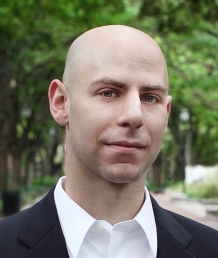
#62 Tony Robbins

robbinscoverTony Robbins joined James Altucher to talk about his book, MONEY Master the Game: 7 Simple Steps to Financial Freedom. The conversation explores many ideas and stories from the book and besides getting the Tony Robbins attitude, the interview provides a nice overview of what the book offers.

Altucher begins the interview by telling Tony that he’s had a big effect on James’s life. He says that he read Tony’s book over and over a decade ago, and it made a big difference in his life. Robbins thanks Altucher for the kind words and says that he was glad to help, in fact, it’s wanting to help now that inspired him to write this book. He says that 2008, “made me sick.” Between the story told in Inside Job and the ruin he saw, Robbins felt for the people. Not only that, but he tells Altucher that he wrote this book too because “we didn’t just bail them (the bankers) out, we put them in charge of the recovery.”

As he watched what unfolded, he felt the need to do something and realized that his power was the power of connection. He tells Altucher: “I’m gonna go to 50 of the smartest people in the world financially.. and say, what did they do? How did they get there?” Later in the interview Altucher calls this the Tony Robbins method; find successful people and see what they do.

Very quickly Robbins saw that money was a complex subject and tells James that “complexity is the enemy of execution.” Fees alone are a swamp of hazards that can trip up your returns and knocked you down. Robbins found 17 different kinds of fees that may be attached to financial products and while they seem small, they add up.

Imagine, Robbins tells Altucher, that three people each invested money for 30 years and earned 7%. The only difference is that person A pays 1% in fees while person B pays 3%. It doesn’t sound like much but A makes more than one and a half times what B does ($7M v $4.2M for example).

Warren Buffet would suggest an index fund with minimal fees, and made a bet along those lines. In 2008 he bet Protege Partners that after fees were subtracted,  Vanguard’s Admiral fund would outperform any five hedge funds of their choosing. Buffet is up 43% so far while Protege is up 12.5%. Those figures are from this very interesting Fortune article which that shares nuances of the original million dollar bet have changed its structure as well. Do read it.

Beyond the fees that active investors charge, there is also the “skin in the game” problem that inflicts money managers. It turns out that very few “eat their own dogfood” (or use their own lathe). In the book Robbins reports that nearly half of all fund managers, don’t own any shares in the fund they manage.

Past guest Nassim Taleb calls this the “skin in the game” problem, and says that it’s a big one, he writes:

Which brings us to the largest fragiliser of society, and greatest generator of crises, absence of “skin in the game.” Some become antifragile at the expense of other by getting the upside (or gains) from volatility, variations, and disorder and exposing others to the downside risks of losses or harm. And such antifragility-at-the-cost-of-fragility-of-others is hidden – given the blindness to antifragility by the Soviet-Harvard intellectual circles, this asymmetry is rarely identified and (so far) never taught.

In “Brooklyn English” this means that without bearing the consequences of your decisions, you learn nothing from them. Any parent knows this after seeing their child do something foolish and think, “well, I told  you so.” The kid had to have skin in the game to learn.

Robbins tells James that “the goal of this book is to make you the chess player, not the chess piece” and he went out to find the best players.  He tells Altucher that he learned this strategy – of finding the best of the best – early on when he had to teach the US Army how to shoot. He says that he showed up and asked the Army to give him the experts and masters in pistol shooting and he observed them. While watching he would say, “Stop, what are you doing in your head? What are you doing internally? Externally?” Robbins was look for the things experts consistently did and tried to model that for everyone else. It worked.

The biggest, consistent things he learned from those experts were:

  1. Diversify your holdings
  2. Minimize your taxes
  3. Don’t lose money

The average Joe has to learn these things because, as the poet once said, the times they are a changin.

What does that change look like? Robbins tells Altucher that it means being valuable to many. Growing up he wondered how his dad could work so hard as a parking garage attendant, but not make much money. He worked hard, but he was working hard at the wrong things. Robbins realized that there isn’t value in a job everyone can do. You have to find and build skills that are valuable.

In Average is Over Tyler Cowen makes the case that the valuable skills will be working well with computers. His proving ground is the chessboard where the human-computer teams are the most dominant, beating either human or computer. Ditto for medical surgery, teaching, or stock trading. The humans need to know how to leverage the computer, that’s the value proposition. Cowen wrote, “Writers and teachers need to consider what aspects of their work are better done by intelligent-machine analysis and look closely at the irreplaceable value they do provide.”

In the interview Tony Robbins provides a different example. He sees the light at the end of the tunnel, but rather than being the oncoming train, it’s the driverless truck. Robbins wonders if truck drivers see technology coming and changing their lives much like it did for farming. He writes, “In the 1860s, 80% of Americans were farmers. Today 2% of the US population work in farming and agriculture, and we feed the entire world.” What we aren’t doing then is looking toward the future at what our careers and financial futures look like. But how?

What do you do then? In Choose Yourself, Altucher gives rules for getting started with something.

  1. Take out the middleman.
  2. Pick a boring business.
  3. Get a customer.

The book lists four more, but that’s good enough to start (and if you haven’t read it yet, what are you waiting for?)

Day_60_Occupy_Wall_Street_November_15_2011_Shankbone_18One way that Robbins focuses on becoming valuable is another tip he learned from the successful people he’s coached. “Every great person I know spends 1% of the time on the problem and 99% of the time on the solution.” In the interview he uses the Occupy Wall Street protests as an example, wondering how people making over $30,000 a year can be outraged when they themselves are the global 1%. This limited scope is what Taleb calls domain dependence, where our thinking in one area doesn’t translate to another. You may be poor in America, but globally you’re not. Cowen takes a similar angle, suggesting that even though there is a stagnation in earnings, our lives still get better. The stock market took five years to bounce back, but few would want the medical treatment, entertainment, and food choices of five, ten years ago. For a more tangible example look at your smartphone, even the iPhone is only 7 years old.

Lostyearssp500.bmp

What Robbins is suggesting in the interview – and book – is to construct what you need in realistic stages. He tells Altucher that financial security and absolute financial freedom are two different ideas, but that we should know what both mean for us. The first includes the five basic areas for security; housing, utilities, food, transportation, and basic insurance. Once you have these things taken care of you have a peace of mind. Plus, getting to that stage is a lot easier.

One modern day model of this is Mr. Money Mustache (MMM). In 2014 he lived the luxurious life for a total of $25,330. He is living one version of what Robbins is telling Altucher, find what you really want in life and work for that. For MMM it meant retiring at 30 but he hardly feels deprived. One action he took is to ask, “will buying this really improve my overall lifetime happiness?” In many cases the answer is no, and he’s happy without.

For MMM, $600,000 is what he needed for complete financial security. Robbins wants his readers to find their own number, because like many of the people he’s coached, bringing our target closer makes it easier to achieve. In his own life he found that moving to Florida saved him enough in state income taxes to pay for his new house there. In six years! Florida’s zero state income tax is the opposite of Californias 10+% bracket.

Part of what Robbins wants everyone to do is just to start, start thinking, investing, and acting in a way that leads to your dreams. He tells Altucher that people project the best motivations on themselves and less great ones on others. This is known as the fundamental attribution error (FAE) and it’s a problem for people like you (just kidding, that’s the error right there). The problem is that we tend to see mistakes by other people as their fault, and our mistakes as conditional. Your brother lost money in the stock market because he’s reckless, you lost because the market tanked. Robbins wants you to be thinking with less bias, to realize that it’s your choices too that affect what happens.

Altucher asks Robbins what would happen if he had to start from scratch, and Tony says that this happened to him after his divorce. Needing money, he got back to work and he leveraged his skills of serving many to build up his income again. That’s what he calls “a winter in life” and tells James “we all have them.” Being born in 1928, or graduating in 2008 was bad luck, but there’s nothing you can do about that. The thing you can do is make the best of what you have.

In the book Robbins outlines financial products and themes to fight these financially winds, and while even good plans go down, we always have our frame of mind. In Robbins’s other books like Awaken the Giant Within he has quotes from the stoics in regard to our mental fortitude. In our pursuit of wealth we may never get the beach house, but maybe we don’t need one. In Meditations Marcus Aurelius wrote:

People try to get away from it all – to the country, to the beach, to the mountains. You always wish that you could too. Which is idiotic: you can get away from it anytime you like.  By going within.  Nowhere you can go is more peaceful-more free of interruptions-than your own soul.

Near the end of the interview the pair talk about effective communication being important, even when you’re right it doesn’t matter if you can’t communicate with people who disagree with you. If you haven’t read it yet, go get Getting to Yes as the de-facto starting point for thinking about negotiation and communication. You’ll also be following Warren Buffett’s best piece of investment advice – invest in yourself. Buffett spends 80% of his work day reading, accumulating facts and corralling ideas. After investing in yourself, you can begin the investing strategy he suggests to Robbins. From MONEY Master the Game:

All he would tell an individual investor today is to invest in index funds that give you exposure to the broad market of the best companies in the world and hold on to them for the long term.

And when he dies, what will he suggest for his family?

Put 10% . . . in short-term government bonds and 90% in a very low-cost S&P 500 index fund. (I suggest Vanguard’s.) I believe the trust’s long-term results from this policy will be superior to those attained by most investors— whether pension funds, institutions, or individuals— who employ high-fee managers.

The interview ends with Robbins telling Altucher; “most people overestimate what they can do in a year and underestimate what they can do in a decade.” What action will you take?

Notes: Robbins’s book is good, but has had a fair amount of criticism online. Do educate yourself, but taking a motto from the book, diversify where you learn and what.

Thanks for reading. These posts take 3-5 hours to write and writing is how I earn a living. Please either share this post or donate

#83 Simon Rich

Simon Rich joined Altucher to talk about his new show, the architecture of his jokes, and how much the people around us matter. This was Rich’s second interview with Altucher, here are the notes from round one.

Fullscreen capture 1192015 54105 AM.bmpAltucher gets right to it, asking Rich about what it’s like to have a new show and Rich says he’s, “super nervous.” Despite the difference in ages and stages, all the comedians on the show have had similar comments about their work. In episode #66 Carol Leifer told Altucher that you have to be on the edge of failure. “If you’re not failing then you’re not doing something right because it’s through these failures you really get better.”

Rich has a nice chance to fail, though that’s not what he’s seeking. Failure is the output, what Rich is getting a chance to play around with is the input. Altucher highlighted this in his TEDx talk, noting that we shouldn’t be praising failure and, in his words, “failure porn.” Instead we should think in terms of experimentation. He gives the example of Thomas Edison and how we explain his work as experiments, not failures.

Getting a framework to work in is equivalent to a plant in a greenhouse rather than outside. Past guest Scott Adams advocates experimenting within your systems. He writes:

Think of healthy eating as a system in which you continually experiment with different seasonings and sauces until you know exactly what works for you. You want to be able to look at a vegetable and instantly know five ways to make it delicious, at least two of which don’t require much effort. When you change what you know about adding flavor to food, it will change your behavior. You’ll no longer need much willpower to resist bad food because you will be just as attracted to the healthy stuff.

Back to the interview, Altucher asks Rich what he’s been up to and Rich has a litany of things since the last time they spoke. He tells Altucher there’s his new show, Man Seeking Woman, along with some books and movies. This “project pipeline” is similar to what past guest Steve Scott mentioned in episode #18 on his own podcast. Scott explained, “What the book project pipeline is… something that helps me manage multiple projects at the same time. So in a given week I’ll be working on three books at the same time. The three books are the books I’m developing, the book I’m writing, and the book that’s in post production.”

All these projects have kept Rich busy and Altucher asks what has been the most anxiety inducing moments. He tells Altucher, “trying to keep up with everybody.” It’s quite the crowd – he’s working with writers from some of the all-time best comedies; The Simpsons, The Onion, and Seth Rogen among many other talented people. And trying to keep up is a good thing.

In an email to Bill Simmons, Malcolm Gladwell explained why surrounding ourselves with the right culture and the right people can make us a lot better than we otherwise might be. Gladwell frames this idea in terms of why Jamaican sprinters are so good. Their best youth runners are better than the adults in many countries. Gladwell writes:

So why are the Jamaicans so good? There are many reasons, but the simplest is that the effect of peers on high performance are REALLY strong. In Jamaica, EVERYONE sprints. There are 20 heats in the 100-meter regional championships. And because everyone sprints, and the average quality of sprinting is so high, everyone’s expectations are raised accordingly. The psychological ceiling on elite performance if you are a high school sprinter in Kingston is, like, a foot higher than if you are a high school sprinter in America.

Rich has lifted the psychological ceiling on comedy writing and tells James he seeks this out, wanting to “feel like you’re barely holding up.”

This challenge also makes his skill set more diverse. Even though the act of comedy seems straightforward, it’s anything but. Different mediums require different techniques. Rich tells Altucher that “you can’t shoehorn things” into a show or movie like you can in a book. In his books he can diverge and take the scenic route, in TV he has to be moving in an arc. Leifer found the same thing, getting a writing job on Seinfeld because she didn’t have TV writing experience. She told Altucher that Jerry Seinfeld and Larry David were looking for people with a fresh perspective. Dave Berg, producer of The Tonight Show, told James that monologues are different than stand-up which is different from sketches. Even storytelling can differ from one place to another. Alex Blumberg said that what it took for stories to succeed on the radio was not the same as TV.

Altucher asks Rich what an average day is like and Simon gives him the birds eye breakdown about what happens. First the writing team spends a few weeks brainstorming what’s going to happen and then “breaking the stories” and getting the natural character arcs. Craig Turk, executive producer of The Good Wife said their process is similar. (And it’s a good interview about the entire writing and production podcast)

Altucher asks Rich for his tips on becoming a great writer and Simon gives him one big piece of advice:

Make something great don’t worry about whether it fits in any economic landscape – Simon Rich (Tweet This)

Rich also tells Altucher that he’s glad he thinks the clips are “YouTubable” and hoping the joke, scene, and concept all stand on their own.

About working with FXX Rich says that he “feels really grateful they let us do it.” Gratitude is one of the best mental exercises we can do. Research from UC Davis concludes that people who take time to record reasons of gratitude exercise more, complain less, get sick less, and feel better about their lives overall.

Altucher suggest we engage in “creative gratuity.” In his TEDx talk he says that being grateful for things like our family is “emotional sugar.” Quickly satisfying but not lasting. To get the real effects, we need to breakthrough a certain limit. It’s the same framework as his idea muscle, when coming up with ideas we often flounder when we get to number six or seven, but it’s in these moments we can push forward and see real changes. Rich could have complained about the things he didn’t get – a better time slot, more writers, a bigger network – instead, he appreciated the things he did.

In his book Excuses Begone, past guest Dr. Wayne Dyer, breaks down the different ways we can be grateful. That we have the ability to get online with our computer or tablet. That you can read these words. One prayer from Thich Nhat Hanh that also works is: “Waking up this morning, I see the blue sky. I join my hands in thanks; for the many wonders of life; for having 24 brand-new hours before me.”

Switching projects, Altucher asks about what it’s like to work with Seth Rogen, to which Rich says: “The biggest thing with a movie, is the story working? Are the character moving in the right direction? Is the pacing right? Is it high enough stakes? The actual jokes and oneliners, those come along the way. You can’t really build a movie on jokes.”

Rich says that the secret to his success is tapping into a real feeling in an absurd concept. His new show clearly does that, and only the trailer can do it justice:

In the last set of notes there were a bunch of books mentioned, and in this one Rich shares a few things that inspired him while creating the show; The Adventures of Pete and Pete, anything by Kurt Vonnegut, and Kids in the Hall.

Thanks for reading. If you enjoy these post please share them or consider a monthly $3 donation. Each post takes three to five hours from first listen to finally publishing. 

#52 Simon Rich

James Altucher interviewed Simon Rich about writing, writing for Saturday Night Live, reading for writing, and did I mention writing. Despite the singular subject it was entertaining throughout. One note, there were a lot of books mentioned in this episode, and I’ve included links to them here, just make sure you’re logged into Amazon. Rich joined Altucher to promote his new book Spoiled Brats.

As the recording equipment gets set up, Altucher asks Rich if he actually listens to any podcasts. He says it seems like everyone is doing them, but can’t think of many people that listen to them. Rich says he listens to the Posting and Toasting New York Knicks podcast and sometimes Jalen Rose. Altucher said he likes WTF with Marc Maron and Nerdist with Chris Hardwick. He also says he should listen have been listening Adam Carollaa past guest – before interviewing him, but listens to his podcast now.

Then the reading love affair begins, and it really is an intimacy with the printed page. Altucher says he’s read all of Rich’s books and that they were hilarious. Those books are:

The Last Girlfriend on Earth: And Other Love Stories. Thirty short stories about love.

Ant Farm: And Other Desperate Situations. The humor in our everyday lives, including the classic conundrum, “If your girlfriend gives you some “love coupons” and then breaks up with you, are the coupons still valid?”

Free-Range Chickens. A follow up to Ant Farm with more stories of comedy from our “hopelessly terrifying world.”

What in God’s Name: A Novel. God as an absentee owner of Earth who delegates our survival to a pair of angels.

Elliot Allagash: A Novel. The kid who no school could control turns his attention to helping a the least popular kid.

The Married Kama Sutra: The World’s Least Erotic Sex Manual. This “sequel” to the original includes the “prodding position,” where the woman cleans near a man’s feet so as to prod him into helping. The Daily Mail has more illustrations, all SFW.

The pair quickly jump into Rich’s experience at SNL, and he gives some nice backstage information. For one, that he wrote the opening monologue for Seth Rogen, and that most hosts never write their own. That speaks to both the talented writers at SNL, and the hosts who can deliver it so naturally. Rich also said that laughter during rehearsals is a key factor in getting skits to make the final cut. If shows run long before going live, odds are the sketches with the fewest laughs will be the first to go. For more SNL history, Bill Hader said in a NYT interview that “the “S.N.L.” book is Tom Shales and James Miller’s oral history, “Live From New York.” I think most current cast members, the day they find out they’ve been hired, run out and buy that book to see what’s in store for them. I know I did.” In the same interview Hader also said “Simon Rich’s “What in God’s Name” was brilliant. Actually, most of his books are brilliant.”

Rich says that when he wants to see something funny he’ll watch Mr. Show (YouTube clips) with his writing staff.  A few times in the interview he tells Altucher that he watches or reads something to see how it was done. “We should really watch this Mr. Show sketch because it’s very similar to the premise that we’re trying to pull off here.  Let’s learn from this great sketch.” Mr. Show was co-created by Bob Odenkirk who also has a new book out, A Load of Hooey. Ditto for BJ Novak (who also has a book out, The Book with No Pictures), and who recommends Rich’s writings. In his interview with Altucher, Rich explains that comedy writers may not laugh out loud because something is funny, but appreciate jokes on a different level. They may not laugh, but they certainly put in good word about their comrade’s books.

James and Simon talk about 1990’s sketch shows like Kids in the Hall, The State, and Upright Citizens Brigade. They have an interesting conversation about what shows were “the best.” Rich says that it’s hard to figure out the best of something because the order and circumstances matter. “It’s sort of unfair to compare those shows.  You know, it’s like comparing, like, the – you know, the Beatles and, like, the Kinks and, like, the Smiths.  It’s like you have to kind of – they’re so influential on one another.”

Altucher opens a new drawer to ask about the nuts and bolts of writing, and Rich does not disappoint, telling Altucher, “my favorite comedy games are thousands of years old.”

“What do you mean by a comedy game?” Altucher asks.

Rich then goes on to talk about story archetypes. One is the character who is naively missing a key to their survival. Later in the interview he says that another type is the “do anything to get to the top type.”

Whenever writers explain things like this I’m struck by how obvious it is in so many stories. Like a Magic Eye picture, once you know what’s there, you can more easily see it. (Couple that thought with this book.)

Then Rich gives the funniest joke breakdown of Abraham in the old testament. Like Altucher, I had never thought about it this way, but laughed out loud after hearing it.

Rich then talks about the difficulty in being a good stand-up comedian, which Altucher thinks he could do, but Rich doesn’t. He says, “Well, I just know myself to be a terrible performer.  I can tell from reading my pieces out loud in front of people.  And also, you know, you – usually stand up comedians, they love performing.  You know, just like how I love writing.”

Altucher asks Rich about his writing habit, to which he responds that he writes seven days a week. Simon echoes past guests like Matt Stone, when he says that writing is something that you should only do, it if you really want to do it. “I never get anxious about what I’m gonna write ‘cause it – if I don’t have anything to work on, that’s when I get to come up with something new, which is its own kind of fun and exciting experience.” Some days he’ll continue writing what he was working on the previous day, like a screenplay. Other days he’ll have nothing to do and that’s when he gets to work on a new project. “ I wake up in the morning and I’m really excited to sit down and write.  That’s – I can’t wait to do it.”

There’s a lot of conversation in the middle about Simon’s upcoming show, praise of other comedians, and why every four years people hate SNL but not Family Guy.

Then Rich gives a great writing tip about writing comedy – take one idea and flip it. He says:

“All you’d have to do is be, like, have somebody say, yeah, I won.  All right, great.  So what did I win?  You know, then all of a sudden you’re – and it’s like, why’s everybody looking at me.  Is it a car?  It’s a car, right?  I mean, you know, it doesn’t take that much to flip something.  Same thing with Stephen King, like a lot of his premises can be flipped.  The Simpsons has been doing it for years, all their Halloween specials.  You just take a classic Twilight Zone premise, a high-stakes Twilight Zone premise and you just tweak it really very slightly and all of a sudden you’ve got a great comedy premise.”

On his website Stephen King shares how he gets some of his ideas. “I get my ideas from everywhere. But what all of my ideas boil down to is seeing maybe one thing, but in a lot of cases it’s seeing two things and having them come together in some new and interesting way, and then adding the question ‘What if?’”

Off hand I remember hearing about him saying that as he walked out to his mailbox one day and collected its contents, there was a missing persons, “have you seen me?” card. This sparked the idea for a story where those faces could talk to him. About these ideas, King says that he never writes them down, taking their mental stickiness as a gauge for how interesting they truly are.

The pair then get into a whole slew of books that would make me really smart to have read, or at least that’s how they sound. The spitballing of literature includes:

Douglas Adams, Rich says his books kinda bleed together into a single awesome story. Kurt Vonnegut is “another one of my (Rich’s) favorite writers.” Ditto for T.C. Boyle, and the pair agree that Greasy Lake is great. Other writers that Rich enjoys are P.G. Woodhouse, Ray Bradbury, Philip Dick, Roald Dahl, Alec Wilkinson, and Jon Ronson.

Despite all these books and television shows they turn the pages of and reflect on it’s “The Simpsons above all.”

Rich’s has said in another interview that he quotes The Simpsons “ad nauseum.” One interesting moment of the interview was when he was telling Altucher about sitting down with his writing team and saying “we need to make this scene more like this very, very specific, you know, joke or scene or premise on this The Simpsons episode” and who is on his writing team but former Simpsons writer Ian Maxtone-Graham who ”will remember when, you know, he or somebody else wrote it, which is a totally surreal experience.” I’m no where near as big a Simpsons fan as Rich, but that would be cool.

A little later in the interview Rich implicilty gives advice that Scott Adams (a past Altucher guest) shares. About BJ Novak, Rich says, “Right, well that’s a guy who’s obviously a brilliant writer, but he also happens to be a great actor and performer, which is just like – I mean, that’s like knowing how to play guitar and sing.  Like, what are the odds, you know, and if you can do both of those, it’s extremely impressive.”  Adams would define this in terms of his success formula, that is “every skill you acquire double your odds of success.” While this isn’t a mathematical proof, failing to stand up the real world physics, it’s ethos is right. Novak has his level of success because he’s a brilliant writer + great actor + performer.

The interview was good throughout, and if like me, you haven’t read anything by Simon Rich yet, check out Sell Out online at The New Yorker.

#82 Amanda Palmer

Fullscreen capture 1132015 10742 PM.bmp

Amanda Palmer, (@AmandaPalmer) joined James to talk about the art of asking, art, and that we all do both whether we realize it or not. She tells James that we need to ask in small ways and with all our heart. We need to ask and be ready for rejection and realize that it’s part of asking like melting is part of eating an ice cream cone.

Palmer is on the podcast to talk about her book The Art of Asking. James tells her that he got depressed reading it because he was going to write a similar book to which Palmer replies that she felt the same way about Daring Greatly, telling James, “Fuck, she already wrote my book.” Renee Brown, author of Daring Greatly takes a more academic pursuit on the angle and contributes a foreword to Palmer’s book. James says Amanda’s book is more like a sequel to Just Kids by Patti Smith.

Palmer makes the case to James in the interview and in her book that:

“We’re all artistic at a certain level. We’re all creative. We all see connections. We all have the ability to manifest from scratch.” – Amanda Palmer

Her case goes, that when we make connections to things, that’s art.You don’t need to be in costume or on a stage. If you’re selling Volkswagens and you do it well, you’re an artist. Brooks Brothers provides your costume, the showroom is your stage. In episode #80 Tucker Max said much the same thing about writing. About writers he told James, “they like their identity as a writer.” Some people feel most like a writer by doing the traditional writer things, but Palmer’s saying it doesn’t need to be that way. Anyone, traditional or not, is an artist.

For all artists (ergo everyone), there is “the ask.” And that part is often hard. Amanda tells James, “There’s not an easy way, and that’s the point. If there was an easy way we’d all be happy and everybody would do it all the time and we’d be living in a fantastic society.” (Tweet this!)

This is hard, because in asking we bring judgement.

Part of the interview (and part of her book) is about Amanda’s successful Kickstarter, where she raised over a million dollars, the largest music launch at the time. The project was a confluence of happiness, chaos, love, and hate. Her fans were happy to support and part of the success she tells James was in giving a small option, even just a dollar let people contribute and be part of it.

The Kickstarter also brought along “outrage porn” as James calls it. People decided to be mad at Amanda Palmer for some reason or another. She’s not a real singer, she’s not really independent, she has a rich husband. She shares how this affected her in her book, and it’s painful. She says she felt a lot of these things and worried about getting sucked into wondering if they were true or not.

She tells James that even 1 bad review among 99 good ones can “overpower your psyche for a day.”

Palmer developed a unique angle on viewing an ask when she posed as a human statue and again as a stripper. She found a model in Dita Von Teese, who, rather than strip to nothing, started out in lingerie and stripped down to her underwear. Palmer tells James that while the traditional strippers earned 50 ones, Von Teese would earn 1 fifty. That would be Palmer’s arbitrage.

Amanda and James conclude that there are 3 layers of people we can ask. There are the people blind to us, our weak ties, and our strong ties. The people blind to us we can contently ignore, knowing that we don’t show up on their radar anymore than someone 1,000 miles away might. The weak ties are the ones we can ask for some sort of trade. Palmer doesn’t see money as bad for an artist, it’s simply the medium of exchange. Song for a dollar. Flower for a dollar. Dollar for a coffee. Each of those transactions has an element of appreciation, an unspoken thank you from each party.

These weak ties are also important because they have often have connections we don’t. For Palmer this meant couchsurfing on her tours and meeting some wonderful people (and the book has some fantastic stories). This is a strength for us says Adam Grant, guest of episode #73. Our weak ties are the web we can draw on and Palmer uses this same imagery in her book.

Finally there are our strong ties, the hardest to ask. For Amanda it was asking her husband to float her some cash to pay her band until a big check came. For us it’s our family and friends. James asks for advice on asking and Amanda tells him to accept the feeling and tell the person it. Be truthful about being scared and allow their answer to be “no.” Allow people the “space and grace” to decline your offer without malice from you. Tim Ferriss uses this same technique when emailing people, always giving them a chance to politely decline.

Isn’t there a way to get over this fear, James asks. Palmer says it helped her when she realized she was providing something her fans really wanted. In her book she writes,

“I chatted constantly online, and listened to the input and feedback from the fans. If they wanted high-end lithograph posters, I made high-end lithograph posters.”

She gave the fans what they wanted and they were happy to support her. In couchsurfing, in crowd surfing, in crowdsourcing – Amanda asks and by asking she trusts.

Despite her success, she still worries about the Fraud Police. That someone who knows is going to come and take away everything she’s made. Amanda says you start by believing in what you do. She tells James, “Step one. If you’re gonna ask with grace, you really need to believe in the worthiness of what you’re asking for.”

Often artists believe there is value in what they do, but don’t know how much. The key is to trust what you do and charge people for it (experimenting along the way). In her book she tells the story of a friend who asked her fans for money but then worried about sharing a photo of her on a beach or in a new dress. Amanda told her to be content with needing inputs for outputs, and it was the latter that the fans were most passionate about. They didn’t care about martinis or pencil skirts, they just wanted the music.

Amanda Palmer, Auckland, 2Once you believe in what you are creating, you have to charge for it. Palmer says that if the default is free but people can pay, most will pay nothing. If, however, you switch it to a default of a few dollars but people can make it less, they pay more. James found the same thing with his book, offering to refund anyone’s money if they sent a receipt and said they didn’t like it. He tells Amanda fewer than 1% of customers did.

In the interview James calls this “sunk cost” which isn’t quite right (and is part of the benefit of writing these posts later rather than thinking on the fly). Sunk cost is when we’ve already committed to an item, but shouldn’t influence our decision to continue to use the item. For example, if you buy Amanda’s book and feel like because you bought it, you should read it. That’s sunk cost fallacy. The price of the book is gone, you would be better off making better use of the time.

Rather, when we buy something we value it more. Where sunk cost thinking might go, “I bought this dessert, I may as well eat it.” What James and Amanda are suggesting though is something more like reducing cognitive dissonance. That thinking might go, “I bought this dessert, I must like it.” Our brains enjoy getting our thoughts to match our actions to maintain cerebral harmony. For more about this bias check out the wonderful Dave McRaney.

The interview ends with Amanda and James talking about who can ask for money. They agree that anyone can. If we accept that the Rolling Stones can ask for $150 a ticket, then we should accept a garage band that charges $5. Each is an artist. Palmer calls the financial critiques of small acts a “cruel sport” in this “Guardian Piece.” (Do read the whole thing, it’s very good.)

James ends the interview with this quote from Palmer’s book, “”You can fix almost anything by authentically communicating.”

If I missed something, do let me know, @MikeDariano on Twitter.

#79 Dick Yuengling

Fullscreen capture 1132015 61531 AM.bmp

Dick Yuengling joined James to talk about business, beer, and why Yuengling beer hasn’t taken over the beer business.

Yuengling beer has had a bumpy road to become the oldest and largest American owned brewery in the country. Dick says that the brewery was nearly sold in the 1960’s but when his grandfather found out that the guy wanted to scrap it, they decided not to sell. Part of Yuengling survival has been just that, survival. Nassim Taleb writes that sometimes the best thing to do is just not die.

The brewery has been in the Yuengling family for six generations and Dick’s grandfather left Princeton to take over. Besides nearly turning to scrap in the 60’s the Yuengling company had to deal with prohibition from 1920 to 1933. As they couldn’t sell beer, they sold “near beer,” built a dairy to sell ice-cream, purchased real estate, and Dick’s grandfather even became a bank president. In that diversification that even partially owned the Roseland Dance Hall, and James remembers going there.

roseland-madonna

Throughout the interviews James brings up the expressions “shirt sleeves to shirt sleeves in three generations.” The expression means that the first generation will create something, the second will build it, and the third will bring it down. HBR reports that only 10% of all privately held companies are in existence after three generations.

Part of this problem is how the conditions change for each entrepreneur. For the founder things are always harrowing, rough, and getting by with just enough. For the second generation things are a bit easier, maybe too easy. For the third generation things are too easy. Paris Hilton, for example, is a 4th generation hotel Hilton.

What might make the Yuengling family different is the stressors they’ve withstood in various generations. Prohibition in the 20’s, slow business in the 60’s, getting lucky in the 90’s. Each stressor served as a reminder about what their core business is.

Malcolm Gladwell calls these things desirable difficulties and says that they matter quite a bit. In David and Goliath he writes that being dyslexic, being unorthodox, and losing a parent can be good because they force us to grow, think, and act in new ways. Nassim Taleb subscribes to the same process, though different terminology. He calls them stressors and writes that they are good for a system to have because it makes the system adapt – like Yuengling did. One final proponent is comedian Carol Leifer who told James, “you should be failing in your career because it’s through these failures you really get better.”

Dick took over the business in 1985 and began to modernize the facility. He tells James that he was a production nut. From his time in high school to now he’s been in the factory, knowing, learning doing. This was the theme in Mark Cuban’s interview too, where he knew the ins, outs, ups, and downs of his business. Samuel Zemurray, the man who popularized and delivered the banana to the United States did much the same thing, riding the boats from New Orleans to Honduras while his competitors stayed in Boston. Zemurray saw things, his competitors read about them. A favorite Zemurray saying was, “they’re there, we’re here.”

James brings up the idea that wheat may have been partially developed to make beer and both were created 8,000-10,000 years ago. For the full beer story, check out the Stuff You Should Know Podcast about beer.

Dick and James have a tennis match like conversation, James lobs a suggestion for the business and Dick sends it back. James tries again, Dick returns. This part of the conversation leads to a slew of great pieces of advice from Dick. He tells James that “they don’t jump into things” and “we don’t have to be the biggest.” I live in Ohio, a state where the arrival of Yuengling beer was a big deal. It used to be that if someone was traveling to or through Pennsylvania, it would warrant a stop, like Cuban cigars only iron city lager. James is talking from a similar east coast perspective about expansion, it seems like Yuengling could take over the world.

Eventually James comes around and says “you found your ideal space to form a monopoly.” He goes on to say, “that’s a hard thing for entrepreneurs to realize, they don’t have to do everything.”

In episode #43 Pete Thiel tells James the same thing, “you don’t want to start the 100th online pet food company or 500th restaurant in San Francisco.” This goes to the point that James makes to Dick (explicitly) and Dick makes to James in the interview (implicitly) that too much competition is going to squeeze you. About Coke and Coors, Dick says, “we don’t want to play in their space.” Thiel says, “extreme competition, extreme undifferentiation is not synonymous with capitalism.”

“Click to Tweet: “Build a monopoly and scale it if you want to take over the world. – James Altucher”

Rather than the ideas for expansion, Dick tells James they can grow in their current markets – Yuengling has only a 3 or 4 share in many of their markets, even capping out around 10 in Pennsylvania.

 In the interview James guesses that Dick might be worth over a billion dollars, to which he says that’s “a figment of someone’s imagination” and it doesn’t sound like he wants to cash out. Dick echoes what Sam Shank says in #78, wondering where he really wants to be. Sam is in a startup, in an area he knows, with good people, and room to grow. That’s what he wants so why sell. Ditto for Dick, who’s happy making beer.

 If you like this post, please share it on Twitter, email to a friend, or thank James for doing it. If I missed something, let me know on Twitter, @MikeDariano.

#81 Astro and Danielle Teller

Astro (@astroteller) and Danielle Teller joined James to talk about marriage, divorce, constructs, rules, and what really matter for raising happy, healthy kids. Rather than an overall summary of the episode, here are 10 lessons.

From Amazon, here is a snippet of summary, “In the same way that Esther Perel’s bestselling Mating in Captivity gave couples a fresh perspective on their married life, so Sacred Cows invites reader to question assumptions and conventional wisdom. It offers a smart, insightful, and sympathetic view for those in a marital crisis, marriage counsellors, or anyone looking to gain a fresh perspective on one of our most cherished and misunderstood institutions.”

Lesson 1: Find out the rules of the game

A big part of their book, Sacred Cows, is that there are rules to the marriage game we don’t fully understand. Danielle tells James, “our society has created a whole set of boogie men to scare people into staying married.” We may promise to love you forever, but when we are young, do we really know what that means?

As the ballad about a boy rounding third, and trying to score goes:
[Girl:]Will you love me forever?
[Boy:] Let me sleep on it.
[Girl:] Will you love me forever?
[Boy:] I couldn’t take it any longer, Lord I was crazed, And when the feeling came upon me, Like a tidal wave, I started swearing to my god, And on my mother’s grave, That I would love you to the end of time, I swore I would love you to the end of time.
So now I’m praying for the end of time, To hurry up and arrive, ‘Cause if I gotta spend another minute with you, I don’t think that I can really survive.

Lesson 2: Expect bumps

Danielle tells James, “much of the pain of divorce is unavoidable.” Marriage has bumps too. Our ceremonies are white and clean and neatly pressed, but our lives won’t be like that and knowing this makes those transitions easier.

In Switch, Chip Heath writes that we should plan for some things not to go well when we try to adapt any change. If you’re dieting, you will be tempted and maybe fail. If you are trying to write everyday, some days that writing will be crap. If we begin our journey with the idea in mind that there will be challenges, we may be better able to face them.

In episode #78, Sam Shank said that in running Hotels Tonight they expect these sorts of things to happen. He tells James that not only do they respond quickly, but systemically for both the customer and hotel. If a hotel turns away enough Hotel Tonight clients, they get dropped from the service.

Lesson 3: Be wary of statistics

Astro and Danielle talk about the types of people who get divorced and it’s really a muddled mess. There’s no good data because there is no good data set. A randomized control about divorce that strides across income, family structure, or other variables doesn’t exist. Divorce statistics suffer the same selection bias that James writes about with some college statistics:

Any college Freshman who takes Statistics 101 (and I know I’ve said this before so I wish these Georgetown people would let me teach their Statistics classes) will have heard of something called “Selection bias” which this report is littered with.

In other words, they did not just select people with many years of education. They inadvertently also selected “the type of upper middle class person who is intelligent, ambitious, aggressive” who chose twenty years ago to go to college. That type of person will certainly make more money than his peers twenty years later.

Lesson 4: Find what is essential

James tells Astro and Danille that he spends more quality time with his kids since getting divorced to which Astro says, “I’ve never heard a divorced person say anything but that.” What the divorcees have found is the essential parts of their relationship. My guess is that because James finds his time with his daughters finite, he fills that time with things that are valuable to them. When we have to, we cut through the clutter in our lives.

Greg McKeown writes about finding what is essential in Essentialism. He says, “it is about pausing constantly to ask, ‘Am I investing in the right activities?” One way to do this is to focus on what is truly essential. Facebook, no. Extra hours at work, no. What you and I need to live on is so small that if we can find that, we can find happiness.

Joshua Becker writes at Becoming Minimalist and he has an good origin story. One day his son was playing in the backyard while Joshua cleaned the garage and his wife cleaned the bathrooms. After a while, his son came to ask if he could play with him, and Joshua said no, he had to finishing cleaning the garage. His son turned away, and a bit later a neighbor who was doing the same thing came over and said, “maybe you don’t need to own all this stuff.” This began Becker’s move toward minimalism and finding what is essential.

Lesson 5: Fast and intense or slow and muted

James tells the Tellers about his divorce, and relays that he set up a corporation to handle the financial part of the divorce so that they didn’t have to deal with that right away. It let him and his ex-wife focus on the emotional and relational hurdles before the financial ones.

This reminded me of Dan Ariely’s interview where he tells James that when he was in the hospital, it was much more comforting to have his burn bandages slowly removed rather than quickly peeled away. Despite this, the nurses did the opposite. This inspired Ariely’s career of looking for other misconceptions we have.

Lesson 6: Separate the people from the problem

Danielle says that it’s a challenge to switch from an intimate relationship to what becomes a business one. James circumvented that by forming a corporation but many people won’t. Instead, they can draw on the strategies from Getting to Yes, the starting place for good negotiations.

This classic book (#1 in business negotiating on Amazon) suggests we start the negotiation by separating the people from the problem. The authors write:

Failing to deal with others sensitively as human beings prone to human reactions can be disastrous for a negotiation. Whatever else you are doing at any point during the negotiation, from preparation to follow-up, it is worth asking yourself, “Am I paying enough attention to the people problem?”

We are always negotiating and can remember that there is always the people and the terms. Don’t take your eye off the prize of the problem to focus on what the people are doing wrong. Even if your ex, boss, or landlord is an absolute jerk, remember that some people are like that, but that’s not what you are at the negotiating table to determine. You want to solve your interests. 

Lesson 7: Wield social pressure wisely

I’ve got a friend who’s starting the new year with a 30 day challenge to read the bible. Each day his update shows up on Facebook and I ‘like’ the post. If he missed a day I can encourage him or ask what’s going on. This is the same social pressure that morning show talking heads encourage with resolutions. Tell people and you’ll be accountable to them. BUT.

Astro and Danielle hint that maybe there is a dark side to this. When we invite people to our wedding we’ve started a social pressure that gets away from us. Like a spark can light dried newspaper, the large wedding begins the social pressure to stay married.

Lesson 8: Remove the worst thing first

James says his biggest fear during the divorce was what might happen with his kids. He was worried about being seen a certain way or not seeing them. The Tellers console him by explaining that most things that happen to our kids don’t push the needle one way or another. If you avoid the biggest two, neglect and abuse that goes a long way. Like our selection bias from divorce statistics and incomes of college graduates, there’s no compelling data about what to do with kids. Just to love them.

Tweet: “Remove the worst things first”

In the Nassim Taleb school of parenting these ideas are known was lessons in via negativa and barbell thinking. Via negativa is the act of removing things that have questionable or not positive effects. The big kids should remove sitting, smoking, and crappy foods and enjoy the fruits of our labor in the pursuit of health. Our kids need the removal of abuse and neglect. Taleb is keen to point out that telling people to remove things is a hard sell. He writes, “I have used all my life a wonderfully simple heuristic: charlatans are recognizable in that they will give you positive advice, and only positive advice.” People who always tell you to do this, in ten steps, and buy my program will fall into this camp. The second lesson is thinking about the barbell strategy, or that less is more. Rather than parenting tips online, find out what the key parts of childhood are and do those. Love is probably the biggest. Make Taleb happy and go ask your grandmother for advice rather than Parenting magazine.

Lesson 9: See things as they truly are

Danielle tells James, “just examining whether there is truth in a lot of these social beliefs make them go away. Just like looking at a monster, you realized it’s not real.” She’s talking about social rules we have for getting, being, and staying married. This idea of seeing things is nearly as old as marriage itself. Two-thousand years ago Marcus Aurelius wrote:

Always define whatever it is we perceive – to trace its outline -so we can see what it really is: its substance. Stripped bare. As a whole. Unmodified. And to call it by its name-the thing itself and its components, to which it will eventually return. Nothing is so conducive to spiritual growth as this capacity for logical and accurate analysis of everything that happens to us.

For more stoicism see the Ryan Holiday post.

In the interview James tells the Louis CK joke about seeing divorce accurately. It comes up at 5:20 in this clip. (NSFW)

Lesson 10: Match expectations to reality

Astro asks James if promising love forever was “a reasonable thing to promise.” Do, we as twenty, thirty, forty, fifty-somethings understand the concept of forever? Can we see the changes that will be coming as people lose or find jobs, begin or stop habits, have and raise kids? Probably not. I’ve only had kids for 6 years and it’s been a major change in almost every area of my life, how could I have guessed that?

Dan Savage has some of the best advice for getting our expectations to match reality.

When you think about it, you meet somebody for the first time, and they’re not presenting their warts-and-all self to you — they’re presenting their idealized self to you, they’re leading with their best. And then, eventually, you’re farting in front of each other. Eventually, you get to see the person who is behind that facade of their best, and they get to see the person your facade, your lie-self — this lie that you presented to them about who you really are. And what’s beautiful about a long-term relationship, and what can be transformative about it, is that I pretend every day that my boyfriend is the lie that I met when I first met him. And he does that same favor to me — he pretends that I’m that better person than I actually am. Even though he knows I’m not.

Those are 10 takeaways from the Tellers.

Let me know what you thought about this post on Twitter, @MikeDariano and use those handy-dandy share buttons below.

*A note about the Taleb section. I’m very new to thinking in this way, if you want to add any clarification please do.

#78 Sam Shank

Sam Shank (@SamShank) and James Altucher talk about startups, pivots, and what might happen if someone offered you $400 million for your business and Sam gives the best answer to that question I’ve ever heard. Sam is on the podcast to talk about Hotel Tonight, one of James’s favorite apps. HotelTonight is “Hand-selected hotels at great prices on your mobile device.” Sam wasn’t always in technology though.

Fullscreen capture 192015 80542 AM.bmpHe tells James that his secret origin story was in the film industry, where he worked with Wes Craven on the first Scream movie. If you’re under 25, you may not appreciate the Scream series in the canon of horror movies, but it was the franchise that bridged the Halloween series to the Saw style movies. One story from the set that Sam shares is when something happened with some footage that had to be reshot. Filming is resource intensive between the time and financial costs and a huge pain in the ass. It would have been easy for Craven to loose his head but he followed the same professional kindness that Carol Leifer talked about with James, saying, “don’t be a jerk.”

Sam could see that his upside in film was limited, only a handful of directors get to work on movies each year and there were people years ahead of Sam still doing the work he was. Sam switched to technology, working at Excite and CNET for about ten years. From the interview with James he sounded very focused when he decided to work there, saying, that he had to meet people and get experience before he could start his own company.

James asks about how he knew he was ready to start a company and Sam says, “You’re ready when it just feels uncomfortable enough that you can bear starting a company.” In a sense, Sam was ready to start failing in little ways to succeed in big ones. In her interview, Carol Leifer said, “you should be failing in your career because everybody fails and if you’re not failing then you’re not doing something right. Because it’s through these failures you really get better.” We need to see failures as opportunities for improvement and expect them to arise on our path. In their book about any kind of Switch, the Heath brothers write that we should expect failure; “The answer may sound strange: You need to create the expectation of failure—not the failure of the mission itself, but failure en route.”  Ryan Holiday might take the idea of failure one more step to say that failure isn’t bad, it’s good. Failure is an obstacles and obstacles show you the way. This is exactly what happened with Sam.

He launched Travel Post with “not a lot of downside.” Sam was applying what Nassim Taleb calls asymmetrical thinking. If nothing happened with TravelPost, Sam could go work for another technology company with almost no change in knowledge or income status. If, on the other hand, TravelPost succeeded wildly, then Sam had the upside of a hot startup. TravelPost was eventually sold to SideStep and after working there for 15 months, Sam started Dealbase.

These iterations – through different companies – led Sam to his current venture, HotelTonight. At this point in the interview I was stunned with what came next. I expected that someone who had a pair of startups in his toolbox, a Kellogg MBA, and two partners would have an efficient and scalable system right from the start. Nope.

Instead, Hotel Tonight started with 15 hotels in 3 cities. Sam and his co-founders called each hotel in the afternoon to see how many vacancies and at what price point the rooms could be listed at. There were no boardroom meetings with a Hilton, no elaborate databases. There were three people with a computer and a telephone.

It took two weeks of listing rooms before anyone booked a room and Sam says this lag time was to be expected. People wanted social proof or to see online reviews but the nature of Sam’s business meant it took time. You hear about a video online, you can watch the video. You hear about a hotel, that’s another matter. This timing, I publish something online I want immediate results is an internet fallacy. Even Ryan Holiday, marketing guru, needs time. His email list (which is wonderful) took years to build up. He writes, “Be ok mailing to very few people for a long time. I was. I knew that I had a long-term strategy. I also knew that recommending some life-changing books even to a small number of people was a beneficial activity in itself. Look at my chart–the size is basically unchanged for over a year.”

Sam tells James that the key to any consumer product is solving this equation:

“It boils down to saving time and saving money. I think all consumer products need to deliver on one, ideally both.”

The end of the interview has James and Sam spitballing ideas about other “tonight” services for food, cars, or other hospitality stuff. I do an idea list each day and it’s nice to hear James brainstorming because some of his ideas are as silly as mine.

At the end of the interview is the real gem of the conversation. James asks Sam if he would sell the company for $400 million dollars and Sam says, probably not.

We’ve got big goals for Hotel Tonight. It’s a wonderful platform, where we’ve got a great team, we’ve got lots of resources, wonderful investors. We’ve got great co-founders and we’ve got a really strong vision for where we want to take it. The other way I look at it, is if this all ended right now, what would I want to do personally? What I’d want to do personally is get back to where I am right now.


If you like these posts. Thank You. I’m as much a fan of the podcast as you are. Please share it or consider a $5 annual donation.

#80 Tucker Max

Tucker Max (@TuckerMax) joined James Altucher to talk about his new company, Book in a Box, publishing, and solving problems.

 Tucker is the only guest to have a repeat chance to talk to James and it’s mostly about his new company, Book in a Box. The company’s tagline asks, want to write a book but don’t have the time? “The Book in a Box process is a new way to write a book. We take your ideas and your words, and turn them into a professionally published book, in under 12 hours of your own time.”

 There is a LinkedIn post where Tucker explains the model and process (and is similar to the content of his interview with James), but do be careful wading through the comments.

His idea for Book in a Box came from a LDV Entrepreneur dinner in NYC when Melissa Gonzalez approached Tucker about writing a book. After explaining to her that it’s a long and hard process to write a book, she called him to carpet and said, “in my job I solve problems. Can you solve my problem or not?”

(Eventually he did,The Pop Up Paradigm: How Brands Build Human Connections in a Digital Age)

Tucker has found what past guest Sam Shank says, is one of two things every consumer product should do; save someone time or money. Tucker is angling for saving successful people time, though toward the end of the podcast he shares how that may change.

Tucker explains that this system isn’t what someone like Neil Strauss does. For more about that, check out this interview Strauss had with Tim Ferriss to talk about writing and conversation.

The Book in a Box system begins with an outline that’s been formulated, refined, and distilled to the essence of what is needed. Tucker tells James, “the process has to be set before we can hire freelancers.” Then a freelancer comes in to have an eight hour conversation with the author, some transcription transpires, and an editorial polish cleans things up before a cover and marketing officially launch it. Tucker says that they have a team of freelancers that can turn an interview transcript into a book in a matter of days.

Throughout the interview Tucker repeatedly goes back to the idea of having good systems in place. It’s taken him and co-founder Zach Obront time to figure out what is necessary and what isn’t, but after finding these systems they can remove themselves from the process. James says he has a piece of paper taped to his computer that reminds him to take himself out of the equation.

HwacheonCentreLathe-tailstock-mask legend.jpg
Part of the way Tucker has succeed with this is by doing the work. He says that even now he’s applying the Book in a Box process to writing an actual book, this one about Book in a Box. He also introduces the analogy of using a lathe to make a lathe which should replace the eat your own dogfood mantra that exists.

 One specific example from the middle of their interview is what they found with the interview process. Rather than sticking a microphone (or phone) in front of someone, there are specific questions that are asked. Tucker learned how to identify overloaded specificity. He tells James that the interviews are trained to ask for specific examples if the interviewee is being too general, and to generalize if they are giving too many specific examples.

Despite even this refinement (and many others) there are still variations. For the different types of non-fiction books, Tucker says there are different types of outlines.

 “Our process is not for people who enjoy writing or are good at writing or like writing. It’s for people who have ideas that they want to turn into books, but don’t have the time or ability to sit through the writing process or deal with publishing process.”

 When talking about the actual publishing industry, Tucker doesn’t have great answers. He says that 40-70% of all books sales are through Amazon and that number is as high as 90% for certain genres. It turns out that there really aren’t great answers. One Wikipedia page suggests 300,000 for 2013.

 Besides Tucker’s company, there are people doing similar things online. Past guest, Steve Scott has dove, dug, and buried himself in the habit and productivity vein of Amazon. Tucker also says that he knows a guy doing content creation via books. That team will find a trend like paleo and pump out a number of high quality books. Then there is the James Frey, James Patterson stables of writers. In an interview with The Daily Beast, Patterson says that he writes an outline which the co-writer then contributes to. After that, the co-worker sends his work over every few weeks and Patterson decides, “This is terrific, I love the way it’s going,” or “We’ve come off the tracks somehow.”

 Tucker tells James that he can see this Book in a Box idea expanding to other areas like painting, film, and fiction. It reminded me of the Jimmy Whales interview where he hoped the same thing, only for crowd-sourcing. Both Jimmy and Tucker have the same idea, let wisdom chisel this thing into something great. For Jimmy it’s many people with little experience or time, for Tucker it’s few people with much experience and time.

 Both James and Tucker advice that it’s not great to be an employee any more. In Thou Shall Prosper, Rabbi Daniel Lapin put it this way. Always think of yourself as a freelancer, even to your current employer. If you think this way, you can see that you have one client, your employer, but you can always get more. In the realm of coding you see this all the time, people building side projects. Even something as simple as teaching means tutoring options are available too.

 Tucker says he completely forgot about this SNL sketch when naming his company and that if Amazon came along and offered him 80 million dollars he would take it. (Sam Shank probably wouldn’t.)

#73 Adam Grant

?????????????????????????????????????????????????????????????????????????????????????????????????????????????????????????????????????????????????????????????????????????????????????James Altucher interviewed Adam Grant (@AdamMGrant) about giving, taking, and five minute favors. At first Altucher says he was reluctant to have Grant on because he said ‘yes’ and James was writing a book about ‘no.’ Add in that Grant is a professor at the University of Pennsylvania and subtract Altucher’s feelings for academia. Despite his hesitations, Altucher read (and liked) Grant’s Give and Take: Why Helping Others Drives Our Success.

 The premise of Grant’s book is that people who give in the right way succeed more often than those who take, match, or people who give in the wrong way. Wrong giving would be making copies, writing simple computer code, or running an unnecessary meaning. These givers typically go wrong in three ways; being too trusting, being too empathetic, and being too timid. Matchers don’t succeed because they never reach out to extend their network and takers don’t succeed because they want credit for work done rather than improving their work. In his book Grant lays out the spectrum and provides compelling examples for each thing.

The interview begins with Altucher asking Grant about how he’s continued to be a giver since the book came out. Specifically, Grant says he’s had to change his system for dealing with emails, drawing the line when it starts to compromise your own goals and values. This meant  he had to set some boundaries. His post-book schema included a ranking system for the people in his life; family, students, colleagues, everyone else. This is an example of system thinking, where Grant doesn’t have to decide an items importance, rather who it’s coming from.

Scott Adams is a big fan of system thinking and tells a story about, his first plane ride west. He was heading off to being his career when he met a CEO who offered this career advice:

He said that every time he got a new job, he immediately started looking for a better one. For him, job seeking was not something one did when necessary. It was an ongoing process. This makes perfect sense if you do the math. Chances are the best job for you won’t become available at precisely the time you declare yourself ready.

For Adams this built a system of thinking about working, Grant learned a system for prioritizing emails. I would wager that Grant has eschewed a goal like Inbox Zero in favor of the system.

 In the interview Altucher asks what it means to be on the giving spectrum. Grant says;

“We have the takers who are always trying to get things from others, they don’t want to give back unless they have to…on the other end of the spectrum we have giver who are not volunteers or philanthropists, but who just enjoy helping others.” A final group is the matchers who operate “quid pro quo.”

It sounds good to be a taker in the same way it sounds good to make sure you always eat first at the family reunion. The first few times will be fine but soon people will resent you for eating all the potato salad. Professionally Grant says that takers who are competent can be threats to other people and will be treated like one.

Altucher says he tries to not be taken too often, but that’s been happening for 2,000 years. Roman Emperor Marcus Aurelius wrote:

In the ring, our opponents can gouge us with their nails or butt us with their heads and leave a bruise, but we don’t denounce them for it or get upset with them or regard them from then on as violent types. We just keep an eye on them after that. Not out of hatred or suspicions. Just keeping a friendly distance.

 Grant suggests we oscillate between each place and our trends determine what type we are. Being an exclusive giver isn’t without it’s problems though. Grant says, “that’s dangerous, it’s a great recipe for burnout or just getting burned by takers.” In these cases Grant suggest acting more like a matcher, with a bit of giving sprinkled in. Matching can also act as a filter if there is too much taking going on because it upends the balance of giving and taking.

Past guest Carol Leifer used this matching strategy with Altucher, who reviewed her book and so she came on his podcast. This sort of matching jives with her book where she writes that she’s been burned too many friends of friends. She’ll be asked to vouch for someone who turns out to be a dud and so now she’s more reserved with initial giving. Leifer’s matching strategy is one that Grant suggests in the book, to be a focused and cautious giver.

Grant has found that givers are both the most and least successful. “It comes down to being thoughtful about who you help, how you help, and when you help.” Giving the right way means:

  • Successful givers are cautious with takers.
  • Successful givers help in specialized ways. This means you’re helping in a way that excites you and get the reputations that you have a certain kind of expertise.
  • Successful givers take care of their own work first and have separate windows of time to help other people.

Taking care of your own business should be the first priority of givers. Scott Adams writes that selfish generosity is the best kind. “If you do selfishness right, you automatically become a net benefit to society. Successful people generally don’t burden the world. Corporate raiders, overpaid CEOs, and tyrannical dictators are the exceptions.” Grant uses different language but comes to the same conclusion, first do your own work well, that alone will be helpful.

Take the example of Cate Cole, who Grant brings up as an example of the right kind of giver. Cole started out as a waitress at Hooters and now runs Cinnabon. Another example of the right kind of selfish is Trina Barkouras, a recent Shark Tank entrepreneur. Her pitch is worth watching.

Grant discovered the idea of giving while at a youth diving camp. He tells Altucher that couldn’t help not helping a competitor get better, giving him tips as he watched. That other diver ended up performing better than Grant at a later competition but that didn’t matter because Grant chose his values over his goals. He tells Altucher, “There are lots of ways that we can help others that cost very little.”

One of those small cost areas is the idea of t five minute favors that Grant learned from Adam Rifkin, one of the most connected people on LinkedIn.

Altucher proposes that the beat writers of the 1950’s was a pocket of givers. Grant adds that the same is true of the author community, “when I was starting out I reached out to a number of people that I hardly knew and some people that I didn’t know at all.” Grant felt like a huge taker at first, but found that most successful authors were happy to pay it forward. Not only that, but if you ask a giver to give – they like it. Asking was hard at first for Grant but he tells Altucher, “There is a huge difference between taking and receiving.” The former is something selfish but the latter is in service of something bigger, an idea or others.

One key part of Grant’s book is the idea that our networks are composed of strong and weak ties. He tells Altucher, “strong ties are the people we know well and trust, weak ties are more like acquaintances.” Grant found that weak ties help more, and this was dissonant at first. Peeling back the layers Grant found that strong ties are too incestuous, whereas weak ties are more broad. Your circle is probably homogeneous in skills, connections, and values. If you want to move away from that you need a connection that takes you in that direction. Those people are your weak ties.

Pixar Animation Studios Atrium
Pixar Atrium

Grant’s book includes ideas beyond giving and taking, including how collaborating works best.  In the interview he tells the story of an automotive company that became more innovative when they connected employees with a common goal and got out of the way. This happened at Pixar too, where Steve Jobs wanted bathrooms only in the building’s atrium. Jobs thought was that if people were always walking past each other then they would be able to connect and create more. His plan got toppled when a pregnant employee made the case that she couldn’t make the 15 minute walk. Jobs compromised with a single cafeteria.

The interview with Grant is a nice sampling of his book, but do dive into that if you want more about how to give the right way and the benefits it brings. Grant writes about being vulnerable, how to be better motivated, and how to cultivate givers. He uses a nice blend of stories and research throughout.

Thanks for taking the time to read this. Each one of these posts takes 3-5 hours to write and your support is appreciated. Thank you to all those who have already given and if you would like to do so, you can do so here.

BONUS: Mid-December Ask Altucher Summary

This is a test post to see if there is interest in the Ask Altucher posts. If you like this please let me know.

#166 Do You Believe in Intuition?

James is having a great time with his Airbnb rental in Miami when he compares human chess to computer chess and says that intuition is more like a subconscious compiling of our experience. In business James says “what makes or breaks you is the type of people you associate with.” With experience we start to find the good people and the not so good ones, but this isn’t easy. He references his interview with Peter Thiel and notes that the key to success is solving difficult problems.

After a meeting James will consider a worse-case scenario for each person he deals with. See also “pre-mortem.”

James suggests that we can develop our intuition by reading books, Claudia says that journaling has helped her. (Have you tried a decision journal?)

#167 How Long Should You Date Before Having Sex?

This question is from a woman who “needs to know soon.”

“Don’t be afraid to have three months of dating.” James and Claudia both suggest on focusing on the big stuff – one of which is sex but to remember it’s not the only thing.

#168 How Do You Get That Final 1% Finished?

James is moving to Florida and looking to hold meetups. The question about finishing comes from an engineer who gets 99% of a project done, but can’t seem to finish. What can he do?

James says he can “totally relate” and one way he finished a book was to hire an editor to do that last bit. Another tip is to clean up the whole area around you. A tip that happiness author Gretchen Rubin believes in too. Second, list what good your project will do. Third, imagine you’ve already accomplished the project and focus on how good that feels.

In this episode James shares his current reading list:

#169 The Key to Success in Life

Claudia is cooking mashed cauliflower and James wonders what happens if they add avocado. Ugh.

James shares his key to success; “the key to success in life is what you do in the morning.” Forget about staying up late the night before because if you feel crappy the next morning, you’ll feel crappy all day. Altucher sets up his day the night before; limiting his screen time, eating right, and going to sleep early.

James takes a moment to be grateful and visualize what he wants to happen that day. A technique called priming that Tony Robbins said on the Bryan Koppelman podcast. He finds even the smallest things to be grateful for, something Dr. Wayne Dyer says we can all find just in being alive.

Claudia asks James about feeling guilty about eating when so many people don’t and he tells her that no he doesn’t because what would that solve. Scott Adams calls this the right selfishness, that by taking care of yourself first you can take care of others. Flight attendants call this, putting on your own mask first.

James said that everything he does is based on staying healthy, mediation, exercise, and reading.

After two hours, James will spend a few hours of writing (starting with his idea list). “Those moments from 5-10am that sets the day for success.”

For more morning rituals check out Daily Rituals.

#170 What’s The Best Way to Crowdfund?

Claudia shares a few crowdfunding things she’s followed and they call Clay Hebert about crowdfunding.

Clay says he sees a difference between artists and entrepreneurs where the latter feel odd about asking for money. Alex Blumberg said this idea is true for the public radio world too. It may be changing though. The Frontline documentary Generation Like shares that kids don’t know what the word “sell out” means and that the expectation is to sell out. Their idea is to build stuff for free and then get a sponsor or product to promote. They are comfortable with what Amanda Palmer calls The Art of Asking.

For crowdfunding, Clay has a few suggestions:

  • Ask for as little money as you need. The Coolest Cooler failed when they asked for a lot, when they dropped their minimum though they became the biggest Kickstarter in history.
  • The press needs a hook, crushing your goal becomes that hook.
  • But that press needs to be focused and niche or big to act as a testimonial. (See his page above for an example)
  • Nobody wants a digital high five, instead make a valuable first level reward.
  • Tell a good story in a video; “address the problem you are solving in the first ten seconds.”
  • Think about the first ten people that will buy your product. Also, read 1,000 True Fans.
  • Market your product (get a landing page) before running crowdfunding.