One aspect of Jobs Theory is when producers focus on one aspect but consumers prefer another.
Often this is in terms of measurable features: size, speed, cost and so on. But consumers think about their tradeoffs in a different language. Here’s an example from November 2023.
Bill Simmons: “To me audiobooks don’t seem that much different than podcasts. My wife likes audiobooks more than podcasts but it’s not like ‘I’m an audiobook person and not a podcast person.’”
Malcolm Gladwell: “There’s been a real blurring of that line – but these distinctions don’t matter to listeners who just want to hear something interesting. It’s only insiders who obsess over the differences between podcasts and audiobooks. It’s just interesting stuff to listen to.”
You don’t teach them the history of baseball, give them the baseball encyclopedia, quiz them about Abner Doubleday, and if they do well on the test, let them go to a game. What you do is get them enrolled in the journey of being a baseball fan because five minutes of it was fun, and they want it again. The next thing you know, they’re learning statistics because they want to. They’re learning facts because they want to, not because there’s going to be a test.
Financial advice is tricky because it’s a bunch of priority influenced trade-offs. There are many ways to succeed financially, it’s just a question of how: What are the priorities and trade-offs?
Our previous personal finance MUSU was based on the Michael Douglas movie, The Game. In that thriller, Douglas is sent on an adrenaline adventure. We never know if what he lives through is real, or just the game.
That start up could imitate market crashes, pandemics, and stressful situation. Individual investors would never know if what they live through is real, or just the game.
Today is another personal finance idea.
A lot of advice starts with the idea of goals. What is your goal retirement age? What is your goal retirement income? What are your contribution goals for the kids’ education?
Share your goals, work backward in time, make assumptions, and then generate a plan.
But as humans, this is difficult to articulate. As we saw with opportunity, cost neglect, if it’s not an obvious choice in front of us, we don’t generate it. I want to retire at 65 and live on 80% of my current expenditures and pay for two college educations. Blah. Generic options like multiple-choice tests in school.
Thinking different – please read this book – is hard. So it’s logical to conclude that non-differentiated thinking means that it might not be what a person really wants.
The pitch: show us your portfolio, and we will tell you your goals.
For example, someone comes in with a limited portfolio in a bunch of individual stocks. The goals of this person is to rely on luck. Or, someone comes in with $X,000. This is the portfolio of someone who wants to work for twenty more years.
A lot of clients would come in and go oh hell no. That’s good! That reaction creates boundaries to what they truly do/don’t want out of their financial plan.
Additionally, this presentation could be presented using base rates: People with X at age Y work for Z more years – just like you will unless something changes.
This is a hard sell because finance is, like Rory Sutherland writes, a “name brand”. People buy financial advice for the same reason they buy name brand products, as downside protection. I don’t need it to be good, our subconscious reasons, I just need it to not be shit. Brands are undifferentiated on purpose!
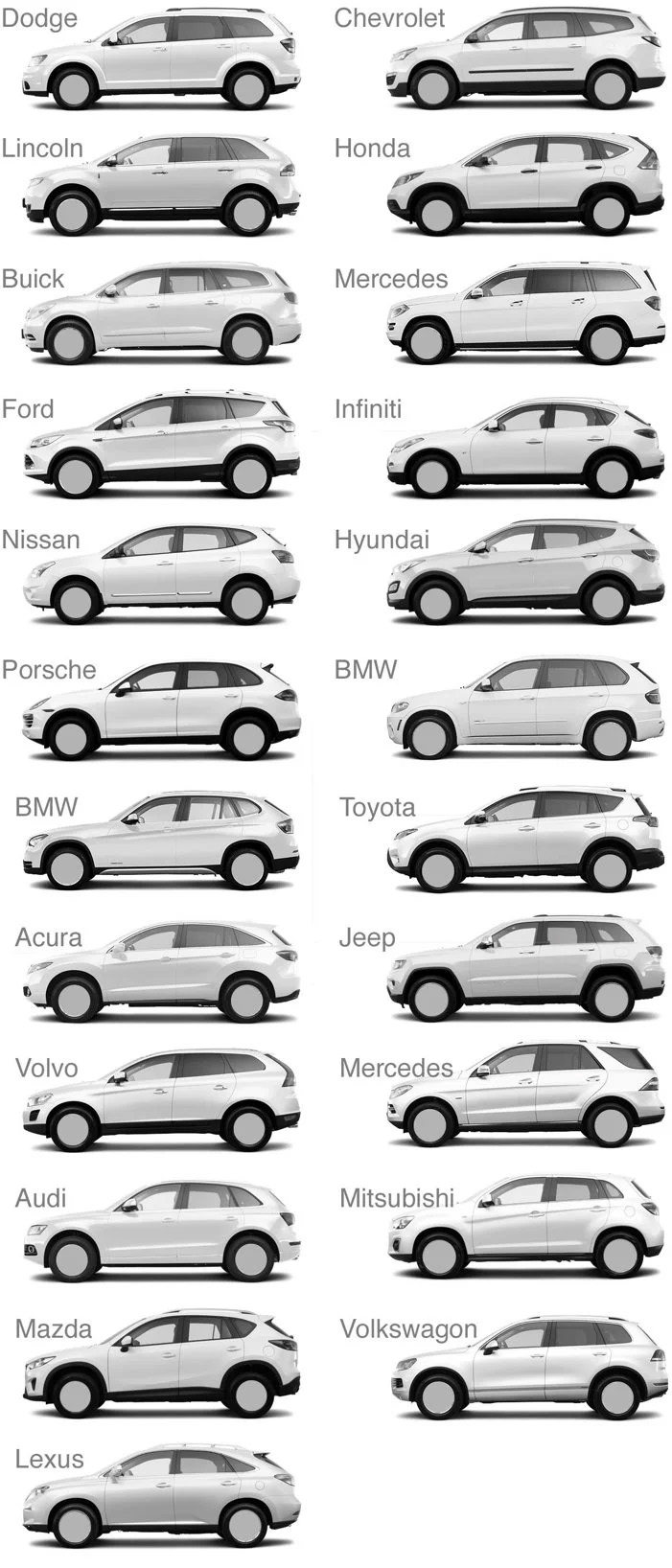
The “white suv meme” circulates on the internet and we laugh. But new leads to unexpected factory recalls, disappointed customers, and other monkey wrenches. New/Unproven is not what the customer wants, though it’s better on some dimension. That goes for cars as much as it goes for financial advice. Even if, a little game or a backwards approach might lead to some good ideas.
“I think it’s the worst Boston sports trade in my lifetime. What’s amazing is they psyched themselves out with the long term. They just got scared. They overthought it.
They looked at all this data of offensive players in their 30’s tailing off. Maybe their power peaked? Maybe injuries? There’re a lot of examples , and I agree with this logic.
Where they whiffed, where if you watched Mookie Betts play, week after week, this guy was one of the most extraordinary athletes in the history of Boston sports.”
Bill Simmons, August 2023
I don’t follow baseball. I follow Simmons, and assume he’s right about all these things. And this is what makes base rates difficult. If it were obvious and easy we wouldn’t note it. If it were logical, we’d just call it normal.
But it’s not. It’s difficult. It’s confusing. How does a team pick the “once in a generation” talent when that proclamation rises so often? What’s the cost to miss one?
“The day-trippers wear gangster suits and outlandish patterns and hats inappropriate to the latitude, temperature, or setting. It’s amateur hour. They hold liquor like ninth graders. The homogenization of America has left people wandering the land in search of a place to belong. We are a tribeless nation hungry for tribes. That longing and loneliness are especially on display in early May in Kentucky.”
One aspect is that precise but not accurate plans feel right. Running a Monte Carlo portfolio analysis on a low-beta trend-following model to prove the robustness feels “more right” than buying Vanguard Target Date Funds. We feel agency, authority, and accuracy through action (even though it may be more wrong).
A second aspect is framing the choices rather than making the choices. Choosing from good options, 30 or 15 Year Mortgages?, takes less time and works just as fine. A list of pros and cons doesn’t make a lick of difference when it’s just bad options.
I forgot these things.
Talking to a friend about how to estimate income from CDs vs. other instruments (when rates were 5%), he advised assuming a 50% tax rate.
What?!?! I thought. With an effective income rate of around twenty-five, some capital gains, some sales tax, and miscellaneous fees that sounded way too high. It certainly wasn’t the assumption in my spreadsheet. Plus the friend lives in a high cost-of-living area.
His number will be “more wrong” but in some ways, it was “more right”.
–
I’ve grown to see the world as less good and bad and more a series of tradeoffs. There are Good and Bad, but much is a bunch of tradeoffs. Myopia isn’t good or bad. It’s a tradeoff between now and later.
Behavioral psychology unearthed different biases, but how the field did that is a tradeoff too. Knowing about different biases is helpful (opportunity cost neglect, base rates, etc.), but just because one is “discovered” doesn’t make it a big deal. We can’t consider every other available option, something will be neglected.
Every choice is a tradeoff, like personal finance plans. My 25%+, like Price is Right, will be closer to the true amount without going over. But my friend’s 50% has a greater confidence interval. We know something is always happening and assuming you get half your money rather than 3/4ths means a lot less somethings can happen to you.
I like the books even though they may be completely wrong.
Author Gary Chapman proposes that each of us likes to be communicated to in some ways more than others. The love languages: acts of service, touch, quality time, gifts, and words of affirmation describe different ways our partners, teens, and children prefer communication.
Personal finance plans work the same way.
Some people prefer accurate plans while others prefer ones with a margin of safety. Some people can stomach volatility. Some people want to invest like their friends.
And, finally, in what was easily the most emotional aspect of the trans-formation, Rickover made it clear that most of the officers who had previously served in diesel submarines (the same officers who had just popularly “won the war in the Pacific” were not welcome in nuclear submarines.
Our this time is different series builds on the idea that system changes dictate when things are different.
Ask, Have the rules changed?
Nuclear submarines were different from their diesel counterparts, writes Oliver. In the Pacific theater, during WWII, the diesel submarines got “within rock throwing range”. That strategy and “the stress of war distinguished the ducks from the drakes in the submarine officer corps”.
Those captains were cowboys.
Which is what Hyman Rickover did not need.
Nuclear submarine captains needed to be smart and prudent. They had to be wise and calculating. They needed less gung-ho and more ho-hum.
This time was different because the system of war had changed.
Organizations must understand this because when market incumbents, (if this sounds related to disruption theory it’s because Bob was a colleague of Clayton Christensen), serve restockers they change nothing. If it’s not broke don’t fix it.
Whereas challengers need to break into the restocking mindset. They might articulate novel criteria: Our dips have no added sugar.
The incumbent’s dips may also be sugar-free, but the challenger creates the question and the incumbent responds.
Bob tells the story of shopping of needing a new shampoo and conditioner and making his choice because it was 2-in-1. It wasn’t the natural oils (or lack of). Nor was it how charitable the company was or the number of additives. It was convenience.
His original choice (the restocking) was unavailable and like the sugar-free hypothetical, Bob had to ask himself: What’s important?
Well, there’s this.
Take from July 2023, the shortage has proved to be a shopping “opportunity”.
We’ve settled on Tapatio (side-note: weird keychains, like this, are always a hit as gifts) and depending on how long the outages last, may switch from Tapatio shoppers to restockers
We think of the market mechanism as an information network: What information is considered important? In the world of business, profits are the important information and alpha erodes. To be successful then, your important information should be secret from someone else. This can be done by obscuring your information or by elevating something else for the competition. In Graham’s case the elevated information is “fashionable contemporary crap”.
GRAHAM: It sounds weird, but if you look at where the money’s spent at auction, it’s almost all fashionable contemporary crap because if you think about how prices in very high-end art are set, they’re auction prices. How many people does it take to generate an auction price? Two. Just two. So, you have boneheaded Russianswho want to have a Picasso on their wall so people will think they’re legit, or hedge fund managers’ wives who’ve been told to buy impressive art to hang in their loft so when people come over, they’ll say, “Oh, look, they’ve got a Damien Hirst.”
The way art prices at the very high end are set is almost entirely by deeply bogus people, [laughs] which is great, actually. When I was an artist, I used to be annoyed by this. Now that I buy a lot of art at auction, I’m delighted because it means there’s all this money. You see Andy Warhol’s screen prints selling for $90 million.
COWEN: Yes. Old masters can be, I wouldn’t say cheap, but I would say radically underpriced.
GRAHAM: A couple hundred thousand.
COWEN: Or even less for some good ones.
GRAHAM: Yes, I know because I buy them. [laughs] I used to be annoyed by this, and now I think it’s the most delightful thing in the world because there’s all this loose money sloshing around, and so-called contemporary art is like this sponge that just absorbs all of it. There’s none left. Some of the things I buy, I am the only bidder. I get it for the reserve price. No one else in the world wants it, or even knows that it’s being sold, so I am delighted about this.
The answer to your question, which artists are undervalued? Essentially, all good artists. The very, very, very famous artists, artists famous enough for Saudis to have heard of them — Leonardo, I would say, is probably not undervalued. But except for the artists who are household names — every elementary school student knows their names — they’re all undervalued.

 The Waiter's Pad