And, finally, in what was easily the most emotional aspect of the trans-formation, Rickover made it clear that most of the officers who had previously served in diesel submarines (the same officers who had just popularly “won the war in the Pacific” were not welcome in nuclear submarines.
Our this time is different series builds on the idea that system changes dictate when things are different.
Ask, Have the rules changed?
Nuclear submarines were different from their diesel counterparts, writes Oliver. In the Pacific theater, during WWII, the diesel submarines got “within rock throwing range”. That strategy and “the stress of war distinguished the ducks from the drakes in the submarine officer corps”.
Those captains were cowboys.
Which is what Hyman Rickover did not need.
Nuclear submarine captains needed to be smart and prudent. They had to be wise and calculating. They needed less gung-ho and more ho-hum.
This time was different because the system of war had changed.
The Psychology of Money by Morgan Housel is a book of twenty money lessons but really it’s about two things.
Thing 1: How the world works.
There is the world and there is how we think about the world. The more these ideas overlap the happier more calibrated the person. People follow stories (chapter 18), pessimisms sells (17), and tails drive everything (6) are all explanations about the world.
It’s through a combination of evolution, social pressure, and a history of this-worked-for-me that we drift. Sure, we think, Tom lost so money in crypto but he didn’t listen and get in when I told him the candlestick fed cycle jump was coming (luck, chapter 2). When something bad happens to us we’re unlucky. When something bad happens to them they’re idiots (1).
Things 2: How you work.
So it’s not just outside that we misunderstand. It’s inside too. We move the goalposts (3), confuse consumption (8), and aim for the rational rather than reasonable (11).
Asking what do I really want out of this big trip is not easy.
So we don’t.
Thankfully Housel is here to help. Think of time as freedom (7), just save (10), and don’t confuse consumption for wealth (9).
–
The Psychology of Money is a difficult book to review because it’s personal. It’s how you see the world and understand yourself. Oof.
While the chapters are short, don’t spend little time on them. Read them. Stop. Think. Reflect. Note. The book is a refreshing break from the digital cycle. You’ll read this and think: Oh yes, this is a breath of fresh air and one I needed.
“If you want to do better as an investor, the single most powerful thing you can do is increase your time horizon. Time is the most powerful force in investing. It makes little things grow big and big mistakes fade away.”
Start investing young was the advice I got. At 22 I opened a Roth IRA.
But there was a nuance I failed to note. It’s not just about time horizons but also how to get there.
Young Mike opened a Roth knowing it should compound for a long time. But he didn’t think about how that might happen.
Save 3-6 months of living expenses was another piece of advice. This is an average lie. It’s not enough or too much. We should call them “repair funds” because emergencies are not covered.
Emergencies need a year or more.
–
In Nomadland, Jessica Bruder writes about “house-less” Americans. With RVs and campers, these ‘nomads’ travel the country for work. Do you know how busy Amazon gets at the holidays? It’s these people working there. Seasonal National Parks? That’s them too.
Generally, four events precede someone becoming nomadic: health, house, job, spouse. Mary Smith or her significant other lost their _____ and now she’s nomadic. Three months of savings for that? Get out.
But that’s tough. So much time horizon is eaten up by savings accumulation – which an individual may never need! In hindsight I see all of Young Mike’s mistakes. But he didn’t think they were mistakes at the time.
This balance is what makes Morgan’s book so good. It’s not black and white numbers. It’s messy. It’s color. It’s holistic, it’s an ecosystem. You never do just one thing.
I didn’t read The Psychology of Money when it came out because I’ve read a lot of Morgan’s memos, followed him online, and written about personal finance. But the book is good. It’s not about money as much as it’s about morals.
Peter Attia’s Outlive starts with the medicine: biology, physiology, chemistry and so on. There’s an excellent explanation on arterial plaque. I did not know that cardiovascular diseases were caused by the body trying to heal itself from within, dealing with LDL cholesterol as best it can. There’s also good explanations about our synapses and cancers.
But what’s the point?
Information does not change action.
–
Attia’s book is about the four modern horsemen of human mortality: cancer, heart disease, type two diabetes, and neurodegenerative diseases.
Like other areas of discovery, medicine follows the pattern: identification, react, ‘proact’. The Ghost Map tells the story of choleras identification in 1854. Covid-19’s cadence meanwhile was within a year: sequence, treatment, and bundled with the flu shot.
According to Attia, there is a lot more room to proactively address the four horsemen.
Channeling Michael Pollan, switching from hundreds of pages to a few words that address the action, the advice might be:
Get stronger. Eat your best foods. Sleep well.
–
The book is thick. Parts are dense. Even now, days later, I can’t explain parts.
But that’s okay.
The main point of the book is to be intentional. Like the vegetarian experiment and as good bayesians we should tinker. Attia is rarely absolute: Do this but not that! Instead it’s about you getting to this point of heart rate or insulin sensitivity or sleep.
One takeaway from Covid-19 was our heterogeneity (see: The End of Average). Outlive fits in this line of thinking. It’s your healthspan, it’s your lifespan, it’s your choice.
So get stronger, eat your best foods, and sleep well.
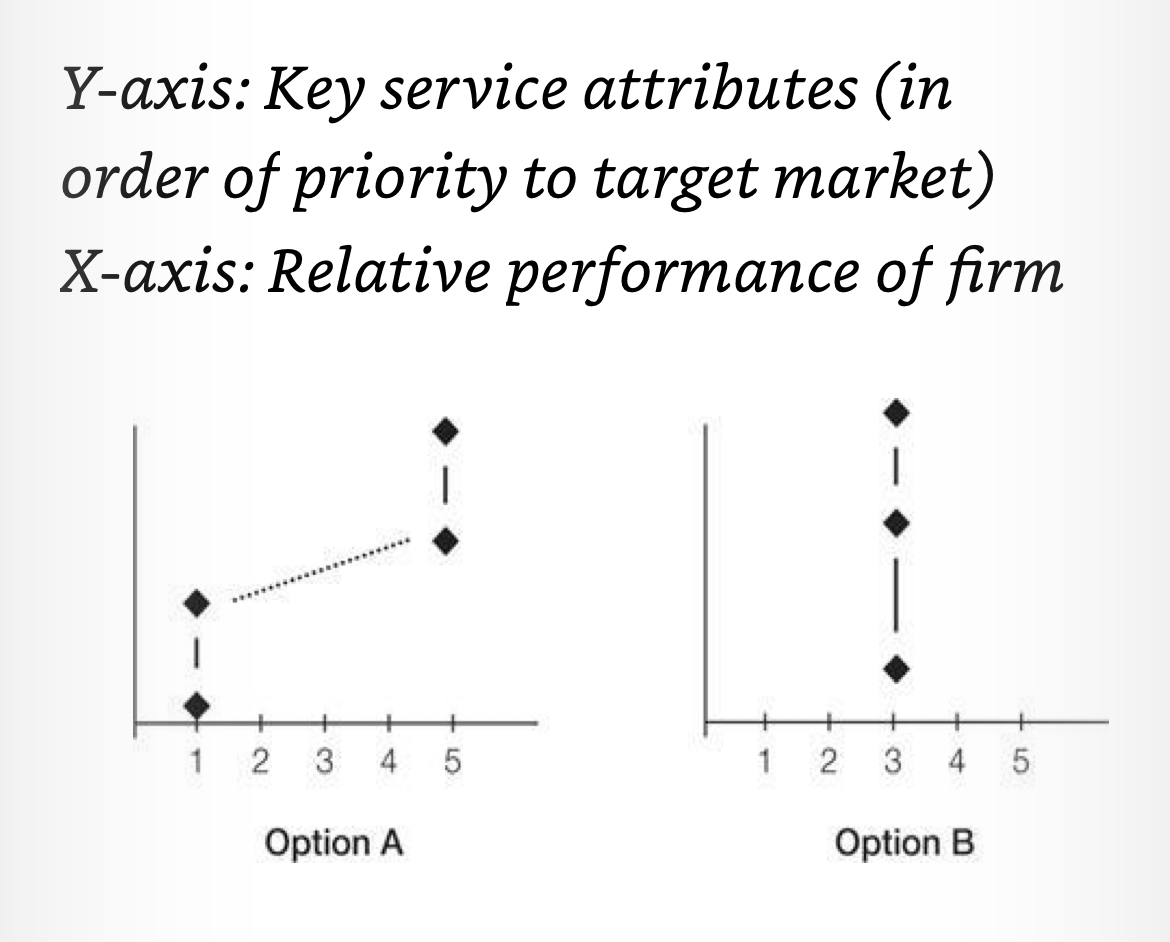
In Uncommon Service the authors note that customers want businesses to suck at something. It’s a Never Split the Different vibe. Or in terms of a karaoke bar: Play the hits!
A visualization from the book:
Restaurants have different attributes: food quality, pacing, pricing, ambiance, and so on. For a celebration, people are willing to trade price for service. This is the sort of “context” at the heart of JTBD.
“Our business,” listings read, “has 100 years of combined experience.” Well, that sounds like a lot. But is it two people with fifty years or ten people with ten? Then again, is fifty years of experience good? Do you want a doctor who went to medical school in the 70s?
How to Fly a Horse is one of the best books you haven’t read. It’s part inspirational (like Rosling) part instructional (like King) and part historical (like Dan Carlin).
Simply, we are capable but more importantly, we are responsible for the world we want. “Everything around you that you call life,” Steve Jobs said, “ was made up by people that were no smarter than you.”
But this ain’t influencer stuff.
Everyone has creative potential, Kevin Ashton writes, but it takes work. “Time is the raw material of creation.” As Steven Pressfield noted, put your ass where your heart wants to be.
That’s just Insta-advice.
The world does not want creation. The system is designed against it in two ways.
A me problem.
We block our creations. There’s the genius myth: Creation is for a select few. That’s just not right. The End of Average explains this nicely. ‘Genius’ (or ‘athletic’ or ‘industrious’ or ‘lazy’ and so on) are collections. There’s no genius metric because there’s nothing to have.
Ya got it or you don’t is not true.
But this isn’t enough. It takes work, work, work. For a species designed for ease, work is hard.
There’s a paradox too: The better we get at something the more efficient we get and the less likely we are to see novelty. Think of “expertise” Ashton writes, as “efficiency”. There is nothing more deceptive, wrote Arthur Conan Doyle, than an obvious fact. Tyler Cowen calls this “once and for all-ism.” Experts have been rewarded for seeing the world a certain way, why change?
The solution to the paradox is to bring experience but not beliefs. To have a light identity footprint. To see the unexpected, expect to see nothing.
A them problem.
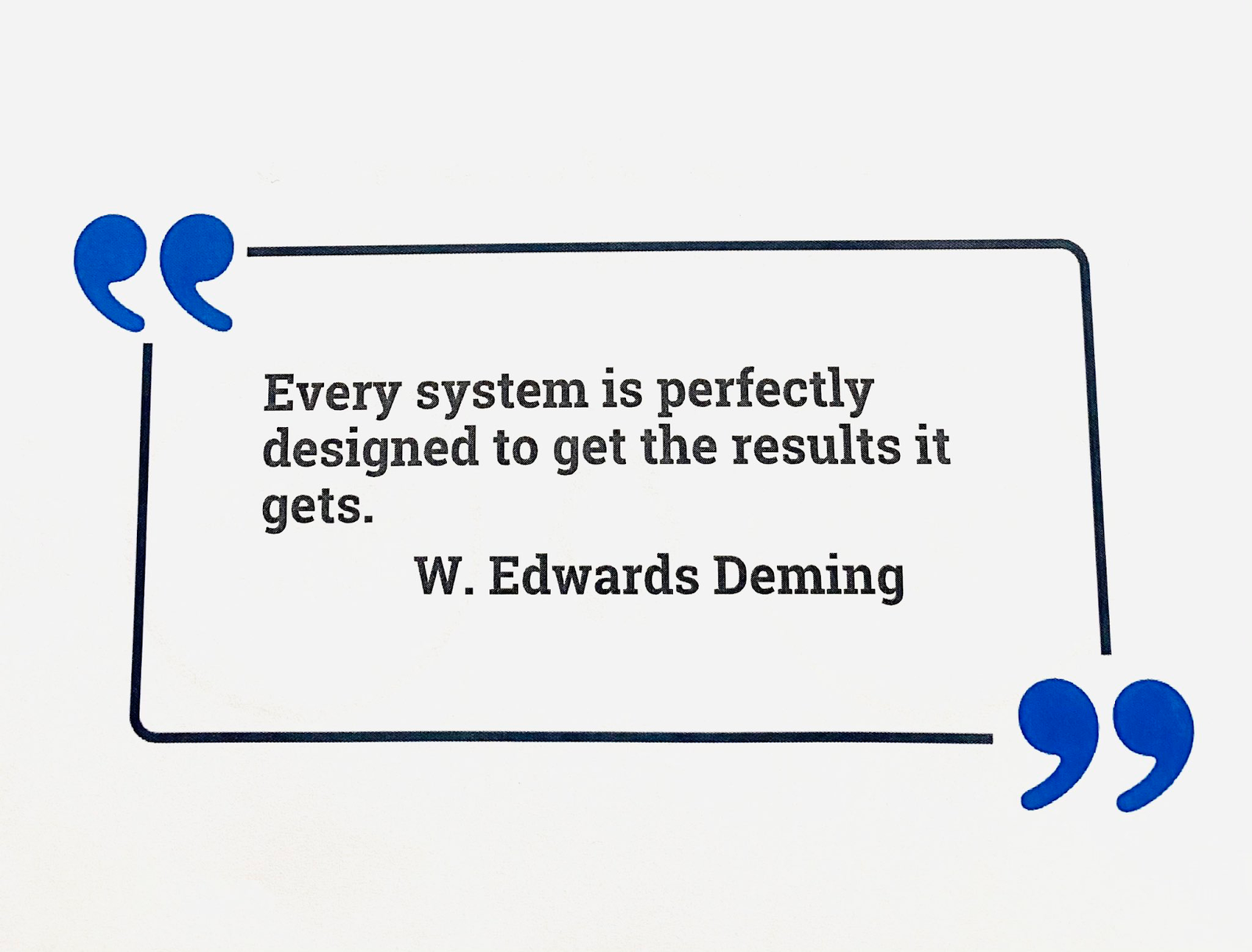
They, the others, those folks don’t want to see it. Or they can’t see it. It’s helpful to remember Demings, “Every system is perfectly designed to get the results it gets.” People don’t randomly red-pill, laissez le bon temps rouler!
The status quo is humanity’s default (this is an assumption of JTBD).
‘Different is bad’ is evolutionarily good. Our ancestors were the ones who didn’t try the new berries.
Rejection, hesitation, and reluctance are good things. First creators must expect it. Knowing first drafts suck, progress is slow, and TK takes the sting out. Second, creators must use this for guidance. Feedback presents the soil to sew, the path to plan for, the itinerary to travel. Ashton advocates for the creator to utilize not internalize rejections. Ask, okay, so how could this be better?
–
The book is full of pithy quotes. Let’s end with two:
“We sell our soul when we waste our time. We drive neither ourselves nor our world forward if we choose idling over inventing.”
“The math of time is simple: you have less than you think and need more than you know.”
Rather than a traditional review, think about Learning to Build in the context of jobs to be done.
We believe there’s no such thing as a bad book so much as bad timing. In some version of the multiverse, you need any given book right now!
Similarly, jobs theory is about finding the pushes and pulls, habits and anxieties, and contexts for when people act.
In that spirit, here are the Jobs books for this multiverse.
Learning to Build is an introduction to someone who wants to learn more about Bob Moesta’s work. It introduces the five skills: empathetic perspective, uncovering demand, causal structures, prototype to learn, and making tradeoffs.
Competing Against Luck is for someone with a strategic angle. It’s for someone asking: What should we do here? The Mom Test is a faster, less academic path with similar idea vistas. How to Fly a Horse is a bigger and wider picture, with more history.
Uncommon Service is a “what to do and how” kind of book. If Atomic Habits is a what/how book for the person then Uncommon Service is one for service businesses.
It’s organized into four parts:
One: The tradeoffs. To have uncommonly great service, a business must make tradeoffs. Importance requires attention – and there’s an opportunity cost to that attention. In Unreasonable Hospitality, Will Guidara writes about the front-of-house staff that aims to create “legendary” moments for the guests. They Google the guests. They run out at the last minute for just the right gift. They go above and beyond above and beyond.
But they don’t shine glasses, clean tables, or sweep the sidewalk. They don’t help with any of the hundreds of tasks that need doing every single night. That’s a tradeoff.
The LinkdInfluencer scoffs, be the best. But businesses that dig deeply into customers’ jobs find there are things the customers want more than others. Your customers want tradeoffs.
Two: Things cost money. Uncommon service isn’t free.
Customers could pay more and get more. Premium services like Disney’s Backstage Magic tour and The Four Seasons work this way but these opportunities are limited. Most businesses cannot simply charge more.
Instead, most businesses must find holistic solutions. Exceptional service leads to more word of mouth and less marketing spend. Specialized service leads to better processes and less loss or more gain. When Publix employees walk customers to requested items – rather than tell them the aisle – does that increase sales and decrease theft? Certainly.
Few businesses can claim it cost more and it’s worth it, but all businesses can think creatively about how to offer more and how to pay for it.
Three: A business’s team reflects a business’s tradeoffs.
Florida has a lot of mom-and-pop pool cleaning businesses. Our neighbor likes reports that detail the pH, chlorine, and salt levels. For him, the JTBD is visual and numerical.
But most cleaners want to show up, clean, and move on – while listening to whatever on Bluetooth headphones.
So the business owner makes it easy for their employees. Rather than have the cleaner communicate with the customer, they communicate with the office that prepares the report. Cleaners take a few photos, report some numbers, and move on. The office makes it look as nice and tidy as the pool.
(Alternatively, a business can try to hire people rather than design the system. We write a lot about that at Daily Entrepreneur.)
Four: Prepare the customer. The authors suggest service businesses imagine they are manufacturers. In ‘goods’ businesses customers don’t wander around the plant, inspecting machinery, and tinkering. No – and they shouldn’t do that in a service business.
But customers are part of the experience: they have varied expectations, arrive at different times, and spend different amounts. They are “locally logical”: what makes sense to one will not make sense to another.
Like employees, a business has two options. They can change the system for the people or change the people for the system.
We’ve written about financial stakeholders. An investor is only as good as their capital base. This is part of Warren Buffett’s persona: he draws people aligned with his approach. He picks the people for the system.
But not every business can filter their customers. In those cases, they must focus on the customer’s experience. How can a business operator systematize the times they bend over backward?
Historically Harvard Business books run dry with too much theory or too specialized examples. This book did not. It was uncommonly good, fast, and helpful.
Notes. Never Split the Difference addresses tradeoffs well. Both Never Split… and Uncommon Service are recommended by Bob Moesta.
“We’re more likely to pursue change on dates that feel like new beginnings because these moments help us overcome a common obstacle to goal initiation: the sense that we’ve failed before and will, thus, fail again.”
New year, new week, new me. It’s a birthday. It’s a new job. This time is different.
Reliance on fresh starts fails because only the narrative changes, not the structure.
Milkman writes about a study of college transfers. Some kids transferred from the local two-year school while others came in from out of town. The local kids made fewer changes – good and bad! Fresh starts with a different structure push the variance of the changes outward. Sometimes the changes are a desired direction and sometimes not.
“When we hope to change,” Milkman writes, “we have an opportunity to try reshaping our environment to help us disrupt old routines and ways of thinking.”
Successful resolutions are an issue of design, not mindset. Like the high jump, the physical surroundings matter!
How Will You Measure Your Life? is about what investors call “out-of-sample tests”. If an idea works in more than one area then it probably will work again.
Wisdom is an example. Proverbs 16:32, He who is slow to anger is better than the mighty, And he who rules his spirit, than he who captures a city becomes, it’s not if you win or lose but how you play the game.
Timeless.
Clayton’s choice combines business ideas with personal goals in two areas: career and relationships.
Measuring your career. There are legible aspects to a career: money, titles, promotions, and career paths.
Clayton cautions not to over-index on the legible. Careers, he writes, offer a mix of “hygiene” and “motivation” factors. Money, health insurance, and perks are hygiene factors. These factors have capped advantages and diminishing returns.
Non-legible, like motivation, interesting problems, and growth have an upside. This is the good stuff. Just because it’s hard to count doesn’t mean it’s not of value. In fact, it’s really valuable!
And because it’s hard to count and valuable means people underrate it.
But there are legible things to count. How do you spend your time? Your money? Do these reflect your priorities, hopes, and dreams?
Through legible and not, the aim is intentionality. Are you intentional about the important?
Who is this choice for?
“Parents have their own job to be done, and it can overshadow the desire to help their children develop processes. They have a job of wanting to feel like a good parent: see all the opportunities I’m providing for my child. Or parents, often with their heart in the right place, project their own hopes and dreams onto their children.”
We don’t have to teach our kids to tie their shoes. With technology, fashion, and other people it doesn’t have to happen. But it does.
Now apply that to everything.
Helicopter or consultant parent provides a good contrast. It feels good to be a helicopter parent. “See all the opportunies…”. But helicopter parents are selfish parents. Their choices are first for them, not their kids.
Instead, Christensen uses a short-term-pain long-term-gain model. Live verbs first. Experiences are expensive tuition but essential in the school of life. It’s the right choice for them.
…
How Will You Measure Your Life? is a difficult book to report because the lessons are personal. For every, I never thought about it that way situation, someone else would have solved it years ago.
I needed Christensen to write this book.
It’s written by a man of faith. A Harvard professor. He’s a best-selling author. He developed a famous business theory. Anyone that knew him brings up how much they miss him, years later.
I needed his permission.
Permission to think about life, not hacks or hustle. For the important things, not the urgent things. You read it as a reminder of why we live and an admission that we need help to live better.
It matters that it’s Clayton freakin’ Christensen. He lived well and we aim to.