The Secret Path to JTBD

One secret entrance to the job to be done is how people hack your product. There’s the way you built a thing – using supply-side innovation to scratch an itch or whatever. But then there is the demand-side innovation of what people really want. This manifests as hacks, like desire paths.

Peloton saw people hack their own social groups on Facebook and then built social tags within the app. 

Instagram saw people hack photos to show white backgrounds with text and build polls. 

Josh Wardle saw people share their Wordle scores and built the feature into the app.

🟩🟩🟩🟩🟩

There’s a cake icing tool called the “silicone icing spatula”. We bought this set, but any will do. Its “supply side innovation” is to ice baked goods. Its “demand side hack” is to scoop out jars. 

Neither sauce, mayonnaise, nor store-bought icing can resist the sliding edge of this device. Tall container? No problem. Do you buy the peanut butter that separates? The good stuff but hard stuff. It becomes easy with this spatula. 

🎁🎁🎁🎁🎁

Buy a set of these to give away for the holiday. Not only is it a thoughtful gift, but it’s also helpful and the colors stand out among the sea of black kitchen devices in the spatula drawer. 

The only way to get better at a thing is to do a thing. Practice active copywriting, think about business models, and notice the different aspects of jobs to be done in your life. Find ways people hack products. Notice unusual go-to-market strategies. Think about when the customer and consumer are different people. Consider how requests are different from actions. 
Collaboration on Optimal Designs

One important thing Rory Sutherland’s book Alchemy did was remind people about the importance of subjectivity. In her talk, Balancing Order and Chaos in UX, Katie Dill (Lyft, Airbnb) talks about how Virgin Atlantic made people feel different even though their seats are the same size and material.

Mohnish Pabrai said something similar about Southwest, “I go on a Southwest aircraft and I’m in coach and I usually find I’m happy. I’m in a happier state of mind in coach in Southwest versus business in American. Why is that? I don’t know.”

On the easy metrics, Pabrai is getting less value. But he’s happier. There’s hidden metrics at play.

Companies like Virgin and Southwest or Disney, Dill explains, have an advantage because they own the experience. For marketplaces, like Lyft and Airbnb, Dill has advice on what a business operator can do to create the same perceived value advantage as “full stack” companies.

  1. Zoom out, “have a perspective on what you are trying to deliver, it’s not just one moment.”
  2. Look out, “where can the shit hit the fan and where can we solve for it prior?”
  3. Set the stage, “use guardrails.”
  4. Don’t overstep and smother the user’s quirks.
  5. Open up, “the community is the key.”

Good design (and its rewards) aren’t about the finished style but the production style. Design is about collaboration. Dan Lockton said, “When people feel they are being influenced in a way that doesn’t match their understanding of the situation they will rebel.”

The best designs serve users. The best designs pave desire paths.

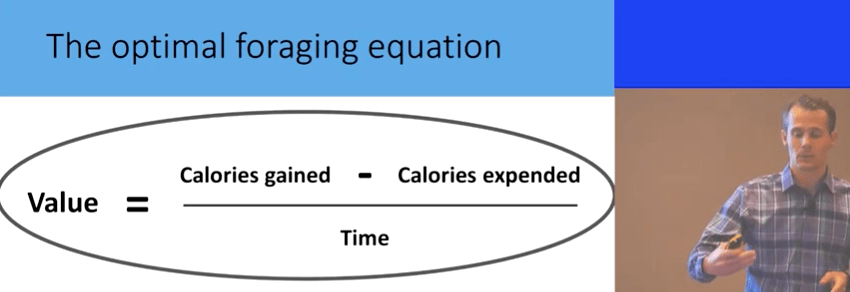
We focus on design because of the potential upside. In his talks on The Hungry Brain, Stephan J. Guyenet brings up the optimal foraging equation.

YouTube

That same approach works for design. The cost for a good design is relatively low and the gained value—especially because all value is perceived value—is relatively high.

Good design is why Pabrai likes Southwest, even though the seats are smaller. Good design is often hard to measure but the results show there’s something there.