Nearby Solutions

Solutions to your problems may not be under your nose but they’re probably not further than next door, next block tops. 

Creative ideas work for two reasons, neither of which is inherent creativeness.

  1. There’s an untapped JTBD. Consumers have a latent need. Current solutions are ‘fine’.
  2. There’s limited competition for a new product. But the market responds rapidly, and similar people in similar places at similar times make similar things.

One way to wrangle a creative idea is to find areas where something is already being done but not done in your particular industry. There’s only so many things consumers need; ease, trust, consistency, etc. It’s likely that a creative solution for you is old hat to someone else. 

Scott Alexander brought this up writing about the Amish health system. There are multiple reasons the Amish system is more cost effective than the English (non-Amish-but-American) system, but one is how they’ve dealt with the costs.

From Alexander:

“Much of the increase in health care costs is “administrative expenses”, and much of these administrative expenses is hiring an army of lawyers, clerks, and billing professionals to thwart insurance companies’ attempts to cheat their way out of paying. If you are an honorable Amish person and the hospital knows you will pay your bill on time with zero fuss, they can waive all this.”

And.

“Doctors around Amish country know this, and give them the medically indicated level of care instead of practicing “defensive medicine”. If Amish people ask their doctors to be financially considerate – for example, let them leave the hospital a little early – their doctors will usually say yes, whereas your doctor would say no because you could sue them if anything went wrong.” 

Amish medicine costs less because it’s less costly to provide.

Duh.

But this obviousness was SoFi’s insight.

When SoFi started, the company looked at the loan default rates across a variety of metrics. Where did someone go to college? How much money do they earn? What degree does this person have? Which default more, art or vocational degrees? (Art). SoFi realized that some people defaulted less and paid promptly more. With lower costs for collections, SoFi could offer these customers a better rate. 


 Waitress At A Lunch Counter To Customer. 
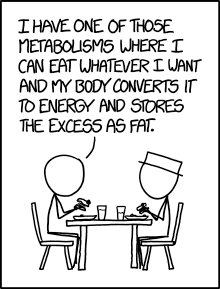
Food Wood Print featuring the drawing We Use The Cheapest Ingredients And Pass by Robert Weber

This can be any insurance that’s sliced and diced. And it’s been happening all along.

What’s common between the Amish, the SoFi Henrys, and homes in floodplains since 1968? Legibility. 

We don’t know a solution exists until we see it.

Tony Hsieh succeeded enormously in the early days of the internet. Before joining Zappos, Hsieh sold an advertising network to Microsoft for hundreds of millions. Like anyone else who’s young, wealthy, and (maybe) smart, Hsieh started angel investing. Which is where he met Nick Swinmurn. 

It’s 1999. Everything internet was hot. It’s the year Webvan started taking orders for groceries in San Francisco. We can imagine Swinmurn meeting Hsieh.

‘Footwear is a forty-billion-dollar a year market and there’s no good way to buy shoes online.’ 

‘Of course, why would someone buy shoes online?’

‘Because of the selection!’

‘I just don’t see it.’

‘It’s already happening!’

‘People are buying shoes without trying them on first?’

‘Yes.’

‘Prove it.’

‘Have you ever opened a catalog?’

‘Sure.’

‘Weren’t shoes in there?’

‘Sure.’

‘There you go.’

‘Sure, but how many?’

‘Right now, five percent.’

Hsieh’s problem had already been solved. Now he just had to solve it better—and he did, selling Zappos to Amazon a decade later. 

During the coronavirus quarantine (or whatever we’re calling this) there’s been a lot of trouble with the data. Part of the problem is a collection issue. But part of the problem is a heterogeneity issue. The data is fine it’s just that the conditions are different. There’s culture, ethnicity, practice, government and so on. It’s hard to compare one place to another. 

But what makes the pandemic devilishly confusing makes business slightly easier. Your answers are out there. 

Note, in a related post we addressed this idea through sports. Our Jenn Hyman post addressed this too. Thank you for reading.

Button Skills

IMG_5495.jpeg

My daughter made this.

The button popped off my pants. Not due to quarantine snacking so much as use. These shorts are so old that the faded parts are a different hue from the non-faded portions.

I found the button separated from the shorts in the bottom of our washing machine. I put both aside for a day and when I came back with needle and thread the button was gone. Now the button lives on as art.

We have a button jar and I found a grey one, instead of blue, and sewed it on the shorts. I’m not great at sewing, and my stitching is uneven, but it’s functional. Attaching the button took the shorts from waste to my waist. The small act of attaching the button made them useful.

A lot of life is probably like this.

There is some range of easy-to-acquire skills that are like sewing a button. Being able to save the function, if not the form, is helpful.

No code. Being able to build small recipes for scripts using a service like IFTTT.

Productivity. Setting up folders, filters, and canned responses in emails.

Cooking. Knowing how to make a few healthy, inexpensive, sustainable meals.

Home repair. Access to a basic set of tools and the understanding of how to use them

Personal health. Maintaining a body type that matches a lifestyle.

Personal wealth. Spending, saving, investing.

Interviewing. Listen to people and hear what they say.

When my daughters were little kids, the most common advice was to read to them. This was binary advice. Or, Just Do It. We did a lot of that. Just reading is probably a button skill too.

Though I learned to sew face masks, I can’t imagine learning to sew clothes. But knowing a little bit can certainly go a long way.

Thanks for reading, and don’t tell my wife these shorts were saved—again.

The POV40IQ email list has been restarted. If you’d like a short email each weekday you can sign up and read them. The idea is that a change in point-of-view is worth more than forty-IQ when solving a problem.

A Need to Know Basis

I was reading a journal article. Well, actually I was skimming it. I now skim articles because there is a lot I don’t need to know. I only know this because Tyler Cowen told me so.

When Cowen was asked how he can read so much he said something like, read for forty years. The gist is that if you’ve read a lot about one subject area you get it. For example, research on personal finance often addresses the three big questions.

In addition to the literature review is the math. Often it’s the sigma of some Greek letters which I’ve long forgotten. It’s the chef sharing her recipe for the other chefs. I’m a diner and so I skip it.

What does someone need to know, has been top-of-mind as we continue our quarantine education. Or, how fast can someone learn to fly a helicopter?

A friend is moving to South Korea and she’s been learning the language. It’s difficult but she’s persistent. However, it’s not necessary. Augmented reality, the universality of English, and western culture mean that navigating a foreign country is easier. Speaking Korean has moved from the need/don’t-know box to the don’t-need/don’t-know box.

Another way to frame the question is to ask, what is just-in-time knowledge and what is warehouse knowledge?

IMG_0715.png

The internet allows an infinite JIT system to be a few keystrokes away. Repetition moves tasks from left to right, neglect moves tasks from right to left.

I asked my twelve-year-old daughter what she thought sixth grade should teach: “How to read, not world history, and whatever your job requires.” My own world history is JIT knowledge.

Want the best paying jobs? Warehouse your science knowledge.

James Holzhauer said he read children’s books to compete on Jeopardy. If knowledge is Pareto, does that mean we can follow his lead?

We’ve settled on the mantra to learn facts, make things.

Hand Washing Update

bathroom bottle clean container
Photo by Pixabay on Pexels.com

We looked at hand washing design research because conditions matter. People are influenced by their environment, often more than they realize. In that first post we highlighted to:

  • Turn off the water, to feel less rushed.
  • Make bosses (attending physicians) clean their hands.
  • Use incentives to reward (or penalize).
  • Put the hand-cleaning area adjacent to the need-hands-clean area.
  • Create a social expectation.

That research maps well to the EAST framework. To change behavior make things Easy, Attractive, Social, and Timely.

There are two updates since then.

First, The Behavioral Insights team researched which infographics communicated the best. Comparing seven ‘how to’ posters from around the world on 2,500 UK adults they found that “bright infographics with the step-by-step procedure prominently displayed without too much accompanying text” worked best to communicate good hand washing steps.

However, this was a ‘what I say’ question on a ‘what I do topic.’ Instead of hand washing it could have been a personal savings infographic about spending too much on a car. Sure, people will confirm they know the information but what would they do? It’s an encouraging start but more needs done.

Second, Google Search Trends for ‘hand wash’ negatively correlates with coronavirus cases. A few years ago, Google Trends predicted the flu rates ahead of the CDC but in following years erred enormously. Researchers suggested it was because people aren’t great at diagnosing the flu. How many times have you gone to WebMD AND had the thing. This bodes well for  the hand washing research, which stepped over that obstacle of unfamiliarity.

This focus on hand washing is timely but it’s also generalizable. It’s any verb. Investing. Driving. Loving. Parenting. All of these things are affected by the conditions they exist in.

Thank you for reading and supporting.

What is an accident?

The way we frame things matters. People are relative thinkers: more, a lot, and sorta—only matter when we ask, compared to what?

One framing is words. Vegetables, innovations, saving and investing, solitary confinement, and designated driver all affect our actions. This idea was brought up in a NYT piece on Avalanche School:

“As we packed up our notebooks and travel mugs, however, I wondered why these case studies were called accidents. To call these deaths and burials accidents implicitly perpetuated the idea that the randomness of nature was the killer, not the shortsightedness, cowardice or hubris of people.”

Heidi Julavits

This approach to auto ‘accidents’ comes up in Tom Vanderbilt’s Traffic too. Names matter.

Jocko Willink developed “extreme ownership” as an accident antidote. With avalanche accidents and auto-accidents we externalize the blame. It wasn’t my fault. But Willink’s idea enters and synchs our history to our actions. Sometimes it’s a weak coupling, but it’s never an absent one. We hurried, and we got sloppy, and the odds tipped against us.

If we were to extend the idea names matter and affect how we understand the world we’d get something like the movie Arrival.

We believe in design and words are one tool in that collection.


Does Netflix compete with sleep?

Does Netflix Compete with Sleep?

Netflix added fifteen-million subscribers in March, double their expectations. This makes sense. Most people watch Netflix on a television. Most people search for Netflix around November and December of each year.

December search spikes as well as the March 2020 one.

In 2018, the Netflix annual report noted, “We compete with (and lose to) Fortnite more than HBO.” Director of content, Ted Sarandos told Variety their biggest competitor was sleep.

Does Netflix really compete with Fortnite and sleep?

No.

Well, kinda, but probably not as much as we think. There’s a human tendency psychologists call opportunity cost neglect. It’s our inability to compare across categories. For example, when researchers went to a Toyota dealership and asked the ‘just looking’ customers what they might buy if they didn’t buy a new car, almost everyone said they might buy a Honda.

Sure.

But they also might buy a vacation, a remodeled kitchen, or two-semesters of college for their oldest daughter. A dollar is a dollar but that’s not how people think.

In another study, researchers asked people if they would buy an iPod with 40gb for $399 or an iPod with 20gb for $299. Most college students chose the larger size for more money.

However, when researchers added ‘and with your $100 in savings you can buy better headphones or download more music’ the students flipped their answer. Now it made sense to buy the smaller and cheaper option but have money for music.

Ok.

Asking people, If you don’t watch Netflix, what might you do? is a murky question. If people don’t compare across categories, then they’ll probably bring up what comes to mind: Amazon, Hulu, HBO, or play Fortnite.

To untangle this web of apps and find which activities compete with Netflix we need to ask what job do people hire Netflix to do?

Bob Moesta has pioneered the JTBD research (I’ve added my own thoughts) and he says that company growth will come from “horizontal integration, not vertical integration.”

This observation came after an interviewee told Moesta what she did after work. Some nights she ran, some nights she ate ice-cream, some nights she played video games. Superficially we don’t think that Nike, Ben and Jerry’s, and Microsoft’s Xbox compete. But for this woman, they do. For this woman the JTBD is ‘unwind after work’.

If that’s true does Netflix compete with Nike, Ben and Jerry’s, and Microsoft’s Xbox too? Let’s take some guesses.

Netflix competes with babysitters. Parents use Netflix to keep their kids out of the way. During the quarantine of 2020, it’s very likely that many WFH parents use the service for spot supervision. When my daughters were younger, my wife and I certainly did.

Netflix competes with comedy clubs. Yes, going-out and staying-in are two very different jobs. The former is a date single people have, the latter is a date married people have. But for a good laugh, Netflix stand-up specials are tops.

Netflix competes with serialized television. Many of the top shows on Netflix are the same characters is the same situations with the same friends. Customers who watch these shows hire Netflix for the familiar.

Netflix competes to be in the Zeitgeist. I tried to watch Tiger King. I wanted to join the conversation, to mosey over to the digital water cooler. I couldn’t. Every Fantasy Football League has someone who did not want to play but they did not want to be left out more.

Netflix competes with boredom/family time. Why do Netflix searches peak around Thanksgiving and Christmas? Is it a coincidence that these are the two times of the year many are too lonely or too together?

Netflix doesn’t compete with Fortnite. Netflix is lean-back, Fortnite is lean-in. Netflix is consume, then converse. Fortnite is consume and converse. Netflix is same-level. Fortnite is level-up. Though both digital apps with millions of users, the Netflix and Fornite overlap is small. We think these two companies compete because they are easy to compare.

Netflix doesn’t compete with sleep. Are there any shared benefits between sleep and Netflix?

The JTBD research is a very helpful tool figuring out what people want, not what they say they want. Moesta has written a few books but he’s a great speaker so start your intro to JTBD on YouTube.

Thanks for reading and supporting

Marketing Mistakes: Selling Photos

Screen Shot 2020-05-04 at 9.50.18 AM
This came in an email. Below it were pictures of staff members and their reviews.

The Void virtual reality experiences are one of the most unique things I’ve ever done. The fifteen-or-so-minutes of virtual reality complete with sensations of heat, vibration, and smell are well worth the price.

Orlando has a location at Disney Springs and my oldest daughter and I have done the Star Wars experience (twice) as well as the Wreck it Ralph tour. Both are great. Both are highly recommended.

As the staff assists in removing the Oculus kit (it’s heavier than expected) they take your photo. Returning to the counter, guests can buy a print. From a numerical perspective, this is a great idea. Cameras are one-time costs and the additional time training staff and having them offer the service is zilch. This part of the business has great margins.

But it’s a mistake.

In college, I was a member of the ultimate frisbee club. It was tons of fun with great people but it was more fun to play than organize. One year I was goaded into being ‘club president’ which consisted of recruiting new players, requesting space from the university, and emailing other colleges to coordinate tournaments.

The recruiting part normally consisted of papering campus with fliers and table tents. But with limited funds and less interest, we passed on the paper and bought t-shirts instead. We created walking advertisements.

With limited funds, we focused on money’s fungibility.

That’s missing at The Void. Those photos should be free. The photos should be better. The photos should be the marketing. People can write about the experience and share word-of-mouth reviews but mediums matter.

Virtual reality could become the bowling alley of the next generation, a place to socialize, converse, and play. But places like The Void need to think long-term about marketing this, rather than think short-term about profiting.

Note: I don’t know what the rent costs, but it’s probably high given the locations. This, is something we addressed about restaurants

The Art of Decentralized Command

“Our whole business is based on giving our artists and designers complete freedom to invent without limits.” Bernard Arnault (HBR)

For a long time, we advocated for a decentralized command. It just made sense that as Ray Kroc wrote, the person closest to the problem should solve the problem. But reading Good Strategy, Bad Strategy reveals a wrinkle in this advice.

Richard Rumelt opens the books with an example from his classes. Rumelt asks his MBA students why Walmart went on to succeed where Kmart did not. The shiny pre-MBAs “are willing to throw anything into the bin, and I don’t stop them,” he writes. There will be boxes and lines and obvious answers, but where was the competition? Why wasn’t this obvious to everyone? 

And early on we get a central idea to Rumelt’s work:

“Whenever an organization succeeds greatly, there is also, at the same time, either blocked or failed competition.” 

Rumelt sees a synthesis between Walmart’s command and logistics. They weren’t just better, they were the only one doing it. It was Zero to One. With large stores connected to integrated supply lines and digital record management, Walmart was the largest buyers (at the lowest prices) and most efficient distributor. 

One part of their strategy fed another which fed the original.

Had Sam Walton let his store managers dictate purchases, those supply and price advantages would have evaporated. However, store managers orchestrated local marketing. Walton encouraged just about anything to bring people to the stores, often a popcorn or ice cream cart was involved. It was okay that individual stores varied in applications that weren’t central to the synergy.

Part of the reason this blog has focused so much on DC is that we write about business in the earlier and smaller stage. For nascent businesses action trumps coordination.

The existing businesses which maintain a more bottom-up structure have a more ‘collection of parts’ vibe. Ted Sarandos said about Netflix’s non-notes: “We’re way better off taking someone’s creative vision and putting it through the service than us trying to go in and retool it. At the end of the day if the creator says, ‘That’s my show.’ we put it up.” 

It doesn’t matter to Netflix that documentaries are shot a certain way or that some subjects are covered while others are not. What data could have, would have, suggested Tiger King? 

When John Galliano created dresses from newspaper, Arnault wasn’t worried. 

“I don’t have alarm bells when it comes to creativity. If you think and act like a typical manager around creative people—with rules, policies, data on customer preferences, and so forth—you will quickly kill their talent. Our whole business is based on giving our artists and designers complete freedom to invent without limits.”

Why didn’t it bother Arnault?  What-if all of LVMH’s 75 brands did this? The don’t. Each of the ‘newspaper dresses’ is an experiment, it’s outcomes are (expensive) limited runs, and the mass-market has some of its DNA. 

Finally we have the (maybe old) difference between Toyota and GM. Known as Andon manufacturing, the Toyota assembly system included a chord anyone could pull when they saw something wrong. GM, did not

There are lots of ways to run a business. Arnault says just this. However for most business, some ways are better than others. Netflix’s hands-off-ness helps creators make great work and share the word about Netflix being hands off, which leads to better creators working with Netflix. This is what Rumelt teaches. That’s the art to it.


Book Review: The Naked Jape

When Rory Sutherland recommends a book I do my best to find it. Even if it’s from 2006 and uses British English. Henceforth, I’ll be interchanging behavior and behaviour.

The Naked Jape was good for exactly the reason Sutherland said it would be: comedy reframes things.

Alchemy recasts one thing as another. Diets, wrote Penn Jillette are hard, but challenges are exciting. When he reframed his diet as something difficult but not-fun as something difficult and challenging it changed his attitude. Jillette had already learned challenging things – like juggling – so this was just another one of those.

Comedians are great at this.

“My father hugged me only once, on my twenty-first birthday. It was very awkward. I know now what it was that made me feel so uncomfortable: the nudity.”

That joke works well in a comedy set, less-well on a first-date, and terribly while talking to a psychiatrist. Change the context, change the meaning. Or, change the words and you change the meaning in the context.

Carr’s book offers lots of little jokes that prove this point. The ideas, these jokes are “anarchic, a little scrap of chaos from beyond the boundaries of the rational, a toe dipped in the shallow end of anti-social behaviour.”

Take the idea of jokes along with the JTBD theory and we get the start of the solution to a puzzle.

When Instagram was building out features an engineer told co-founder Kevin Systrom that he was building a polling tool. ‘That doesn’t sound like something I would use’ Systrom recalled. ‘Oh no, it’s going to be great,’ the engineer explained, ‘teens will love this!’

They did.

What was happening at the time was that teens were uploading solid-color backgrounds with a prompt on it. Their followers voted as comments. The users created a work-around, customizing the platform for their needs. Workarounds are also common in comedy. I saw a sign at an audiologist’s office that (loosely) demonstrates both JTBD and jokes; We don’t sell hearing aids, we fix hearing.

In the JTBD work, Bob Moesta changes his perspective. He enters customer interviews as an empty vesicle and lets them tell him about the product. He avoids jargon. He doesn’t lead them. Moesta is similar to Jerry Seinfeld who described comedians as people with a third eye. Here’s Seinfeld with the check after the meal.

“Went out to dinner the other night. Check came at the end of the meal, as it always does. Never liked the check at the end of the meal system, because money’s a very different thing before and after you eat. Before you eat money has no value. And you don’t care about money when you’re hungry, you sit down at a restaurant. You’re like the ruler of an empire. “More drinks, appetizers, quickly, quickly! It will be the greatest meal of our lives.” Then after the meal, you know, you’ve got the pants open, you’ve got the napkins destroyed, cigarette butt in the mashed potatoes – then the check comes at that moment. People are always upset, you know. They’re mystified by the check. “What is this? How could this be?” They start passing it around the table, “Does this look right to you? We’re not hungry now. Why are we buying all this food?!””

Let’s try this comedy idea with this reframing.

Instead of paying last, people pay first. A restaurant places a $50/100/200 charge just for stepping in. Customers get a menu without prices and order without influence. At the end of the meal, a waiter brings back their balance, if there is any.

There’s all kinds of consumer psychology at play here from menu design to mental accounting to the idea Seinfeld jokes about it. This may not even be a good idea but it’s a new idea and that’s what matters.

If something could be the premise to a joke, it’s on the right path.

Another Rory’s read is Schtick to Business by Peter McGraw. If you like this blog’s stories, you’ll probably like that book (a few overlap). McGraw’s big idea is that business people should think more like comedians and find the interesting weirdness around life. There’s areas where we’ve always done it this way has wallpapered over interestingness.

Thanks for reading.

Rory Sutherland (@rorysutherland) Tweeted:

Highly recommend. https://t.co/A4Wi0WmJIQ

Unintended Consequences: bag bans

Potential bias: if bring-your-bag was equivalent to free-throw rate I’d be an all star.

Update: since drafting this post there was a related interview on Data Skeptic with Becca Taylor about this. It was good

Our evolutionary advantage was to see cause and effect. This If this then that approach to life kept us alive. It was a simple rule that worked great in a simple system. Modern life is not so simple, but that doesn’t mean we need complicated rules (see Gall’s Systems Bible).

A modern simple rule with great effect is to ask and then what when faced with an intervention. There’s always cascading effects and asking and then what is a way to look for the larger effects.

Chicago, 2016-2017, offered a chance to see this question in terms of plastic bags at the grocery store. In sequential months, there was a ban on thin plastic bags, no ban or tax, and then a tax on disposable bags.

This legislative two-step occurred because the first bag ban was a debacle. Lawmakers gave the wrong answer to the and then what question. Instead of ‘people will use reusable bags’, it was ‘stores will get around this by using a slightly different bag.’ 

Asking and then what helps us find that when schools ban soda sales households buy more, when communities ban payday lenders pawn shop foot traffic booms, when governments limit cars one day a week the total number of cars rise. 

From, Skipping the Bag: The Intended and Unintended Consequences of Disposable Bag Regulations:

We 􏰂find that plastic bag bans lead retailers to circumvent the regulation by providing free thicker plastic bags which are not covered by the ban. A regulation change that replaced the ban with a tax on all disposable bags generated large decreases in disposable bag use. Our results suggest that plastic bag bans—stricter, but more narrowly defi􏰂ned regulations—􏰁are less effective than market-based incentives on a more comprehensive set of products

There are a cornucopia of incentives to use to change behavior. Sometimes money works well (bag tax). Sometimes social norms work (the authors note that this may be present in their study). The best thing to try might be small bets