Paul Wilmott

Supported by Greenhaven Road Capital, finding value off the beaten path.

Paul Wilmott joined Barry Ritholtz on Masters in Business.

Models. All models are wrong but some are useful is the expression but Wilmott adds a twist. “Are they useful in how they control risk? Are they useful in helping you do more business? They may conflict with what the man on the street might want.”

Complexity can be marketing, as Geoffrey Miller writes about inSpent. Complexity can also be wrong. There are limits to our models and maps. The perfect map is the 1:1 map. The map as large as the world. While accurate it’s unwieldy. Map/model makers need to embrace the tradeoff from useful to descriptive.

Maybe we’re also looking at the wrong models, to begin with. “You really have to understand human nature,” said Wilmott, “before you start doing the mathematics.”

Rory Sutherland said that human psychology is the original code. Rather than design a product to be bigger, faster, larger, longer, shorter, lighter, etc – Sutherland wants people to ask, how is this perceived.

A transportation model is ‘shorter = better’. With this guidance, engineers will aim to make trips as short as possible. However, Sutherland points out, we run up against the Right Wall of physics and earn diminishing returns. What if he asks, we switch models? Rather than faster being better let’s use the model of enjoyable being better. This is harder to measure but may be more effective and efficient.

The Wilmott Business Model.  “My business model has always been, do something which is fun and then accidentally turn things into businesses. It’s not a greed thing, it’s an enthusiasm thing.”

Scott Galloway gave great advice on how to do it.

“The secret is to find something you’re good at, as the rewards and recognition that stem from being great at something will make you passionate about whatever “it” is.”

Charlie Munger too.

“One trick related to passion is that you are not likely to be passionate about something you do not understand.”

“The more you know about some topic, the more passionate you will get.”

Enjoyment follows skill which feels back into enjoyment.

PassionSkill (1)

Small, interesting, bets.  “Going back to the late eighties, I was doing some research with colleagues at the university and we thought, why don’t we give some courses and teach people in the city? They were phenomenally successful so we set up a business. We turned that into a book, and self-published it.”

Life advances incrementally. The direction may be clear but the path is not. Strike off and see where it leads. It could, like Wilmott, go somewhere great.

Dan Egan said, “Everyone hates draw downs except perma-bears and behavioral scientists because this is the point where I finally get to test whether stuff works.”

Judd Apatow told Joe Rogan, “With any scene, I’m always like ‘well that’s where the joke’s supposed to be, here’s my favorite, let’s get eight more and we’ll move on.”

How to read books.  “I’m now very impatient with books. Up until the age of thirty if I started a book I had to finish it. This was the greatest thing to happen to me – other than the birth of my children- to realize that I could just stop reading a book.”

Bill Gates said he’s choosy about starting because he’ll want to read the whole thing if he starts. I’ve given reading advice in three times; one, two, three.

Thanks for reading.

Dan Egan

Supported by Greenhaven Road Capital, finding value off the beaten path.

Dan Egan spoke with Ted Seides on Capital Allocators. I can’t get enough of these behavioral economics folks. From Richard Thaler to Rory Sutherland – if you have some favorites let me know.

There are lots red flags when evaluating people or businesses but one green flag is the humility to acknowledge the role of luck. Egan has that.

“I think I was incredibly lucky. Like surfing, I just happened to be at the right place at the right time and be lucky. Of course, you also have to do the swimming out bit.”

David Heinemeier Hansson had a good line about it:

“I retain the humility of knowing that just because I have hit a homer with Basecamp does not mean that I have some magic voodoo touch that’s going to turn everything else into gold.”

In school, Egan enjoyed economics or psychology – though he knew economics paid better.

“That inability to decide (on psychology or economics) about which one of those things I really wanted to focus on led me to being acceptably good at both of them.”

This is advice Leigh Drogen is giving to people who ask him: “I’m telling my interns from Wharton to go study quantitative and interpersonal skills, go study both and become the center of that.”

Scott Adams wrote a book largely about the idea of Venn diagram type skills.

Knowing doesn’t stop doing – but design might.

“At some level, you start to say,  how can I build systems, habits, or patterns around myself so I minimize the harmful biases?”

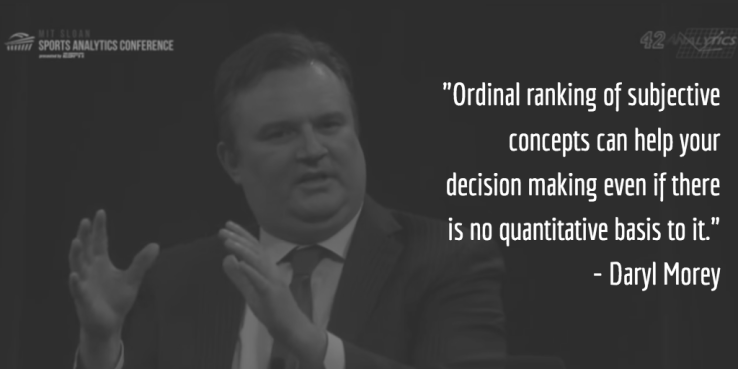
Daryl Morey noticed this. Coaches, scouts, and executives tended to compare one player to another player of the same race. Morey built a system where comps had to be cross-race to circumvent this tendency.

Rory Sutherland says that the sequence we make decisions in matters quite a bit. Often it’s not what you want to eat, he says, but how you want to eat. How often do we choose quality over convenience? That’s our internal choice sequence.

Egan also likes to experiment. In one experiment, Egan showed users the tax consequences if they confirmed a buy/sell order. For four weeks one group saw the message and a control group did not. He tallied the results and found that 70% of people changed their behavior after seeing the message.

In another experiment, they tested email and push notifications. “Everyone hates draw downs except perma-bears and behavioral scientists because this is the point where I finally get to test whether stuff works.”

During the Greek crisis, they showed customers prepared warnings.  It was a dud. “We learned that most people aren’t worried about the market.” Instead, people are thinking about meetings at work and grades at school.

Egan and his team made tweaks. During the next crisis, they alerted only people who logged in. “That pop-up notification reduced the bad behaviors by about fifteen percent and increased deposits by about ten percent. It didn’t solve the problem but it’s very easy to do and does have enough effect you can hang your hat on it.”

One small change for a medium-sized effect. That should be the gold standard. Silver bullets are for the movies. Small changes work, it’s “Poor Economics.”

This kind of stuff is “…hard to do, but it’s worth exploring,” says Egan.

Egan knows that it’s hard to divert people from performance chasing. Instead, they tried to direct investor’s attention elsewhere. “Taxes, costs, and investor behavior is what we tend to focus on rather than the investments themselves.” Switching attention can switch conclusions. This was something Sutherland marveled at to Shane Parrish:

“The pilot says something I’ve never heard before. Instead of saying, “I’m terribly sorry, we haven’t been able to get an air bridge, so you’ll be bused to the terminal. If you just wait while the bus draws up on the port side of the aircraft—”

No. Instead, he says, “I’ve got some bad news and I’ve got some good news. The bad news is we haven’t been able to get an air bridge because there’s a plane blocking our gate.

The good news is that the bus will take you right next to passport control, so you won’t have far to walk with your bags.’ Suddenly, I realized that actually that’s always true. When you get a bus, there’s an upside to the bus, which is you don’t have a long walk through a shopping center with your carry-on luggage in order to get to passport control and then the baggage carousel.

But because no one had brought our attention to it, we had no opportunity to derive the positive.”

Betterment has similar framings this says Egan. “We don’t show individual security returns, you can only ever see the returns of a diversified portfolio.” They also use color to show not past performance but future potentials.

Rapid fire takeaways (and one theory):

Focus on the MITs.  “It’s easy to get stuck on the rebalancing methodology but the marginal gains are really low. As long as you think about the tax component and you’re not letting your asset allocation get crazy, you’re fine.” And the active and passive debate is “a distraction for the vast majority of people.” Instead, focus on more important things – like saving more.

Have people commit by naming. “Putting names on things actually makes it easier for people to spend money on it.” Goal-based based investing creates stability and ownership, two behavioral nuances that lead toward certain behaviors and away from others.

Hire the right customers. “We are not where you are going to trade. We are not that fun. There are apps out there that make it fun and interesting to trade single line stocks and market time. We are wonderfully boring. I hope that we are selecting for investors.” The right stakeholders reduce friction and reduced friction means more movement.

Don’t tell customers to shut up. “The worst thing you can do when someone is freaking out is say ‘Stop! Don’t do anything. Sit still.’ You have to take that anxiety and energy and redirect it to more positive things.” This echoed what Josh Brown said too, “If you’re just telling a client, ‘Shut up I got this,’ you’re not going to be the client’s advisor for a long period of time.”

Exciting things are bad investments. “If you’re excited about what you’re investing in you should worry. If you’re doing something boring or standard you’re going to stick with it.” That sounds like something Brent Beshore would say.

Arguing well is difficult. This may be the most honest articulation I’ve heard.

“I underestimated how difficult it would be to set up systems and process such that people who have very different perspectives feel engaged, feel like they were heard, and making sure that continues so you don’t end up with an echo chamber. Diversity of perspective is not fun. You’re going to be disagreeing with people you work closely with on a regular basis. It can make for a tense workplace, but that’s the crucible that the really strong stuff comes out of.”

A theory of live advisors. Why would Betterment, a technology company, bring in live financial advisors? It’s a great move and here’s why. This theory is from Rory Sutherland (again), writing in The Spectator.


“A case in point: ever since Uber cars became established in London, I barely drive into London at all (I live just outside the M25). Previously I did so once a week. This wasn’t by choice (after all, if I wished to recreate the experience of driving in London, I could sit in a stationary car at home while stabbing my head repeatedly with a fork).

No, before Uber, I was forced to take my car into London simply because if my event overran or if the trains went funny, or if it started raining and the black cabs were all taken, or if I was in that 90 per cent of the city where black cabs don’t go, then I was irredeemably stuffed.

My car wasn’t a form of transportation, it was a fallback position.”

With Uber, Sutherland had another possibility. Option A was the planned train trip. Option B to take Uber.

“In all those 50 non-car-journeys in the last year, I used an Uber to get home only once. The other 49 journeys took place as planned by train. But I made those 49 journeys by train largely because Uber now offered me an acceptable second-best alternative.”

What if this works for Betterment too? Maybe people just want the option to talk to a person? Does Betterment think this way? I asked:


Thanks for reading.


MOAR here –> http://eepurl.com/cYiwTP


Poor Economics

Supported by Greenhaven Road Capital, finding value off the beaten path.

Abhijit Banerjee and Esther Duflo wrote an interesting book. It’s titled Poor Economics but that’s because an alternative title like People do stuff that appears stupid but is locally rationally and are influenced by their environment and wealth is important too is unwieldy. But that’s the thing, this book isn’t just about the poor or economics. Let’s see how.

Understand your stance.

“The position that most rich-country experts take on issues related to development aid or poverty tend to be colored by their specific worldview.”

“We have to abandon the habit of reducing the poor to cartoon characters.”

Right from the start Duflo and Banerjee write that they’re trying to find answers that work in the real world, not answers within party lines. Affiliative heuristics are helpful, but we should be aware that we’re using them.

To understand how accurate your worldview is you have to be there.

“This has taken us to the back alleys and villages where the poor live, asking questions, looking for answers.”

“Answering the (narrower) questions we get to understand what, if anything, is special about the poor.”

“This shift in perspective requires us to step out of the office.”

Duflo and Banerjee want to figure out – in Ray Dalio‘s words – “Basically everything is another one of those … the key to success is to identify which one of those it is.”

Being there lets you talk with your users. Jason Calacanis said this is a mistake founders make all the time. Marcus Lemonis said, “Customers are investors, they choose to give you revenue or not.” Matt Wallaert heard that kids weren’t curious enough to use Bing. Wait, thought Wallaert, kids are always curious. He went to the classroom to find the truth.

It also lets you see conditions, cultures, and context. One set of mothers Banerjee and Duflo interviewed wouldn’t take their children for vaccinations because they feared the Devil’s Eye. Huh? Those mothers believed that if their infants were exposed to the sun in the first year of their life they would suffer consequences.

Except that is, for food. Researchers were able to compensate the mothers with a small amount of food in exchange for bringing their kids for vaccinations. Cultural insights are peeling back the curtain in Oz.

“References to a certain old-fashioned sociological determinism, whether based on caste, class, or ethnicity are rife in conversations involving the poor.”

“The novelas, (Brazilian soap operas of the 1980’s) ended up projecting a very different vision of the good life than the one Brazilians were used to, with historic consequences.”

“The power of shame seems to be sufficient.”

Social norms influence people and lots of small experiments tell you how. These experiments show you small steps for big effects. This is why Rory Sutherland suggested this book. Sutherland loves the idea of doing a lot with a little. He learned this early in his direct mail days, and wrote:

“Very small changes in the design of things would suddenly have immense effects in the number of people who replied, or the nature of the response, or people’s readiness to pay—almost kind of butterfly effects.”

Get pregnant mothers and infants better food and there are huge effects. Get villagers to chlorinate their water and there are huge effects. Buy school uniforms for girls and there are huge effects. Duflo and Banerjee “…we have no magic bullets to eradicate poverty…” but they don’t need them! “Miracle drugs” like chlorine, salt, and sugar already exist. They just need to get people to use them.

Why didn’t people do things so obviously beneficial? Four  reasons:

1/ Cause and effect are difficult to link. The poor often saw “Bengali Doctors” – someone with any kind of education – who “tended to underdiagnose and over medicate.”  “They were cheap and at the very least gave the patient a sense of doing something.” Even the randomness of Voodoo has more immediate results than the effects of vaccinations which may take years.

2/ Time Inconsistency. Like all people, the “bottom billion” are hyperbolic discounters. One farmer, the duo talked to buys his seeds and fertilizer immediately after harvest. Why? “When there is money in the house, things always happen.”

3/ Complicated policies. Duflo and Banerjee like nudges (and so does the Nobel committee – Congrats Prof. Thaler!). While “governments have a way of making easy things much less easy than they should be.” Make things easy – nudge people – and they will do more of that thing.  One town did this by installing a chlorine dispenser at the town well with preportioned amounts.

4/ People aren’t  predictably irrational – they’re locally logical. “People make their choices based on what makes sense to them.” Some young girls explained to the researchers why it’s better to marry an older man while young. Rather than work in their parent’s home, they can work in their own. When those are the only two options that come to mind early marriage makes sense.

Stability is massively underrated.

“A good job is a steady, well-paid job, a job that allows a person the mental space needed to do all those things the middle class does well.”

It’s hard to appreciate this from “the view from our couch,” write Duflo and Banerjee. We have so many systems around us reduce our chances of cataclysmic events while “For the poor, every year feels like being in the middle of a colossal financial crisis.”  In our RWW podcast, we looked at the role of stability too.


Thanks for reading. If you want more subscribe here: http://eepurl.com/cYiwTP.

Emotions about Emoticons

Supported by Greenhaven Road Capital, finding value off the beaten path.

In the past six months, I’ve deleted Twitter off my phone four times. Within two weeks it was back. Soon gone again. Twitter can be a tool for good. In the past, we looked at Ways to Use Twitter well. To recap:

  1. To connect with colleagues.
  2. To amplify reticular activation.
  3. To bust biases.
  4. To connect with fans.

I did this but Twitter also riled me up. If my inner monologue had subtitles they would read, That doesn’t even make sense… and That’s such a load of horseshit. As a response, I’d delete the app. Within two weeks it was back.


I reasoned – we are reasonable creatures said Franklin – that it was in pursuit of Deep Work. This idea from Cal Newport is that Deep Work is rare and valuable and cultivated aside from social media rather than astride it.

From Aziz Ansari (who also deleted Twitter) to Sam Hinkie (who is mostly inactive on Twitter) there were cases against the app. Just not the ones I gave.

My disbelief at what I read was a form of cognitive dissonance. Someone saw the world in a different way. Instead of digging deeper I checked out. Realizing this is self-awareness. Thomas DeLong talked about asking if you were activated. Peter Attia talked about the “stress buffer.” Jason Calacanis talked about soft spots and sweet spots. 

Farnam Steet has a great page; The Work Required to Have an Opinion that lays out the case for understanding.

“The work is the hard part.You have to do the reading. You have to talk to anyone you can find and listen to their arguments. You have to think about the key variables. You have to consider the system. You have to think about how you might be fooling yourself. You have to think not emotionally but rationally. And you need to become your most intelligent critic.”

Emotion is a signal that the world we expected and the world we see fail to overlap. It’s a signal to do the work. It’s a signal to listen better.


Thanks for reading. Of course, I’m on Twitter @mikedariano.

Grab Bag #3

Supported by Greenhaven Road Capital, finding value off the beaten path.

This blog has a podcast with similar ideas. The most recent episodes are RWW and Cities as Systems. The first is dark, the second is (en)light(ening). Find it on iTunes, Soundcloud, or Overcast.

I’ve only just started Poor Economics but the introduction has a number of lessons we see frequently in business, sports, and investing but not always from two academics. The first question that arises is when to use facts and when to use stories.

Buying bed nets sound like a great idea, but Duflo and Banerjee want to know when it really is. Ray Dalio said: “Basically everything is another one of those … the key to success is to identify which one of those it is.” If he were in Africa rather than Connecticut, he may ask, ‘which one of those situations is one where free bed nets work?’ That’s what Duflo and Banerjee want to find out.

It’s not easy to answer because we’ve got baggage. Ken Burns said he didn’t put his finger on the scale for his documentary but this is hard to do. We have biases and sweet spots. Specific questions help us find oversights:

“Answering the (narrower) questions we get to understand what, if anything, is special about the poor.”

“We have to abandon the habit of reducing the poor to cartoon characters.”

“The position that most rich-country experts take on issues related to development aid or poverty tend to be colored by their specific worldview.”

This takes work. Stories are easy to digest and pass as opinions. But “The idea that everyone is entitled to his or her opinion,” said Danny Kahneman, “was a California thing – that’s not how we did things in Jerusalem.” Dalio agrees, “There’s such a bias to think that just because you have an opinion that it’s valuable.”

Yet stories are valuable. When fundraising, aid organizations know that a photo and a story of a person will raise twice as much as general facts and figures. ‘A billion people will go to bed hungry’ is more effective than ‘865 million people live on the equivalent of ninety-nine cents a day.’

The right facts will lead us to better stories.

Those facts take work to find. “This (research) has taken us to the back alleys and villages where the poor live, asking questions, looking for answers.”

“This (research) has taken us to the back alleys and villages where the poor live, asking questions, looking for answers.”

“This shift in perspective required us to step out of the office.”

Being there is the best way to get facts. Jason Calacanis said this about tech in Silicon Valley. Marcus Lemonis said it about interviewing business owners.


Thanks for reading. Want more? Sign up here: http://eepurl.com/cYiwTP.

Jason Calacanis

Supported by Greenhaven Road Capital, finding value off the beaten path.

When Jason Calacanis talked with James Altucher he said there are four things would-be angel investors should know:

  1. The costs. Is 5% of your net worth an acceptable risk for the upside, learning from others, and a new network?
  2. The odds. What does the upside pay and is it worth the bet?
  3. The customer. Don’t dismiss Airbnb because you wouldn’t use it. Think like a journalist.
  4. How to communicate. Be clear. Limit ambiguity.

On the Meb Faber podcast, Calacanis expanded on some ideas from his book Angel.

1/ Sweet spots.

“Find the Goldilocks zone. Before the revenue is so high and the traction is so apparent that a VC would invest but after they launched a product. Not too hot, not too cold.”

Calacanis wants to see some momentum before an investment. The odds of success are lower but so is the price. Later in the process, he explained, once the A-List investors come in, take that as a signal to stay in rather than cash out. “If the smartest kids in the room think it’s a multi-billion dollar company I’m holding.”

2/ Be there.

“To be a great angel investor you need to be in Silicon Valley…if you’re in Silicon Valley it’s like you’re trying to match eight numbers on your lottery tickets and they give you the first five. If you’re playing Texas hold ’em your first card is the ace of spades every time.”

In some areas, the area code matters. Marcus Lemonis doesn’t call in to his businesses, he goes there. David Remnick learned Russian from living in Russia. Sam Hinkie traveled all over the world to watch basketball players.

But sometimes it’s better to be away. Ken Burns lives in New England. That’s better for making movies he says. Warren Buffett isn’t in New York City. Josh Kopelman is a venture capitalist in Philadelphia. Richard Jefferson found San Diego too chill.

3/ Don’t blow up.

“What makes the great investors is they can be contrarian, they’re independent. The big cardinal mistake people make when they start angel investing is, they have a three hundred thousand dollar stack and say ‘f-it’ let me put one hundred fifty in this one startup…and soon you’ve blown your whole chip stack. I’ve seen people go through this who were invested in three startups and they quit angel investing.”

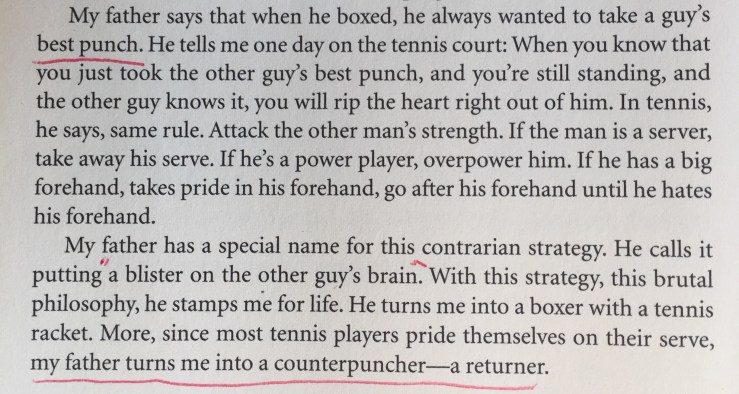
Brad Gilbert wrote for tennis what Calacanis wrote for angel investing. Ray Dalio explained this to Tim Ferriss. Nick Murray warned, “The best and most easiest way he can blow himself up is chasing Alpha.”

4/ Glamorousness.

“Being a founder is a very hard job. Most people are not suited for it. You have to have a demented, sadistic desire to change the world.”

“Out of one hundred days, ninety-eight of them will be arduous and two will be absolutely brutal. There are no good days.”

Ken Burns said, “I’m in a medium people think is glamorous and only a small fraction of it is. It’s mostly a lot of hard work.”

Marcus Lemonis said, “To be a business owner it’s not a glamorous job. It requires you to make a lot of personal sacrifices.”

Robert Greene said that writing is “not horribly glamorous.”

5/ Emergence. Ask ‘Why now?’

“Usually if something is going to work it means that something has changed.”

“I think the real ‘Why Now’ for Uber and Lyft was GPS on phones because you could see in real time the car coming to you.”

“Bandwidth answers the ‘Why Now?’ for YouTube and Netflix. Because storage and streaming have become so cheap it works.”

“These technological trends sometimes take four or five times to actually hit.”

Marc Andreessen calls this the “Volcano Movie Problem.” In The Evolution of Everything Matt Ridley wrote:

“Just as the light bulb was ‘ripe’ for discovery in 1870, so the search engine was ‘ripe’ for discovery in 1990. By the time Google came along in 1996, there were already lots of search engines: Archie, Veronica, Excite, Infoseek, Altavista, Galaxy, Webcrawler, Yahoo, Lycos, Looksmart . . . to name just the most prominent. Perhaps none was at the time as good as Google, but they would have got better.”

Ridley’s theme is that everything evolves from small actors in certain conditions. Around each corner of time is a series of things that will be ‘ripe’.

6/ How to barbell.

“I guess people call it a barbell, which is what I’ve gone after. Really secure blended portfolio with low fees and then on the other side just complete insane angel investments.”

“This is why poker is a great metaphor for angel investing – because if you go on tilt and start acting recklessly and can’t handle the bad news you’re not going to be well suited for angel investing.”

The barbell approach (NNT AMA) requires mental muscles.

Tennis wrote Gilbert is mostly a mental game. Andre Agassi‘s case bears this out. Good decisions require good self-awareness. It’s knowing what Peter Attia calls “the stress buffer.”

7/ Customers. (again)

“I have to always get founders to stop thinking about the game ‘Startup Land’ and get them to play the game ‘Customers.’ My inbox is filled with ‘How do I get investors to do this?’ ‘How do I convince VC’s to do that?’ I’m like, ‘How do you convince customers to buy your product?’ Let’s answer that question.”

A business that doesn’t talk to their customers won’t be businesses for long.


Thanks for reading. Want more? Sign up here: http://eepurl.com/cYiwTP.

Brad Gilbert

Supported by Greenhaven Road Capital, finding value off the beaten path.

pablo (24).png

Brad Gilbert won an Olympic medalist, participated on Davis Cup teams, and coached Andre Agassi. In his book Winning Ugly he writes about winning at tennis. The book is really about winning at anything. Let’s see how.

The first step to winning is to not lose. Warren Buffett’s two rules of investing are, one, don’t lose money and two, don’t forget rule number one. Gilbert has similar advice.

“Don’t be afraid to swing at the ball but don’t try to impress the other player.”

“Unforced error determined results more than spectacular shots do.”

“Make sure your mediocre backhand doesn’t make world-class errors.”

“Hit the ball over the net and into the court. Make that the goal.”

“Playing not to lose’ is pejorative commentary. That might be wrong. Athletes, teams, inventors all need chances to win. More chances more winning. Willbur Wright wrote about this:

“The man who wishes to keep at the problem long enough to really learn anything positively must not take dangerous risks. Carelessness and overconfidence are usually more dangerous than deliberately accepted risks.”

Or as Jason Calacanis said about angel investing:

“What makes the great investors is they can be contrarian, they’re independent. The big cardinal mistake people make when they start angel investing is, they have a three hundred thousand dollar stack and say ‘f-it’ let me put one hundred fifty in this one startup…and soon you’ve blown your whole chip stack. I’ve seen people go through this who were invested in three startups and they quit angel investing.”

To do this well you have to know thyself.

“Don’t ask a skinny dog to fly.”

“Look in the mirror – do you see Pete Sampras?”

What are you really capable of doing, asks Gilbert. If you have a weak backhand, own it. If all you can do is pop it back, that’s fine. Think winning over beauty. This is hard to see in ourselves. We have biases. We’re in too deep. Instead, ask someone how they might defeat you. Gilbert had his coach do some scouting too.

 “Sitting on the sidelines it’s fairly easy to spot a match and see what’s happening; who’s doing what to whom.”

Objectively knowing your skills and weaknesses as well as your opponents allows for mismatches.

“I’ll lose if I go strength to strength. I’m good, however, at working my strengths against my opponents weaknesses.”

Michael Lombardi says that the best NFL coaches “make you play left-handed.” That’s what Gilbert wants too. Advantages don’t always come from your best skill but the biggest delta. The sweetest opportunities are in the largest gaps.

This is all in preparation and the best players plan in the calm.

“When things were getting desperate I had a mental compass that kept me on course and gave me a way to get back in the match.”

“Your body will try to do what your mind tells it to do. In this prematch review, you’re programming your mind to give the body correct information once the match begins and things start happening quickly under fire. You’re setting the course you want to take to arrive at your destination.”

Wesley Gray said that he plans in System 2. “All your (military) training is how to minimize system one errors and try your best to use the system two mentality.” This work will prepare for the storm.

“Psychologically 0-3 seems a lot heavier than it is. It’s still just one break.”

“You have to recognize it (anger) and you have to be able to regain control or it’s like playing with a broken racket.”

“My game didn’t fail me (against Connors). My mind did.”

“If you gang up on yourself there will be two people on the court trying to beat you.”

Tennis is a mental game too. Ken Fisher thought that John Templeton was a great investor because of his stability.

“His spirituality led him to a form of internal calmness that’s rare. He would make investment decisions other people wouldn’t make because he was so at peace with himself.”

Learning all this  requires paying attention.

“Who’s doing what to whom? Have at least a sense of it.”

 “After that (an unexpected loss), I started writing things down. It’s when I started my little black book.”

“I’d watch a match like I was studying for a history test.”

Gilbert wanted to find patterns in play. “Pressure,” he wrote about tight situations, “is the ultimate lie detector.”  What someone did when a point, game, or match was on the line carried weight.  This is the same attitude for finding secrets or gems.

“Most of the time there is a way to win. You just have to figure out what it is.”

I’ve never played tennis beyond a few summer afternoons with a wooden racket and Gilbert’s book isn’t really about tennis. It’s about everything. Knowing your limits but getting better. Being curious and writing discoveries down. Accepting luck, innate talent, and harnassing ambitions.


Thanks for reading. I’m mikedariano.

Marcus Lemonis

Supported by Greenhaven Road Capital, finding value off the beaten path.

Marcus Lemonis spoke with James Altucher about his show television show The Profit and what he’s learned after four season. Here are my notes.

pablo (23).png

Photo by Andy Rusch.

10,000 hours and youth soccer? 10,000 hours or youth soccer.

“To be a business owner it’s not a glamorous job. It requires you to make a lot of personal sacrifices. If you want to meet a business owner with a great home life and a great life balance — they’re probably BS-ing you a little bit. It’s very difficult to be a business owner and have balance. I’ll be honest with you, I don’t have good work-life balance.”

“In fairness to most people, I don’t have kids and I don’t want to minimize that because I have business associates who have kids.”

“If you’re young and single you can be reckless. As you get older and you have a family and children and responsibilities it has to be more calculated.”

Malcolm Gladwell popularized the idea of 10,000 hours as the staircase to the balcony of expertise – but he clarified to Stephen Dubner why:

Gladwell wasn’t promoting so much as pointing out. Ken Grossman wrote that when he was starting the Sierra Nevada beer company he felt guilty for not being home as often. Gene Kranz an early NASA engineer wrote, “Behind every great man is a woman – and behind her is the plumber, the electrician, the Maytag repairman, and one or more sick kids. And the car needs to go into the shop.”

For Lemonis this is an advantage. He can take bigger swings. He can handle more volatility. If things don’t work out he can go back to selling cars.

Know thyself, and thy soft spots.

“The ones with the dysfunctional people are the ones that are the most challenging for me and the ones I get burned the most because I have this notion that I can fix everybody and everything and it’s just not true.”

Soft spots are biases articulated. Daryl Morey had a soft spot for one type of player. Meb Faber has a soft spot for certain investments. Gregg Popovich has a soft spot for a style of play.

Knowing these preferences leads to better decisions.

Relationship debts.

“Put a heart with a face, not just a name with a face.”

“When you take care of your people as best as you can, you really will find out when shit goes bad who’s going to be there.”

Debts and surpluses compound accordingly. Richard Jefferson saw how physical debts (body fat, weight) negatively compounded. NBA players eat like kings but don’t want to work out too hard before games. That leads to weight gain.

There’s code debt, financial debt, relationship debt, turnover debt (loss of institutional memory. Less debt is better. As Peter Lynch said, “it’s very hard to go bankrupt if you don’t have any debt.”

Getting lost in the weeds.

“You knew it was going to be a problem, I didn’t know it was going to be a problem. When you’re in it it’s very difficult.”

“When you are a business owner it’s very easy to get lost in the weeds.”

Alton Brown said this happened to him while making Good Eats. His crew had a code word they used when talking to his wife about when he went too deep.

Aziz Ansari said much the same:

“When we do Masters of None we screen the episodes for people as we’re editing because it helps. You’re the craziest person to watch and judge this thing because you’ve been living in it, you’re in too deep.”

It’s why people like Daniel Kahneman and Michael Mauboussin advocate for the outside view. Be conscious of ‘what typically happens’ – or include someone who is.

Humility + Curiosity = Ideas. When he talks to business owners, Lemonis asks a lot of questions, “they’ll tell you if you keep pushing.”

“Thinking I had all the answers was the mistake.”

“It was like I turned into an infant again…I just kept asking questions of everybody all the time.”

“I have no trouble admitting when I don’t know something and need help.”

“Everyday you should be asking questions.”

“I think what happens to people is their pride gets in the way and they don’t want to say ‘I don’t know’ And that may be the single biggest mistake.”

Success comes from enough ego to believe you can, but not so much you expect to. This manifests as curiosity. Thomas DeLong put it this way to Ted Seides:

“If you live a more curious life, you’re going to listen more, you’re going to be more interesting, you’re going to learn a lot more. You need to move your life from certainty to curiosity.”

More inspiration is in Brian Grazer‘s book, A Curious Mind.

Change your POV.

“I have a little trick. I always turn my mind into a consumer and not a business owner. I think ‘Would I buy that? Would I pay for that?’ and I really work hard at it.”

Businesses exist to serve customers so knowing what they want helps. Grant Oliphant works in the non-profit area but has a saying that applies here too – nothing about me without me. Ask, ‘what do people want’ rather than ‘what do I want’.

Businesses who fail to do this are a – according to Scott Fearon – Dead Company Walking.


Thanks for reading. If you liked this and you don’t get enough email, get my email here: http://eepurl.com/cYiwTP.

Richard Jefferson

Supported by Greenhaven Road Capital, finding value off the beaten path.

Richard Jefferson spoke with Bill Simmons about the NBA, LA, and the media.

https://soundcloud.com/the-bill-simmons-podcast/richard-jefferson-on-podcast-fame-jason-kidds-greatness-and-kyries-departure-ep-260

Place matters.

“I’m down there in San Diego with nothing to do. It’s beautiful but you get lazy as shit there really quick. Everyone is super happy and mellow. I had to move up to LA.”

Jefferson didn’t thrive in San Diego, so he left. Ken Burns lives in New Hampshire, not New York. George Lucas left Hollywood for San Francisco. Milton Hershey lived in central Pennsylvania. Warren Buffett lives in Omaha.

Place in part of our ecosystem. Place affects our actions.

Compounding debt or surplus?

“A lot of the things I learned there (in San Antonio) have helped me prolong my career since I left there. Like the way, you need to work out during the summer. The way you need to take care of your body. The constant focus on your weight and your body fat.”

As a Spurs fan, I was excited when Jefferson signed with the team. Their engagement was a disappointment. But he learned about physical debt there. If you don’t take care of your body then the debts pile up, compound, and come due.

Surpluses compound too. Adam Grant said his first book took twelve years to write. That’s compounding. Illmind compounded his work into a career. Compounding also works in Fitness and Finances.

Accounting for our debts and surpluses helps because we’ll be in situations where we can’t pay down or build up. The NFL is like this said Michael Lombardi. There’s no time to build up your intellectual capital during the season.

Added value.

“I’m always surprised that some owner hasn’t given Chip Engelland twenty million dollars a year. Think about all the money they spend on players, coaches, and everything. This shooting coach has transformed all these different people. I would think that’s worth at least as much as an all-star.” Simmons

Engelland is the “shot doctor”. The question is, how many wins can a coach add? This may be an analytics edge.

In baseball, this played out Big Data Baseball. The Pittsburgh Pirate’s analytics team found that shifting players, ground ball pitchers, and the right catcher were one way to win. Hiring analysts to maximize player value was cheaper than an all-star.

The Pirates adopted the design mindset to express, test, and cycle. What organizations shouldn’t do is cut and paste.  As Adam Grant and Shane Parrish explained, you want to ask, in what conditions does this work? The Spurs are famous for their culture. It’s one of the building blocks of Gregg Popovich‘s team. Remember, place matters.

The skill jar of Jason Kidd.

“He was so smart that he had this whole second part of his career when he was athletically thirty percent of what he was but he knew where to go and who to set up.” – Simmons

Whether mental or physical, much of life is about being in the right place at the right time. We can do this one of two ways.

  1. Move quickly, physically or mentally changing our position.
  2. Be accurate, begin close to the correct place.

Kidd shifted his career from one to another.


Media reports. About the 2004 Olympics Jefferson said:

“We were murdered by the media. They were like, they don’t care. No. None of us had any experience in this.”

“I’m introducing myself for the first time two weeks before the Olympics. And Larry Brown was the worst possible coach we could have had. For that team, they couldn’t have picked a worse coach.”

Media is like a funhouse mirror. Parts will be accurate and parts will be distorted. Andre Agassi was ‘all show and no go.’ Russell Martin was ‘bad.’ These are only the outside view. The media has both objectivity and information deficiency.


Thanks for reading. I’m mikedariano.

Maha Ibrahim

Supported by Greenhaven Road Capital, finding value off the beaten path.

Maha Ibrahim spoke with Kara Swisher about her seventeen years in tech.

pablo (22).png

Timing is everything.

“Timing is everything. If there’s one thing I’ve learned in my venture career, that’s it. Timing is everything.”

The Brilliant Visionary story skews praise from the situation to the person. This is a mistake. Politics, for example, is full of people whose skills matched the circumstances. Tom Brokaw arrived in California at the right time. Without an interesting governor who would go on to do big things, Brokaw’s career would have been different. So too for Karl Rove (in Texas) and Teddy Roosevelt (in New York).

Timing matters for books too. The Great Gatsby was stacked in warehouses unread. Even further back Martin Luther benefitted from a printing price.

Examples across domains and time is a good way to find true things. “I have a rule that it has to be timeless and universal,” said Ray Dalio.

Bubbles.

https://soundcloud.com/mikesnotes/kara-swisher-bubbles-in-fall-2017

Bubbles are impossible to call but Swisher provides a good ear-to-the-ground signal. Other signals? THE TALLEST THING headlines. Big parties. Binder boys.  Pricing guides for cards or collectibles.

Depression babies, women in tech and ecosystems.

“We’re looking at the last nine years of up and to the right. We’re also looking at a cast of characters in the venture industry where a lot of them have only seen up and to the right. They look at their jobs as selling money. That’s not our job. Our job is to return capital to our limited partners.”

It’s a skill to separate your work from your ecosystem. Ducks, said Warren Buffett, don’t flap their wings in pride because the tide came in. Conditions matter. In their environment women often have headwinds.

“Every woman had a story (about sexual harassment). Every good man was surprised.” – Swisher

“What we hear collectively from entrepreneurs – and we meet collectively with a lot of female entrepreneurs is that they all have a bad story.” – Ibrahim

Success despite disadvantage changes the evaluation. In the NFL this is figuring out if an offense was good or a defense was bad. In investing it’s figuring out if you’re brilliant or you were just in a bull market. For leadership questions it’s thinking about what happened at Yahoo?.

This was the tagline for the Tim Ferriss podcast. Why does someone that looks like they shouldn’t succeed, succeed? Nassim Taleb explained it this way to Russ Roberts.

Screen Shot 2017-09-20 at 11.05.54 AM

Skinning cats.

“I’ve been in panels where male investors say, ‘We feel like women shoot for the moon and not the stars. We feel like women are not as ambitious as men.’ They are using that as an example of no female Mark Zuckerberg. There doesn’t have to be.”

Looking for the next Zuckerberg is a terrible idea. Scott Norton said that if manuals exist you aren’t doing something new enough. The next Zuckerberg is like that. It’s not new.

In investing this comes up when people talk about David Swensen. It’s good to know what’s made him successful, but you can’t be Swensen. Both David Salem and Charley Ellis are quick to point this out.

Building relationships. Kara Swisher has advice for Amazon and Jeff Bezos.

“I think Trump has a lizard brain. He understands that people are going to be mad at Bezos later over jobs and everything else. So he’s attacking him on the wrong thing but it’s right.”

Nice people get the benefit of the doubt. Nice people have relationship capital (non-GAAP). Kip McDaniels said this is “underinvested in because it’s not a clear revenue item, it’s a cost on their balance sheet.” Gregg Popovich said basic strategy, talented teammates and relationships are what makes a team successful.


Thanks for reading. Get the weekly email of all my posts and podcast notes here: http://eepurl.com/cYiwTP.