Chess Forks

In the 2023-2024 school year I was back in the classroom. It was a successful year. There were ups and downs, but the setbacks provided chances to grow and the successes led to further advances.

During the last eight days, after exams and projects, we played chess. It was a blast.

I’d last played this much chess in middle school. A friend brought a rolled up board to lunch and we would play over peanut butter and jelly sandwiches, apple slices, and potato chips. Among our lunch table I was about average. I’m still about average. My strategy is winning by accident.

For instance, I didn’t know about “chess forks”:

From ChatGPT: In chess, a fork is a move where a single piece attacks two or more of your opponent’s pieces at the same time. This puts your opponent in a difficult situation because they can usually only move one piece to safety, leaving the other piece (or pieces) vulnerable to capture. Knights are particularly known for creating forks, but any piece can perform a fork. It’s a clever tactic to gain an advantage by threatening multiple pieces simultaneously.

To prevent forking, a player needs to stay out of trouble, unlike Amina.

The best selling fantasy adventure story The Adventures of Amina al-Sirafi is one fork after another. Amina, our buccaneer hero, faces one tradeoff after another. Unlike my chess skills, she wins not by accident but…., well no spoilers.


Does this happen in real life? Go to a meeting and deal with obstinate coworkers or skip the meeting and be left out? Have a difficult conversation with your loved ones or let the issues fester? Sell an investment for a loss or continue to psychologically carry the burden? Waste more time in a job or face the unexpected prospects of starting over?

One solution comes from Shane Parrish’s book, Clear Thinking, where warns against two-dimensional solution sets. This or that. Burgers or dogs. Good or bad. Day or night.

But, Parrish prods, get creative. Ask: what would it take for one of these options to be good? Can you empathize with the obstinate coworker? Can you have a hard talk with the goal of one step backwards two steps forward? Can you sell an investment as a tax-loss? Can you side-hustle while staying in the job?

Chess and fantasy adventure novels are too strict for this sort of Alchemy.

But life is flexible. It’s malleable. We should avoid getting forked. But if we do, maybe with a little work, there are 3D chess moves to make.

95/5 Instead of 50/50

It’s 2004. Will Guidara is working at the Museum of Modern Art. Not in the esteemed gallery or adored restaurant. Will is in charge of the cafe: coffee, sandwiches, and snacks.

And he wants to create a gelato cart for the Sculpture Garden.

But first, he needs gelato worthy of the museum and his group, Union Square Hospitality. He finds Jon Snyder who sells it at a discount. He also convinces Synder to pay for the cart. It’s a nice cart.

Things are looking promising.

And then Guidara goes crazy.

He wants Italian spoons. “How amazing could a plastic spoon possibly be?” Will writes, “You’re going to have to trust me on this: they were paddle-shaped, extraordinarily well designed, and completely unique.”

But they’re expensive. His boss sees the cost and says “we’ll talk about this later.” But Guidara loves them. He gets them. He creates The 95/5 Rule.

“Manage 95% of your business down to the penny; spend the last 5 percent ‘foolishly’.”

This idea manifested later when Guidara was at Eleven Madison Park. While traditional wine flights had average wines, Will and his winos wander wider. Most of the samples were good, diverse, and less expensive. But one, the last one, was excellent. “The Rule of 95/5 gave us the ability to surprise and delight everyone that ordered those pairings, making it an experience they would never forget.”

It’s a good rule because averages are not good measures. Save where you can but splurge on one thing. That’s helpful. That gets past average thinking.

Solving the EV Problem, 2

Paying 1,000 people $1 in interest is different, according to Credit Karma, from paying one person $1,000 in a lottery. 

That same thinking can be applied to electric automobiles.

Eighty percent of drivers drive fewer than fifty-five miles each day. Half of all trips are less than five miles. Yet vehicle range is a prominent selling point.*

We’ve tried to solve the EV problem before but here is another idea. 

Fuel Rods are rechargeable lithium batteries used for charging phones, bluetooth speakers or headphones, or whatever. But they can be swapped at any Fuel Rod location. You see these at airports. Here is the map of Orlando swap spots. 

Most of the time users can recharge on their own schedule. Sometimes users need a fresh swap. 

Can EVs do that? 

Previously, we focused on the subjective. The rules of chemistry dictate how quickly an EV can charge but it’s the rules of psychology that influence the enjoyability of the wait. 

But we can change ‘how quick’!

Swap the batteries. 

Gas stations sell diesel, unleaded, and propane fuels. They sell fat, carbohydrates, and protein calories. Sheetz has the best air pumps. In Florida, my state, an absurd number have car washes too. Why can’t they sell automotive fuel rods too? 

* There’s also the availability heuristic. Range is easy to understand and compare so it appears important. 

Greeting Card Competition

In Competing Against Luck, Clayton Christiansen‘s book about jobs to be done, he talks about the three jobs groups: functional, social, and emotional. Each depends on the situation.

Clayton’s classic example is the milkshake. It functions as nutrition and provides emotional entertainment during a commuter’s morning.

In the afternoon that same milkshake provides a functional snack and an emotional connection between parent and child as an after-school treat.

Lovepop co-founder Wombi Rose talked about the depths those jobs have.

“It’s about helping you with your occasions. We want to make sure you can quickly send a thoughtful and creative gift. We’ve found that everyone wants to be more creative and thoughtful but it takes time. We want to help you with those two challenges. We’ll remind you of those occasions and make it super easy to do something that is creative and thoughtful where what you do is based on your relationship.”

Meaningful messages are costly.

In high school, one of my made-up start-ups was a celebration card company that sent out cards on your behalf. Rather than your forgetful self, hire us to send Aunt Jan’s card on time every time. As my friends pointed out, it kinda took the charm out of the whole experience.

Rory Sutherland, the alchemist, points out that digital wedding invitations work – so long as they’re costly. A song works. A poem worlds. Something that demonstrates an investment works.

Lovepop’s attempt is to link people’s lives to the cards they buy. Does your special someone have a certain plant they love, like a Japanese Maple? Do they like a certain animal? There’s a card for that.

Jobs gives language to discuss the depths. It’s like the wavelength spectrum. We can only see so much. That’s our visual language. But our tools give us the ability to understand a whole lot more. Just like jobs.

Mary and Rory: Two Great Brits

If you want to change, writes Katy Milkman, consider the advice of Mary Poppins. In every job that must be done. There is an element of fun. And a spoonful of sugar helps the medicine go down.

But we don’t do this. “When committing to a healthy new eating regimen, we buy a basket of the most sinless foods – broccoli, carrots, kale, and quinoa – without regard for taste.”

Ahh, yes. Of course! Rory Sutherland enters.

We are rationalizing creatures. We ask, Why is this so cheap? If junk food tastes great then healthy food must taste bad. It’s the gross medicines that work best!

But, but, but, Milkman butts in. That’s what the research shows.

Think of things you want to change as chronic conditions. Diabetes is a chronic condition. Stress can be chronic too.

But so is shelter. That’s a recurring problem people deal with every day. So is food. And Milkman argues, so are your habits. So make them fun.

We have learned a lot from Milkman and Sutherland because they both share lessons that work. It’s not whether something works, but where, when, and with who. Monster Energy is large, full of caffeine and calories, and it tastes great. It found a where, when, and with who. Snickers found a context too.

Boiling water softens a carrot and hardens an egg. Solutions must match their contexts.

The Disney Parking Problem

Though Disney is the most magical place on earth, their vacations take work. Saving. Planning. Coordination. Make a reservation at the hotel, the park, the restaurant. Packing the right clothes for your kids. Sunscreen too! Transportation.  

There’s a lot going on. 

Then the magic. Princesses. Castles. Rides. Shows. There’s a reason it’s one of the best brands and businesses in the world. 

But when guests leave, they have a problem. 

They forget where they parked.

Though the parking lot rows are labeled things like “Dumbo 12” or “Goofy 3”, every day about four hundred people forget where they parked their car. 

Disney is known for its service and they don’t want guests to leave hot, tired, and frustrated at not finding their car in the massive parking lots.  

Instead of a technological solution, Disney challenged the parking lot attendees to come up with something. They did not disappoint. 

Disney staff write down the time each row fills up. Guests more often remember when they arrived rather than where they parked. 

This simple solution turns frustration into delight. 

This is part of the Daily Entrepreneur series I write with Aaron.

Robot vacuum innovation using JTBD

Robot vacuum innovation using JTBD

Too fast? Slow down. Too hot? Cool down. Too little? Add more. Too long to wait? Make it shorter. Maybe.

Waits are complainable for a couple of reasons. Fairness, if someone enters a line later but finishes sooner. Ambiguity, if the wait duration is unknown. Comfort, if there’s somewhere to sit, charge a phone, or entertain us, waits can be wonderful.

Not all problems have “symmetrical solutions”. Changing something else might change the main thing. Even better, sometimes something else is easier.

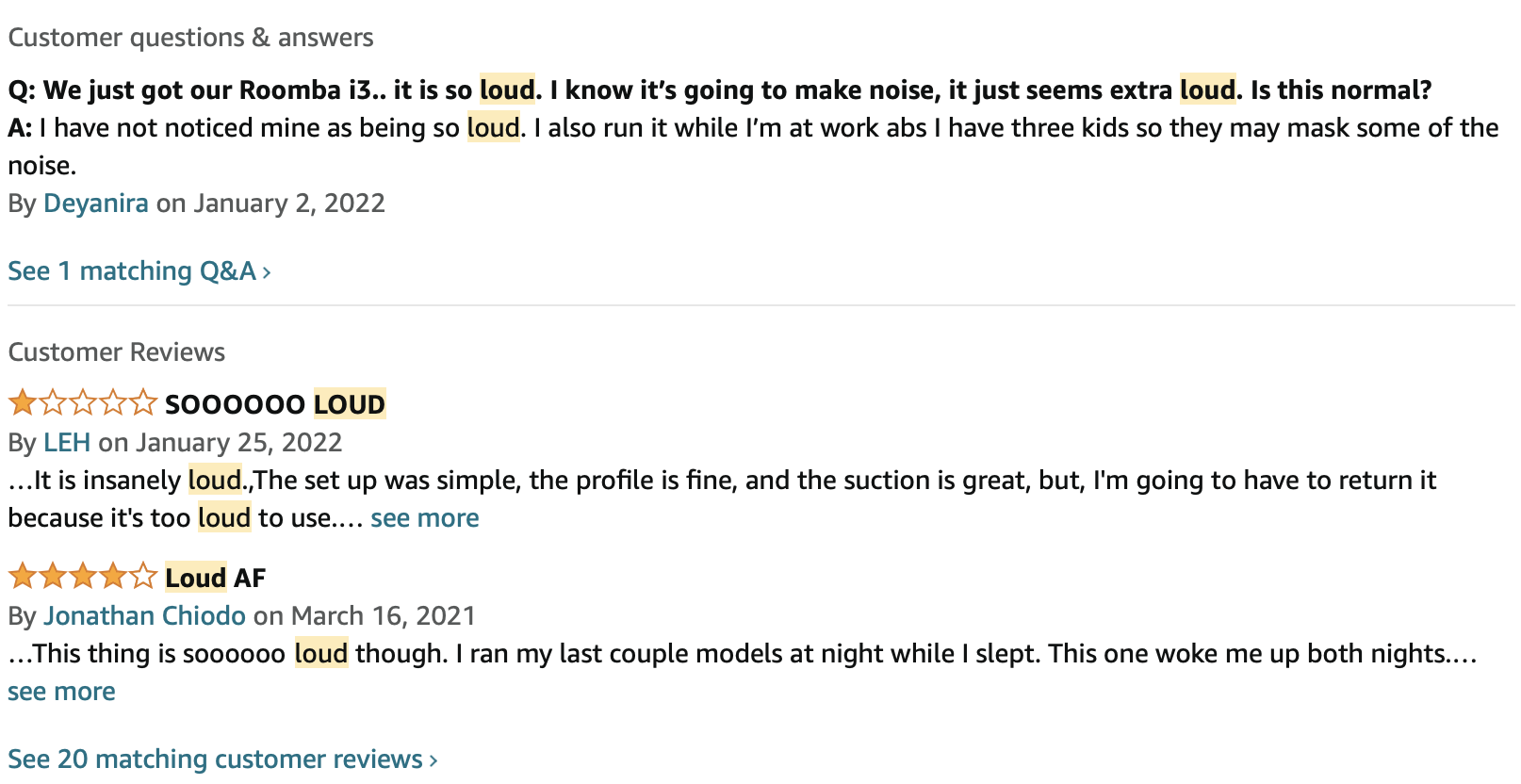
For instance, we bought a Roomba. It is loud. Rather, it is Loud AF.

Too loud? Make it quieter. Maybe. But loudness has layers like, how much noise I can hear. One change is quieter. Though that tradeoff makes it more expensive.

Another approach is to hear it less. The Roomba does just that! The vacuum has a scheduling feature and integrates with smart homes. Want a quieter Roomba? Run it when no one is home.

Asymmetry is at the heart of Alchemy. Rory Sutherland wants people to see that problems are asymmetrical and then use psychology (in this case, technology) to solve the problem in a new way.

The idea of symmetry is from Bob Moesta in episode 7 of the Circuit Breaker podcast. The idea of tradeoffs is from episode 2. One of the Roomba’s competitors is non-consumption, episode 13.

Snickers and Milky Way

Snickers and Milky Way

Reframing our perspective is a powerful thinking tool. ‘Sleeping on it’ is reframing. Reading books is reframing. Comparing novel things is reframing. 

For a business owner, thinking of time of day, place in life, and what happened prior is reframing.

Bob Moesta notes “context creates value”. Time and place create more or less value. Birthday gifts have one value on birthdays and another value when it’s not. 

But we miss this because of average lies. Average computes easily, is sometimes helpful, but is a crude tool. Sometimes we NEED this one thing RIGHT NOW! 

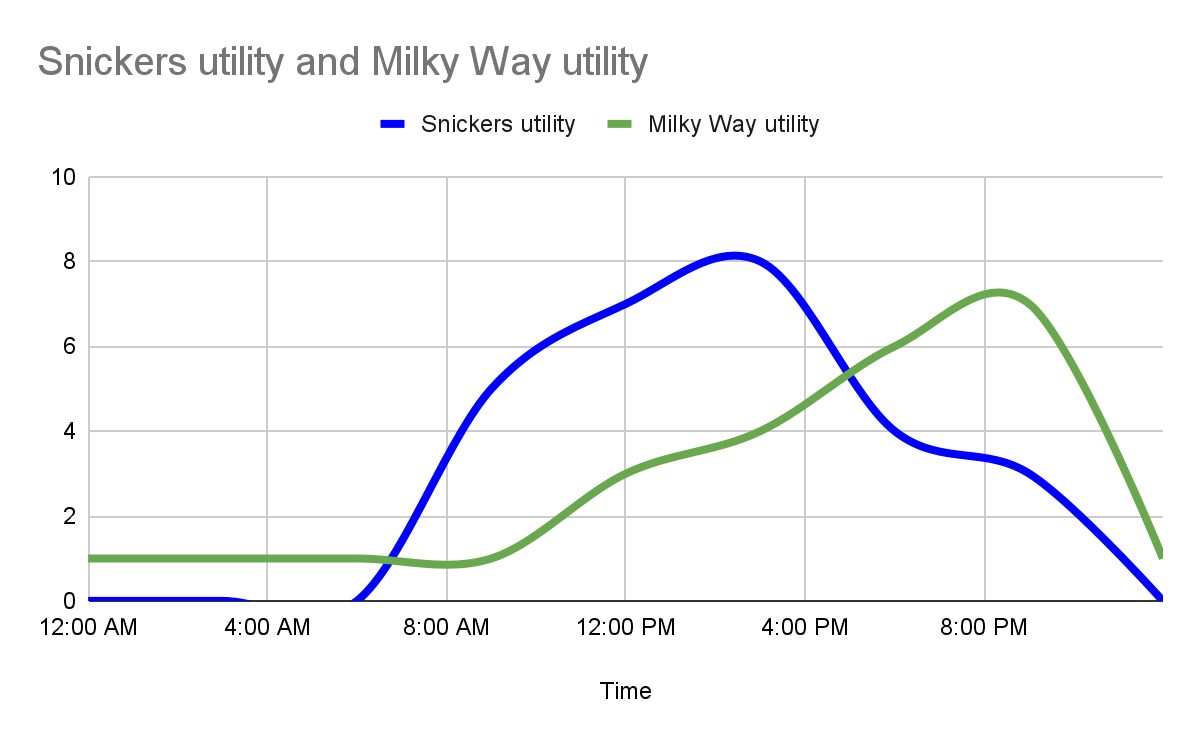
Contrast Snickers and Milky Way. Graphically: 

Commercially (2011):

Snickers is a chewy pick-me-up energy bar. Milky Way is a treat-yo-self deep breath of sweetness. The context creates value

According to Bob Moesta, the context for eating Snickers is that I’m hungry and I want something filling, tasty, cheap, and fast. Applying average thinking, there’s not a constant demand. Find when customers consume a product reveals that product’s JTBD.

“Context creates value” fits well with Alchemy too. Channeling Rory Sutherland, it wasn’t that Snickers needed to be tastier, rather reframed. Alchemy is about solving problems with psychology rather than physics. Instead of making travel faster, make it more enjoyable with wifi, charge ports, booking flexibility, a table for tea, someplace for the kids to burn off energy, and so on. Faster is only better when the process sucks. 

Consumers and customers have untapped wants. They’re hiding behind time, place, averages. They’re served by JTBD & Alchemy. 

Solving the EV problem

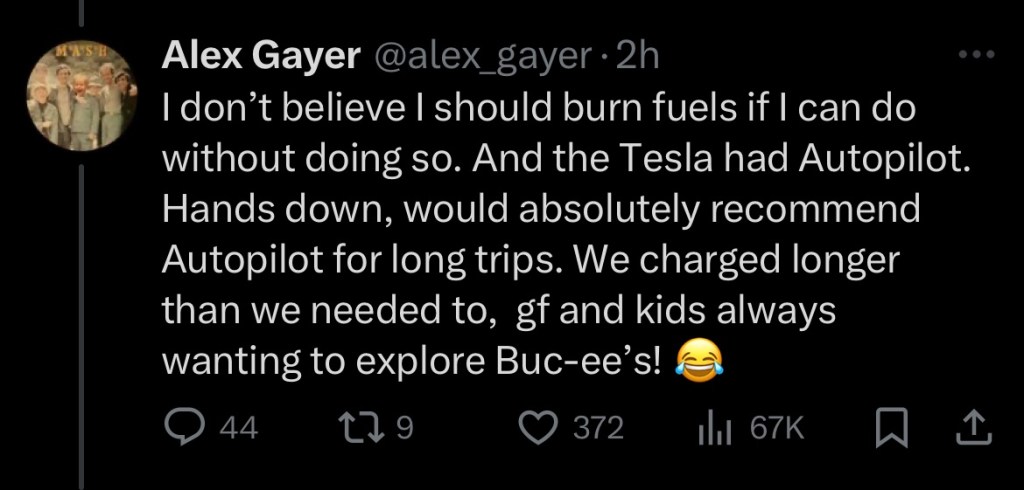
The EV problem is not range. The problem is charging time. “Most electric vehicles today,” said James Frith, “can do an 80% charge in twenty minutes or so. That’s probably slightly longer than people want to stop at a gas station on a long journey, but it’s not unreasonable.” 

While technically correct it is psychologically wrong. The problem isn’t “twenty minutes”. The problem is “gas station”. 

When I started driving, gas stations were dirty. In high school, I worked manual labor and we rated the gas stations on how horrible they were. They were bad even to a crew of teenage and twenty-year-old boys working for an asphalt company. 

But gas stations have gotten better as they have become less like gas stations. Buc-ee’s – a Texan invention – is a gas station that became a tourist destination. People want to stop. That seems like the kind of place someone could spend twenty minutes. 

So it’s not the wait, it’s the quality. 

There are different forms of twenty minutes. A twenty-minute wait in the McDonald’s drive-thru is different from a twenty-minute nap while your wife and daughters go to a craft store. You’re frustrated by the first and delighted by the second. 

The classic gas station is the wrong model and the industry changes reflect that. An ideal charging station then is a nice place to spend twenty minutes. It’s a place to buy coffee and food and use a nice bathroom. Maybe there’s a playground or park? It should have solar so customers get a psychic reward for their time. 

Another avenue is to ask where do people already wait twenty minutes? Fast-casual meals are at least twenty minutes. Twenty minutes is the length of an episode of The Good Place. Headspace could use charging stations as a customer acquisition channel – we all could use a little less stress on the not-so-open roads. 

In Alchemy Rory Sutherland suggests that we invest too much in physics rather than psychological solutions. Physics, like battery technology, is hard because the rules don’t change. Psychology is easier because sometimes the rules change. What’s a long wait in one case is a short one in another. That’s how to solve the EV equation. 

I wrote about Headspace here and “personal recharging” is a great opportunity.