One of the (few) calculations for my Business and Entrepreneurship class is customer acquisition cost. I’m a fan.
Rewriting the text for the upcoming year forced me to reemphasize and reiterate the value of a low CAC. Especially in the world of social media marketing and influencer marketing where CAC is sometimes zero. It’s an incredibly powerful idea.
But anything zero or low coast can be. Especially when part of an equation that divides (zero by many) or one that multiples many by a low cost (such as almost zero).
Talking with Chicago Fed Chair, Tyler Cowen asked about this very thing.
COWEN: What would be an example of something with a marginal cost of zero?
GOOLSBEE: [laughs] Well, I don’t want to reveal anything about our operations and get myself in trouble about the Federal Reserve operations. If you look at marginal cost of zero things, opening meetings to include others and having folks work together, sharing of information can often have very low cost — if not literally zero — and strong benefits.
Maybe this is the engine of alchemy. Find something that costs nothing (or very very very little) and do more of that. If it’s valuable (or very very very valuable) do a lot more of that.
Full Fee Agent is written for real estate agents but it’s a book that applies to anyone is sales. It covers a lot of ideas we tread over but includes something I’ve undervalued over time. That is relationshipsmatter a lot. Our outcomes are some mix of what and who we know. The bridge for each of my career changes was a person, not a subject, degree, or work-sample. Salespersons have known this a long time and Voss’ book emphasizes that.
Here is a summary: build empathy with people by seeing things from their point of view and understanding its importance. Done well, this builds trust and supercharges someone’s willingness to partner. Trust is inversely related to CAC. Finally, with trust, the deal terms (Full Fee) become worthwhile.
The biggest ideas is legibility.
Home owners see dollar sign 🏷️
Agents see actions ☎️
But these aren’t actually that important.
The illegible connective tissue is empathy and trust.
Agents who misunderstand spend time and money 🤑 on people who aren’t actually going to be clients 🤮. Don’t confuse the counts of dollars, calls, and miles driven for meaning within empathy and trust.
Full Fee Agent is written from the point of view of an agent, here are four tactical steps:
🙉 Listen, listen, listen, not location is the key part of real estate. Use tools like mirroring and labeling (‘that sounds stressful, that must have been agonizing,…’). In all caps Voss writes: “Your primary job as a real estate agent is to cultivate relationships”.
🐘 Get the elephant out early. Build trust by pointing out flaws. Not only does this build trust, but it brings up deal stressors. 😬 Bracing is one way to do this: “I have some bad news”. Often what people hear is not as bad as what people think.
👣 Cross the street to see things from their point of view. Rather than you-you-you, think about what the clients want. “The first step toward your goal of having your influence stick is to learn what’s really going on inside their heads. Not the pro/ con, profit/ loss calculations but the emotions that so often override logical reasoning.”
🎯 Calibrated questions. Rather than salesy talk, get customers to lead the way. ‘What would success look like to you’. “Never forget,” Voss writes, “people will die over their autonomy.”
A friend told me his goal was to collect 100% of his potential customer’s contact information.
I told him that was wrong.
It’s difficult to identify your potential customers. Sure, everyone owns a refrigerator, but that doesn’t make everyone a potential customer for Maytag. That’s inefficient strategy.
What’s ideal is something we first identified from Warren Buffett’s letters. These marketing missives brought in Buffett’s brand of capital. They were people who thought like him and became his permanent capital base.
A few likely customers are better than many unlikely customers. This is not a Large N small p problem.
For hiring, Tyler Cowen recommends this, attraction. Books like, Are You Smart Enough to Work at Google, are a condition of correlation. Is it that Google hires people who are good at puzzles or is it that people who are good at puzzles drift to Google?
“Well, the Teal Fellows Program has a very good record of picking winners. But I think the biggest part of interviewing is not how you interview, but rather which candidates do you attract. So it’s what you’ve done before the interview to make yourself exciting so the good people want to come to you, be looking for you.
And the same is true of Google. A lot of the questions they asked back then actually are not very robust or very relevant. But what Google did succeed in doing was establishing themselves as the exciting place to be for obvious reasons, and they attracted talent.
And if you get talent coming to you, it’s actually not that hard to be at least a pretty good interviewer. So that’s the part of the problem I would focus on.”
When I talk to young people, they often think a gatekeeper prevents a goal, outcome, or desired effect.
And when young, there often is a gatekeeper!
My advice begins with the suggestion of making it easy. How can they make it easy for their listener to say yes?
During some advising for highschoolers, a lot of it was about talking to their guidance counselors who could approve a class. The students who bought in and prepared their case ended up having their way.
Changes can’t only be logical, they have to overcome inertia. Things are the way they are for a reason.
A humorous example of this came up on the Stratechery podcast.
Talking about Netflix, paying for the rights for NFL games, a reader wrote in saying that Netflix specifically chose Christmas because that’s when boomer’s kids were home. 
That makes it easy!
Get the kids to set up the Smart TV, login, share a good show or two.
There is no better mouse trap. People do not beat a path to your door.
Things need to be sold, people need to be convinced, there is a hurdle for switching.
Often our point around customer acquisition cost is about finding the right customers. Where are the people who will say yes easily?
This is the heart of jobs to be done. This is the central tent pole of many successful businesses. This is where customer acquisition is either a cost or profit center.
Approximately seventy percent of Calendly’s new users come from using a Calendly link. That’s a crazy CAC.
But that’s not all.
Customer acquisition cost requires converting customers which requires building something that offers progress (the JTBD).
At first, Calendly’s users were broad. “What that means,” said Annie Pearl “is that product managers had a really hard time prioritizing.”
What the heck to build?
“We’ve made a clear distinction that while a lot of the feature work – that we’ll do to support our target personas of sales teams, customer success teams, and recruiting teams – will impact folks who are not in those personas. Those are the core ICPs that we’re going after. And so, historically, that would’ve always been a sort of trade-off decision and a question. And now I think we have a lot of rigor around our target market and the persona we’re going after. And so, teams can use that to prioritize and deliver better value for those users.”
A lot of people join, but the product may not be built for them.
Calendly’s actions represent Todd Rose’s three features from The End of Average.
We are jagged creatures. ‘Good’ executives are a collection of leadership, insight, and strategy skills. The average ‘good’ is a collection of jagged parts.
We are contextual creatures. We aren’t ‘jerks’, it’s just when we are driving. We aren’t ‘generous’, it’s just while tipping a server.
We are path dependent. The places we’ve been, affect the places we will go.
If a business serves “the average” they won’t find the jagged, contextual, or path-dependent parts that really matter. Calendly’s decision to build for sales teams, customer success teams, and recruiting teams show how their process embraces Rose’s observations.
“Don’t eat them for the 100% whole grain oats. Don’t eat them because the oats can help lower cholesterol. Eat them for her.”
Cheerios commercial, 2023
The good. Jobs-to-be-done uses “Mario marketing”. Sell the power, not the flower. Why is ‘being healthy’ a goal? It’s to spend longer with your granddaughter.
This ad ran on a Wednesday morning in Florida. Who is watching television? Retirees. This CAC is money well spent.
The bad or the confusing. None, it’s a good advertisement.
🧐
One of the best ways to get better at something is to do it.
One of the best ways to get better at some thinking is to notice it. The human tendency to confirm beliefs is generally useful. So be curious. Give something a name and label to your experiences.
Catalogs, department stores, big box, and online (distribution) seeded DTC (products).
Why is this so cheap?
One thing low-cost airlines got right, says Rory Sutherland, is they “magnify the things you didn’t get like a meal, pre-allocated seating, free checked luggage, and so on. And they had to do that to explain where the savings were taking place. Otherwise, you assumed it was worse trained pilots.”
Yes! “People don’t just believe, here’s the price but you can get it for this,” agrees Marcia Kilgore, “you have to tell them how and you have to tell them why.”
According to Kilgore, beauty product is no longer differentiated. Everyone sells the same thing – and anyone can sell it. This is a problem for people like Kilgore.
Hers is the ‘explain where‘ approach – we cut out the middleman. But with so many new entrants (thanks to easy products) it’s hard to communicate that message.
“Instagram and Facebook have become the new landlords. We’re trying to get away from having to ‘pay retail’ and now you have to pay that same cut to Instagram.”
If the product is constant among beauty brands and the distribution channels are limited to retail and DTC what kind of levers exist in marketing?
1/ Change the CAC/LTV. If Instagram is the new rent, then only acquire customers once. Kilgore’s company Beauty Pie uses a membership model like Amazon Prime. Founder Jeff Bezos said, “Our goal with Amazon Prime, make no mistake, is to make sure that if you are not a Prime member, you are being irresponsible.”
2/ More organic & less paid marketing. Instagram ads may be bid up but Instagram posts are still free. Beauty products have inherent characteristics that make how-to and before-and-after content successful.
3/ Offer extras. The Beauty Pie boxes are nicely designed but not expensive. The message is “just as good but nothing extra”. The brand has good communication. They’re using alchemy.
December 13 is the Survivor finale and a chance to highlight the different ideas of the blog.
Sampling. These people are not “representative samples“. Survivor hosts a casting call for people with good stories. Like Bob Iger’s big lesson, entertainment isn’t about reporting so much as stories.
Incentives. Like the many games of Jeopardy, Survivor has layers of games. When there are layers of games it’s difficult to judge actions. Is someone trying to win the game or claim later fame?
Business models. Thanks to MTV in 1981 and then Real World in 1992, one entertainment business model is to create value by editing rather than crafting (unlike Seinfeld). Put regular people with backstories (hence sampling) in interesting situations and things will happen. Edit a month of island living to a few dozen hours and viola.
Customer acquisition costs. Sequels – it’s season 43 for Survivor! – have lower CACs. Consumers don’t need to be educated.
Good business strategy is homeotelic, single actions work toward multiple goals. Aldi has a good strategy. Dominos has a good strategy. Trinny of London has a good strategy.
Good strategy balances what’s made, how it’s delivered, and how it’s communicated: product, placement, promotion. Aldi uses private labels to control the product, small footprint stores to sell from, and focused promotion. Those fit.
What does a business do well and what do customers want well done? Organizations answer these questions and the best organizations do so in a homeotelic way. This is an example from my local pickleball store:
For today and the next two days only (ends Wednesday 9/7)…we are offering a special Labor Day 20% off sale on Bags & Apparel and 10% off all paddles (and receive a FREE Paddle Cover with your paddle purchase).
Go to our website by CLICKING HERE.
For Bags and Apparel, use discount code LaborDay20 at checkout
For Paddles, use discount code LaborDay10 at checkout and receive a FREE paddle cover too.
NOTE: You can only use one discount code at a time, so if you are buying bags/apparel and a paddle you will need to place two (2) separate orders.
If you know what you want and want to go directly to the page, here’s the quick (direct) links:
Bags > CLICK HERE
Apparel > CLICK HERE
Paddles > CLICK HERE
Any questions, email
The good: Scarcity drives urgency and attracts attention. For the I’ve been thinking about this group, this email drove sales. The free paddle cover is good too.
The bad: (1) Discounts are heterotelic: more sales less brand value. All value is perceived value and premium products – like these paddles – shouldn’t be discounted. Price is a proxy for value. Here it is lowered. Freebies, gifts, ‘two-for-the-price-of-one’ maintain the core product value and have other benefits – see below.
(2) Why buy? Here customer language shines. Buy a bag and we will send three balls because you’ll have the room. Or, when you miss-hit at the end of the day your paddle is too heavy. Or, summer is winding down, get a long-sleeve shirt while they last. There’s nothing in this copy other than CLICK HERE TO TRANSACT NOW. As outsiders we don’t know the customer’s language, but a business owner should.
(3) Hats, shirts, and towels retail for thirty dollars. These lightweight packable items are perfect for shipping, have good margins, and are an easier part of profitability. But they are also a form of CAC. Reducing profitability per item raises the revenue, a homeotelic approach. People pay to be walking billboards. These items are great thank you gifts, with the purchase of a premium paddle. Gifts also seed new product lines and delight consumers.
The confusing: CLICK HERE. Multiple discount codes.
Labor Day Sales (like this) raise revenue but reduce brand value. Labor Day Sales are superficial and reactionary. Labor Day Sales are heterotelic, not homeotelic. Labor Day Sales should follow, not precede, Alchemy.
…
Here’s an excellent example, received around the same time.
Ridge speaks the customer’s language visually: my wallet is too fat. Why buy? Does it carry my cards and cash? Oh, it does. It’s the best way ever. Not ‘best’ via test, but ‘best’ is expert language, like someone judged wallets and this is indeed the best. Don’t CLICK HERE like a child, instead shop our wares like an adult. There’s no sale, but there are premium products (good, better, best) and because value is relative, ‘good’ appears discounted to ‘better’ and ‘best’.
…
Outsider commentary is a challenge. It’s another perspective, unaffected by sunk costs, and angled away from the status quo. However it’s also ignorant of successes, goals, and pesky problems like ‘oops we made too much’. Broadly sales are bad unless they are baked into a business’s strategy (like Domino’s Pizza).
Homeotelic, introduced here, applies everywhere. If someone learns to cook at home they save money, eat healthier, and gain skills. If someone joins a gym they meet new people and get healthier.
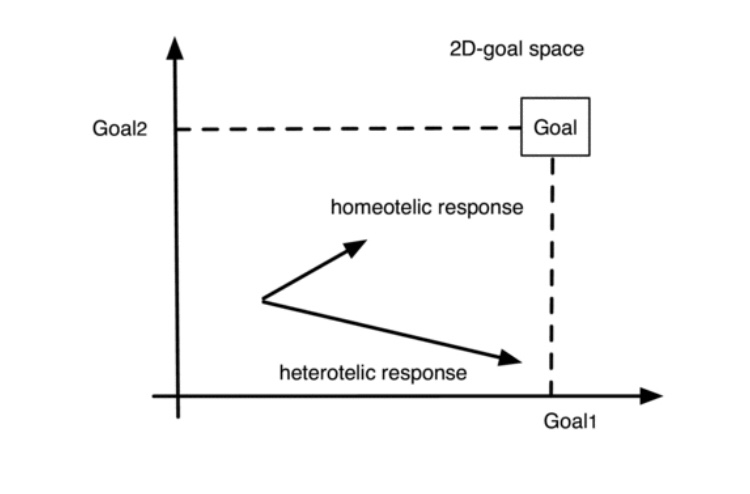
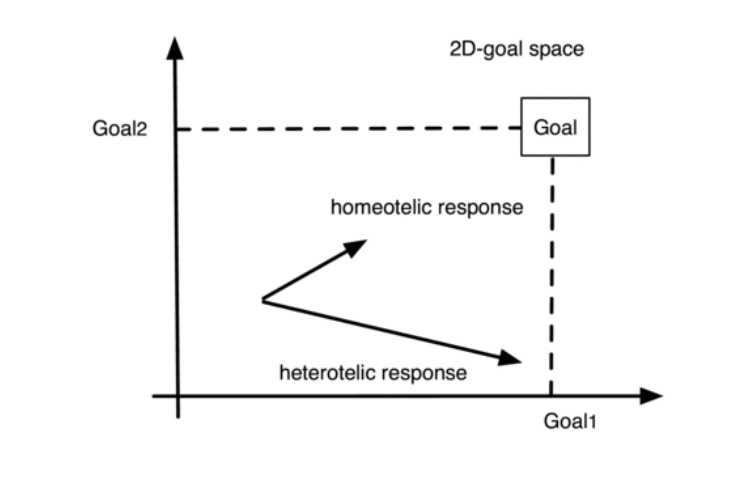
Homeotelic responses are the most important type of action. Introduced here, someone who wanted to lose weight and save money would learn to cook for themselves. Cooking (homeotelic) satisfies both goals.
Harry’s and Dollar Shave Club used homeotelic approaches. Their first goal was cheaper razors and their second goal was easier razors. Online subscriptions achieved both goals.
Competitors like Gillette were forced into heterotelic responses. They couldn’t move towards easier because of their existing retail goals.
Makeup company Trinny London’s CMO Shira Feuer spoke with Rory Sutherland about how she manages the brand in a homeotelic way. Here are three ways.
Trinny London uses real people not models as their models. This is a good bit of differentiation. We’re like you the ads state.
The branding is like the models: nice but not fancy. The copy isn’t polished and the images aren’t photoshopped.
The company uses gifts, not discounts to extend value. Gifts are CAC Trojan horses.
If the Trinny London brand goal is nice and friendly, then not-models, simple copy, and free gifts all work toward that.
Feuer also worked at Burberry and tried to bring that aesthetic to the makeup world. But it was too polished. What works at Burberry does not work at Trinny London. Feuer also consulted with companies and remembers being told you should never pay full price for a Domino’s Pizza because the discounting is built into the pricing model. What works at Domino’s Pizza does not work at Trinny London.
The Domino’s Pizza turnaround was built around changing the culture, improving but not perfecting the pizza, allowing social media, and building their data prowess. That’s a great homeotelic plan – for DP.



 The Waiter's Pad