Collaboration on Optimal Designs

One important thing Rory Sutherland’s book Alchemy did was remind people about the importance of subjectivity. In her talk, Balancing Order and Chaos in UX, Katie Dill (Lyft, Airbnb) talks about how Virgin Atlantic made people feel different even though their seats are the same size and material.

Mohnish Pabrai said something similar about Southwest, “I go on a Southwest aircraft and I’m in coach and I usually find I’m happy. I’m in a happier state of mind in coach in Southwest versus business in American. Why is that? I don’t know.”

On the easy metrics, Pabrai is getting less value. But he’s happier. There’s hidden metrics at play.

Companies like Virgin and Southwest or Disney, Dill explains, have an advantage because they own the experience. For marketplaces, like Lyft and Airbnb, Dill has advice on what a business operator can do to create the same perceived value advantage as “full stack” companies.

  1. Zoom out, “have a perspective on what you are trying to deliver, it’s not just one moment.”
  2. Look out, “where can the shit hit the fan and where can we solve for it prior?”
  3. Set the stage, “use guardrails.”
  4. Don’t overstep and smother the user’s quirks.
  5. Open up, “the community is the key.”

Good design (and its rewards) aren’t about the finished style but the production style. Design is about collaboration. Dan Lockton said, “When people feel they are being influenced in a way that doesn’t match their understanding of the situation they will rebel.”

The best designs serve users. The best designs pave desire paths.

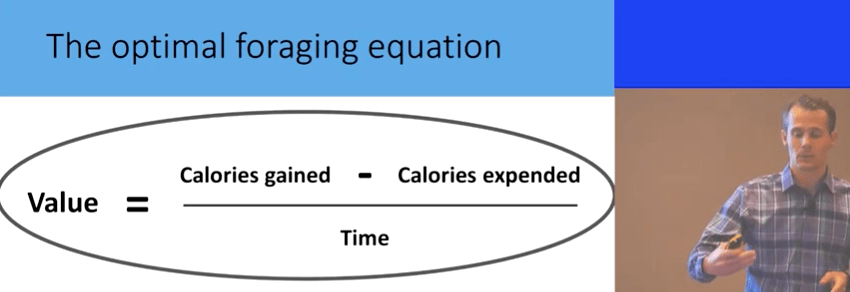
We focus on design because of the potential upside. In his talks on The Hungry Brain, Stephan J. Guyenet brings up the optimal foraging equation.
YouTube

That same approach works for design. The cost for a good design is relatively low and the gained value—especially because all value is perceived value—is relatively high.

Good design is why Pabrai likes Southwest, even though the seats are smaller. Good design is often hard to measure but the results show there’s something there.

Trees on Buildings are not Easy

On the 99pi episode, #385 Shade, Roman Mars and Kurt Kohlstedt talk about the trend of trees on terraces. Kohlstedt said:

“One of the things that always cracks me up when looking at their (architect’s) renderings is that you’ll see all the trees on the sides of the buildings and they’ll depict the plaza below with a couple of trees. I can’t help but think; if you want to go all green, the easiest way is to add more trees on the ground. Which makes you wonder, what is the purpose?

What’s the purpose? That’s a good question. Here’s a YouTube video of some ‘plans.’

I call this fancy recipe syndrome. It’s the idea that if a chef blogger shares a recipe it needs to be distinguishing. It’s hard to stand-out with simplicity, efficiency, and time-tested recipes. Though my favorite cookbooks, are just that.

Okay, okay. They’re standing out. What’s the big deal?

Well, on net, these green buildings are a zero. They cost more to build and maintain than they offset. Yet they persist. What’s up with that?

Whenever we see the illogical, it’s an invitation to dive deeper. Everyone is locally logical. Bob Moesta said, “the irrational becomes rational with context.”

There are multiple part-of-the-reason explanations but I’d guess the predominant one is the contrast between the visible and the less-visible and the idea of importance and unimportance. We tend to think that visible = important and when the entire side of a building is covered in trees our thinking fast reaction is, wow, that building must be green.

However so much is working against us, including how we see vertical versus horizontal spaces.

It’s helpful to remember that action doesn’t always mean effective. In productivity circles there’s the Cal Newport deep work ideas. In investing there’s the advice to, ‘don’t just do something, sit there.’ In architecture it might be to just plant more trees on the ground.

I was talking to a neighbor about refinancing a house and shared these calculations. Looking back, a re-fi is like putting trees on a building. It’s flashy, it’s easy to count, it makes sense. But in the scope of a personal budget there are much easier and effective things worth doing.