The Need for Speed

Tom Cruise Quote GIF by Top 100 Movie Quotes of All Time

You know a mental model is good if you continue returning to it. Taleb’s antifragility is like this. Munger’s emphasis on inversion. Another is Boyd’s OODA loop.

Run the numbers on a fifteen or thirty-year mortgage with the mindset to invest the difference and both are good choices. Avoiding mistakes is more than half-the-battle.

When I finished that post, I thought good choices were low variance. “Don’t be house rich and cash poor,” my dad advised. With too much house, a job loss would introduce a lot of volatility. Similarly, an emergency fund tempers variance. So does ‘living within your means.’

However, variance isn’t the first principle.

What matters more is response cadence. We’ll call this articulation of cadence and the OODA loop: Variance Response Time (VRT).

A public school teacher will have a high VRT due to the nature of hiring. With seasonal hiring and year-long contracts, a teacher must step into another industry or live off their savings. A large emergency fund (dollars are units of time) will make the transition more comfortable.

Medical providers will have a low VRT. While their emergency funds vary, a physician, nurse-practitioner, or medical assistant can immediately find work. With a lower VRT these people can recover from choosing from a mixed bag of good and bad choices.

A tree has the longest VRT. A force outside the normal ecosystem conditions and that’s it. Kaput.

While money, knowledge, and transfer (i.e. licensing requirements) will all affect VRT, so will complexity. It doesn’t matter how much money or knowledge someone has if they don’t know which question to ask first. Boyd’s first ‘O’ is Orient. Or as Steven Soderbergh put it, “If you don’t know where the camera should go it doesn’t matter what you’re shooting on.”

None of this is new but examples seem to help drive the point home. Catholic churches do read the same gospels each year. So, am I able to adapt quickly or am I setup so I won’t have to?

Competitive Advantages: NBA

It’s interesting to hear successful people talk about physical location as a competitive advantage. We should probably hear more of it.

George Lucas left Hollywood for San Francisco. Ken Burns lives in rural New England. Buffett is in Nebraska. Brent Beshore, successful in his own niche, operates in Missouri. All of these places are advantages, not disadvantages, to the participants.

Getting away from the cacophony of a major city helps someone do a certain kind of work. For these individuals, the loss of interactivity is offset by a new set of actions.

Daryl Morey spoke about this to Bill Simmons. Morey noted that in addition to no state taxes, Houston Texas had more to offer players. Great weather, fine recreation, good culture, and so on. In addition to dollars and moneyball, Morey has a large competitive advantage. I often wonder why the local Orlando Magic doesn’t offer more to their players about brand building, as one of the greatest brands in the world shares the same ‘magic.’

The nature of these competitive advantages came up in a podcast with Zach Lowe and Howard Beck who said (39:30):

I don’t think it’s fair to the fans when you treat every injury to every player like it’s a national security matter and the Nets have done that. That’s Sean Marks embodying the Spurs’ culture.

This is Marks’ mistake. He’s taken too much. While the Spurs have a great cultural reputation it was time-sensitive. The next great culture team will have to find the first principles and not the outcomes. It wasn’t that the Spurs kept things secret but that they did so for a reason. That’s the key, and it’s important to ask if that still matters.

At the 2019 Sloan Sports conference, Beck and Lowe were on a panel with Paul Pierce who said, “team style of play is created around their best player.” Any competitive advantage is contextual. The time and place matter just like the people and actions.

Ego, Null-Ego, Anti-Ego

One of Nassim Taleb’s contributions is reminding people of opposites. That the opposite of fragility is not robustness but anti-fragility. That absence is not the opposite.

With that in mind we’ll see that the absence of ego isn’t anti-ego (humility) but just null-ego. Ted Sarandos spoke on the Aspen Ideas To Go podcast about the early days of Netflix.

It’s easy storytelling that Netflix disrupted television. It’s convenient to label Reed Hastings a genius (no matter how much he emphasizes his luck). It’s a great contrast to say that Netflix landed House of Cards and no one else did. However the truth is always more complex.

Everyone, Sarandos explained, wanted House of Cards. The show was not like an indie-band that blew up. It was an auction and Netflix was the highest bidder.

In addition to the highest bid, Netflix had another competitive advantage. A null-ego. Sarandos said:

“We had to convince the talent, ‘Why do it with us?’ We famously gave them twenty-six episodes with no pilot and a promise not to give them any notes on the production. I did that because there was no reason they should have done it with us. We had never done an original anything.”

Ted Sarandos

Sarandos and Hastings didn’t have an ego and that served them well. Jason Blum said that this is his advantage too. Michael Ovitz wrote about this too, noting that daytime television didn’t have much glitz and glam but it did pay the bills.

Sarandos continued: “at the beginning (the light touch) was out of necessity. I didn’t have enough people and I told David Fincher, ‘You don’t want me giving notes.’ I knew enough people who had shared enough horror stories.”

This decentralized command is common for high functioning organizations with great culture and talented employees. Warren Buffett has said to, “hire well and manage little.” Both The Simpsons and Seinfeld were famously no-note-sets.

Sarandos understands this, “The real art of what my team does is pick the show runner and then give them the tools they need.”

However, interviewer Derek Thompson and Sarandos talk about why this doesn’t happen. It’s the belief that activity is good. Taleb wrote about this too:

“Ingenious interventionism is very persuasive across professions…if you supply a typical copy editor with a text, he will propose a certain number of edits, say about five changes per page. Now accept his corrections and give this text to another copy editor…and you will see he will suggest an equivalent number of edits.”

Nassim Taleb

Like the Hollywood-note-machines or Nassim’s editors we can often think of change as good. However, sometimes all it takes is the removal of something harmful rather than the addition of something helpful.

Always Fix Your Weaknesses

On the Wharton Moneyball podcast the trio of Eric, Adi, and Cade talked about betting lines for the upcoming weekend in sports and they brought up a good point: Liebig’s Barrel.

The idea is that a barrel can only hold as much water as the shortest slat. In the context of Wharton Moneyball the trio discussed if Jimmy Garoppolo was an elite quarterback. Adi said he might be “mediocre,” to which Cade replied, “No, they’ve got a great coach and a great system, and a great defense. They’ve got enough quarterback.” Eric added, “If both teams play to their abilities I think the 49ers win the game.”

From the sounds of it, the ‘quarterback’ slat of the barrel is about as tall as the others, and tall enough to win the game.

‘What to do’ is an allocation challenge. Good capital allocators tend to succeed. It’s amazing how much the leaders in William Thorndike’s book overlap with leaders in any successful organization. He writes, “As a group they were, at their core, rational and pragmatic, agnostic and clear eyed.”

What do you do? Improve strengths or weaknesses. It depends, but not in football.

In football the impact of any one player is small, though the quarterback has increased in importance. The football ‘barrel’ has many narrow slats: offense, defense, coaching, training, analytics, and so on. So fix weaknesses first.

But wait, there’s more! Both randomness, situation, and skill mean that teams don’t know who great players are. Talent evaluation, commentators joke, is having a generational talent every three years. So if it’s difficult who’s the best, fix weaknesses first.

And if all that weren’t enough there’s the idea of diminishing returns. It costs more to make a seven an eight than a four a five. So fix weaknesses first.

In any capital allocation decision it often makes sense to avoid paralysis by analysis. One way to do that is find a weakness and make it better. Then, find another.

Truth-Default, Podcast-Default

How do you believe someone?

It seems like context is really important. Used-care-salesmen face an uphill battle on the field of ‘reputation’. Businessmen in suits have some kind of unconscious advantage. Then there’re podcasters.

Why are podcast people so persuasive?

I wondered this after looking up another ETF by another ETF operator and podcast interviewee. They always seem to have good ideas and my rationalizing brain runs faster than my legs on my podcast runs. Negative splits are a joke compared to the legitimization I can do. Well, you do need to zig when everyone else zags.

Part-of-the-reason may be due to something Dr. Tim Levine (YT) calls “Truth-Default Theory.” The thinking goes that Truth-Default allows coordination.

The part of Levin’s talk that related to my podcast persuadability was when he addressed couples. In one study they collected college couples and told some couples that one might be lying about some things (it was a large collection of statements to hide the true nature of the study) and they told other couples nothing of the sort.

For couples who received hints of deception, the lie-spot-rate was slightly above average (60%). However in couples with NO hints the rate terrible. It was so bad, Levine said, “During debriefing we had several subjects deny the nature of the experiment and tell us their partner did not lie to them and we were surely mistaken.”

In a study of political agreeableness, there was a humanizing element to hearing someone’s voice rather than reading their words. This is may be what happens in podcasts. Listeners subscribe to things they want to hear (confirmation tendency) with people they enjoy listening to (liking tendency) in a medium (McLuhan) that is more persuasive.

Pile on Levine’s theory that we default to believe. He said, “My theory is that absent some kind of prompting, thoughts of deception don’t even come to mind.” The payoff to believing must be worth it.

Image result for if you want to go far go together

On a Christmas walk with my father-in-law, we covered a lot of ground in both sidewalk and ideas, and one that we touched on was fasting. I explained that I believed in fasting without considering the science. In fasting, there’s nothing to sell.

Constant vigilance is impossible and unwanted. Truth trust leads to cooperation–which got us here. However, an awareness might help at least avoid the situations that aren’t win-win.

Thanks for reading. More around this idea on Twitter.

Design it

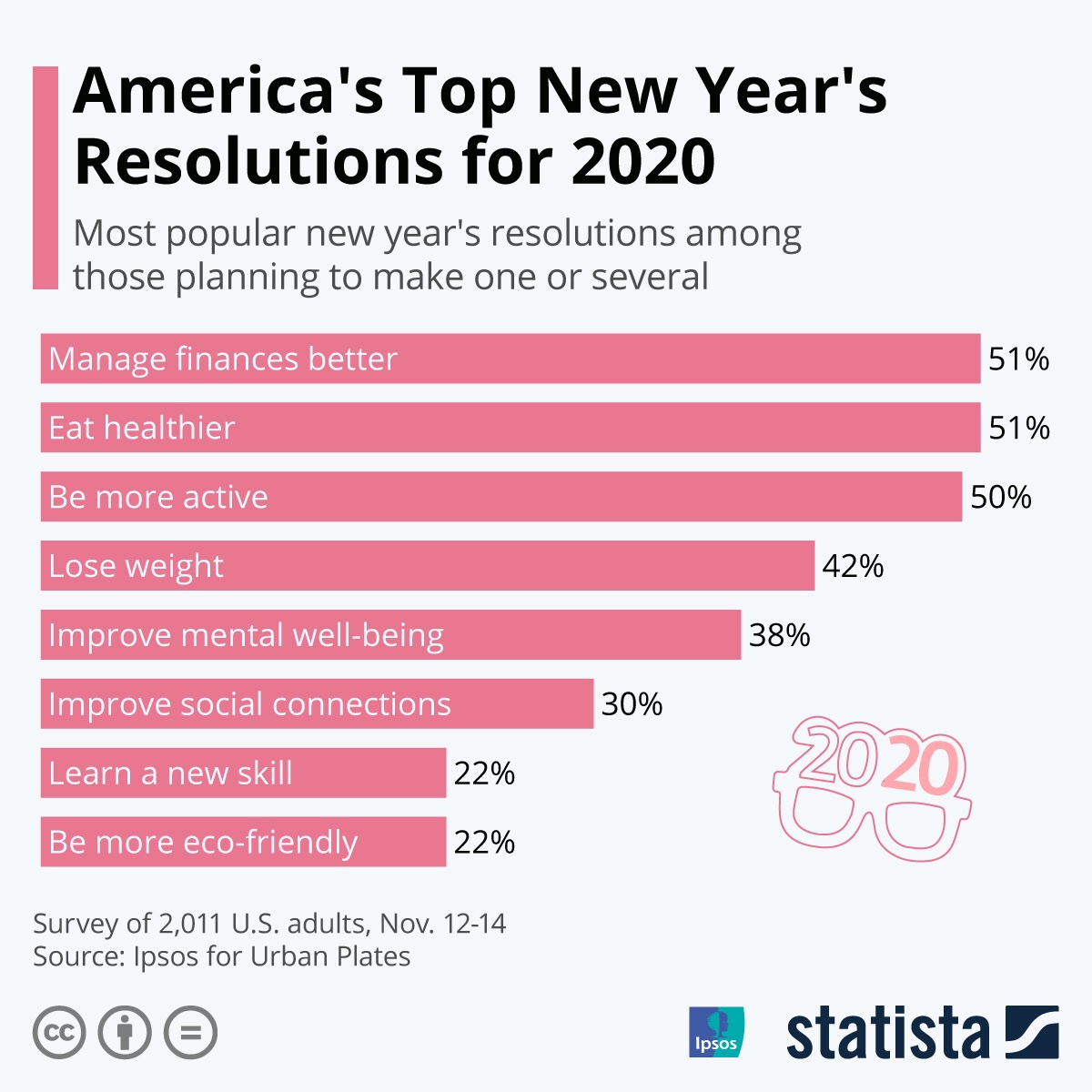
I don’t remember resolutions as a kid other than be nice to my brother or study more. Ambiguous, token offerings.

As an adult, I get it. Finances, health, and friendships all take on different meanings as time passes. It’s that wonder of the world called: compounding.

Part-of-the-reason things compound is the system. As kids, our systems is buffered, like bowling alley gutter guards, by caring adults and lack of resources. It’s harder to go to extremes. As an adult these buffers fall away and we rely on the skill called ‘personal responsibility’.

If t-shirts are any indication, there are fewer adults ‘adulting’ each day. Luckily for them, very little ‘adulting’ is required except for small moments of design. Their obstacles are really opportunities.

Rich Barton said “Every friction point in our lives is a chance for an entrepreneur to solve a problem.” Jeff Jordan said that eBay bought PayPal because of transaction cost frictions. Ted Sarandos noted this too, “What it takes to get you out of your house if you’re on episode four of Stranger Things is pretty high.”

Frictions are the source of the negative effects that lead to the resolutions.

For our resolute resolvers then, we can ask if we want to do more of something we should make it easier to do and if we want to do less of something we should make it difficult to do. They should design it.

Image result for dial spinaltap

However, most people don’t consider themselves designers. They confuse design with art. Art is the “shabbiest” kind of design writes Victor Papanek. Design is not white walls and pine desks and smart drawings. Design is ugly prototypes and rough consensus and running code and living problems.

Design just changes the system. Anything that changes behavior is a design. So if we want to change something, we can design it—business or personal.

15 or 30-year mortgage?

Right around thirty-two, most people ask this question: should I get a 15 or 30-year mortgage?

When my wife and I wondered this we had some of the personal-finance challenges licked (hedonic adaptation, envying the Joneses, etc.). A fifteen-year mortgage felt like the responsible choice because delayed gratification is almost always worth it.

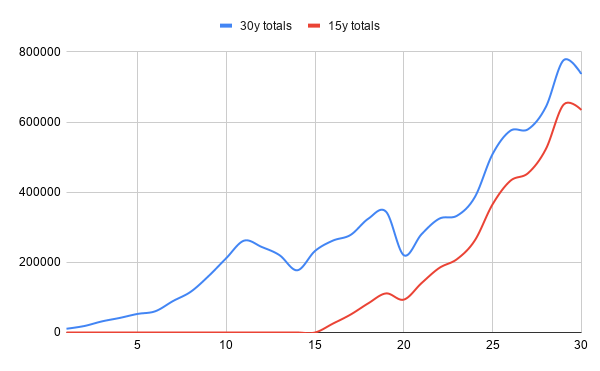
However, there was opportunity cost to consider. If we chose the lower monthly payments that go along with the longer payment period we could invest the difference. Using a selection of actual returns of the S&P500 over the last thirty years here’s what the number said: it doesn’t matter.

These lines cross around thirty-five years.

Subtract total house payments (extra interest) from total investment gains and the total difference is twenty-thousand dollars.

Fifteen or thirty? Doesn’t matter.

Another question that pops up for parents is paying for college. It just so happens—and I double-checked the math—that a fifteen-year mortgage started when a child is three, finishes when that child turns eighteen and may head off to college. Mortgage payments become tuition payments. Clean and easy.

This doesn’t matter either.

All that matters is choosing from good options. With hindsight one option will be better than the others, but that prediction is impossible.

A lot of time we want THE BEST. Early in life, I compared televisions, computers, and cars on all the listed attributes (I hadn’t read Sutherland). Now I try to think about what the good options are and pick one.

Much of life is too complex to optimize but not so complex to neglect.

Forward and Backward Thinking

“Jeopardy! James” Holzhauer won a total of 2.7M dollars during his appearances on Jeopardy!. It was a financial and cultural success as bar flies asked each other, have you seen this guy?

During the week his run ended, Holzhauer appeared on the Wharton Moneyball podcast to talk about his approach on the show as well as what it is like to be a sports bettor. While his interview was good, this part stood out the most:

A stunner of a Daily Double OR “someone suggested they could make the questions really easy and any advantage I had is negated and I’d purely have to win on the buzzer.”

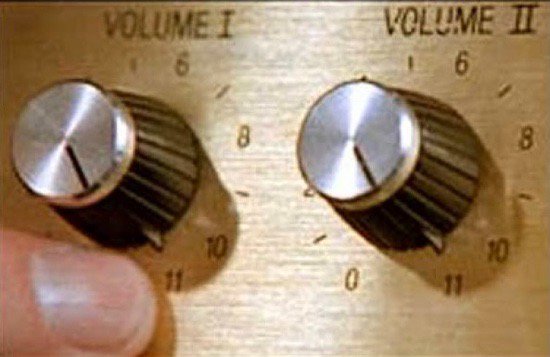
Most of the time people find themselves thinking about the first suggestion; harder questions. However, difficulty is a dial that can go both ways. Rather than ask how can James get fewer questions correct someone on the show could wonder, how can not-James get more questions correct?

Daryl Morey said of the early analytics movements that coaches quickly picked up the advantage of corner-threes—offensively. However, “If you knew threes were good on offense you had to know they were bad on defense but that whole marriage hadn’t happened yet.”

There are two obstacles to seeing things forward and backward.

First is that people love to see cause and effect as well as assign responsibility. Put another way, we rarely consider the conditions of the system, and their effects.

Second is that people settle for one-right-answer. I blame school. ORA works for complicated questions in stable fields: solve this chemical formula. ORA also works for simple questions in complicated fields: what motivated this purchase? ORA does not work for complicated questions in complicated fields. We call this “most of life”.

Thinking forward and backward then provides one tool for approaching problems. For practical use, whenever you hear an adjective like good, low, recent think of the opposite like bad, high, or ancient and think about how turning the dial in that direction might have beneficial effects too.

Tools for 2020

Recently I had to take our family golf cart in for service.

That seems odd, but we live adjacent to the largest retirement community in the United States. There are over 100 miles of ‘multi-use paths’ for walkers, runners, bikers, and golf-cart-drivers. Have you ever gone to dinner, the library, or home from elementary school on a golf cart? It’s awesome.

The service station was three miles from our house and so I ended up walking home. As I strolled, cars and carts zoomed past and I marveled at the efficiency of an internal combustion engine.

Later that same day I read this from The History of the Future:

“With web forums, chat rooms and a motto of “Learn, Build, Mod,” ModRetro sought to attract the world’s best, brightest and most curious portabilizers. And for the most part, Luckey’s community achieved that objective.”

Toward the end of 2019 on Twitter there was a thankfulness on the platform. I’ve met some of the most thoughtful, kind, insightful people. It’s really amazing.

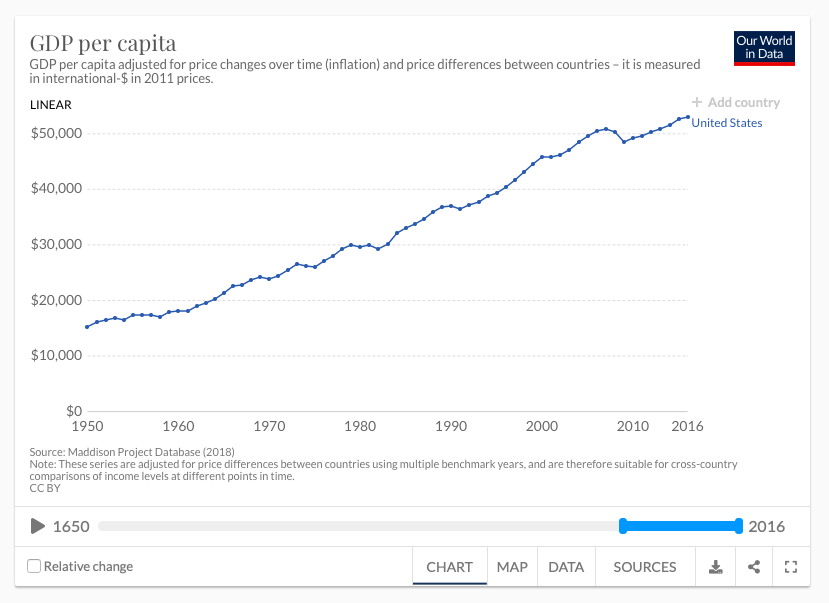
Both the engine and the internet increased productivity.  Throw in some other major changes and we get a picture of the growth.

Screen Shot 2019-12-23 at 6.18.41 AM.png

That low hanging fruit has been picked, sorted, canned, jammed, and consumed. But here are some ideas for tools for 2020 and beyond.

  1. Your health. It’s amazing how much more someone can do when they optimize their physical and mental health. Some new tools will be easier than others because they’re adjacent to the things we already do but this is one area where anyone can develop and deploy better tools.
  2. Your writing. There’s something to writing that forces someone to think about an idea. Even superficial writing — I have an idea! — can be valuable because it creates a dot on an idea graph.
  3. Your technology. Those engines that zipped past me required some level of skill, so too does the technology in our lives. From no-code to real code, tweeting to a/b tests, technology is a tool to worth improving.

These three tools are guaranteed to help because there’s nothing here to sell. It doesn’t matter which health program, plan, or path. There’s no software for writing or specific code for technology.

I’m a sucker for the shiny new app, service, or technique for X. But the best results may come from the compounding of all the things we already do.

Words mean Competition

Supported by Greenhaven Road Capital, finding value off the beaten path.

The easiest competition is a competition with no one. Peter Thiel wants entrepreneurs to go from Zero to One. Bob Moesta wants business owners to think about nonconsumption. Investors want to fish by themselves.

A good sign for a lack of competition is a lack of words, metrics, numbers, figures, or ways to describe the thing. Sabermetrics provides a clear example, creating new words like WAR (wins-above-replacement). Early on it was only natives that spoke that language. With time it became legible and numerical.

Recently I was researching Shopify for a client and the Reddit message boards are full of good questions, helpful advice, and sad stories. The most helpful comment was this, “drop shipping worked before there was a name for it.” 

Like comets passing past planets; ideas are unknown, known and captured, or lost again. Once an idea has been collectively captured it takes a form, it becomes easy, and it’s hard to create value from it. Ben Savage explains this idea in his comment about blockchain.

There’s little doubt that in 2020 we will generate, collect, clean, and analyze more data than we did in 2019. That’s a lot of potential legibility. However, more data doesn’t mean good data.

Ask any parent what the best restaurant meal is like and they’ll tell you, 100% of the time, it’s when a waiter takes special care of the children. Early food, extra apps, special cups, jokes, magic tricks, whatever. This is low hanging fruit, easy to see, guaranteed to please.

“A larger sample size doesn’t give you a better answer to a bad question.” — Bob Moesta

I don’t get more excited for new years than I do new months but they do provide an artificial break — like a paragraph — to pause and prepare.

We can take a breath and business owners can ask, am I going to sell the same things to new people or new things to the same people? To avoid the competition and make a difficult task slightly easier it will help if there aren’t quite words for what you’re doing.

Thanks for reading.