Big Game Gambling

Photo by Daria Sannikova on Pexels.com

On Bet The Process, Rufus Peabody, Jeff Ma, and John Murray of the Westgate Casino talk honestly about betting. The podcast reminds me of Econtalk. Rather than simple narrative answers, the true answer is some version of, well, it depends. The Big Football Game offers a chance to think about decision making and our bias to thinking that something specific will happen.

People are pretty terrible at weighing opportunity cost. Deciding on this or that is much easier than coming up with a list of options. Walk into any high school and you’ll hear students protest a fill-in-the-blank test when they expected a multiple choice version.

With the upcoming Big Football Game, recreational bettors in Las Vegas and other states will start to make prop-bets. Props, Murray said, were invented to make blowouts interesting. The 2020 Big Game, for example, offers a chance to bet if a fumble is lost in the second half (No, -150).

Make it interesting and immediate thinking lead to a tendency of people to bet for something to happen. Murray said, “The public will bet yes, yes, yes on everything in the prop markets.”

Rufus Peabody, former-prop-bet-gambler-extraordinaire, said that the bet of ‘no safety’ always has positive value. It’s easy for people to remember a past safety, envision a future one, or construct a narrative about someone’s defense chasing down someone else’s quarterback.

We remember the somethings that did happen rather than the one thing that didn’t.

With that in mind, let me give you a sure thing. The best over bet, will be to bet on overeating.


Solve for the Equilibrium: Facebook

One of Tyler Cowen’s most powerful ideas is to have a little person that sits on your shoulder. In one talk he explained it this way:

“Carrying around phantoms and daemons is advice I typically give to my students. When I teach them, I’m trying to teach them some content but most of all I’m trying to teach them to have a phantom Tyler Cowen on their shoulder so when they go through life they can consult with the phantom Tyler Cowen because the real Tyler Cowen won’t be there…It’s very useful to have a phantom of someone on your shoulder to respond to what ideas you might have.”

Tyler Cowen

One way we can all have a phantom Tyler with us is to solve for the equilibrium. This common prompt on his blog, Marginal Revolution, is a shorthand (as I read it) for asking and then what? Cowen is exceptional at this. When Brendan Wallace asks Tyler about Facebook addressing the misinformation problem, Cowens says that’s a very difficult question. Then he solves for the equilibrium:

“Here’s how I think of the world we live in. Due to the Internet every possible thing that can be said, will be said. Every video that can be made, whether it’s real or fake, will be made. Every charge that can be leveled. Every conspiracy theory that can be imagined. It will be out there.

“The question is, do you want to regulate Facebook heavily and push it into more obscure corners of the internet? I would say in the short run that decision will look pretty good, people will find it harder to get to, but over the medium term there will arise websites. One of them might be called ‘all the really good stuff you can’t get on Facebook’ and it will be very popular. So I actually favor some continued version of the status quo.”

Tyler Cowen

To solve for the equilibrium means to think like Hans Rosling, who reminded people the world can be not-great but also getting better. Too often we conserve mental energies. If X is bad then not-X is good. Well, maybe not.

Diet contrasts this clearly. If eating meat is bad, that means vegan foods like Oreos, Doritos, and Coca-Cola must be good. Well, maybe not.

Facebook clearly has a problem, but how to react isn’t. Instead of reacting, we can consult our phantom Tyler. What will happen immediately? What will happen in the mid-term? These questions may not have lead us to change our mind but we will be wiser for doing it.

Sometimes it’s difficult not to act. However there are many cases when we should don’t just do something, sit there. That and a few other helpful ideas are in my Idea Trails book.

Netflix’s Two Customers

‘Who is my customer?’ is a key business question and the ways a company looks at that question influences its approach. For Reed Hastings the question is oriented around media consumers and media producers.

The consumers.

These two stakeholders influence the strategy. About the 1.5X speed feature that so many railed against, Hastings said, “it’s an experiment, we’re always doing experiments to see if consumers even care about that. If consumers cared a lot we would go and talk with creators and see the use cases.”

The future of competition will be measured, Hastings said, in, “How do consumers vote with their evenings?” And there will be a lot of voters. Hastings gets this, When host Andrew Ross Sorkin addresses the international market Hastings notes that “It’s not one market.”

Population tailwinds have built many great business: Coca-Cola and Hershey. As people move from the land of linear TV to on-demand the number of consumers will grow and Netflix wants to serve some of them.

The producers.

One of the early advantages Netflix offered producers of content was control. Ted Sarandos said that part-of-the-reason they won the House of Cards bid was because they ordered a full-season and promised not to interfere. This is part of Jason Blum’s advantage too.

When asked why somoene can’t just copy what he does, Blum replied, “It’s very hard for producers and executives in Hollywood to get out of their own way.”

It almost sounds as-if the Netflix strategy is out of a movie: if you build it they will come.

A few other quotes I liked:

  • “A bubble has to go down again…linear TV is both a huge revenue and time source that’s declining and that’s fueling the growth of all the internet services.”
  • “We’ll continue to push the edge in entertainment (and have content) that people feel is unusual, something they haven’t seen before.”
  • “The original quote was that we compete more with Fortnite than HBO meaning that Fortnite gets a lot more hours of viewing…but we don’t compete with Fortnite by doing something like that because we’re not very good at that. We compete by doing the most amazing TV shows you’ve ever seen.”

A New POV

A new perspective can be invaluable. One expression is that a change in point-of-view is worth forty IQ.

In her Masters in Business podcast with Barry Ritholtz, Barbara Tversky highlighted research about design and creativity. She said:

“In order to design we have to get rid of old ways and think in new ways. We just finished an experiment asking people to think of new ways to use old things. The good answers come at about the ninth answer. The way we got people to generate these new ideas—how to use an umbrella in a creative way—was to ask them to think of differing roles of people. How would a doctor use this? How would a gardener?”

Barbara Tversky

Host Barry Ritholtz said it reminded him of the props portion of Whose Line is it Anyway.

A new perspective tends to help because it’s a new way to look at an issue. Even though we may be well versed in an area, we also may be on a blocked trail. Our familiarity with one path could be our hinderance.

When Bill Gates was asked why he could contribute to something like polio research, besides just dollars, he said that sunk costs and biases seep in along with the work. Instead there has to be an outside perspective that asks, have you considered this?

Part of the reason comedy, like Whose Line, works so well is because it offers a contrast from a different point of view. Ricky Gervais’s joke about guitar lessons is just that. He reframes Twitter into a physical message board. He reframes followers as passersby.

It’s great to hear about Tversky research because it provides a framework for how this can happen. Think of ten jobs, pretend you’re that person, come up with one answer for each. That’s it.

Other quotes from Tversky I liked:

  • “We have to learn routines to get through the day. If everything is a new problem it’s going to take too long.”
  • “Memories start getting distorted the minute you use language because they don’t happen in language.”

The Disney Stroller Couple

It was going to be a long day.

One of the great advantages of living an hour from the Disney World parks is day-trips. Typically we won’t have access to the best attractions, but we’ll have access to many good ones. Plus, seven day-trips over seven weekends is different from a seven-day trip during the week. That’s just basic Alchemy.

Before we moved to Florida, we lived in Ohio and scheduled annual visits. On those trips we had to ‘get our money’s worth’. Tickets might be one-hundred dollars per day per person. Hotel rooms can cost a few hundred dollars too. We bought two ice-cream sandwiches during our last trip and those were twelve dollars.

Flying to Florida and doing Disney costs a lot of money, requires a lot of planning, and introduces some unexpected stress. Keep in mind, this is all a vacation. On our last trip we heard this exchange as a man tried to fold a stroller so he could board a tram.

Him: “This thing is so hard to fold because of all the stuff under here.”

Her: “Welcome to being a dad.”

I felt the frustration like the Florida sun.

Disney’s Animal Kingdom has a few fantastic rides, some nice animal viewing areas, and a few of our favorite shows: A Great Bird Adventure, Finding Nemo, and Festival of the Lion King.

At the big finish of Festival of the Lion King, performers choose children from the audience to take a lap around the stage. One girl got to shake hands with Timon, the singing meerkat. If someone can smile with their entire body she did. It was magical.

Many people believe that Disney’s advantage is their IP—but it’s not their only one. Disney magic is an advantage too. These moments for guests don’t happen because of a character but because of a person.

When I walk around Galaxy’s Edge it’s neat—but when you watch Storm Troopers hassel guests it’s great.

If the stroller couple had a magical moment, they’ll be back. Guaranteed. They’ll look back on the trip, and it won’t have been a long day, but a great one.

Maximizing a 401K

There’s an interesting investing idea in personal finance to be like Rip van Winkle. If investors don’t earn the market returns because they churn, maybe they would be better off setting it and forgetting it, of sleeping-on their investments.

I was reminded of this story because I forgot a password. Does invest like you forgot your password have the same flair? Eventually I logged in and checked our contribution amounts for 2020.

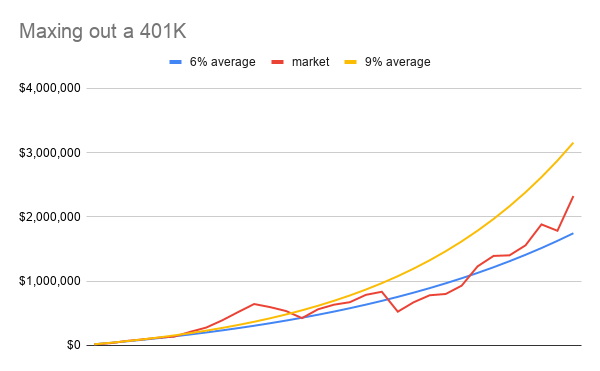
While poking around I wondered what a retirement account would look like if someone were to maximize their 401k ($19,500 in 2020) each year. Sometimes the government changes the limit of what an employee and employer can contribute to a retirement account. As someone who likes simple and effective plans I thought this was great financial advice. I could see advisors telling their clients, just aim to hit the max number each year and you’ll have this much.

I calculated the rate changes each year and found out that contribution limits change at about the same rate of inflation. Of course. The IRS calls these ‘cost of living adjustments’. Sometimes you just need to stumble on things yourself.

The S&P average over the last thirty years was 9.69%. The picture looked like this.

This doesn’t account for an employer match, social security, or other savings but it’s comforting to know that the real 4% withdraw at retirement is $93,000 annually.

Digging into this made me realize how much variation can occur in planning. Cost-of-living, family situations, businesses, multi-income families, income levels, mortgages, taxes, and so on can all swing the equation one way or another. Ditto for flexibility in needs and wants.

However, just because there is a lot to consider doesn’t mean there’s not a simple plan. Specific predictions are futile but ballpark approximations are possible, helpful, and a good way to frame potential outcomes.

Collaboration on Optimal Designs

One important thing Rory Sutherland’s book Alchemy did was remind people about the importance of subjectivity. In her talk, Balancing Order and Chaos in UX, Katie Dill (Lyft, Airbnb) talks about how Virgin Atlantic made people feel different even though their seats are the same size and material.

Mohnish Pabrai said something similar about Southwest, “I go on a Southwest aircraft and I’m in coach and I usually find I’m happy. I’m in a happier state of mind in coach in Southwest versus business in American. Why is that? I don’t know.”

On the easy metrics, Pabrai is getting less value. But he’s happier. There’s hidden metrics at play.

Companies like Virgin and Southwest or Disney, Dill explains, have an advantage because they own the experience. For marketplaces, like Lyft and Airbnb, Dill has advice on what a business operator can do to create the same perceived value advantage as “full stack” companies.

  1. Zoom out, “have a perspective on what you are trying to deliver, it’s not just one moment.”
  2. Look out, “where can the shit hit the fan and where can we solve for it prior?”
  3. Set the stage, “use guardrails.”
  4. Don’t overstep and smother the user’s quirks.
  5. Open up, “the community is the key.”

Good design (and its rewards) aren’t about the finished style but the production style. Design is about collaboration. Dan Lockton said, “When people feel they are being influenced in a way that doesn’t match their understanding of the situation they will rebel.”

The best designs serve users. The best designs pave desire paths.

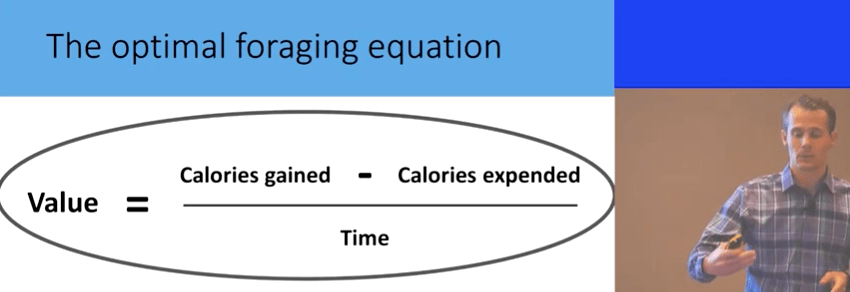
We focus on design because of the potential upside. In his talks on The Hungry Brain, Stephan J. Guyenet brings up the optimal foraging equation.

YouTube

That same approach works for design. The cost for a good design is relatively low and the gained value—especially because all value is perceived value—is relatively high.

Good design is why Pabrai likes Southwest, even though the seats are smaller. Good design is often hard to measure but the results show there’s something there.

Trees on Buildings are not Easy

On the 99pi episode, #385 Shade, Roman Mars and Kurt Kohlstedt talk about the trend of trees on terraces. Kohlstedt said:

“One of the things that always cracks me up when looking at their (architect’s) renderings is that you’ll see all the trees on the sides of the buildings and they’ll depict the plaza below with a couple of trees. I can’t help but think; if you want to go all green, the easiest way is to add more trees on the ground. Which makes you wonder, what is the purpose?

What’s the purpose? That’s a good question. Here’s a YouTube video of some ‘plans.’

I call this fancy recipe syndrome. It’s the idea that if a chef blogger shares a recipe it needs to be distinguishing. It’s hard to stand-out with simplicity, efficiency, and time-tested recipes. Though my favorite cookbooks, are just that.

Okay, okay. They’re standing out. What’s the big deal?

Well, on net, these green buildings are a zero. They cost more to build and maintain than they offset. Yet they persist. What’s up with that?

Whenever we see the illogical, it’s an invitation to dive deeper. Everyone is locally logical. Bob Moesta said, “the irrational becomes rational with context.”

There are multiple part-of-the-reason explanations but I’d guess the predominant one is the contrast between the visible and the less-visible and the idea of importance and unimportance. We tend to think that visible = important and when the entire side of a building is covered in trees our thinking fast reaction is, wow, that building must be green.

However so much is working against us, including how we see vertical versus horizontal spaces.

It’s helpful to remember that action doesn’t always mean effective. In productivity circles there’s the Cal Newport deep work ideas. In investing there’s the advice to, ‘don’t just do something, sit there.’ In architecture it might be to just plant more trees on the ground.

I was talking to a neighbor about refinancing a house and shared these calculations. Looking back, a re-fi is like putting trees on a building. It’s flashy, it’s easy to count, it makes sense. But in the scope of a personal budget there are much easier and effective things worth doing.

The Only Honest Sport

Sports are good case studies. The outcomes are binary, the statistics are plentiful, and the rewards are large. There’s glory, attention, and interest. What’s not to love?

The most recent version of this (on my radar) was the double-edge sword of luck. In his paper, (Kyle Siler) writes about how lucky breaks in football lead to job losses and job opportunities. One part:

“Luckier outcomes were conducive to the retention of coaches and players. Less lucky teams were more likely to replace coaches and players. In turn, people are credited or blamed for accomplishments that were at least in part out of their control.”

In an era where people emphasize the process and not the outcome, where resulting is a four letter word, this objectability makes sense.

Well, only sometimes.

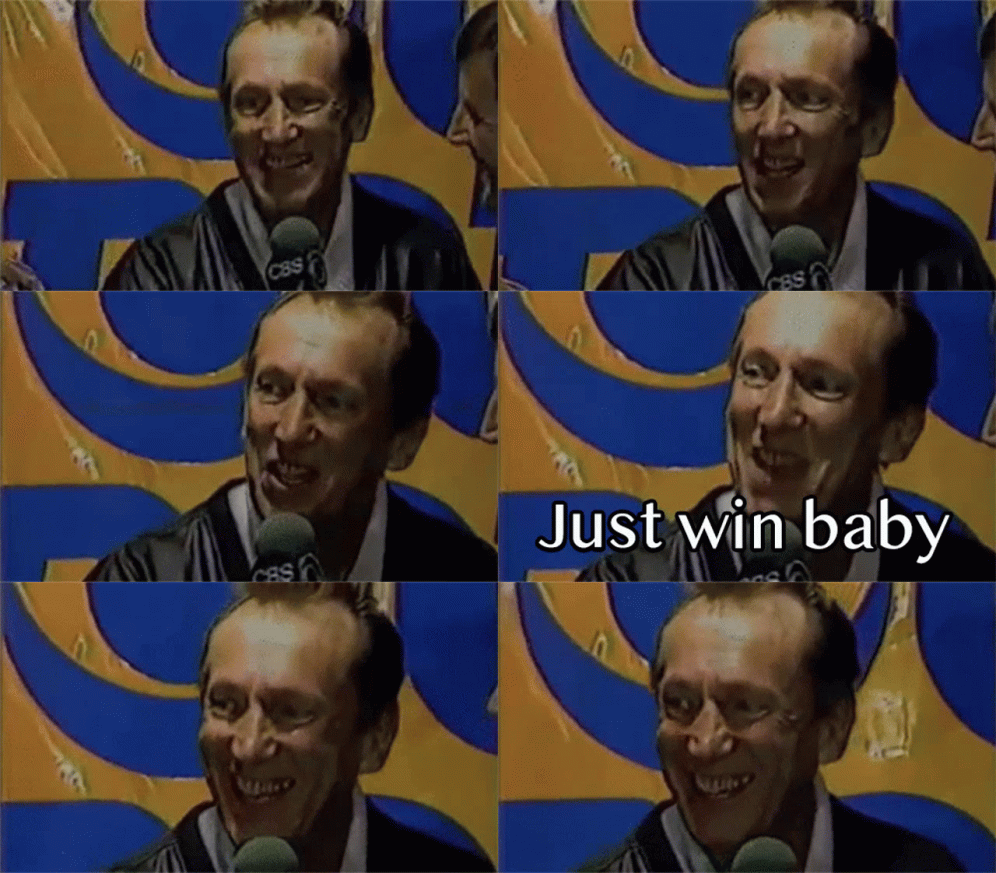
What makes sports great: bountiful numbers, is also what makes it prone to errors. Al Davis had it wrong.

Image result for just win baby gif"

But Davis knew he was wrong, even as he said it.

Go Like Hell was a great book because it had great characters, the race was secondary. Bob Iger‘s most-important early lesson was that sport wasn’t mainly about broadcasting. My short ebook emphasizes the jobt-to-be-done of sport.

Al Davis knew all this. Davis is still relevant today because he knew that winning was secondary to relevance. Sports is about storytelling. Sport is about narrative. Talking heads are imperative to this. Analytics haven’t taken over sports because they’re not conducive to storytelling—at least not yet. That means there’s one sport, one champion, that understands this. The only honest sport is the WWE.

Millions of Dollars or One Ring?

Money solves a lot of problems and it’s a stable form of compensation. That makes it a great incentive.

Here, take this thing that you think is valuable and others think as valuable and thanks to the computer in your pocket you don’t actually need the thing but a code on a site that sends the digital version of the thing to someone else. Trust me, this works.

But money isn’t the only incentive. Eventually it’s not even the most important. However, not thinking about money as an incentive requires imagination. Nothing is official but here’s one reported consideration for the NBA.

This is a terrible idea.

Bill Simmons—who we like—understands why. In his version of the in-season competition, Simmons awards teams a better chance to win the NBA championship. In zero-sum competitions, people would give body parts to win. How much does the marginal million matter?

It’s not just sports. After a certain salary, company culture matters more than company checks.

Incentives are like a series of dials: culture, mission, pay, people, autonomy, and so on.

Bob Iger wrote that he and others stayed at Capital Cities because of loyalty. Plus it was a great place to work. Once in the Disney machinery things changed. Iger again, “If you stuck to your budget and behaved ethically, Tom and Dan (Cap Cities) gave you room to operate with independence…Disney was the opposite of all that.”

It’s great that money isn’t the only motivator. This allows for interesting solutions. If you need some ideas, try some Alchemy.