Baby Steps and Windfalls

Supported by Greenhaven Road Capital, finding value off the beaten path.

There are two types of change, gradual and sudden. Kids are one example. Before kids a person is mostly responsible for themselves. Then a baby shows up. One human being is entirely dependent on another. That’s sudden.

Then those kids grow up. They become less, but not fully, dependent. One day a parent looks at them and somehow they grew from a baby to a teenager then to an adult. Daily gradual change is hard to notice, but a lifetime of gradual change is hard to ignore.

The delightful Chenmark email addressed this idea with, People Like Us Do Things Like This.

“Second, we must understand that change is a steady, incremental process. Good things happen gradually so that great things can happen all at once. To be successful, we must have the discipline to make the small, daily, but sometimes hard decisions that will add up to massive success over time.”

A lot of successful change is baby steps. The physical world shows this everyday; beards go grey, grass becomes hay, pounds are added (or lost) from what we weigh. Gradual change is easy to get used to, we hardly notice it.

The hard part of gradual change is sustaining it. This is why making it to Mars is so hard. It takes a long time. High school students can figure out the variables for fuel, direction, orientation and so on but keeping people alive, sane, and healthy during a nearly a year in space is a challenge. The same is true for financial, personal, or experiential wealth.

But windfalls happen too. Something good, or bad, occurs in our lives that change the existing conditions. Babies begin one type of family and divorces end one. Financial rewards from a lifetime of effort are some too. On the Invest Like the Best podcast, Joe McLean talked about this.

“Blindly buying houses and giving money is not the direction you want to go in. That’s part of our spirit of empowering people to get education rather than given money.”

McLean wants to serve his clients and influence their actions after a windfall.

Lottery winners keep their money, but sometimes lose it. Bariatric surgery participants keep their weight off, but sometimes gain it back. The leverage point for windfalls and baby steps is the same — it’s actions. Gradual change is actions in pursuit, sudden change is actions to sustain.

Sometimes the actions are unclear. Sometimes it takes a little creativity. For starters, think about what not to do. McLean notes that athletes buy the right watch, not the bright watch. Invert the question, says Charlie Munger, and avoid doing dumb things before you mess around with doing the right things.

Then good ideas can come from anywhere.

“I’m often asked, ‘Where do you get your ideas?’ This happens to anyone who is willing to stand in front of an audience and talk about his or her work. The short answer is: everywhere. It’s like asking, ‘Where do you find the air you breathe?’ Ideas are all around you.”

Twyla Tharp

In the book, Anatomy of a Song, Marc Myers interviews and edits decades of musicians interviews. What’s common about each is the sudden and gradual change. There’s always a flash; lyrics, riffs, intros. That’s the sudden change. Jim Weatherly called a college friend only to have Farah Fawcett answer the phone. She couldn’t talk, she had to catch a plane. Jim recalled.

“After I got off the phone, I grabbed my guitar and wrote ‘Midnight Plane to Houston’ in about forty-five minutes—the music and lyrics. The line ‘I’d rather live in her world than live without her in mine’ locked the whole song.”

That’s sudden.

Then that song took a lot of work. Weatherly sold it to Crissy Houston who changed it from planes to Houston to trains to Georgia. Then Gladys Knight changed it to have more soul and spirit. That’s gradual.

There are two ways to go bankrupt said Hemingway’s character Mike Campbell, gradually and suddenly. Those are the two ways that everything happens.

Thanks for reading. Want more? Check out this email series.

Marc Stickdorn

Supported by Greenhaven Road Capital, finding value off the beaten path.

Good designs get awards, great designs get ignored.

Design can be physical like a home or office, technological like a user interface or operating systems, or personal like habits and beliefs.

If we reframe everything as designed then we can adopt the roll of designers. Let’s highlight the design process from Marc Stickdorn.

When he gives tours of the IDEO offices, Tom Kelley gets asked where everyone is. Visitors expect a certain aesthetic.

But that’s baloney. Good designers, Kelley said, spend time with their clients, going through their experiences, walking in their shadows.

Stickdorn agrees, “It’s much more powerful seeing a customer failing to use your product or service than having statistics about how customers are failing. We need to prove something is a real issue (quantitative) and the qualitative bits showing why things actually fail.”

In one talk Stickdorn says that good research is about triangulation between three things; qualitative, quantitative, and questioner. It’s a combination of interviews, numbers, and different people collecting data that will give the most accurate view.

After collecting data, good organizations organize it and then present findings and actions. These kinds of meetings require good arguments.

“How do you create an experience where people feel safe and are open enough to share and try out things? Technology won’t help you with that, that’s a human skill.”

In Trillion Dollar Coach, the authors write that Bill Campbell had certain steps that would ensure a good arguments because he told them, “I hate consensus.”

The first was to set the facts, the second was to set the first principles, the third was to establish things they already thought were true. Bill would also frame meetings as debates, not disagreements. Words frame situations and that matters.

Stickdorn gives another tip to argue well – structure. Some parts of meetings should be ‘Yes, and…’ segments. Where, much like in comedy, it’s a chance to broaden an idea into what the adjacent possible or MAYA territory.

But meetings should also include ‘Yes, but…’ where constraints are introduced, limits proposed, and deadlines created. This phase can include creativity too, as constraints help.

However your organization runs a meeting, “When people are involved you need more structure than you think.” And, “The more freedom you want the more structure you need.”

From there, an organization might get something like a journey map. Building on the triangulation of Q’s, an organization has a chance to visualize the customer’s process. However, “A customer journey map is not a fucking deliverable. Many think ‘We buy this software, we do a journey and then we’re done.’ No, you’re not. They should build their journey map on research and not assumptions.”

Design is about action. Stickdorn highlights Alex Nisbet who said, “We are change agents, we are not creators of beautiful tools…it’s about the outcome, not the output.”

Design is making making a change in the world, that takes action.

Stickdorn believes idea generation is overrated. Underrated is shitty first drafts, or in design-speak, prototyping which is just a numbers game with psychological pitfalls. Stickdorn warns against sunk costs:

“If we take one idea into prototyping we’ll fall in love with this idea. We’ll stick with it even though we learn it’s shitty. Through biases we all have, (we will make up a reason) ‘This prototype is not shitty but is actually cool.’ If however, you take a couple of ideas into prototyping and you prototype it quickly and test different solutions you have variants to choose from.”

People compare in relative, not absolute terms. Any lone idea transforms into a (maybe) good idea because it’s compared to doing nothing. Better advice is to come up with many ideas.

Any kind of design is ‘hired’ for jobs to be done. It doesn’t matter what we call it. It could be design, magic, Alchemy, whatever. “People don’t care about service design, they want their problem solved.”

You’re a designer now. Go solve something.

Thanks for reading. Want a week-day email from me? It’s not analysis, breaking news, or statistically significant. It’s just one story that offers a change in perspective. Rory Sutherland noted that a change in Point-of-View is worth 40IQ (points). This email is just that. Check it out.

Tyler Cowen

Supported by Greenhaven Road Capital, finding value off the beaten path.

Tyler Cowen stopped by EconTalk (for the 11th time!) to talk about his book, Big Business: A Love Letter to an American Anti-Hero. The conversation with Russ Roberts circles the book in a way only Tyler Cowen can. The definition of polymath should be someone who can cite John Rawls and PewDiePie in the same breath.

In talking about how to change poverty, Russ Roberts half-joking says to buy people luggage. The idea being that transaction costs for job changes (see also: Michael Munger) are too damn high.

Cowen suggest enhanced public transit and congestion costs or reduced incentives for things like rural mail delivery. Both Roberts’s and Cowen’s ideas are about frictions. Subsidies reduce fictions for planting one crop instead of another or getting rural mail the ‘last mile’. Removal of subsidies increases frictions and forces a person to find a new way of doing things.

Frictions are something Austen Allred thinks about frequently:

“One of the things I spend most of my time thinking about isn’t the course content but how can I eliminate all the other distractions for people? The first way is making tuition free upfront…how can we take all the distractions away to help someone get from point A to point B? Because we know you can., but lives are complicated and messy.”

Finding solutions to better work is important because work matters. A job is more than a paycheck. “Unemployment is very bad for people,” Cowen says and “most people are happier working.”

Tyler has recommended the work of Brynjolfsson and McAfee in the past, and they note too that work is more than just work. People create friendships, gain skills, and self-fulfillment while on the job. It’s not just a paycheck people get, but intangible and sometimes immeasurable things too.

Solving the ‘job’ of income is like solving the ‘job’ of door-opener by replacing a doorman with an automatic door. The solution only works for the first order principles and neglects everything incremental.

Much of the episode between Cowen and Roberts is about creativity; thinking creatively about new solutions, current situations, and the entire ledger. Cowen says his book is “trying to set the record staring by just looking at the facts.”

One example is social media. Cowen is happy with his use of WhatsApp, blogging, and Twitter because while, “there’s a downside to social media I think the upside is so much greater.”

People are cognitive misers. We assume that all we see is all there is. That’s not the case. The financial sector Cowen says, provides useful services such as capital allocation, yet it’s vilified for a portion of the actions.

In another section Roberts asks if he’d rather be born in the past or the future. “I’d still be okay being born in 1962,” Cowen says, exhibiting a case of the same limited thinking. “I’ll prefer the future but I’m not convinced how long civilization will last. If it’s a uniform distribution across the whole future I’d definitely rather be born in 1962.” Cowen isn’t creative enough about the future—imagining mostly negative outcomes.

A third example of this phenomenon is related to the idea of reference class. People compare in relative, not absolute terms. Joe McLean said that as he advises celebrities and professional athletes, “Every client wants to know what the other guy is saving, not spending.”

Cowen noted, “I think the real weird period was the 1980s and 1990s when everything felt right and orderly. That was an illusion and the bubble has been burst.”

We compare whatever is in-front of us with whatever comes easily to mind. It takes creativity to think about the now in a better light.

You see this with the complaint that we were promised flying cars. That’s the wrong way to think about it. Rory Sutherland writes, “The broken binoculars (of market research & economic logic) assumptions is that the way to improve travel is to make it faster.”

Faster isn’t the only way to make something better. Travel can be slower and be better too. Cruise ships are slower than airplanes yet many people prefer to travel that way.

Even the mundane can be made better by not being faster. Cowen says:

“You can work from the backseat of an Uber and sail on to your flight because pre-check is easy and while you’re waiting for your flight you can read on Kindle. It’s different from a flying car but maybe in some ways it’s better.”

Cowen believes in growth solving, curing, and preventing many problems. One way to grow, the Straussian way when listening to this conversation, is to get creative. It’s new answers like productivity in the backseat of an Uber, wondering why the future won’t be better than the sixties, and how to use social media to better the ledger in our favor as people.

Thanks for reading. If you like these thoughts, you’ll also like this email. It’s weekday mornings, it’s short, and it’s full of stories.

Nudgestock 2019 Wrap-up

Supported by Greenhaven Road Capital, finding value off the beaten path.

Rory Sutherland’s Nudgestock is probably the best conference you’ve never heard of. Luckily though, now you know, and the videos are a go, on YouTube if you must know. We’ll hit a few of the highlights from the wrap up podcast. If you want more Rory, check out his book, Alchemy, or my book about Rory, Thinking Like a Marketing Genius. The current and previous years of Nudgestock are also on YouTube.

Tricia Wang spoke about thick data and big data.

“You want to close the gap between your data model and your human model.”

One shortcoming of designers is that they often want to solve a problem when it might not be the problem. That’s what Wang warns against too. It’s only through a combination of data that someone can get a full picture. Marc Stickdorn encourages designers to triangulate between the qualitative, quantitative, and questioner-noting that we all bring some bias but through diversity we can reduce our data misuse.

Robert Frank was a huge influence on Sutherland. Years ago Rory fell sick and needed entertainment-or at least distraction. Through Amazon he found Frank’s book, The Economic Naturalist. In that book (p. 2007) Frank offers answers from quandaries like; why do men rent a tuxedo when they might wear it again, while women buy a dress they’ll only wear once? And, why do hockey players vote for helmets but almost never wear them?

Frank’s Nudgestock talk was about “the expenditure cascades process.” People compare in relative not absolute terms. So when a higher income group buys something, the next highest group compares with them and so on down the chain.

Stefanie Johnson spoke about the unconscious bias and referenced what happened when the Boston orchestra switched to blind auditions. With a closed curtain, musicians walked across the stage and played for judge who sat on the other side of the curtain.

What you track is what you prioritize. The orchestra was (unknowingly) tracking and rewarding gender as a metric. When they stripped everything away – including the musician’s shoes – so only the music played on the people they selected changed.

Will Page talked about the work done at Spotify, a company we’ve covered before. Part of the reason Spotify succeeded is because of top down support to test things like Discover Weekly. The company has also worked well because they look for a ladder of possible answers, not a single one. For example, if someone gives a thumbs-down to a song on their Discover Weekly podcast does that mean they don’t like the song or that they didn’t want to discover it?

Finally, at the end was a rapid fire section about solutions to problems and Rory wondered how much of the plastic and paper straw debate was about virtue signaling. It’s helpful to remember as brand owners and consumers that there is the literal conversation taking place but also the meta conversation. When your kid says, ‘I hate you,’ it’s the consequence of an amalgam of feelings. The same is true for brands and the work we do.

Thanks for reading. If you want more book recommendations of the likes of Alchemy and The Economic Naturalist sign up for the monthly book list.

The Director’s POV

Supported by Greenhaven Road Capital, finding value off the beaten path.

Kevin Costner has had a great career. (I liked Waterworld.) Costner spoke with Bill Simmons about his career and offered this story about perspective.

Costner was directing and acting in a movie and as such, had to wear different hats. Bill Hader was on a summer podcast with Simmons too and he said much the same thing. Costner comment was:

“My problem was, I gave myself too few takes…finally my producing partner said, ‘You need to give yourself more takes, you’re not rushing anyone else but yourself.”

This isn’t true just for movies, this is true for life. We all wear different hats from moment to moment and it can be hard to juggle them. It helps to have people to tell us we’ve donned the wrong one.

From Costner’s and Hader’s conversations it seems that the secret is trust. Feedback has to be helpful and it has to be trusted. Investment advisors say that the best plan is the one you’ll stick with. Feedback is like that, the best advice is the stuff you’ll do.

In his book, Working Robert Caro reprinted this exchange:

INTERVIEWER: Do you set daily quotas?
CARO: I have to, because I have a wonderful relationship with my editor and my publisher. I have no real deadlines. I’m never asked, When are you going to deliver?

Trust like this works when everyone has aligned incentives. Caro wants to write a good book and his editor and publisher want that too. Ditto for Costner’s work.

Caro and Costner are doing things with a lot of randomness. Movies bomb for clear and complex reasons. Books are fickle with power laws ruling the day. As Michael Mauboussin reminds people:

  • Skill based outcomes are where history is a useful teacher and small samples can be used.
  • Luck based outcomes are where randomness rules, and base rates should too! Here mean reversion can happen fast.

Costner’s partner and Caro’s editor then trust the process. Before he made Dances with Wolves, Costner said he started to pay attention to all the things a director had to do. He studied the additional role he’d have to play. Caro too had a great process, recalling this advice he got when he started as an investigative reporter, “Turn every goddamned page.”

The writer and the director both did the work, built their skills, and created a reason to be trusted. The way to earn trust then is actions over time.

Thanks for reading. Want a week-day email from me? It’s not analysis, breaking news, or statistically significant. It’s just one story that offers a change in perspective. Rory Sutherland noted that a change in Point-of-View is worth 40IQ (points). This email is just that. Check it out.

John Hempton

Supported by Greenhaven Road Capital, finding value off the beaten path.

John Hempton was on The Jolly Swagman podcast to talk about his career, investments, and work in Australia. Hempton’s a short seller, and not the first we’ve looked at. Marc Cohodes has been featured, twice. Jim Chanos has been featured twice too.

Bethany McLean explained why short-sellers are helpful. She said, “I had no cynism or skepticism is those (early) days.” McLean had to pick stocks for the magazine and representatives from different companies came in, pitched their company, and it was roses all the way down.

After one of her first stories, she got a call from a short seller. That person told her all the ways she was wrong, and as McLean told Patrick O’Shaughnessy, “I just don’t like being wrong.”

Hempton is a short seller, so let’s see what he has to tell us.

Hempton has a talent stack. “At some point, I realized I wanted to pick shorts like Marc (Cohodes) and manage a portfolio like Kim. I don’t think I was good at either of those things as those people…but the combined result is quite nice and I’m really happy with it.”

The odds that anyone is the best in the world at any one thing is quite low. (See Also: Something is always happening). However, the chance that someone is world-class in one combination of things is quite high. Scott Adams writes that he was not great at business, drawing, or humor but he’s great at combining the three.

Adam Savage writes, “Eclecticism is kind of my brand…my talent lies not in my mastery of individual skills, at which I’m almost universally mediocre, but rather the combination of those skills into a toolbox of problems solving that serves me in every area of my life.”

This combination of stock selection and portfolio management contributes to good decisions. He’s very complimentary of Cohodes throughout the episode but Marc invests with such rigor it borders on anger.

“In my ideal world I have a computerized Marc Cohodes that takes his unbelievable stock selection and it industrializes it and by industrializing it I can diversify it and de-risk it.”

This kind of style takes a certain approach. For example, Hempton tries to argue well.  “A really good guy in financial markets likes to be told he’s wrong and hear rational arguments why he’s wrong.”

Steve Jobs was like this, writes Ken Segall. “Steve preferred straight talk and raw content to slick presentations.” Jobs would act like a newspaper editor, assigning tasks, giving feedback, and scheduling follow-ups. “Steve was most comfortable with a table, whiteboard, and an honest exchange of ideas.”

Though as Charlan Nemeth told Russ Roberts, it’s more than the MBA method of assigning a devil’s advocate. 

Sometimes arguments mean not knowing. Good, says Hempton. “If in finance someone asks you thirty questions, the answer to at least seven of them should be, ‘I don’t know.’ If your answer is not ‘I don’t know,’ I’m probably not going to hire you.”

These kind of back-and-forth, honest conversations get to a deeper understanding. “If you just stole an idea without understanding the analysis, you’ll get it wrong and trade it badly.” Cohodes agrees, “When I short a company I know it better than the guy running it.”

This kind of work is needed because there’s a lot of work to do. Hempton says there are lots of shorts available and when one busts, co-founder of Bronte Capital will tell John to go find another one. Similarly, this is true for our time.

We’ll end with a quote from another investor, Howard Marks:

“One way I help myself make these decisions is that I constantly remind myself that there are two risks that they face every day. The first one is obvious, the risk of losing money. The second one is not so obvious, it’s the risk of missing opportunity.


Thanks for reading.

Something is always happening

Supported by Greenhaven Road Capital, finding value off the beaten path.

Two boats flashed their lights as they raced across the lake. A third joined them. Sometimes it’s hard to tell when boats go fast, with knots, wind, waves and all. Not this time. These boats were booking it.

I watched the scene from the top of the water slide and wondered what happened. A drowning? A gator attack? Terrorism? It was my turn and I slid down the slide into the – also carefully patrolled – waters of a Walt Disney World Resort pool. Later in the day I found out what happened. It was something.

Something is always happening. Walt Disney World averages a million guests a week. Things that occur 0.01% of the time happen 100 times a week. That low percentage may be on the high side. The parks, hotels, restaurants, busses, and shops are full of strangers, exhausted from a day in the Florida sun with their wallets and patience stretched to the limits. Mix in the unfamiliar and the Everyman can become ‘Florida Man’.

Now step back. This applies to everyone everywhere. Seven and a half billion people live on the planet. That provides a lot of combinations for a lot of somethings to happen.

Another something happened on this trip. My two daughters (11 & 9) experienced their first (dad instructed) hotel fire drill. I sold it as them needing to assist someone else in a hectic situation. They bought it—kinda.

The base rate for a fire in a Walt Disney World Resort is quite low. The base rate for something is quite high. These two events reminded me of this fun math puzzle.

The odds of someone in a group of 23 people sharing your birthday is pretty low. The chance of someone in a group of 23 people sharing someone’s birthday is better than a coin toss.

This is part of the reason I consume very little news. There will be something to report on so long as there are people to report about and people to report to. The combinatorics make it so. Important events, from shared birthdays or hotel fires are much rarer.

Another example is investing. There are so many investors doing different things that something successful will happen to one of them. The trick is finding a ‘zoo’where it’s more than random.

I never found out what scattered the boats. Our hotel also managed to make it through the night, and I’d wager tomorrow night and the next too. But it was a good lesson in these convinces to remember that something is always happening, though how much that something matters takes a bit more work.

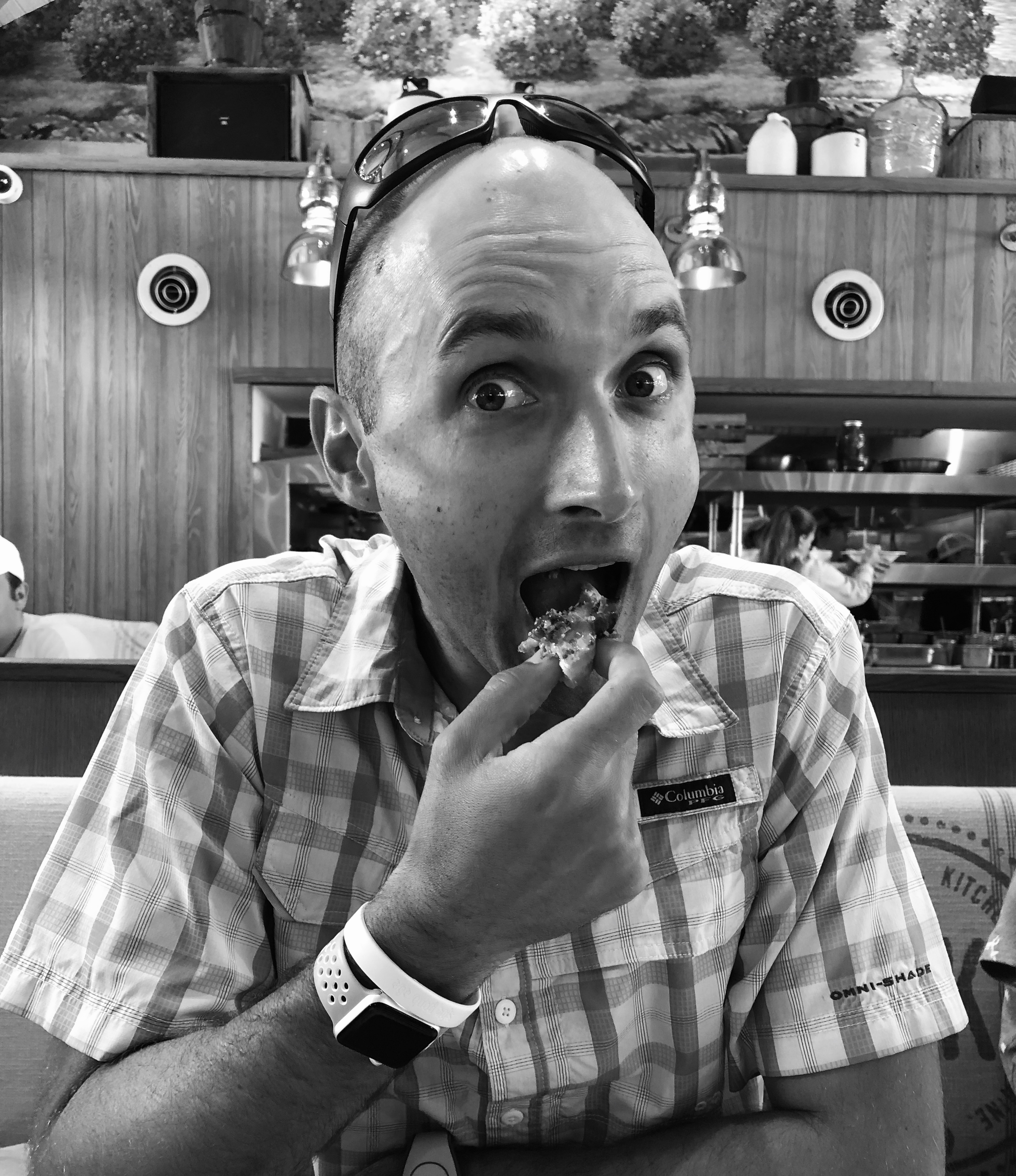
Photo is from Art Smith’s Homecomin’ in Disney Springs. The doughnuts were very good and I don’t usually like doughnuts.

How to go to film school without going to film school.

Supported by Greenhaven Road Capital, finding value off the beaten path.

Industries are professionalizing. Basketball players went from drinking beer and smoking cigarettes during halftime to training and managing their brand over the summer. Entrepreneurs went from managing by the seat of their pants to building a leadership skillset and professional network. Podcasting has gone from two people talking, recording, and sharing to companies trying to be the next big thing.

This trend happened in Hollywood too. In Film School: A Memoir, Steve Boman writes about his time at USC’s famous film school.

Making movies is like investing money or leading people, the only way to learn it is to do it. Robert Rodriguez said, “You learn some things from watching movies but you’ll learn more by picking up a camera and making movies and making mistakes.”

Sometimes school – like USC – is the best place to do that. It was for Boman. “I know a considerable number of people in the industry say wannabe filmmakers would be better served by spending their tuition money on just making a movie without going to school…but it’s not going to work for me. I’m not connected enough with like-minded people, and I don’t know how to do the mechanical filmmaking steps without some guidance.” Boman needed what Scott Kelly needed, structure and resources and motivating forces like the carrot of applause and stick of criticism.

Boman also needed time. Attending film school at forty meant his wife operated as a single mom, with bits of help. During his six semesters in California Boman’s schedule looked like this: on weekdays wake up early to beat the L.A. traffic and drive to campus. Boman’s lucky that he has friends that live eleven miles away, giving him a safe, quiet, friendly place to live 1,500 miles from family.

On-campus, Boman attends classes, studies classics, or writes scripts. Around lunch, he’ll eat and exercise and then attent more classes and work on more projects. During the week Boman gets up at six and stops working at ten. On weekends; well, weekends are made for filming.

“Classes are clustered on Tuesdays, Wednesdays, and Thursdays, with a few courses offered on Monday evenings and Friday mornings. It’s a schedule that allows film students to have the maximum amount of time for shooting and editing on weekends.”

That’s it!

But let’s be curious.

Is there a way to get 80% of the results for 20% of the time and money? Maybe not the time but definitely the money. Here’s what a DIY MFA might include:

Constraints. In one class, Boman’s instructor limits the number of words they can use and Boman writes, “that the smaller the box we work within, the easier it is to focus on the art of filmmaking.” He also shoots on film which limited the takes and “we can no longer use the camera like we’re spraying water from a hose.”

Constraints help a lot even when we think they might not. For example, cigarette companies have hugely successful branding and advertising campaigns despite not advertising on television. One theory is that when they were forced off TV they got good at the other advertising forms.

Reps, reps, reps. “I start to make a list of things I would do differently before enrolling in film school. Top of the list is spending time on a non-linear editing system.”

Everything in film school takes time. A lot of time. There are some moments of luck when lightning strikes, and magic happens. Between those moments is where efficiency reigns. If someone can get good at the minuscule they’ll have more time for the major.

Deep understanding. “The class loved my (sport biker) documentary. All my other films were on subjects I know little about. I realize I’ve been ignoring the most basic tenet of Writing 101: write about what you know.”

Steve Osborne wrote that he almost got killed his first day as a cop. He’d chased a perp into a subway tunnel, but “I never planned on the likely event the train would come. Now, I only had a few seconds to think of something before I became a hood ornament.” As his career progressed, Osborne understood more about when to chase someone.

Connections. “A great many classes are taught by these adjuncts, nearly all of whom have extensive experience working in the trenches of Hollywood.”

Here’s the challenge of the DIY method. Boman’s classes are staffed by Hollywood writers. Boman actually sells a piece of work while in grad school. In the long list of USC students, he’s the first in this area. It happened because of the instructors.

Hustling. One of Boman’s friends is Peter Breitmayer who gives this advice over a meal:

“I get asked that question so much from actors back home. They want to know how I do it. I tell them I treat auditioning as a full-time job. If I’m not putting in forty hours a week doing auditions, preparing for auditions, meeting my agent, doing readings, then I’m not working…So many people think to act in this town you’re gonna just suddenly ‘make it’. Then they don’t, and they quit. My attitude is just constantly to be auditioning.”

Jenna Fischer gives similar advice. Want to be famous? Be a reality star Fischer writes. What to be an actor? Study acting. Then go out and audition, and keep training. Fischer writes, “Professional athletes train in the off-season. So should you.”

Stakeholders. The biggest advantage a DIY-er has over Boman is the fewer stakeholders. Boman has a family living in Minnesota while he’s in California. He has a serious medical situation (no spoilers here!) while at USC. Oh, his wife does too. He also has kids and a compressed earnings future. The only missing drama is an earthquake.

A three-year, film school MFA, can cost up to two-hundred thousand dollars all in. That’s a lot for anyone, much less someone using his kid’s college fund to pay for it. Part of the reason shows like Seinfeld and Friends worked is because those starring actors didn’t have huge commitments. One person on Seinfeld said that “time had little meaning there.”

Big projects, like work or school, require time and support from other people and places. The fewer or more supportive commitments, the better the base of stakeholders someone can begin a project from, like a DIY MFA.


Thanks for reading.

Habitual Advice

Supported by Greenhaven Road Capital, finding value off the beaten path.

In college, there was a professor who touted Automatic Bill Pay. Not only did he use it, but he also paid for it. The thing banks now offer for free, as a perk, used to cost money. How wild is that! But this still exists. I didn’t realize it either, but I was paying for ‘Automatic Bill Pay’. Only in the form of habits.

Many parts of life are automatic. Some use technology, checks to mortgage companies. Some use psychology, coffee each morning or smartphones in bed. Personal habits are like Automatic Bill Pay. They take time to set up, but once done require minimal updates and maintenance.

New habits work best in stable environments, installed habits work in any. I was reminded of this after seeing my brother and his one and three-year-olds this summer. Toddlers are unstable. They’re unpredictable and totally reliant. They’re great in many ways and my nephews filled my lap like they filled my heart, but they are terrible for routines.

This is obvious only with distance. My older kids are more predictable and reliant, but there’s always some kind of constraint on our habits. Habits need certain things to get started, especially in unstable environments.

Habits need motivation. Jocko Willink repeats that “discipline equals freedom”. I didn’t understand this until thinking more about habits. The regularity of important things (whatever that means to each person) makes other choices easier. Whether later in a day, a week, or a life.

Habits need investment. Tynan inspired the automation of all the grout-like tasks in my life. My bills are paid, emails are filtered, and food is delivered thanks to reading Tynan. He has an approach I’ve called Investments and Dividends and it’s the idea that some things are worth a lot of work upfront to reap the long term benefits.

Habits need commitment. Ramit Sethi navigated me to make regular investment decisions. It’s easier to look at the checking account after the money has been sent off to the wisest possible choices.

Habits need to be daily. Tyler Cowen and Stephen King both say that writing is a daily and regular task—like anything else we both enjoy and want to be better at. Daily is the only unit where people (like me) are incapable of lying.

Habits need locations. Guy Spier wrote of moving to Zurich, “I would also overhaul my basic habits and investment procedures to work around my irrationality…To my mind, this is infinitely more helpful than focusing on things like analysts’ quarterly earnings reports, Tobin’s Q ratio, or pundits’ useless market predictions—the sort of noise that preoccupies most investors.”

Habits need time. Naval said, “All the benefits in life come from compound interest; whether in money, relationships, love, health, activities or habits.”

Habits need the right tools. In the book, My Morning Routine, Shane Parrish said that he doesn’t use a smartphone. Why? “I’m not really a fan of trying to solve common life problems with apps and software programs.” Instead, he uses “some basic, old-school planning and discipline.”

Habits need kickstarting. Brian Koppelman was a blocked writer until he was thirty. He only blasted past when he found The Artist’s Way by Julie Cameron. “That was enormous for me. In doing morning pages, I freed myself from all this other stuff, from the curse of perfectionism.”

Habits need high switching costs. It’s easy at any moment to go and do something else. Unless we like the thing we’re doing, we’re good at it, and it’s beneficial in the short and long term. Businesses talk about raising the switching costs between products and the same approach can work for habits.

As students head back to school and routines change, best of luck starting your new habits. Thanks for reading.

Bottlenecks

Supported by Greenhaven Road Capital, finding value off the beaten path.

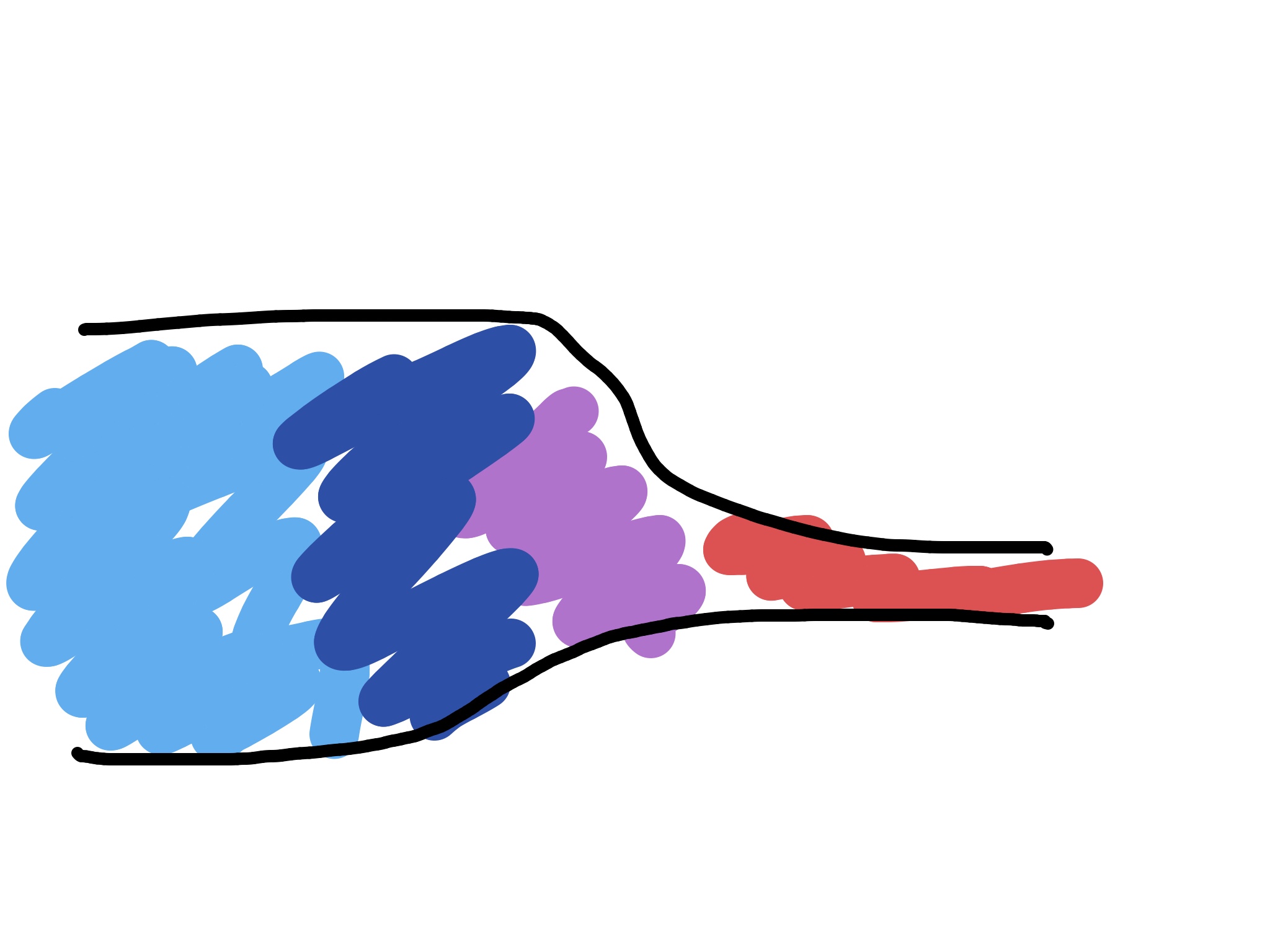
For many of the puzzles that come up in life we can use the mental model of a bottleneck to consider possible solutions. There are two components to consider; the bottle body and the bottleneck.

For a week in July our family lived on a lake in lower Michigan. It was gorgeous. We skied, tubed, fished, swam, ate, and reminisced with friends. All the memories from the trip happened in those moments.

But there were also the logistics. The boat to rent, the swimmers to lifeguard, and the food to cook, clean, and dispose of. When I toured our rental the owner emphasized using the trash compactor. “If you don’t use this, you’ll have the cans full by the second day,” he said. He was right. Twelve people create a lot of trash.

It wasn’t an abnormal or atypical amount. It was just a lot of people. We had a bottle volume and bottleneck problem.

Normally the four families in one house were four families in four homes, each with it’s own trash can. On day two we started writing our names on the red plastic cups littered around the house. That helped one way (create less trash) but we could have also had more trash cans.

In college physics there’s always a question about flow rates. Assume a bathtub fills at X gallons per minute and drains at Y gallons per minute. What’s the water level after Z minutes? This physics question is our trash metaphor. We can turn the tap and slow the flow or widen the drain.

The business funnel is an exact replica of this. Picture taking is another. A decade ago I bought a nice camera and took online classes to learn to take better pictures. The most frequent advice was to take a lot of pictures. That’s more flow. Skills like the rule of thirds, framing, lighting, and zooming with your feet were about widening the bottleneck.

Writers are more researchers than writers. Their research expands the body their skills refine the bottleneck – this time it’s a selection effect that’s desired. Robert Caro’s challenge was that the bottle was so much bigger, etnerally vast, that he realized. About researching Johnson he wrote:

“For example, bringing electricity to the Hill Country. In all these early biographies of Johnson, the fact that he founded the largest electricity co-op and brought electricity to the Hill Country gets a few pages, if that—sometimes it only gets a paragraph. But when I was interviewing people out there, they would say, No matter what Lyndon was like, we loved him because he brought the lights. So I suddenly said, God, this bringing the lights is something meaningful.”

So Caro moved to the Hill Country.

Bottle bodies and bottlenecks are two knobs to turn to change the rate something occurs. For things like trash on vacation we only had access to one. For things like new clients and more sales there’s both.

Cheers, and thanks for reading.