Uncommon Service (book review)

Uncommon Service is a “what to do and how” kind of book. If Atomic Habits is a what/how book for the person then Uncommon Service is one for service businesses. 

It’s organized into four parts: 

One: The tradeoffs. To have uncommonly great service, a business must make tradeoffs. Importance requires attention – and there’s an opportunity cost to that attention. In Unreasonable Hospitality, Will Guidara writes about the front-of-house staff that aims to create “legendary” moments for the guests. They Google the guests. They run out at the last minute for just the right gift. They go above and beyond above and beyond. 

But they don’t shine glasses, clean tables, or sweep the sidewalk. They don’t help with any of the hundreds of tasks that need doing every single night. That’s a tradeoff. 

The LinkdInfluencer scoffs, be the best. But businesses that dig deeply into customers’ jobs find there are things the customers want more than others. Your customers want tradeoffs. 

Two: Things cost money. Uncommon service isn’t free.

Customers could pay more and get more. Premium services like Disney’s Backstage Magic tour and The Four Seasons work this way but these opportunities are limited. Most businesses cannot simply charge more. 

Instead, most businesses must find holistic solutions. Exceptional service leads to more word of mouth and less marketing spend. Specialized service leads to better processes and less loss or more gain. When Publix employees walk customers to requested items – rather than tell them the aisle – does that increase sales and decrease theft? Certainly. 

Few businesses can claim it cost more and it’s worth it, but all businesses can think creatively about how to offer more and how to pay for it. 

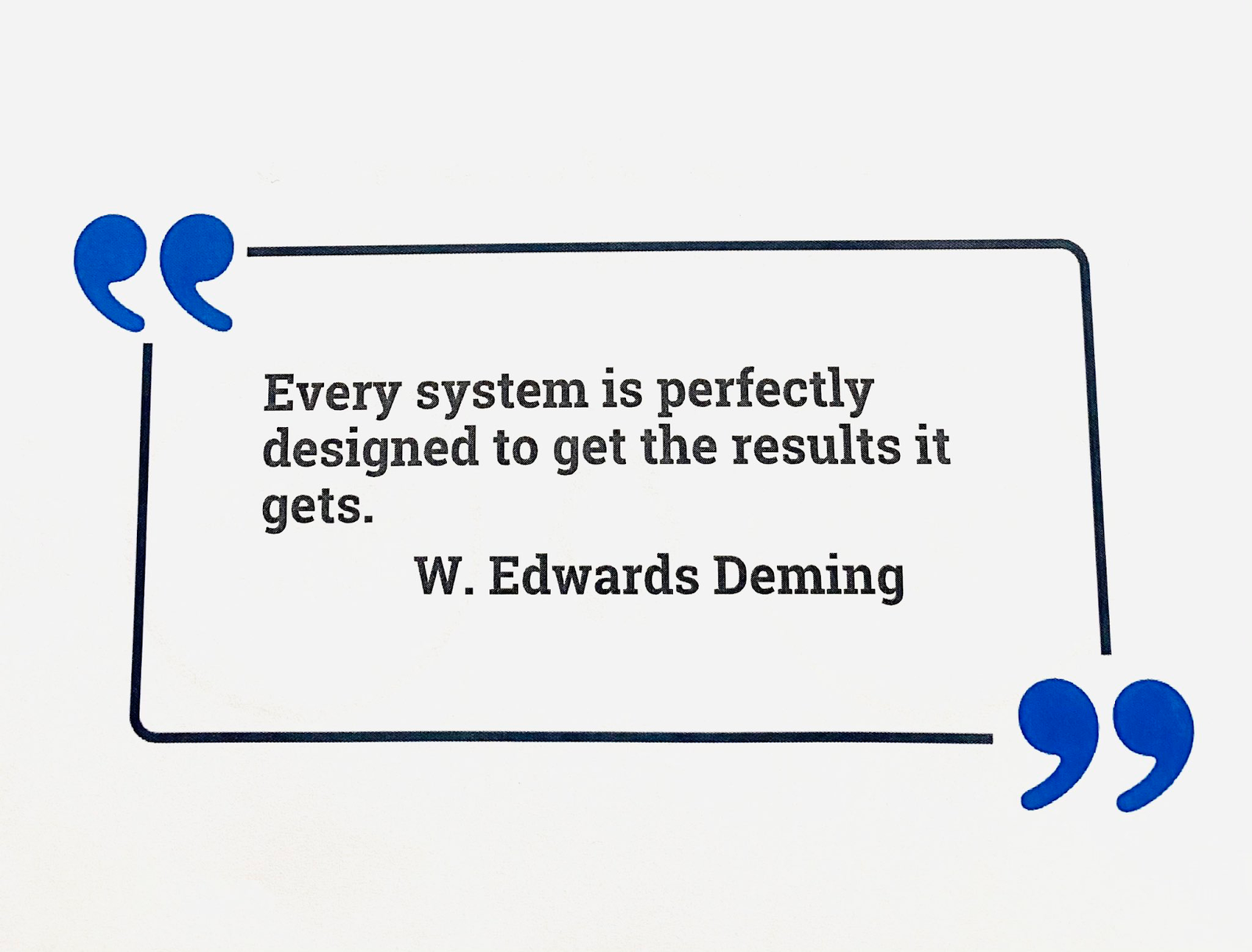
Three: A business’s team reflects a business’s tradeoffs. 

Florida has a lot of mom-and-pop pool cleaning businesses. Our neighbor likes reports that detail the pH, chlorine, and salt levels. For him, the JTBD is visual and numerical.

But most cleaners want to show up, clean, and move on – while listening to whatever on Bluetooth headphones. 

So the business owner makes it easy for their employees. Rather than have the cleaner communicate with the customer, they communicate with the office that prepares the report. Cleaners take a few photos, report some numbers, and move on. The office makes it look as nice and tidy as the pool. 
(Alternatively, a business can try to hire people rather than design the system. We write a lot about that at Daily Entrepreneur.)

Four: Prepare the customer. The authors suggest service businesses imagine they are manufacturers. In ‘goods’ businesses customers don’t wander around the plant, inspecting machinery, and tinkering. No – and they shouldn’t do that in a service business. 

But customers are part of the experience: they have varied expectations, arrive at different times, and spend different amounts. They are “locally logical”: what makes sense to one will not make sense to another. 

Like employees, a business has two options. They can change the system for the people or change the people for the system. 

We’ve written about financial stakeholders. An investor is only as good as their capital base. This is part of Warren Buffett’s persona: he draws people aligned with his approach. He picks the people for the system.

But not every business can filter their customers. In those cases, they must focus on the customer’s experience. How can a business operator systematize the times they bend over backward

Historically Harvard Business books run dry with too much theory or too specialized examples. This book did not. It was uncommonly good, fast, and helpful. 

Notes. Never Split the Difference addresses tradeoffs well. Both Never Split… and Uncommon Service are recommended by Bob Moesta. 
How Will You Measure Your Life? (book review)

How Will You Measure Your Life? (book review)

How Will You Measure Your Life? is about what investors call “out-of-sample tests”. If an idea works in more than one area then it probably will work again. 

Wisdom is an example. Proverbs 16:32, He who is slow to anger is better than the mighty, And he who rules his spirit, than he who captures a city becomes, it’s not if you win or lose but how you play the game. 

Timeless. 

Clayton’s choice combines business ideas with personal goals in two areas: career and relationships. 

Measuring your career. There are legible aspects to a career: money, titles, promotions, and career paths. 

Clayton cautions not to over-index on the legible. Careers, he writes, offer a mix of “hygiene” and “motivation” factors. Money, health insurance, and perks are hygiene factors. These factors have capped advantages and diminishing returns. 

Non-legible, like motivation, interesting problems, and growth have an upside. This is the good stuff. Just because it’s hard to count doesn’t mean it’s not of value. In fact, it’s really valuable!  

And because it’s hard to count and valuable means people underrate it.

But there are legible things to count. How do you spend your time? Your money? Do these reflect your priorities, hopes, and dreams?

Through legible and not, the aim is intentionality. Are you intentional about the important? 

Who is this choice for? 

“Parents have their own job to be done, and it can overshadow the desire to help their children develop processes. They have a job of wanting to feel like a good parent: see all the opportunities I’m providing for my child. Or parents, often with their heart in the right place, project their own hopes and dreams onto their children.”

We don’t have to teach our kids to tie their shoes. With technology, fashion, and other people it doesn’t have to happen. But it does. 

Now apply that to everything. 

Helicopter or consultant parent provides a good contrast. It feels good to be a helicopter parent. “See all the opportunies…”. But helicopter parents are selfish parents. Their choices are first for them, not their kids. 

Instead, Christensen uses a short-term-pain long-term-gain model. Live verbs first. Experiences are expensive tuition but essential in the school of life. It’s the right choice for them

How Will You Measure Your Life? is a difficult book to report because the lessons are personal. For every, I never thought about it that way situation, someone else would have solved it years ago. 

I needed Christensen to write this book. 

It’s written by a man of faith. A Harvard professor. He’s a best-selling author. He developed a famous business theory. Anyone that knew him brings up how much they miss him, years later. 

I needed his permission. 

Permission to think about life, not hacks or hustle. For the important things, not the urgent things. You read it as a reminder of why we live and an admission that we need help to live better. 

It matters that it’s Clayton freakin’ Christensen. He lived well and we aim to. 

Unreasonable Hospitality (book review)

“How to Treat Other Human Beings” could be the subtitle to Will Guidara’s Unreasonable Hospitality. I loved this mix of stories, lessons, reflections, and mistakes. It felt honest. It read fast. I had a library copy but this is one of those put this on the shelf to page through later books.

Unreasonable Hospitality is going above and beyond to treat other human beings well. Take care of each other. Get out of your own head. Avoid your ego in favor of service.

It felt great to read, I’m still glowing.

And unreasonable hospitality is easy. It’s just three things.

First, a desire to do it. Your motivations may vary.

Second, a 95/5 mindset. Things cost money. It’s impossible to provide service without charging and even harder to be over-the-top. So the business model matters.

Guidara’s 95/5 approach is to watch ninety-five percent of the expenses like a hawk. At Eleven Madison Park this meant things like dishwasher racks to reduce breakage. While he managed the MoMA cafe it meant no fresh food an hour before closing time to reduce waste.

In his experiences at many restaurants, Guidara learned to manage costs. What could get cut? What couldn’t? What were the easy (and wrong) metrics? I pictured him like a wise carpenter. Rather than head to Lowe’s, he ripped a spare sheet of 3/4” plywood that was in the corner.

Now, what about that other five percent?

Third, the job to be done.

It’s about delight. Sometimes Guidara gave away the Tiffany champagne flutes to a newly engaged couple. Sometimes he fed the parking meters.

Sometimes it was complementary theater, sports, or concert tickets. Sometimes he served a classic New York City hot dog for a guest who hadn’t had one yet.

Sometimes it meant complementary cognac after dessert and with the arrival of the check. Sometimes it meant ten 100 Grand bars when a guest, preying on their hospitable reputation, asked for a million bucks. That guest loved it.

Why is this person here? What do they want? How can I serve them? What delights them?

Nothing about Unreasonable Hospitality is new.

But none of it is common.

The book is a chance to change that. With Guidara as a guide, anyone can put a little more hospitality into the world.

Note: Part of this book’s impact is its identification. We have plenty of posts about words: words mean competition, the new dictionary series, and words hiding value. Words are important because they identify something. They’re landmarks on our map of life.

In 2008, the story goes. A bunch of NBA players returned to their hotel after a night (and morning) of revelry, only to see Kobe going to the gym while they were headed to bed. Those players saw that and took their careers more seriously. Kobe’s actions were a landmark.

Will’s book is a landmark.

Jurassic Park (book review)

Jurassic Park (1993) by Michael Crichton is a book about expectations. But first, we have to address the movie.

The movie was great. It was an amazing adaptation (and is connected to the Pixar story btw). But – it defines the characters. Hammond, Malcolm, Ellie, and Grant are the movie version in my version. Oh well.

Ok, back to expectations.

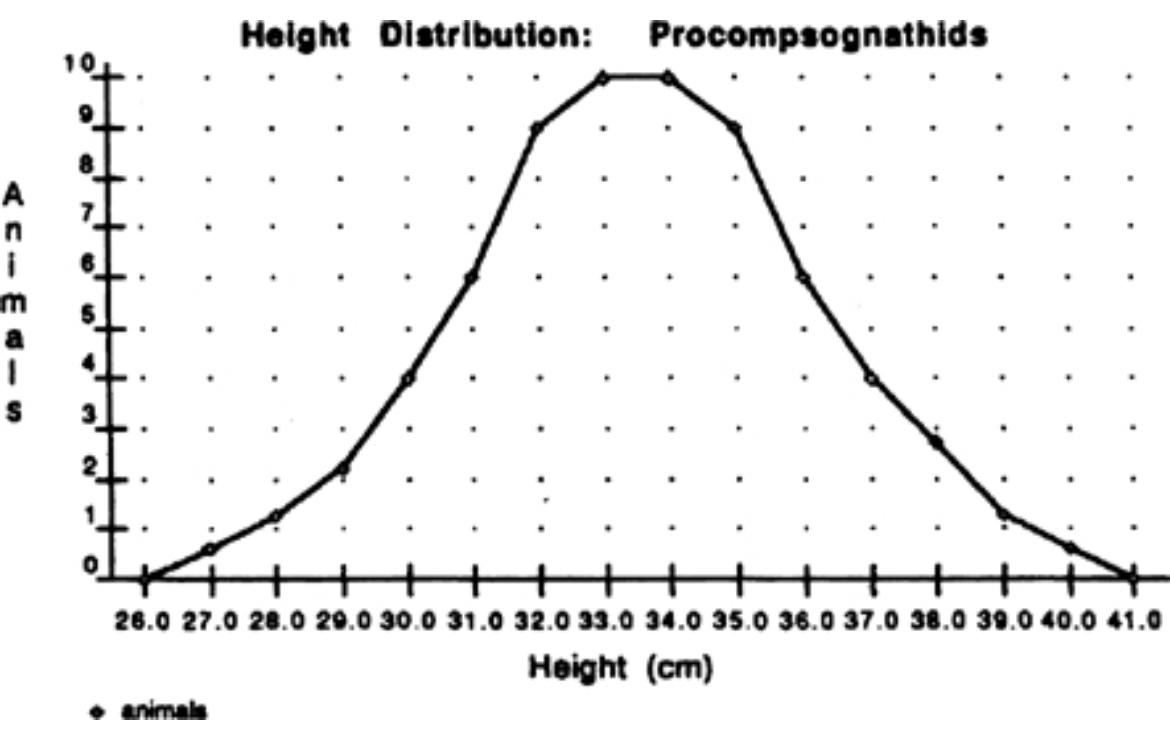
The Jurassic Park story turns when Malcolm tours the facilities and sees this:

See, Hammond says to Malcolm, everything here is normal!

But, Malcolm counters “that is a graph for a normal biological population. Which is precisely what Jurassic Park is not. Jurassic Park is not the real world.”

Normal distributions (and averages) are a specific tool. But they are the wrong tool for distinguishing between Snickers and Milky Way, student loan debt, or Aaron Rodgers touchdown passes. Or, tracking dinosaurs.

Jurassic Park is not the real world. It is a zoo. Cages. Fences. Pens. Controlled feeding. Controlled breeding (oops). Controlled everything.

Malcolm again, “Because the history of evolution is that life escapes all barriers. Life breaks free. Life expands to new territories. Painfully, perhaps even dangerously. But life finds a way.”

Life finds a way.

“Now you see the flaw in your procedures,” Malcolm said. “You only tracked the expected number of dinosaurs. You were worried about losing animals, and your procedures were designed to advise you instantly if you had less than the expected number. But that wasn’t the problem. The problem was, you had more than the expected number.”

Hammond expected to run a zoo.

Hammond expected a ‘normal number’

Hammond expected his problem to be ‘fewer’ not ‘more’.

Expectations are heavy, they are hard to throw off. I could only picture Jeff Goldblum as Dr. Ian Malcolm. Hammond could only picture Jurassic Park one way too.

This isn’t really a book about dinosaurs, they’re just a stand in. For what?

Also interesting that Waltrop’s Complexity came out around the same time. Something was bubbling in the early 90s. Something is bubbling now too.

Ben & Jerry’s: The Inside Scoop (book review)

Ben & Jerry’s: The Inside Scoop is an underrated business book. Traveling through the 1980s and 90’s it chronicles the growing pains of America’s favorite ice cream pints. 

It’s a business book with two parts. 

The fun stuff

Two hippies create, grow, and scale a super premium ice cream brand from a converted gas station in Vermont! That’s fun. 

On Black Monday 1987 the duo showed up on Wall Street with “That’s Life, vanilla ice cream with pieces of stale apple pie (the stale pieces held up better in the ice cream), and Economic Crunch, which was actually some leftover Nutcracker Suite from the previous winter, renamed for the occasion.”

Ben and Jerry drove around in a Cowmobile promoting the brand. On their one-year anniversary, they hosted a block party, with Ben and Jerry organizing, acting as characters, and offering free ice cream of course.  

The grind

“Amateurs talk about strategy,” said Omar Bradley, professionals talk about logistics.” 

Ben & Jerry’s wasn’t the only super-premium ice cream. Häagen Daz was the market leader and a bunch of me-toos. Starting in Vermont, a state with no Baskin Robbins franchise was probably a blessing. 

But the distribution was still a grind, sometimes literally as their beat-up delivery truck broke down delivering the pints. Once they contracted out to distributors it was a game of sharp elbows for shelf space, full of kickbacks, relationships, and lawsuits. 

Even the Beatles had a logistics machine! 

Oh, and the people. 

Every business is built on the foundation of its people. In a podcast with Brent Beshore, Anu Hariharan said she looks to invest in good teams with product-market fit. This is despite her technical and financial backgrounds. To paraphrase: It’s the people, stupid. 

But that’s also the hardest part of a business. 

While Ben & Jerry’s product line, market share, and revenue grew, the team’s expertise did not. They hired slowly. Not because of a great vetting process but because they were overwhelmed. They fired slowly too, a terrible combination. 

Oh, and the finances!

We won’t recount the story here, but in Shoe Dog, Phil Knight writes about taking all of his profits back to the bank to say, see, these things sell, now please give me another, larger loan.  That happened in Vermont too. Inventory. People. Facilities. Raw materials. New facilities. At least they could drown their sorrows in a fresh pint. 

Be your own boss with your best friend(s), but work like hell.

Sounds right.

Pappyland (Book Review)

Pappyland by Wright Thompson is a book about wistfulness and wishfulness.

Kentucky Derby visitors are wistful.

“The day-trippers wear gangster suits and outlandish patterns and hats inappropriate to the latitude, temperature, or setting. It’s amateur hour. They hold liquor like ninth graders. The homogenization of America has left people wandering the land in search of a place to belong. We are a tribeless nation hungry for tribes. That longing and loneliness are especially on display in early May in Kentucky.”

That feeling is in late-night bourbon too. We feel nostalgic, “which I only recently learned comes from the Greek words for home and pain.” Bourbon, Wright writes, “It’s a drink made for contemplating, and what is usually being contemplated is the easy and often false memory of better days.”

It’s Springsteen’s Glory Days. Youth is wasted on the young. It’s melancholy.

There’s also wishfulness.

The book is centered around Julian Van Winkle III, the caretaker of the bourbon brand Pappy Van Winkle. My impression was silver spoons, seersuckers, and bluegrass mansions. My impression was wrong.

David Chang once cautioned an interviewer that just because a restaurant was highly rated and busy did not mean it was also a good business.

Julian grew up well, running around the bourbon-born grounds. But like the Kentucky horses, bourbon’s success was short-lived. The glamorous inheritance from his grandfather couldn’t be salvaged by his father and the family business sold out.

That’s about when Julian wished for it back.

That’s about when Julian worked for it back.

Wright weaves a good story, which I won’t spoil. It’s about Julian’s past and present. Our past and present. Wrights too.

Can we be anything but wistful of the past? Is bourbon a conduit? We marvel at AI’s ability to generate the right information. Physical artifacts do that, bourbon does that.

“We make fine bourbon at a profit if we can, at a loss if we must, but always fine bourbon.” – Pappy slogan

Competing Against Luck (book review)

Clayton Christensen developed The Innovator’s Dilemma to help established organizations understand that when they serve their most profitable customers it leaves them susceptible to innovators who enter the low-end of the market but serve the customers better and move up the market to become the newly established organization.

There’s also a solution.

Why were innovators successful?

They’re undercapitalized, under-experienced, and underwhelming relative to the established company.

The answer was Jobs To Be Done, told in Christensen’s et al. book Competing Against Luck.

Jobs is a way to describe the functional, social, and emotional progress a person wants to make in a given context.

Christensen’s work includes the milkshake example, where he and a team found that people bought milkshakes first thing in the morning. They ‘hired’ the shake to entertain them on the commute and provide some calories. They also finished before work so as not to be judged by their colleagues.

Christensen’s experiences included buying his son a milkshake. This is a different set of functional, social, and emotional progress a person wants to make in the context of being a dad in the afternoons.

This contrast is Jobs.

It’s work to find, but worth it. The process of understanding the job, the context, the progress, and all the parts creates a sustainable advantage (aka profits and avoidance of the market mechanism).

Think about Netflix. If a capitalized and connected Hollywood mogul wanted to compete with Netflix, they could buy all the streaming rights but that misses all the work: physical networks, social networks, technology, production, and so on.

Jobs exist for solutions to enduring and persistent problems. Snapchat was preceded by the IM, which was preceded by the extra-long telephone cord which was preceded by passing notes in class.

Kids talking to each other without adults’ oversight is an enduring and persistent problem.

A large example from the book covers the Southern New Hampshire University online program. Once the staff adopted a Jobs perspective they noticed two sets of customers.

The first was conventional high school graduates who wanted a conventional college experience.

The second was adult learners who needed information, training, and accreditation yesterday.

SNHU found the context was a parent alone at the kitchen table at night and looking for immediate information. Their functional progress was training and certification. Their emotional progress was as role models for their kids.

A university seems like a singular thing. But in the context of these two customers, it must act differently.

With hindsight, Jobs stories are obvious – and we’ve shared plenty – but to find them takes clustering data. The interviews are hard, especially relative to the alternative innovations of: cheaper, faster, sooner, shipped, or a different color.

Some clustering insights:

GM’s OnStar division listened to customer calls and found that it was people who were in an unfamiliar place and wanted to feel safe. OnStar wasn’t directions so much as security.

V8’s product manager saw things through the eyes of their customers who wanted to “eat” their fruits and vegetables. V8 is a juice whose competition isn’t in the juice aisle.

Intuit found that customers didn’t want tax optimization so much as tax minimization. Make this painless, fast, and damn sure I don’t get audited we don’t have time for that.

Along with Bob Moesta’s books, Competing Against Luck is the best introduction to Jobs. Though a touch academic, the sections are fast and full of examples and theories.

The Starbucks of Authors

There’s no way this can be good, or so I thought. He’s the McDonald’s of authors. Cheap and everywhere. 

I was wrong, he’s more like Starbucks. 

James Patterson by James Patterson was fun! And reading should be fun. 

An “ego-biography” the book runs through Patterson’s life, from blue-collar Massachusetts to New York madmen to Palm Beach production. And the book runs. It’s fast. Short chapters. Strong stories. No wonder people love the guy. 

If there’s a summary of Patterson’s story it’s this quote from his grandmother, hungry dogs run faster. Peterson was hungry. 

He worked at McLean Hospital where “I had begun scribbling short stories…I couldn’t stop writing if I wanted to.” Catholic high school, Catholic college, a year or so at Vanderbilt, writing all the way. 

He moved to New York City. Patterson got a job at J Walter Thompson. The job was “hell” but “I’d write early in the morning, every morning. I’d lock my office door at lunchtime and write for half an hour. I’d write on the plane during every business trip. I’d write pages at four in the morning, and I’d write again until midnight. I refused to give up on myself.” 

He succeeded in New York City, rising through the ranks of J Walter Thompson. “Why? Because I chopped wood—I worked hard—and I could write. I could also write fast.” 

He wrote in New York City, finishing his first book. Then, he got “the best advice” from a fellow author, “Write another book. Start tonight”. So Patterson wrote. 

He sold in New York City. In 1993 he published the first Alex Cross novel. By 1996 he was just an author. 

And then he became ‘Starbucks’. 

At the same time I read James Patterson by James Patterson, Chat GPT became popular. The AI tool will reshape work. In Average is Over, Tyler Cowen writes about how the most successful chess teams are not computers or humans but humans using computers. Similarly, Chat GPT will not replace ‘knowledge workers’ but the best knowledge workers will use Chat GPT. 

That analogy makes sense.

Good organizations use leverage like people, money, and intellectual property to scale their operations. Technology companies are easy examples, but we’ve looked deeply at why Disney had to buy Pixar for the same reasons. 

That analogy makes sense. 

Except when it comes to writing. 

Patterson’s collaborations were icky, were too processed. But that’s the wrong analogy. 

Patterson writes an outline and has his collaborators fill it out. But don’t think “middle school notes”. Instead, think about a manager asking someone to start a new product. James starts the car, the collaborators run the race. 

It works because Patterson is mostly hands-off. Peter de Jonge wrote, “One of the best things about working with Jim, and this may be the key to why he is a publishing juggernaut, is that he is almost pathologically open-minded. If an idea adds stakes or drama or weight or in any helpful way propels the story forward, he’s game. As he told me once, you can tell any story you want, but it has to be a story.”

It reminded me of how Apple built the iPhone. Steve Jobs told the team what to do, they built it, reviewed it with Steve, got feedback, and built more. Jobs didn’t tell them how – well, sometimes he did and sometimes he was wrong – he just told them what. The same with Patterson. 

And this is great. Patterson’s book was fun. Reading should be fun. More Patterson books, more fun!

The Lego Story (book review)

The LEGO Group was founded in 1932 by Ole Kirk Kristiansen and the story is told in The Lego Story by Jens Andersen.

The takeaway, like all successes, is to work hard and get lucky. Rather than a review, let’s tour history through industry.

1919, Denmark’s economy slows. “Farmers in Billund and other districts benefited from Denmark’s neutrality during the First World War, by selling grain and meat to the warring nations and earning some extra hard cash by producing peat.” When farmers have money they can pay carpenters like Ole Kristiansen. And if farmers don’t, they can’t.

1925, a fire in Ole’s woodshop. This will be a recurring theme.

1929, the depression. “For a while, the future looked promisingly bright, but shock waves from the Wall Street Crash in October 1929 that wiped out billions of dollars in wealth quickly spread to Europe. Germany and England, Denmark’s biggest trading partners, were badly affected, and the price of grain, butter, and pork crashed.”

1932, anything that sells. Though woodworking had been his trade, it was the 1931 Yo-Yo craze that inspired Ole to make toys. “By the 1930s, yo-yo-ing had become a nationwide fad,” writes Chat GPT, “with tournaments and competitions being held across the country.” Ole’s brothers and sisters want to know why a good carpenter would waste his time, “I think you’re much too good for that, Christiansen—why don’t you find something more useful to do!”

1933. “We worked like dogs, my wife, my children, and I, and gradually things began to pick up. Many days we were working from morning till midnight, and I bought a cart with rubber wheels so the neighbors wouldn’t be disturbed when I took the packages to the station late at night.”

1940, Germany invades Denmark. Though occupied (and part of the resistance group, running grenades to saboteurs in LEGO boxes) it was a good time for LEGO. Parents were “keen to protect their children from hardship,” and during the five years of occupation, LEGO’s revenue grew.

1942, another fire in the woodshop.

1946, plastics? Ole buys a plastic molding machine. Through the early 1950s executives at LEGO will say no no no, plastic toys will never take off.

1947, Ole sees his first plastic brick from an English toy manufacturer. This is the seed for LEGO but will prove a thorn in their intellectual property side for decades to come.

1951, the top-selling LEGO toy is the (plastic molded) Marshal Plan-delivered Ferguson tractor.

1955, LEGO bricks roll out to toy stores.

1956, LEGO bricks roll out to Germany. Andersen writes, “Selling toys in Germany would be like selling sand in the Sahara.” LEGO advertises in one city, Hamburg, creating a two-minute film to play before features. Word spreads.

1958, good news, LEGO invents the tube on the underside of the LEGO brick. Ole Kirk passes away and his son Godtfred takes over.

1962, the Scale Model Line. Godtfred grows up playing LEGO, so do other people. What if we make LEGO for professional adults? The Scale Model line is for engineers to design with LEGOs. Even the everyman could create his own house. The project fails but leads to the 1/3 size pieces ubiquitous in today’s sets.

1968 LEGOLAND Denmark opens. It’s a hit.

1976 oil crisis. “A significant part of LEGO’s challenges in the 1970s could be ascribed to two separate oil crises, a stagnating global economy, Denmark’s falling birth rate, and a declining toy market abroad.”

1978 minifig enters. Lego, Kjeld Kristiansen notes, has three phases: blocks, wheels, and mini-figures.

1989 LEGO pirates. But Gameboy too.

If there’s one consistent lesson through each decade of LEGO it’s the importance of sales. Every few years someone comes along and says the toys are good enough and every few years someone else reminds them but we have to sell these things. It’s just hard work.

The End of Average (book review)

If markets have a limited supply but high demand then prices will be high. Disney vacations are one example. Human capital is another. Computer science majors earn the highest salary out of college and humanities majors earn the least. Employers distinguish students (supply) by their degrees.

But how do you distinguish among the computer science majors? The answer is included in Todd Rose’s 2017 book, The End of Average.

Rose’s big idea is economic – society overpays for talent!

Throughout the 1800s and 1900s, modernization has been an experience of measurement. At first, the outcomes were crude because the measures were crude. Take the twenty years of Moneyball progress and stretch that through two centuries. In the same way that baseball teams overpaid for home runs, society overpays for talent.

Rose offers three explanations for our mistake.

1/ Jaggedness. What makes a good first baseman? That depends. What makes a good leader? That depends too. Unfortunately, nuance is neglected in our day-to-day functions. We tend to use loss-aversion-based heuristics. When you evolve from mammals focused on danger, food, and sex there’s only so much digging our default allows.

Winston Churchill is an example of a jagged leader. He excelled in oration and “stature” but less in collaboration. During the war, certain skills were more important than others. This brings us to…

2/ Context. Brent Beshore’s people are messy comment summarizes Rose’s idea. Instead, think of people as complicated creatures who act using If/Then statements. Someone may be honest or careful or diligent based on the situation.

We miss this, Rose writes, because our samples of other people aren’t wide enough. Jessica from the office may act snooty or kind at work – the only place we see her. But does that encompass her at church, at home, and with her family?

3/ Paths. There are not a million ways to do something, Rose writes, but there’s also not one. Think of a situation like being lost in the forest. The goal is to get out. One option is to find the path and follow it. But one could forge their own as well. Too often the focus is on the path and not forging a way out.

If a group undervalues these explanations then it restricts the possible outcomes. Imagine a rule that in order to start a business someone had to give up listening to podcasts. There are a lot of great business podcasts and the budding entrepreneur would be worse off – and so would we, missing out on the upside of their creation.

The End of Average is a Bob Moesta book suggestion and reading it from his point of view offers additional information.

Moesta is a product designer, researcher, and marketer. Put on that POV and we can see how products fit within Rose’s explanations as well. Our hunger is jagged, hence the difference between Snickers and Milky Way. Our purchases are context-based, Moesta comments that hot dogs and steaks are both the right meal for the right context. Lastly, consumers end up at a product in a variety of ways, there’s not a single sequence of “I need a new car”, but there’s not an infinite either.

My first impression of The End of Average was that I kinda already understood these topics and didn’t need to spend time on the macro-educational angle. Both impressions were true but there were deeper ideas too and giving names to jaggedness, context, and paths is and will be helpful.