Survivor Games

December 13 is the Survivor finale and a chance to highlight the different ideas of the blog.

Sampling. These people are not “representative samples“. Survivor hosts a casting call for people with good stories. Like Bob Iger’s big lesson, entertainment isn’t about reporting so much as stories.

Incentives. Like the many games of Jeopardy, Survivor has layers of games. When there are layers of games it’s difficult to judge actions. Is someone trying to win the game or claim later fame?

Business models. Thanks to MTV in 1981 and then Real World in 1992, one entertainment business model is to create value by editing rather than crafting (unlike Seinfeld). Put regular people with backstories (hence sampling) in interesting situations and things will happen. Edit a month of island living to a few dozen hours and viola.

Customer acquisition costs. Sequels – it’s season 43 for Survivor! – have lower CACs. Consumers don’t need to be educated.

Your product is the feta on the salad

This is from the Daily Entrepreneur, sign up here.

Operators live in their business. It’s nights, weekends, holidays, birthday parties, and vacations. 

Customers don’t care. 

To a customer, a business is just mustard on a sandwich. Nice, but not their life. To a customer, life is nights, weekends, holidays, birthday parties, and vacations. 

Hamdi Ulukaya immigrated to the United States when he was twenty-two years old. He signed up for an English class – Hamdi spoke Kurdish and Turkish – and was assigned a ‘how to’ paper. Hamdi grew up shepherding sheep in the Turkish hills, so he wrote his paper about making cheese. 

His teacher loved it. Not for Hamdi’s encouraging English, but for the content. She owned a farm upstate and needed help making cheese. Hamdi agreed to help. 

It paid enough to get by and continue his studies. Hamdi’s cheese was good, it was “old world”. Americanized cheeses, like feta, didn’t taste like the cheeses of his youth. After working on the farm, Hamdi opened a cheese factory with his brother. 

People liked their cheese, it was good, but the restauranters didn’t care. Pricey but good feta from a regional supplier wasn’t what operators wanted. It was just a salad component. Restaurant operators ordered from the major manufacturers because the price was low and the quality was consistent. That’s all they needed. 

Hamdi worked nights, weekends, holidays, and birthday parties, and didn’t take vacations. Hamdi lived cheese. He was a shepherd, a farmer, and a manufacturer. There was no one in the world better equipped to run a feta cheese business. 

But it was just ‘mustard’ to his customers. To Hamdi, it was his life. With a lot of hard work, he grew the business to be a regional success. 

In 2005 Hamdi got a letter about an adjacent business for sale. It was in Ithaca New York and the last owner couldn’t make it work. Let me take a look, Hamdi thought and he called a friend to tag along. Are you crazy, his friend marveled when they arrived, this factory was owned by Kraft and they couldn’t make it work! What makes you think you can? 

Hamdi thought he could, this time with yogurt. Like with feta, he made a great product. Unlike feta, people cared. His first distribution deal was with ShopRite. After two weeks, his contact said, “I don’t know what you put in this yogurt and I don’t want to know – but I cannot keep it on the shelf.” This new, thicker yogurt was a hit. Within five years Hamdi’s yogurt company, Chobani, passed one billion dollars in sales and was the leading American yogurt company. 

Businesses service customers and fit in their lives. No one cares as much about your business as you do. Customers want to live their lives with their mustard, cheese, or their Chobani yogurt. Entrepreneurs live the mustard, cheese, and Chobani yogurt.
Make up business model

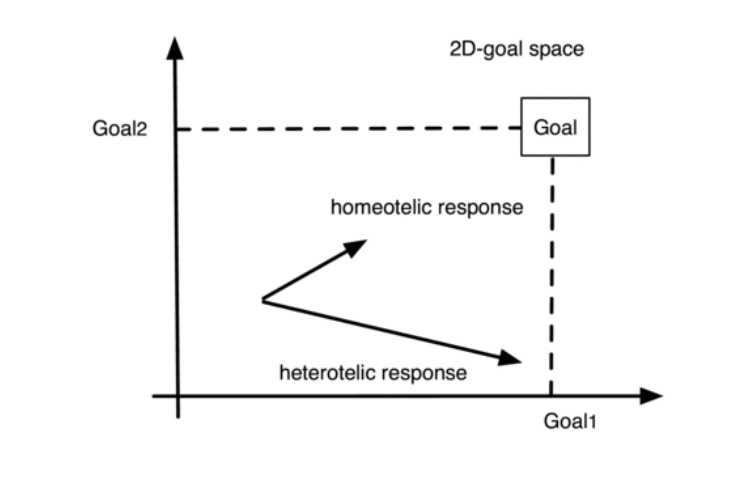
Homeotelic responses are the most important type of action. Introduced here, someone who wanted to lose weight and save money would learn to cook for themselves. Cooking (homeotelic) satisfies both goals.

Harry’s and Dollar Shave Club used homeotelic approaches. Their first goal was cheaper razors and their second goal was easier razors. Online subscriptions achieved both goals.

Competitors like Gillette were forced into heterotelic responses. They couldn’t move towards easier because of their existing retail goals.

Makeup company Trinny London’s CMO Shira Feuer spoke with Rory Sutherland about how she manages the brand in a homeotelic way. Here are three ways.

  • Trinny London uses real people not models as their models. This is a good bit of differentiation. We’re like you the ads state.
  • The branding is like the models: nice but not fancy. The copy isn’t polished and the images aren’t photoshopped.
  • The company uses gifts, not discounts to extend value. Gifts are CAC Trojan horses.

If the Trinny London brand goal is nice and friendly, then not-models, simple copy, and free gifts all work toward that.

Feuer also worked at Burberry and tried to bring that aesthetic to the makeup world. But it was too polished. What works at Burberry does not work at Trinny London. Feuer also consulted with companies and remembers being told you should never pay full price for a Domino’s Pizza because the discounting is built into the pricing model. What works at Domino’s Pizza does not work at Trinny London.

The Domino’s Pizza turnaround was built around changing the culture, improving but not perfecting the pizza, allowing social media, and building their data prowess. That’s a great homeotelic plan – for DP.

Really, this is one of my favorite books.

3P Placement

There have been four eras of modern retail. 

Catalog era. In 1888 the Sears catalog begins. In 1896 the United States begins rural free delivery. Companies can mail catalogs directly to their customers and customers could mail their orders. It’s an important step in the Reconstruction Era. In 1908 the Sears kit house appeared. By 1915 the Sears catalog peaked in size. 

City era. By 1929 half of Sears’ orders are retail rather than catalog. Americans migrate to cities. Stores like Sears and Montgomery Ward get in front of them. Sears buys radio station WLS and locates stores in downtown areas. “Window shopping” begins. 

Suburbs era. Americans move again. Following World War II, Americans seek space and the automobile allows it. At the time Walter Cronkite noted, “When [Eisenhower] approved and pushed through Congress this great interstate highway network that we now have, he changed the entire face of America.” Sam Walton opens his first store in 1945. The American mall begins in 1950, a decade later there are almost five thousand. By 1975 malls account for 33% of all retail sales.

Internet era. In 1994 K-mart reaches its peak store count and Amazon.com begins. Though digital, early websites are niches of catalogs or newspapers: classifieds, shoes, clothes, used goods, and so on.

How a business distributes to customers affects how a business succeeds. The four eras of modern retail demonstrate how the placement of goods and services changed over time. 

A niche of the internet era, DTC, is a modern example of how the terms change. The DTC placement is, or used to be, quite cheap. Businesses warehoused goods away from expensive city centers or suburbs. Or dropshipped across the Pacific Ocean. They didn’t worry about fighting for shelf space when public and private and last-mile couriers were happy to work for them.

DTC brands also succeeded because they chose good products. Glasses, rings, clothes, razors, and makeup are all easy to ship, similar in scope, and don’t expire. They’re also products with favorable margins. 

Lastly, the internet provided unique promotion opportunities. The internet allowed cheap websites and cheap – though growing expensive – advertising on social media sites. There were no gatekeepers and they told their story on podcasts and in videos. 

What’s the next era? No one knows. What’s the question to ask? That’s easy. Where are my customers and how do I talk with them? 

There’s a longer look at the four eras here: From farm to city to suburb to circuit

The economics of iPhone cases

I tried, and failed, to get a photo of this issue.

For Christmas my youngest daughter got an iPhone. It was BOGO when you add a line, so I got a new iPhone too. For simplicity sake I ordered us Apple cases with the phones. And my case sucks. The silicon marigold iPhone 13 case is the worst I’ve ever owned.

But why?

Apple products are good. The computer I’m typing this on is an Apple product. If it’s read on a phone odds are one-in-three it’s an iPhone. Apple is one of the most valuable companies in the world – and has been for many years. What’s going on?

Well first, value is relative. If something is bad, it’s bad relative to what? My previous Smartish and Speck ($12 & $8 respectively) cases were more durable and provided prolonged protection on earlier inferior designed products. I think Apple cases are bad because they lack competition.

Apple, like Aldi, competes in a special way. Both are A+ companies and both compete outside the store. The goal is to get people inside, and if customers come in, they’ve got them. So Apple doesn’t convince me to buy the silicon marigold case rather than the leather case. No, Apple just wants me to buy Apple.

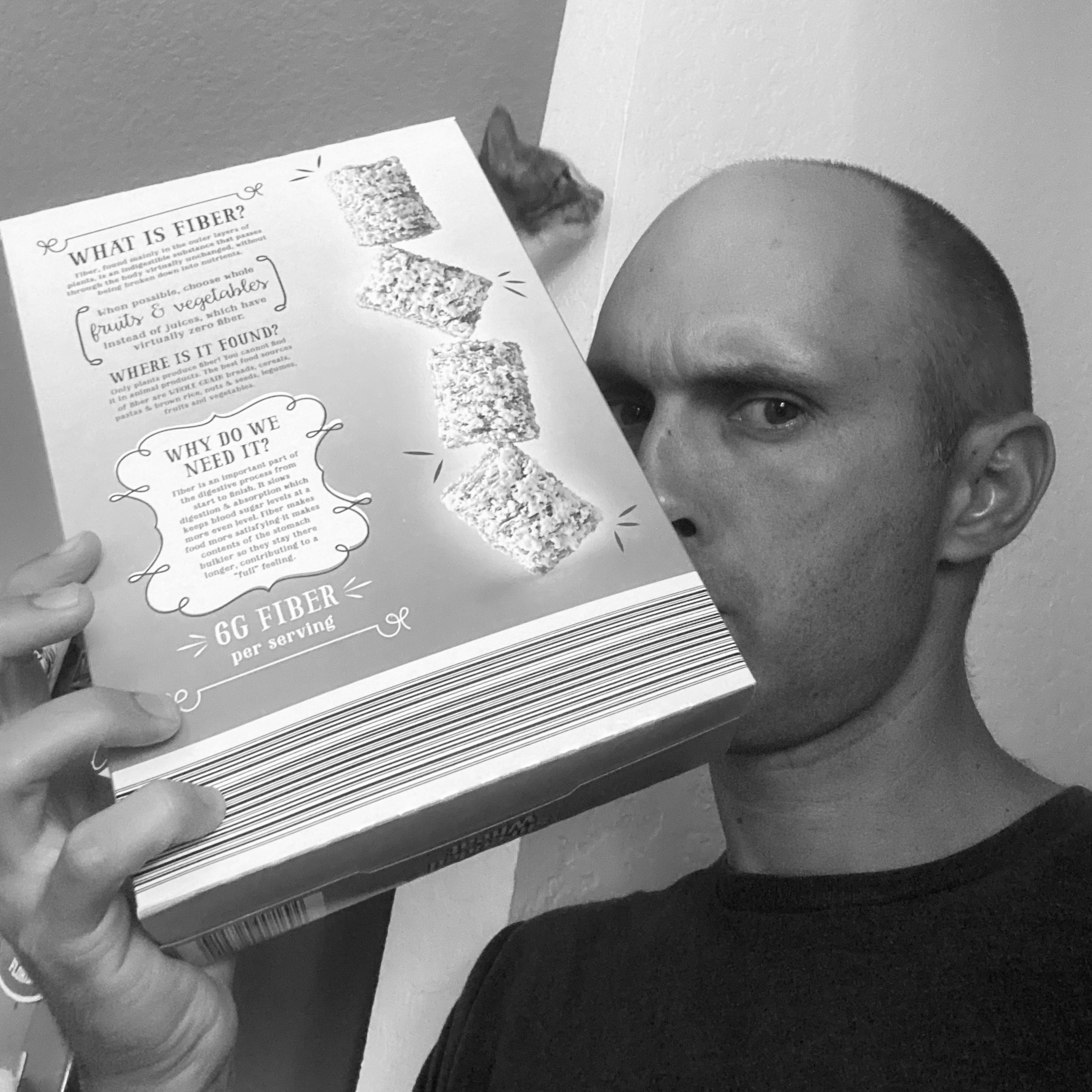
Aldi cereal is a visual example of this model, the boxes are bland (here in B&W) because they don’t have to grab the customer’s attention in the store. Contrast this with Walmart or Amazon where the competition is both inside and outside.

Smartish or Speck compete in the bedlam of Amazon. These cases have to throw sharp elbows in the arena of good, fast, and cheap. I found the Smartish case via a Wirecutter review, so it has to stand out as well. Ditto for Speck.

That said, I don’t know if the Apple case should even be good. Apple’s advantage is packaged hardware and software, not being best in class on accessories. Apple doesn’t sell a great phone case, instead the JTBD is ease and brand.

3P and pricing power

3P: Pricing power 

The best business has pricing power. Investor Charlie Munger noted that a business with pricing power is “the ultimate no-brainer.” 

How does that fit within the Placement, Promotion, and Product series

Product. Pricing power exists relative to production costs. A knowledge worker uses ‘information’ to create their service. If the price of the information increases and the worker cannot raise their prices they do not have pricing power. 

A coffee roaster might have a different perspective. If coffee is coffee, then one Brazilian farmer raising prices doesn’t affect the roaster. They shop around. Or, they can stick with the roaster and pass the cost increase onto the consumer. Which gets to…

Promotion. Pricing power exists relative to perceived value. If customers buy ‘milk’, a business has low pricing power. But if customers buy ‘milk, from grass-fed low hormone happy cows’, that is different. 

Customers don’t buy one thing. There’s always an intangible. Brands demonstrate this. A Rolex doesn’t just tell time. McDonald’s doesn’t just provide sustenance. 

Placement. Pricing power exists relative to distribution and retail options. Think about location. Landlords have pricing power over restaurant tenants. 

The internet (with shipping) removes the landlord – and their power. Website hosting, online shopping carts, and 3PL have minimal pricing power over their customers. So, online businesses can be quickly profitable. But not all internet services are created equal. Facebook has pricing power for Facebook communities, not so for email newsletters or websites. 

Another aspect is Wholesale Transfer Pricing. This is part-of-the-reason restaurants are terrible businesses

Batman (part 2)

What do the following movies have in common? 

American Beauty, The Green Mile, The Matrix, The Sixth Sense, Being John Malkovich, Boys Don’t Cry, The Blair Witch Project, Fight Club, Toy Story 2, American Pie, and Star Wars Episode I. 

They were released in the same year. It was so good they wrote a book: Best. Movie. Year. Ever. 

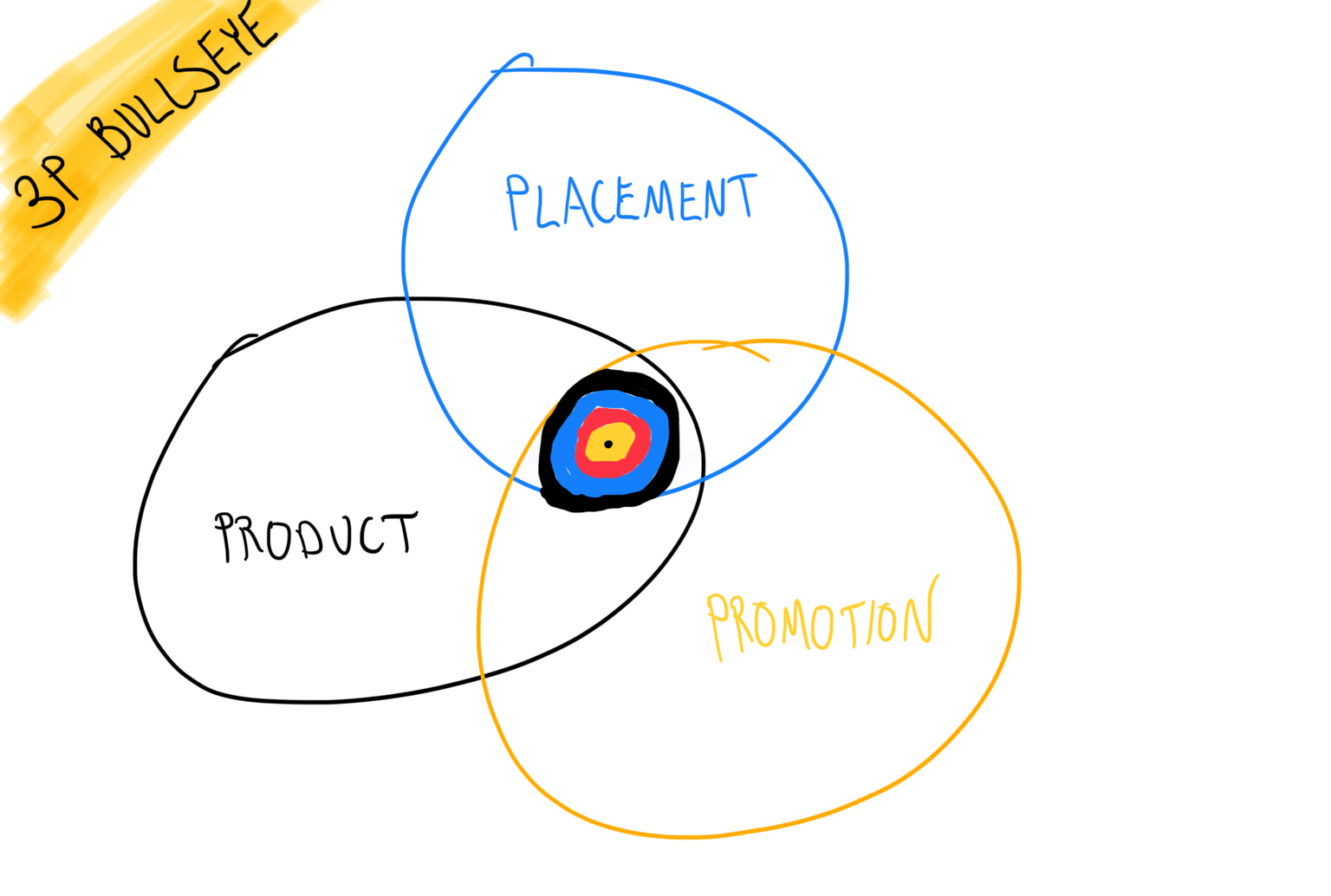
Was it talent? Maybe. Good economics? Perhaps. Instead, let’s look at this using the Placement, Promotion, and Product Bullseye. If a business ‘hits the bullseye’ it succeeds. 

In 2000, Thomas Tull founded Legendary Entertainment. It was one of the first companies to combine private equity investments with Hollywood movie-making. 

It was good timing. The late 90s saw the highest number of movie screens in America. In 2004, Blockbuster’s store count peaked. A year later DVD sales did too.

The placement for movies was primo. There had never been more screens on which to place movies. Make enough of something and some of them will be very good. 

Tull also nailed the promotion for movies. Prior to Legendary, Hollywood used mass-market advertising – because it worked! Jaws pioneered and Star Wars exploded the model that with national advertising and distribution, movies could be huge. 

But Tull saw national consumers as three segments. There were huge fans, who would pay regardless of promotion. There was also the free tickets and twenty bucks crowd. These people wouldn’t go for free tickets and twenty bucks. Then there was the middle group. It was them Tull wanted to reach with the advertising. Persuade the persuadable and he did just that 

The final piece of the picture puzzle was a great product. Hire great directors – Nolan, Snyder, del Toro – and get out of their way. Legendary’s product was helped too by characters like Batman, stories like We Are Marshall, and laugh-fests like The Hangover. 

The product was also profitable. Movie studios controlled the pricing and theaters earned their keep on soda, sweets, and treats. Ditto for DVD, a product with a high upfront cost but zero marginal cost . 

Now flip it. Books are also media. Lee Child is a 3x NYT Best Seller and when Killing Floor was released in 1997 it had a limited audience, was hard to find, and was promoted in a review of books section of the newspaper. Not ideal. 

Books became a better business model. They’re better placed: physical or digital. Promotion is more focused, specifically with the rise of podcasts. But Child still has ‘his biggest fan’ come up on the street to ask when his next book is out. It’s out now, he tells them, go buy it!. The product, for the right authors too, has never been better. But best sellers are not blockbusters.

Businesses ask: Where to direct resources? Through contrast, the bullseye model highlights the trade-offs. 

Keep following along. 👇 

Part one of Batman was looking at the movie industry from 1975-Marvel in the Batman BATNA post.

Placement, Promotion, Product (Genesis)

Businesses have to do many things to succeed. But three areas encompass those many things: placement, promotion, and product.

Where is this sold? The placement includes distribution, retail (shelf space), shipping, etc.

How is it promoted? Also known as ‘marketing’ but includes how the customers understand the value.

What is sold? The ‘thing’. What are the trade-offs in the creation?

Consider toothpaste. It’s universal in retail, it’s promoted with national, regional, and local advertising, and it is designed to feel good.

Or, your local accountant. They have an office (Main St. USA), sponsor a little league team, have a weekly newspaper ad, and do a service many people don’t want to, or can’t, do.

Even, Google. It’s located in the world of bits rather than atoms, it spreads through word-of-mouth, and is the best search engine ever built.

Remove one area (placement, promotion, or product), and each business changes significantly. What if toothpaste loses shelf space to deodorant, if the local accountant stops advertising, or if Google search results become worse? These three areas are ‘gotta haves’.

We’ll look more at how Placement, Promotion, and Product influence how a business succeeds or fails.

Some parts of this diagram we’ve covered. If Product is the goal, then job to be done is the means. If Promotion is the goal, then Alchemy is the means. If Placement is the goal – well – this one we’ve looked at less, and it’s because of the internet which makes getting bits of data to anyone so simple it’s overlooked. We’ll fix that.

Follow along 👇

Blumhouse business model

“So how do you win, how can you make money if the dumbest guy in the room is the one setting the price?” – Jerry Neumann 

Every business has better or worse business models. Pixar only worked as a movie company thanks to the extensions offered by Disney. John Lassiter told Steve Jobs that each movie they made had to be the highest-earning animated movie of all-time every time. Unless of course there was theme park, merchandise, and licensing revenue too.

Another movie model is Thomas Tull’s experience at Legendary Pictures. There the goal was to “stand as close as you can to absolute talent” and be mindful with the marketing. Great directors (Nolan, del Toro, Jonze, Snyder) with established characters (Batman, Superman, Jurassic Park) and good marketing meant Legendary worked. 

A third movie model is the Blumhouse model. How does it work? 

1/ Horror is the minivan of Hollywood. One day I went to a friend’s house to play pickleball. They love pickleball and painted a court on their driveway. I parked in the grass, got out of the car, and was welcomed by the question you bought a minivan?!?!?!

Yup. Besides the practical aspects, minivans are don’t include a “signaling premium”.  It looks cool to ride in a Suburban. A minivan is much much much less cool. Because it is ‘hired’ to do fewer things it’s cheaper for the other jobs. 

In Hollywood action movies are Suburbans and horror is the minivan. “It’s very hard for producers and executives in Hollywood,” Blum said, “to get out of their way.” Horror movies don’t have an ego reward.

2/ Control the costs. Blum does this three ways.

  1. Actors get the minimum plus bonuses. “Few locations, few speaking parts, and we shoot 90% of our movies in Los Angeles. It’s twenty to twenty-five days and everyone works for the least they’re allowed to be paid from the union.” It’s a venture capital model. 
  2. There’s no meddling. “I’m not an artist,” Blum said, “I leave that to the directors.” If you hire the right people they don’t need to be told what to do. At Seinfeld, they celebrated the 100th episode with an enlarged list of requests from NBC – none of which had been made. People are willing to work for less because there’s also no “note tax” on their psyche.
  3. Moneyball hiring. “James Wan and Leigh (Whannell) had done Saw together and they came in my office and pitched Insidious,” Blum said, “Leigh and James had done two movies for Universal that hadn’t worked very well and I think Hollywood judges all of us too harshly on our last work as opposed to our body of work.” Blum found metrics that were underpriced by the market due to recency.

3/ Total addressable market. The movie business model affects how many and what kind of movies there are. The 1990s saw a bunch of movies because there were many screens. The 2000s saw a bunch of DVDs because of their high margins. The 2010s saw a bunch of superhero action movies because they easily translated across languages. Horror does too.  

4/ Sequels. Each movie is a test. If the ‘proof of concept’ works, Blum and his team add to it. The Purge was made for $3M and earned $90M in 2013. The sequel, Anarchy, was made for $9M and earned $110M in 2014. There have been five Purge films (so far). 

Is there such a thing as a bad business? There are poorly run businesses. Some businesses attempt the wrong thing. There are business cycles. But every business has a model that works. Jason Blum utilizes ego and lack of to compete and compensate in a unique way. Much like a CAC of zero changes the unit economics, Blum’s approach opens up a business model that works.

Seriously, 1999.

KISS the Afterpay business model

Many actions are taken because they are easy. What did you last eat for lunch? How did you drive to where you are? What browser tabs are open? And ease is context-dependent. What is easy for one person may not be easy for another. 

Ease is a tool. Make it easier and people will do more of it. 

And it doesn’t have to be that easy: Framing makes comparisons better. Any fast associations will do.

The ‘buy now pay later’ company Afterpay succeeded for many reasons, one was a focus on ease. 

Easy for the consumers. Pay one-fourth now, then one-fourth every two weeks. That’s easy. There’s no consideration of credit card balances or APR. 

The terms also make it easy for the consumer to legitimize. If the offer was too good to be true consumers would sniff it out and balk at the purchase. 

Easy for the merchants. Say you own a store. You hear about Afterpay. Wait! They charge, 4% of the transaction!?!?! Your store can’t afford that. 

So how did Afterpay make it easy? 

Merchants don’t have to handle the transaction costs (~1-2% anyway) or the chargebacks. They don’t have to worry about bounced checks or building out their own software. Afterpay increases total order size and serves as a marketplace. The deal was so good it was irresponsible not to be a customer

Easy for regulators. Every business exists within a system of rules. One of the largest agents in the system is the government. Relative to credit card companies, Afterpay has a consumer-friendly profile and consumers love it. 

BONUS: Easy for Afterpay. Yep. Afterpay made it easy on themselves too. Co-Founder Nick Molnar told people his ideal customer was someone buying a purple polka dot dress. This customer was fixed on the fashion and unlikely to miss a payment. 

Fashion customers also skew younger, are more open to options, and want creative financing. While Amazon is convenience shopping, Afterpay became experience shopping. 

Afterpay found an opportunity by reshuffling the costs of doing business. Merchants do pay more per transaction but have more and higher transactions. Effectively Afterpay took money from the marketing and rent buckets and moved it to (their!) processing bucket. 

Within Afterpay, it is CAC reshuffling. If Afterpay is more lenient in approving customers, they have more loss. But they get more customers. Longtime users use Afterpay 29 times each year! While the fraud and loss figures increase the other forms of CAC do not.