Ramit Sethi’s Business Advice

ramitface.bmpRamit Sethi has been a guest on Pat Flynn’s Smart Passive Income podcast three times. Sethi had many good things to say to Altucher when they talked in episode #36, and his time with Flynn is no different. In those conversation Sethi laid out, how to build your product, how to market it, and how to make decisions.

I’m a fan of Sethi and writing this post was quite fun. It was like picking up breadcrumbs that someone had dropped along a path, leading me to a big idea. That said, there’s probably something I missed. If you notice a big ideas missing, please let me know.

How do you build a product?

If the key in real-estate is; location, location, location. Then the key to internet products according to Sethi is; research, research, research.

Sethi’s first blog, I Will Teach You To Be Rich, was built on answers to questions his friends asked. A book came from the blog. While on tour to promote the book, people started asking him questions that weren’t in the book. One of those questions was about how to make a side income. Which led to the next project.

This sequence isn’t uncommon. Austin Kleon (episode #19), Wayne Dyer (episode #6), Steven Kotler (episode #118), Stephen Dubner (episode #110) and others have all said that they got ideas for their next project from questions raised by their current one.

You want to spend time on research, not just creating, Sethi says.

Justin Jackson (@mijustin) – another product person – tells this story. He was walking to his barber one day, turning over ideas in his head. One was about how to improve his barber’s scheduling system. Jackson could create an online tool that let people schedule appointments, see openings, and make changes. The barber could collect email addresses, track key metrics, and sell products. Then, if he can build a system for one barber, he can sell a license to other barbers. This appeared to be a win for everyone.

When Jackson arrives at the barber shop, he hops into the chair and starts to share his ideas.

The barber listens patiently for a few minutes, but interrupts Jackson to tell him that he hears this idea all the time. “All the time?” Jackson asks, “but then why don’t you do it?”

“It won’t work for me,” the barber tells him. The barber explains that he wants something that’s quick and easy. He needs to efficiently answer the phone while cutting someone’s hair, check and note the caller’s appointment time, and get back to the job at hand.

Jackson thought he had a golden idea until he talked to his potential audience.

Sethi puts hard numbers down, spend 50% of your time on research. That doesn’t mean tweeting, “Hey guys, I need your help, what do you think I should build/write/code/draw/design.” Instead, look for a problem to solve, then:

1. Create a surveymonkey survey. These don’t have to be perfect questions, but put your best guesses out there.
As the results come in, talk to people in your industry and ask key metric standards. If you emailed everyone on your email list and 10% responded, figure out if that’s an average number. Ask how big someone’s list size is, ask them about how often they email people. Ask lots of questions.

2. Create a Google Doc. While the survey responses pile up, create a document with  your predictions. If the question is, “What do you like most about vacation” put headings like, Relax, Family Time, Sand, Etc.
At this point these are your best guesses, and they are merely a place to start. Do not become attached to them because:

3. Disprove your Doc assumptions. Did you know the term Devil’s Advocate originated  the Roman Catholic Church? It was a position assigned to someone who would make the case against someone’s canonization. That’s what you – or your team – needs to do.

If you’ve got more than one person, your most convincing advocate will be someone who actually believes in their stance. In Yes!: 50 Scientifically Proven Ways to Be Persuasive, the authors write that someone who’s merely playing the role will be viewed as less persuasive by their co-workers.

Sethi saw his assumptions dwindle like a stack of chips at the craps table when he launched his Earn1K course. He thought people wanted to create extra income to be “ballers” who flew to Las Vegas for the weekend. In reality people wanted optionality in their lives. The wanted the ability to do this or that or not do something.

Look at the survey results and start to see how things fit with your original assumptions. The goal here is to figure out the shape and picture of the puzzle that’s forming. While you do this, be open to the idea that your original pieces may not be part of the final puzzle.

4. Create a picture with real people. In your document you want to include headings that are the big ideas that have emerged, and direct quotes from people. If the reason they go on vacation is to “get away from the office” then those exact words need to end up on your document.

At this point you don’t need to worry about statistical significance. If only 16.87% of people say they like to “get away” that’s fine at this point. You’re like someone who’s chosen to begin a healthy diet. You don’t need to know the difference between quinoa and couscous, you do need to know the difference between couscous and candy bars

5. Interview people. Much like the survey and document, this doesn’t need to be complicated. Sethi notes that you need to check your biases at the door and don’t ask leading questions. This stage is still research and to dive deeper into the problem that people are having.

Soon you will start to get an idea about what people want. Sethi says:

“At a certain point I start to see a lot of patterns in people. They’re going to always be using the same words. They’re going to be saying the same things, and at a certain point instead of just listening I can say, “You know, it sounds like what you’re saying is blah blah blah” and I kind of read back what I’ve learned. Sometimes they’ll say, “Well, kind of, but not really.””

Only then can you start to probe and say things like, “if there was a vacation autoresponder that cut down on your mobile emails would you use that?” or “if there was a way to get back into work-mode when you returned, would you pay for something like that?”

Once you start to poke around and get traction you need to find hard yeses to these questions. If someone hasn’t said, “shut up and take my money,” you need to keep looking.

6. Create small groups. Once you think you have something, you can build it. This too can be quite small. Sethi says that his team will use Google Docs to create a slide deck for people to go through. That works because this is still not a polished project.

Ask 10-20 people to be part of your small group. Have them go through the entire course/book/system that your research suggested.

Product people sometimes miss this – I know I have – but it’s everywhere once you realize it. Authors have beta readers they seek feedback from. Comedians go to clubs on Tuesday nights to test material.

7. Maintain an internal locus of control. Do not worry about what other people are doing. Do not worry that So-and-so released such-and-such and it’s their 4th one this year. You do not care. Bigger numbers don’t necessarily mean more or better.

For example, Peter Thiel (episode #43) writes that bigger corporate boards aren’t necessarily better boards. You might think that more minds might mean more solutions, but this isn’t Thiel’s experience. More minds mean more debate and fewer decisions.

You can only control the things you do, you may as well focus on those. Michael Singer (episode #119) suggests you mentally lean back and imagine things passing you. T. Harv Eker (episode #100) says that he mentally says, “thank you for sharing,” when distracting thoughts arise.

Ramit Sethi’s Guide to Marketing

wrappedcookies
Can you spot the 3 marketing points in the stack of cookies?

Marketing – like development – comes from the research. Marketing and Development are not a chicken and egg problem. Marketing and Development are a egg and scrambled egg breakfast platter problem. One must come before the other.

If you do good research for development, your marketing should flow right out of that. That said, here are some macro ideas anyone can use.

1. Let your language flow from your research. Sethi says that his “Earn 1K” program was called something different in the development stages. After some tests, his team realized they needed to tone down the language because people didn’t believe it.

For example, Sethi says. If you were to create a dating product, think about how your language may differ for different sexes. For men it may be; “double your dating.” For women; “catch him and keep him.”

With any of these ideas, let the copy come from the customer’s cries.

2. Answer objections. Sethi calls this the Theory of Preeminence and he outlined it in his first talk with James Altucher. “When we created a product called Earn1K, this was the headline…finally a proven legitimate program to identify a profitable idea and turn it into a reliable side income of a $1,000 a month with just five hours a week.” Then Sethi explains why this works:

  • Some people earn 10K but many don’t believe it, 1K is reachable.
  • Don’t I need to quit my job? Nope, it’s a side income.
  • This sounds like a scam, has it been tested? Yes, it’s proven and reliable.
  • But what if I don’t have an idea? The course helps you identify one.

3. Give social proof. People want to see that people like them – and the more similar the better – have used the product. This is where you can go back to your small group. Sethi says that some of his small groups have been free, on the condition of those people letting IWT to interview them later on. This is social proof, and the better you implement it, the better your results will be.

Researchers have found that good social proof can improve conversations from 0-25% and great social proof from 25-32%. The more niched your product, the more focused you can be with your social proof. In the vacation example you can focus on men who travel for business. In the dating example you can focus on young people who live in large metropolitans.

4. Know what your market will pay. Sethi says that one of his first products was about how to save money. “Guess what,” he says, “people who want to save money don’t want to pay to to see how.” That was poor alignment on his part Sethi says.


5. And don’t sacrifice your price. Unless you’re selling t-shirts at Target, don’t discount your product. If you worked hard on something and it’s worth $50, then sell it for $50.

You need to be confident in what you’ve created, Sethi says, and this comes from all the testing and research you’ve done.

Instead of thinking in terms of cost, think in terms of value. How helpful is the thing that you’ve created? Books are classic examples of great values but they are priced at <$20 (an example of #4 above). No matter how great your book is, you’ll be hard pressed to sell it for a lot more than that.

But many books have great value. I’ve read some books where I would have liked further discussion on a topic or someone to follow up with how I was putting the principles into practice or video examples. If you can create more ways to interact, apply, or understand the material then that’s added value.

6. Sell in long emails. “One thing I’ve learned,” Sethi says, “is if people have a pain point or if they are interested in what you have to say, there’s no limit to what they’ll read.”

Each email that you send should contain something of value, Sethi says. People should be excited to open your email and see what’s inside.

This also filters in the right people. If your writing is a reflection of who you are and what you are selling, then it’s step one of customer acquisition.

Ramit Sethi’s Guide to Running a Business

mullerlyer-illusiaSethi has been doing the internet business hustle long enough now that it’s his business, not a side project and he thinks of it like one. There are a few lessons he’s learned along the way that can help anyone with their business.

1. Understand psychology. There are a lot of psychological tools that Sethi uses in his sales pages, and for good reason, they work. Ideas like scarcity, abundance, social proof, and more are all little levers we can pull that will nudge people along. In an interview with Tim Ferriss he recommended people read, Mindless Eating, The Age of Propaganda, and The Social Animal.

There’s a reason people don’t change, Sethi says, and it’s not for a lack of information.

“Hey, everyone knows what those compound interest charts are, they don’t change behavior at all. Or when it comes to dieting, or weight loss–“If people really understood how bad carbs are, if we just wrote another paper on it, then they would change.” WRONG! If they change their behavior first, then their attitude will follow.”

Howard Marks noted that the biggest #fail in investing is psychological misunderstandings, not financial ones. To fix our thinking, we need to flip the sequence we often try. Both A.J. Jacobs (episode #94) and Gretchen Rubin (episode #97) use the idea that behavior -> thinking pattern and Sethi does too.

2. Does 5X move the needle? Did you know there’s an IWT app? Yep, really. For all the things Sethi is, he’s not one to shy away from talking about his products. Yet I had never heard of the app before. It’s because they’ve cut bait on it.

Sethi says that they had a meeting about it and a team member suggested they spend some time optimizing the app and making changes. They could do that, Ramit says, but it wouldn’t really change anything.

“I called it the 5x Principle, because even if we 5x sales, it would make no material impact. It wouldn’t even move the needle!”

They could have changed the app and increased sales fivefold, but it wouldn’t have had a significant impact.

3. Haters gonna hate. There will be people who call you names, it did not end in middle school. The key is to not take it personally, because it will eat you away if you let it. Pat Flynn says, “when I would get negative criticisms for something I would think about it for DAYS. It would just kill me.”

Amanda Palmer (episode #82) and James Altucher both said the same thing – it hurts.

4. You are a CEO – act like one. “I want everyone listening to start thinking of themselves as a CEO,” says Sethi, “not some scrappy internet nutcase but a CEO. A CEO walks into the room and they think very methodically and deliberately.”

One way to improve your thinking is to develop decision making models like Michael Mauboussin (episode #TKP1). Peter Thiel also has some good mental models. Shane Parrish at Farnam Street has the best collection of them.


If there’s a conclusion to Sethi’s system it’s; just do it. Do one small thing that moves your business or book or course forward. While writing this I thought how similar it was to walking through a dark room. You can’t see anything and sort of move slowly about. You’ll run into the chair and maybe knock over a lamp. But if you remember where the chair and lamp are, you won’t make that same mistake twice. That’s Sethi’s secret – don’t make the same mistake twice. Learn lessons along the way. Do research that gives you a leg up on your guesses and be critical of them.

But how do you do it? Where do you start? Begin by finding smart people to get ideas from. I started this site because James Altucher consistently has podcast guests sharing great ideas.

Howard Marks

Barry Ritholtz was joined by Howard Marks to talk about competition, decision making, and persistence. Marks is the co-founder of Oaktree Capital Management and author of The Most Important Thing Illuminated: Uncommon Sense for the Thoughtful Investor. His funds have achieved 18-22% returns and his net worth is $2B. Marks has been incredibly successful in his financial life, but it’s wise to remember the words of Seymour Schulich; “The word ‘billionaire is a very crude and inaccurate measure of how well I have played the game of life.”

Bigger than the billions are Marks’ ideas, which he shares with Ritholtz.

Competition is not capitalism.

This expression comes from Peter Thiel (episode #43), who writes that the accumulation of capital does not happen in instances of competition. The reason there are few wealthy pizza palace owners is because there is too much competition. Competition eats away at capital accumulation, no matter how good your pie.

Marks learned this serendipitously in his career. One day a client called the place he worked and asked about a high yield bond fund. The company didn’t offer that, so Marks’ boss assigned him the task of developing one. Marks’ career grew as the desire for bond funds grew. There were very few people at the time who were operating bond funds like this and Marks says he was “lucky to get in early.”

It’s the same story Jason Calacanis (episode #77) tells about getting in early with blogging and Jay Jay French (episode #75) tells about his band being ready to play on MTV. More competition would have meant less capital for each of them.

Think at the second level.

“If you think the same as everybody else, you’ll behave the same as everybody else, and you can’t expect to outperform them.” – Howard Marks

Marks tells Ritholtz that first level thinking is the style of thinking that many people use. It’s cause and effect thinking. It’s thinking in simple contexts rather than complicated or complex ones.

First level thinking is – someone pays me for my work, it must be valuable.

Second level thinking is – why does someone pay me for my work, what value do I provide?

Taylor Pearson, Adam Davidson, and others suggest that the employment landscape is changing in exactly this way, and the people who recognize it first will be the second level thinkers.

Marks suggests we follow this advice from Warren Buffett:

“The less prudence with which others conduct their affairs, the greater the prudence with which we should conduct our own affairs,”

And Marks has applied this thinking too. In 2007 he started a distressed debt fund – in 2008 the market crashed. In January 2000 he wrote about the internet bubble – in March it peaked. It’s a sample size of two, Ritholtz points out, but it’s a pretty good record.

How to avoid the winner’s curse.

The winner’s curse is, by definition, paying more than anyone else will pay. So how do you avoid paying too much?

Marks suggests awareness, “the secret to solving all problems starts with awareness of that problem.”  We call this the Rumpelstiltskin Effect, and have seen it over and over again:

  • Adam Savage cracked the code by finding out out glass bottles are named.
  • Carol Leifer cracked the code by finding out how to shut down hecklers.
  • John Chatterton cracked the code by finding out how to identify sunken submarines.

Avoiding the winner’s curse – or any psychological pitfall – begins by knowing its name.

“The biggest investing errors come not from things that are factual or analytical,” Marks says, “but from those that are psychological.” If you can keep yourself out of the way, you’ll be well on your way.

The average way to be the best.

Marks tells Ritholtz about a meeting he once had with a fund manager. The guy told Marks that he was proud of his slightly above average results, because over 20 years that meant he was in the top 5% of all performers.

A short time later Marks met a manager who was in the midst of a quite bad year, but justified it by explaining you had to have some years of loses to have the great years of gains.

Instead it’s more about survival. If you avoid blowups, you’ll survive. If you do good work, you’ll survive. In blogging like this, more people leave each year and the pool of survivors moves up the ladder of success.

What to do when you hear the crickets.

For ten years no one responded to Marks’ chairman memos. Ten years! And it’s not like these weren’t of consequence. Warren Buffett said, “When I see memos from Howard Marks in my mail, they’re the first thing I open and read. I always learn something.” Ritholtz praises them as well, but also asks, why Marks kept writing them when it seemed like no one cared.

“I enjoyed the process,” Marks says. It’s the same thought process Chris Hadfield (episode #111) used in his pursuit to become an astronaut. Hadfield reasoned that there was a good chance he would never make it, but wanted to try. He made sure that the work along the way was interesting to him as well as leading the way to becoming an astronaut.

Finance has been a great career for Marks, but many young people do it for the money. Don’t, says Marks. Instead, find something you enjoy doing and get good at it.

How to not make mistakes.

The best way to avoid mistakes, says Marks, is to read widely. You’ll start to see the cycles of life. Marks tells Ritholtz about this bull market cycle; nobody thinks things will improve -> some people think things are getting better -> most people think things will improve forever -> CRASH. Nobody thinks things will improve…

You dont’ have to live through these things to understand them, Marks says. Instead read widely about different ideas and cultures and history. As the roman financier Seneca wrote:

“By other men’s labors we are led to the sight of things most beautiful that have been wrested from darkness and brought into light; from no age are we shut out, we have access to all ages.”

Try Against the Gods, Fooled by Randomness, or The Short History of Financial Euphoria, says Marks. Also good are Poor Charlie’s Almanack, The Warren Buffett Way, or Outsiders. Ritholtz too has book suggestions.

We’ll never be mistake free, says Marks, and sometimes we’ll need to face situations with consequences. In those cases, he suggests we seek outcomes we can live with.

Be logical, not emotional.

Marks says that a lot of companies get tripped up in emotional hurdles – especially when they buy back their stock. Why do companies buy back stocks when the price is high, Marks asks. Instead they should be buying back when the price is low.

Have a set of procedures for how you would like to act and plan ahead. When John Chatterton dove into a sunken submarine, he had to navigate by touch using only his memory of the sub’s layout. When Chris Hadfield launched into space, he had his steps choreographed like a dancer. When Ramit Sethi (episode #36) teaches courses, he tells people how to have logical answers (add value) rather than emotional ones (cut price).

Our logical responses are like paths through the woods. If we are familiar with them, then we can better stay on them, even when running from a bear (market).

Thanks for reading, I’m @MikeDariano.

Taylor Pearson, Adam Davidson, and the New Career Conditions

This post is two-for and it’s all about the future of jobs. Taylor Pearson joined James Altucher to talk about his book, The End of Jobs and Adam Davidson joined Russ Roberts to talk about the “Hollywood Model.” All four thinkers believe that the employment landscape is changing and they – and others we’ll dive into – all have a common thesis for what it will look like in the years to come.

Pearson told James that it all started for him when he looked around and thought, “wow.” He was sitting at breakfast with a group of entrepreneurs and asked, “why was this situation possible?”

That situation that Pearson talked about was a group of expats sitting in the Philippines. All there because they were able to meet and talk about the work they were doing. Thanks to a world-is-flat style changes they were able to run their business from anywhere.

Across the pacific ocean in California things looked similar. “Here are hundreds of people,” said Adam Davidson, “that snap into action on day one but when the lights go down they are scattered to the winds.”

Both the ex-pats at breakfast and set designers in Hollywood told the same story of the new employment model. Both groups had a suddenness of arrival, a completeness of their action, and a firm dispersal. It’s like a flash-mob for business.

If we are going to look at how the employment landscape has and will continue to change, we need to dive in, dig around, and come out with some conclusions. Pearson, Davidson, Altucher, Roberts, and others have given us these questions to answer:

  • What biases do we have that prevents us from seeing these changes?  (The Legacy Effect)
  • Why don’t we accept these changes?  (The Fear)
  • How do we find answers in this changing landscape? (The Cynefin Framework)
  • How do I continue to learn? (Post Graduate Education)
  • How to I start? (Start Small)
  • Why shouldn’t I grow? (Stay Small)
  • What happens when everyone can Google you? (Keep Your Name and Nose Clean)

These questions won’t have clear answers, and for good reason. Once there are clean answers, things have already begun to change again. This post is about where things are going, not how they are.

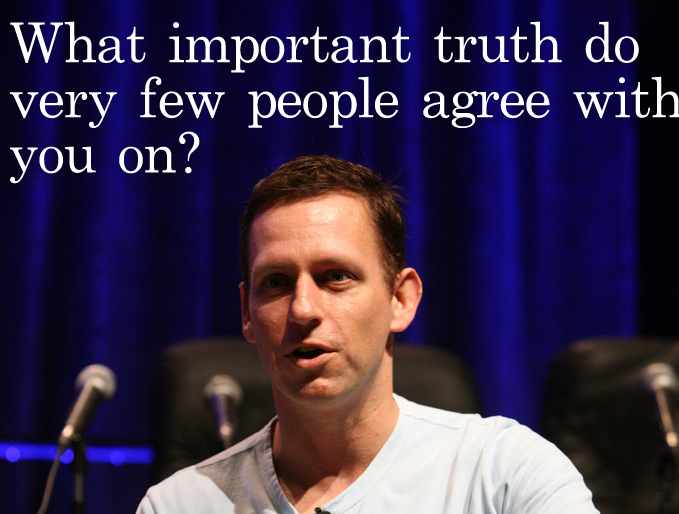
As Peter Thiel (episode #43) likes to ask, “what is an important truth that very few people agree with you on?” This may be one.

thieltruth

The Legacy Effect – Overcoming our biases

If you put a frog in a pot of boiling water, the frog will quickly jump out because it notices the water is too hot.

If you put a frog in a pot of water and then slowly warm it, the frog will slowly boil to death because it doesn’t notice the change in temperature.

These changes are happening but hard to see because we have a legacy tendency in our thought. “It takes time for anyone’s mental model to adapt,” Pearson tells James and if we adapt too slowly, we become like the frog in water. Most of us think, “I’m getting a paycheck, I must be doing something valuable,” but don’t fall into that mindset says Pearson.

Most of us can’t identify the gap between what we do and the value it provides. But not all of us. There’s a group of people who see the gap in real terms, Hollywood.

Or that’s the case that Davidson makes. In what he calls, “the Hollywood Model,” Davidson says there aren’t the same illusions of value because of the way work works. You might work for two or three months on a project but then it’s time to find another job.

In addition to finding jobs, filmmakers have to negotiate their wages. How much can you charge? Will it be enough? The search for work, combined with how much you earn is a regular feedback systems that many people don’t have.

A specific example, Davidson reports, is the value of artists who can do zombie makeup. Ten years ago makeup artists didn’t need to know how to do that, but now they do. That’s a signal.

Add in our squishy feelings and we have a real mess. “There is some romance about long term employment in the United States,” says Roberts. We like the feelings of security, even though that job may not be all that secure.

The Fear – Why we don’t accept the changing landscape

It’s hard to move out of this steady situation. We are afraid. But Nassim Taleb gives us a parable to think about it in a new way. Imagine there are two brothers. One is a banker, the other a cab driver.

The banker’s incomes is steady month after month. The cab driver makes the same amount each year, but his income varies monthly. Which of these two careers is the safer career? (In Taleb’s terms, which is more antifragile)

It seems odd to say, but he cab driver is the safer career and part of the reason is that the cab driver gets signals about his work. If he’s at the airport at 6AM and there are no customers he will see that right away.

The banking brother doesn’t get these same signals. He has to read the tea leaves of market changes, investment rates, and so on. The 2008 crash and devaluation gives some evidence to how much real value the financial sector added.

We can morph our fear with a change in wording. Seth Godin (episode #27) writes that we can shift our thinking between risk and uncertainty. Godin suggests we recognize that we should seek outcomes that are uncertain rather than risky.

“But a range of results, all uncertain, does not mean you are exposing yourself to risk. It merely means you’re exposing yourself to an outcome you didn’t have a chance to fall in love with in advance.”

This happened to Chris Hadfield (episode #111). Before he was scheduled to lead a crew to the International Space Station, Hadfield had to go for an emergency ultrasound on an old surgery. It may not have healed correctly and if there was any chance of danger, Hadfield would be scrubbed from the mission.

This wasn’t a risk, just an uncertainty for Hadfield. While he had worked his entire life to lead this mission – and it would be his last chance to do so – it was just a moment of uncertainty. On the car ride to the ultrasound appointment he talked with his wife about what they would do if he was scrubbed from the mission. By the time they arrived at the office they had a plan.

Tim Ferriss (episode #109) calls it a nebulous fear of failure. We don’t know what kind of monster is hiding for us in the closet, but we’re sure one is there. If you open the door and dig around, you’ll see there is no monster. That thing you were afraid of just the work you need to do.

The Cynefin Framework (Wha?) – Where to find answers

Pronounced “ku-nev-in,” this is the idea that there are different decision making contexts and each one requires different thinking.

You wouldn’t celebrate your anniversary at a fast food restaurant. But if your wife is pregnant and she wants McDonald’s french fries that’s the only place you should go. Everything is contextual and the Cynefin Framework is a way to contextualize decisions. There are five areas situations can fall.

  1. Simple contexts. These are situations with one answer and many people can find the answers.
  2. Complicated contexts. Situations that may contain multiple answers and they may not be seen or understood by everyone. Who you marry might fit here.
  3. Complex contexts. Situations of flux where we only have a retrospective understanding. Complexity theory lives here (if  butterfly flaps it’s wings in Oklahoma, it could cause a storm in Connecticut).
  4. Chaotic contexts. Cause and effect are impossible to determine.
  5. Disorder. You have no idea what context you are in.

Pearson brings this up in his interview and I think his point is this – we view our career conditions as simple contexts but we should look at them as complicated or complex. The logic for simple contexts goes: if they pay me, then my job must be valuable. But we’ve made the case that hidden in there are changes we aren’t attuned to.

Instead we should look at the complicated and complex models to see how our career conditions fit there. One positive variable in those instances is continued education.

Post-graduate education – How we can learn

Pearson may be more critical of school that James (which isn’t easy to do). Pearson’s angle is that school evolved as a method of compliance. A way to prepare people to work in factories. That has clearly changed, but Pearson says education on the whole has not.

“You need need to be thinking not about what’s been true for the last fifty years, but what will be true for the next fifty,” says Pearson.

For Pearson it meant getting an apprenticeship, something that Robert Greene (episode #1) told James as well. Pearson also echoed what Ryan Holiday (episode #108) and James have said about free offers. Don’t offer to “work for free” so you can do “whatever it takes.”

Instead, approach a person and present them with something they can just say “yes” to. Holiday says that the free offer isn’t free for him. It may not cost him money, but it costs him something even more valuable, his time.

1-woman_mountain

Pearson’s education consisted of learning about WordPress, and then SEO. After that he learned Google Adsense and started making some money, but not much. “I was making $5 an hour doing that work,” he tells James. “Bravo,” I imagine Robert Greene might say. Greene stresses that early on you want to build your career capital not your bank account.

Beyond learning specific skills, Pearson also picked up bigger ideas. He tells James that Rob Walling’s Stair Step Method is a great model.

The apprenticeship is alive and well in Hollywood says Davidson. This is what Sam Shank (episode #78) saw as well when he was there, and it’s why he left. Shank didn’t want to be an apprentice for decades. He wanted to create something right away.

But however you do it, start small.

Start Small

It’s repeated over and over, and it needs to be. According to Stephen Dubner (episode #20), there are four good reasons for starting small:

  1. Small questions are less often asked and may be virgin territory for discovery.
  2. Big problems are dense and intertwined small problems that have to be solved first.
  3. Small problems have a smaller mass and are easier to change.
  4. Thinking big leads to more speculation, small problems can have more accurate observation.

Pearson tells the story of someone who bought an invoice business and grew it to be more profitable. Matt Barrie (episode #114) told James nearly the thing. He needed freelancers and was using website that connected him. Eventually he bought that company. Then he bought another. Now he runs the biggest freelancing site on the web.

Steven Kotler (episode #118) introduced the idea of “first principles” from Elon Musk.

Another case for a small start is the nuanced knowledged required.  When Davidson was on a movie set he noticed that one person was in charge of the scene’s wall if they were interacted with (written on for example) while another person was in charge of them it they weren’t. Those people told him they had to choose the perfect “white” to set the scene. The perfect white? Does it matter?

According to Davidson it does. Each person there he says, was very good and their cumulative decisions together made everything fit together like a puzzle.

In the new landscape of jobs you may be the small fish that’s really good at one thing. That’s fine.

Stay Small

Another trend that Pearson has noticed is to stay small but serve more people. This sort of boutique service is also what Davidson saw in the Hollywood Model. It’s owning a skill rather than a job and shopping that out to more than one person in a year. In Hollywood, Davidson says, a camera operator may work on six films in a year. Davidson continued:

“I don’t know how to see the future without seeing a lot more of that. People finding intimate, passionate engagement with their customers.”

How might this relate to the new economy?

  • Chefs could cook for 12 families rather than 1 restaurant.
  • Teachers could quit teaching in favor of tutoring a handful of students.
  • Writers could write for many different publications.

Another analogy is what Nassim Taleb calls barbell/bimodal thinking. You have Google/Amazon/Apple that sell the same services/thing to many people. On the other end you have artisans/custom woodwork/writers who do more variety but for less people. Rather than aim to become someone who does the same thing many times over, think about moving to a job on the other end.

For example, what would you tell your friend Factory Joe about the future of his job? The workforce in the plant he’s at has shrunk 80% from its peak thirty years ago. Factory Joe’s older brother started out at $25/hour, but Joe began at $18/hour. There’s no guaranteed pension (if there ever was) and there is a small 401K match. Joe sees the outsourcing news on television but also sees reports like this and this about companies bringing some factory work back to the United States. What advice would you give Joe? What advice would an economist give?

Tyler Cowen wrote a book with some of the – possible – answers.

I imagine that Tyler Cowen would sit down in his office with Factory Joe and lay out a two-fold case.

  1. Educate yourself. Yes, some factory jobs are coming back to the United States, but not as many as left. Combined with that is that the jobs that are returning are highly skilled. You can’t take a Honda line machinist and maker her an Apple computer assembler.
    But, the good news is that you can learn how to do new things quite easily. Factory Joe could begin taking free class in robotics from MIT or something else from the buffet of options. Joe’s father was limited to learn at work, and earn promotions there. Joe’s experience will be to learn outside of work, and receive his promotions there.
  2. Get another job, then another. Factory Joe probably has a lot of skills. He’s good working with his hands, can take things apart and put them back together, and knows about electronics and engineering. Joe could build up a set of clients to serve and do repairs for them.
    If the upper class is going to grow (as Cowen thinks), then they will demand more services. If a quad-copter breaks with a GoPro camera breaks, who fixes it? Not the investment banker who bought it and not the ten-year-old who crashed it. Factory Joe though has the right skills for just a project. Roll in the “internet of things” and Joe seems like the perfect candidate for a role as the modern plumber. Instead of unclogging drains, he’s soldering circuits.

It’s much easier to speculate with Factory Joe than our real lives, but that’s exactly what we should do. It’s hard to have the same perspective that Adam Blumberg (episode #70) had when he left his job. Blumberg said that he realized right now was the perfect intersection of his skills and the demand for them.

To do this for your own career, think about the advice you would tell a friend. Make up your own Factory Joe persona and write down what you think they should do. Once that mental puzzle is put together, switch your thinking and read it yourself.

Realize that you are part of the way toward a new job, whatever it is.

Robert Greene told James that even though it may take 10K hours to be world class at something, you don’t need to be world class and you’ve probably already got some number of hours. Build on that.

Kevin Kelly (episode #96) calls this idea “1,000 true fans.”

“A True Fan is defined as someone who will purchase anything and everything you produce. They will drive 200 miles to see you sing. They will buy the super deluxe re-issued hi-res box set of your stuff even though they have the low-res version. They have a Google Alert set for your name.”

It means that you, me, and Factory Joe don’t need to to strike out and be huge. We can strike out and stay small.

It’s why both Tucker Max (episode #80) and Rabbi Daniel Lapin give the same advice about your career. That’s about an unbiased opinion if there ever was one. The authors of  “I Hope They Serve Beer in Hell” and a “Business Secrets from the Bible” both give the same advice.

Keep your name – and nose – clean

Davidson tells Roberts that there has been a “reduction in employment transaction costs,” which is a fancy way of saying that it’s easier to hire the right people now. Part of being the right person is not being a jerk. On the set Davidson said there was a lot of “professional gossip,” where crew members talked about so-and-so who did such-and-such.

Barrie told Altucher he saw this change with freelancers. It used to be the case where you posted to a freelancer job site and the respondent was in your town or the next. You didn’t know anything about them except what they told you. Now, you can see feedback from someone half the world away.

And it’s coming to every job. In his book, Average is Over, Tyler Cowen writes that he wouldn’t be surprised if everyone had a rating.

“Everything is rated. Everything will have a Yelp review. And if you’re a worker, there’ll be, like, credit scores. There already are, to some extent.”

And it’s going to be easier to do.

Clay Shirky predicted this in 2008  in the book Here Comes Everybody. Let’s start with the big picture:

“Running an organization is difficult in and of itself, no matter what its’ goals. Every transaction it undertakes – every contract, every agreement, every meeting – requires it to expend some limited resource: time, attention, or money. Because of these transaction costs, some sources of value are too costly to take advantage of.”

Okay, got it. So ten years ago it was too costly (in time, money, attention) to find out if Steve was a good cameraman on a movie, or if a factory in China could make a widget. Thanks to technology, transaction costs decreased and organizations got bigger and got more done. Back to Shirky:

“When such costs fall moderately, we can can expect to see two things. First, the largest firms increase in size. Second, small companies become more effective, doing more business at lower cost than the same company does in a world of high transaction costs.”

Great! Now we see that our cameraman Steve was not only a great guy, but really skilled. Word gets around more easily and Steve can travel more easily and we get movies with better cinematography thanks to Steve.

We can also not only visit our factory in China whenever we want, but we can see a live-stream of the production floor and and do video calls and live chat.

The transaction costs for Steve and the factory are both so low that it’s easy to find a great version of what you’re looking for. That means medium and low versions will be passed over and you better create a good Yelp rating for yourself..

Learn to tell stories

It doesn’t seem like the type of hard skill you’d need in the new economy, but it comes up time and time again. Learn to tell good stories.

  • Davidson says you need to learn to tell stories because, “you have to be better at articulating the value you add.”
  • Cowen writes about this too, “Despite all the talk about STEM fields, I see marketing as the seminal sector for our future economy.”
  • Gary Vaynerchuk (episode #2) as well, “no matter who you are or what kind of company or organization you work for, your number one job is to tell our story to the consumer, where they are, and preferably at the moment they are deciding to make a purchase.”

The takeaways.

  1. Recognize biases in how you value your work.
  2. Turn conditions of fear into ones of uncertainty.
  3. Use the Cynefin Framework as a decision making model.
  4. Learn a skill and then become an apprentice.
  5. Start small in your changes.
  6. Stay small when you start out on your own.
  7. Keep your nose clean because everyone can find anything about anyone.
  8. Learn to tell stories that engage people.

The change is coming, Pearson says, you need to be someone who chooses to “exit up or exit down.”

Whew, thanks for making it this far. I’m @MikeDariano. One note, I was an early reader for Pearson’s book and got to give him some feedback on it. If you read something here that interested you and would like to talk, please get in touch.

“Peter Thiel TechCrunch50” by TechCrunch50-2008 – 2008-09-08_17-24-26. Licensed under CC BY 2.0 via Wikimedia Commons – https://commons.wikimedia.org/wiki/File:Peter_Thiel_TechCrunch50.jpg#/media/File:Peter_Thiel_TechCrunch50.jpg

#120 Brett McKay

Brett McKay (@BrettMcKay) joined James Altucher to talk about manliness, living better, and how it all started thanks to an article about having five-hour sex. McKay is the founder of The Art of Manliness (AOM), a site he runs with his wife Kate.

Don’t let the name “Art of Manliness” turn you off says James, “this is really a site with advice for everybody, not just men.”

The interview begins with both James and McKay remarking on how things have changed, notably that they are both in closets for the interview. This is what you need to do, says James, if you want to podcast quietly. You don’t need a studio, special equipment, or permission. Nicholas Megalis (episode #104) only needed his phone and an app called Vine. Amanda Palmer (episode #82) only needed herself, a drummer, and a place to play. Tony Robbins (episode #62) needed to take a course before he began teaching them.

None of the people on this site are anointed or appointed – they all #chooseyourself. (Except maybe Dick Yuengling (episode #79), but even he has good life lessons.)

The AOM site, says James, is funny in the sense that men need help. The Art of Charm podcast host admits that his introduction about dating advice for men is a trick to get men in the door. Then they really teach the men about long term relationship advice. I guess this all makes sense when you look at this Reddit thread which includes praise for a “lack of man smell,” and extra points if you don’t have a taxidermied cat.

McKay doesn’t admit to, or deny, having a messy apartment when he met his wife Kate. “Everything just clicked,” he tells James. A great spouse is so important says Brian Koppelman (episode #98).  James says that if someone comes into an investor pitch meeting without a partner, know that the spouse is a partner.

McKay says that his marriage has also worked as a business relationship because they never keep score. You never want to “make it a math equation,” James adds.

This was proved true for me when our first daughter was born. I was changing many more diapers than my wife, and one day I decided to air my grievances. Luckily, I had a stoic moment, and realized that it didn’t matter who changed more. Even with the most careful accounting, one of us would eventually change more diapers than the other. And, in the grand scheme of things it didn’t matter who.

The birth of AOM

The Art of Manliness was born when McKay was in a bookstore browsing for something to read. There were plenty of men’s magazines, but none that seemed good fits for him. He didn’t need $400 watches, or tips on how to have sex for five hours. He wanted something that fit him, so he created it.

McKay followed a path that Peter Thiel (episode #43) advises – “Don’t want to be the sixth pizza place in your town.”  Instead, you want to be something new. McKay created a new men’s resource, one focused on timeless wisdom rather than the superficial.

One of those early articles was how to shave with a straight blade and it landed at the top of the Digg homepage – a lucky break at the time. McKay had the winds of social media pick up his site. Neil Strauss (episode #113) had those winds blow him off course.

Strauss had just published The Game: Penetrating the Secret Society of Pickup Artists and was flying to New York for a slew of media events. It was a beautiful day, August 23. Rather, it was a beautiful day until Hurricane Katrina hit New Orleans. Strauss’s media tour was essentially over.

The current media tour du jour is podcasts and guest posts. If you want to get started with either, says James and McKay, you must do it well. McKay says that one of their earliest contributors – Creek Steward – was excellent at this. He provided good content, in the right form, proofread and ready to publish. “I had to take our contact form down,” McKay tells James, in part because of all the awful guest post inquiries he received.

As the AOM has grown, McKay says they continue to focus on pageviews and social engagement. Gretchen Rubin (episode #97) noted to James that we should track anything that’s important to us. Even if we don’t like it at first, and even if we don’t intend to continue tracking it.

The manliness of James Altucher

In the interview there were a few articles that James brought up to talk about:

The problem with minimalism.

“I loved your article on the problem with minimalism,” James says. Minimalism may be popular now, but don’t mess with grandma’s mess says McKay. Those grandparents that keep everything? There’s a reason for that. These people lived through the great depression says McKay and that had a strong effect on their worldview. They hold on to these things because they can – and may need to – use those things.

Another problem with minimalism, continues McKay, is that it’s still a focus on stuff. “Look at my notebook, I love this notebook,” McKay teases. How much does a notebook matter?

James says he relates to this and tries to focus on experiences more than things. This is often true.

Generally the thinking goes, “things” will break, get lost, and pale compared to the next latest and greatest “thing”. Experiences don’t break, get lost, and might even improve with time. You don’t even need to have mind blowing experiences. If your experience includes one good part and ends well, you’ll likely remember it fondly.

Two is one and one is none, how redundancies increase your antifragility.

More on this in a moment.

The importance of integrity.

James that he sees people who justify non-noble actions and he wonders why. “I was just flirting, it wasn’t a big deal,” is something he sees people justify as no big deal. Well, not so fast. “How you do one thing is how you do everything,” Ryan Holiday (episode #18) said. James and Holiday are right, we are consistent creatures.

In our book club book, Robert Cialdini writes about the myriad of ways to get people to act consistently:

  • Sales people who begin their solicitation with, “How are you feeling?” doubled their sales. The theory goes, that because you interacted once, you will interact again with that person.
  • Chinese torture procedures began with statements like, “The United States isn’t perfect.” If prisoners could admit to that, then they could be influenced to go even further.
  • If someone first accepted a 3” window sticker supporting some cause, they were 5X more likely to then put up a sign.

Small actions can be first steps down a path. Gretchen Rubin told James to use this to your advantage and, “begin how you’d like to continue.”

How to follow up with someone after you meet them.

Taylor Pearson and James discussed a lot of this in Ask Altucher episode #309. If you want to connect with someone – from something as small as guest posting to something as large as mentorship or apprenticeship you have to do two things.

  1. Provide them value.
  2. Make it an easy yes.

You can’t just say, “I’ll work for free,” because, as Ryan Holiday says, “it isn’t free for me.”

We tend to follow the easier paths in life, and we should find those paths to connect with others. McKay saw this path of least resistance approach when he removed the contact form on his webpage. He replaced it with a PO Box address and suddenly, his correspondence got positive. It took only a little extra effort to mail a letter, but this filter was too much for the haters and not too much for the fans.

This is true for every area of our life. It’s why Ramit Sethi (episode #36) tells people to put their running shoes next to their bed, they’ll be easier to put on. Sethi also recommends the Brian Wansink book, Mindless Eating. Which includes research that shows:

  • People eat more when their plates are cleared.
  • People eat more if they see food.
  • People think food tastes better based on how it’s named and how it’s prepared.

Each of these consumption patterns is true because they follow a path of least resistance.

The manliness of Nassim Taleb

How manly Taleb is I don’t know, but he prefers to look like a bodyguard rather than have one. One interviewer said she approached him as one would approach a sleeping bear, gingerly. There are traces of Taleb’s wisdom and writing in McKay in the AOM.

Use filters

Though it doesn’t come up explicitly, there is Talebian wisdom in what McKay did. In looking to the past he found valuable ideas that have been tested and refined. Time a filter that everything must pass through. If your local pizza place has been around for twenty years, it has good pizza. So too for ideas about manliness.

When McKay – or his contributors – write about the why to shave with a straight razor, how to ace a job interview, or how to exercise, they are drawing from this age old pool of ideas. Latest doesn’t mean greatest.

Create redundancy

McKay says he cribbed this from Taleb. Originally a financial mindset, it can apply to any area of your life. If you don’t have financial redundancies – personal or professional – you are fragile. A business with redundant amounts of cash can buy things when they are on sale. A person with redundant amounts of cash can avoid absorbing debt. Both of these steps are ones of resilience and away from fragility.

You can create it in other areas of your life as well. Think about your health McKay says, you can create redundancies so you are less fragile there. Rather than just run, try tennis. Different exercises will stress different parts of your body and make you more resilient.

Embrace stress

We all need some amount of stress in our life to move from fragile to resilient to antifragile. When Chris Hadfield (episode #111) returned from space he couldn’t walk because the lack of gravity in space deteriorated his musculoskeletal system. This idea is domain independent and we can apply it elsewhere.

  • We are fragile if little things in life disrupt us.
  • We are resilient if we can accept little disturbances.
  • We are antifragile if little things make us better.

To move from one bullet point to the next requires some stress.

The interview ends with a few media suggestions from McKay. He listens to the Freakonomics podcast, hosted by past guest Stephen Dubner (episode #110) and Marketplace money. He’s reading Boyd: The Fighter Pilot Who Changed the Art of War, and John Wayne: The Life and Legend.

Thanks for reading, I’m @MikeDariano. I’m still collecting title ideas for the book this blog is turning into. If you’ve read this far, follow this one final link, and answer two questions. You’ll also get the e-book for free when it’s published.

#1 Robert Greene

Robert Greene joined James Altucher to talk about power, writing, and what it means for us to really become great at something. Greene is the author of Mastery, The 48 Laws of Power, and The Art of Seduction.

The interview begins with Greene telling James that he just finished reading Phil Jackson’s book Eleven Rings: The Soul of Success. “I’ll read 200-300 books for each book I write,” Greene says. Wow. Ryan Holiday (episode #108) told James that his career as a writer started because he was Greene’s research assistant.

“What is your current reading leading towards?” James asks. Greene says that he’s taking the chapter from Master about social intelligence, and expanding that into an entire book. The big ideas, says Greene, go back thousands of years and the new book is an attempt to explain to people how to use them.

One example from the book is how to persuade somebody to do something. Pretend you have a project, says Greene. You tell someone about it, they seem interested, but two weeks later they’re suddenly not interested anymore. Why?

Well, it could be that they’ve cooled off. That happens to all of us and it might be the case. Or, maybe you didn’t get to their self-interest. You need to be able to successfully identify the cause says Greene.

There are two powerful ideas here. First is the Rumpelstiltskin effect, second is persuasion jujitsu.

The Rumpelstiltskin Effect

In a podcast from June 23, 2015, Adam Savage says that he was looking for a glass bottle for a model he was building. It had to be a certain size and shape, and have a lip that curved just right. Savage says that he would search for “small round bottle” and “skinning bottle with medium lip” but  without luck.

His fortunes changed however when he learned that bottles are classified by the type of lip (also known as bottle finish).

bottlefinish

Once Savage learned this, he quickly found the bottle he was looking for. Just like in the fairy tale Rumpelstiltskin, once he knew the name of the thing, the spell was broken. Other examples include:

  • Carol Leifer (episode #66) needed to know how to shut down hecklers. Once she knew the name of the technique, and the spell was broken.
  • Michael Mauboussin (episode TKP1) says that people make poor predictions when they lack a system. Once you have a name for decision steps, you make better decisions, and the spell was broken.
  • Dan Ariely (episode #65) explained the same idea in economic decisions. When he asked people what they would buy if they didn’t buy a certain car, they often said they would buy a different one. But once he explained the term “opportunity cost,” people started to see things differently, and the spell was broken.

To break the spell you must know the name of the thing. Greene’s point is this, you have to identify why you failed to connect and there may be many reasons.

Like a doctor diagnosis a medical ailment, we can diagnose social ones. How? By persuasion jujitsu.

Persuasion Jujitsu

In Influence – our current book club book – Robert Cialdini writes about negotiation jujitsu. The trick, he writes, is to realize that you won’t overpower someone and get them to change their minds. Instead you need to use their own invisible scripts to get them to do what you want.

Once you know the moves to make for each of their attacks or feints, you can take a certain course of action.

Say for example, you want people to use less energy in their homes.

  1. You could educate them about the negative environmental effects of burning coal.
  2. You could inform them about how much money they might save if they use less energy.
  3. You could tell them how much their neighbors use and incite a friendly competition.

Researchers have looked at this exact question many times over and the results are regularly the same. People will say that #1 or #2 might work, but certainly not #3. When researchers apply the test though, it’s  #3 that has the biggest effect.

Social pressure, it turns out, get us to act more than financial or environmental ones. I don’t know what type of social intelligence Greene is writing about, but this is the sort of jujitsu I’m sure he’ll make note of.

Social Intelligence in Mastery

A lot of what’s in the book Mastery, says James, is social intelligence. How important is that? “It’s 25% of the game,” says Greene. “No matter what field you are in, you have to have some degree of awareness of how other people are thinking.”

Let’s say, Greene explains, you’re at a new job. You get hired and most of the people there are friendly, but not overly so. Except for one guy who acts way too nice. What does this mean? As a society we have a spectrum of interpersonal relationships. Some are social, some formal, some professional, some intimate. You need to know, Greene says, when somebody isn’t acting the right way at the right time.

Adam Grant (episode #73) talked a bit about this with James as well. Grant’s angle was that there’s a certain kind of social giving you should do .

  • First, only give your time to others once your own work is done.
  • Second, give in a way that makes you feel good and uses your skills.
  • Third, don’t be a pushover. It’s this last part where Grant gives specific advice.

In giving situations, Grant writes, you can cooperate or compete with someone else. If you find yourself in a competing situation, you don’t want to cooperate fully because that person will take advantage of you. Instead you need to identify the situation and cooperate two-thirds of the time.This will keep you from being taken advantage of, and it will let you remain a successful giver.

The (Happy) Sorcerer’s Apprentice

As the interview moves on, James asks Greene about the his book Mastery, which he says is “a brilliant book, I highly recommend it to everybody.” But how do you become a master, James asks.

Step one, says Greene, is to find something you can enjoy doing, “listen to your own voice.” Gary Vaynerchuk (episode #2) says to find something you love to do because you are going to work your butt off if you want to do it well. Gretchen Rubin (episode #97) says to “know your tendencies,” before you choose something.

Ask, “what excites me?” says Greene. For Maria Popova (episode #89) it was the discovery of human ideas and truths. Popova didn’t get this in college – to the point that it surprised her – so she started a small email. Now she runs Brainpickings.org.

For Amanda Palmer (episode #82) it was always about being a performer. Palmer’s act as a street artist taught her about how to ask. She learned so much, and asked so often that she wrote a book about it.

At this stage you want to double down on experience, even at the expense of income says Greene. (Palmer and Popova both had none early on). Big shot lawyer? Yeah right, that doesn’t always turn out rosy. It turns out more like a prison said Peter Thiel (episode #43) who said that when he left his law firm his colleagues congratulate him, expressing that they couldn’t leave. “It was a place where everyone on the outside wanted in,” says Thiel, “and everyone on the inside wanted out.”

Robert Kurson (episode #116) said the same thing about his experience in corporate law and how much it drained him. Kurson described it as a place where, “time seemed to tick backwards.” Law isn’t like a John Grisham book, at least it wasn’t for Kurson. One of his last cases was to determine if a McDonald’s franchisee was using pickles that were too green.

If you aren’t going to chase dollars what do you go after? Experience says Greene. “Once you get in a field where you want to work, think of your 20’s as your apprenticeship.” Alex Blumberg (episode #70) took this path. His career sequence was ; freelance reporter, producer for This American Life, creator of Planet Money, then founder of Gimlet Media. I don’t know what a freelance reporter for NPR gets paid, but it couldn’t have  been much. Instead Blumberg accumulated so much experience he told James, “this skill that I’ve worked and slaved for now has value.”

And you don’t have to know where you’ll end up. Blumberg certainly didn’t know podcasts would be a thing when he graduated college in 1989. Neither did Kevin Kelly (episode #96) when he was starting out. What does the Whole Earth Catalog and living in Asia have to do with editing Wired Magazine? Little, except that Kelly had the right set of skills when that job came along. And you need to build some skills.

The 10K Hour Rule.

The rule considered gospel since Malcolm Gladwell wrote about it in Outliers . If you aren’t familiar with it, here’s the Wikipedia page. More concisely it’s this: it takes about 10,000 hours of dedicated and intentional practice on something to become world class in that thing.

Greene says this idea is still true, but maybe not to the extent of the original research. Your hours of experience can come from anywhere. Maybe you worked as accountant for 7 years, that’s about 10K hours of accountant work. But what if you want to quit that job to be a motivational speaker? Hmm.

Don’t stress too much says Greene. Rather, you probably have a few thousand hours from that job as an accountant that will translate to motivational speaking. For example, you know how to talk with people, you understand their fears, you see the value of a plan. Plus, you’ll know how to balance costs against revenue for your new business. You might be a quarter of the way to mastery before you’ve given a single talk.

A Day in the Life

James asks what a typical day is like for Greene. “It’s not horribly glamorous,” says Green. The actual writing is only about one-third of the process he says. If that’s what he’s working on, he’ll write for three to four hours and then take a break to exercise. The other parts are research and then the miscellany of management, small tasks, etc. For more about writers:

One thing Greene doesn’t care to do is to create Pinterest images of his quotes – in general terms. “I find it exhausting and depressing for me.” Greene says about social media.

Thanks for reading, I’m @MikeDariano on Twitter and find it exciting. If Greene’s comments about a career, apprenticeship, and 10K hours struck you more than anything else, then you need to read Cal Newport’s book, So Good They Can’t Ignore You. That book makes the case that the biggest thing you need to build up is career capital and there is a correct sequence to it. Newport’s book stands well on its own but if you want some help, I created a guide with further examples and questions. If you’ve read this far you enjoy my insights, connections, and further stories. The guide is no different.

#119 Michael “Mickey” Singer

Michael (Mickey) Singer joined James Altucher to talk about leaning back, finding out who you are, and owning your mind. Singer is the author of The Untethered Soul (which James says “is a beautiful book,” and which has a whopping 2,200 Amazon reviews!) and the recently released The Surrender Experiment. The interview takes place at Singer’s Temple of the Universe.

One programming note before we get started. This was a personal interview. Not that it’s personal to James – though it sounds like it is – but personal in however you take it.

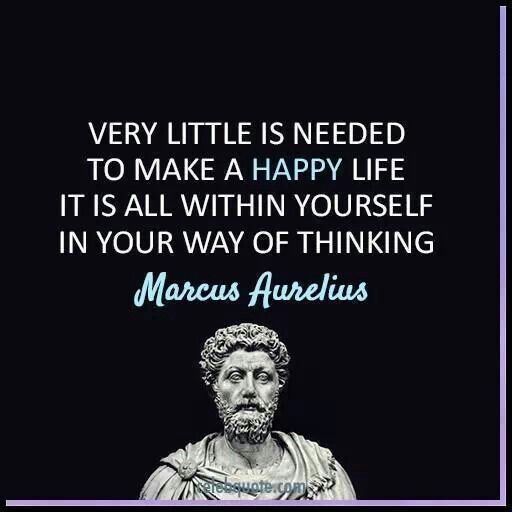
Much like Wayne Dyer (episode #6) and T. Harv Eker (episode #100 ), this interview is spiritual in nature. My first thought to what Singer said was to apply a stoic filter, much like I wrote about in the Ryan Holiday (episode #108) notes. I have a bias going it and that’s it. One quote from Marcus Aurelius and we’ll get started:

marcusaurelliusverylittleneeded

Singer began his spiritual transformation when he was finishing his Ph.D. in economics. He realized then that he could watch rather than be the voices in his head. Eker had a similar realization, telling James that is was wonderful when he realized he could say to those thoughts, “thank you for sharing.”

For Singer it was an “evolution of consciousness,” that led him to realize that he controlled his thoughts. His theory goes, that if we don’t have the same primal factors to fear (hunger, predators, etc), we will manufacture something to fear. We build emotional threats. We resurrect  things from seven years ago. We feel alone.

Even if you have it all – says Robert Greene, a past guest – people will come for it.

But you don’t need those things says Singer. “You have everything you need to live at a deeper level” he says to James. Rather than focus on the outcomes of the world, focus on your inner voice he says.

Adam Carolla (episode #25) said similar things in a different way. For Carolla it was how he dealt with rejection for a television pilot he wrote. He did the best he could with a good idea, but it was rejected. Oh well, move on.

The stoic Marcus Aurelius has another perspective, if it can happen it will happen, and we shouldn’t be surprised by anything really.

marcusaureliushowridiculous

Singer draws the analogy that your mind is like a house, and you need to choose what comes in and what doesn’t. “This is my house, this is where I live,” Singer says, “I’m going to straighten this out.”

This is easier said than done. It’s hard to shift your thoughts, and it’s a writing tool that helps me. In her book Bird by Bird, Ann Lamott says she thinks small to get started.

”I go back to trying to breathe, slowly and calmly, and I finally notice the one-inch picture frame that I put on my desk to remind me of short assignments. It reminds me that all I have to do is to write down as much as I can see through a one-inch picture frame.”

For shifting our mental situation try to focus on one small thing. Maybe it’s your kids, your boss, or your spouse. Maybe it’s not getting angry about traffic. There’s no limit to how small you can start.

Maybe start with your thoughts. There is a wonderful parable from The One You Feed Podcast (one you may enjoy) that goes like this:

An old grandfather told his grandson: “My son, there is a battle between two wolves inside us all. One is evil. It is anger, jealousy, greed, and resentment. The other is good. It is joy, love, hope, humility, kindness, empathy, and bravery. “The boy thought about it, and asked, “Grandfather, which wolf wins?” The old man quietly replied, “The one you feed.”

Singer’s perspective is that the universe already has many things figured out. It doesn’t need you to push forward, cells still split, the sun still shines. Singer says – and James echoes – that his book lays out the steps one at a time.

For Singer one of the early steps meant ignoring a vagabond in his yard. This was hard. Eventually though he had a mental shift. “I let that voice in my head know you’re not running things here.”

In the middle of the interview James asks Singer about how he makes decisions. This is a great question area and I hope it joins the “cubicle” question.

There are lots of good ways to make decisions.

  • Chris Hadfield (episode #111) makes decisions by knowing the “boldface.” That is the rules for spaceflight that have been learned through repetition or accident.
  • John Chatterton (the subject of Robert Kurson’s (episode #116) second book) made decisions by asking how he would feel when he was older. When he was an old man, would he be happy with his choice?
  • Billionaire Seymour Schulich has the decision maker. Tally two sides of an argument and score each item’s importance. Only if one side is double the other do you change from the default choice.

Singer doesn’t give an answer with the same clarity, but he does say that he tries not to think too far ahead. He likens life to being like a river. You know where you’ve been on the river, and you can forecast some of what’s ahead – but you can’t see the entire course of the river or the obstacles underneath.

In The Five Elements of Effective Thinking, Dr. Burger writes about this as a tool for thinking. If your knowledge was like a river, look at what you’ve learned and what the natural progression might be. Sometimes it’s obvious. For Steven Kotler (episode #118) and Austin Kleon (episode #19) it was clear. On their book tours, people were asking them the same questions over and over. Their next books set out to answer those questions. Kevin Kelly (episode #96) told James he uses this technique to get ideas for what the future may hold.

James has learned a lot of Singer’s ideas. “In my worst experiences it’s like, oh wow, here’s an opportunity to take a step.”

Nassim Taleb also takes this idea – though I believe Taleb is well versed in the stoics rather than Singer – and it’s a key point in Antifragile. “Wind extinguished a candle and energizes a fire.” Taleb writes, “Likewise with randomness, uncertainty, chaos: you want to choose them, not hide from them. You want to be the fire and wish for the wind.”

The interview ends with a neat little story about what happened when Oprah called. You can watch part of that interview here:

Thanks for reading, I’m @MikeDariano. If you want to join our book club, we just started and there’s still time to catch up. After this week though it might be too late to get up to speed. If you want to learn more about stoicism start with Meditations or On The Shortness of Life. Both were accessible to me and I had no philosophical background.

If you want to see the effects on stoicism on me, I wrote about my experiences applying stoic thought to parenting. It’s been the single biggest positive effect on my parenting.

#118 Steven Kotler

Steven Kotler (@KotlerStevenjoined James Altucher to talk about the future, progress, and his new book Tomorrowland: Our Journey from Science Fiction to Science Fact. Kotler has been on the podcast twice before, once on episode #10 where he talked about the flow state. Later with Peter Diamandis in epsiode #93 where they pair talked about the 6 D’s of the future. If you haven’t gathered, Kotler is very much about the future and where we go from here.

riseofsupermanThe interview starts with a message about finding mentors from David, the podcast producer. I try to do something like this with our book club. If you want to join over 50 other people, sign up soon, we just started Influence: The Psychology of Persuasion.

As the interview begins, Kotler tells James that he wrote Tomorrowland in response to many of the questions he heard while on his book tour. Austin Kleon (episode #19) told James that his second book – Show Your Work – was born from the same womb. Jack Canfield (episode #90) also uses this technique. In his books, he includes a place you can send your own stories. Canfield then uses them when he writes. Any enterprising person could collect questions almost instantly via Twitter…

The takeaway from each of these authors is that there isn’t an instantaneous moment of clarity. They all have a moment of need to write, but it never comes fully developed. Kleon likens it to a bucket that gets filled with water. The only way to have a full bucket is to make many tiny drops into it. In writing books – and life – there is no hose that readily fills your bucket.

Kotler tells James that his career has been like this as well. “When you are coming up as a writer, you think I’ll get one book out and it’s going to level me up. I won’t need to worry about making a living and do what I want with my time. Which is not true at all.”

For Kotler it took 7 books before he felt like he was a writer. James says that it took him 10. When he looks at his progress now, Kotler says that he sees three phases.

  1. Develop your voice. Kotler says that people liked his voice, but not necessarily all of it. “We want you to write Kotler like pieces,” he recalls one editor saying, “and this isn’t it,” as he threw an early draft back.
  2. Spend time in the box. Kotler realized that he had to write in a certain way. His articles at GQ were done one way. His articles at Wired another. There was a path the editors expected his articles to follow, and it was up to him to find it.
  3. Work four-times as hard, but on what you want. Now Kotler writes about what he wants, but works much harder. Stephen Dubner (episode #110) told James much the same thing. He was fortunate Freakonomics succeed or else he would have to go back to phase two.

“How did you figure this out?” James asks, in an attempt to peel back another layer of the process. I try to be the “dumbest guy in the room,” Kotler says. He aims to focus on the details that go into a book and get them right. But once a book is gone, it’s gone. Adam Carolla (episode #25) had the same sort of detachment that Kotler has. Do your best possible work and put it out there and let it go. It’s gone. You can’t do anything about it.

Kotler also echoes the advice that Andy Weir (episode #92) told James. Weir’s second piece of advice about writing was, “don’t tell people.” He says that when you tell people you begin to feel like you’ve done the thing.

Kotler’s books often deal with big, futuristic ideas and James asks him, “how do we separate the real deal from the raving mad med?” Try these two filters:

  1. Ask about the first principles. He tells the story of Elon Musk who looked at the costs of battery components and realized that the components didn’t cost that much. If a battery costs 100, but the parts only 20, where does that extra money go? Ah, if we can build them a better way they will be cheaper. If the first principles inspire you to think, well that’s not too bad go on.
  2. Look for user interface. If there is an easy way for many people to adopt a technology, it will be adopted. This blog is one example. The wonders of WordPress, Evernote, and Downcast – the tools I use to write with – make it easier to write. Clay Shirky wrote about this is Here Comes Everybody. The point there is that once technology is easy, we can all use it to do the things we haven’t yet done. Not doing something now doesn’t mean you won’t do something once it becomes easier.

Kotler tries to take these filters and apply them in his latest book, Tomorrowland. James says that the chapters on anti-aging piqued his interest and asks if he could be the six million dollar man. No, he can’t, even if he had the money. Planet Money did a podcast and asked if the new 6 BILLION dollar man television show would be financially possible. (tl;dr – no, not even the government could spend that much).

What you might see, says Kotler, is more performance enhancements in sports and other parts of life. We’ve seen life elongation on the front end with better sanitation and medication. The back end is where things get more difficult. Kotler says that we are using things like stem cells to regrow body parts like the cornea and that’s where we should expect things to head.

In another instance Kotler says, “I met a blind man and then two days after (vision surgery) he could drive a car around a parking lot.” Robert Kurson (episode #116) told James that one of his early books was about a man who regained his sight.

When you break it down, the pair resolve, our senses are as much peripherals as they are a part of us. Think about, our bodies can detect sound waves but don’t have a discernible way to identify the cellular radio waves that bounce about us all day long. We can’t tell how much solar radiation is out and about – well actually, we can – it’s our tan lines. What if we could pick up on cellular or solar waves more readily?

One of Kotler’s contemporaries, David Eagleman, tries to answer that question in this TED Talk:

Okay, this is informative, but how I can use this for personal or professional gain asks James. Kotler tells him that neurochemicals work, but we don’t know exactly how. Both Tim Ferriss (episode #109) and Peter Diamandis would have better suggestions he says. Kotler says that rather than take something, try do something. How well do you use flow Kotler might ask. Take a diagnostic test at the Flow Genome Project to get an idea about where to start. If you have a roadmap, Kotler says, it’s easier to know where to begin and what shortcuts to take. Ultimately, “you have to conduct the experiment yourself.”

Self experimentation, it needs to be done. From Neil Strauss (episode #113) to Gretchen Rubin (episode #97) to Scott Adams (episode #112), they all experiment in their lives.

From the business side of things, Kotler doesn’t know exactly what to do. Mark Cuban (episode #24) told James that we’ll look back with disbelief that we all took the same quantities of medicine so maybe that’s one area.  But whatever it is, you must be passionate, says Kotler, “You have to build these businesses on the back of passion because it’s so god damn hard to be an entrepreneur.” Gary Vaynerchuk (episode #2) told James much the same thing in his interview. But it’s not just about passion. It’s about being passionate enough and good enough.

You can also help things out if start with a small monopoly. Peter Thiel (episode #43), borrowing the structure from Anna Karenina, advises:

“All happy companies are different: each one earns a monopoly by solving a unique problem. All failed companies are the same: they failed to escape the competition.”

The interview ends with some book recommendations from Kotler: Anything by Neil Stephenson, William Gibson, or Richard K. Morgan (Altered Carbon especially).  Ready Player One is also very good.

Thanks for reading, I’m @MikeDariano. If you want more book suggestions, I have a monthly email you can subscribe to. Also, please consider a financial donation or answer two questions about this blog and the book it’s becoming.

#117 David Bach

David Bach (@AuthorDavidBach) joined James Altucher to talk about money, values, and which of those should lead the other. Bach is the author of a twelve books including; The Automatic Millionaire, Start Late Finish Rich, and Smart Couples Finish Rich. He joins James to talk about his current tour and his website is Finish Rich

Bach begins the interview with a story about a woman he met at an airport. “Your book helped free me,” she told Bach, “I felt trapped…everywhere I turned I felt trapped.” He opens with this story because it gets to the heart of the money issue – as he sees it. Your problems aren’t about your money. Your problems are about your values. Figure those out first and then figure out your money.

Bach advices values based financial planning. “I wasn’t living my values,” said a client, Bach recounts, “but when I started fixing my financials I started living my values.”

Here he touches on a counterintuitive point that some other podcast guests have mentioned too. Sometimes it’s easier to start with changes to our actions rather than our thoughts. Both A.J. Jacobs (episode #94) and Gretchen Rubin (episode #97) said that our thoughts can be hard to change. Our actions though, they are a bit more malleable and like the tail follows the dog, they will come along too.

DISGUST_RenderThis all works because our thoughts don’t like to be out of line. They are like the fringe member of a cliche. They just need to fit in. Rather than you’re wearing that, really?

The leader of his mental cliche is cognitive dissonance. This is the voice in our minds that keeps thoughts and actions in step. When we act like A but believe in B we have mental unease (cognitive dissonance). Either our thoughts or actions aren’t quite right. Because we can’t change what we did, so we have to change what we think.

A great historical example is when Benjamin Franklin wanted to borrow a book from an unfriendly peer. Franklin approached the man, told him how he admired the book and implied that anyone who would own such a book must have good taste. The man, slightly flattered, lent Franklin the book and the two became friends.

The psychological reasoning goes:

I don’t like him (thought)  -> I lent my book to him (action) -> Why would I lend a book to someone I don’t like, maybe I like him (thought)

For our financial choices the reasoning might go like this:

I don’t like my financial life (thought) -> I change my finances to reflect my values (action) -> I must like the things I’m investing in and will pursue those (thought)

Remember, it’s not about the money, it’s what you do with the money that matters. Tim Ferriss (episode #109) says that “money is wampum.” It is the bridge that takes you from one place to the other. Sometimes you don’t need the bridge. Sometimes you take the long way, and sometimes that long way is even more fun.

That’s what Wayne Dyer (episode #6) did when he was selling his first book. After multiple rejections from the national television shows (who said that if he called one more time they would never put him on again) he had to figure out something else. He could buy advertising, but that would cost a lot of money. Or:

“There’s a second way, and it’s a lot more fun. You go to everyone in American.”

So, Dyer loaded his car up with books and began a cross country trip.

Kevin Kelly (episode #96) would applaud Dyer’s choice. For Kelly it goes beyond just not needing money, but seeing the value that the constraints of not having money. If you have money, Kelly reasons, you can often buy a solution. If you don’t have money, Kelly goes on, you have to create one yourself.

All of these ideas are fall under the advice umbrella to choose yourself. In his book that shares these ideas James writes:

“That’s when it clicked. When everything changed. When I realized that nobody else was going to do it for me. If I was going to thrive, to survive, I had to choose myself. In every way. The stakes have risen too high not to.”

It’s being selfish in the right way. Scott Adams echoes these thoughts:

“The most important form of selfishness involves spending time on your fitness, eating right, pursuing your career, and still spending quality time with your family and friends. If you neglect your health or your career, you slip into the second category— stupid— which is a short slide to becoming a burden on society.”

Find your values, and pursue them. That’s the essence.

But it’s hard to find your values, choose yourself, or be selfish in the right way because there are so many voices telling you otherwise. In the interview Bach guesses that we see “thousands” of advertisements a day. James guesses “50K.” According to CBS News it was 500 in 1970 and is up to 5,000 today. That’s about five a minute.

In addition to the advertisements, another problem is how you view money and how your spouse views money. Some of us are natural savers and some are natural spenders Bach says. Despite the differences they can – and must – work together. If you don’t work together, he says, you’ll face the number one cause of divorce, disagreements over money. There are two things to figure out:

  • Don’t have a different view on what “small purchases” means. Make sure that you and your partner have the same expectations for what purchases you should talk about and what you don’t.
  • Don’t let someone become disengaged. Often one person will handle the money and the other won’t know much of what’s going on. Have monthly (or bi-annual at the least) meetings to go over where you are financially.

If you can make it past the advertisement barrage and marriage money spats you are nearly home free. The final hurdle is when you retire. Bach says that your chances of death are highest the year you are born and the year you retire. “I saw multiple men die within six months of retiring,” Bach tells James. Part of it is their health goes on them, but I think there was something else. A job is part of an identity.

Both Seth Godin (episode #27) and Jason Calacanis (episode #77) bring up the emotional weight when they lost (Godin sold, Calacanis folded) their companies. It was the thing that they identified with most of all, and like a horcrux, it was painful to see it go.

On the health side, look no further than what Gretchen Rubin told James in her interview. “Start the way you want to continue,” advises Rubin. For her it meant getting up early on her first day at a new job, no matter what. If Rubin can do it before clerking for a supreme court justice, you can too.

Bach goes on to tell James that for some people the recession had positive outcomes. “The good thing about the recession,” Bach says,  “was that it forced people to reboot their lives.” Being able to change and be flexible is like a superpower, and my guess is that people who were most flexible handled the situation best.

Sam Shank (episode #78) is a good example of flexibility. Shank arrived in Hollywood ready to “pay his dues” and then get a chance to show his creative skills. There was one small hurdle – he could “pay his dues” his entire career.

“I looked around,” Shank told James, “and there were people decades older than me at my level or one higher.” He saw the harsh landscape of Hollywood. It’s a pyramid of roles. There were precious few director, producer, and creative positions.

Shank left Hollywood films for technology websites. After building up a set of skills, he started a travel website that he sold. Then he ran another company. Now he runs Hotels Tonight. He reinvented.

Sam attached his work to an idea, not a position. Have a job that allows me to be in charge of something creative is more flexible than be a Hollywood director. Jack Canfield (episode #90) gave the same career advice. Don’t be attached to one thing, but find an general area to aim for with your career.

Bach has the same idea, but calls it values. “Find your values,” Bach tells James, “ and align with them.” You don’t have to be a near retiree to do this either. In his book ,The Secrets of Happy Families, Bruce Feiler writes about creating a family mission statement; “a central tenet of the family strengths movement, going back to the 1960s, has been a focus on what families should do and less on what they shouldn’t do.” Bring focus, whether it’s to your finances, family, or faith.

Another piece of advice Bach has is to cut out your daily latte. The daily latte. It’s the scapegoat of regular purchases. Bach mentions it, but says that when he goes into people’s homes for  makeover he sees so much more. Cable, subscriptions, lots of stuff.

Wait, wait, wait. What’s that sound. Oh my. It’s Ramit Sethi storming in.

When Bach mentioned the financial foolery of a Latte, I knew that would lead to Ramit Sethi (episode #36). For Sethi (and I think for James based on his comments) it’s not about cutting out the latte. It’s about increasing the money you get from it. As James mentioned in the interview, you can only cut so much. Stop buying lattes and you save $4 a day. Instead, think about making more, which has an unbounded upside.

Gretchen Rubin might chime in to echo Sethi’s advice, don’t strip everything away. Rubin saw this when she was studying why people wanted to get in the habit of going to bed earlier, but couldn’t. As one interviewee told her, “if I go to bed earlier then I have no time for myself and feel like the firm owns me.”

This opposition, no latte but more money vs. one latte but less money, is something you need to figure out on your own. Don’t take any advice here as gospel. Everything must be tested. Self experimentation is how you figure things out in life. A.J. Jacobs and Jim Norton (episode #31) are two good examples.

That said, if you want a starting point for testing something, the Big Ideas are a good place to start.

The middle of the interview is mostly about becoming an “intrapreneur” and beyond what James and Bach say, Mark Ford (episode #102) encouraged this too.

The pair also touch on what it takes to reinvent yourself. Bach said that a decade ago there used to be many publishing jobs in NYC that paid 350K. Now there are none, and all of those employees are fighting to work for 175K. This seems bad, but maybe not as much as we think. Bach says that he’s seen people who are forced to reinvent their lives and face some of the most exciting work they’ve ever experienced.

There’s actually an entire book of these stories – The Up Side of Down – where Megan Mcardle shares many stories about good outcomes that come from bad events. What did the the Hawaiian prison system do when they had too many inmates? What did a married woman do when her husband left her? Why do companies, behind closed doors, admit that 2009 was helpful? These bad events all end positively because  – in Wayne Dyer’s words – they’re all “enlightenment through suffering.”

The interview ends with three valuable points.

  • If you don’t know what your values are, try writing in a journal. Meditation is also good.
  • The most effective way to get rich says Bach, “is to pay yourself first.” Here’s a Quora question with other answers.
  • Don’t forget to give back. Bach says that he’s seen people give back well before they were financially wealthy because it brought them a spiritual and emotional wealth. Giving is good, just see what Adam Grant (episode #73) had to say how.

Thanks for reading. I’m @MikeDariano if you want to connect on Twitter.

One of the big ways to improve – “to reinvent” as Bach might say – is to read. It’s listed over and over on the podcast and if you want to do it together, you sign up here. In July we are reading Influence by Robert Cialdini. It’s a book both James Altucher and Ramit Sethi highly recommend.

Unlike the first book club we did, there will be no regularly scheduled emails from me, just big ideas for us to talk about. The first round was like a classroom where I was the teacher. This round is more like meeting over coffee to talk.  These by the way, are always free.

One final favor. I’m writing a book that ties up the ideas on this blog into a nice bow. If you could help me give it a title (2 survey questions here) I’ll send you the e-book for free.

#116 Robert Kurson

James Altucher was joined by author Robert Kurson, (@RobertKurson) to talk about pirates, writers, and treasure. Kurson is the author of Shadow Divers, Crashing Through, and most recently Pirate Hunters. (Via Amazon: “John Chatterton and John Mattera—are willing to risk everything to find the Golden Fleece, the ship of the infamous pirate Joseph Bannister.”)

And they lose so much. But when you Listen to Kurson, it doesn’t sound like the loses matter. The Johns are doing things they enjoy and if they find the treasure all the better. It’s similar to what Chris Hadfield (episode #111) told James about getting to space. “It probably won’t happen,” Hadfield writes in his book, “but I should do the things that move me toward it and make me happy.” Hadfield knew that the work he put in shouldn’t just lead to the big goal (be an astronaut) but it should be enjoyable in itself.

Hadfield knew that the work he put in shouldn’t just lead to the big goal (be an astronaut) but it should be enjoyable in itself. Even though the treasure hunters were digging down and the astronaut was flying up – they both ended up with the same perspective on their work. This was not the case for Kurson.

Much like past guest Peter Thiel (episode #43), Kurson began work as a big-shot lawyer. And like Thiel, he hated it. Thiel recounts his experience this way; “it was a place where everyone on the outside wanted to get in, and everyone on the inside wanted to get out.”

Kurson was in the same boat, he wanted out. One memorable experience that catalyzed this was when he was working on a case about the shade of pickles a McDonald’s franchisee was allowed to have.

So he left the place where “time seemed to tick backwards,” and began his life as a writer. Even though he was a Harvard Law graduate. Even though was making a lot of money. Even though he was successful on many metrics. He still disengaged from that life. How?

Part of it, he tells James, had to do with his family. As a kid he would go on multi-week road trips with his traveling salesman father. James suggests that this experience got him a “head start thinking that things could be done differently.” This different thinking helped Kurson and it can open new doors for us too.

Tim Ferriss (episode #22) says that “some impossibles are negotiable.” T. Harv Eker (episode #100 ) told James that he had to change many thought systems before he was successful.

Kurson also had another skill that helped him become a writer – ignorance. “If I knew how difficult it was to make it as a writer,” he tells James,  “I might have thought differently about it.” This is the kind of ignorance that many of the guests have praised. A.J. Jacobs (episode #94) called it “delusional optimism” and Alex Blumberg (episode #70 ) said he was a “little bit delusional” when he started Gimlet Media.

So Kurson began with small strokes. He didn’t try to write a best-seller, he just tried to write well. Even though his books have done well, they did so because of the small beginnings. James Manos (episode #39) said the same thing about writing for The Sopranos. Manos told James that if they had been trying to create something great, they surely would have messed it up. Instead it was about getting a character, scene, or episode right.

Besides his modest start and bit of ignorance, another helpful part of Kurson’s experience was the disinterest in money. “I was lucky to have made enough money to realize that a BMW didn’t matter to me,” he tells James. Money motives didn’t matter for Kurson (or the subjects in his books). They haven’t mattered to the other guests either. Tom Shadyac (episode #15) sold almost everything he owned and downsized his lifestyle. Kevin Kelly (episode #96) found the same money truths, but with the opposite approach. Kurson had it all, realized he didn’t need it all, and was happy with less. Kelly had very little, realized that was all he needed, and was happy with that. Both perspective led to the conclusion that money wasn’t what they needed.

One of the things money is good for is doing cool stuff. For Kurson’s pirate hunters it meant funding another expedition. Nicholas Megalis (episode #104) calls money “gasoline” because it can fuel the next thing he wants to do.

Kurson didn’t know what he was getting into, he didn’t try to write the next great nonfiction book, and knew early that there was more to it than money. He tells James that he also had one more thing going for him. He had failed before. “The fact that I had been through some things before, where it looked hopeless for me and looked like I had no where to go and I survived helped me jump into the darkness.”

The pits are sometimes the place we need to stand. J.K. Rowling had a similar experience to Kurson. Before Harry Potter, Rowling was not doing well. Her marriage had ended, she was unemployed, and she had a useless degree (in classics). “(I was) as poor as it is possible to be in modern Britain without being homeless,” Rowling writes. She goes on:

“Failure meant a stripping away of the inessential. I stopped pretending to myself that I was anything other than what I was and began to direct all my energy into finishing the only work that mattered to me… And so rock bottom became the solid foundation on which I rebuilt my life.”

Rowling and Kurson both had low moments before they soared. Kurson eventually succeeded with Shadow Divers, a book that spent 24 weeks on the New York Times Bestseller list. That book began with “a lucky phone call from a friend,” who told him to turn on this series on PBS NOVA.

There was nothing, Kurson tells James, “I was less interested in,” than German U-Boats. Not the fairy tale beginnings we might think.But, there was something missing. The documentary never told the story about why the two guys looking for the sunken ship would do it. That missing answer was the catalyst for Kurson.

But, there was something missing for Kurson. The documentary never told the story about why the two guys looking for the sunken ship would do it. That missing answer was the catalyst for Kurson.

Gretchen Rubin (episode #97) writes about ideas the same way. For Rubin it was over lunch with a friend who told her that in high school, she never missed a single track practice. But now couldn’t get into the habit of exercise. “Why?” That question, Rubin writes, “buzzed in my head with the special energy that tells me I’ve stumbled onto something important.”

Kurson began to explore. He called one of the guys in the documentary. He asked questions. He dug around.

What he found was a burn the ships attitude. The Johns created an environment where there was no backstop for their failings. If they fell, they would fall all the way. Jim Norton (episode #31)  told James that this was the only mindset that worked for him. “I personally left myself with no safety net,” said Norton.

Much of the second half of the interview is about Kurson’s books. It made me want to stop listening and start reading (Shadow Divers has been on my “to read” pile for months.)*

One interesting analogy from this section was a part when Kurson and James talked about how to find a sunken ship. In one case the ship seekers thought they had a pretty good idea about where the ship was. They just needed to triangulate the actual wreckage and get it out of the ocean. The problem was, that they didn’t know exactly where it is. “It’s hard enough if you know where it is.” said Kurson.

This stuck with me because it’s an analogy for many of the things we do. Even if we have a really good guess about the components to a successful career, relationshiop, or business – it’s till hard to do.

Thanks for reading, I’m @MikeDariano.

Two quick notes:

I need your help naming the book that is coming from this website. It’s about how the people who have been interviewed have found success. Each of them seems to follow the path of Skills -> Persistence -> Luck. If you would offer your thoughts on a two question survey, I’d really appreciate it.  (I’ll also send you the ebook for free when it’s done) Click here.

In July I’m going to read Robert Cialdini’s Influence. If you’d like to join The Waiter’s Pad book club subscribe here.

#114 Matt Barrie

Matt BarrieMatt Barrie, CEO of Freelancer.com, joined James Altucher to talk about startups, stories, and the moment when Barrie realized, “I could hire an army with a credit card.” Even though this interview started out slow, it was filled with some Big Ideas. Plus, many of the podcast guests are on the show to sell something. That’s not bad and it’s great to learn from people like Andy Weir (episode #92), Nicholas Megalis (episode #104), and Jack Canfield (episode #90). But it’s also fruitful to hear from people who are just getting work done. While Barrie is promoting Freelancer.com, it’s less so than others.

Barrie starts the interview by telling James that the types of jobs available at Freelancer.com are “anything that can be done on a computer.” Of course, the pair quickly dives into what it’s like to “choose yourself” and Barrie says, why not. You can “architect your career,” he tells James. Scott Adams (episode #47) has similar advice in his book, How to Fail at Almost Everything and Still Win Big. Adams writes that for every skill you have, you double your odds of success. In the book, he has a list of ideas:

“I made a list of the skills in which I think every adult should gain a working knowledge. I wouldn’t expect you to become a master of any, but mastery isn’t necessary.”

His list includes public speaking, psychology, and accounting among many others. It’s the working knowledge part that Adams stresses.

In some ways I think Barrie is expressing the same thing. If you want to hire a freelancer to build you a website or write some code – you don’t have to understand everything that goes along with that. You have to understand just enough.

One thing that might help, says Barrie, is the parallel alignment between you and the freelancers. Everyone who works in freelance is there to make money Barrie says, so you’re dealing with people who want the same things as you. Being around the right people like this is often part of what makes something a success.

Peter Thiel (episode #43) told James that PayPal was built by people all aligned around a common goal. Jay Jay French (episode #75) needed to find band mates that were aligned with his goal of making great music. Thiel and French and create great things because they worked with their friends. They created great things because they didn’t. The more powerful alignment was with goals, not personalities.

Barrie says that 3D printing is the freelance trend of the moment, but there has been an uptick in Apple development requests as well because of the Apple watch. James says that he thinks 3D printed jewelry is one of the next trends that will be big. (For more futuristic predictions, go back to the Kotler and Diamandis (episode #93) interview)

One thing that neither could have predicted was giant inflatable swans.

The story goes, according to Barrie, a guy wanted inflatable swans for a party. Not being able to find what he wanted, he created a contest at Freelancer to have people design a new swan. He got a good option, ordered some from a factory in China, and now just sells them. It’s his full-time job.

The biggest project on the site was $340K for an ongoing series of website templates. In another case, an engineer was hired to reverse engineer a boat.

One of the far-reaching benefits of a site like Freelancer.com, says Barrie, is the change in the quality of life. “The quality of life of someone changes dramatically as they go up the s-curve of industrialization.” Tim Ferriss (episode #109) said that he looks to the s-curve (also know as the Sigmoid curve) when he tries to help people too.

James asks Barrie how he started Freelancer.com and it was a case of needing to scratch your own itch. Barrie began with a degree in engineering (from Stanford of all places, and at the same time Brin and Page were there building Google) and he started a circuits company. Eventually, that company was sold to Intel, but only years after Barrie left. When he first left the company, “I was actually crushed emotionally and physically crushed” Barrie tells James. The problem was that the timing was off. His company was good but good at the wrong time.

Mark Cuban (episode #24) tells James that his timing has been off too. In Cuban’s case, it was streaming media, which his companies had done years before Pandora or Spotify. Trip Adler (episode #61) told a similar story about his idea for a ride-sharing app that was ahead of its time.

In Barrie’s case, his lack of timing here would be balanced out many years later. After leaving the circuit company he started doing some website work. Eventually he had some data entry he needed to be done, but couldn’t find anyone local to do it. After a handful of failed attempts, Barrie stumbled onto a freelance site and had someone from Vietnam do “perfect work” in a matter of days for less money. “This was the real eureka moment,” Barrie says, because “every great business needs to have a problem that’s being solved.” Sam Shank (episode #78) told James much the same thing:

“It boils down to saving time and saving money. I think all consumer products need to deliver on one, ideally both.”

Barrie realized that he could hire an army of developers, coders, and designers with a credit card. Rather than transatlantic flights for meetings – which are often unnecessary, just ask Brad Feld (episode #91) – Barrie started hiring people digitally. Eventually, he realized he should just own the freelancing company he was using.

This is where Barrie gets the timing right. Before 2008, he says, developing countries weren’t on the map for freelancing. You could go online and get something done, but chances were that the person wasn’t all that different from someone would meet offline. It might be the case where you were in Boston and ended up with someone from New York. The idea was so prepubescent that sometimes you even had to meet face to face to collect the software. After 2008 though, technology reached the point where you could get good work done by people who really were remote.

Clay Shirky wrote an interesting book about this very idea. In Here Comes Everybody Shirky writes that the burden for organization was too high. Much like Archimedes when he said, “Give me a place to stand and a lever long enough, and I will move the world.” Connecting to people around the globe lengthened the lever.

Even though technology allows you to reach more people, you still have to find the good ones. The hardest ones to find now are good designers says to Barrie. This was his experience at least.  After he bought the freelancing business for $3.5M, one of the first things he did that changed the revenues was to change the design. It had a huge impact. One person who’s figured this out is Ramit Sethi (episode #36). “We are all cognitive misers,” Sethi told James in their interview. This is why design can be such a crucial element. We don’t want to spend the time and energy to compare and contrast things. We don’t want to weigh the pros and cons.

What we want is to have easy decisions that we can feel good about. Who can design things to be this way, designers.

Barrie ends the interview by telling James that his success was thanks to “timing and luck.”

“If I was six months earlier it probably wouldn’t have worked out and if I was six months later it would have been financed by venture capitalists.”

Much like Kevin Kelly (episode #96) and Adam Carolla (episode #25), Barrie admits that part of it was luck.

And it’s important to recognize this for decision making says Stephen Dubner (episode #110). If our success = skills + persistence + luck and we fail, then we need to know how much of each we had and how much of each we need.

Thanks for reading, I’m @MikeDariano. My favorite quote from Barrie that didn’t fit was; “the Australian stock market is like Kickstarter for grown-ups.”

One small request. I’m working on a book that unifies the concepts on the blog and need a good title. If you could take this two question survey about title ideas and leave some feedback, I’ll send you the e-book free once it comes out.

Our book club for July is going to change a bit. We’re going to try a book buddy system. The book is Influence by Robert Cialdini. If you’d like to join The Waiter’s Pad book club subscribe here.

Remember, reading is something a lot of successful people do. Barrie said, “education has always been the lubrication for moving up in the labor force.” If you don’t want to read Influence, you can sign up to see the other things I’m reading.

Photo credit: “Matt-barrie-1” by freelancerOwn work. Licensed under CC BY-SA 3.0 via Wikimedia Commons.