Drucker’s disagreements

Decisions, writes Peter Drucker, are not made between right and wrong. They are choices between “almost right” and “probably wrong”. How then can someone choose?

“Decisions of the kind the executive has to make are not made well by acclamation. They are made well only if based on the clash of conflicting views, the dialogue between different points of view, the choice between different judgments. The first rule in decision-making is that one does not make a decision unless there is disagreement.”

Peter Drucker

In other words, argue well.

  • Both Presidents Eisenhower and Obama concealed their preferences to turn their Yes Men into Drucker’s Diagreeers.
  • Audrey Tang offered the expression rotate your position, using language to embody our action (and this connection works).
  • Tim Harford praised debate for setting boundaries and structure, letting the ideas duke it out while egos, relationships, and norms sat on the sidelines.
  • Sam Zell strives to be “business agnostic” and encourages his people to push back.
  • A good scrap, Wilbur Wright is quoted as saying, “brought out new ways of looking at things…helped round the corners.”

Disagreement can be upsetting. But the best organizations set up expectations to disagree. Drucker’s addition to the “argue well” collection is to draft the fine line between “almost right” and “probably wrong”. If things are that close then we must debate to find what’s right.

Urban’s words

Tim Urban words

This post is part of our new dictionary series. Words are information about how we can think and how we do think. These are from Tim Urban’s March 2022 appearance on The Psychology Podcast.

Low rung thinker. Think of a ladder. Climbers are high rung thinkers. They approach life like scientists, with curiosity and inquiry. They look around. Non-climbers are low rung thinkers. They approach life with dogmatic and group thinkyness. 

Our height is not static. We climb up and down the ladder. Changing the scope of your media is one way to affect the height. 

An inverse proxy for height is conviction. Depending on the topic, the more confident person the lower they likely are.

Grand Theft Auto Dating. Think of dating as a GTA level. In the game avatars run about stealing cars, shooting bystanders, and running from the police. There is a lot of exploration and not a lot of consequences. 

Dating can be like that. 

It’s not when we use innate norms. We evolved in small social groups where the cost of standing out was high. But we mostly don’t live that way anymore. Yet we act as if we do. 

Instead, says Urban, treat dating more like GTA (minus the carnage). Treat dating as having GTA rules rather than evolutionary ones. 

Identity rocks. Imagine identity as rocks in a backpack. We carry these rocks around with us and they can get heavy. They don’t allow us to change. 

Identities serve (at least!) two purposes. First, they give us membership to a group. As evolved creatures that used to matter a lot! Second, they embody what we want to be. ‘Caring’ is embodied in religion. ‘Freedom’ is embodied in politics. ‘Change’ is embodied in movements. Disembody the sensation from the identity. 

Idea lab. A real imaginary place where collaborators can throw out crazy ideas and freely disagree. It’s where “ideas are like science experiments.” 

Often this is in the culture of a place. One way to create this culture is by having two bosses clash. This shifts the incentive from appeasement to truth-seeking

But naming a room “the idea lab”. That frames it nicely. 

Loved Flash FM (YouTube). Also, the ideas around social groups and status games are in this post. Also, naming a room isn’t crazy. Some founders put a toy elephant in the corner of their meeting rooms so they never forgot about the elephant in the room.

Time management and commutes

I thought the genesis of this idea was Rory Sutherland, but he probably got it from Nassim Taleb who writes that fifty, one foot falls is different from one, fifty foot fall. It also came up on Acquisitions Anonymous where Mills Snell noted thirty years of experience could be two people or ten and the situations are quite different. Taleb got it from someone too – King Solomon? – that it exists in many places is good reason to take note.

Rory Sutherland writes that life is not commutative like mathematics. Put numerically: 20,000×1!=1×20,000. Credit Karma acts on this, rewarding $25 spent for lunch rather than a few tenths of a percent in interest. Gifts and maybe mileage reimbursements may act under the same human tendency.

Time management writes Peter Drucker in The Essential Drucker is also not commutative.

“To write a report may, for instance, require six or eight hours, at least for the first draft. It is pointless to give seven hours to the task by spending fifteen minutes twice a day for three weeks. All one has at the end is a blank paper with some doodles on it.”

Rather Drucker suggests locking the door, removing the phone and six hours without interruption. Then one can finish the “zero draft, the one before the first draft.” And only then work in small installments.

Is this commutative?‘ can be another problem solving prompt. In true cases, there’s no gain in rearrangement. In false cases, switching from water cooler meetings to off site meet ups, can result in different outcomes on similar inputs.

“To have small dribs and drabs of time at his disposal,” writes Drucker, “will not be sufficient even if the total is an impressive number of hours.”

The Mom Test (book review)

“It’s not anyone else’s responsibility to show us the truth. It’s our responsibility to find it. We do that by asking good questions.” – Rob Fitzpatrick 

The best way to think about The Mom Test (Amazon) is as a field manual for JTBD. Bob Moesta explains that JTBD is the balance of supply-side innovation and demand-side innovation. It is the innovation balance between what we can build and what the customers want. 

Often innovation is unbalanced, oriented more from the supply side. One way to judge is the language. Is a product or service explained in the company language or the consumer language? 

Oooooohhhhh. Got it. So just ask customers what they like and change it! 

Nope. 

Fitzpatrick’s book guides the shift from supply-focused to demand-focused. It’s an informational puzzle. 

To shift, an organization must focus on good questions. Fitzpatrick dubs good questions “The Mom Test”. If a question is so good even your mom answers truthfully it’s a good question. Failed startups often failed The Mom Test. Yes, our friends say, that’s a great idea

Good questions find signal in the noise, which comes in different flavors. 

  1. Social context. People will be nice, so questions must be precise. 
  2. Vague questions. Good questions focus on behaviors. Show me your calendar and checkbook types. 
  3. Lack of listening. Take a page from Chris Voss and reply with sounds like, looks like, and seems like

Good questions focus on aspects of a person’s life, not ideas about a product. 

One difference between Fitzpatrick and Moesta is the structure of these question-and-answer sessions. Moesta tells his interviewees to think of it as background for a documentary. He reduces the stakes and that leads to a better signal. Fitzpatrick suggests reducing the stake further. Any conversation can include The Mom Test. If you want specific conversations Fitzpatrick has advice for that too. 

To see if The Mom Test helps every conversation leads to a next step. There are no good or bad meetings, writes Rob, only successes or failures. 

A good examiner will get out of their own way. “You’re searching for the truth not trying to be right.” 

If you want to get better at creating things people want, or like a bayesian update to be more demand focused, check out 1,000+ reviews on Amazon.

Never Split the Difference (book review)

You never step in the same river twice, the saying goes and this second read (the first) of Chris Voss’s Never Split the Difference revealed an unknown spectrum.

Life is a series of “I want you to…”. These requests span our discomfort. For me, job-to-be-done interviews are easier than Voss’s negotiations which are easier than direct copy which is easier than face-to-face negotiations.

I dismissed direct copy and negotiations as less good and confused the metric of difficult as correct.

But they’re all the same.

Each “I want you to…” begins in another person’s world. “The goal is to identify what your counter-party needs,” writes Voss and get them to talk and talk and talk some more. For direct copy said Bob Bly, “enter the conversation they are having in their mind.” For JTBD interviews said Bob Moesta, act like a documentary filmmaker gathering information. Understanding always happens first.

But not a perfect understanding.

Voss wrote his book because Getting to Yes felt too formal. Perfect understanding is a logic puzzle. Negotiations are psychological puzzles. Like understanding Status Games, Voss wants his readers to understand people’s biases and tendencies too. Those include:

  • Framing: setting an anchor price or using loss aversion, each of which changes the comparison to a new price or a missed deal.
  • Removing the sting: I’m about to ask you for a big favor or this is going to take a while but we will go as fast as possible. These warnings are the balm for the stoic observation that we suffer more in imagination than reality.
  • Avoid split the difference compromises: which optimize easy and neglect the chance to be creative.

Negotiations are like the Who’s Line is it Anyway Helping Hands skit (YouTube). Each party is a set of hands and “the deal” is making something that works. Understanding the other person’s style and needs is how to make it work.

My discomfortable dismissal was mood affiliation.

Meth COGS

In profession problem solving we looked at how careers craft thinking. Let’s add DEA agents.

In his podcast with Jocko Willink, Joe Piersante talks about his time working in Arizona and dealing with hundreds of meth labs. If I told you I was in 500 labs, Joe says, it would be an understatement. Meth was the drug of choice in Joe’s region and between the cost to create, the large rural area, and proximity with Mexico it was difficult to police.

“It was bad at first because there was so many,” Joe says. It was too easy. What “put a dent into it,” was the 2005 Combat Methamphetamine Epidemic Act, which restricted access to pseudoephedrine, a precursor chemical to meth.

The COGS increase changed the business model.

Later in his career and the episode Joe talks about his time in Afghanistan. “We would not go after the poppy farmers because they were made to grow the opium,” Joe said, “The Taliban came in and they had the biggest stick at the time. It was a case of ‘you’re going to grow this or you’re going to get killed.'”

There were no better incentives to offer this group of laborers. “We knew they weren’t reaping the benefits so we tried to find the people getting the money.”

A lotta problems are multi-dimensional. Think about the field of addiction, said David Nutt, it’s about the drug, the person, and the society. Each of those is a lever. Profession problem solving is too. How would an economist solve this? How would a marketer? How would a coder? Each leads to a different island in the archipelago of thought. DEA agents think a bit like business owners, and we can add this approach to the set.

I also learned what Smurfing is/was, a unique JTBD.

Snickers and Milky Way

Snickers and Milky Way

Reframing our perspective is a powerful thinking tool. ‘Sleeping on it’ is reframing. Reading books is reframing. Comparing novel things is reframing. 

For a business owner, thinking of time of day, place in life, and what happened prior is reframing.

Bob Moesta notes “context creates value”. Time and place create more or less value. Birthday gifts have one value on birthdays and another value when it’s not. 

But we miss this because of average lies. Average computes easily, is sometimes helpful, but is a crude tool. Sometimes we NEED this one thing RIGHT NOW! 

Contrast Snickers and Milky Way. Graphically: 

Commercially (2011):

Snickers is a chewy pick-me-up energy bar. Milky Way is a treat-yo-self deep breath of sweetness. The context creates value

According to Bob Moesta, the context for eating Snickers is that I’m hungry and I want something filling, tasty, cheap, and fast. Applying average thinking, there’s not a constant demand. Find when customers consume a product reveals that product’s JTBD.

“Context creates value” fits well with Alchemy too. Channeling Rory Sutherland, it wasn’t that Snickers needed to be tastier, rather reframed. Alchemy is about solving problems with psychology rather than physics. Instead of making travel faster, make it more enjoyable with wifi, charge ports, booking flexibility, a table for tea, someplace for the kids to burn off energy, and so on. Faster is only better when the process sucks. 

Consumers and customers have untapped wants. They’re hiding behind time, place, averages. They’re served by JTBD & Alchemy. 

Designer grocers

Like what is this place optimized for, places are designed to increase or reduce action frictions. Grocery stores for the end consumer are designed for comfort – stores for middlemen are designed for speed.

The end consumer grocery store has wide aisle to avoid the butt brush effect, produce in the front (colors have a relaxing effect), and pasta near the sauce because customers look for complimentary items. Fish and coffee are separate because of the smells. Stuff for kids is on lower stuff. The blueprint for a traditional grocery store is called a planogram.

For a dark grocery store the layout is different. The aisles are smaller. The seltzer is separated. Spaghetti and linguini are parted too. Salt and pepper also. In dark stores the design goal is speed which means reducing confusion. Also, shot glasses, bags, foil, garbage bags, batteries, and foil pans are next to each other because those items are ordered for parties.

Nothing new here, just a reminder that design guides behavior. It can be how we count calories or answer financial questions or avoid drinks or break fasts or track travel. We need reminders because we are all designers.

Fifteen minutes could…be the JTBD

The central point of JTBD is that innovators over index on what they can build and under index on progress the customers wants. Too often innovators ‘scratch their own itch.’

This doesn’t mean verbatim bequeaths . Do that, said Ford CEO Jim Farley, and you get The Homer.

No, successful JTBD innovation uses the customer’s language.

One mistake, writes Frank Lutz in his book Words that Work: It’s Not What You Say, It’s What People Hear, is explaining in actions rather than outcomes. Actions are what I can build whereas outcomes are the progress.

A business that offers same day responses resonates more with customers than one that has “agents standing by”. How a customer describes their issue outlines the progress a customer wants to make.

An example of customer language comes from GEICO’s advertising start. GEICO executives told their marketers that, on average, phone calls took eight minutes and customers saved about 18%. Good numbers.

But when the marketing staff listened to the customer language they found the numbers were too good. “Research pointed out,” said Ted Ward on NPR, “that ten minutes wasn’t long enough to talk about something like car insurance but fifteen minutes was, and twenty minutes was considered way too long.” Eighteen percent was too good too, hence the 15 minutes to save 15% or more.

Customer words are the breadcrumbs along the JTBD path. Innovators settle into metrics which may not be helpful but are familiar, easy to collect, and seem important. But those metrics aren’t how the customer sees the world. For instance:

  • Best Buy Geek Squad formerly shared the average wait time. That led to disappointed customers. They switched to 90th percentile waits and customers became a lot happier.
  • Netflix used to offer star ratings (3.2, 4.1, etc.). That didn’t resonate like sub-genres like my favorite, ‘one last job then I’m out’.
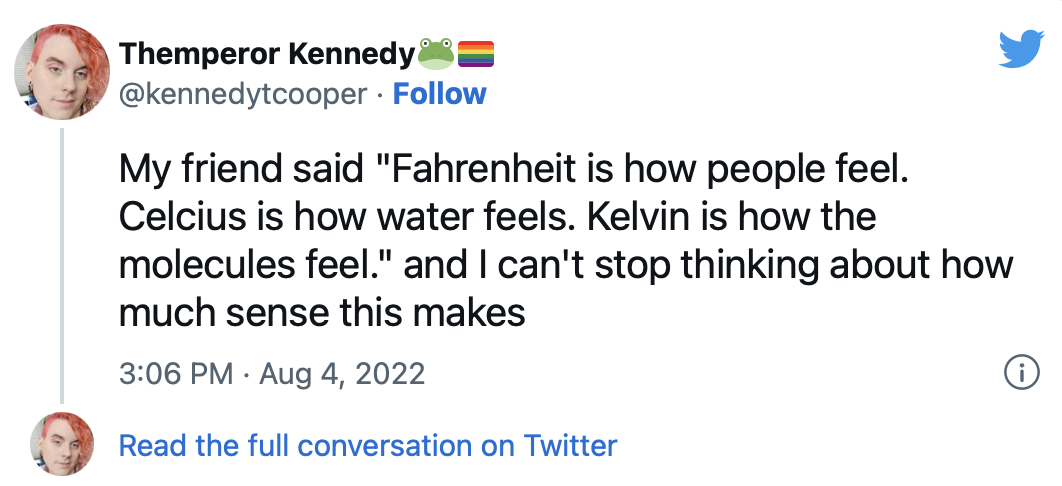
  • Temperature can be Celsius or Fahrenheit but each has different fidelity. Laymen like Fahrenheit whereas scientists subscribe to Celsius.
  • Canada gets avalanche descriptions. Americans describe a class three avalanche as medium ‘relative to the path’, whereas in Canada a class three ‘could bury a car, destroy a small building, or break trees.’
  • This same effect exists at Disney. Touring Plans creator Len Testa noted that if his app says a time that’s too far from the Disney estimate people won’t believe it.

Each of these is an example of Lutz’s subtitle: it’s not what you say it’s what people hear. When people heard 8 minutes they knew it wasn’t enough time to get a legitimate car insurance quote.

Don’t miss any of the Job to be Done posts.

Mismeasurements

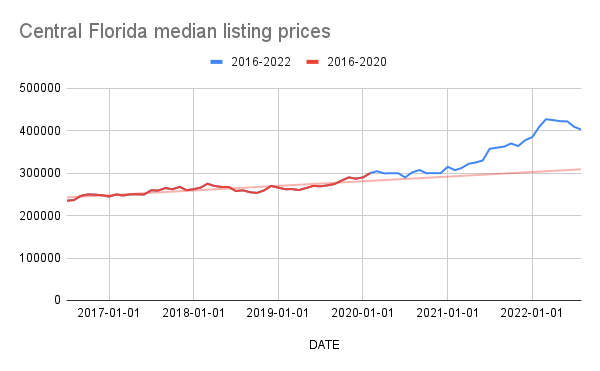
Prices are set by the amount supplied and the amount demanded. When supply is mostly fixed, like top home-run-hitters, prices rise. This is the market mechanism.

One way to shimmy around this feature is to find things nearly as valuable, but less demand. This is Moneyball. It’s also investors who “fish in smaller ponds”. It’s also art. Collectors pine for Picasso but many fewer for real estate. Discretionary income + housing budget is a lot of money. Find a different attribute to compete on can be good advice.

Sometimes. We can overcorrect. Kristen Berman noted that one experiment which shifted the incentives from monthly to daily saw sales reps “focus on selling large numbers of cheaper items rather than more expensive items that have higher margins. A focus on short term returns can undermine pursuits of higher impact goals.” It was a case where 100 monthly sales did not equate to 4 daily sales.

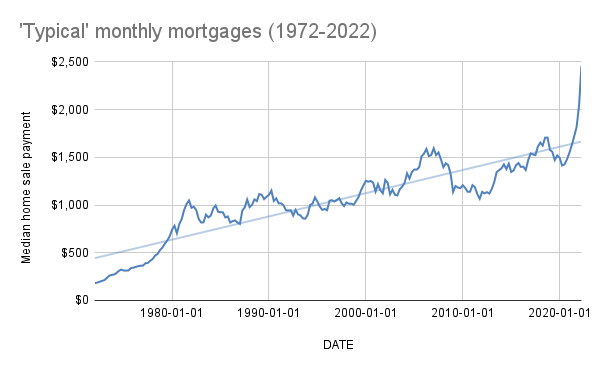
This is Goodhart’s Law, when a measure becomes a target it ceases to be a good measure. A textbook example is higher education ranking hackings. Some schools counted “a postcard expressing interest” as an applicant. More applicants meant more rejections and a selectivity shine that was only a veneer.

But wait. Goodhart’s Law is a human quirk and quirks can be hacked. Airbnb grew because like eBay or Amazon, stars replaced brands. But while a four star hotel is mostly the same four star homes were not. So the company added subcategories.“We picked the subcategories based on what guests want,” said Jiaona Zhang, “but we also picked subcategories based on what we wanted our hosts to do.” 

Airbnb used Goodhart’s Law to direct their host’s attention. Once a category was counted hosts worked toward it.

Measures are a tool. They can be like Moneyball and show cheap things. They can be like Goodhart observed and show unintended consequences, but also tweaked for tidy Airbnb hosts. Measures only seem static but really reveal a lot.