I had a problem. Too many of my subscriptions went unread. Too much podcast advice went unheeded.
I had another problem, I need repetition to learn things. The first time it took me over an hour to change a headlight. Now it takes fifteen minutes.
I have a solution (not for the headlight). If you want a short email, each weekday, focused on one theme for the week you can sign up.
There will be no links. There will be no breaking news. There will be no interviews, analysis, or something else, someone else is already doing really well.
There will be stories. Some will be apocryphal, second hand, and every now-and-again they will be untrue. That’s okay. We aren’t aiming for statistical significance, we’re aiming for ideas to try.
Rory Sutherland is fond of saying that a change in perspective is worth forty IQ points. That’s what this is. It’s a fast hit, a thinking vitamin, a dash mushroom. It’s asymmetrical, minuscule investments for gigantic payouts. There will be weeks when this email is unhelpful, maybe even unwelcome. But there will be once when it leads to a brilliant idea. Sign up.
The theme for week one is small bets. Here are two snapshots.
Happy (belated) Father’s Day to the dads. Father is a biological term but that’s not really what we celebrate. It’s not the number of kids you have but the kind and kindness you show.
How we measure things matters. In academia it’s p-value. A value of p=.05 means that there’s less than a one in twenty chance the observed effect is due to chance. For studies published in journals read by professors that’s good. But not for real life. Instead, we’re looking for anything that works.
That’s what Sam Walton did we he started Walmart. As Charlie Munger notes, Walton invented almost nothing we might think of when we think of Walmart. Instead, he copied the best from everyone else then stacked, piled, or implemented it himself. Walton once bragged that no one had been in more Kmart stores than he had. One time he was walking down the aisle of Costco taking notes on his ubiquitous notepad when the store manager asked him to leave. That was Sam Walton.
Not all the ideas were good but none were fatal. One time Walton borrowed $1,800 for an ice cream machine and popcorn maker. They grabbed attention and got people into the story. But he wrote: “Every crazy thing we tried hadn’t turned out as well as the ice cream machine, of course, but we hadn’t made any mistakes we couldn’t correct quickly, none so big they threatened the business.”
These emails will not be statistically significant in the academic sense. These will be stories. There will be survival bias. There will be irrelevant, apocryphal, and wrong things. That’s okay too because a change in POV is worth 40IQ.
…
Marc Cohodes is a short seller. Cohodes is candid. He’s active on Twitter (@AlderLaneEggs) and even creates websites for whistleblowers to report fraud at companies he suspects. He’ll swear in interviews. He’s a reckless guy.
Except he’s not. To short a stock, Cohodes borrows a share at one price with a promise to repay at a later date. In theory, his downside is infinite while his upside is capped – at zero. Though brash, he’s cautious and Cohodes said that he uses the lifeguarding motto he was taught as a way to think about how he invests. Lifeguards are taught to Reach, Throw, Row, Go.
Though it makes for good television, running into the surf, diving into a pool, or swimming through the water is the path of last resort.
Caution saves lives. The Red Cross has even adapted the rhyme to instruct most people; Reach or Throw, don’t Go. The point is to nibble new ideas, not gulp them down.
Charlie Munger is an investor, but not a short seller like Cohodes. Munger has worked with Warren Buffett for four decades. Buffett said that Munger has the best brains in the business. Reflecting on his early investing career, Munger told a group of University of Michigan students, “I was not a courageous, adventuresome admirable man. I was a cautious little squirrel.”
There are many ways to take big swings but those are often the moments that expose us most. Sam Walton took calculated risks by getting cheap rents and copying best practices. His weird ideas were small things, like introducing Walmart shoppers to flip flops or buying an ice cream cart to use for promotions.
It’s not big swings that change our course but new ideas. As they say, a change in POV is worth 40IQ.
Jerry Neumann again chatted with Patrick O’Shaughnessy on Invest Like the Best. Neuman is kind and curious and we’ve looked at some of his ideas already:
He also turned us on to Rob Fitzpatrick, author of The Mom Test. Recently Neumann invested in Unsupervised and he said, “One founder is one of the few people in the commercial world who understands this (machine learning) technique and the other founder has worked at startups before and is an awesome outside facing person.”
There are two parts to any business; doing then telling. If neither is done well, startups won’t succeed. Josh Wolfe told O’Shaughnessy, “There are amazing credible people. And there are amazing salesman. And sometimes those two people are one. When they are you have an amazing entrepreneur. But often times they’re not.” So you get two. You get someone like Tyler Willis, that “outside facing” person.
…
“I was not a good traditional student,” Willis said. We hear this a lot and it’s helpful to think of school as one type of education. Another type is to do. Tom Goodwin said, “Leaving school and starting out, or leaving school and traveling the world and writing, or leaving school and creating a documentary are actually pretty remarkable ways to learn.”
However, Willis said, “If you’re going to drop out you need to work harder than you would have in school.” That’s kind of what he did and does. “So I tried to do things. I became a fairly voracious reader. I read a lot of nonfiction to understand different people’s opinions about different things. I read history, biographies, a lot of varied topics.”
But Willis also gives a reason to stay in school. “If you don’t know which way to go, the default should be to stay in school.” Defaults, base rates, and distributions are all mathematical fences to corral our psychological guesses. Michael Mauboussin is fond of citing Daniel Kahneman’s work, and no wonder. Kahneman observed – academically – our self-aggrandizement.
Base rates are for other people. Right?
Ramit Sethi said that for the second edition (10th anniversary) of his book, I Will Teach You to be Rich, he was coaching a group of readers through the content. He asked them, What would you do with $10,000? They’d be canny of course. Ramit said they were full of baloney. “According to these answers, we have a bunch of Mother Theresa’s in the group. They will pay down debt, give to charity, do this and that.”
These were people who had enrolled to be coached through a book on better financial decisions. But it’s not just them. It’s all of us. Even Kahneman fell for it, thinking he could write Thinking Fast and Slow in less time than the base rate might suggest.
Willis is familiar with the work of Ramit who champions good designs. Dan Lockton has done lots of good work on designs too and noted that designs only do so much. Lockton said, “When people feel they are being influenced in a way that doesn’t match their understanding of the situation they will rebel.”
In 2014 Willis spoke about growth. First, “You have to create a product of value before you can grow your product.” Then, “The number one thing is that speed beats everything else. The faster that you iterate, the more you win…You could be one standard deviation better than the next guy but if he has 20% more cycles he’s going to beat you.”
Jerry Murrell messed up a lot of businesses before starting Five Guys. Anson Dorrance told his soccer players that goals only happen every seven shots or so. Scott Adams compares life to a slot machine that costs little and has “rare and uncertain payoffs.”
Mauboussin titled one of his books, The Success Equation. The formula is some luck mixed with some skill. Mauboussin’s goal was to look back to peek forward at expected values. His advice might be, ‘do more skill dependent things.’ But for some people it’s even simpler, ‘do more.’ Think of marketing as an MVP process too said, Willis.
Martin Lindstrom was doing research for LEGO. He was a good choice because he loved LEGOs. As a kid, Lindstrom built a LEGO Land in his backyard. It was so popular that one day two – kind – IP lawyers showed up and asked him to call it something else.
LEGO saw 2003 as a time of change. Call of Duty was released and The Matrix trilogy finished. It seemed like kids wanted easier toys (everyone knows kids have short attention spans, right?) with more technology. LEGO adapted, making sets with bigger blocks, fewer steps, and less intricacy. Things only got worse.
Year-over-year Christmas sales fell 30%. LEGO headed out into homes around Europe to find out what kids really want. At one home the LEGO team asked a kid about his favorite possession and he pointed to a pair of ratty shoes. Those? Yep. Why?! Well, the kid said, those are my first skateboard shoes. That moment showed LEGO that kids only had short attention spans for boring things. The company shifted directions and found success.
It wasn’t that kids wanted easier LEGO toys, they wanted less boring ones.
Lindstrom calls these moments “Small Data” and said “these seemingly insignificant observations, is all about causation. The reason why.”
Lindstrom is a consultant, spending most of his time in planes, hotels, and client’s offices. He’s the author of Small Data, Brandwashed, and Buyology. We’ll look at his suggestions for creativity, how to focus on the customer and how we think fast and slow.
…
Phone and serendipity. There’s a joke that veterinarians are just like doctors only their patients can’t tell them what’s wrong. Lindstrom is like a consumer vet. How does he do this kind of work? Recently he got rid of his smartphone, “I don’t have a smartphone because it makes me detach from the world and stops my creativity.”
The problem isn’t the phone so much as what it replaces, boredom. “I’ve learned that creativity happens when you’re completely bored and that inspiration for creativity is when you start to see the world. Yet we hide behind the screen, a comfortable distance from the real world.”
This summer our family is reading The Lion, the Witch, and the Wardrobe. The story begins when four children are whisked to a countryside house to avoid the bombs of World War II. The children are nervous but excited, especially to explore the nearby woods. “There might be eagles. There might be stags. There’ll be hawks,” Peter exclaims to the others.
But the first day it rains. “Of course it would be raining,” groans Edmund. “Do stop grumbling, Ed.” said Susan. “There’s a wireless and lots of books.” “Not for me,” said Peter, “I’m going to explore the house.” On a rainy day, in the English countryside, within a large home, four children discover that a wardrobe is not just a wardrobe.
Fast forward to today’s English countryside and any home and with a smartphone, and the entertainment is quite different. The radio for Peter, Susan, Edmond, and Lucy had an effective library of one, whatever was being broadcast. Now the effective library is more like 11,000+. In his technology strategy analysis, Ben Thompson often brings up the moment when Netflix signed up to stream Starz to create an effective library of 11,000. A few months early the iPhone was released. Then, Facebook published its mobile site.
From the world of Narnia in 1950 to the world of the smartphone in 2008, effective libraries crawled along until they suddenly jumped. When I was a kid it was easy to be bored. I watched ESPN SportsCenter every summer day but only for an hour. Then it repeated itself and I was bored. Try doing that on YouTube when YouTube’s incentive is the opposite.
Yet we need to be bored.
Ed Sheeran told Howard Stern, “The worst thing in the world is being in the studio and you’re, like, mid-flow, bang bang bang, and you get a text and you go into your phone and that’s an hour of your time gone.”
To stop the flow no-nos Sheeran’s apps had to go. He deleted a bunch. “If you don’t have any distractions – I was literally writing four or five songs a day ‘cause there was nothing else to do.”
Lindstrom’s research revealed that too, “Even if you have a smartphone on a desk that’s not yours, it will affect your performance negatively.” Kenneth Jeffrey Marshall said, “I don’t own a smartphone. I don’t own a television. I don’t have a Bloomberg terminal. All of that seems to have led to better decisions. There’s less noise, and little loss of signal.”
With Starz on Netflix, phones in pockets, and infinite feeds we consume and assume rather than observe and wonder.
Brian Grazer, curiouser raconteur wrote about curiosity as a prerequisite to serendipity. You don’t need a smartphone, an internet connection, or an encyclopedia. You just have to notice things and ask questions about them. It’s like when Neo sees a glitch in the Matrix or when you pause and say that’s interesting.
This is hard for us to do because serendipity and curiosity aren’t linear. There’s no cause and effect and as people, we love to see cause and effect. Lindstrom notes that “Clue gathering is never linear.”
David Epstein told Patrick O’Shaughnessy this when they talked. During his research, Epstein reads ten journal articles a day, sometimes veering in odd directions. That’s okay.
Rabbit holes and wardrobes both lead to interesting places, often more than smartphones.
…
Outsider POV on the customer. Businesses succeed when they serve customers and earn sustainable profits. But, “Business are struggling right now because they don’t understand the customer.”
Why is that? “There’s a huge difference between selling to you and listening to you.” Lindstrom put his phone away and started to listen more. In his books, he writes about being in different homes around the world and watching what people do, what people hang on their walls, what people store in their refrigerators and where.
I have a neighbor who doesn’t recycle. At all. This amazes me. At our previous house, we sorted and transported our recycling. At our current house, we have a single stream bin and a combination of lasers, pressurized air, and algorithms sort it. For us, it’s easier. For my neighbor, it’s not.
That’s the kind of point-of-view a business needs to understand. Priors are important because humans compare in relative, not absolute terms.
David Halpern’s work in the United Kingdom is probably the best application of the behavioral economics work done by Kahneman, Tversky, and Thaler. Halpern reflected, “We’re not very good at estimating the absolute value or price of something but we’re pretty good at estimating relative to something else.”
Like me, Halpern is willing to pursue easy environmentalism. While was in charge of Britains ‘Nudge Unit’ Halpern noticed that if more people insulated their attics they’d use less energy and save more money in the future. Using a direct mailing, Halpern and his team notified people of the potential savings.
Rather than absolute terms (all live on the planet will die unless…) they used relative terms (you could save money…). But almost no one took them up on the offer.
Here we should hear and heed Lindstrom. Go sit with your customer. That’s what they did. Halpern’s Nudge team went out and talked to people. Everyone wanted to save money but that only happened in the future. There was a price to pay to get there. It was costly, not in money per se but in something else. It’s a cost every adult has borne at one point. Cleaning out an attic is a pain in the ass.
There are decisions to make about what to keep and what to pitch. How many photo albums are enough? Will I ever go skiing again? Why did I buy this in the first place? Could I sell this and if so for how much?
With this understanding, the Nudge team started sharing coupons and connections to movers who would at least bring everything down. That made it easier. Rather than a physical and psychological effort, people had half that. Halpern found out when he talked to his customers, in this case, fellow citizens.
Lindstrom has also worked with IKEA and showed up one day to meet with the CEO only to find he wasn’t in his office. That’s odd. Lindstrom checked with his secretary who explained that he was in the store.
When Lindstrom finally tracked down founder, Ingvar Kamprad, he was working at the cash register! Lindstrom said, “If you want to study animals, don’t go to the zoo, go to the Amazon.” If you want to understand customers, don’t use spreadsheets, go to the cash register.
We looked at the Pixar fairy tale and how unlikely it was…
…but part of the reason the company made great movies was the field trips. Ed Catmull wrote, “Many on the crew of Finding Nemo also became scuba certified.” For Monster’s University, the crew visited MIT, Harvard, Princeton, UC Berkeley, and Stanford.
When John Lasseter and Catmull got to Disney they insisted the animators go to New Orleans for The Princess and the Frog. “Attending the Krewe of Bacchus parade on the Sunday before Mardi Gras gave them a vivid frame of reference when they animated a sequence based on that festival.” Catmull explained, “The authenticity it fosters in the film always comes through, even if moviegoers know nothing about the reality the film is depicting.”
The Pixar teams had to go there because they couldn’t listen to scuba divers, professors, and parade queens. That introduces Kulturbrille, culture glasses, that tint whatever you see.
Lindstrom said, “Familiarity, in fact, is at best counterproductive, and at worst, paralyzing.” Mark Ritson said that the early days for a consultant are the most important because, “The minute you start getting paid to work for a company, product, or service, it is impossible to see that product the way the customer sees it.”
Lowes Foods in North Carolina asked Lindstrom for help and in turn, Lindstrom asked everyone there for something. Rather than do his own research, Lindstrom took the store employees with him. “Why not issue a report? There’s no emotion to a report. But if you see a person cry, or emotionally affected, you will realize it has more impact than 10,000 people in a report. We infused empathy into the minds of the employees.”
Then, when they were working, the employees understood the why.
Customers hire businesses for all kinds of jobs to be done. Sometimes they know, sometimes they don’t. It can be clear, or opaque. Whatever the conditions, listening to your customers is crucial.
…
Buyology. Lindstrom’s book, Buyology, is an academic-like approach to how people unconsciously react. “Emotion is a sort of autopilot we’ve inherited through millions of years of evolution,” Lindstrom writes.
The book has many sections on smoking, in part, because Lindstrom’s mom was a smoker. “I noticed that when there were no ashtrays around my mom smoked less. Not because it was inconvenient but because it didn’t remind her to smoke.”
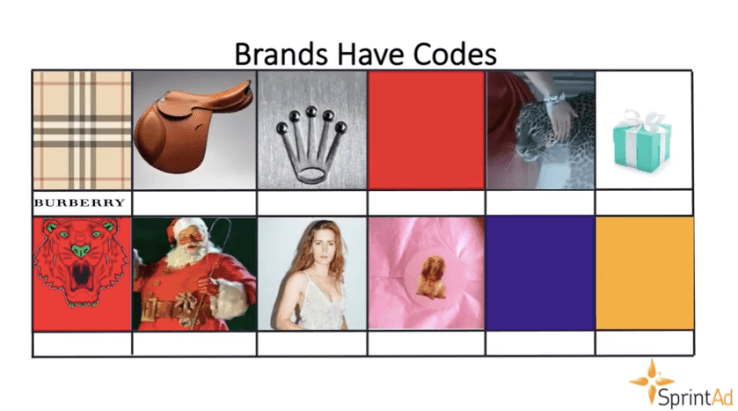
Using this insight he put people in an fMRI machine and wondered if Mark Ritson’s brand codes.
This is the DNA of a brand. There’s a story, maybe true but definitely helpful that the classic Coca-Cola bottle had to be designed such that even if it was smashed it someone could recognize it.
Cigarettes companies cannot advertise on television and this constraint turned one of their weaknesses into a strength. Without one medium, the cigarette companies got really good using the others. Smokers in an fMRI had similar brain activity when they saw cigarettes or a camel, mountains, or rugged cowboys.
However, when asked, people said it wasn’t subconscious associations. Lindstrom said, “Feeling the emotion is a process distinct from having the emotion in the first place.” And we post-rationalize. Jonathan Haidt said, “The conscious mind thinks it’s the Oval Office when in reality it’s the press office.”
Lindstrom saw this strongest in Coke and Pepsi test. If fed with a straw, participant’s brains and surveys reported liking Pepsi more. If asked, participants said they liked Coke. Like Dominos pizza, Pepsi had negative brand equity when compared to Coke.
…
Lindstrom wants people to ask questions and listen to the answers. That means putting down your phone and heading out to your customers.
This takes work. Lindstrom is on the road almost all of the year, but it’s an important job. Ron Shaich asked customers why they wanted their bread sliced. Eric Maddox asked why one person hung around another. Brian Koppelman asked why poker players (and then billionaires) talked a certain way. These are glitches in the matrix or ‘that’s interesting’ moments.
Sometimes we know why we do things, sometimes we don’t but that’s just a reason to ask more questions.
Just the funny parts by Nell Scovell is the story of 30+ years of television writing. We highlight people from all walks of life because of the potency of out of sample tests. If something proves true, relevant, or helpful in more than one domain it’s more likely to help in ours.
When running his models, Cliff Asness told Barry Ritholtz that out of sample tests are “very calming because it made you think there’s a much smaller chance that you’re just lucky.” So, what did Nell Scovell do so well?
Partner well. “My career has let me put words in the mouths of iconic performers like Bette Midler, Bob Newhart, Craig T. Nelson, and Miss Piggy. Those performers make everything funnier. It’s like having Serena Williams as your doubles partner.”
When Brian Koppelman wrote Billions, he knew the actors could add something to the writing. One step back and Koppelman’s writing partner, David Levein, is his doubles partner on the page.
Good partnerships are built, said Marc Andreessen, when “It has to be more important that the other one gets to make the decision than for you to prove yourself right.”
See it to believe it. It was Monty Python and other TV comedy where Scovell noticed that men and women are both funny. Ramit Sethi included case studies in his latest book for this reason too. When Paul Rudd told Marc Maron that he didn’t realize acting was something to do, Maron said that hears that a lot. It’s not just a job but that a job can be done by someone like me.
Heads I win, tails I don’t lose. I “TRYING SOMETHING NEW SHOULD BE THE EASIEST thing in the world. If you succeed, great. And if you fail, you have the perfect excuse: “Hey, I’ve never done this before.””
Chris Cole wondered why more people don’t take these kinds of risks. The cost is so small compared to the possible payout. Ask the girl, call the boy, talk to your boss.
Career. Scovell had a lot of bombed jokes and bad jobs. So what. Move on. “This approach also applies to an overall career where it’s better to focus on the next opportunity rather than ruminate on missed chances and setbacks.”
Jerry Murrell started and failed at a number of businesses. He had setbacks and no experience in restaurants – and why restaurants are terrible businesses – but he started one anyway. “I really didn’t know what I was doing,” Murrell said, “I’m just lucky that I got in the hamburger business.” It was that opportunity that became Five Guys.
Culture stems from the top and flows down. In television that’s the showrunner. These people can frame how things are going to work – and where. In New Jersey, the writers were, “Operating outside Hollywood’s sphere (which) gave Monk a different feel. No one was reading the trades and the small staff buckled down and stayed focused.”
For Ken Burns, that means New Hampshire. For George Lucas, it was the Bay Area. Organizations can get a mental distance and remove cultural influences by abstraction. Here’s Bill Simmons on how the Celtics dealt with Greg Oden’s medical history.
Serendipity, according to Scovell is a “felicitous accident.” On one shoot she was getting a lot of pushback from the director of photography about how to compose different shots. During a rain break, she slipped under an overhang where a cameraman was watching the gear. They struck up a conversation, got to know one another, and as the shooting progressed he backed up her ideas.
It’s about being open to opportunities.
In 1979 Bill Walsh was the head coach and GM of the San Francisco 49ers. He visited UCLA to see if hurdler James Owens could be a football wide receiver. When Walsh got there he needed someone to throw the football to Owens. There was a quarterback there too, so Walsh asked him to throw a few balls. That quarterback’s name was Joe Montana.
Diversity. Scovell compares the Hollywood glass ceiling to the antifragile metal from the Terminator. That’s too bad because as one mentor told her, “A fairer sampling of humanity will always produce better comedy.”
Businesses call this “cognitive diversity” and as Michael Mauboussin said, “People that can surface different kinds of view is key for quality decision making.” How do you get diversity? Batches. Rory Sutherland notes that when choosing one thing we aim for the average thing. Families own one minivan. Vacations are the average for how much we can spend and choose to do. But do batch work and the decisions change. Hire one person each month for a year and it’ll be the average applicant. Hire twelve people once a year and there’ll be diversity.
Ramit Sethi is a great interview. He’s on the podcast circuit because he’s updated I Will Teach You to be Rich. I like Ramit, in part because he’s a nice guy.
Years ago I sent him an out-of-the-blue email about working for him. His response was prompt, kind, and thoughtful. It was like a stranger holding open a door for you, but also noticing the map in your hands and offering directions and a dinner suggestion.
Good designs. Ramit believes in automated finances. Just like email filters, but for money he tells Ferriss. But Ramit’s taken this approach beyond money. “I wake up in the morning and double click on my calendar and everything is perfectly organized.”
Designs influence behavior. Dan Lockton talked about how metaphors influence our thoughts (Startups are like a…). There’s an architecture of happiness. ‘Choice architecture’ is one tenet of nudging because designs matter.
In his podcast with Howard Marks, Ferriss credited the design around him (physically and contractually) for his investing success. “I’ve done reasonably well in private technology startups because I lived in the middle of it in San Francisco, it was the only thing I paid attention to, and it protected me from my lesser behaviors because I wasn’t allowed to sell.”
Habits are behaviors we’ve already designed for, choices are opportunities we haven’t yet.
Base rates and optimistic future selves. Ramit is coaching a group of people through his book and asked what they might do if gifted ten thousand dollars. “According to these answers, we have a bunch of Mother Theresa’s in the group. They will pay down debt, give to charity, do this and that.”
Much like as Daniel Kahneman thought he could write a book in less time than everyone else, these people thought they could spend money more wisely than their previous selves. But we’re all overly optimistic about ourselves.
This is part-of-the-reason Michael Mauboussin hammers base rates again and again. Base rates help even when someone doesn’t think they will. Bent Flyvbjerg studies megaprojects like dams, bridges, airports and the like and said:
“You hear this when you talk to project planners like I do in my research. You will hear them say you cannot compare projects, it’s impossible, each project is unique. Our statistician laughs when he hears this because he says the curves of cost overruns and benefit shortfalls are so similar that it’s ridiculous to talk about the projects as being unique.”
Adam Carolla colorfully put it this way:
See it to believe it. Ramit includes examples in the second edition of his book. People who retired early(ish). People with a lot of money. People with enough. He told Ferriss that seeing someone like you, doing something new, makes the doing seem possible.
Doris Kearns Goodwin saw it in this book. For Sig Mejdal it was this book. Nell Scovell saw it in this show. This works for college or entrepreneurship too said, Malcolm Gladwell:
Context matters. The middle of the Ferriss interview has a lot about relationships and Tim shares how he and his partner conduct a weekly check-in. “We started off with, ‘shit you need to fix’, then it was ‘growth opportunities’, now its ‘what I’d like to see more of’. The phrasing turns out to be really important.”
For investors, this means figuring out what kind of (bull or bear) market they’ve invested in. For baseball managers, this means figuring out what kind of ballpark a hitter played in. For marketers, this means figuring out what works and why.
Rory Sutherland’s Alchemy is full of examples of context mattering a great deal. One friend enjoyed a trip to the Caribbean so much he loaded up on banana flavored rum to share with his friends back home. But he got home and realized banana flavored rum goes best with sand and sun.
Important things, measurable things, and their differences. Ramit praises the Financial Independence, Retire Early group. Most people don’t save enough, but they have. That’s good. However, “I think a lot of FIRE people decide what’s not important to me. They are on top of that. I think the challenge I would make is, ‘You nailed what’s not important to you, now let’s talk about what is important to you.’”
This is hard. This is latent needs.
Rory Sutherland wrote to “Interpret laterally rather than literally.” The literal interpretation of FIRE is to ‘retire early’. The lateral interpretation is, ‘And then do what?’
In the same way that marketers find the latent needs of their customers, individuals who retire need to provide for their latent needs. Jobs provide meaning, friendships, income, hobbies, connections, and more. “Sometimes the most valuable things in life live outside a spreadsheet.”
Brynjolfsson and McAfee have made the role of ‘job’ more important in their research because of this. Universal Basic Income is like FIRE, a literal interpretation of work but not an accurate one.
The last time I heard Stern was in 1998. My summer job was sealing asphalt and one guy loved Stern. He was a hard worker so I didn’t mind pairing up with him but I just didn’t get Stern. It was too early. This book of interviews is smart, funny, and insightful. Stern is contrite and kind. This might be the ultimate book where your mileage will vary but here’s a taste of a few lessons I learned.
…
The hedonic treadmill is real. Most every guest is rich. Stern is rich too. But money isn’t everything. The celebrities, the actors, the guitarists, the lead singers, and the comedians are also parents, brothers, wives, and friends. They still have problems in their lives, challenges with their health, and obstacles every day.
In what Stern calls my best interview ever, he asks Conan O’Brien about turning down a deal from Fox for twenty-million dollars. Conan replies, “I never made a decision in my career based on money. Not once.” For him, the value was in the body of work. Conan valued his portfolio more than another portico.
Each year there’s a new number. According to Nature, it’s $95,000. But the real number is something else. ‘Enough’ is only enough when it meets expectations. Like pouring water into a graduated cylinder, at a certain level, it’s all you need. Only we change. We adapt to the hedonic treadmill, up and down. The way to get off, as Conan noted, is to want something else.
…
Work, work, work, work. Stern writes in the introduction, “Nothing is casual. Everything requires work, research and thought.” Throughout the book, the interviewees comment on Stern’s preparedness. Stern may seem like someone who just rolls out of bed and does his show, but that’s how good he is. Prepare enough and anything looks easy.
Stern asks Madonna why celebrities aren’t friends with each other. “Because everybody is busy working,” she tells him.
Before commenting on how hard their jobs are, most interviewees point out they aren’t complaining. It’s easy to think that someone making millions of dollars a year should be breaking their back and busting their hump. They did, they do. Chris Rock said, “Malcolm Gladwell (and 10,000 hours) in the closest I come to religion.”
When Steve Martin ventured away from the warm safety of television writing to be a standup comedian he was scared. Instead of being a writer, magician, and comedian he would just be one. He hit the road because “The lonely road with nobody watching was the place to dig up my boldest – or dumbest – ideas and put them on stage.” Stern too writes that he was glad he got his reps in while he was small.
Years later Gladwell points out that his point wasn’t to set a benchmark but a stage. To get “10,000 hours” requires a lot of support.
Time is zero-sum. Both Bill Murray and Ed Sheeran say they’ve simplified their mobile/social usage. Murray said, “I only got a phone to text with my sons…I’m not a very organized guy Howard. I’m really not. I can’t take on any more.”
Ed Sheehan commented, “The worst thing in the world is being in the studio and you’re, like, midflow, bang bang bang, and you get a text and you go into your phone and that’s an hour of your time gone.” Sheeran deleted social apps, then, “If you don’t have any distractions – I was literally writing four or five songs a day ‘cause there was nothing else to do.”
Fit. Jerry Seinfeld said, “I am not arrogant and stupid enough to think I did that. I know that I got caught in a perfect storm. Me and Larry fit together perfectly. And then the cast.”
“What I do is too hot for television,” wrote Stern, “I mean ‘hot’ in the way that Marshall McLuhan used the word. You got to be ‘cool’ on TV. You can’t heat things up too much. People get uncomfortable. When you see a guy growling and gritting his teeth and baring his fangs, it looks ugly. When you eliminate the video and just go with the audio, it becomes wonderful. It becomes refreshingly honest.”
Different forms have different norms. The best work is done when there’s a good fit. Michael Lewis noticed this about podcasting:
Michael Lewis to Malcolm Gladwell about matching medium to message. This is part of the reason podcasting works, there’s a kind of content that’s best for the listener in the feed, voice, approach of a podcast. pic.twitter.com/L4lFqy0OwG
This doesn’t only apply to media. Good businesses have the right culture. Good marketing matches a business’s spirit. Good distribution depends on the product and the customer.
…
School of life. A lot of the guests had difficult periods of life. Stephen Colbert’s father and brothers died in a plane crash and after that school punishments become hollow. But, “Oh, I read every day. I read almost a book a day. But I just read whatever I wanted to.”
He didn’t care for school but books, books were grand. When I talk to young people I notice that often they dismiss both school and learning. Like train cars hitched to each other, if one’s bad then another is too.
That’s not the case.
Life is full of learning, and best when it is. Tom Cruise never went to film school but said, “Film school was every day I was making a movie.” Michael Lombardi got his Ph.D in football from Al Davis, Bill Walsh, and Bill Belichick. That’s a better education than any school could provide. Sanjay Bakshi said the Berkshire Hathaway letters are free, though he paid for the postage for the early ones while at the LSE and it was the best investment of his life.
2014, Nudgestock. Dan Lockton wants people to know that “everything that is designed has some effect on people’s behavior.” Even things that appear chaotic (cities) have a (/n emergent) structure.
Sometimes you can’t always get what you want. “When people feel they are being influenced in a way that doesn’t match their understanding of the situation they will rebel.” Design only does so much.
Nudging isn’t shoving, it’s small prompts for small changes. Design nudging, only in the physical rather than psychological. Misuse comes when “The people designing these things don’t understand how people actually think or act.” Bad design is from an IYI.
Good design comes from talking to people. If you want to know how the lion hunts, don’t go to the zoo. Good designers leave the lab. Good designs ‘pave the cowpaths.’
2016, London College of Communications. Behavioral economics has caught the attention of organizations and governments but it’s not a panacea. BE is a model of the world, and like all models, it’s imperfect but useful.
Lockton uses the garden cities analogy as a warning about design. “This is sort of the modernist’s dream, ‘If we plan everything perfectly and design everything there won’t be any problems anymore.’” But no complex system, including people, is predictable. Also, omnipotence excludes interestingness.
In another talk, Greg Lindsay outlined four components for serendipity:
Are you ready? “You know the classical line, the true sound of scientific discovery is not Eureka but ‘that’s interesting’.”
Can you talk at work? “Google started a beekeeping club so that engineers who are interested in beekeeping might meet each other and actually have discussions about unrelated subjects.”
Do you meet people in the city? When it comes to serendipity, “cities are the stars.”
What about your network? “It takes unknown knows and makes them known knowns.”
Lockton ends this talk with a nice example about BBQ. Many cities are concerned about fire and ban flames. But that’s not the only solution. This is the heart of what designers and businesses do, what job is your customer hiring for? Cities aren’t anti-BBQ. Cities are anti-fire. Lockton shares solutions where cities provide water or dirt to extinguish the flames.
That’s good design. Create something that solves the collective problem while allowing individual liberty.
…
2018, ILA, Rio. “Think of metaphors as a designed thing, deliberately created by people to try to enable other people to understand something in a different way.” In his previous talks, Lockton talked about how physical spaces influence behavior. In this one, he’s talking about mental spaces, like metaphors.
Metaphors are just another model, inaccurate but helpful. Though unique, people share overlapping parts, “and that overlap is the cultural understanding of a concept.” Metaphors often exist at opportunities, neé gaps.
Lockton looked at how people thought about energy usage. People may think of powerlines or thermostats or batteries but are those the best metaphors? How might someone know which metaphors were better?
“One of the big parts of the (energy use) project was visiting people in their homes and trying to understand how did they understand energy. You’re told to use less energy but then actually spending time with people to understand how they understand and make decisions about energy in their everyday life.”
Telling people their kilowatt usage doesn’t change behavior because it’s too abstract.
When gas costs peaked in 2012 ($3.62/gal) people connected mpg to ppg and sold gas guzzlers as fast as possible. Home energy is different and to understand their understanding Lockton got people to draw it.
Metaphors are pliable and can frame things in positive or negative ways.
The government is like X…
The city is like Y…
Life is like a box of chocolates, you never know what you’re going to get.
I learned how varied this could after two minutes on Twitter. Search for “Startups are like” to learn they’re like… hockey, sausages, long call options, an inverted TARDIS, embryos, moody families, Schrödinger’s cat, cults, fingerprints, babies, pirates, boats, ant farms, love affairs, garage bands….
There were many more. A lot had to do with boats and water.
Whether physical or mental, design can only influence behavior so much. But that can still be a large ROI. People change based on their understanding of the world, not yours. And just because it doesn’t seem like there’s a good reason for something means we haven’t found it yet. Thanks for reading.
“This is a book about effective problem-solving.” That means, writes Stevyn Colgan “How to solve problems before they arise.”
Colgan joined the Metropolitan Police Service because of a bet with his dad. He stuck with it because it was interesting, not because he was measurable good at it. Except he kinda was, which Colgan’s story. His metrics weren’t great. He didn’t stop or arrest or testify for many cases. But how do you measure prevention?
🤔🤔🤔
Colgan’s always been a questioner. “I do have an insatiable curiosity and I’m not afraid to ask a difficult question.” And, “that hadn’t made me popular with my teachers at school.”
Teachers loath one question above all others – ‘what if’ – because schools teach students how to solve known questions. ‘What if’ is a tool that unearths new ones. What if you could rent dresses instead of buying them? What if you could loan money to those least likely to default? What if you could end around Coke’s endcaps?
Businesses exist within growing and gathering seasons. Clayton Christensen writes that growing is disruptive moments and gathering is sustaining innovation. Mark Ritson notes that some marketing is for brand building and some is for customer conversation. Farmers plant seeds and farmers pull weeds.
In the Met, there was too much gathering, too much sustaining, too much conversion, too much weed pulling. There’s always a balance between making the trains run on time and laying new line. Colgan wondered, ‘Why punish if we can prevent?’
One example Colgan tells is the story of John Snow who defeated cholera, (not white walkers).
Cholera (1854) and crime (2019) are messy subjects. People knew cholera spread through the air. Except it spread through the water. People know that teens are vandals. Except we they aren’t. Colgan writes that solutions aren’t “always as clear-cut as you might imagine.”
We like to think in terms of cause and effect, that A causes B. Sometimes A does cause B, but not always. In complex systems, there are all kinds of interactions and influences.
Ordering a Lyft is people using algorithms built on math. That’s Relatively controlled. Getting a Lyft is all that plus more people interacting in traffic and on the streets and in your group.
I own a robotic vacuum and it lives in a controlled system. The robot’s battery isn’t sophisticated but it doesn’t travel far. It has blunt sensors because nothing – except the dogs – move. It’s made out of plastic because it never gets wet. Homes are easy to navigate, roads are not.
The first reason robotic driving is hard is the elements. Cars can’t bump things like a robotic vacuum. But the bigger reason robotic driving is hard is that people are involved.
Look at just how people describe car crashes. It’s often because the asphalt was wet or because visibility was low or someone else “came out of nowhere.” It’s never our fault (at least not at first). That’s the people part.
Traffic, writes Tom Vanderbilt, provides regular examples of the fundamental attribution error. It’s other drivers that make mistakes. “Meanwhile, we attribute our own actions to how we were forced to act in specific situations. Chances are you have never looked at yourself in the rearview mirror and thought, ‘Stupid #$%&! driver.’”
We should call traffic ‘accidents’ traffic neglect.
But we don’t.
🦋 🦋 🦋
Colgan’s work environment, like my living room, was physically stable but psychologically complex. In complex systems we see butterflies.
“Tackling problems effectively means not jumping at the simplest solution, or the most complicated, or the most outlandish, intriguing, or sexy solution. It means understanding the problem.”
So Colgan marched around, questioned victims, and solved problems. It was just like an exam at school. Only not really. Most people will tell you that a solution is the elimination of a problem. Colgan writes “that’s pretty much an impossibility.” People are great at many things and too great at thinking in terms of opposites.
Colgan began asking “Why?” and “What if?”. Colgan was looking for something elusive, the latent need. The thing we want but can’t articulate.
Economists have known about this distinction for a while, distinguishing between what we say (stated preferences) and what we do (revealed preferences). It’s as Nassim Taleb notes, don’t tell me how to invest, tell me how you invest.
Tariq Farid has a good story about this. Farid was a high school kid who had to work to help out his family. Thanks to a mentor got the chance to own a flower shop. If he’d asked his customers what they wanted they might say more variety, lower prices, or faster delivery.
Those were unimportant changes.
What really mattered was ease.
Farid had to make flower buying easier. “I looked around and everyone closed at five-o’clock and I stayed open until seven-o’clock and we started to get a lot of customers coming home after work.” Latent needs mean figuring out what job your customer is hiring you for.
From there Farid opened another shop. He needed a better point of sale system so he built one and then started building them for others. That became a business itself. At the time he was only home three days a month and in a moment of peace, embarked on a cruise.
It was there that Farid saw it. His next idea. The next big thing. It was there he saw arranged fruit. “I got a knife and started doing it. The same way we did the flower shops, you just experiment until you get it right.”
He sent some initial attempts to friends. They told him it wouldn’t work. “Who’s gonna buy fruit on sticks in a basket, come on.” Now there are over 1,100 Edible Arrangement stores in eight countries around the world. This was something nobody asked for but many wanted. It was a latent need.
That’s what Stevyn Colgan did too. He noticed something and then talked to people about it. He met people for tea, in the street, and anywhere they were. In talking to them he found their focus; fear. If flowers were about ease, affection, and signaling then crime was about fear and loss. That was the need.
Colgan had to consider how “strong emotions such as fear and anger or a sense of injustice can skew people’s perceptions and lead them to imagine problems where there aren’t any.”
Stevyn Colgan spent his career in London but he worked as if he were in Switzerland.
🇨🇭 🇨🇭 🇨🇭
Market research for companies or citizen conversations for the police both better begin with minimal bias. Marketing consultant extraordinaire Mark Ritson said, “The minute you start getting paid to work for a company, on a product, or on a service it’s impossible to see that product the way a customer sees it.” Terry O’Reilly, a Canadian Ritson said, “Don’t ever assume you know the answer.” A potential protege Rob Fitzpatrick said to ask questions so unbiased not even your mom could lie to you.
“One of the most important lessons I ever learned was that solving problems means focusing on the actual problem, not the perceived problem-they can be two very different things.”
Bums weren’t always mean. Drunks weren’t always violent. Teens weren’t always dangerous. Bums tend to be people with mental health issues. Drunks tend to be people who want to have a good time. Teens tend to be people who just need a place. In talking with people Colgan found that small tweaks could change everything.
🔺 🔺 🔺
Conditions and timing matter. A recent example is the May 2019 Uber IPO. In the delightful Acquired podcast hosts, David and Ben note that Uber rose thanks to good timing and great conditions. San Francisco had few licensed cabs. The iPhone app store opened to third-party developers. A slew of people thought about mobility, traffic, and becoming very very rich. Those conditions were ripe for something.
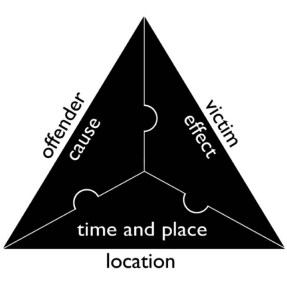
Crime also requires the right conditions. Colgan explains using a triangle with interlocking pieces for the offender, victim, and location. Prior to prevention, the aim was to remove offenders but that didn’t always work.
What if, Colgan wondered, we worked on the other parts instead.
One problem he faced was grifters working crowds with the shell game. They were hard to catch, hard to convict, and harder still to keep out. What if instead of grifters at markets Colgan got magicians instead.
So Colgan hired someone to demonstrate the sleight of hand. Like Penn and Teller explaining cups and balls the marketplace crowds were entertained, educated, and somewhat inoculated against grifters running a similar show.
But it’s hard to measure and demonstrated effectiveness when what’s measured is how many of one type of puzzle piece is booked at a precinct.
Rory Sutherland, a book supporter, fellow Nudgestock speaker, and author himself calls this McKinsey-itis and diagnoses it as a condition where people are addicted to numbers so they don’t appear stupid to their boss. “Business is throwing away opportunities by failing to be more random. Businesses believes you should only test those things you can post-rationalized in retrospect,” Sutherland evangelizes.
Free housing for the homeless seems to be one example. Colgan writes about Mayor Ted Clugston who (now) thinks it works. Yet how does a community convince people that, on net, free housing helps more than it hurts? How does a community, Colgan wonders, not see that what influences drug use the most is the people and places an addict was around when they did drugs.
Free housing and magicians are only two ways to change the conditions and timing. Colgan used Lollipops to calm drunks. He repainted a soccer pitch to stop bullies. Sometimes just turning on the lights to relieve a bottleneck changes behavior.
Fellow Brit, Owen Slot spoke at Google about how the British Olympic team recovered from an underwhelming 1996 Olympic Games. Slot describes that team as “happy amateurs.”
Which they kind of were. The British team didn’t have resources the same way other – notably, larger – countries did. So the country contributed money, time, and expertise.
One sport on the precipice for success was cycling. The engineers made lighter and faster bikes. The nutritionists prepared tastier and healthier meals. The teams made better kits. They had better everything.
But the athletes needed one more thing. They needed their seats adjusted. Riders were often embarrassed to talk about it, but they missed too many training days due to saddle sores. Once they declined the seat a few degrees the saddle sore problem was solved.
Due to a changed culture, lots of hard work, and one small but important tweak the team transformed one gold medal in 1996 to twenty-seven gold medals in 2012. It was the same place. It was different results.
In his work, Colgan spends little time talking about removing offenders, in part because that’s the status quo and we over-index on that solution. But he found that small changes led to big results.
…
“A sudden, unexpected and left-field idea seems so much more exciting than one that’s been arrived at by slow, methodical research and testing, but it doesn’t necessarily follow that ‘unexpected’ and ‘left-field’ is a guarantee of success.”
Colgan’s book is full of fun and successful stories but he notes they failed a lot too. There were things that didn’t work or didn’t get adopted and even though his unit was eventually called “The Problem Solving Unit” it wasn’t quite that easy.
Readers should pick up this book to be inspired to act different, to find where they are over-indexed and ask a few more questions like ‘What if?’.
Ashley McCollum is the Vice President of Tasty, the Buzzfeed food division. With 533 million global monthly viewers, Tasty is the most watched food content on Facebook, YouTube, and Instagram. One in three Americans watch a Tasty recipe each month, one in five Americans make a Tasty recipe within a week of watching a video.
Tasty started out as a curiosity. “Tasty started as an experiment on Facebook. We did not set out to build the next great massive food network.” McCollum and her team wondered, what the web allowed that was different from what came before. Once our phones had iOS, GPS, and LTE they did more than make phone calls. Once our homes had IFTTT, WiFi and iPads they did more too.
The Tasty/Buzzfeed advantage was that they were native to the web. “We just had internal talent that understood the social web.” Tom Goodwin reminds us that there is no such thing as electronic banking. Erika Nardini reminds us that there is no such thing as talk radio. We just bank, we just talk.
McCollum and her team understood the social web, understood the value of sharing, and understand that brand relationships have shifted.
“In the past brands told you about perfection. Now, customers don’t want perfection they want imperfection and to know that the brand understands them. Loyalty to a brand is no longer the driving force to why you make purchases. We have entered a phase of loyalty to me.”
Patrick Doyle of Domino’s faced this problem during the pizza company’s turnaround. In blind taste tests, people liked Domino’s pizza more if they didn’t know it came from Domino’s. If you put the name on the box, it was about as good as Chuck E Cheese participants said.
In the past, Doyle/Domino’s could broadcast change and make it so. New and Improved – or something. But now, “It’s wallpaper. People don’t pay any attention when brands say, ‘We’ve got this new product and it’s new and improved.'”
What Doyle learned, McCollum knew. The Tasty start, “was rooted in the user, it was never about our authority.” Doyle immigrated to social, McCollum grew up there.
Cooking used to look like this, and you can’t make this up: After a date with Anthony Hopkins I was going to invite him to my giant house in Maine…
McCollum said, “You’re sitting on a couch, passively consuming video content that’s in a kitchen you can’t afford making a creme brûlée you can’t make.” And laughing with a celebrity friend, of course.
Social shifted sharing and consumption.
We’ve gone from aspiration to participation.
“Our point of view on food is that it’s about what you would want to tag your friend in to say ‘let’s do this, this weekend,’” said McCollum. These tagged posts are at least 15% of my Facebook feed. Tasty content, like Penn and Teller, meet and greets, are for sharing.
The Tasty content is made to be shared but that’s not all. “The focus was not on food. The focus was on a format that you can watch in your social feeds, post-literate, and audio independent.”
Watch it muted, watch it twice.
Watch it wherever, ain’t that nice.
Okay, but doesn’t alpha erode? Can’t someone come in and do it better? “People often copy Tasty’s format, it’s fairly cheap to produce compared to Game of Thrones, but what is very challenging to copy is what’s underneath all that. Why do these things work? Why do people connect with them?”
Why make the recipes they do? McCollum (and Ben Kaufman) know what their customers want because they see Buzzfeed clicks. Think fidget spinners and makeup have nothing in common? Think again.
Tasty surveys their users too, 75% still make a shopping list. Businesses serve customers to create sustainable profitability and from Jenn Hyman to Peter Rahal to Tiffany Zhong we see the value of understanding what customers want.
Ask what they want, watch what they do, or see what they click and then serve them.
…
McCollum at Tasty, as well as Kaufman at Buzzfeed Product Labs, are some of the more interesting and instructive studies in current commerce. Stores like Macys and Walmart think they’re doing something right and have signed agreements to work with the duo.
Marketing can be magical, creating something from just a story. That’s what Tasty is, a story about food, cooking, and who a person is. Stores like Target and Walmart used to have that. Now they have it less.
Why? Advertising used to create a brand, now content does.
Just look at sports. Each week of football season, each basketball home game, each soccer match is content that tells the story of the brand. Advertising was one-way authority, content is a conversation. That’s what McCollum knows.
Alex Rampell started TrialPay, a company that advertised to consumers at the point of purchase. Say you visited Fandango for information (movie showtimes), not consumption (ticket purchase). But you see an ad where Netflix offers a free ticket if you sign up. Well I was gonna sign up anyway the thinking goes. Click, sign-up, claim ticket. In the middle of Netflix, Fandango, and you was Rampell and TrialPay. The company was acquired by Visa in 2015.
Rampell is a general partner at a16z and we’ll look at some notes and quotes from his talks on YouTube.
Homes. “In the future, you will buy your house from, or sell your house to, a company.”
Real estate is a weird business. There are two million real estate agents in the United States. The median number of homes sold is two, the modal number of homes sold is zero, the top 10% of agents sell 7 homes a year, and the top 1% sell 22 homes a year. Total commissions to all agents were around 100B dollars.
Sellers and buyers are connected by agents, except for for-sale-by-owner, about 7% of sales. Spencer Rascoff, sequentially Zillow’s CMO, CFO, and CEO said Zillow sold ads, not houses. That allowed them to have the P/L of an internet company and 1B in revenue and Rascoff joked that Zillow was the park bench for the internet.
New Zillow CEO Rich Barton wants to buy and sell like Rampell recommends. Why now? Expectations and capital. “Consumers are accustomed to everything on-demand…Consumers want to push a button on their phone and take an action,” said Rampell. And this new Zillow couldn’t have been built in 2004/2005. Zillow had to be a website, then an app, and then full-stack.
The company has adapted well. Rascoff said after seeing an app store demo in 2011, “We dropped dot-com from our name and did all the little things. It was all about mobile.”
As data became more important they recruited more people. Rascoff recalled, “We called the Expedia data science leader and he said, ‘I don’t know anything about real estate,’ we said this isn’t about real estate, this is a math problem.”
Websites, apps, and data were all incremental improvements on the same model. But what if people are ready for a new model? When asked Why do we always do it this way? There’s got to be a better answer than We’ve always done it that way.
Tricia Wang saw how phone usage changed. Daryl Morey saw how basketball changed. Barton and Rampell think real estate will change.
Consider the job to be done. Sellers higher agents for speed and convenience, not price. And they deliver. Agents also have expertise, experience, and a mental database of when staging a home delivers value, when to list a property, and how to compute comparables.
Only for some of those things computers do the work much much better. This is a point hammered by machine learning experts, let machines do what they do well and let humans do what humans do well.
Rampell said, “Individual agents can look at the comps that have sold, but they don’t have a data science team. When should I list my house? November? January? March? Computers do a fundamentally better job answering these questions than people.”
Rascoff’s book, Zillow Talk, is stuff with this information. Location isn’t everything. Spring listings aren’t the same nationwide. Gentrification is not random. And my favorite chapter title, “It’s the worst house for a reason.”
The jobs people hire for don’t change much because they’re still people. We’ve been hiring for food, safety, companionship, entertainment, fulfillment, and signaling forever. So startups should look wherever people are already doing whatever. “Rich parents have always helped their kids buy their homes,” said Rampell. It’s stuff that “happens on and off but there’s never been a marketplace for this.”
Rampell wants to fund companies that structure currently unstructured behavior.
His colleague, Chris Dixon blogged this in 2013. Ride-sharing began with Moes safely getting Hoes, where they need to goes. Jan Chipchase advises to, “find people who are already in extreme situations – people whose situations or context pushes them to make the most of what is currently available regardless of existing social or legal norms. Call it innovation by necessity.”
…
FinTech “If we don’t need branches or in-person communication (thanks to the internet) what type of businesses can we build because of that?”
As Tom Goodwin noted, we only call it FinTech because it’s new. Eventually, we just call it the thing. Electric light becomes light. Online dating becomes dating. Rampell said, “In twenty years you would think about it (FinTech) as your bank, your insurance, your retirement account, you wouldn’t necessarily think of it as your FinTech company.”
Yet we have banks on main streets with clean windows and nice lobbies. Why? Stability was the signal for safety. But, “The physical condition (is) a little bit more of an anachronism than a building block for banking success.”
Banking isn’t about money. Banking is about trust.
Our on-demand, tap-tap-do-it-app, adaptations are filtering to banking too. When I worked in minor league baseball there was a two-week stretch where because of the home games, weekends, and team commitments I couldn’t cash my paychecks during regular banking hours. So I used the night deposit via the ATM. Fast forward almost twenty years and I last used a bank for their notary services and while buying my most recent house didn’t enter a bank at all.
If the branch doesn’t matter what else is changing? User Interface. Andy Rachleff said about Wealthfront “millennials pay us not to talk to them.” Rampell said, “My parents like going to the banking website, it’s a feature for them but it’s a bug for people under a certain age.”
What else? The data. Rampell talks about SoFi’s focus on HENRYs. These High Earning, Not Rich Yet consumers are filtered by degree – oooh mechanical engineering from Cal Tech – and offered attractive terms. Instead of bricks and tellers, SoFi uses reams and programmers.
Then sell them other things. If you find a high-income doctor who pays back medical school loans on time it’s likely she’ll also pay back home loans on time and car loans on time and so on down the line. Not only that, SoFi has the chance to be the default choice thanks to a good UI (the new main street) and low rates (because only HENRYs are in the pool).
New data – like college major and university – isn’t limited to the United States. Some of the most interesting work is being done in Africa or the Caribbean and using mobile phones.
In one example, only 34% of adults had bank accounts. If banking is about trust how do you trust someone with “a thin file”? But 89% of adults had a mobile phone. That’s sort of a file. Right?
One study found that borrowers with smaller networks (infrequent and fewer calls to homogenous numbers) were more likely to default. Consistent SMS use signals repayment. Another study looked at how frequently customers who’d been denied loans “topped off” their prepay mobile number. If someone topped off often they were more likely to repay than those who’d been approved using traditional credit checks.
It used to be that if you built a better mousetrap the world would beat a path to your door. Now businesses face the TiVo Problem.
Think of it as a race. Can innovators get to the market before incumbents get to the innovation? About FinTech he said, “In the US the big ones are Betterment and Wealthfront who were the innovators. The challenge it turns out that Vanguard and Fidelity and Schwab have now replicated what they’re doing and has a massive distribution.”
Rampell is the co-founder of Affirm, an organization that has avoided the TiVo problem. When asked about barriers to entry, CEO Max Levchin said about big banks, “Those guys cannot enter our business because they’re addicted to the (late fee, interest rate, and hidden fees) income.”
There’s an aphorism that something can be good, fast, or cheap but only two. Well, startups need to ignore that. Ideally, a startup will acquire good customers, in a fast manner, for a cheap cost.
Which brings us to the next part.
…
Channels & CAC
Customers hire businesses to do jobs. Businesses deliver solutions to customers.
How does a business get hired? Their customers get acquired. Hopefully cheaply. Open Table, said fellow a16zer Jeff Jordan, had a kind of negative CAC. The patrons requested the restaurants to offer online booking.
Because of the TiVo problem startups must grow cheaply, “because it’s too complicated or too expensive to compete with well-capitalized companies.” Paid acquisition, said Rob Fitzpatrick, “is mind shattering expensive. Geico spends a billion dollars a year in advertising, how can anyone compete with that?
Startups can compete because strengths are weaknesses. Where does Geico advertise? Television. Who watched television? Everybody.
What if instead of selling insurance to everyone a company sold insurance to only the best drivers? The healthiest people? What if a company only loaned money to people who were unlikely to default?
That’s what SoFi did. That’s who HENRYs are.
A business needs to have a plan as to how they can find their HENRYs. For SoFi, Rampell said, “Think of this from the psychology of the borrower, how come I’m paying the same rate of the person who’s going to default. Then, positive selection vs negative selection.”
Without a good answer to how a startup is going to acquire customers, Rampell suggests buying Google or Facebook stock, where many of these companies advertise.
"Google is the second most valuable company on earth and a big chunk of their market cap is coming from insurance. How? About 25% of the most expensive keywords on Google are insurance related." @arampell October, 2017https://t.co/5yivnu4G7c
One company doing a good job is TransferWise. “At the end of a transaction, TransferWise will probably tell you how much every bank would have charged you for the transaction. Why do they do that? The transaction already happened. They give you that reinforcement and then they say, tell your friends.”
A delightful example was shared in Season 8, Episode 16 of the Under the Influence Podcast.
Jerry Murrell used the WOM test to see if his burger business would work. The Zestimate was born after Bill Gurley challenged the Zillow team to reduce their ad spend. Part of the reason Beanie Babies went viral was because of their size. “(Founder Ty) Warner thought that the play value of a stuffed animal with mostly beans and a little stuffing would appeal to kids, and he also thought that a stuffed animal that could be slipped into a backpack would spread through word of mouth far more quickly than one that required at-home play dates.”


 The Waiter's Pad