Supported by Greenhaven Road Capital, finding value off the beaten path.
People don’t want quarter-inch bits, wrote Theodore Levitt, they want quarter-inch holes.
Readers don’t want blog posts, they want knowledge that leads to action. There were 6 things I think Sam Hinkie did well as General Manager of the Philadelphia 76ers.
- Be different but don’t start from scratch.
- Find helpful base rates.
- Get information by being there.
- Have the longest view in the room.
- Use inversion.
- Argue well.
…
On April 6, 2016, Sam Hinkie’s resignation letter from the Philadelphia 76ers was released. I read it. I was hooked.
The letter explained the how and why of his decisions. It explained the theory behind the actions. This is good. While actions are domain specific, theories are agnostic.
Hinkie’s letter itself is evidence of the theories he writes about. In a world where skill and luck both influence results it’s better to build good processes than focus on good outcomes. If you subscribe to that you also have to be willing to be wrong but for the right reasons. That’s what happened to Hinkie. You have to be willing to fail unconventionally. That happened to Hinkie too.
We won’t let Hinkie’s sacrifice be in vain. Let’s look at how Hinkie was different.
…
“If you want to understand the entrepreneur, study the juvenile delinquent. The delinquent is saying with his actions, ‘This sucks. I’m going to do my own thing.’” Yvon Chouinard
If you want to succeed beyond your peers you have to be different from your peers. This requires the skill and persistence to see things others miss, do things others won’t, and argue well.
The NBA, unlike many other industries, is zero-sum. If one team gains a win, another loses one. It’s a pie that never grows. Hinkie realized this:
“A competitive league like the NBA necessitates a zig largely in an effort to stay true to the idea of having the longest view…A league with 30 intense competitors requires a culture of finding new, better ways to solve repeating problems.”
You can’t just be different. It’s different to stay in a burning movie theater. It’s different to sell milkshake mixed drinks. It’s different to only sign short players to an NBA team. Those things are all different, but they’ll all fail. To succeed you must be different and you must be right.
Hinkie knows this and wrote, “We should attempt to gain competitive advantages that had a chance to be lasting, hopefully, one unforeseen by enough of our competition to leap from them from a seemingly disadvantaged position.”
Not only does Hinkie want to be different, but he wants to be different in a sustainable way. If Hinkie tried to build Golden State Warriors East he would fail because he’d never be better than the original.
Warren Buffett addressed this at the 2016 Berkshire Hathaway annual meeting. “We don’t look at something like that (Amazon) and try to beat them at their own game. They’re better than we are at that, and we aren’t going to try to out Bezos Bezos,” said Buffett.
Be different, but don’t start from scratch
One mistake is to be different from everything. That doesn’t work. There are some things that work. Hinkie wrote:
“Whenever possible, I think cross-pollinating ideas from other contexts is far, far better than attempting to solve our problems in basketball as if no one has ever faced anything similar…. Get back on defense. Share the ball. Box out. Run the lanes. Contest a shot. These things are real and have been measured, precisely or not, by thousands of men over decades of trial and error.”
Rather than, ‘blow it up’ or ‘start fresh,’ a leader should question why things are done one way and not another. A story about fences articulates this.
In The Thing, G.K. Chesterton wrote:
“There exists in such a case a certain institution or law; let us say, for the sake of simplicity, a fence or gate erected across a road. The more modern type of reformer goes gaily up to it and says, ‘I don’t see the use of this; let us clear it away.’ To which the more intelligent type of reformer will do well to answer: ‘If you don’t see the use of it, I certainly won’t let you clear it away. Go away and think. Then, when you can come back and tell me that you do see the use of it, I may allow you to destroy it.’”
Only after consideration should we remove something. Gregg Popovich knows this. For ‘Pop’ the pregame shootaround was a fence that needed to be torn down. Popovich said: “I just think it was the modus operandi for every organization. It was a habit. It was what everyone did. If you didn’t do it, you were recalcitrant or you weren’t doing your job.” There is career capital risk if you do something different and fail. Pop continued:
“Some owners would look and say ‘Why aren’t you doing a shootaround?’ If you were a young coach, you have to have a shootaround because you’re doing what you have to do. And, basically, half of them are total crap – a total waste of time….In general, shootarounds could be kaputskied.”
The pregame shootaround began in 1972, a different basketball era. Popovich noticed how much things have changed in forty years and stopped doing it.
“To do science is to search for repeated patterns.” Robert MacArthur
David R. Oliver was a nuclear submarine commander who found a Chesterton fence knows as “Condition Baker.” Condition Baker was a surfacing maneuver for diesel submarines. These subs needed to surface to recharge their batteries and bring on oxygen. Due to a limited range, these subs often surfaced in shipping lanes. Condition Baker was an order to partition off the sub in case of impact. If a surface ship sheared the sub only some compartments would flood and the ship would remain buoyant. It made sense.
As the United States Navy became nuclear, Condition Baker wasn’t needed. Nuclear subs rarely surfaced in shipping lanes and did so only a fraction as often, but submariners still ordered the maneuver.
Oliver was running a battery charge one day when Condition Baker was ordered and he realized the danger. His compartment required cooling airflow and during the maneuver, that air flow stopped. Baker was to make the ship watertight. It was to do exactly what Oliver didn’t want to happen. If cooler air didn’t get into his section, the entire submarine might explode.
Oliver didn’t explode, and he took his intact self to his commanders and pointed out that they didn’t need to do this anymore. Eventually, nuclear submarines stopped doing this. The fence was cleared away.
How do you do this? How do we figure out when not to ‘reinvent the wheel’ and when to clear away the fence? If it were obvious and easy you wouldn’t be here and Hinkie would still be in Philly. It’s not easy, but there’s an easy place to start, with base rates.
Base rates
The base rate is what happens in similar situations. The base rate for summer weather is warm with a blue sky. The base rate for dinner out is $60. The base rate of investment return is 3.5%.
Of course, there are exceptions. It can rain in the summer and dinner at Walt Disney World will be more expensive. Base rates help us figure out what to expect and then, how much we can change the situation. Weather is out of my control, dinner is not.
Hinkie started with the base rate from day one. He told Zach Lowe that during his interview for the job he asked the ownership group what their goal was and then found similar situations for how to achieve that. Hinkie said:
“One of my big things is to survey base rates any time you can. You go back to facts whenever you can. You go back to finding what has worked. Often things have changed…but at the same time, you should be starting with some base rate. What does this look like? What did these (championship) teams have in common? Where was the value driven from?”
Lowe asked what are the odds that their draft pick Joel Embiid becomes an all star. Hinkie goes back to base rates, and says, “we don’t know.” It depends on Embiid’s skill ceiling and ability to stay healthy.
Lowe asked about free agency too, and Hinkie returned to base rates. Assume the base rate of success for free agents is five percent, Hinkie tells Lowe. “If it’s five percent – you should be expecting to look at twenty or so to find one of those. The hit rate is not fifty.”
“You have to turn over a lot of rocks to find those little anomalies. You have to find companies that are off the map — way off the map.” Warren Buffett
When Hinkie notes base rates for teams that win championships, rookies who become stars, and free agents who succeed, he’s looking for what works and how often it does. Hinkie wants to find the ‘right’ part of ‘be different and be right.’
In Michael Lewis’s book, The Undoing Project, Lewis explained the base rate as, “What you would predict if you had no information at all.” Sometimes this is all you need. Daniel Kahneman – the book’s subject – summed up his findings for Lewis and explained:
“When no specific evidence is given, the prior probabilities are properly utilized (people use the base rates); when worthless specific evidence is given, prior probabilities are ignored.”
Knowing this and doing it are two different things. It’s hard to use the base rate because we think we are so smart.
“I used to think that the brain was the most wonderful organ in my body. Then I realized who was telling me this.” Emo Phillips
One misstep is to favor the visual over the mathematical.
When David Quammen was tromping around the south Pacific to research his book The Song of the Dodo, he wanted to know why certain animals lived on some islands and not others. One such subject was the Komodo dragon. Quammen’s first exposure was at a feeding at the Komodo National Park. It was a sight. The tourists, which includes Quammen, gather in a fenced enclosure (for their safety) and the animals enter. Quammen wrote:“They walk high on their legs with a steady, surging stride. They surround the corral. Expectant but calm, they pose obligingly for everyone’s camera.
“They walk high on their legs with a steady, surging stride. They surround the corral. Expectant but calm, they pose obligingly for everyone’s camera. They nose up to the fence like puppies. This calmness, combined with their pleasant, old-boot faces, is misleading; they appear amiable and harmless.”
Then “the goat carcass suddenly flies overhead,” and the animals feast. “They stir up one hell of a ruckus,” Quammen wrote. Once the goat is gone – Komodo dragons eat everything – they “splay out onto their bellies…content for the moment.”
Quammen, unlike the dragons, isn’t content. He hires a guide to take him through the jungle. He’s studied the animal. He knows that it tops out at about ten feet in length, but that people who see it overestimate the size. Quammen knows the numbers, yet he encounters one up close, and:
“Exactly how big is it? I couldn’t say. If not for the likelihood that I’ve been deluded by its aura of power and strength, I would tell you twelve feet, maybe fourteen, roughly four hundred pounds.”
David Quammen knows it’s not fourteen feet. He’s read books about how people think it’s that big, but the base rate is otherwise. And yet, here he is, thinking well past the base rate.
To outperform in any domain, but particularly in a zero-sum environment, you will need to do things differently from others. That said, don’t go overboard and ignore tried and true methods. Find relevant base rates and when you come to a Chesterton fence ask why it was put there in the first place.
Be there
Hinkie didn’t start from scratch, but he did need to find an edge. One way is to go where others don’t.
As basketball follows baseball deeper into data analysis, it’s good to remember that computers can’t do all the work. In his interviews, Hinkie is quick to prove his basketball knowledge. Part of that comes from seeing a lot of players. He wrote:
“There is so much about projecting players that we still capture best by seeing it in person and sharing (and debating) those observations with our colleagues. What kind of teammate is he? How does he play under pressure?”
Hinkie’s former boss, Daryl Morey, told Michael Lewis that being there was something he initially undervalued. Morey was an early adopter of analytics in basketball, and like many innovators, his early model was good but needed work. Lewis explained that Morey missed DeAndre Jordan who had “grown up in Houston under the noses of the Rockets scouts.”
That didn’t mean that Morey went ‘Office Space’ on his models and hired a flock of scouts. No, he adjusted the focus of the model and the scouts. Lewis wrote, “Models were bad at knowing that DeAndre Jordan sucked his freshman year in college because he wasn’t trying.”
Being there gives you an advantage – a way to be different – because you see things other people don’t see.
Samuel Zemurray built the largest banana business in America because he understood every detail. Zemurray began by buying the ‘ripes’ – bananas with one or two spots – from ships docking in New Orleans. Those bananas were worthless to the importers because they wouldn’t last through transport to the northern states.
For Zemurray, they were perfect. On his first foray, he spent his savings on a load of bananas and part of a boxcar. Zemurray road the rails north through the south and built relationships as he went. Soon he had each train station calling ahead to the next to announce that the banana man was coming.
Zemurray succeeded and got deeper into the banana business. He bought a boat, then two. He scouted plantations in Central America. He dealt with governments. He lived and breathed bananas. In the wonderful book, The Fish That Ate the Whale, this is what Rich Cohen wrote about Zemurray:
“Zemurray worked in the fields beside his engineers, planters, and machete men. He was deep in the muck, sweat covered, swinging a blade. He helped map the plantations, plant the rhizomes, clear the weeds, lay the track. He was a proficient snake killer. Taller than most of his workers, as strong and thin as a railroad spike, he shouted orders in dog Spanish. He believed in the transcendent power of physical labor – that a man can free his soul only by exhausting his body. A life in an office, desk bound, was for the feeble and weak who cut themselves off from the actual. He ate outside – shark’s fin soup, plantains, crab gumbo, sour wine. His years in the jungle gave him experience rare in the trade. Unlike most of his competitors, he understood every part of the business, from the executive suite where the stock price was manipulated to the ripening room where the green fruit turned yellow. He was contemptuous of banana men who spent their lives in the North, far from the plantations. Those schmucks, what do they know? They’re there, we’re here!”
That passage excites me each time I read it. It’s a reminder to get out of the office and feel the winds of the real world. Andy Grove gives this advice too.
Grove wrote that leaders tend to be insulated from the real world. Middle managers are filters and sometimes the wrong information gets filtered out. There is value in some of this information. Grove wrote, that middle management, “usually know more about upcoming change than the senior management because they spend so much time ‘outdoors’ where the winds of the real world blow in their faces….I feel much safer back here in California than he does in ‘enemy territory.’ But is my perspective the right one? Or is his?”
The first job Tim Ferriss had out of college was with a software company. He was in sales. The job was okay. He was employed in technology during the late 1990’s, what could go wrong?
Ferriss often ate lunch with the engineers and started to notice something. They would talk about an upcoming software release and told him there was no way it would be done on time, under budget, and as expected. Those engineers knew before anyone else that the company wasn’t going to make it. Knowing this, Ferriss started his first side business. Soon thereafter he was let go but he had a side business to support him.
For another example, let’s return to the Caribbean. We’ll head east from the banana plantations to the island of Haiti to meet Dr. Paul Farmer. Farmer is an amazing man; Harvard graduate, best-selling author, charity founder. Did I mention a MacArthur fellow? Part of the reason Farmer succeeds is that he has better information. How? Farmer spends half his time in rural Haiti.
Farmer’s fascination with the country started when he was a Duke undergraduate and met some Haitian workers. Then he went there. He worked in the poorest parts of the poorest country in the western hemisphere. What he saw didn’t click. Haitians infected with tuberculosis or HIV didn’t fit the pattern taught at Harvard. That theory assumed that people infected with TB/HIV engaged in ‘high-risk behaviors.’ They were intravenous drug users and had multiple sexual partners at the same time.
Bullshit thought Farmer. He had been to Haiti. He walked the streets, he drove the roads, he served the people. There wasn’t enough money in Haiti for anything, much less for drugs. He also saw that the people he treated didn’t have multiple concurrent sexual partners. Sequential ones, yes, concurrent ones no.
The real cause, Farmer discovered, were truck drivers and military officers. Those two semi-stable jobs attracted women. Those men were the hub on the wheel of infection. So Farmer thought, how do you keep women away from those men?
Well, why were they there in the first place? The answer was jobs. The answer was money and security. If you gave women those things they’d be less likely to seek them from the men. That’s what he did. Farmer had to be there to find this out.
Just like ‘starting from scratch’ takes ‘be different’ to an extreme, being there can be taken to extremes as well. This happens if you get lost in the weeds.
Jocko Willink recalls one of his early training sessions with Leif Babin. The two Navy SEALS were in preparation for deployment and Willink asked Babbin about leading an assault. Babin said he led from the rear and Willink asked how that worked for getting information and giving orders. Not great, said Babin. It took time for information to travel back to him and equally as long for an order to travel back. Babin needed to be more forward.
But not all the way. Babin’s role wasn’t to knock down doors, clear rooms, or take prisoners. His job was to lead. That meant a balance between collecting information from the front and understanding the entire situation.
Being there is one way to be different. Note that each example took moderate, not complete steps, toward this. Babin moved up in the assault column, but not to the front. Farmer doctored in Haiti, but was educated and still works at Harvard. Daryl Morey created a model, but adjusted it and relies on plenty of humans.
Being there reveals information that can differentiate you. Like most things, don’t get stuck in the weeds or see the trees and not the forest.
Long-term horizons
“To take the long view,” Hinkie wrote, “has an unintuitive advantage built in – fewer competitors.”
If “Trust the process,” wasn’t the slogan for Hinkie’s strategy “The longest view in the room,” might have been.
We see this in how the 76ers got players. They didn’t get the best players of 2014 or 2015 or 2016. Their strategy was to have the best players of 2020 – and beyond. Trading down in the draft did this. Choosing young foreign players did this. About Dario Šarić, Hinkie wrote:
“Dario is a 6-10 forward with a guard’s skills and a big’s toughness. Twice voted as FIBA European Young Player of the Year, we were in a position to draft him in part because he required something you’ve had in ample supply: one part courage, two parts patience.”
Not only is Šarić young, but because he plays in Europe he doesn’t occupy a roster spot. He’s an asset the 76ers didn’t have to immediately pay or play. Hinkie was one of the few who planned to win in 2020 and there was less competition for that.
If you listen to sports talk radio you’ll hear a lot of hyperbolic discounting. That means that people favor the present – by a lot, well more than what they think. We’d all take $100 today rather than next year. That makes sense. Situations become more nebulous when it’s $100 today compared to $120 next year. In broad strokes, this is what Hinkie attempted. He observed the need for some teams to ‘win now’ because their ‘window was closing.’ Hinkie tried to collect options for $120 in the future. In the NBA that goes by the name ‘pick swaps.’ Hinkie accumulated a lot of these future options. He wrote, the 76ers accumulated:
“more than 26 new picks or options to swap picks over and above the two per year, the NBA allots each club. That’s not any official record because no one keeps track of such records. But it is the most ever. And it’s not close. And we kick ourselves for not adding another handful.”
A lack of long-term thinking can hamstring our future selves. Have you ever financed a car for 60, 72, or 84 months? (Don’t shake your head, I checked, 84 months is a real option). Those plans sound great when you sign and drive off the lot in a new car. Four years in and your net worth still dawdles along and the truck has lost its shine. Distant finish lines – choosing $120 later over $100 now – requires discipline. Investors know this.
Peter Lynch said, “Everyone in the room is a long-term investor until the stock market goes down.”
“As much as hedge funds talk about being long-term owners, it is ultimately an aspirational sentiment,” wrote Jeff Gramm.
Let us pause again and note the other side of this argument. Much like starting from scratch and being there, a long-term obsession goes too far. In More Than You Know Michael Mauboussin wrote, “there is a tradeoff between the short-term and the long-term, and the appropriate focal point shifts as conditions warrant.” Mauboussin compares it to driving a car. Both the distant destination and immediate conditions are important.
“The secret to great success in business is to choose competition that’s not very good. The same thing works in sports, it works in lots of different things.” Charley Ellis
The value of long-term thinking is that it allows you to be different in the future. How many other teams will be competitive in 2020? Hinkie tried to get to a place where the competition wouldn’t be as good because few others were doing that. Long-term horizons are one way to solve the ‘be different’ challenge. Another way is to invert the question.
Inversion
Some problems are very difficult.
- How do you have a happy marriage?
- How to run a business?
- How do you win more games?
Each question has many possible answers. Some lead to more questions. It can be endless. What can help more is asking the opposite.
- How do you fail at marriage?
- How do you fail at business?
- How do you lose more games?
Inversion is to answer those questions, and then do the opposite. Hinkie knows this, and wrote, “What basketball axiom is most likely to be untrue? Take it on and do the opposite.”
Inversion is a great tool for problem-solving and some of the best leaders demonstrate this.
One of Bill Belichick’s first jobs in the NFL was to coach offensive players. This was not what Belichick hoped or expected – but it was incredibly valuable. David Halberstam wrote:
“Though Belichick’s instinct was to coach defense – it was where he was pulled as if by some kind of magnetic force – he was also beginning to understand that if you were going to coach defense, you had to master the offense as well, otherwise you were only half a coach.”
Years later, after coaching offense and defense, Belichick was running laps around the football field with fellow coach Ernie Adams and he was amazed that more coaches didn’t know both sides of the ball. “And he would tell Adams,” Halberstam wrote, “that he did not understand how some of the other coaches in the League had decided they were only going to understand one side of the ball….it absolutely amazed him.”
Belichick solved problems with inversion. He thought about how to stop a player and then reasoned how to not. He knew the opposite because he had coached it. Former colleague Mike Lombardi said:
“One of the adages Belichick always subscribes to is called the inverse theory by Charlie Munger. Instead of saying, ‘What will it take to win?’ you ask the question, ‘What can we do to avoid losing?’ and Belichick always takes that approach.”
“If you want to understand something, take it to the extremes or examine its opposites.” John Boyd
In his own words, Munger said, “Many hard problems are best solved when they are addressed backward.”
Investor Mohnish Pabrai has studied Warren Buffett and Charlie Munger and has his own stellar investment record. In a talk at U.C. Irvine, Pabrai explained the inversion strategy of Coca-Cola. Part of Coke’s success, said Pabrai, was because they used inversion. Instead of asking, ‘how do we succeed?’ They asked, ‘how do we fail?’
Failure would come from a loss of market share or brand erosion. To prevent the latter, Coca-Cola offered their vendors coolers, umbrellas, and everything short of a living room set in Coca-Cola red. To prevent the former, they tried to never leave a country. When American forces moved through Europe in World-War-Two, Coca-Cola men were in the vanguard to support the troops and re-enter markets.
Inversion works because knowing what not to do is sometimes more valuable than knowing what to do.
Argue well
Good organizations argue well. There must be a way to have constructive, balanced, combative conversations without ego, empire building, or ad hominem attacks. Organizations that do not do this will fail because some truths need to be excavated by the spade of argument and the rake of curiosity.
Hinkie wrote, “We talk a great deal about being curious, not critical.” Curiosity is important because we don’t always know what to do. Hinkie wrote, “Sadly, the first innovation often isn’t even all that helpful, but may well provide a path to ones that are.”
If we knew what to do, we would just do it. Building an NBA team is not easy, so we need to be curious. We need to be like filmmaker Brian Grazer, who wrote:
“I worry, for instance, about becoming complacent—I worry that out here in Hollywood, I’ll end up in a bubble isolated from what’s going on in the rest of the world, from how it’s changing and evolving. I use curiosity to pop the bubble, to keep complacency at bay.”
Grazer uses curiosity to figure out what to do – in his case, tell good stories. In his book, A Curious Mind, Grazer explained his system for curiosity; pay attention to the answers and be willing to act.
Grazer schedules curiosity. His assistant arranges regular meetings with people he’d like to meet. There is no agenda, no film plans, no alternative motive. Grazer is there to learn. Each conversation is a node in a network, like a star in the sky. Only with connections do we make constellations. Here’s what Grazer wrote about making Apollo 13:
“My conversation with the astronaut Jim Lovell certainly started me on the path to telling the story of Apollo 13. But how do we convey, in a movie, the psychology of being trapped on a crippled spaceship? It was Veronica de Negri, a Chilean activist who was tortured for months by her own government, who taught me what it’s like to be forced to rely completely on oneself to survive. Veronica de Negri helped us to get Apollo 13 right as surely as Jim Lovell did.”
A bonus to all this, Grazer wrote, “curiosity is free.”
Curiosity means to pull on a string and see where it leads, and be open to the idea that it may lead nowhere. “There has to be a willingness to tolerate counterarguments,” wrote Hinkie. This doesn’t mean disagreement for its own sake. It means finding a way to be different. Here are three ways to argue well.
1/ Counterfactuals
Counterfactuals are outcomes that could have happened but did not. A roulette pill may land on red three but any other number – red seven, black thirty-five – was just as likely. Problems begin when we forget this. We mistake the thing that happened was the only thing that could have happened.
Hinkie’s strategy was to collect draft picks and accumulate salary cap space. Some people thought this was wrong. They thought he should sign veteran players. Maybe. Maybe not.
In the summer of 2010, the Miami Heat signed LeBron James and Chris Bosh. They joined Dwyane Wade and a good roster. That group would appear in four consecutive NBA finals and win two of them. That’s a model some people thought Hinkie should follow, but let’s ask ‘What else could have happened?’.
Zach Lowe did and Hinkie said:
“They (Miami) pulled it off, and I bet there are only a few people on the planet who could do that, Pat Riley being one of them, but let’s not forget there were a whole bunch of other teams that year trying to do the same that failed; Chicago, New York, New Jersey, the Clippers that were all trying to do the same thing.”
Add Dallas to that group. That team has tried to get a second superstar to play with Dirk Nowitzki. They failed too and that situation is fantastic. It’s a well-run team with a good coach in a major city and they’ve failed to ‘pull off’ the kind of deal that some suggested for Hinkie.
Hinkie’s team was bad. The process has been difficult. There is a real stress to this. But different actions don’t guarantee a different outcome. “Counterfactuals are hard because we don’t think about what is on the other side,” Hinkie said, “What if we had done nothing; How many games would we have won?”
2/ Avoid hindsight bias
Please sit down for this. Okay. Ready? People remember more of the things they got right and less of the things they got wrong. The only reason I step onto a golf course is that of hindsight bias. I remember the good shots and forget the bad.
This idea comes home with us from the 19th hole. We tend to misremember things in our favor. Hinkie said they developed a system to row against this current.“You should have been trying to get the draft order right. Not just the one or two that popped up like whack-a-mole. You should be trying to get them all right, even the ones you couldn’t have picked, didn’t pick, the ones you never got an opportunity to pick – that doesn’t matter. What matters is your actual board and what that looked like. We go back a lot. We talk internally a lot and create a lot internal discussion with our staff and owners alike and redraft.”
“You should have been trying to get the draft order right. Not just the one or two that popped up like whack-a-mole. You should be trying to get them all right, even the ones you couldn’t have picked didn’t pick, the ones you never got an opportunity to pick – that doesn’t matter. What matters is your actual board and what that looked like. We go back a lot. We talk internally a lot and create a lot internal discussion with our staff and owners alike and redraft.”
Redrafts are a chance to remove hindsight bias. You can’t say you knew so-and-so was a bust if he was high on your draft board. You don’t get to cherry-pick your decisions, said Hinkie. These kinds of reviews need to be baked in. This means regular reviews and writing things down.
3/ Red teams
No single person knows all the answers. Red teams are often a strategy for good arguments. Hinkie said they would:
“Divide into two groups and you guys argue for and you folks argue against. I’m in for that kind of stuff, I’ve always been in for. I’m not in for the opposite. The way you make a decision is to collect as much information as you can and weigh it as properly as you can.”
Groups are good because they spread blame and reward. It’s hard to empire build when you’re part of a group. At his venture capital firm, Marc Andreessen says he always takes the opposite side of his partner, Ben Horowitz. Why? Because you don’t want people siding with the boss because he’s the boss. Andreessen said:
“It’s the responsibility of everybody else in the room to stress test the thinking. If necessary we’ll create a red team. We’ll formally create the countervailing force and designate some set of people to counter argue the other side….Whenever he (Ben Horowitz) brings in a deal, I’ll trash the shit out of it.”
That’s what good red teams do
“A good scrap….brought out new ways of looking at things… it helped round the corners.” Wilbur Wright
Red teams are part of the culture at Amazon too. In his book about the company, The Everything Store, Brad stone wrote, “Amazon’s culture is notoriously confrontational, and it begins with Bezos, who believes that truth springs forth when ideas and perspectives are banged against each other, sometimes violently.”
Counterfactuals, avoiding hindsight bias, and red teams are three ways to argue well. Good arguments exhume truths.
Discomfort
It’s one thing to read this, another to do it. All this ‘tawk’ about being different, arguing well, inversion, and being there are good strategies but not easy ones. Hinkie wrote, “But to call something that could be wrong (‘failed draft pick’) right (‘good decision’) makes all of our heads hurt, mine included.” And, “Seth Klarman talks about the comfort of consensus. It’s much more comfortable to have people generally agreeing with you.”
“I lost twenty pounds from stress,” Hinkie told Lowe. “It’s not easy emotionally. It’s not easy for everyone to go through. It’s not easy when you struggle in the standings.”
In addition to outside force are mental obstacles too. We tend to equate ‘this is hard’ to ‘this is bad’ and we do it without even knowing it. Daniel Kahneman explained this in Thinking Fast and Slow:”When you are in a state of cognitive ease, you are probably in a good mood, like what you see, believe what you hear, trust your intuitions, and feel that the current situation is comfortably familiar.”
“When you are in a state of cognitive ease, you are probably in a good mood, like what you see, believe what you hear, trust your intuitions, and feel that the current situation is comfortably familiar.”
Kahneman noted that we lend more trust to things that are easy to digest. This means that easy to read fonts convey more meaning than we realize. It means that repeated ideas are more believable. It means simple words and rhyme are remembered more. Because Hinkie was being different he had to fight against the association that he was wrong.
It’s difficult to be different in the NBA. After his resignation, Hinkie was interviewed by Chris Ballard for Sport’s Illustrated. Hinkie said that the Silicon Valley culture was quite different:“When I meet someone out here, I’ll say, ‘I’m kind of between gigs,’ Or, if I’m being cute, sometimes I’ll say, ‘Oh, I’m like a founder that got pushed out for professional management,’ and they’re like, ‘Oh, first time? That happened to me in ’85 and ’93 and ’02.’ There’s not the sense of shame for failure here that there is some other places.”
“When I meet someone out here, I’ll say, ‘I’m kind of between gigs,’ Or, if I’m being cute, sometimes I’ll say, ‘Oh, I’m like a founder that got pushed out for professional management,’ and they’re like, ‘Oh, first time? That happened to me in ’85 and ’93 and ’02.’ There’s not the sense of shame for failure here that there is some other places.”
The way culture accepts being different influences how people act. This is why Hinkie created a team culture that allowed for arguments and curiosity. A place with harsh conditions like the NBA is the Pentagon.
John Boyd is probably the greatest innovator you never heard of. Boyd was a fighter pilot in Korea. An instructor at the Fighter Weapons School at Nellis Air Force Base. An engineering graduate from Georgia Tech, and, for good measure, developer of the military tactic known as OODA loops.
None of this came easy.
Boyd, like Hinkie, fought the status quo. Difference means change and change means losers. Boyd’s fight cost him promotions and medals. The animosity wasn’t only for Boyd. The people who worked with him were guilty by association. When one returned from a brutal meeting Boyd said, “So you got your reward; you got kicked in the teeth. That means you were doing good work. Getting kicked in the teeth is the reward for good work.”
Being different is hard but necessary.
Thanks for reading, I’m @mikedariano.
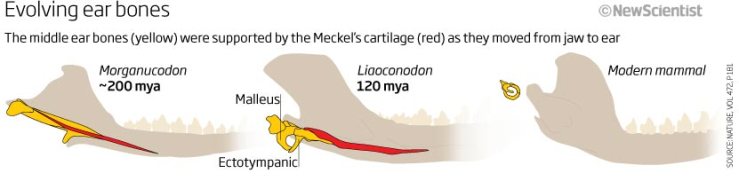
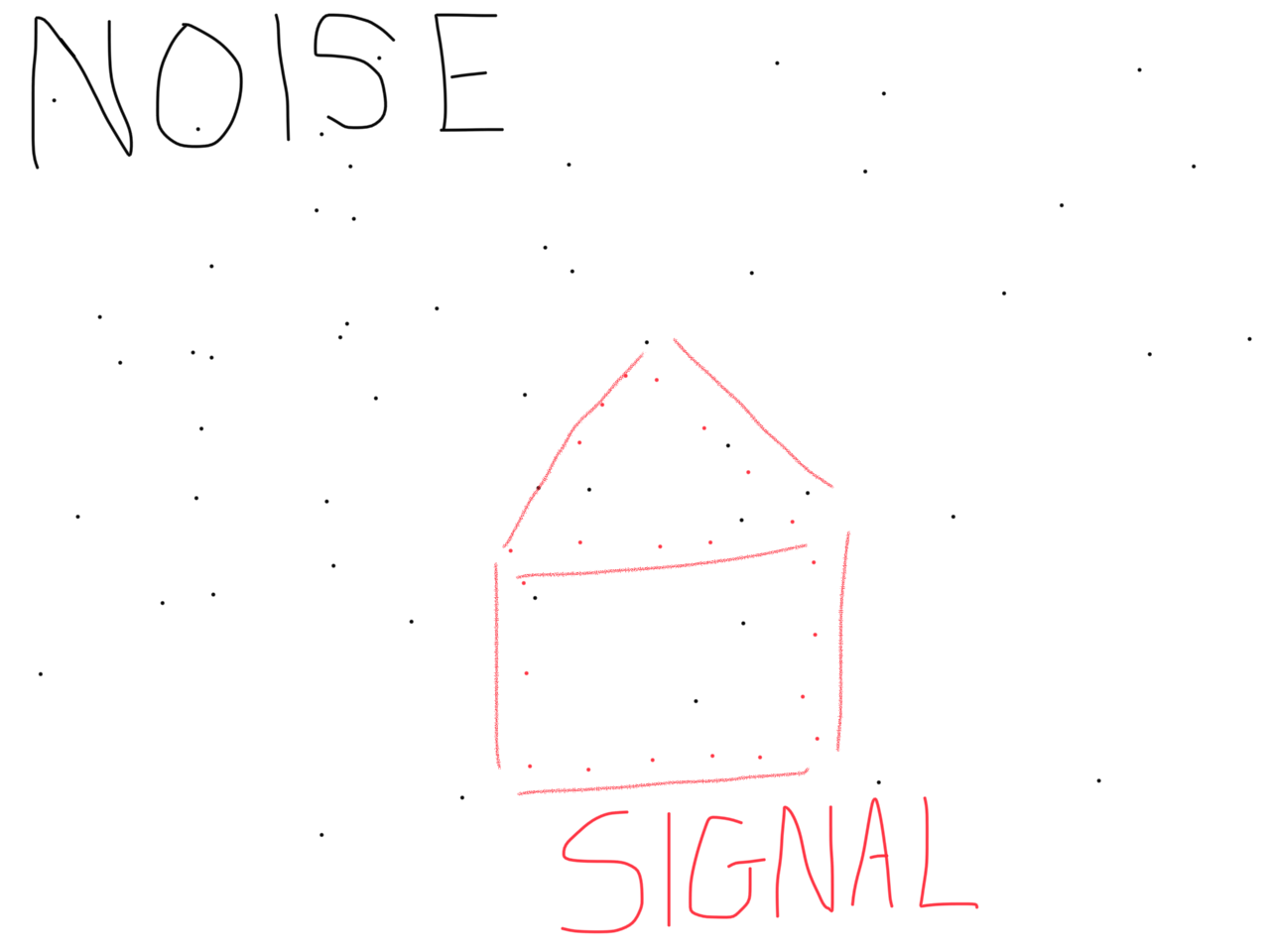
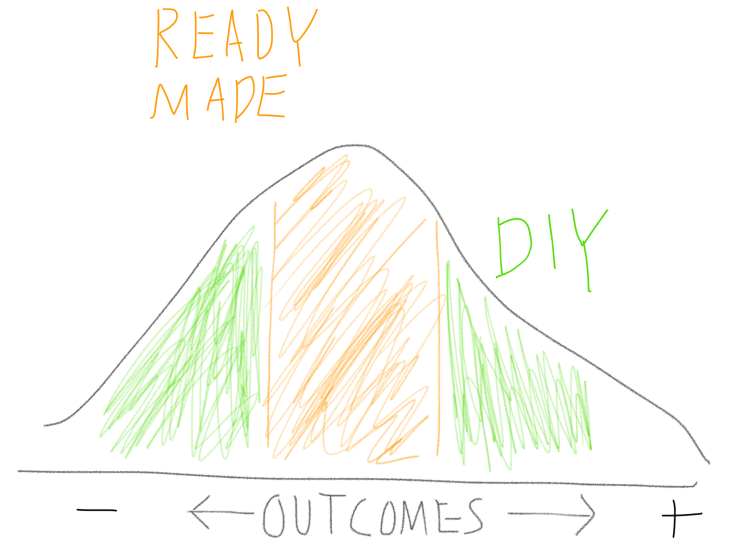

 This is well and good advice but don’t just head out into the woods. Even children learn the rules of the game. This comes from imitation. Mentors and models. Apprenticeships and study. Start on solid footing.

