Kelly Baked (ham) Copywriting

This Honey Baked Ham ad ran in December 2022.

The good. (1) Like the Ridge wallet, it shows contrast – but not of the products. We see the finished, polished, and plated, Honey Baked Ham.

Contrasted with the process. It’s not that your turkey, ham, or sides won’t look good but that it takes some serious effort – with tools you use once a year.
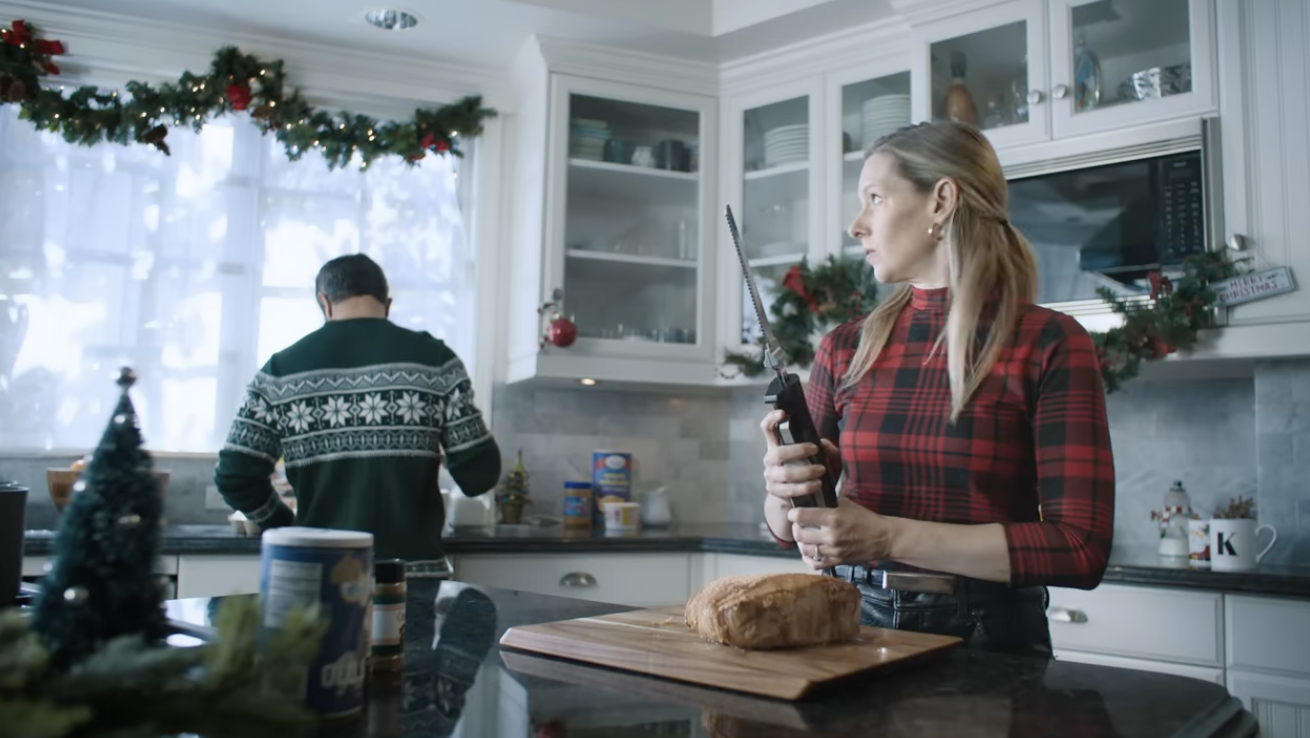
And techniques you use even less.
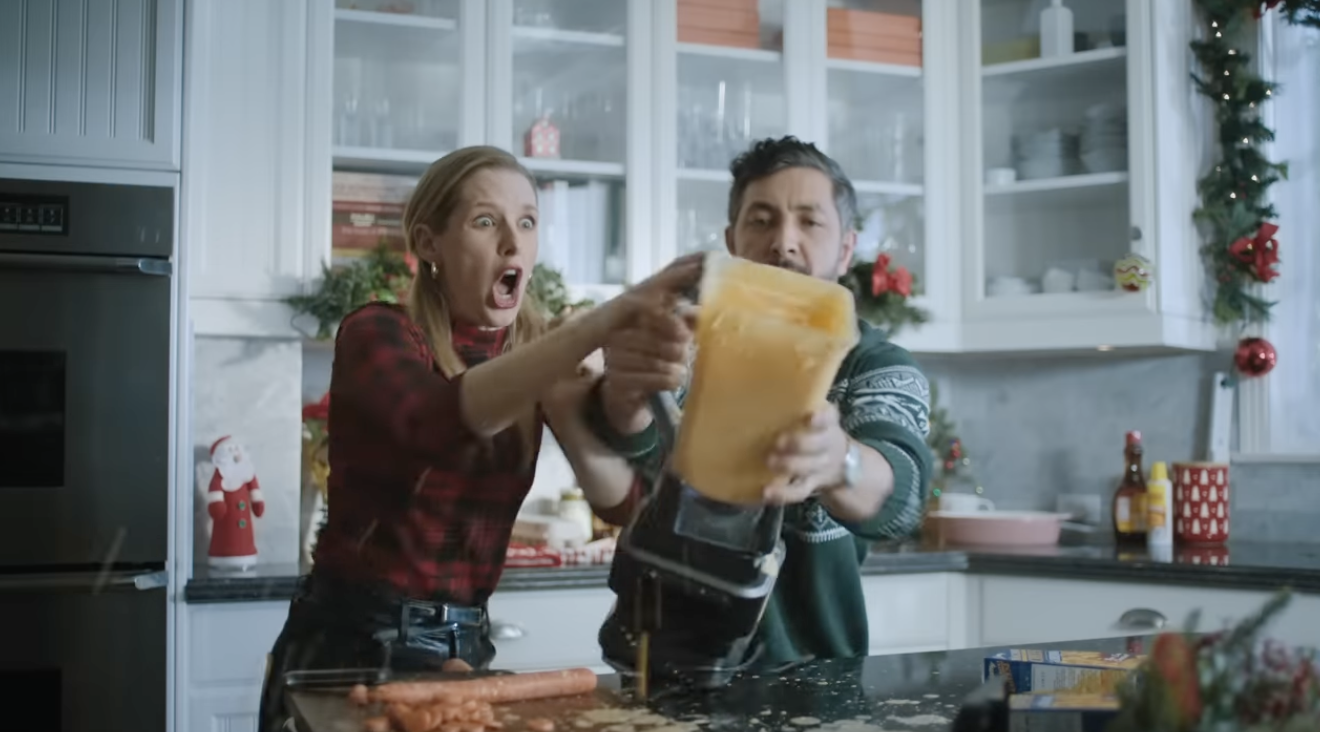
Buy a stick blender instead.

(2) Consumer spending is an example of median and average meanings. We average three thousand dollars a year eating out, but it’s not as simple as that number divided by 12 or 52. We only eat Domino’s Pizza with a deal. Similarly, during the holidays, customers are price insensitive.

Warren Buffett and Charlie Munger noticed this phenomenon in 1972 when they purchased See’s Candy. As Munger said, “I may see Wrigley’s gum alongside Glotz’s gum. I know about Wrigley but I don’t know anything about Glotz’s. If one is $.40 and the other is $.30, am I going to take something I don’t know and put it in my mouth?”

It was the same for See’s and for Honey Baked Ham where the pricing power comes from the holidays, food’s ‘intimacy’, and tradition. They never mention the price and they never should.

(3) Looking the part. When she started Haven’s Kitchen, Alison Cayne thought her cooking business was about food, but she found it was about appearance. Her cooking students (pre-Covid Cayne operated a cooking school in NYC) and sauce customers (the post-Covid pivot) wanted to appear competent.

The ‘job’ of a meal wasn’t filling bellies, it was filling expectations. Todd Snyder said that expectations drive his consumers too. You need to ‘look the part’ at the wedding, the interview, or the party.

Watch the ad. It’s not about the couple’s food, it’s about their appearance.

(4) What does Honey Baked Ham compete with? One part of JTBD is that products in the same category may not be competitors, like Snickers and Milky Way. Pizza, Chinese, and Honey Baked Ham are all Christmas dinner options, but the customers of one don’t consider the others.

Honey Baked’s competition is DIY – which is what this ad addresses!

The Bad. None!

The Interesting.

This ad is polished, like a Honey Baked Ham. At the end of 2022, ‘trending’ recipes were common. Hopefully, the Honey Baked Ham company avoids this and keeps bringing home the bacon with ads like the one above.
Drive Sober or Get Pulled Over

One way to think of the world is not good or bad but underrated or overrated. Switch from binary to fluid. 

Reading like a Bayesian is underrated. Jobs theory is underrated. Books are underrated. 

Think of Over/Underrated as a normal distribution. Only learning from books or never learning from books are bad. Each could “move up the curve”. 

Education, like financial literacy, as a solution is overrated.

Education is a “tight” solution. When my daughter was in elementary school she went to a speech therapist to work on her *th* sound. She had a cast to fix a broken arm. Her volleyball coach helps her with footwork. These are “tight” solutions that fit the larger set. 

Drunk driving advertisements like “drive sober or get pulled over” is another tight solution. 

But it’s wrong. It doesn’t fit the larger set of circumstances. 

A “wider” approach is to think not about drinking but about driving. 

The public could subsidize a ride-share happy hour. If people leave home without their car they can’t return home with it. Or, use the marketing money to pay for random rides. 

Another option is to change where bars are built. If it’s easy to walk or hard to park, people won’t drive.

Gamblers can “self exclude” themselves from casinos. Can insurance companies offer a drink driving equivalent? Let people save 5% while committing their sense of self?

Education is overrated because it’s linear, rigid, and two-dimensional. If X is good, do more of it. If X is good, the opposite is bad. 

Not necessarily. 

Related: using ambiguity aversion to hint at punishments.

Addendum: Because overrated and underrated are fluid and because times change, the overrated can become underrated.

Copywriting Lulz

“So it’s decided,” goes the commercial, “we’ll park even deeper into parking spaces so people think they’re open.” 

“Surprise.” Lolz.

Good copywriting, a subset of jobs theory, speaks in the customer’s language. And this commercial was not written from a rider’s perspective. It’s a driver’s perspective. 

Insurance is an interesting sale because people hesitate to consider premiums, claims, and losses. We’re ambiguity averse and that’s the whole enchilada with insurance. 

It wasn’t until the birth of the AFLAC duck in 1999, that insurance companies found humor as a path to awareness. Okay, customers thought, it’s not that serious, I can make a phone call

But it still had to be kinda serious.

During a rebrand, GEICO found customers saved about 23% and it only took about eight minutes on the phone. However, when they tested that messaging, customers thought it was too good to be true. Instead, “fifteen minutes to save fifteen percent” was born. 

Someone must answer the question: Why is this so cheap? That’s the customer language

Insurances sales (all sales!) start with a simple unintimidating prompt. It can’t be too juvenile, even the mayhem man wears a suit. Costs (higher or lower) must be part of a story: Bundle with us and we pass the overhead savings on to you. 

It Costs More and It’s Worth It

“This carton contains some of the finest ice cream available anywhere,” begins the original copywriting on Ben & Jerry’s pints. 

“We know because we’re the guys who make it. We start with lots of fresh Vermont cream and the finest flavorings available. We never use any fillers or artificial ingredients of any kind.” 

It was the 1980s. European style was the flavor of the month. Häagen-Daz, the ice cream market leader. 

“With our specially modified equipment, we stir less air into the ice cream creating a denser, richer, creamier product of uncompromisingly high quality. It costs more and it’s worth it.” 

It costs more and it’s worth it

Customers tell a story about your product. Is it the same one you tell? 

Discount airlines tell a story. They highlight what you don’t get: free checked bags, snacks and drinks, and premium services. It’s not pilot quality, aircraft age, or mechanic training. It’s the little stuff. That’s why you save. 

People tell a story about your business. Is it the one you want? 

This is from a daily email I write with my friend Aaron.

Cheerios JTBD

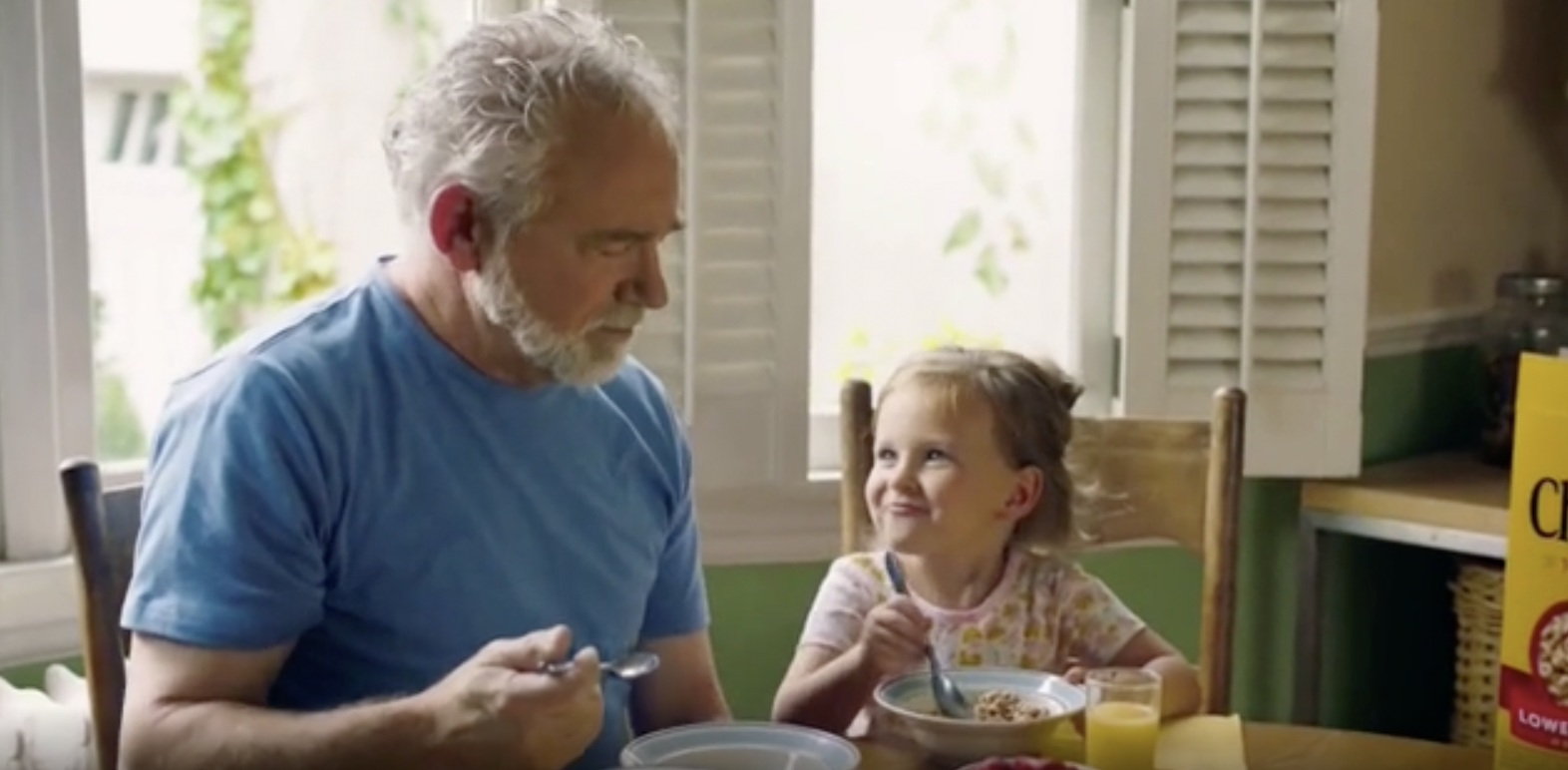
“Don’t eat them for the 100% whole grain oats. Don’t eat them because the oats can help lower cholesterol. Eat them for her.”

Cheerios commercial, 2023

The good. Jobs-to-be-done uses “Mario marketing”. Sell the power, not the flower. Why is ‘being healthy’ a goal? It’s to spend longer with your granddaughter.

This ad ran on a Wednesday morning in Florida. Who is watching television? Retirees. This CAC is money well spent.

The bad or the confusing. None, it’s a good advertisement.

🧐

One of the best ways to get better at something is to do it.

One of the best ways to get better at some thinking is to notice it. The human tendency to confirm beliefs is generally useful. So be curious. Give something a name and label to your experiences.

Here’s a tip, better copywriting

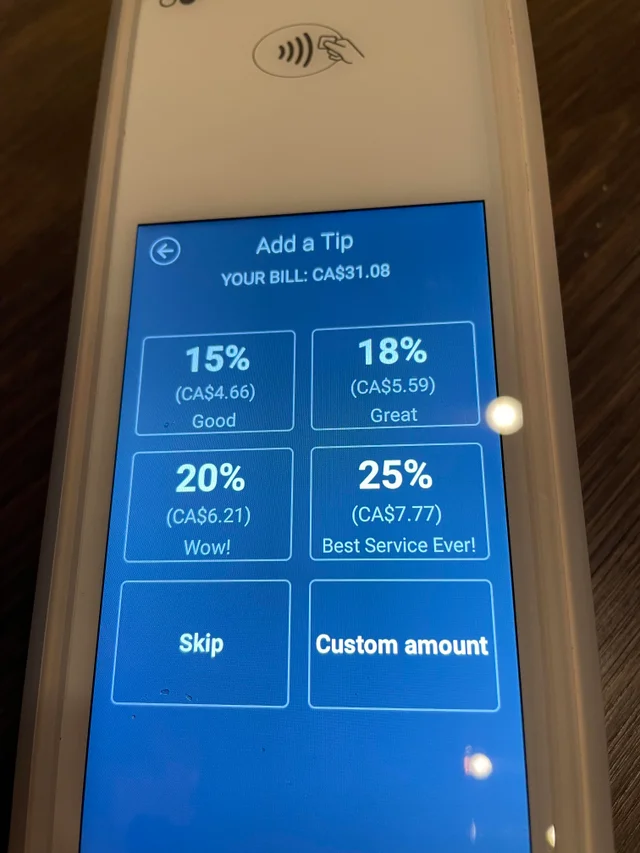
“First time seeing this at restaurants…,” posted Mrs Monroe, “way to guilt customers to spend more”.

Commenters added: “tipping is a sham”, “servers don’t really get that money”, “I hate seeing this at…”. Some suggested subterfuge, a special and spiteful $0.01.

It’s too bad, and a chance for good copy.

There are many restaurants because there are many restaurant jobs: fast, casual, formal, status, and so on. Diners want to feel good.

Broadly, businesses like restaurants, sell two things: steak and sizzle. The tangible, measurable, structural aspects are the steak: how fast, how good, how much. The intangible, spiritual, and attitude components are the sizzle: how nice, how friendly, how fun. Intangibles can be measured, though not as easily (so we often don’t).

Part of a place’s sizzle is their copywriting, even when it’s time to pay.

The good. ‘Good’, ‘Great’, ‘Wow!’. Translating feelings (this service was good) into actions (tip 15%) helps customers. People, like rivers, follow the least resistance. Make it easy. Also good are the calculated tips.

The bad. (1) Misuse leads to dislike. One commenter claims their local Taco Bell uses this same interface – tips and all. That’s fine, I guess, but doesn’t jive with the TB strategy. Hence the frustration.

Also interesting is why Mrs. Monroe feels guilty. Was this a serve-yourself place? Family style? Buffet? There’s a disconnect between her expectations and experiences.

(2) People like choices. There’s technically thousands of tip amounts, but we only see six. Especially with money, people do not like to be told what to do. Better would be a slider like for a phone’s brightness, or a knob like for a stereo’s volume.

(3) ‘Best Service Ever!’ is a twenty-five percent tip? Whoever programmed that has not (or forgot about) eating out with kids. Best ever deserves more. Setting this upper amount also frames the range a customer sees.

(4) ‘Skip’ could be ‘Skip and speak with the manager’. This forces diners to match their words and actions. Was it bad, or just a bad mood?

The confusing. None.

This image lacks context: the quality, service, and kind of meal, the representativeness of the commenters, the individual’s profile. None of what’s written may be a solution. But thinking through the options might get to one.

Good copy sits within the broader bucket of communication which sits within strategy which works best when the sub-actions align.

Copying the Inflation Buster

I don’t check my home equity every day, goes a joke among the Vanguard-Buffett-DCA crowd, why should I check my stock portfolio? It’s a riff on the availability heuristic: if I think it, it’s important.

‘Home’ is super available. Vacation rentals, of someone’s home. A chunk of net worth is home. Neighbors move. During Covid we were stuck in our homes. People began to work from home. After Covid the home market exploded. After that rates ran up. ‘Home’ is everywhere. 

Good copywriting, said Bob Bly, “enters the conversation people have in their mind.” Let’s look at a good Rocket Mortgage ad.

Transcript: “Buying a home? Rocket mortgage will cover one percent of your rate for the first year at no cost to you, saving you hundreds even thousands. With Inflation Buster that means more mini-vacations, a lot more lattes, and more date nights. Now imagine if rates drop within three years of your home purchase. You get exclusive savings when you refinance at that new lower rate. It’s more cash in your pocket. Save when you buy today and refinance tomorrow. Visit inflationbuster.com to get started.”

The good. Rapid fire: It’s not a house, it’s a home. One percent is a nice whole number, and worth more (psychologically) than 0.99999999%. First year… appeals to our myopia. More mini-vacations… highlight the opportunity cost. At no cost to you, and if rates drop… avoids our ambiguity aversion. Visit… as a call to action. 🧑‍🍳 😘

The bad. None!

The interesting. A picture is worth a thousand words, and this video is good. 

We’ve tracked ‘average’ monthly home payments (1971-2022). On a four-hundred-fifty-thousand dollar home, Inflation Buster saves about $200 a month. Put another way, it’s a year of payments on a four-hundred-thousand dollar house instead of the more expensive one. None of that factors into this ad. It’s not the customer’s language. 

Interest rates and home prices are not the important metrics. Only monthly payment matters. That’s the conversation in this ad.

Bad sales

When Labor Day Sales are bad.

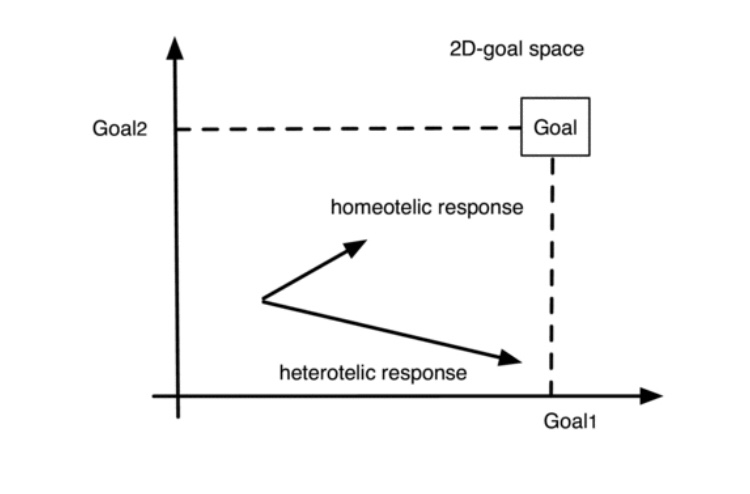
All actions are homeotelic or heterotelic.

Good business strategy is homeotelic, single actions work toward multiple goals. Aldi has a good strategy. Dominos has a good strategy. Trinny of London has a good strategy.

Good strategy balances what’s made, how it’s delivered, and how it’s communicated: product, placement, promotion. Aldi uses private labels to control the product, small footprint stores to sell from, and focused promotion. Those fit. 

What does a business do well and what do customers want well done? Organizations answer these questions and the best organizations do so in a homeotelic way. This is an example from my local pickleball store: 

For today and the next two days only (ends Wednesday 9/7)…we are offering a special Labor Day 20% off sale on Bags & Apparel and 10% off all paddles (and receive a FREE Paddle Cover with your paddle purchase).

Go to our website by CLICKING HERE.

For Bags and Apparel, use discount code LaborDay20 at checkout

For Paddles, use discount code LaborDay10 at checkout and receive a FREE paddle cover too.

NOTE:  You can only use one discount code at a time, so if you are buying bags/apparel and a paddle you will need to place two (2) separate orders.

If you know what you want and want to go directly to the page, here’s the quick (direct) links:

Bags > CLICK HERE

Apparel > CLICK HERE

Paddles > CLICK HERE

Any questions, email 

The good: Scarcity drives urgency and attracts attention. For the I’ve been thinking about this group, this email drove sales. The free paddle cover is good too. 

The bad: (1) Discounts are heterotelic: more sales less brand value. All value is perceived value and premium products – like these paddles – shouldn’t be discounted. Price is a proxy for value. Here it is lowered. Freebies, gifts, ‘two-for-the-price-of-one’ maintain the core product value and have other benefits – see below. 

(2) Why buy? Here customer language shines. Buy a bag and we will send three balls because you’ll have the room. Or, when you miss-hit at the end of the day your paddle is too heavy. Or, summer is winding down, get a long-sleeve shirt while they last. There’s nothing in this copy other than CLICK HERE TO TRANSACT NOW. As outsiders we don’t know the customer’s language, but a business owner should. 

(3) Hats, shirts, and towels retail for thirty dollars. These lightweight packable items are perfect for shipping, have good margins, and are an easier part of profitability. But they are also a form of CAC. Reducing profitability per item raises the revenue, a homeotelic approach. People pay to be walking billboards. These items are great thank you gifts, with the purchase of a premium paddle. Gifts also seed new product lines and delight consumers.

The confusing: CLICK HERE. Multiple discount codes. 

Labor Day Sales (like this) raise revenue but reduce brand value. Labor Day Sales are superficial and reactionary. Labor Day Sales are heterotelic, not homeotelic. Labor Day Sales should follow, not precede, Alchemy

Here’s an excellent example, received around the same time. 

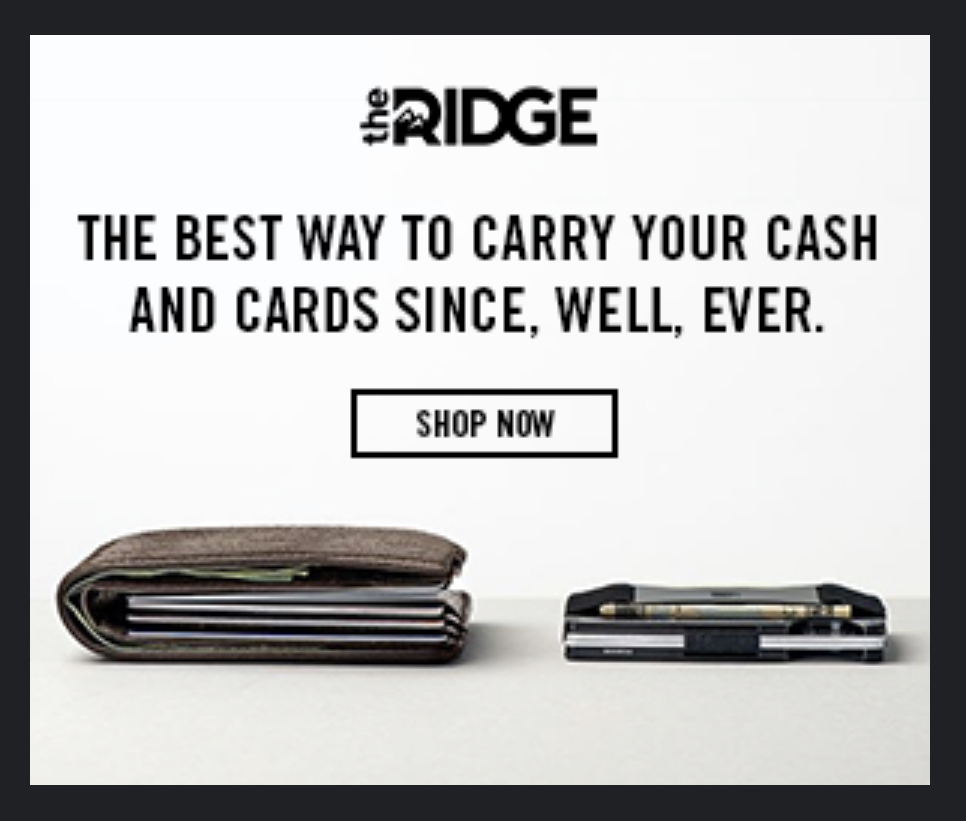
Ridge speaks the customer’s language visually: my wallet is too fat. Why buy? Does it carry my cards and cash? Oh, it does. It’s the best way ever. Not ‘best’ via test, but ‘best’ is expert language, like someone judged wallets and this is indeed the best. Don’t CLICK HERE like a child, instead shop our wares like an adult. There’s no sale, but there are premium products (good, better, best) and because value is relative, ‘good’ appears discounted to ‘better’ and ‘best’.

Outsider commentary is a challenge. It’s another perspective, unaffected by sunk costs, and angled away from the status quo. However it’s also ignorant of successes, goals, and pesky problems like ‘oops we made too much’. Broadly sales are bad unless they are baked into a business’s strategy (like Domino’s Pizza).

Homeotelic, introduced here, applies everywhere. If someone learns to cook at home they save money, eat healthier, and gain skills. If someone joins a gym they meet new people and get healthier.

Hello Fresh Copy

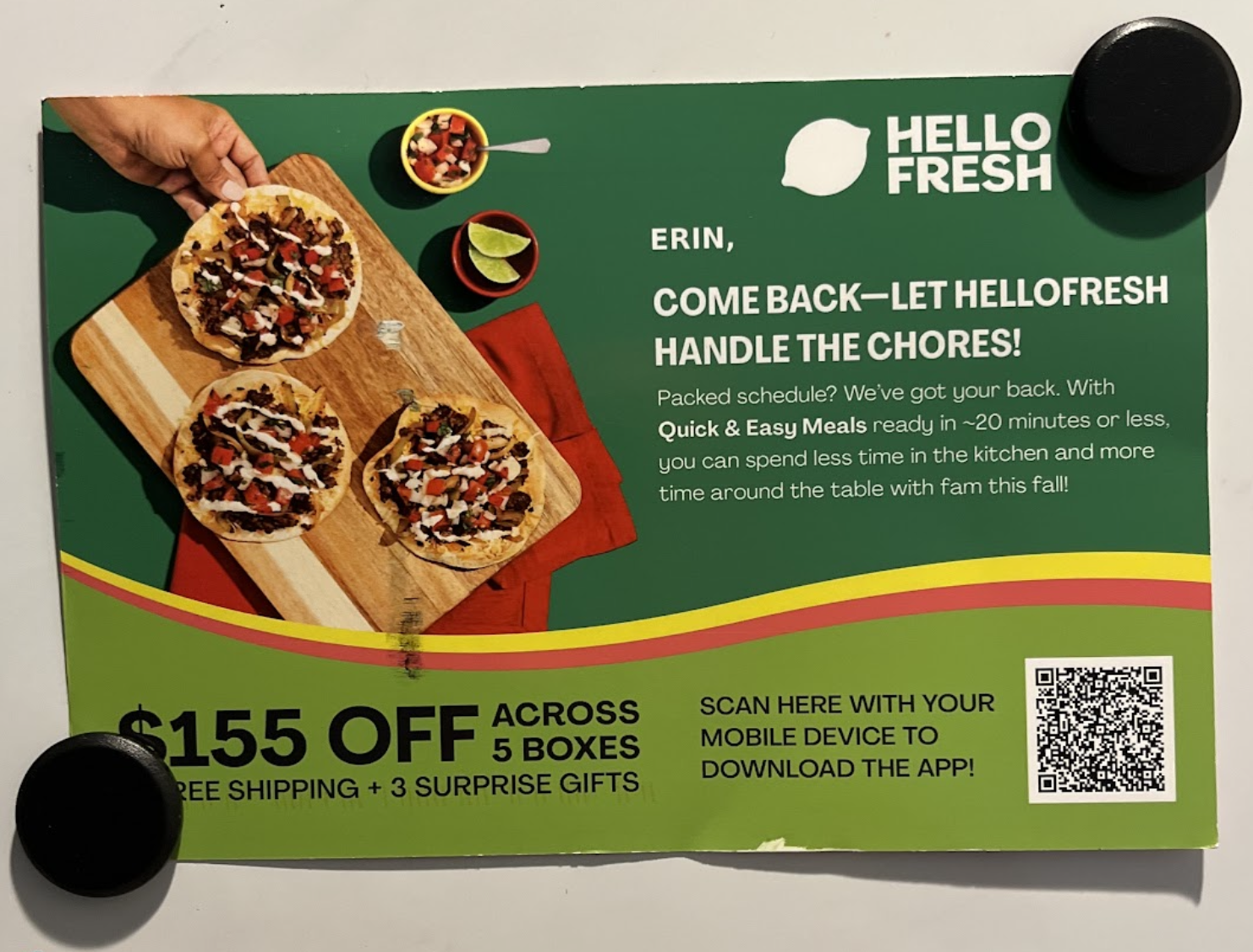
We were HelloFresh customers. The food is good enough. The recipes are simple enough. The logistics are easy enough. Is the copywriting convincing enough?

(Received August, 2022)

The good. This card has two goals: get our attention and convey ease. The ‘$155 OFF’ attracts attention and interest. The ‘3 surprise gifts’ is good too. Gifts are better than discounts because they are a CAC Trojan Horse, seed additional purchases, and delight the customer. Businesses undervalue gift giving. 

The bad. ‘Packed schedule?’ & ‘We’ve got your back.’ & ‘…more time around the table with fam this fall!’ Terrible copy. There’s no story. 

Persuasion is about ease. One form of ease is the story we tell ourselves. I’m a busy mom/dad and about to be busier because school is back/holidays are coming/ summer camps and vacations and need help to make food that is cheap/quick/tasty/easy. Help me tell myself this story. It’s like mad libs.

One idea:

Erin, back to school? We’ve got your supplies. With Quick & Easy Meals ready in ~20 minutes or less, you can spend less time in the kitchen and more time eating your favorite foods with your favorite people. 

Or: 

Erin, back to school, back to the office, back to the store for more folders, then candy, then gifts. With Quick & Easy Meals ready in ~20 minutes or less, you can spend more time at home with the family than at the store getting their groceries. 

Or:

Erin, what’s for dinner tonight? Something Quick, Easy, and Healthy for the whole family? Remember how easy it was to have everything delivered, prepared, and ready to go? Come back to Hello Fresh and save $155.

Surprisingly there’s no indication that we were customers. People are customers for a reason. HelloFresh must find the JTBD and use that language for good copywriting.

The interesting. That QR code. Tools work best in the right conditions. Restaurant menus could be great for QR codes. It’s interesting here. Getting the app must be a point of friction, this may solve that. 

Good copywriting begins with curiosity. Businesses must talk to customers, identify their priorities, create prototypes, get feedback, and work out the kinks. Then they can use the customer’s words to present a solution. 

It’s hard to crique copywriting without knowing the goal. Maybe this works. Maybe the ‘$155’ is the most important thing. Maybe – but maybe not. 

Remember Rule #27:You can’t sell anybody anything, they must discover they want it.

Sweet words

Successful copywriting uses the customer’s language. Find out what, how, when, and why the customer thinks – and the words they use.

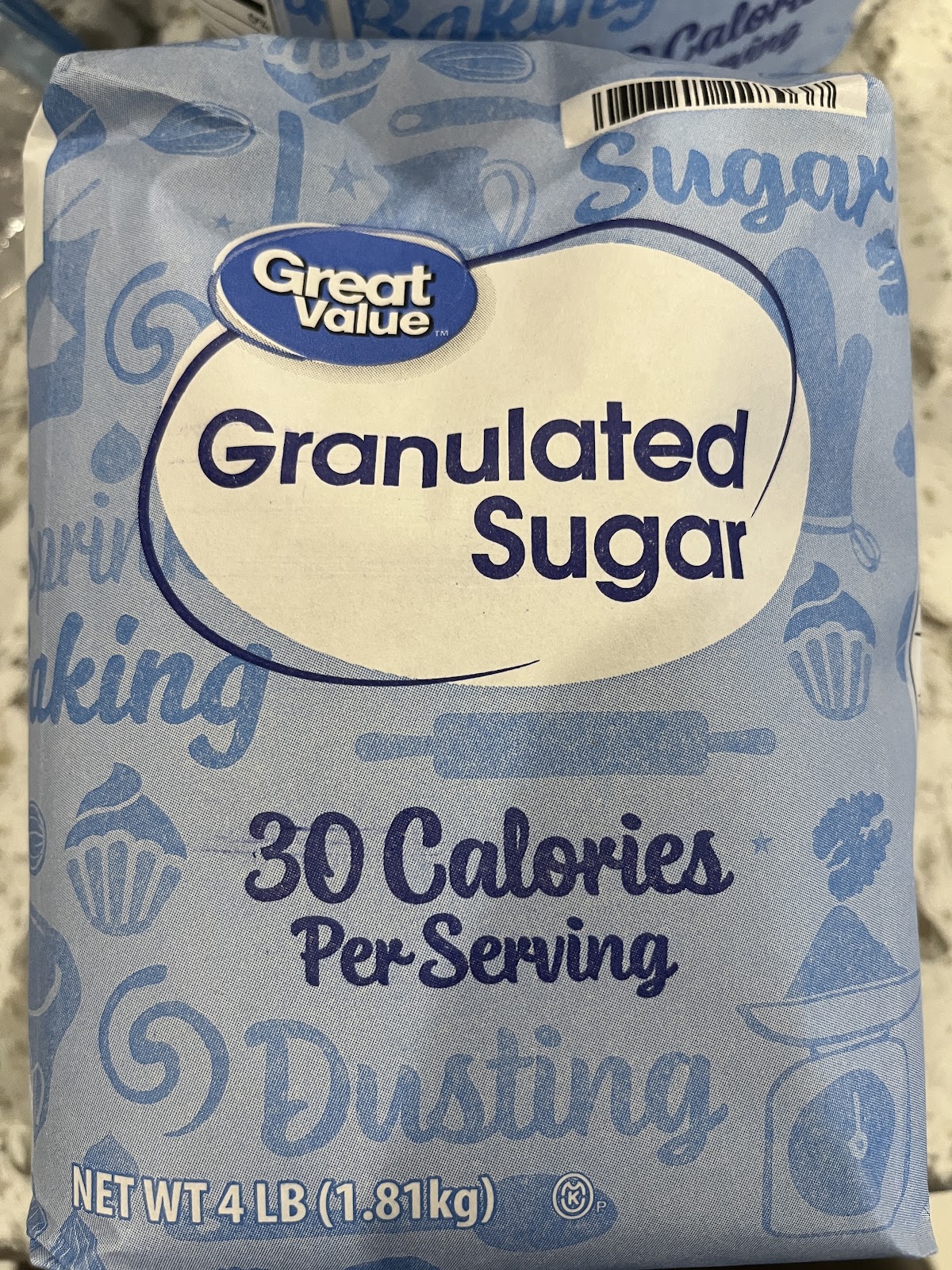
One accent of customer language is certainty. We dislike not knowing. Not knowing feels risky. It’s why this bag of sugar is so sweet: 30 calories per serving. Diets are trends. Eat this or that? Now or later? Are health bars actually healthy? Is sugar bad for me? It’s too much! But this simple bag of sugar puts it in the customer language: calories, and not that many. 

Road construction is another example, only inverted. Fines doubled when workers present. I don’t know how much, but I certainly don’t want it to be doubled! In this case, the natural dislike of the unknown is magnified and aids in the messaging to slow down. 

This hook helped Jaws (1975) set the mold for summer blockbusters. It was a difficult movie to make, in part due to “that sonofabitchin’ bastard rig” (the shark) which kept breaking down. The footage was such a mess that during editing Steven Spielberg used barren shots of the water along with John Williams’ score. That was great because rather than seeing the shark, audiences imagined the shark, a worse fate. 

Organizations can remove or introduce anxiety in their customer communications. How much depends. On what? On what the customer thinks. 

We talked about Jaws’ role in the evolution of the movie business model in this post, Batman BATNA. Contact too: