Kelly and Crypto

There’s an idea, it’s a formula but really it’s an idea, in gambling called the Kelly Criterion. Broadly, it suggests to act in proportion to edge. Bet big when you have a big advantage. Card counters, like those in the book Bringing Down the House followed this idea.

While Kelly is math, like being Bayesian, it works as a general idea too. Most people never follow the formulaic ‘full Kelly’, rather they bet half or ‘quarter Kelly’ because there’s no way to truly know an edge. So, how exactly does it work as just an idea?

“I’ve had a ton of friends who thought Solana is the future, bought in at a couple of dollars, waited eight months and nothing happened and sold everything. Then, all of a sudden, boom Solana took off. The rapid climb is where a majority of the value capture occurred. You have to build a pretty serious conviction around something and have it be small enough dollars. You can’t say: this didn’t work I’m going to move into the next thing. You have to be able to say: I still have conviction here, I’m going to leave this be.” – Kevin Rose, September 2021

Rose practically uses the Kelly language! Rather than edge and bet he says conviction and small-enough-dollars.

This cost to benefit ratio approach is a nice way to frame decisions. While Kelly started in gambling and moved afield, anything about risk and reward, travel budgets for instance, works.

Most systems have lowish cadences: closer to construction than technology, and the reward portion takes time to compound. When that’s the case, it may help to think about how much conviction we have and how long the cycle may take.


This podcast hit my feed September 19, the same day my wife asked me to buy some Doge Coin. ‘Why’ I asked. I’d convinced her to dollar-cost-average into Bitcoin and Ethereum, but it took a fair bit of convincing. ‘I just want some’ she explained. shrug

The JTBD of FIRE

Sometimes the best way to see a thing is to reframe the situation. We’ve looked at FIRE (financial independence retire early) a couple of times: the FIRE Reddit survey and homeotelic responses. But, what’s the job to be done of FIRE?

When asked what’s worth spending money on, Mr. Money Mustache suggests two further questions:

“So instead of thinking about what’s worth spending money on, I encourage people to break it down more like this: What things really make me happy in life, and which things bring me stress or unhappiness? What is the most effective and least costly way to cut out some of that stress and bring more of the happiness into my typical week?” – Pete Adeney, Outside Magazine, July 2021

What’s the job of money? One way to figure that out is answer the happiness and stress aspects of the question. And this is the job to be done for financial independence retire early – more happy less stress.

This is more tricky than it sounds. FIRE has a number, traditionally 25x expenses. We like numbers like this. Numbers like this offer comfort in their certainty. But numbers don’t answer hard questions, questions about being stressed and being happy.

In an interview with the Financial Times, Adeney is asked to coach two FIRE strivers. Should they quit their teaching careers to make more money (with more stress). Adeney flips the question around. Rather than viewing it as a money question, he frames it as an enjoyment question. Like denominating work trips in time rather than dollars, denominating work in quality rather than quantity (of dollars) shifts the question. The guests like their jobs of the moment, and that Adeney says, is part of what they’re working for anyway.

Financial goals are proxies for something else, the job to be done. And we’ve collected many ways to hire for all kinds of jobs.

Here’s the JTBD Twitter tread. Here’s a (short) JTBD book I wrote.

Roulette with Bobby

A friend wants to pay off his mortgage in the next three years. He’s got two young kids. He’s younger than me. Meanwhile, I refinanced into a new thirty year mortgage. If he pays off his home debt it will be quite an accomplishment.

Bobby’s plan is different from mine. But I don’t know that he’s wrong. Personal finance is more like cooking than baking. We looked at, for instance, a 15 or 30 year mortgage?

In a way Bobby and I are at the roulette wheel. He’s bet on black. I’ve bet on red. One of us will be right, but we can’t know ahead of time. Most of personal finance is reducing the range of choices to just good options. It feels like we’ve both done that.

The analogy of roulette also works because rather than red or black, the ball could land on green. Despite planning, we both could be wrong.

It’s also important that we have designed our systems. Sometimes we think knowledge leads to action, but around here we know that design rules the day. Bobby has a plan to pay off his mortgage early – that plan is the design. Our family has automatics contributions – that’s our design.

“If someone says financial literacy at a party I basically give them a thirty minute lecture. The idea is that in a perfect world, if someone is taught about FICO and the impact on their life, they would take actions to improve their FICO score. This is just not what researchers have found – and it’s really robust…the punchline is that environment matters.” – Kristen Berman, All the Hacks, October 2021

Roulette, as an investment, is not in the range-of-good-choices. But as an analogy it fits nice. Prepare and pick from prime possibilities but remember the ball might not bounce any of those way.


There’s a lot about design here. It’s one of my 62 favorite ideas.

Da Moon

Via Reddit.

“My parents are everything to me. They’ve worked their asses off to raise me and my two little siblings, starting with nothing as immigrants. They’re in the restaurant business and the pandemic forced them to burn through a large chunk of their savings, and they stress out over finances every single day. My dad always told me one day he’ll retire once the house is paid off, and that day is finally here.”

The OP dollar cost averaged their way to six Bitcoin for an estimated $240,000. “Thank you bitcoin community for all the memes and bullshit TA threads. I’ve reached my moon.”

We denominate freedom in money (the number) and sometimes get caught in this metric. But personal financial success seems to be mostly choosing from the good options, having good luck, and remembering da moon. Inverted: it’s not getting caught up with the Jones family.

With the 2020/2021 run it’s been a treat to see the Reddit stories about paying down debts, hitting marks, and people cashing out.

There’s certainly luck, but for OP there’s also brains and heart.

OP: Original Poster

Made up start up: The Financial Game

Edit: this was drafted in late 2019.

I loved the movie The Game. The premise was that for his birthday, Michael Douglas’s character was ‘attacked’ in a real life adventure. It was part thrill, part horror. I can’t even remember how much of it was real.

‘What is real’ is a common premise in my favorite movies.

Part-of-the-reason I like it is because it holds a truth. Without skin-in-the-game we really don’t know what we would do. There are our stated and revealed preferences. There are our human biases. There are the ways something is presented.

It’s a real quagmire and something Sallie Krawcheck noted when she spoke on The Long View podcast:

“Ya’ll probably know this as well or better than I do, but when you ask someone what their risk tolerance is, nobody knows it until they go through an ’07 or ’08. They just don’t. Let’s call a spade a spade. But we answer it. Men will answer it and women will go, I need to figure out what it is.”

Sallie Krawcheck

According to Daniel Kahneman, we’re answering an easier question. Instead of what is my risk tolerance we probably answer something like how do I feel today or which column of returns looks good? We do the same thing when choosing college.

Here’s the pitch: Taking a cue from David Fincher and Krawcheck, we’ll create a company that coaches financial advisors on how to stage Doomsday Days with their clients. Like for Douglas, the clients won’t know when it will happen (and we’ll hide this feature in a bunch of legalese).

The plan would be to make up financial statements that mimicked actual downturns; 1953, 1981, 2008, etc. Clients would come in for their regular meetings, be presented with a fictionalized loss for twenty minutes, and then have a debrief session. It’s the financial equivalent of a false positve lung cancer diagnosis.

During the debrief the advisor could talk about real feelings of loss, of risk, and pain. Then, together, work out a new plan.

As advisors are already busy, the business would sell them a script. They could choose a level of pain, and we would provide the portfolio forms (printed on very formal looking paper) as well as suggestions on handling the psychology of it. As an upset we could offer “Confederate Coordination” as we called the wife and explained the plan to her. Yes, it would have to be, the wife.

FIRE Figures

While surveys are sometimes off, they can be helpful. Based on the data from 1380 (ninety percent men) FIRE participants, via Reddit, here are a few findings. Though all we can say for certain might be that men who follow FIRE fill out Reddit surveys.

  • Average salary household salary is $143,500, median is $104,000.
  • Average mortgage is $94,000, median is zero.
  • Average investment portfolio (everything) is $380,000, median is $100,000.
  • Average savings rate is 46%, median is 50%.

Part-of-the-reason that personal finance is difficult is the lack of experience making large purchases. A wise friend once told me how she counseled her her younger colleagues about bonuses: avoid the three-r’s, rims, rocks, and racks. Morgan Housel offers the same advice noting how homes, educations, and vehicles make up a huge chunk of a person’s budget.

The FIRE folks figured this out. Whereas the national average (and national suggestion) spend on homes is about about 29%, FIRE folks only spend about 10% on housing.

There are a lot of ways to be efficient. Make a left across traffic to buy cheaper gas. Stock up on groceries during a sale. But these are often regular and salient. However these “daily lattes” really don’t matter.

If someone spends less on the big (non-salient cost) things, they’ll probably be fine financially. 

Source: Google Docs.

Button Skills

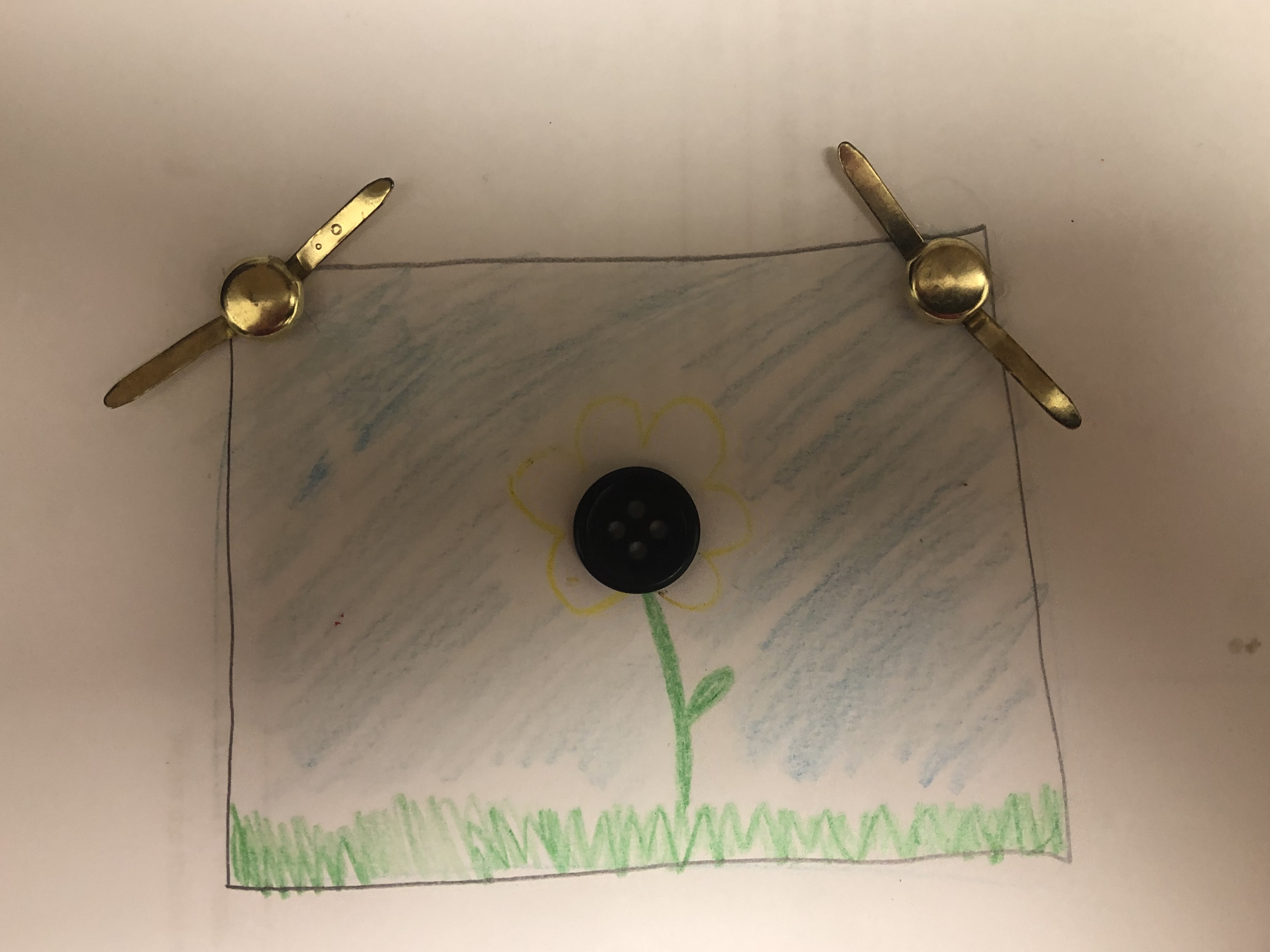
IMG_5495.jpeg

My daughter made this.

The button popped off my pants. Not due to quarantine snacking so much as use. These shorts are so old that the faded parts are a different hue from the non-faded portions.

I found the button separated from the shorts in the bottom of our washing machine. I put both aside for a day and when I came back with needle and thread the button was gone. Now the button lives on as art.

We have a button jar and I found a grey one, instead of blue, and sewed it on the shorts. I’m not great at sewing, and my stitching is uneven, but it’s functional. Attaching the button took the shorts from waste to my waist. The small act of attaching the button made them useful.

A lot of life is probably like this.

There is some range of easy-to-acquire skills that are like sewing a button. Being able to save the function, if not the form, is helpful.

No code. Being able to build small recipes for scripts using a service like IFTTT.

Productivity. Setting up folders, filters, and canned responses in emails.

Cooking. Knowing how to make a few healthy, inexpensive, sustainable meals.

Home repair. Access to a basic set of tools and the understanding of how to use them

Personal health. Maintaining a body type that matches a lifestyle.

Personal wealth. Spending, saving, investing.

Interviewing. Listen to people and hear what they say.

When my daughters were little kids, the most common advice was to read to them. This was binary advice. Or, Just Do It. We did a lot of that. Just reading is probably a button skill too.

Though I learned to sew face masks, I can’t imagine learning to sew clothes. But knowing a little bit can certainly go a long way.

Thanks for reading, and don’t tell my wife these shorts were saved—again.

The POV40IQ email list has been restarted. If you’d like a short email each weekday you can sign up and read them. The idea is that a change in point-of-view is worth more than forty-IQ when solving a problem.

Precise Emergency Funds or Accurate Emergency Funds

The rule of thumb for an emergency fund is three to six months of expenses. The specifics depend on a host of  factors like fixed costs, number of incomes, and type of job. In the Need for Speed post we suggested how Variance Response Time might affect someone’s budget. The theory was that an excellent salesperson would have a faster and higher quality response (i.e. new job like the old job) faster than a teacher.

What was implicit in that post was the idea of being precise or being accurate.

At the end of March 2020 during the coronavirus pandemic I compared our family’s emergency fund to our previous month of expenses. Aside from travel for work and weekend activities, our monthly spending was flat.

Dollars devoted to dining out were diverted to stocking up. Weekend activities become home activities.

How long would this ‘as-is’ lifestyle last using our emergency fund?  The good news was that it would last five months.

But that begat more questions. If this were a true emergency how long could we last? Cutting out the extra expenses like Netflix, home repairs and maintenance, and Target and our runway ran up to eight months.

Okay, but how long could we really go? What if we tapped our home equity, liquidated a 401k (and paid the 35% penalty), and sold one car? That would mean things were really bad but we could still survive for a long, long time. A room, a roof, and rack in oven goes a long way in those conditions.

These calculations were all in a spreadsheet and so the numbers were nice and precise. And probably wrong. Here’s how James Allworth put this idea on Exponent 184: 

“Something I learned early on in consulting was when clients came to you with problems you needed to model them in some way or another and I remember, early on in my career, being really proud about building very sophisticated models with different variables. It could handle all kinds of things.

“One of the partners came along and started to use it, and he laughed. He’s said, ‘James, one thing that you really need to understand if you want to be effective in situations, especially ambiguous situations, is understanding the difference in precision and accuracy.”

That wasn’t in my spreadsheet. Our ‘needed’ 401k was unlikely to be worth as much as it is today, reduced as it is. That car I might sell couldn’t be given away. If things were that bad there were would be so many more sellers than buyers.

At the 2009 annual meeting, Warren Buffett was asked how he calculates value if he doesn’t use a discounted cash flow.

Warren whimsically recalls Aesop’s fable about a bird in the hand being worth two in the bush. Investing, Buffett said, is all about the exchange of the bird in the hand, “But the real question is, how many birds are in the bush? You know you’re laying out a bird today, the dollar. And then how many birds are in the bush? How sure are you they’re in the bush? How many birds are in other bushes? What’s the discount rate?”

He goes on to say, “we do not sit down with spreadsheets and do all that sort of thing. We just see something that obviously is better than anything else around, that we understand. And then we act.”

Charlie anything to add? Yes, Munger says, “I’d say some of the worst business decisions I’ve ever seen are those that are done with a lot of formal projections and discounts back.”

For an emergency fund then, more is better but anything is good. With so much uncertainty there are good ways to gamble. Ian Cassel told Patrick O’Shaughnessy that he tries to keep his fixed costs low and his variable costs variable. If someone has saved and can scale their expenses, then they have an emergency fund. Too much spreadsheeting leads to numbing numbers.

We’ve gotten quite creative with making breakfast.

Median and Average Meanings

There’s a story about Bill Gates’s wealth and height you’ve probably heard. If not, let’s quickly share it here. If Gates were to walk into a room of you and twenty-five friends, the difference in average height and median height would be small.

However, the difference in average income and median income would be large. Gates’s wealth raises the mean because it’s relatively ginormous. Even in a room of millionaires, Gate’s presence changes the average from one-million to four-billion. That’s a lot.

This story is helpful to keep in mind because averages hide nuances.

In 2016, the average student loan debt was $37,000. However, the median figure was $17,000 and one-fourth of all borrowers owed less than $7,000. Part-of-the-reason the average is so far from the median is because of graduate school, one-in-four post-graduation debt-holders had more than one-hundred thousand dollars in debt. My wife attended medical school, and I can attest to the amount.

This median approach might paint a rosier picture.

Retirement accounts show the same point, only in the opposite direction. The average balances is $100K whereas the median is $24K.

“Often an average is such an oversimplification that it is worse than useless.”

How to Lie

Average can become an If/Then word. If the average is presented, then we can attempt to find the median as well. Bill Gates will be our patron saint here. Imagine him, staning with a Diet Coke in hand, reminding you to find the median too.

Another fun part of you and twenty-five friends is “the birthday bet”.

Made up Start up: FinLit Deposit

Photo by Pixabay on Pexels.com

No one is happy with financial literacy. Maybe it’s the questions researchers ask, maybe it’s a generational thing, maybe it’s soft skills. It’s probably a lot of things.

Part-of-the-reason we don’t have a great idea is because we don’t have a great way to test it. A lot of FinLit research follows these steps:

  1. A natural experiment occurs. Sometimes it’s in time. One cohort has no mandate, another has the mandate. Alternatively it could be a law in one state, but not a neighbor.
  2. Students get some combination of classes, videos, etc. To me the treatment seems weak, but you be the judge.
  3. Students answer questions about what they learned.

This structure suffers because it measures what’s easy rather than what’s meaningful. What if we reversed this? What if instead of prioritizing measurement, we prioritizied meaningfulness?

For our start up FinLit Deposit, we’d give every student $100 the first week. If they have at least $100 in the account each subsequent week, they get $25 more. If the account dips below that amount, no deposit. If it recovers, the deposits begin again.

This systems offers students real choices with real money. Save or spend. Invest or rest. Investors often note that paper trading is not the same emotional ballpark as real money. That should apply here too.

We could partially fund this with a grant that studies decision making. What if some kids got physical bills–good day Mr. Franklin- and others direct deposit. Dollars to doughnuts, I’d wager that the mentally accounting will differ.

If grants aren’t available to kickstart this start-up, let’s get some public money. Athletic scholarship total almost $3B. Academic and need scholarships are in the tens of billions. There’s already (!!) $630M spent on financial education. That’s already $200 for each senior. What’s wild is we already do these these kinds of things.

Young people tend to not be great decision makers. So what. No one is fully optimal. If our hypothetical students spend their semester of savings on a concert is that much different than their parents tax-refund choices?

The only problem I see in this is how FinLit Deposit actually makes money. Maybe some financial literacy program actually teaches that.

Join 994 other subscribers

Update 2/6/2020