Manoj Bhargava

Supported by Greenhaven Road Capital, finding value off the beaten path.

The How I Built This podcast continues to post good, crisp, entertaining, and informational episodes and that includes the one with Manoj Bhargava, founder of Five Hour Energy.

Quick anecdote: After my 2016 triathlon I grabbed a Five Hour Energy drink in the post-race tent. I put in the refrigerator and forgot about it. Two months ago I found it behind our jar of bacon fat and gave it a try. I felt amazing. I also realized that there is a component of addiction I know nothing about.

Let’s not bury the lede. Bhargava said entrepreneurs need to do three things:

  1. “Use your common sense. Do not use MBA-speak.”  (He didn’t mention if he’s read Taleb).
  2. “Be totally determined. I hate the work passionate because you get hit in the face a few times and passion seems to fade. Determination means your face hits the floor 20 times and you get up 21 times. You get up no matter what happens.”
  3. “A sense of urgency. Do it now, don’t wait.”

320px-manoj_bhargavaOne thing that made this interview so enjoyable was that Bhargava didn’t tell that many stories. He explained things. When host Guy Raz asks about a business turnaround Bhargava explains, “it’s not rocket science. If you use common sense you’re in great shape. If you use experts you’re in so much trouble.” A moment later he added, “experts are great for telling you what you shouldn’t do.”

That’s it, why make it more complicated?

My guess is that we complicate because knowing and doing are different things. How do I go from knowing to doing? Can’t an MBA help me? Maybe. You could also just try something.

Brent Beshore said the secret to business is to experiment and do more of what works and less of what doesn’t. That’s Bhargava’s model too. After his first year at Princeton, he realized he didn’t need college. Not that he knew everything, he didn’t. He just didn’t need what they were teaching. He went to India and became a monk instead. “That was my true education. It was an education on what is life and how to live and how to live is so fundamental because it affects how you do everything.”

Bhargava returned from India and turned around a plastics company. Then he created an invention company to look for his next thing. At a national food expo, he tasted an energy drink. He couldn’t license it so he tried to make it. The first batch “tasted awful” but Bhargava kept tinkering and tasting.

Bhargava sold it in GNC. Jason Calacanis said on the Dorm Room Tycoon podcast that if you don’t have word of mouth marketing you haven’t made a great product. After one month of sales, Five Hour Energy sold 10,000 units.

He also settled on the strategy of offering it as a shot. Why? For starters, it would have been too damn hard to get space in the cooler section along with the likes of Coca-Cola and Budweiser. Second, why include water?

Bhargava differentiated Five Hour Energy and built a moat around his business. That moat was assaulted when his market share went from 93% to 67% and he said 300+ competitors entered the market. The moat held because none of the knockoffs could knock him off. “The one thing they all forgot,” said Bhargava, “was that you have to have a great product.” It was ironic that a Buffett company (Coca-Cola) was repelled by the very moat mechanism that Buffett likes about Coke. Kevin O’Leary asks this question on the TV show Shark Tank.

giphy (3).gif

And, of course, it helps to get lucky. Bhargava said:

“Business is one of those things where you have to get everything right and then get lucky. Anyone who says luck is not part of it is just arrogant.”

The two-jar model is how Michael Mauboussin taught me about comparing luck and skill. We’ll only reiterate here that anything you can control is skill. That means keeping a low overhead, building good relationships, talking to customers, and being curious are all up to you. Oh, and so is persistance.

If you can persist then you might have something. Bhargava says you have to resist the “heat of failure” and if you fall down, “so what, just get up and do it again.” On a previous episode of HIBT, Nolan Bushnell (Atari, Chuck E Cheese) compared business to a chess board. If you lose one game just set up the pieces and play again. In fact, this should be your default mindset. Ray Kroc said that business isn’t like a painting. A painting you put on the final touches, hang it over the fireplace, and enjoy. A business requires a lot of work.

It helps then if you like what you do.

Thanks for reading.


Complacency and Cheeseburgers

Supported by Greenhaven Road Capital, finding value off the beaten path.

This post will include notes on both Tyler Cowen’s The Complacent Class and the (burger) books In-N-Out and Grinding it Out (McDonald’s). Reading them sequentially (accidentally) was a juxtaposition.

Ready?

Cowen’s book is good, fans of Marginal Revolution or the podcast Conversations with Tyler will like it. His thesis is that things are pretty good for a lot of people and they want to keep it that way. This manifests as self-segregation and less risk taking.

Not all this segregation is obvious or explicit. For example, Cowen writes that colleges are often places where a form of self-segregation happens. Reading this jogged a memory of walking across campus and noting the unofficial school uniform; white Apple earbuds, black Northface jacket, and brown Ugg boots (It wasn’t only me that noticed this).

I hadn’t considered the many ways we form groups but I do know that groups affect how we solve problems. One theme of this blog is that new things (non-complacency) come from people who have one foot in the old and one in the new. Milton Hershey moved from caramel to chocolate. The Wright brothers were inventors who dabbled in aviation, not aviators who invented. Phil Knight was an accountant and runner.

To come up with new things we need new ideas and those often come from new people.

“To put it bluntly, most successful social structures are pretty good at re- producing themselves.” – Tyler Cowen

Cowen also writes that we’re innovating less and “for all the talk about Silicon Valley, we are less a start- up nation than before.” There’s availability bias in technology news. Chris Dixon said that many people are surprised at the small scope of venture capital.  Even the start-ups we recognize as successes like Harry’s or Instagram, are small beans. Those things have made our lives better, sure, but by how much? Technology hasn’t – yet – been used to solve big problems of housing, healthcare, or education.

We explore (flaneuring) less too. Cowen calls this “matching” and notes the options for; dating, dog adoption, and bike/car riding. This isn’t all bad Cowen notes, but it does mean future outcomes are based on past experiences.

In The Inevitable, Kevin Kelly praises matching. “Every year I own less of what I use.” Kelly calls this a switch from ownership to access. This is thanks to matching. I asked on Twitter about this and there were many more instances of matching that I realized:

This tool – like any tool – involves trade-offs. Amazon’s book matching is okay but imperfect. I try to find other good sources like this: http://investorfieldguide.com/bookclub/ .

I also wondered how much matching effects exploration. Lyft rides make planning a trip one bit easier. I’ll get there and figure it out.

Cowen is optimistic in general, but not necessarily for you.

Part 2: Hamburgers

in-n-out

There was much less complacency in the early part of the twentieth century. Harry Synder’s father lived in Amsterdam, Seatle, and California before settling permanently. Unlike today – where, Cowen notes, there is less migration – Synder had nothing to protect so he moved. This was the case for Kroc too. In the 1920’s he left a decent job selling paper cups in Chicago to play piano at a Miami club owned by a rumrunner. Why would Kroc leave a good job for an adventure? “I was driven by ambition. I hated to be idle for a minute,” he writes. Kroc was a traveling salesman and when he wanted to learn more about McDonald’s he went to California from Chicago and watched the restaurant from across the street.

“A new city or state forces people to rethink their assumptions about the best ways to do things and about what their lives really should consist of.” – Tyler Cowen

It could be that Kroc and Snyder were non-complacent because it was a good time for it. After World War 2 the United States was ripe for growth. Cowen calls this mindset “aggressive dreaming.” What are the conditions?

  • The United States is the last industrial nation standing with a manufacturing base that’s no longer making tanks.
  • Women have entered the workplace, for good.
  • Eisenhower builds out the interstate system after seeing the Autobahn.
  • The GI Bill subsidizes home ownership and college.
  • Babies begin to boom.

Daniel Kahneman said that success is a mix of luck and skill and great success is a mix of great luck and skill. This was true for Synder and Kroc. The post-war period was the perfect situation for the hamburger drive-thru (especially in southern California). Synder and Kroc were lucky.

But, the two-jar model reminds us to consider the skill involved too. Synder and Kroc excelled here too.  Stacy Pearlman writes that while Esther Snyder was religious, “Harry’s faith was in hard work.” Kroc put it this way, “If you are running a hundred-yard dash you aren’t thinking about God while you’re running. Not if you hope to win. Your mind is on the race. My race is McDonald’s.” Both men built up a deep understanding of their niches, experimented, and expanded. Neither was complacent.

Our story starts to change in 1973. The oil embargo shakes America out of “aggressive dreaming.” By this point, both McDonalds (nationwide) and In-N-Out (California) are entrenched companies. They have moats thanks to brand and economies of scale. Both restaurants entrench further with ‘Universities.’ This is the start of stasis. We have the companies that Warren Buffett and Charlie Munger look for, ones that can’t be upended by any amount of money.

Conclusions.

If you want to understand the entrepreneur, wrote Yvon Chouinard, study the juvenile delinquent. That’s a person who says, this is bullshit, I’m doing things my own way.

Ray Kroc wasn’t a juvenile delinquent but had the attitude. Kroc, like Buffett, Munger, and John Boyd wasn’t the most present husband or father.  It’s hard to find balance said Stephanie Linnartz, “My family is first, my job is second and that doesn’t leave a lot of roomful hobbies and book clubs.”

Non-complacents believe that things need to change and that takes time and energy. Maybe we’re too distracted by Twitter?

I don’t fully get Cowen’s book because I’m part of the things-don’t-look-that-bad-to-me group. But I do get that stasis is bad for the mind, body, relationships, or culture at any scale.

“Apparently peaceful environments are often not so peaceful once you scratch the surface.” – Tyler Cowen

We need some volatility in our lives. It shakes out debris. Greg Ip wrote about the risks when we avoid or control volatility. Chris Cole talked about it too. It’s also a big idea behind Nassim Taleb’s work.

My kids know not to say certain words. One is the ‘b’ word. Bored. After reading Cowen I wonder if I should add a ‘c’ word too, complacent. My daughters probably won’t understand that, the oldest is nine. Maybe it should be a word for me.

Thank you for reading. If you want to see all the books I suggest you can sign up here: http://eepurl.com/bgRZOX.

Jeffrey Sachs

Supported by Greenhaven Road Capital, finding value off the beaten path.

Jeffrey Sachs talked with Barry Ritholtz on the Blumberg Masters in Business podcast. The entire interview was good and these will be a shorter set of notes in a non-list format. If you like the less is more approach let me know.

Sachs and Ritholtz note that there’s more to life than money, duh. As a platitude we understand this, but they wisely point out that we still use money for a hell of a lot of stuff. Gross domestic product, for example, is one form of measurement we use even though we know it’s not the only thing there is.

Another example is tax cuts as incentives for high net worth individuals. Why doesn’t this work? To use the words of Charley Ellis, people won’t stop working and earning because, “it’s fascinating, it’s really interesting, it’s very enjoyable and you don’t have to stop at 35…I know a couple of people over 100 who are still involved in active management…The rewards are really quite substantial.” There are are many ways to create good Incentives and they often involve more than money.

One inventive incentive solution the duo circle in the episode is the relative nature of incentives. To rephrase things, ‘Would you rather earn a lot absolutely or a lot relatively?’. Nassim Taleb writes that too many millionaires next door will shadow how you view yourself.

The expression “marshmallow test” is shared a few times so Ritholtz or Sachs must have read The Marshmallow Test by Walter Mischel. The book summarizes Mischel’s career and expands on other psychology books about habits and willpower. The whole book is good, but if you want one trick today it’s this: make your deferred gratification goals ‘hot’ and your current temptations ‘cool.’ How?

  • Make thoughts salient to heat them up. Imagine the results are today or tomorrow. Create a positive association with the future you.
  • To avoid temptations cool your thoughts. Create a mental or physical distance between you and temptation. Adopt The Third Stance and imagine what an impartial party would think.

See also: ‘Would Steven Pressfield pass the Marshmallow Test?

Ritholtz suggested that ESG funds may have better results because the companies that go that far probably get the basics rights. I like that and think I’ll add it to our list of Signals. When he said it I wondered how much the personality of the CEO reflects an organization’s culture. Some examples that came to mind were Zuckerberg and Musk compared to Spiegel and Kalanick.

The interview ended with Ritholtz asking Sachs about his hobbies and Sachs says he likes to work. Employment enjoyment is a common denominator for many successful people. Charlie Munger said “In my whole life I’ve never succeeded much in something I wasn’t interested in. I don’t think you’re going to succeed if what you’re doing all day doesn’t interest you.”

If you can create a feedback loop between job, quality, and enjoyment then you’ve got something special, just like Sachs.

Thanks for reading.

Jeremy Liew

Supported by Greenhaven Road Capital, finding value off the beaten path.

Jeremey Liew – partner at Lightspeed Ventures – talked with Kara Swisher on the Recode Decode podcast. Ever since hearing Kara Swisher talk to Ezra Klein I’ve noticed that her interviews stand out. She just lets the guests talk and doesn’t have a list of questions to ‘hit.’ That flexible mindset shows, and it’s something Liew suggests works for businesses too.

We’ll cover.

  1. Cyclical thinking.
  2. Experimentation.
  3. Sampling at Netscape.
  4. Know thyself.
  5. Chesterton fences at Snapchat.
  6. How to compete with Amazon.

Ready?

1/ Cycles. “There’s this sway between walled gardens and content being brought inside to openness and then back to walled gardens. There’s definitely cycles as people think about that.”

Cycles are a helpful way to think about how things happen. Linear is easier, but cycles may be more accurate.

Evolution, for example, is one. The book The Beak of the Finch, Johnathan Weiner explains the cycles of finch sizes on the Gallopogos islands. It starts with weather (rainfall, temperature), which leads to plants (and the types of seeds), and then what size finch (and their beak) is best adapted to that environment.

Another cycle is the personal calendar. Jason Fried said “I think it’s important to optimize your schedule around your natural cycles…That people are running at full capacity all year round is not a natural thing.”

In his interview with Jason Calacanis about Harry’s Andy Katz-Mayfield said that they looked at the facial hair style cycles for ideas.

Finches, people, seasons – all instances where cyclical thinking can work.

2/ Experimentation. At AOL Liew was charged with content creation to see if it could be done on a larger scale.

“AOL had bought Netscape in in 1999. I dropped in to run Netscape in 2004 with the express mandate to see if we could build a standalone media business…what we discovered was that yes you could build a media business. That’s what gave AOL a little bit more of data to take the plunge.”

Brent Beshore said that only secret to business is experimentation. “Do more of what works and less of what doesn’t,” Beshore said.

I was talking with a friend who took Nassim Taleb’s course in NYC and he said a big takeaway was that once you eliminate the chances of destruction, you can and should experiment. Much like when Beshore explained it to Patrick O’Shaughnessy, this never clicked until I heard it over and over again.

When Danny Meyer was growing his New York restaurant empire he wanted to open an Indian restaurant, but he knew he had to be different from the existing ones. In Setting the Table he wrote that his head chef:

“(Floyd Cardoz) continually seeks sensible ways to innovate in the Indian idiom, demonstrating that you can experiment while remaining grounded in solid traditions.”

To rephrase that, Meyer hired people who would experiment with something that was just new enough.

3/ Why did Netscape have the same homepage for four days?!? 

Liew says that after seeing the same homepage for four days he went to the manager in charge of it and she told him it would change when people stopped clicking on it. Liew continued:

“The thing that really stuck with me about AOL and Netscape was that the core user of technology is middle America. The things that we see in Silicon Valley are not representative of the way that things look in middle America…The point is that we use the internet different than normal people do.”

Part of A Field Guide to Lies focuses on the sampling bias and we get to see it here. If you ask SV engineers about a problem and the users aren’t SV engineers you’ve got bad data. We need to think about this stuff, Levitin points out, because no one is going to think critically for you.

Who was a Netscape engineer in the 1990s? It was male in Silicon Valley who studied computer engineering. That’s a small group.

Today Liew is looking for larger groups and he explains his process to Swisher:

“Right now I think about consumer technology as popular culture. If you think about popular culture the early adopters tend to be young women. If I see a product, service, or app that is really taking off among young women because of genuine word of mouth that gets me really excited.”

In addition to young women, Liew is looking for new places too:

“This is why I think you’ve seen an explosion of startups in New York and L.A.”

In just this one point we’ve pointed out the sampling slip up of not looking for a wider group of people like; middle America, big cities, anywhere not in Silicon Valley, women, and young people.

4/ Know thyself. Liew understands that he’s a better investor than operator.

“I think you really have to know what you’re good at. To be a great operator I think you need to have a singular focus and a level of leadership and management charisma that can make you incredibly successful. I’ve seen what good looks like and I’m okay, but I’m nowhere as good as the best operators and CEOs in the world.”

Our circle of competencies aren’t fixed, but they are limited. Liew could grow his ‘operator competency’ but instead chose to focus on his existing strengths.

Charlie Munger, for example, likes to buy moats rather than build them.

Tyler Cowen said this during a March 2017 AMA:

FullSizeRender.jpg

Under the heading of #personalproductivity and #lifehack we like to point out that people have inherent dispositions and skills. Knowing what they are helps.

5/ Chesterton fences for Snapchat. Liew said:

“A lot of this comes down to Evan (Spiegel, co-founder, and CEO of Snapchat) being a very special person. Most of us use these unconscious metaphors as we think about new companies, businesses, and products. Even the best product management visionaries rely on these unconscious metaphors. A good example might be Friendster doing reverse chronological order in the feed and ever since then, every social network has done reverse chronological order in the feed. Then Evan comes along and says, ‘How do people tell stories?’. Reverse chronological order is: end middle, beginning. That’s a great example where people didn’t question the metaphor and just did what had been done before.”

According to Liew, Spiegel, wondered why things were done in one order and not another. Asking questions like this can yield new answers. Danny Meyer asked why tipping was done in restaurants. Fried asks, “Why the Hell Not?” Kara Swisher praised Donald Trump for his ability to ask why.

6/ How to compete with Amazon. Amazon has become the 800-pound gorilla that seems to enter every conversation. Liew has one solution:

“Amazon is an extraordinary competitor and I would prefer not to be going head to head against them. I think the bigger opportunity in startups is for people who are building these vertically integrated online native brands.”

Let’s focus on the key part, vertically integrated online native brands. 

  • Vertically integrated, like Patagonia or In-n-Out.
  • Online native, like, Harrys.
  • Brands, like, Coca-Cola, a company that no amount of money could topple.

All you need to do is combine those companies. That’s why it’s so hard to compete with Amazon!

Thanks for reading.

Danny Meyer

Supported by Greenhaven Road Capital, finding value off the beaten path.

Case studies are a lot of fun and teach us how businesses or start-ups run (or run out of money). But we should be careful of the narrative merry-go-round. Sam Hinkie and Paul Graham both warn about the mistakes we make with narratives:

Bill Belichick said he prefers when people go off and work things out on their own and then come back together for this very reason. You don’t want someone going on, creating a good story, and then people following along like it’s summer camp.

With that warning, what you are about to read is a story.

Danny Meyer is a restauranteur, CEO of Union Square Hospitality Group, and author of Setting the Table, our source for quotes. This book was a delightful surprise because I knew nothing about Meyer and learned so much from him. This book matched my reading goals (#4).

Ready?

Training

Let’s start at the beginning, Meyer liked to eat. In the book, he proudly recalls winning a cookout competition at summer camp despite his cake sliding off a make-shift rack and into the ashes of the campfire. Growing up he worked in his father’s fledging hospitality businesses industry, mostly in European tours. Meyer’s father didn’t do well, but Danny learned a lot about international cooking, travel, and hospitality.

After finishing college and succeeding in the corporate world, Meyer took a 90% pay cut to return to restaurants from sales. He had to. “A career in the restaurant business was going to tap me on the shoulder even if I hadn’t found it first,” Meyer wrote. Great successes require great work and you’re only going to do it if you like it.

Mohnish Pabrai put it this way, what would you do instead of watching a movie? Charlie Munger said to find something that interests you because “I don’t think you’re going to succeed if what you’re doing all day doesn’t interest you.” In a Reddit AMA Tyler Cowen said that his success if from being born in a way that matches his career and persisting:
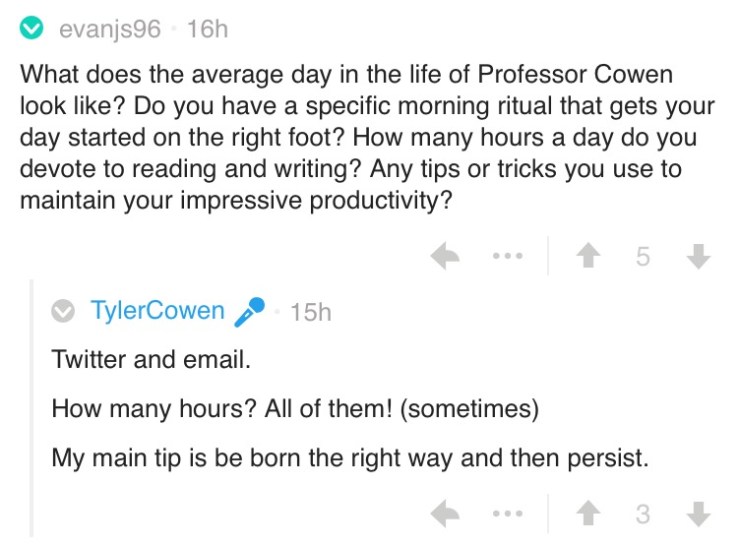
FullSizeRender.jpg


Meyer studied cooking. He filled his knowledge gaps. “I couldn’t take in the information quickly enough,” he wrote about a wine curriculum. After a short training in formal cooking, he got a job doing simple things. “I did those kitchen tasks no one else wanted to do and in which there was no fear that my rudimentary kitchen skills might lead to disaster.” The backwater is often a good place to start. Both Bethany McLean and Kara Swisher started their journalism careers in areas that didn’t get much attention.

During this time Meyer built up an ethos. “Hospitality exists when you believe the other person is on your side.”

He also learned about Incentives. During his years of giving tours in Italy, he wrote, “I could tell my travelers that I knew of an amazing family run place that very few tourists ever found. They loved that.” That is, Meyer found out about transaction utility, something  Richard Thaler explains.

Another incentive Meyer observed was during his time volunteering for the John Anderson presidential campaign. The volunteers he supervised showed Meyer how  “ideas and ideals were the only currency…(they) taught me to view all employees essentially as volunteers.” He learned that money is a proxy and if you can figure out the thing people really want, you can compensate them with that.

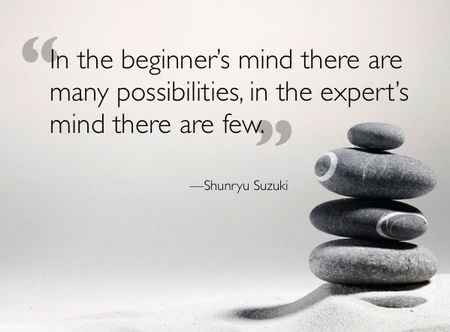
Meyer accumulated a helpful set of skills for someone who wants to be a restauranteur. He’s followed the suggestion to be there and created an understanding of what culture means, as well as the differences between French and Italian cooking. Meyer also developed a set of interpersonal skills he’ll need and knows just enough about cooking and restaurants to get started but not so much that he’ll copy what others are doing.
32bd347841c1300bc9e6a67e72e020c5


Openings

Meyer notes in the book that the conditions of the environment he wanted to enter were lucky. “I would also have the good fortune of entering the restaurant industry during its fertile period of revolutionary change.”

Conditions matters for business success. It’s the Iron Law of the Market. Milton Hershey shipped out his namesake chocolate on reconstruction railroads and built his national brand as national brands were possible. Hamburger joints like McDonald’s and In-N-Out used the growing car culture to create the drive-through hamburger experience. Even modern companies like Apple rise and fall on the conditions of the environment. Apple needed the mp3 which has its own story in How Music Got Free.

In the conditions and environment of New York City in 1985, Danny Meyer opens Union Square Cafe.

To succeed, Meyer has to be different.  He wanted to “combine the best of what I’ve found with something unexpected.” He compared it to music, “the trick is to put those notes together in a way not heard before.”

He also needed space. Meyer needed a location where there wasn’t a lot of competition and with low rents but also someplace people would actually go. He found a place with low enough rent. Ian Cassel suggested something Meyer would agree with; keep your fixed costs low and your variable costs variable.

A low overhead is a strong suggestion from many founders who make it. Jim Koch never rented an office, preferring instead payphones. Michael Ovitz had an office but used gifted office supplies and his wife answered the phones. Instagram had a low overhead too. One founder said about their first outside investment:

“That’s more money (the first $50K invested) than I had ever heard of in my entire life of a business getting… so here are two guys with a prototype, a couple of computers, and no office, who raised a half a million dollars who are looking at each other like, we think we can make this last. We were living on peanut butter and jelly sandwiches.”

Startups who fail to heed this advice fail. So too – almost – for Tony Hsieh who had to sell off nearly everything he owned to keep Zappos afloat.

Meyer kept his overhead low enough and got luck with his remodel, writing  “my naïveté went unpunished,” when it came to hiring a construction crew. The two-jar model notes that great success requires great luck and had this early break gone against Meyer it’s easy to imagine an alternate universe without Shake Shack.

As he put together the plans for Union Square Cafe, Meyer realized he couldn’t be the chef. He used his connections to find someone who could be. Meyer instead worked out front and thought through larger problems. There were many, but Meyer took a certain approach to them, writing,  “It was oddly exciting to manufacture challenges and surmount them.” This kind of mindset turns problems into puzzles.

Meyer enhanced his understanding of incentives. If a guest wanted a table at 8:00 but none were available, Meyer would counter with an offer to eat at 8:45 “which I knew sounded a little earlier than ‘quarter of nine.’”  Union Square Cafe also had a “medicine cabinet” for guests who didn’t have their expectations exceeded. Free glasses of dessert wine would be offered to patrons. This was cheap(ish) to provide but valuable for the guests. Dessert wines were a European thing and that added to the experience of a free glass (more transaction utility).

Meyer’s deep understanding came from being at his restaurant every day. On his first night away Meyer to his wife to Lutece and the chef asked ‘Why the hell are you in my restaurant?’ Meyer finished his meal but didn’t take another day off for a long time.

As Union Square Cafe succeeded, Meyer dreamed about other restaurants. He compared the process to having kids; fun to conceive, but less fun to gestate. “There’s not a lot of sleep in the first six months and you feel as if you’re never going to get your head above water.”

Meyer’s family was about to grow.

Expanding

One thing Meyer is very good at is tearing down Chesterton Fences. He asks, “Who ever wrote the rule?”

  • Who ever wrote the rule that you can’t you have a high-quality burger served in a park? (Shake Shack)
  • Who ever wrote the rule that you can’t have good BBQ the middle of a city next to a Jazz Club? (Blue Smoke)
  • Who ever wrote the rule that you can’t have good food in a museum? (MOMA)

When it came to new ideas, Meyer sometimes looked online. Before he opened Tabla (Indian food), he wondered about the competition. The best Zagat score in 1997 was 24/30.  Charley Ellis would nod in approval. It’s easier, Ellis said, to win if your competition isn’t very good. That said, Meyer still had to offer something different and better. Chef Floyd Cardoz, wrote Meyer, “continually seeks sensible ways to innovate in the Indian idiom, demonstrating that you can experiment while remaining grounded in solid traditions.”

As the restaurants grew in number Meyer felt what Brent Beshore‘s described as “progress anxiety.” You want to do something. Meyer used a checklist to help limit his actions to the best options.

  1. Any new restaurant had to be excellent in its niche. “Be the best you can be within a reasonably tight product focus.”
  2. Any new restaurant must not diminish Union Square Cafe.
  3. Any new restaurant must not be a big time draw. Meyer created processes that could scale and he wanted to use them.
  4. Any new restaurant must be close to Union Square Cafe.

This final point was most important early on. Meyer had to be in his restaurants to check on how things were going. In-N-Out founder Harry Synder did this too, living across from his first location and hopping off the couch to help if he saw the lines become too long.

During the growth phase, Meyer’s pregnant wife gives birth to premature twins that both die. They are devastated. Meyer writes that without therapy “the loss almost certainly would have brought us down individually and together.” Books like Meyers are great to learn from but we should remember that there are people with lives behind the companies.

It’s difficult to have full-time relationships with more than full-time careers. John Boyd, Bill Gates and Warren Buffett and Charlie Munger all committed to their careers to such a degree it left little time for family. Future founders would do well to remember that actions express priorities. As Stephanie Linnartz said, “My family is first, my job is second and that doesn’t leave a lot of room for hobbies and book clubs.”

During the expansion, Meyer hit on the 51% solution. “We can always train for technical prowess,” wrote Meyer. What he wanted is “the excellence reflex,” a response to act when something isn’t right. For Meyer, the Most Important Things were emotional skills like optimistic warmth, intelligence, work ethic, empathy, self-awareness, and integrity. If he found people that exemplified those he could teach them to run a restaurant.

Meyer successfully grew – and had growing pains. He recalls one meeting with a mentor where they talked about doing things the right way and creating good systems. The mentor motioned to the next table and asked where the salt shaker should be. Meyer got up, centered it, and sat back down. His mentor leaned over and moved and asked again, ‘where should the salt shaker be?’ Meyer moved it back. His mentor moved it again.

His mentor’s point was that the salt shaker would never be centered because people would always move it. It was up to Meyer to move it back each day. Ray Kroc put it this way:

“Business is not like painting a picture. You can’t put a final brushstroke on it and then hang it on the wall and admire it.”

Business, life, relationships, blogs, careers are Sisyphisian. This brings us back to where we started. If you don’t like rolling the same boulder up the same hill you need to find a new boulder or hill.

Thank you for reading. If you want to see all the books I read you can sign up here: http://eepurl.com/bgRZOX.


Richard Feynman

Supported by Greenhaven Road Capital, finding value off the beaten path.

480px-richard-feynman

Richard Feynman is a national treasure. I write is even though he passed away in 1988. Feynman may be in the first generation whose videos will live on in perpetuity. Fitting for someone who repaired radios during the depression. Books like, What Do You Care What Other People Think – which is where we will draw our notes from – are great, but there’s something about hearing a person’s voice, Feynman’s especially. He speaks – – no, Feynman doesn’t speak. Feynman declares, explains, and expounds.

Learn from Feynman. Watch him on YouTube. Or, read my notes.

  1. The name of the thing.
  2. Make it fun.
  3. Favor the simple.
  4. Doubt Descartes.

“I learned very early the difference between knowing the name of something and knowing something.”

The book is worth it for just this story. Feynman explains how his father taught him the difference the name and the thing. People who know the name of the thing have only a superficial knowledge. Feynman saw this when his cousin studied the rules of algebra. “The rules had been invented so that the children who have to study algebra can all pass it and that’s why my cousin was never able to do algebra.”

Better is a deep understanding. Grant Oliphant has it for charities. Bill Belichick has it for football. Sam Hinkie and Phil Jackson for basketball. Yvon Chouinard for apparel. Charlie Munger puts it this way for investing, you better know the other side’s position better than they do.

“I’m always looking like a child for the wonders I know I’m going to find. Maybe not every time but every once in a while.”

One way to better solve problems is to not think of them as problems. Reframe them.

Danny Meyer wrote that when starting restaurants, “It was oddly exciting to manufacture challenges and surmount them.” In Superforecasting, Phillip Tetlock points out that super forecasters displayed Carol Dweck’s growth mindset. Walter Mischel found similar things in his study (The Marshmallow Test). Ray Dalio writes about this in Principles: “I learned that there is an incredible beauty to mistakes, because embedded in each mistake is a puzzle, and a gem that I could get if I solved it.”

“When I found out that Santa Claus wasn’t real I wasn’t upset. Rather, I was relieved that there was a much simpler phenomenon to explain how so many children all over the world got presents on the same night. The story had been getting pretty complicated, it was getting out of hand.”

Occam’s Razor is the problem-solving principle that the simplest explanation is probably the best.  In Daniel Levitin’s delightful A Field Guide To Lies I scribbled this principle throughout my notes.

Another quote of Feynman’s reminded me of Levitin’s book. This is from his investigation of the Challenger explosion.

“I tried to make sense out of that number (1 in 100,000)…that means you could fly the shuttle every day for an average of three hundred years between accidents. Every day, one flight, for three hundred years.”

Levitin encourages the reader to ask, ‘Does this make sense?’ and ‘Is it even possible?’ Pair this with some work from Nassim Taleb. In this video Taleb clarifies the difference between Mediocristan and Extremistan. In Mediocristan we can use predictive models for things like ladder deaths. In Extremistan we should not use predictive models for things like Ebola outbreaks.


Screen Shot 2017-02-27 at 8.32.26 AM.png
Ebola figures from Penn State Epidemics MOOC

Rare events are hard – impossible? – to model as if your life depended on it.  Related to that…

“‘Impossible!’ I said, without stopping to think I was doubting the great Descartes. It was a reaction I learned from my father. Have no respect whatsoever for authority. Forget who said it and instead look at where he starts at and where he ends up and ask yourself, ‘Is it reasonable?’”

It was this part of the book where I thought the narrator of the audiobook was earning his keep. I felt Feynman’s energy! Here again is a lesson we’ve seen. To use Levitin’s term, this is an “O.K. Name.” When research comes out from Harvard or when Bill Gates makes a video or when Oprah has a favorite thing it’s a case of the O.K. Name.

Remember that our brains are lazy, especially when it comes to critical thinking. Tetlock writes that we are experts at a mental bait and switch. Rather than answer the harder question, we ask, ‘is this someone I can trust?’. But we act is if we had done the heavy lifting.

One way to exercise the mind is to tackle Chesterton fences.

  • Danny Meyer asks, “who wrote the rule that…?”
  • David Heinemeier Hansson asks, “why the hell not?”
  • Yvon Chouinard said to study the juvenile delinquent, that’s someone that’s not happy about the way the world is.

People change the world because they don’t like the world they see. They aren’t people with ‘respect for authority.’

“I thought one should have the attitude of ‘What do you care what other people think?’ We should listen to other people’s opinions and take them into account. Then if they don’t make sense and we think they’re wrong then that’s that.”

Ahh. Feynman is great.

Thanks for reading.


Steven Pressfield

Supported by Greenhaven Road Capital, finding value off the beaten path.

Steven Pressfield was on the Art of Maniless podcast to promote his latest book. It was a good interview. This post won’t be the traditional notes, but a qustion: Would Steven Pressfield pass the Marshmallow test?

If you were unaware, “The Marshmallow Test” is a catchy catch-all for delayed gratification. The Marshmallow Test is also a book from Walter Mischel, creator, designer, and recorder of results of said test. If you aren’t aware, Mischel noticed that young children who were able to delay gratification – wait for two treats later rather than one treat now – had a smorgasbord of positive results later in life. They were in prison less, married more, earned higher incomes and had a lower BMI. These results, along with the name, The Marshmallow Test, have brought a lot of attention.

“If you’re glued together, honorable, get up every morning and keep doing it, keep learning everyday, and you’re willing to go in for a lot of deferred gratification in your life you’re gonna succeed. It may not be as much as you want but you’re going to succeed.” – Charlie Munger

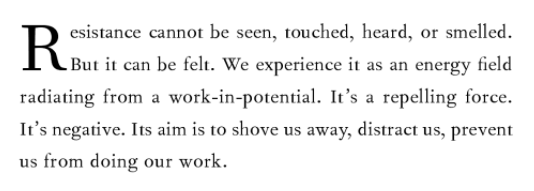
Pressfield is well known for coining his own memorable term, resistance. In The War of Art he opens with this:

screen-shot-2017-02-28-at-5-38-56-pm

In the podcast Pressfield says:

“If you’re a writer you know that when you sit down in front of the blank page you can feel a force radiating off that empty page. It’s a negative force that makes you want to get a hot fudge sundae or go surfing or something like that. Anything other than face the page, and that is resistance…When in doubt it’s resistance.”

That Pressfield uses food is notable. Mischel’s research wasn’t only about marshmallows, the subjects got to choose their rewards, but food qualifies as something Mischel says is a ‘hot’ reward. Marshmallows not only taste delicious but they have a pleasing texture, substance, and elict thoughts of joy.

marhsmallowloarx.jpg

If you compare that to something like crayons, another reward selected by children, Mischel notes different scores for different rewards. For rewards like pretzels and crayons, children waited 2x-3x as long as for marshmallows. I notice this in my own life. In February 2017 I have access to a recent delivery of Girl Scout cookies & a ski slope. I enjoy both. However, the cookies are more salient and easier to come by than the ski slope which requires ninety minutes in the car. It’s also easier to think about the taste of cookies rather than feel the wind and thrill of speed. In Michel’s words, the cookies are a much ‘hotter’ temptation.

The key to success with delayed gratification (Munger), resistance (Pressfield), or marshmallows (Mischel) is “psychological distancing.” Mischel writes that this can be physical as in out-of-sight-out-of-mind. It can be mental, I’m not checking the ski slope’s Instagram feed. It can be abstract too, thinking about the things you want in the future rather than the current temptation.

Wen Pressfield moved to Hollywood he noticed a form of “psychological distancing.”

“When I first got out to Hollywood and started work as a screenwriter I learned that many writers were incorporated. They had their little one-man corporations. When they signed a contract to write a script or screenplay it would be FSO: For Services Of. Their corporation would sign a deal for their services as an individual. I thought that was a great way to separate the entity of yourself that does the work from the entity that manages. It’s a great device to sort of, split yourself in half and one-half can kick the ass of the other half.”

Screenwriters created a psychological distance for work.

We should note that this isn’t all about willpower. That helps, but all genetic gifts do. You can be thankful for nature, but you get to choose your nurture.

That’s exactly what Pressfield did. He said, “there are so few people that possess self-discipline….coming up I had one friend that got up at the crack of dawn and he was a role model for me. I basically tried to become him. I copied so much of the way I live right now from this one particular friend.” And later in the interview, Pressfield came back to this idea, “Working in the movies was a real Ph.D. in storytelling, how to conduct yourself, and how to manage your emotions.”

There’s a huge value to see it to believe it. Here’s Malcolm Gladwell on that:

(Our list is at this post) That’s what happened to Pressfield. But, what exactly is it?

In the case of delayed gratification, the ‘it’ is structure. If you can create structure in your life, Mischel found, then delayed gratification is much easier. Pressfield’s Ph.D. was in “how to conduct yourself.”

One solution is the If/Then statement. Plan out what you’ll do ahead of time. You can further enhance this tool by identifying your hot spots. Mischel found that kids – like adults! – act in domain dependent ways. Sometimes kids broke the rules when confronted by an adult, sometimes by another kid. Sometimes the same adults you see in church will be the ones that scream at the soccer referee. The context mattered.

We’ll add two more notes about delayed gratification. First, it takes a long time. Pressfield said, “I had flipped the switch to being a professional but it was six or seven years before I made the first penny. There was plenty of struggle and lessons learned. It was like getting a Ph.D. in a field that doesn’t have an actual college.”

Second, you have to be like Sisyphus and not expect a panacea.

Pressfield said about resistance:

“Oh yeah. It never goes away. You have to slay the dragon every morning. It never goes away. It never gets any easier. But when you have enough success, when you’ve faced it down enough times, you know you can do it which is different from when you were first starting out.”

Thanks for reading.

Reading – III

Supported by Greenhaven Road Capital, finding value off the beaten path.

Part 1 was a large overview of reading more. Part 2 was about my specific note taking for physical books I own.

For Part 3 I want to address three things.

  1. Preparing the mind.
  2. Preparing the body.
  3. Preparing the scene.
  4. Your reading goals (NOT books per year).

The mind. The presentation of classes in college catalogs always appealed to me. You take 101 and move on to 102 and then 103. I’m a linear thinker but life is not.

Sequence is important though because if you don’t know the elementary things you can’t learn the advanced things. Right now, for example, I’m reading more books about artificial intelligence and I don’t know where to start. Unlike college, there is no predetermined sequence. However, there are some things that I’ve found work well.

  • Podcast interviews are great. Authors explain their theories. Some favorite podcasts are; Intelligence Squared, EconTalk, Invest Like the Best, James Altucher, Recode Decode and Bloomberg’ Masters in Business.
  • YouTube videos fill this niche too. My notes on Peter Lynch, Mohnish Pabrai, and Charlie Munger all came from watching them on YouTube.
  • Amazon rankings also play a role. Find category links like “Books>Cookbooks>Special Diets” or “Books>Textbooks>Computer Science>Artificial Intelligence” and select the first one.

There has to be some kind of mental footing for your climb.

The body. In Part 1 we noted that reading takes time and energy. I find those ingredients between four and seven in the morning.

After experimentation, I learned that it’s easier to get up early if I do certain things. Red win – and all alcohol – would lead to groggy mornings. So too would junk food, cereals, and sugar in my coffee. Overall I have more energy throughout the day, not only in the mornings.

Physical activity helps too. I don’t know if it’s better sleep or if it helps me think in other ways, but the more I move the better I think. Plus, dog walks are great for listening to podcasts.

I don’t disregard sleep.  Rather than arbitrarily get up early I used the Sleep Cycle app to help me optimize how much sleep I need.

All these physical things combine to mean that I have energy in the morning. I convert that energy and excitement into reading.

The scene. My go to book for behavior change is Mindless Eating from Brian Wansink. The gist is that making things slightly easier/harder can have big effects. I use this to create a space where reading is easier and everything else is more difficult.

To make things easier: I try to always sit down with a book. I find books I’m excited to read. I find books that come highly recommended. I view books as a challenge, a game, or a puzzle. I think about the long-term rewards of reading.

To make things more difficult: I deleted Twitter from my phone and turned off the browser. I don’t open my computer or unlock my phone. I have pen and paper handy for taking notes.

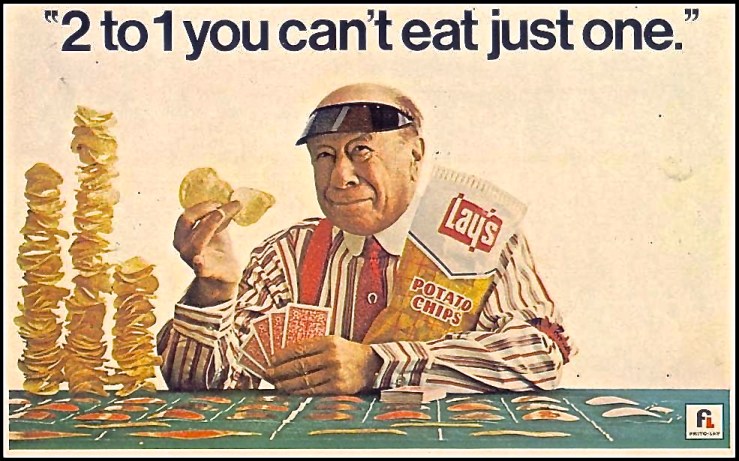
Part of the reason this works for me is that I do better as an abstainer than as a moderator. It helps to know thyself. If you can “eat just one” then a bag of chips is no problem. If you can’t, then it is.

bert-lahr-frito-lay-05-1967

The goals. This Inc. article is so wrong. It doesn’t matter how many books you read a year. What matters is how many good ideas you get. Charlie Munger said that Berkshire succeeded because of two good ideas a year for fifty years. On a smaller scale Ramit Sethi said he keeps Wednesday free to read and think:

“Wednesday is my strategy day. I have a list of articles to read, a list of books and I just work through them…Most days, nothing really comes from it, I would say every quarter I get an interesting idea, and maybe once a year I get a big idea but that big idea can transform the business.”

Sethi, like Buffett, Munger, and Inc. article authors may read 200 books a year but that’s not the goal. The goal is to accumulate examples and cross-pollinate ideas. The goal -and long-term readers will see this punchline coming – is pattern recognition.

If you want to see what I read, sign up here: http://eepurl.com/bgRZOX

Charlie Munger 2

Supported by Greenhaven Road Capital, finding value off the beaten path.

I almost didn’t write this post because you should watch (or listen to) the 2017 Daily Journal meeting rather than read my notes and summary. These notes are like a bread course, technically full of calories, but not really enough.

My favorite quote from the meeting was this:

pablo (9).png

“If you’re glued together, honorable, get up every morning and keep doing it, keep learning every day, and you’re willing to go in for a lot of deferred gratification in your life you’re gonna succeed. It may not be as much as you want but you’re going to succeed. The main thing is to keep in there. Get rid of your stupidities as fast as you can and avoid the bad people as much as you can and you’ll do reasonably well.”

1/ More than money. Life and business are about more than money.

“I wish our example spread more because if you’re wealthy and you own a big share of a company and you get to decide what it does and whether it liquidates or whether it keeps going that’s a nice position to be in and maybe you shouldn’t grab more money in addition.” “I don’t think capitalism requires you make all of the money you can. I think there are times when you can be satisfied with less.”

Mr. Money Mustache and Early Retirement Extreme are bloggers who settled on the conclusion that money isn’t your most valuable thing early on. What is most valuable? Freedom of time and choice. This makes sense. We work for money so that we can get time and choice. Time not to do our taxes, time to have someone mow our yard, time to pay back a loan on something we want to buy like a house, car, education.

Time and choice aren’t common denominators because they’re harder to quantify than dollars. Yet, the way we define things matter.

I think Munger is nudging us to think this way. Why does he say “wealthy” instead of “richer”? Those words mean different things. When I think of wealth it means ample time and happiness. When I think of rich it just means money.

2/ Run your race. Someone asks how Tyler Technologies strategies affect the Daily Journal Corporation. Munger says that Tyler is “an extremely aggressive company but I like our ethos of operation better than I like theirs.” He and Warren Buffett said much the same thing about Amazon at the 2016 Berkshire meeting. Brent Beshore‘s company notes on the bottom of their site, you do you, we’ll do us. 

This idea struck me while on the treadmill. I was momentarily proud of being the longest runner with the fastest speed. If things were still gamified I’d have gotten a digital badge. Echo Charles has seen this too.

But watching what other people are doing is one thing, a distraction.

Charley Ellis said that people wonder why he’s invested in volatile securities at his age. “Becuase I’m not investing for me,” Ellis said. Ryan Holiday cautioned writers to not fall into running someone else’s race. Seth Klarman had a client come in who wanted to dictate a finish line. “I’ll meet with you on anything but that,” Klarman said. A mistake for failed startups was watching what other people were doing.

If your core actions are correct, focus on those.

3/ What to do about mistakes? For starters, get ready for them.  Munger has many, “my life is one long litany of mistakes and failures.”

When you make a mistake, act quickly and firmly to correct it. Wells Fargo, Munger says, failed to do this. But they’ll be better for it. “One nice thing about doing something dumb is that you probably won’t do it again.”

To prevent those dumb things try to create a system that incentivizes the right things. Wells Fargo, Munger says, failed at this too. “They got so caught up in cross-selling and having tough incentive systems that they got the incentive system so aggressive that some people reacted badly and did things they shouldn’t.”

Know you can’t fully design systems, but you can refine incentives through proper steps.

Shane Parrish suggests a decision journal for keeping track of your mistakes to combat the hindsight bias. Sam Hinkie suggested red teams in meetings and no cherry picking your decisions. Flesh out mistakes and don’t double down.

When you say them, says Munger, you’re pounding them in harder and harder. “One of the reasons I don’t tell the world what I think about how the Federal Reserve should behave and so forth is, I know that I’m just pounding the ideas into my own head.”

If you do happen to destroy an idea, Munger says to pat yourself on the back. “I’m very busy destroying bad ideas because I keep having them. It’s hard for me to just single out one from such a multitude. I actually like it when I destroy a bad idea because it’s my duty to destroy it.”

4/ Follow your passion? Passion is a bad career indicator, interest is better.

When asked what sort of work young people should pursue Munger says to find something that interests you. “In my whole life, I’ve never succeeded much in something I wasn’t interested in. I don’t think you’re going to succeed if what you’re doing all day doesn’t interest you.”

Mohnish Pabrai asks, what do you choose to do instead of watching a movie? We can expand it and ask, what do you choose to do? What do you engage in?  Munger says, “I recommend that you engage life. If you spend all your time on how some politician wants it this way or that way and you’re sure you know what’s right – you’re on the wrong track. You want to do something every day where you’re coping with reality.”

Munger wants us to be there. Be like Paul Farmer, John Boyd, and Kara Swisher. Find something that interests you and get in there and mix it up.

5/ Multidisciplinary thinking.  “I don’t think that operating over many disciplines as I do is a good idea for most people.” “Generally specialization is the way to go for most people.” “If you want to get rich the way I did by learning a little bit about a hell of a lot I don’t recommend it to others.”

I felt let down by this. I’m building mental models. I’m solving problems with interdomain solutions. It interests me (#4). But maybe it’s the wrong path.

Munger suggests instead to get good at something that society rewards and spend “10-20%” of your time learning the big ideas in the other disciplines.

Maybe the job I’m hired for is to make the 10-20% easier for others. If Munger is right I need to reread Cal Newport.

6/ A philosophy buffet.  When asked about Donald Trump, Munger says, “He’s not wrong about everything and just because he isn’t like us – – roll with it.” Kara Swisher noted the same thing.

This can be hard with things in the news. Ryan Holiday gave this advice:

“Whenever you start to feel stressed, upset, depressed, confused, worried, put down your phone, step away from the television or computer and pick up a book. Ideally, pick up a very old book. There was a wonderful New York Times article last week from Alexis Coe where she discussed the clarity that comes from reading old presidential biographies.”

Munger likes dead people too.

“I spent my whole life with dead people. They’re so much better than the people I’m with here on earth. You can learn a lot from them and they’re very convenient to reach (via books). I recommend making friends with the eminent dead which I did very early and it’s been enormously helpful.”

Just keep reading and learning. You’ll see that there’s never been ‘golden days’ for life. That life is a struggle.  If you want a break from the news and a reminder that life has been full of less-than-qualified politicians, adventurous inventors, and American culture let me suggests One Summer by Bill Bryson. If you want to see everything I read, sign up here: http://eepurl.com/bgRZOX.

Thanks for reading. If you liked this I just finished a longer article about Sam Hinkie. It’s available for download here: https://gumroad.com/l/philiprocess

Howard Marks 4

Supported by Greenhaven Road Capital, finding value off the beaten path.

Another Howard Marks post?  Yes, yes, yes. I wrote about his memo, Expert Opinion because it touched on three timely topics; media, social media, and predictions. I wrote about his book, The Most Important Thing because it was a wonderful summary of his worldview. And I wrote the first post about Howard Marks because it was my first exposure to him.

I’m writing this one because I still haven’t internalized, understood, or applied Marks’s good ideas. But I’m getting there. This one is shorter than the above links. Here are my notes from Barry Ritholtz’s conversation with Marks.


1/ “Experience is what you got when you didn’t get what you wanted.”

What I liked about this quote was the win-win ethos behind it. You can either get what you wanted or get experience, both are valuable.

2/ If you want to be in the top twentieth, try being in the top half for a long time. Extraordinary results come from not messing up. Pretty good spouses can have great marriages. Philanderers don’t. Pretty good managers can have great careers. Theifs don’t. Marks explains how investors can follow this model too.

3/ Second level thinking doesn’t mean the derivative of the derivative of the derivative and so on. It means considering something just more enough to get your results into the top half (see #2).

Richard Thaler noted how this played out in his book, Misbehaving.

evernote-snapshot-20150823-115612

4/ Ritholtz asks, ‘what do you do when the phones start lighting up in the office with clients who want to know what you are doing?’ Marks says:

“One of the money managers most important jobs is client education. Hopefully, we’ve convinced our clients by now that you have to be contrarian and you have to look wrong for a while and it’s our job to hold their hands when we do extreme things.”

Good relationships help a lot. They help Kara Swisher get information. They help Tony Hsieh build Zappos. They help Pete Carroll create a winning culture.

Relationships are like the winds that swirl around a bike rider. They can push the rider forward, blow in her face, or push across as a distraction. Unlike the rider who has no control over the wind, you and I do with the relationships we build.

5/ “You can only assess the bottom in the past tense. The bottom is the price below which a stock never went.”

We can add this to our list of Signals. If someone says this is the bottom rather than that was the bottom, call them out.

In his book, The Most Important Thing, Marks outlines the stages of a bull (and bear) markets.

  1. A few people believe things will get better.
  2. Most investors realize improvement is underway.
  3.  Everyone is sure things will get better forever.

To understand this cycle you have to look at what people do not what people say says Marks. For example, in February 2017, with low fixed income yields, there is some distance between how people act and how people feel. This gulf is because they have to reach for returns.

6/ Book suggestions. “My philosophy was shaped mostly by reading,” says Marks, who like Munger, ‘makes friends with the eminent dead.’ John Kenneth Galbraith A Short History of Financial Euphoria, says Marks, “was very impactful on me.”

About Fooled by Randomnes Marks says, “in a world of randomness you can’t have events that are predictable and I think he (Taleb) makes very sound arguments.”

Against the Gods is “one of the best,” says Ritholtz.

Currently, Marks is reading Stress Test and it “is very interesting…it’s not exciting or fun but it’s very illuminating…if we don’t study crises we are bound to repeat them quickly – if we study them it will take longer.”

7/ Do something you enjoy.

“What I try to counsel young people is to try and find something they’ll enjoy because if you’re doing something every day for your life and you’re not enjoying it you’re wasting your life. Doing that to pile up money you’ll have left at the end seems futile…you should not let society set your goals. The challenge is to figure out what will make you happy and pursue it.”

Long-time readers know that I dislike the advice to ‘follow your passion’ but ‘do what you enjoy and interests you’ seems fairer. Every job is still a job people like Austin Kleon and Jon Acuff caution. Just because you get to do the thing you want doesn’t mean that thing will be easy, said Brent Beshore. Mohnish Pabrai said to find something you’d do instead of watching a movie.

Don’t wait to do the things you enjoy. Warren Buffett said that’s like saving sex for old age, “it just doesn’t work.”

Thanks for reading. If you liked this I just finished a longer article about Sam Hinkie. It’s available for download here: https://gumroad.com/l/philiprocess