Royce Yudkoff and Rick Ruback

Supported by Greenhaven Road Capital, finding value off the beaten path.

On Invest Like the Best Patrick O’Shaughnessy talked to Royce Yudkoff and Rick Ruback about the course they teach at HBS (and their book) that gives students the tools to find, buy, and run small businesses.

These businesses (750k-2M EBITA) are plentiful because there is an imbalance between the people running them now and those willing or able to run them in the future. Unlike Brian Scudamore’s companies, Uber, or HackerOne – there isn’t a marketplace to match buyers and sellers. Instead, the forty or so searchers a year that come out of places like HBS browse in a bare-bones manner.

People interested in investing in this situation would do best to connect with one of the dozen or so colleges that have programs like this, talk to a small business broker, or connect with one of the five hedge funds that make these types of investments.

Students who go through HBS (or the other schools) will typically bootstrap the search themselves. This takes about twelve months. At HBS they teach students to look for businesses with these characteristics:

  1. Recurring customers bases who have high switching costs. “Ideally over 90% but certainly over 80.”
  2. Low cyclicality. While the seller probably doesn’t have debt the buyer will. Cyclicality/seasonality can make debt service painful, or even fatal.
  3. Low customer concentration.
  4. Good free cash flow characteristics. “Almost all of EBITA is available for debt service, acquisitions, or distributions to equity.”
  5. Business that can be transferred away from selling owner with a big step-up for performance. Founders usually excel at working in the business and buyers should find instances where they can grow things by working on the business.

There are also a few negative screens:

  1. Technology companies.
  2. Stroke of pen risk. Someone can just change the reimbursement rates for medical expenses and — poof.
  3. Hobby businesses. Avoid, “I’ve always wanted to do X” situations.

The ideal small business will be “enduringly profitable business” in a boring domain with minimal go-to-zero risk.

Of course, no company will satisfy all the parts of this checklist. “In the real world you need to compromise, you just don’t get everything…as a searcher, you need to decide what’s good enough for you.”

Once a buyer/student finds a business, they typically finance half by borrowing from a commercial bank, a quarter from the seller, and a quarter from their investors. Each group will be paid back, then earn 7-10% returns, and appropriate levels of common stock. The limited investor base and permanency of them can allow for long-term orientations and decision making.

This sort of debt structure makes the “go-to-zero” risk of these businesses low. Or, in internet form:

Businesses sell for 3-5X EBITA. Even though the seller borrowed money, they probably didn’t overpay.

These businesses can be great for the buyer and their investors and it’s not likely Wall Street will start to sniff around for these returns. The amount of work in just the board meetings and calls to LPs for a one million dollar investment isn’t worth it. Also, these businesses are hard to find. A lot of times the people that live in towns with the business seller don’t even know what kind of cash is generated.


Thanks for reading,
Mike

PS. This is another experiment at short, more direct, less linky posts. Did you like what you read or do you like this:

Once a buyer/student finds a business, they typically finance half by borrowing from a commercial bank, a quarter from the seller, and a quarter from their investors. This allows plenty of skin-in-the-game for everyone involved. Harry Snyder created a profit sharing system at In-N-Out. Investors like Ian Cassel look for large ownership stakes. SITG makes people have a larger stake in the outcomes, but sometimes people don’t want this.  “At one meeting (soccer coach) Anson Dorrance proposed a resolution that every administrator who appoints a coach should be fired when that coach is fired. Nobody seconded the motion.” 

Along with SITG, investors need to keep a long-term mindset for decision making. Patrick Collison said that he’s kept Stripe private so long because this is a hard hat to wear in the winds of the public markets. Long-term thinking, wrote Sam Hinkie has other benefits, “to take the long view has an unintuitive advantage built in – fewer competitors.” But this isn’t easy. In the Steven Pressfield post we saw how to switch from short-term to long-term thinking. 

Bill Gurley 2

Supported by Greenhaven Road Capital, finding value off the beaten path.

Bill Gurley was on This Week in Startups (LAUNCH Festival 2017 edition) and it was a fast half hour or so. Let’s not waste time here either, here are the notes.

1/ How many investments does Gurley make in a year? “As a partnership, we average about two (investments) a year.”

That’s not a lot. Gurley, it appears, is on the same path as Brent Beshore, look at many companies but be choosy with the ones you invest in. Looking at the list there are names you know (Tinder, Snap, WeWork) but also unfamiliar ones. Those other, mostly B2B focused enterprises, are intentional. Gurley said, “there’s a ‘hits’ dynamic to consumer startups. Even if you are a very successful repeat entrepreneur, you may head out to do the next one and fall flat on your face.”Consumer startups and enterprise startups have different arrangements of the two-jar model.

Consumer and enterprise startups have different arrangements of the two-jar model. B2B entrepreneurs, says Gurley, have more stable and predictable results. This is because the skill jar scores factor more into the results than the luck scores. For consumer startups, the situation is reversed.

2/ Obvious opportunities. HackerOne is a bug bounty program and “it’s an enormously obvious idea yet it’s not easy for every company in the world to prop this up because you have to know whether it’s okay to pay a hacker in Estonia or not.” HackerOne creates a marketplace for hackers and companies (another B2B).

At the same festival, Patrick Collison of Stripe said this was something that inspired him to create Atlas. “In the Stripe data, we saw that there were so many people that were going to such lengths to surmount these stupid barriers.”

Sam Shank said he founded Hotel Tonight for this reason too. You want to save people time or money, Shank said, ideally both.

Many entrepreneurs start when they scratch their own itch but others see a rough road they could smooth. Gurley, Benchmark, and HackerOne all thought the one-off, bug bounty system could be improved.

3/ Snapchat, the sexting app. “When we first stumbled upon the opportunity years ago there was a lot of noise that suggested the company was about sexting.”

Teenagers. Ugh.

In their defense, teenagers rarely get the benefit of the doubt. This can be for good reason, but not always. When bicycles were created and popularized, people thought they were bad for teens. So too for cars, phones, AIM, and, now, Snapchat. But not so fast. Adults doubting teens is like a fairway crosswind and wise players will consider that before their approach.

Gurley did just this. He talked to teens. They told him that Facebook was to them like LinkedIn was to adults. Gurley said that weaknesses are strengths and strengths are weaknesses. The things Facebook did well were not the things Snapchat did well.

There’s too much noise and not enough signal when you don’t talk to customers. It’s one-way startups fail. “The normal mind,” said Nick Murray, “takes out of the noise what it wanted to hear all along.”

4/ Books!

Competitive Strategy is “the most efficient short-form MBA you can get.”

Crossing the Chasm, “especially if you’re doing any enterprise work.”

Innovators Dilemma “is fantastic and is really the core essence why startups have an advantage.”

Startup. “It’s remarkably detailed. We spend so much time analyzing success that sometimes it’s just good to read how hard it can be.”

Shoe Dog. “It shows how much grit matters.” (We’ve looked at Grit too).

5/ Grit and moats. Gurley is an investor in Uber and Uber has been in the news for all the wrong reasons. Calacanis asks if too much grit can be a problem.

The taxi industry has a great moat, regulation. Along with network effects (supply & demand) and IP, it provides pricing power. Taxi companies could raise prices and not overly affect demand. Licenses are another regulatory moat.

Screen Shot 2017-04-17 at 8.45.56 AM

In Exponent.fm #108 Ben Thompson said:

“What you will so often find is that the folks opposing the repeal of that sort of regulation are the companies that are already in place….they love regulation because it locks them in.”

Gurley said, “The most regulated industries become the least capitalistic…regulation protects the incumbent.”

Entrepreneurs, said Yvon Chouinard are like juvenile delinquents, and delinquents break things.

To attack this moat, the thinking goes, requires a more cavalier attitude. But as you do it you get to tell your story. Uber should have told a better story.

Storytelling, Gurley said, “is essential for any founder.” Storytelling is built on top of relationships. It was part-of-the-reason Sam Hinkie failed in Philadelphia. It was part-of-the-reason Eric Maddox succeeded in Iraq. People who use empathy to build relationships tell their story better and good stories make people more forgiving when you break things.


Thanks for reading.

If you liked this post, I have a monthly paid newsletter that covers ideas like this and more. It’s $20 for six months. See it here: https://gumroad.com/l/mikesnotes

Ken Fisher 2

Supported by Greenhaven Road Capital, finding value off the beaten path.

Ken Fisher joined Barry Ritholtz (again) on the Masters in Business podcast and it was as good as their first interview. Here are the notes from Ken Fisher‘s first appearance:

  1. Writing, like any skill, takes practice.
  2. Writing is a way to organize thoughts.
  3. The only three questions that count.
  4. How Fisher picks stocks.
  5. Fisher’s favorite books.

Round two had new topics. Ready?

1/ Venn thinking/talent stacking. One way to succeed is to be great at a few things, the other is to be good at many. Charlie Munger is the latter. So is Scott Adams. Fisher says that companies can be like this too and calls it “multiple compound yields.”

“IBM never had the best computer but if you took all the pieces of what they did, they compounded to the best totality for the customer.”

TRIANGLEofmediocrity (1).png

There are two ways to escape from the triangle of mediocrity. The red path is to have many skills but none best in class. This is the Munger & Adams path. The other, yellow, is to have a few well-defined skills. Professional athletes, accountants, and pilots follow the yellow model. Fisher suggests that companies can be identified this way too. If IBM is pretty good at many things that make them a great company.

2/ Rapid fire.

  • “People invest based on the way they feel, and the way they feel is almost always backward looking.”
  • Annuities are a complicated contract “that’s almost never understood by the consumer.”
  • The fiduciary rule is “a stupid rule with great intent.”

3/ Options. Ritholtz asks why private companies are staying private for longer and Fisher says it’s because they have options. There are alternative sources of capital and the public sphere of regulation costs and public pressures aren’t that appealing.

Remaining private may not be the end goal, but having the option to wait is valuable.

Arnold Schwarzenegger credits his movie success to his real estate investments. Schwarzenegger says that thanks to rental income from a four unit building he owned he could be choosy in for his roles. When he came off the body building tour, Schwarzenegger was mostly offered roles as a cop or prisoner or, and this is true, a body builder. He didn’t want to take these roles and he didn’t have to.

4/ Contrarian experiments. To outperform others in certain domains you must be different and you must be right. Sam Hinkie wrote about the challenges of this in a zero sum environment but it’s difficult in fields like investing too. Fisher says that because he was the youngest of the brothers:

“I had to figure out different things I wanted or how to get them a different way…I’ve been prepared to operate by trial and error, you can do a huge amount of small things on a small scale, test them and see if they work, and if they work do them on a bigger scale and if they don’t work move on to the next one.”

Being a contrarian experimenter has helped and it makes sense why:

  • Keep doing what you’re doing and you’ll keep getting what you’re getting.
  • If I knew what would work I would just do it.

Fisher says he found ideas for things to try in other domains. “What I try to do a lot in my career is to do things that people were doing in other realms that they weren’t doing in this.”

These things will look weird, that’s a good sign that you’re different. They may also look weird for a long time. That’s okay.

5/ A punch to the gut. “Most people haven’t been hit in the gut enough times (like a boxer) to know how they react when they get hit in the gut.”

Jim Chanos said, “I went through [the stock market crash in October] 1987 and I went through the Drexel insolvency in 1990, and I know what the fear of not getting paid is.” There’s something to having been through a difficult experience before. Whether its physical (hiking a mountain), relational (your first major fight with your spouse), or in business (losing a major client). Once you’ve done it and realize you’ll get through it, it allows for a different approach to the problem.

Fisher saw this in John Templeton and said “his spirituality led him to a form of internal calmness that’s rare. He would make investment decisions other people wouldn’t make because he was so at peace with himself.”

6/ See it to believe it. Fisher had a group of early mentors; his father, grandfather, and a “substitute grandfather.” Mentors influence and allow for see it then believe it to happen.

Reed Hastings had this happen to him, twice. His first instance was just getting in the room.

“The lucky break of my life was that I got to serve coffee in a teaching lab for computers. If I hadn’t gotten that first job serving coffee and been so exposed to very this alternative style computer architecture it would never have occurred to me. That changed my life.”

The second moment was when he saw YouTube in 2005. It wasn’t great video quality but it opened Hastings’s thinking to what could be possible.

Ken Grossman saw this too. He was on his way to being a trouble maker except for the men on his street who acted like fathers.

The people in our lives are like the sun. They’re there and if we don’t act to change the situation (get in the shade, put on sunscreen, have good mentors) there will be some effect (tanning, burning). Whether UV rays or ideas, exposures affect us all.

7/ Walking. Fisher says that he likes to walk and spends “as much time as I can in the woods.” History is full of walkers and there’s science behind it. This is what Stephen Johnson wrote:

“The history of innovation is replete with stories of good ideas that occurred to people while they were out on a stroll…How this works is easy to understand. When you exercise, you increase blood flow across the tissues of your body. Blood flow improves because exercise stimulates the blood vessels to create a powerful, flow-regulating molecule called nitric oxide. As the flow improves, the body makes new blood vessels, which penetrate deeper and deeper into the tissues of the body. This allows more access to the bloodstream’s goods and services, which include food distribution and waste disposal. The more you exercise, the more tissues you can feed and the more toxic waste you can remove. This happens all over the body. That’s why exercise improves the performance of most human functions.”


Thanks for reading.

What is Mike’s Notes?

Rather than write more short e-books, longer printed books, or bulging blog posts I started a (paid) monthly newsletter. It’s $20 for six months.

My goal is to create something to be read offline. It comes in PDF, EPUB, and MOBI attachments on the last Friday of the month. The most value will come from reading it without an internet connect and on the weekend. Why?

Habits.

With each iPhone software update, I mutter under my breath that Apple engineers need a sign that reads if it ain’t broke don’t fix it. A few days later I forget I had any problem because I’ve been retrained for tapping, swiping, and refreshing. I’m just a monkey that pushes a button for a reward.

The way I read is also trained by the internet. The context of LOOK MA, I’M CONNECTED TO THE INTERNET has one set of habits. In RSS readers I swipe. In Twitter I scroll. In browser tabs I close.

The internet is awesome for many things but horrible for learning. It’s trained me to expect random rewards and come back for more.

Mostly.

Shane Parrish has a great email newsletter that comes out Sunday mornings. Tren Griffin‘s comes out Friday. Patrick O’Shaughnessy‘s podcast comes out Wednesdays. The regularity keeps me consuming their content.

That’s why Mike’s Notes will be delivered on the last Friday of each month in printable and e-reader form.

Is Mike’s Notes for me? Probably not. People who should not buy this include:

  • Those reading more than two books a month.
  • Those listening to podcasts and taking notes.
  • Those watching YouTube lectures.

Most of all this isn’t for people on the fence. If this doesn’t immediately sound like a great idea, or you don’t think the excerpt below is great, do not buy this.

This is only for people who want to learn and believe – after reading this blog – that I can be one of their teachers.

The section below is part of the March 2017 edition.

The Yin and Yang of Negotiations

In Never Split the Difference, Chris Voss suggests that tit-for-tat and split the difference negotiations are the easy way out. He opens the book with a critique of the Harvard Negotiations Project and the book Getting to Yes. It’s okay, Voss writes, but you need to know more.

I’ll admit my bias. Getting to Yes is a book I regularly refer to. It’s one of those books – much like spiritual texts like the Bible, Meditations, or the Tao de Ching – where you don’t need to read it cover to cover. Instead, the most value comes from dipping and sipping.

Voss is a former FBI hostage negotiator who took the ideas from GTY and evolved them. Never Split isn’t a replacement for GTY, it’s a supplement. The two books are like yin and yang. One was built by academics in ivory towers, the other by a hostage negotiator in Central America.

The two books have a lot in common and combining them we get a whole that’s greater than the sum of their parts. Let’s look at what to do before and during negotiations.

Before negotiations

There are three questions you must answer before the negotiations.

  • What are the facts of the situation?
  • What are the perceptions of the situation?
  • What are some options out of the situation?

Another way to put is to follow Charlie Munger’s “two-track” analysis.

“First, what are the factors that really govern the interests involved, rationally considered? And second, what are the subconscious influences where the brain at a subconscious level is automatically doing these things – which by and large are useful, but which often malfunction.”

What kind of facts are there? Try to accumulate as many facts as possible that support your side of the negotiations. In GTY this is so you can “insist on objective criteria.” For a house sale some of those facts will be; comparable homes in size, school district, or amenities (master bath, pool). A seller might also stress the newer appliances while a buyer might note the older roof. Voss writes that you “fall to your highest level of preparation.”

The second facet is the perceptions each party may have about the negotiation. My brother recently closed on a home purchase and part of their final offer to the sellers was a letter about their growing family and a picture of his one-year-old son. That appealed to the buyer’s perception about who might own their home. Other things like “entertaining guests” or “safety” may be perceptions a house buyer holds as important.

Finally, you should prepare your list of options for a negotiation. Time, for example, gives you a lot of optionality. Voss often dealt with kidnappers and realized they lacked the option of time because they dropped their ransom demands as the weekend got closer. Why? They wanted fun money. After he learned this Voss decreased negotiation payouts only towards the end of the week when the kidnappers were more antsy to get paid.

Be creative when you answer these pre-negotiation questions. Voss compares a negotiation to playing cards. You don’t know what the other person is holding, so you need to come up with a wide collection of options. It won’t be all-encompassing, but coming up with ideas beforehand can prepare you for the negotiations when those cards are finally played.

During negotiations.

Listen

Voss spends most of the first part of his book explaining how to listen – and for good reason. Listening is hard. Eric Maddox had a difficult listening job. He was the interrogator in Tikrit Iraq in 2003. Special Forces operators would bring prisoners to Maddox and he had to put aside his feelings (“These men just shot at me”) and focus on the facts. Maddox wrote, “I didn’t care how bad a prisoner was, or was supposed to be…It was important to look at both sides as objectively as I could.”

“Your goal at the outset,” writes Voss, “is to extract and observe as much information as possible.”

How do you become empathetic and collect information?

Voss’s tactics They say You say
Be a mirror. “This is a family heirloom and it’s hard to part with.” “You must have a deep connection with it.”
Repeat their last 3 words. “My grandmother passed this down to me.” “She passed it down to you?”
Label their pain. “I just don’t know if I can give this up.” “It sounds to me like there’s an emotional connection to this item.”


Remember that during this discovery phase, the aim is understanding, not agreement. The more you can get the other side to talk, the better. In GTY the authors warn against a negotiation concession where a psychological one will do. Sometimes people just want to be heard. There’s a two-minute YouTube video with fourteen million views that show this.

When Danny Meyer opened Union Square Cafe he had a lot of kinks to work out. That meant he had to negotiate with a lot of customers. Your table is not ready, we lost your reservation, we’re out of fish and so on. Meyer wrote in his book, “For most people it’s far more important to feel heard than to be agreed with.” He added that as the service provider you always get to write the last chapter.  At his restaurant, this meant a free glass of dessert wine to people who had something unplanned occur. This wine was cheap for Meyer to provide but valuable to his restaurant guests. It’s a tactic Voss et al. would applaud.

Positions are not concerns

As you listen develop a picture of the person’s concerns which manifest as requests. When I bought the house I live in now I learned one of the concerns from the seller was moving closer to town. I would never have guessed this and it’s an example of something I didn’t and wouldn’t know about. At the time I didn’t think much of this but in hindsight I see that this was a concern mostly for the wife. Her husband worked a lot and so the burden of errands, time in the car, and taking kids (they have four boys) to activities weighed more on her than him. Her position was to sell the house, but her concern was to spend less time in the car.

Dollars are often front and center in negotiations but because it’s a convenient language for concerns. Credit cards that offer rewards in hotel or airline points are other versions of convenient metrics. Remember that everyone has concerns beyond the dollar.

Landlord $ …and stable, mature tenant who pays the rent on time. They also want minimal vacancy and limited expenses for maintenance.
Employer $ …and institutional memory and minimal switching costs associated with hiring new employees.
Salesman $ …and fast transactions, referrals.
Chris Voss $ …and publicity. Voss agreed with the Memphis Bar Association to a reduced rate in return for a magazine cover article.
Warren Buffett $ …and quality businesses. Buffett went from looking for “cigar butts” to chasing “moats.”

Never Split and GTY both emphasize control and security as two fundamental human concerns.

Another concern to keep in mind is that of the third party. In a home purchase there is the seller and buyer but also the buyer’s bank who will require a home appraisal to validate the loan amount.

Ken Grossman found out the hard way about negotiations with third parties when he tried to buy out his partner Paul Camusi. The two had gotten funding from friends and family. In that group was Camusi’s extended family. After years of negotiation and mediation, Grossman got a good enough agreement and bought out Paul and his family. Even though negotiations like this can take a long time,

Voss writes that if you hear someone described as “crazy” you should take that as a signal to look for clues.

Early on he didn’t pay his employees as much as other places but he wrote, “they loved what we were doing and it was a fun place to work.”  He identified their concerns as enjoying life. Part of that was how much you got paid and part of it was how much you liked your job.  By 2009 Grossman had build a larger and more successful company and created on-site daycare, medical care, and classrooms. Grossman understands his employees concerns.

He didn’t understand this for his buyout of Camusi. You see, he didn’t have to buyout only Paul but also Paul’s mother and others who had given the company loans in the early years. Few people are actually crazy, what’s more likely is that you don’t understand their concerns.


As always, thanks for reading, Mike.

Sean Iddings

Supported by Greenhaven Road Capital, finding value off the beaten path.

Sean Iddings was on the Five good questions podcast hosted by Jake Taylor. What I like about 5GQ is the conciseness and structure. While long conversations can be delightful, there’s also something to a crisp thirty-minute interview. Taylor does that. So does Aaron Watson.

In this conversation, Iddings and Taylor talk about intelligent fanatics. Iddings paraphrases Charlie Munger and says these are people that “do things ordinary mortals can’t.” It’s the John Patterson and Sam Waltons of the world. “Intelligent fanatics see things others can’t see,” says Iddings. That is, intelligent fanatics have these moments:

thatsinterestin

Jim O’Shaughnessy had his moment as a kid when he walked past a group of (adult) family members who were discussing stock purchases based on the personality of the managers rather his numbers.

Eric Maddox had his moment when he interrogated prisoners and found out that they told him things that didn’t jive with another story he’d heard.

Investors, interrogators, and intelligent fanatics all pay attention for that’s interesting moments and tug at them like a loose thread on a sweater.

Iddings is an investor and he’d prefer to find intelligent fanatics early but knows that’s not easy. To help he uses a spectrum approach. “I like to think of intelligent fanatics as a spectrum,” says Iddings. Spectrums are relative (rather than absolute) scoring systems. Michael Mauboussin articulated the luck <-> skill spectrum. Andy Weissman thinks of his VC deal flow on an active <-> reactive spectrum. Greg Ip wrote about the spectrum of ecologists <-> engineers.

A spectrum works nicely because you can identify something as here and want it to be there. 

Iddings finds intelligent fanatics through pattern recognition (a superpower). He compares it to playing the guitar, study and copy the masters. Jeff Annello compared it to chess. “I think an efficient decision maker is like a chess player that has studied a lot of games, and can very quickly call to mind other moves that have been made and what the best moves are.” Warren Buffett’s inspiration, Ted Williams, played baseball. Each investor has their own metaphor for pattern recognition.

Taylor wonders if the phase of intelligent fanatics has passed. Maybe they had an economic tailwind? We’ve seen that successes like Coca-Cola, Sierra Nevada (Ken Grossman), and McDonald’s (Ray Kroc) all grew in part because of favorable economic ecosystems. Even Steve Jobs got a boost from illegal digital music downloads.

Those tailwinds may be gone, but Iddings is a student of history. He knows that history doesn’t repeat, but it may rhyme. “It’s going to be in a different way but it’s still going to be replicable,” he says.

Thanks for reading,
Mike

Jeff Annello

Supported by Greenhaven Road Capital, finding value off the beaten path.

Jeff Annello is the coconspirator at Farnam Street and through some internet wandering I found two of his interviews that had some nice ideas. One with Halelly Azulay at The Talent Grow Show and the other with Chris Macintosh at The Big Question.

What appealed to me in these two interviews was Annello’s sense of work. He seems like a “lunchbox” worker. Show up each day, do good work, and your rewards will compound. If that was all I got from his interviews, that mindset would have been enough. But there were more notes than just that. Ready?

1/ Tools of the trade. In both interviews, Annello uses the analogy of a tool for mental models and said, “a mental model is a tool that helps you understand some particular aspect of how the world works.” Analogies like tools for mental models are good because they help articulate ideas. For example, one of Charlie Munger‘s oft quoted pieces of advice is to destroy your bad ideas. At the 2017 DJCO meeting Munger said he’s been busy doing this:

“I’m very busy destroying bad ideas because I keep having them. It’s hard for me to just single out one from such a multitude. I actually like it when I destroy a bad idea because it’s my duty to destroy it.”

Now mix in Annello’s tool analogy and we can visualize throwing out old tools and replacing them with new ones. Anyone who’s switched from corded drills to cordless ones or replaced a dull saw blade appreciates the new tool. So it goes for our mental models.

Annello, like a craftsman, enjoys the tools. “What’s constantly exciting to me is getting lifelong tools in the toolbox.” You see this in computer programmers who like to code and in woodworkers who have more planes that you’d ever thought possible. If you enjoy using things you’ll use them more.

Great jobs (like working at Farnam Street!) – writes Cal Newport – are rare and valuable and require rare and valuable skills. If you can match your temperament, work ethic, and luck in life towards tools used in those jobs you’ll get them.

Of course using a tool doesn’t mean using it properly. Annello suggests getting reps. “I think an efficient decision maker is like a chess player that has studied a lot of games, and can very quickly call to mind other moves that have been made and what the best moves are.” Annello knows that pattern recognition is a superpower because it saves you time.

Bill Belichick won a Super Bowl because he and Ernie Adams taught it to Malcolm Butler. Warren Buffett idolized Ted Williams because of William’s pattern recognition at home plate.  This superpower is built, just as Annello says, through repetitions. Which works for almost everything says Arnold Schwarzenegger:

A book interlude.

Annello said suggested It’s Your Ship for leaders. Sapiens was “an amazing book.” The Power Broker was “a fabulous book.” Poor Charlie’s Almanac is “the best summation of what causes us to make the errors we make.” Explaining Social Behavior was “an amazing book.” The Honest Truth About Dishonesty was good too.

2/ Biases and decision making. In both interviews, Annello was asked about common mistakes and he says one is “first conclusion bias.” Munger likes to say, Annello explains, “I never let myself hold an opinion unless I know the other side of the opinion better than that person does.” Avoid this bias with a “step back and ask, is that actually the best decision?”

My first conclusion bias was to think, “Yes, this a good idea.” But wait a minute. In agreeing with Annello aren’t I doing just that? Letting my first reaction rule the day? Rather, let’s take the scientific approach (“Good science bombards ideas from all possible angles,” Annello says) and test this.

Annello points out in the interview that for physical things, there’s isn’t really a bias. Ducking, catching, swinging, hoping or dodging are all skills honed over thousands of years of evolution. We’ve got a good track record for decisions of that sort. What trips us up are complex systems we aren’t well adapted for.

One way to improve our decision making in these areas is to spend time planning for the important parts. The Mercury, Gemini, and Apollo missions ran as many simulations and calculations as possible ahead of time. Flight director Gene Kranz said that they aimed to have most everything figured out. “During a mission countdown or even a flight test, so many things would be happening so fast that you did not have any time for second thoughts or arguments. You wanted the debate behind you.” The capsule speeds went from 5miles/min to 5miles/second and first reactions had to be correct. They sharpened them through preparation.

In other instances, we can slow down. Here’s what Danny Kahneman told Michael Mauboussin:

Better decision making comes from good preparation beforehand and awareness when to slow down so we can avoid the first conclusion bias.

3/ Disruption. Companies lose market share because something happened they didn’t expect. “The core thing you’re asking yourself,” says Annello, “is, does the world really work this way or not?” Is the way you’re doing business a way that will continue to work?

It’s difficult to answer this from within the system. “There’s this problem of being inside a system and not being abe to see it,” says Annello. What you need to do is “solicit advice from people who don’t belong to your worldview.”

When Reed Hastings excluded the DVD executives from the strategic meeting of the company it was an exemplary exception.

“One of the most painful moments along the journey was the DVD was all the revenue, all the profit. We were hybridizing it with streaming and getting more attention but the discussion was still around DVDS. We realized that we had to kick out the DVD executives of the main management meeting. That was hard because we loved them, but they weren’t adding value in terms of the streaming discussion. We compared ourselves and asked, ‘Compared to a streaming pure play, what would we do?’”

Companies must change, even though it’s hard. “It’s very difficult for a business who has dominated one sort of business model to adapt their model to the new world and dominate in another way,” says Annello. Yet, they must.

4/ Reading. 

“Like everything in life, reading has opportunity cost. The time you spend reading articles online is time you’re not spending reading something deeper and long lived, like a book.”

Reading, like any other verb, occurs when our habits (internal default) or structure (external default) allow for it. Part of [passing the marshmallow test](https://thewaiterspad.com/2017/03/06/steven-pressfield/) is having If/Then plans to circumvent temptations. If  I sit down, Then I’ll have a book rather than my phone. Even small obstacles – constructed or removed – can get us to do more of one thing and not another. Annello wants you to read more, so do I.

Thank you for reading,
Mike

Denis McDonough

Supported by Greenhaven Road Capital, finding value off the beaten path.

Ezra Klein asked, “how do you actually run a White House?” As chief of staff for President Obama, Denis McDonough knows. From the interview were four questions about leadership.

  1. What do you want in a leader?
  2. What does a leader need to know?
  3. What incentives matter?
  4. What about planning?

Ready?

1/ A good leader, says McDonough is three things.

  1. “I think you want a president to be well read and constantly updating on that.”
  2. “Disciplined.”
  3. “Open to arguments. You don’t want an ideologue in there. You want someone willing to learn new things.”

Obama, McDonough said, did these things. Karl Rove said similar things about George W. Bush. Both presidents were frequent readers. Obama, McDonough said, was “someone that’s constantly reading what’s coming to him but also going out and finding other stuff.”

Good leaders create a culture to argue well inMichael Mauboussin explains it this way, “A final dimension of learning is creating an environment where everyone in the organization feels they can voice their thoughts and opinions without the risk of being rebuffed, ignored, or humiliated.” In business, we see this in Jeff Bezos. In sports, we see it in Sam Hinkie and  Bill Belichick.

Good leaders also create a culture of learning. McDonough said he was inspired by Duke coach Mike Krzyzewski to put a sign on his desk that read “What and where am I learning today?” The idea came from hearing Krzyzewski talk about coaching the Olympic team. The main reason to coach that team, Krzyzewski said, was to learn more about the game of basketball.

2/  A good leader knows the other side. McDonough said:

“What the American public should expect is that he’s spending the kind of time to prepare for his decisions on issues commensurate with the impact it will have on the American people’s lives. If you run into a citizen on the street who is impacted by a decision you made, do you feel that you could argue to that person that ‘I know this impact on you has been significant but I spent a long time really thinking about it and considering the alternatives. I know it has impacted you in a negative way but the national interests have been advanced in the following way.’ Rather than saying, ‘My gut told me this was the best thing to do.'”

Good leaders have deep understandings of their own house, but also the neighbors, and the entire street. Grant Oliphant does this in his non-profit work. Ken Grossman used it to build a brewery. Wesley Gray used it on the battlefield. A deep understanding requires knowing your side, the other side, and the overall conditions.

3/ A good leader understands Incentives. McDonough said he was talking to a colleague who gets a lot of people that come to him for advice. These – mostly young – people want help deciding whether to remain public servants or go to the private sector. McDonough’s friend asks if they want to work for an office with a flag, or if they want to build the next Yelp.

Adventure may be an incentive. Tom Jermoluk, who worked with Jim Clark in the 1990’s said, “Jim was building the coolest stuff. You wanted to be around just to see what was going to happen next.”

Access and community can be incentives. Matthew Crawford wrote:

“The fringe benefit of a discount on parts, and the use of a lift after hours for his own car, is a big part of the compensation. Having the next crop of kids coming in and seeking his advice is no doubt another part; he rises in stature. Showing up at, say, the local dirt track oval on a Saturday night, with his shop’s posse in matching T-shirts, is another pleasure.”

Just simple job enjoyment can be an incentive. Grossman’s brewery ran on fumes during the early years and the employee compensation was middling. People stayed on, wrote Grossman, because they liked working there.

4/ A good leader plans – and then adapts. Plans don’t survive impact, but planning helps says McDonough, because “you trust each other and can make a (new) plan when the shit hits the fan.”

Andy Grove wrote to “plan the way a fire department plans: It cannot anticipate where the next fire will be, so it has to shape an energetic and efficient team that is capable of responding to the unanticipated as well as to any ordinary event.”

Thanks for reading,

Mike

Jim O’Shaughnessy

Supported by Greenhaven Road Capital, finding value off the beaten path.

Jim O’Shaughnessy joined his Patrick O’Shaughnessy on the Invest Like the Best podcast to share some life lessons. Serendipitously I listened to Sean Iddings on Five Good Questions and he mentions the book Thirty Lessons for Living. Jim would make a good addition to the book. What I liked most was Jim’s attitude. “Everyday I woke up and said, boy I’m lucky to be alive today because I’m going to go in there and figure out more.”

pablo (12).png

Jim’s learning started early. He remembers being a kid at the family library and hearing the adults discuss investment choices. The debate centered on personalities. That’s interesting, thought Jim, what about the numbers? He snuck off and did some research and found that the best returns were from companies with low P/E ratios, not dynamic leaders.

Often the genesis for better ways is someone seeing the old way and thinking, that’s not how I’d do it.  Eric Maddox questioned interrogation techniques. Ray Kroc questioned why a sleepy town had a great burger place. Daryl Morey questioned a Sports Illustrated cover.

But because a new idea is better, doesn’t make it easy. Just because Jim unearthed something that worked didn’t mean he could do it. Behavior is simple but not easy. 

“Investing is like dieting. There are a million diet books on the market today. Most of them have simple, easy to execute plans and it is remarkable difficult to get anyone to use that simple system. It’s all emotion.”  – Jim

“A lot more than people think is pure discipline.” – Patrick

“I couldn’t agree with you more.” Jim

To hijack a quote Jim would appreciate: “The name of the thing is not the thing. The stated returns are not your returns.

Trouble begins when you deviate from a good plan, says Jim. “The four horseman of the investment apocalypse are fear, greed, hope, and ignorance.” The first three are all about emotions.

Once Jim figured out what to do (use the numbers) and how to do it (with discipline) he started to build out his company. He gave four pieces of business advice.

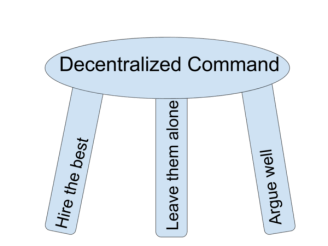
  1. Hire adults for decentralized command. “You tell me the way to do it and that’s how we’re going to do it.”
  2. Be consistent in your actions. Jim says he has a low standard deviation.
  3. About meetings. “Meetings, for the most part, are a waste of everyone’s time
  4. Reputation. “Our business is based almost entirely on trust.”

Through all this, Jim had an attitude of discovery and the work didn’t feel like work. Phil Jackson opened his book this way:

“When you do things from your soul, you feel a river moving in you, a joy.” Rumi

And with this attitude, you’re motivated to practice and do many repetitions. Jim says that if you want to learn about art, “you want to look at tons of art.”

Here’s how Arnold Schwarzenegger put it:

Here are the books Jim O’Shaughnessy suggested:

  • The Tao De Ching. “I’ve been reading and reading this book since I was in my early twenties and every time I open the book I find yet another interpretation I hadn’t thought of.”
  • Adventures of a Bystander. “You look at this and say, ‘this has to be a work of fiction.'”
  • Surely You’re Joking Mr. Feynman. “This guy really had it all.”
  • Zen and the Art of Motorcycle Maintenance. “A great book.”
  • Cloud Atlas. “A tour de force.”
  • The Misbehavior of Markets. “The chapter on the destruction of the efficient market theory is worth the entire book.”
  • When Breath Becomes Air. “I’m not a crier but at the end of the book I did have tears in my eyes.”
  • For better communication, O’Shaughnessy suggested On Writing Well and How to Win Friends and Influence People.

Jim O’Shaughnessy also spoke about luck and in this last quote we circle around to where we started.

“Luck is the hand you’re dealt, talent and achievement is how you play that hand.”

Thanks for reading.


Gary Taubes

Supported by Greenhaven Road Capital, finding value off the beaten path.

Gary Taubes joined Russ Roberts on EconTalk to discuss his new book The Case Against Sugar.

This episode is another example of Roberts’s excellent podcast work. I don’t finish every episode, but do start each one. The subjects are interesting and the questioning and conversation is engaging. If you read this blog, you’ll like that podcast.

Two mini ideas before the notes.

I was shooting hoops with my daughter on an otherwise nice spring day, except for the wind. For each shot, I had to aim slightly left of the target if I wanted the ball to go it. I think biases, backgrounds, and beliefs are like the wind. We all have these unseen forces that push our conclusions one way or the other. If we want to be most accurate we need to aim a little left.

After half an hour we came inside and I thought, “that was fun.” Shooting hoops with your kids has an asymmetric return. Taubes makes the case that eating sugar is also asymmetrical. If you stop eating licorice sticks that’s a small payment for the potential upside if Taubes is right.

Onto our notes.

1/ Who comes up with new ideas? “You could argue that the times when paradigms shift, they are often driven by people outside the field with a different perspective and who aren’t trapped by the belief system of the field.”

Michael Mauboussin wrote in More Than You Know that one attribute of successful active investment managers is “geographic location.” Those people have one foot in the old (their domain) and one in the new (their location). There are other examples of this.

  • George Lucas worked in Hollywood (old) but moved to San Francisco (new) to get out of the, as Taubes says, “belief system.”
  • Warren Buffett worked for Ben Graham in New York (old) but moved to Omaha (new).
  • Paul Farmer studied medicine and medical anthropology at Harvard (old) but practiced, almost completely, in Haiti (new).
  • Sam Hinkie read investor letters (old) and applied that to running an NBA team (new).

Danny Meyer asks himself the question, “Whoever wrote the rule?” when he’s considering a new venture. In asking that Meyer gets out of the old belief system.

2/ “Nature does not divide itself neatly into textbooks.” – Neil deGrasse Tyson

Taubes said:

“Last fall I was doing a BBC interview by Skype on a program where the host was a very charming geneticist from Cambridge or Oxford and he studied the genetics of obesity. I said to him, ‘Do you know what regulates the flow of fat into and out of fat cells?’ He said, ‘We don’t know that.’ I responded, ‘No you don’t know that because you are a geneticist and don’t read endocrinology textbooks, but this was worked out in the 1960’s.”

Recently I finished The Well-Education Mind (basically Tools of Titans for classical education) and was struck by how connected education can be. In the book, Susan Wise Bauer lays out a schedule of education where everything is tied, knotted, and strung together like glistening spider web. Facts don’t bob alone by themselves but instead are connected. I knew this but I don’t learn like this.

3/ Experimentation. Toward the end, Roberts talks about schools, and tells Taubes:

“Your honesty about the data reminds me of when I passionately suggest we should try an alternative to the public school system…when I say that people say, ‘what’s the evidence that your system will be better?’ I say, ‘that’s really hard to accumulate.’…all I see is that we’ve had three generations of inner city kids that haven’t gotten an education.”

Experimentation, said Brent Beshore is the secret to business success (if there is any secret at all). Ken Grossman spent his first year of work at Sierra Nevada experimenting with new recipes and systems. Take time to experiment on new things, but then, writes Andy Grove, GO!

“The time for listening to the Cassandras is over. The time for experimentation is also over. The time to issue marching orders – exquisitely clear marching orders – to the organization is here.”

Thanks for reading.

ps To circle back to where we started, what’s the wind for Russ Roberts? He’s a great interviewer but he has a lens he sees the world through too. So do I. So do you. Also, podcasts have an asymmetric return (all learning does). I like how Ramit Sethi put it:

Screen Shot 2017-04-01 at 7.39.25 AM.png


Exponent #108

Supported by Greenhaven Road Capital, finding value off the beaten path.

If you know of someone doing better commentary on technology and business than Tren Griffin at 25iq.com or Ben Thompson and James Allworth at Exponent.fm please let me know.

Each post or podcast is like the idealized college course; informational, educational, entertaining, timely, and taught by someone who’s walked the walk. Jocko Willink addressed this specifically on Twitter:

There has never been a better time to want to learn things. Wow.

Exponent episode #108 from Thompson and Allworth was about artificial intelligence in technology and they go into the issues much better than I could. Our goal is to back out and look at some of the bigger ideas.

Ready?

1/ Technology. The episode is about the growing pains between no artificial intelligence and ARTIFICIAL INTELLIGENCE. Much like Tyler Cowen wrote about the industrial revolution, the end may be nice but getting there may be messy. Some areas will see this shift before others.

“Any space that has any sort of routine work and generates data is very susceptible to this,” says Thompson. “Data is what allows the learning to take place. It’s the application of these learning algorithms to data that allows this sort of intelligence.” We’re early in this shift Thompson says, right now it’s “basically statistics gone wild.”

Allworth is more precise with a prediction:

“There’s this fascinating NPR article and it’s a map of the most common job in every state over time. There are lots and lots of secretaries in the 70’s and 80’s. Fast forward to 2014 and the most common job in every state is truck driver. They’re everywhere. Look at this big push, all this money, that’s chasing autonomous vehicles. All those jobs are at risk. It’s the same thing you just described, it’s routine and there’s lots of data.”

We can look at another technology that contributed to drastic changes, The Box. But first, checkers.

One of the first games my kids learned was checkers. Their favorite part is the double (or triple) jump. This is when instead of capturing one piece, a player captures multiple pieces by consecutively jumping the opponent. Kids love this. One day, my seven-year-old daughter double jumped and landed in my back row. Not only did she get the thrill of the double jump, but she got a king as well.

When we play, I sprinkle in these opportunities but don’t point them out. The conditions exist but my daughters have to find them first. Business success seems to be like this. A founder is in a game of checkers and if they can see a few moves ahead they can wisely position their business. This is what happened with the shipping container. Once that move was made, a flurry of events followed that changed the game.

Here’s what Ian Cassel wrote about the man who created the container. “Malcom McLean is known, or actually unknown, for having reinvented the modern world of global trade…His impact on transportation is right up there with Henry Ford and yet his story remains relatively unknown.”

McLean invented the shipping container and the ships that moved them around the world. With this change, entire industries vanished. From 1967-1976 New York City lost one-third of its manufacturing jobs. Another victim was the garment industry. “With an ample supply of cheap labor and a well-established distribution network, New York was prepared to meet the demand,” at the turn of the 20th century. But shipping containers changed the rules for labor and distribution. Of course, with shipping containers, dockworkers also saw their jobs go away. It was contraction through attrition.  What used to be a good job that employed generations of men in the same family became unavailable.

One change – from bulk and crate shipping to containers – but many effects.

Technology is like a river. It allows for an ecosystem to grow around it. New York City was a great place for making clothes because there was labor (many people, minimal cost) and a good port. The technology of the shipping container changed this is in a big way.  It rerouted the river, and when one ecosystem died out another grew up.

2/ Inverting problems. Thompson (helpfully) directs the conversation to the boots on the ground situation. We may be in a simulation, but debating this doesn’t address a lot of actual problems. Thompson says:

“It’s the big picture versus the little picture thinking. Being worried about general intelligence is being worried about the big picture, the extinction of the human race….but for now there are lots of under the surface, smaller picture worries. By smaller picture I mean, very big large massive problems. We can talk about the other problem too, but there’s a lot of talk that needs to be done about this problem.”

“That framing of top down, bottom up is exactly right,” Allworth says, “I hadn’t thought about it like that until just then it’s such a fantastic articulation.”

Inverting is thinking forward and backward about problems and can be a helpful tool for solving sticky situations. When Allworth reframes a situation as being bottom up, he’s flipping the point of view.

When Ken Grossman ran a bike shop he had no college education and barely got through high school. It could have been helpful to take night classes on running a small business (the top down approach) or he could run his own business and learn on the go (bottom up). Grossman did the latter, and it worked out well because he saw another bike shop go out of business and learned what not to do.

“If you want to understand something, take it to the extremes or examine its opposites.” John Boyd

There are valid points of view from both the boots on the ground and from thirty thousand feet and we can use both perspectives to answer questions.

3/ Soap for bad language.

“What are they going to do when no one wants their CAT scan read by a human when the machine does it better – did I just get on a soapbox?” – Allworth

Even in a podcast – a technology river itself – we still allude to old ideas. According to Wikipedia:

Throughout the 19th Century and into the 20th, prior to the invention of corrugated fiberboard, manufacturers used wooden crates for the shipment of wholesale merchandise to retail establishments. Discarded containers of every size, well-constructed and sturdy, were readily available in most towns. These “soapboxes” made free and easily portable temporary platforms for street corner speakers attempting to be seen and heard at improvised “outdoor meetings,” to which passersby would gather to hear often provocative speeches on religious or political themes.

If “tweetstorm” every replaces this I’ll be tempted to become Captain Fantastic myself.

4/ Winner take all. Thompson said:

“The problem is that, the best writer in the world can be read by everyone, the best artist can be viewed by everyone, the best music can be heard by everyone. There’s no, ‘all the different courts of Europe will be patrons of the arts’. There’s going to be the best. The best dominate in a world of zero cost distribution. The story of technology broadly and practically of anything digital is the dominance of the up front fixed cost winner.”

This was the case for the shipping container. Ports, ships, and companies are all a winner-take-all situation.

image (5).png

Writers then too will be a winner-take-all. Gulp.

But people like this blog. Why do people read this and not Thompson? Thompson is right that in a world of “zero cost distribution” the best dominate, but best is subjective. My favorite podcasts aren’t yours. Businesses that define themselves as best in class/niche can survive. A local newspaper that does great work can survive in the internet age.


And “best” is flexible. Right now Facebook is the best social network, but I spend more time on Twitter. Someday it will be something new. Twenty years ago, writes Michael Lewis, in The New New Thing it was Microsoft this and Microsoft that. The Seattle titan was going to eat Yahoo, reshape the healthcare industry, and barrel into anywhere else they wanted. Only they didn’t.

Winners take all but only in categories and for the moment.

5/ Regulatory moats. Thompson said:

“Any regulatory repeal that benefits large corporations is the wrong sort of regulatory repeal…(about Verizon/AOL deal, “sorry I got on your soapbox”)…the sort of regulation that is so problematic is the regulation that restricts new kinds of businesses because that’s the opportunity cost. What you will so often find is that the folks opposing the repeal of that sort of regulation are the companies that are already in place….they love regulation because it locks them in.”

In Cowen’s 2017 book, The Complacent Class he writes about this as a contributor to the stasis. “In other words, it is harder for new firms to get up and running, but successful firms stick around for longer; both are signs of stasis.” Thompson warns against regulatory tailwinds (or moats).


Thanks for reading, Mike