A confusing life expectancy calculation

“Statisticians are sometimes dismissed as bean counters. The sneering term is misleading as well as unfair. Most of the concepts that matter in policy are not like beans; they are not merely difficult to count, but difficult to define…the truth is more subtle yet in some ways easier: our confusion often lies less in numbers than in words.” – Tim Harford, The Data Detective, 2021

One of Harford’s goals is to help people understand the world more as it is and less as they wish it. Harford kindly covers ideas like base rates, sampling bias, and algorithm associations.

That last one has some quite funny anecdotes. For instance, one AI system was trained to distinguish healthy skin from cancerous skin. Crunching and comparing over and over are two things computers do really well, so this seemed a good fit. And it was! The AI categorized correctly. But computer code is like a mango slicer – it has a singular use. In the case of the skin cancer, what the AI “learned” was that if a ruler was present it was cancer.

That’s funny.

But also not. One economic principle that’s going to affect (is affect_ing_) work is the idea that as something gets cheaper it’s used more. LEDs and cameras are two recent examples, name an electronic product that does not have one of those. Data too, is going to be part of our lives more, and Harford wants us to think about the numbers a bit more. For instance, what does “life expectancy” mean?

“They take the relative risk at every age and they integrate it. They ask, if the relative risk this year stayed constant forever, how long would someone born today live? That’s where we lost a year, but that’s assuming Covid stays and the year we just had gets repeated .” – Adi Wyner, Wharton Moneyball, July 2021

This isn’t the only way to calculate life expectancy, but it was the way that lead to headlines like, “US Life Expectancy in 2020 Saw Biggest Drop Since WWII, With Virus Mostly to Blame”. That’s true, but is that how most people understood it?

Most of what happens, and Harford starts his book on this idea, is that we think fast. “Biggest drop”, “WWII”, and “Virus” are all oh-boy-this-is-bad bits of information. But we dig in to what the words really mean and things look a little better.

Our tendency to think fast doesn’t have to be a hinderance. We can use this tendency to be more numerate. Books like Harford’s bump up (be Bayesian baby) these ideas. Riddles like: most British men live past the average age help too. A steady dose of numeracy uses the availability heuristic for our own good.


Not into the book thing? Harford has great podcast that cover these ideas. Wharton Moneyball is another with more of a sport’s bent. Gambling podcasts too cover these ideas. As Tyler Cowen said, it’s not that these things are VERY IMPORTANT but that if we see them more we update our mental toolboxes so they are marginally more important.

Creative Operations

Creativity according to John Cleese is “A way of operating.” This smart 1991 YouTube talk, is full of lightbulb jokes and advice on creativity. How many socialists does it take to change a lightbulb?

The problem with creativity is that it seems difficult. It’s like running a 5K for someone who doesn’t run. Like, c’mon, I can’t do that. Cleese nips this complaint right away and offers two helpful pieces of advice.

First, is to be a designer, and we are all designers. We are all designers because designs influence actions. Some designs tightly constrain action, like this Mario 1-1 walkthrough on YouTube. Other designs constrain loosely.

To design for creativity requires two things: space and time. Set the phone to DND. Sit at the desk. As Steven Pressfield notes, put your ass where your heart wants to be. Like a chef ready for the dinner rush Cleese offers his next piece of advice: think.

Rather he says ‘to play’. That’s the second step. Creativity is the subconscious bubbling up and it’s the conscious shutting up.

“As a general rule, when people become absolutely certain that they know what they’re doing, their creativity plummets.” Jon Cleese

Without interruption, think widely.

This will be hard. Most people, says Cleese, don’t like it. It’s hard to just sit or walk or be. It’s hard to just think. Annie Duke faced this. When she coached poker players they wanted to act, to do, to play the hand. But a lot of poker is not playing. Duke’s challenge was to get players to feel like they were poker players while also making good decisions. So, she reframed the actions.

Rather than playing hands as the action, Duke explained that deciding was the action. Thinking through the hands, the outcomes, the pot odds, the base rates and the game-theory-optimal case was what good players did. That was the secret for being a good poker player. This is the secret too, according to Cleese, for operating creatively.

Creative people are comfortable with the lulls. They understand that the time of play is time working on the problem.

There aren’t good metrics for this. There’s no word count. There’s no investment return. There’s no miles or dollars or calls made. There’s nothing to count which means no numbers which means no comparison which implies no value.

Do not fall into this trip says Cleese. Trust that the moments of wide-open thought matter.
After the play it’s time for work.

How many socialists does it take? Five, but they don’t change it and instead insist that it works.

F1 CAC

Customer Acquisition Costs might be the most fun business topic because it offers a lot of room for creativity and a CAC near zero makes the unit economics much easier.

One way to think of CAC is like a Nigerian Prince: how do I find my ‘customers’ cheaply so that the resource intensive activities are focused on the ones most likely to ‘buy’.

Via Business Breakdowns:

“This is probably the area where Liberty has done the most in the shortest amount of time, where what’s going on behind the scenes has changed quite a bit. They’re fine with paid TV but also want to make sure there is access to live TV to keep the F1 fan base engaged.” – Arman Gokgol-Kline

There is an opportunity cost to giving away content, but that must be balanced with the customer acquisition costs down the line.

We’ve highlighted some fun CAC ideas like viral marketing (Zillow), email signatures (Hotmail), coupons (Netflix, AOL) and bundling and reframing (McDonald Happy Meal). One addition here is beauty.

This isn’t brand new. One insight that led to AOL CD proliferation was that people will open (direct) mail that feels substantial. Rory Sutherland harks on this too: no one has ever thrown away a substantial 9 x 12 package addressed to them.

This is Todd Synder’s angle. His catalogs are purposefully beautiful and meant to be left out. The aim, said Snyder, is to have the recipient’s partner see it and say something like ‘You would look great in these clothes’. This catalog angle is decades old. Sears supposedly make their catalog’s footprints slightly smaller than the competitors so that when the housewife tidied up, the Sears one came out on top.

It’s easy (but not cheap) to buy customers. It’s not simple (or easy) to have customers find you. But a low CAC has a high value.

Thanks to Tren Griffin for repeating the ideas of CAC and LTV so many times they’re a well-worn mental model.

A confusing life expectancy calculation

“Statisticians are sometimes dismissed as bean counters. The sneering term is misleading as well as unfair. Most of the concepts that matter in policy are not like beans; they are not merely difficult to count, but difficult to define…the truth is more subtle yet in some ways easier: our confusion often lies less in numbers than in words.” – Tim Harford, The Data Detective, 2021

One of Harford’s goals is to help people understand the world more as it is and less as they wish it. Harford kindly covers ideas like base rates, sampling bias, and algorithm associations.

That last one has some quite funny anecdotes. For instance, one AI system was trained to distinguish healthy skin from cancerous skin. Crunching and comparing are two things computers do really well, so this seemed a good fit. And it was! The AI (read: computer code) categorized correctly. But computer code is like a mango slicer – it has a singular use. In the case of the skin cancer, what the AI “learned” was that if a ruler was present it was cancer.

That’s funny.

But also not. One economic principle that’s going to affect (is affect_ing_) work is the idea that as something gets cheaper it’s used more. LEDs and cameras are two recent examples. Data too, is going to be part of our lives more, and Harford wants us to think about the numbers a bit more. For instance, what does “life expectancy” mean?

“They take the relative risk at every age and they integrate it. They ask, if the relative risk this year stayed constant forever, how long would someone born today live? That’s where we lost a year, but that’s assuming Covid stays and the year we just had gets repeated .” – Adi Wyner, Wharton Moneyball, July 2021

This isn’t the only way to calculate life expectancy, but it was the way that lead to headlines like, “US Life Expectancy in 2020 Saw Biggest Drop Since WWII, With Virus Mostly to Blame”. That’s true, but is that how most people understood it? Does if this previous year repeated forever seem like a good conditional?

Most of what happens, and Harford starts his book on this idea, is that we think fast. But we can use this tendency to being more numerate. Books like Harford’s bump up (Bayesian baby) these ideas. Riddles like: most British men live past the average age help too. A steady dose of numeracy uses the availability heuristic for our own good.


Not into the book thing? Harford has great podcast that cover these ideas. Wharton Moneyball is another with more of a sport’s bent. Gambling podcasts too cover these ideas. As Tyler Cowen said, it’s not that these things are VERY IMPORTANT but that if we see them more we update our mental toolboxes so they are marginally more important.
‘Good’ numbers

This summer my kids were not going to watch too much YouTube. But, things changed. My eleven-year-old got into Moriah Elizabeth, a YouTuber into decorating and painting. Her channel is good. It’s interesting and entertaining. It, for me, avoids the overreactions and clickbait present on YouTube. She’s super positive and if not teaching kids how to be creative at least she shows them that it’s okay to mess up, laugh it off, and try again.

She wrote a book, Create this Book where each page is a prompt to draw only with polka dots, or draw a structure, or draw something without lifting your pencil from the page. We bought it. It’s fun. We do a page a day and laugh at or admire our drawings after.

This is to say that not all screen time is equal. But it’s easy to count and present equally. Apple offers a Sunday notification that your screen time was higher/lower than last week. That’s not really helpful. It would be like if a refrigerator displayed the calories consumed but not what exactly someone ate.

It also happens, says Betsey Stevenson, at the macro level during each jobs report. There’s the unemployment number and the initial response is that more workers are better. However it kinda depends on the timescale.

“When we see the ‘quits’ numbers really high that seems bad. In the short run we’re going to see fewer jobs. But it’s actually an optimistic time.” – @BetseyStevenson The Ezra Klein Show

People tend to quit their jobs when times are good and the next job is immediate. As people move about in the economy it follows that wherever they land will probably be a better fit, a win-win for everyone. But that’s hard to quantify.

One way to flip this problem is to restructure the counts. Basketball coach Todd Golden will redraw the lines on a basketball court. If a player shoots from inside the arc it’s worth one point. Shots outside the arch are worth four. That’s clever counting. Restructuring the way a player perceives the points is a way to find the ‘good’ numbers.

USA Swimming Analytics

The first breakthrough in swimming was imitation. Like with high jump, seeing a new way to do things helped. The second breakthrough was underwater footage. What’s next?

Adi Wyner asked, is there anything beyond video helping with swimming improvements? It’s a good question. Let’s get some sweet advanced analytical fruit from the random forest up in here!

“We don’t have any tools to calculate instantaneous velocity, which would be the most helpful. It (the tool) also can’t be something that burdens the swimmer because if equipment is hanging off of them it changes how they are interacting with the water.” – Russell Mark, USA Swimming, July 2021

It’s the classic question: how do I know what to do?

It could be that baseball was uniquely suited to analytics: lots of data, one-v.-one matchups, less cultural importance (relatively). Swimming, Mark explained, has a lot of different body types and so there’s less data and fewer answers for “what to do”.

But it’s not completely empty. USA swimming for instance hosts the Olympic trials three weeks before the games. The thinking here, explained by Wyner, is that individuals vary in their performance but not too much during this competition window. If variance runs ‘in chunks’ then a proximate trials-games window makes sense. This theory might work, it is showing some alpha erosion as for the 2020 games Australian swimming has copied this schedule.

Luckily most of life is not the Olympics. The greatest athletes in the world looking for improvements “at the margin” is not the model. Most of life is answering questions like a 15 or 30 year mortgage? Most of life is just choosing from the good options, not finding the best one to the nth degree.


It feels odd writing about luck without mentioning The Success Equation by Michael Mauboussin. There we go, it’s mentioned.

Favorites or the field?


The top five S&P companies account for 22% of the index’s earnings and a similar percent of the market cap.

“To me that is an interesting market question right now. If you were a betting man would you take the other 495? Would you take the field or would you take the Lakers with LeBron, a healthy Anthony Davis, James Harden and Kevin Durant on the team too?” – Carl Kawaja, Invest Like the Best, July 2021

One way to improve decision making is to understand the mechanics of a system. The physics system for example is relatively stable and that’s why, with great work, engineers can land the Perseverance rover in a Martian area twice as wide and one-third as long as Manhattan. Other systems, like social systems, follow the rules of network effects like the friendship paradox.

Sometimes analogies help to understand the type of system. One sporting analogy is to take the favorites or the field. When Kawaja’s episode was released, the Chiefs and Bucs had a cumulative 33% chance to win the NFL big game. Sports vary though. In January 2020, three NFL favorites had cumulative odds of about 30%. Meanwhile the top three NCAAF football favorites had odds of about 75%. Three tennis players at the French Open get a bettor to better than ninety-five percent. Want to bet the PGA Master favorites? The top seven golfers only get you better than a coin flip.

Odds in January 2020

One reason to take the field is that more can go wrong than go right. Something is always happening and it’s more likely to be a “negative tail” event than a positive one. During the 2020-21 NFL season we guessed that Tom Brady would not hit the over on passing yards (he did) by guessing that injury, Covid, and new teammates had a much larger downside area. Kawaja recognizes this too, noting “guys get injured”.

It’s not that the field or the favorite is better, but which is cheaper relative to the expected returns. During the Big Game for instance, things happening (safety, two-point conversation, etc.) are priced higher because people like to bet more on something happening. Successful betting and investing isn’t about finding the best, but finding the best odds. Yes, the Chiefs and Apple are great teams but is there value in the high prices?


Physics systems or social systems are wonderfully illuminated in Nassim Taleb’s book Antifragile.

Fire hoses and tea cups

There are three ways to spend your days online. The broadest consumption of information is the Trend. A curated collection of information is the Feed. A laser focus is the Search. The best way depends on the situation. An ‘end of’ moment has more Search. A start has more Trend.

It’s not simple to know which way to spend a day but Jason Zweig beautifully addresses the balance of the three ways, the feeling of FOMO, and offering tactical advice on how to spend your day.

“If you’re drinking from a fire hose, which we all are, then the only sensible thing you can do is let it run. There’s no point in trying to put your face in front of the fire hose and open your mouth as wide as you can and take it all in. What I do is let the fire hose run and then once or twice a day take a little tea cup and dip it into the fire hose and pull it out and see if I like what I found.” – @JasonZweigWSJ, The Long View

This style of checking in feels slow. But then again, what does the work need? “Any recommendation to take action,” Zweig told Shane Parrish, “has to be compelling enough to overcome the inherent intrinsic advantage of just sitting there.” We design our own performance architecture and metaphors like fire hoses and tea cups helps us think — at least like Jason Zweig.

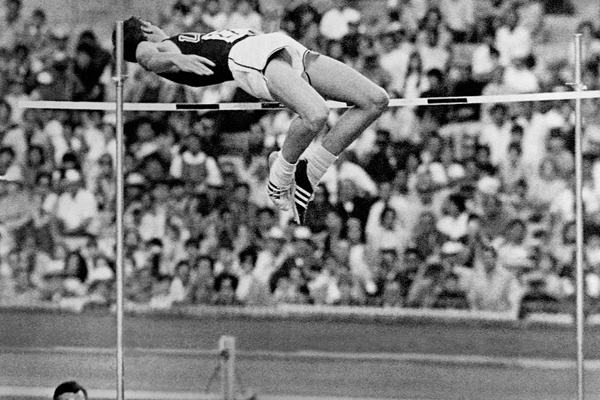
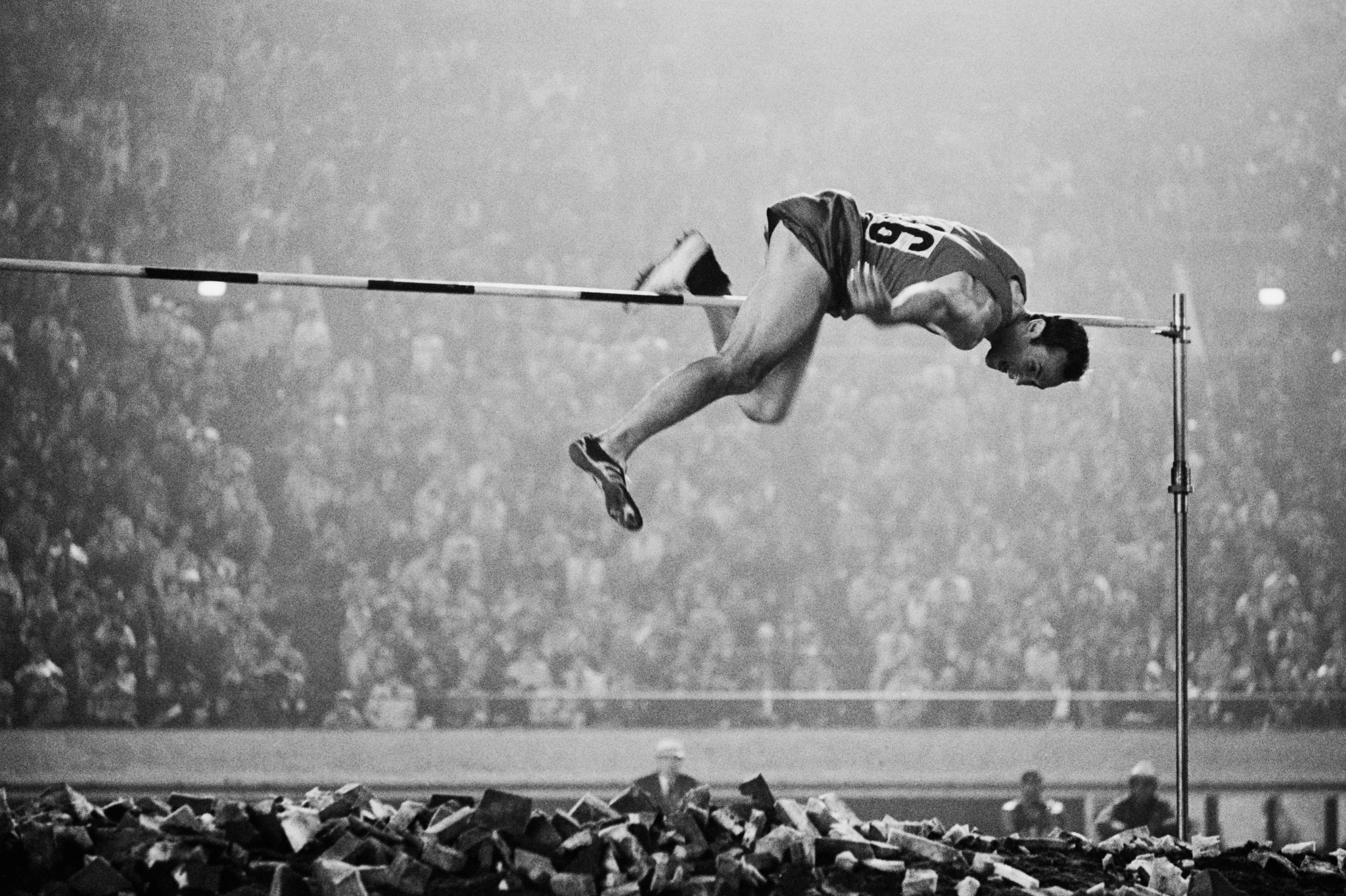
This time is different part 3, the high jump

This is 1958 (via Wikipedia):
1958 high jump

This is 1964 (via Getty):
1964 Getty

This is 1968 (via Getty):
1968 Fosbury

High jump has always iterated in style but prior to 1968 each iteration was limited by the landing. When participants landed in sand they landed on their feet. As the pit changed from sand to wood chips to foam the form changed with it.

Normally we focus on the stakeholders and reducing the restricted action section. Sometimes limits are malleable but sometimes they have to be structural changes. Technology, even just foam, is an external change that might mean this time is different.


This time is different: Part 1, ask what rules have changed? Part 2, use a coin flip or hurdle model, this time is different because only two heads, rather than three, are needed.

Landslides

One idea (Rory Sutherland and Nassim Taleb talk about it most) that’s perpetually interesting is that in real life 2 x 5 does not equal 5 x 2. One perk of Central Florida is the theme park day trip. Going to the theme parks seven days during the year is different from a seven day vacation once a year.

The heart of this idea is the balance of effect and time. Sun-skin damage is like this. It’s much worse to get sun burnt twice a year than it is to get the equivalent amount of sun spread over many days outside. Stress follows this pattern as well, and sleeping on it tends to always make things better.

This (via Reddit) is the best visual representation of the idea. The same amount of material flows down but it reaches the town at different times. We used to live in Athens Ohio which would periodically flood and it was the same idea: effect over time. Five inches of rain in one day was not equal to one inch of rain over five days.

Marc Andreessen commented on this too with regards to the culture of work: “I’ve never really got the water cooler conversation thing at the office. Maybe it’s because I’m too introverted but I always thought the water cooler conversations were so facile, light, and substance free…I wonder if the in-person setting of an off-site, over a meal, over a drink where we aren’t under pressure or in between meetings or emails, where we actually get to know somebody might actually create much stronger relationships than someone you see at the water cooler everyday.

If the mechanism is effect over time, we can consider how to extend, delay, compress, or shift some impact in time.

Liberty addressed this in edition #149 regarding self-driving cars: “If they’re all communicating at very low latencies, it’s trivial to make micro-adjustments to avoid animals, and all other cars around would know what your car is planning on doing before it does it…To a computer, it’s all happening in super-super-slow motion.”

March 28, 2022 update: This idea continues in the 20,000×1!=1×20,000 post.