Bethany McLean

pablo-7.png

Supported by Greenhaven Road Capital, finding value off the beaten path.
Bethany McLean spoke with Patrick O’Shaughnessy about her career, her writing, her contacts, and her (evolving) skepticism. We’ve highlighted Bethany McLean‘s conversation with Barry Ritholtz too.

Critical dogged empathy. O’Shaughnessy heard that “good investors are a bit like journalists.” Jason Calacanis has heard this too. We’ve talked about the Sizzle (and Steak) of selling, and there’s a lot of people out there telling us now nice it is. Investors and investigators sniff through the hot air. Chris Douvos said that to be an investor, “you have to be a professional skeptic, everyone is a fantastic salesman. You can sit there all day and get pitches from people and every opportunity is as exciting as the last.”

Jim Chanos agrees, “There are thousands of people gainfully employed, making a lot of money, who are there to promote stories…who are always going to tell you why it’s fantastic. There are only a handful of people who are there who are going to say ‘This glass might be half empty rather than half full.'”

You get to talk to smart and interesting people, McLean tells O’Shaughnessy. “I just like to figure things out.” But the critical dogged empathy required to figure things out took time to develop. It was like a muscle. McLean had no cynicism or skepticism is the early days. After a few wrong theories about stock perforce, “and I just don’t like being wrong,” she started to look closer.

She hounded Chanos and Doug Millett. What are you working on?

Enron they said.

But with only a start the end wasn’t clear. McLean had to dig. She had to ask questions and then sit and listen. How?

“To start, you have to really care. If you really care what the person has to tell you that will come through and people with respond to interest.”

Eric Maddox said, “It was important to look at both sides as objectively as I could.” Chris Voss said, “There’s a lot more space between Yes and No that most of us realize.” Maddox and Voss, along with Getting to Yes were all in our Negotiation post. McLean knows this stuff. Do your work ahead of time, she told O’Shaughnessy.

“You need to know what’s knowable because there’s nothing more off putting than having asked for someone’s time only to show that you haven’t done your work.”

There are no real-life movies, though movies will be made about real life. McLean has to dig, exhume, and reconstruct. She’s a financial archeologist.

“For me, writing is an act of finding clarity and it’s an iterative act. You try to write. You realize you don’t understand. You go back and try to figure it out. You try to write again. You realize you still didn’t figure it out. But it’s all a process of finding clarity.”

It’s a difficult process because life is a series of part-of-the-reason explanations.  McLean says that the bad businesses she covers are a mix of self-delusion, rationalization, ego, and idealism. These are the things an investor or investigator needs to understand because some subjects need convincing. “I convinced Microsoft that I didn’t have it in for them.” This takes empathy. “Even if you see that they’re skewed in their point of view why it’s skewed.”

David Ogilvy tried to build empathy and understanding. “I have always tried to sit on the same side the table as my clients, to see problems through their eyes. I buy shares in their company, so that I can think like a member of their family.”

McLean tells stories. Often she tells the counter-story. O’Shaughnessy said, “This idea of storytelling in business is amazing because of the power that you can create something from nothing with a great story.”

Sometimes those stories are buoyed by obfuscation. Mike Pearson, McLean guesses, was so successful because he “spread a veneer of efficient capitalism over it.” Another story  is the home ownership story. It’s the focus of McLean’s latest. This is a great part of the podcast as McLean and O’Shaughnessy discuss the tangledness of life.

Mortgages are forced savings mechanisms. That’s good right? Fannie Mae has an implicit guarantee. Is that right? McLean says, “The irony of the worlds most capitalist economy-in theory – having a government supported housing system is huge. The way in which this has happened is fascinating too because it was sort-of accidental and I love things that have come to seem inevitable but were actually accidental in the way they were structured.”

Accidentally structured could be every story.

So is fracking. What do you need to dig lots of holes? Not shovels but cheap capital.

This podcast felt old and wise. It’s not about crypto. It’s not about machine learning. There’s no new factor for investors or book suggestions. If anything McLean’s study of failure felt peaceful.


Thanks for reading.

Michael Fishman

pablo-6.png

Supported by Greenhaven Road Capital, finding value off the beaten path.

Michael Fishman is the Assistant GM of the New York Yankees. Fishman majored in Math at Yale, computed insurance risks as an actuary, and won a surfing fantasy sports competition. On the Wharton Moneyball podcast, Fishman said that he wanted to bring an actuary mindset to a basebal field.

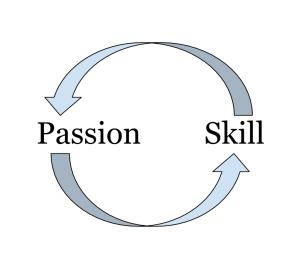
“The change I wanted to make was taking the subject matter from insurance to baseball. How could I take what I was good at, math, and combine it with my passion, baseball.”

Like Ted Sarandos, who saw Marvel’s big screen success and tried it at Netflix or Sam Walton who saw what the retailer across the street did, Fishman took something that worked over there and tried it over here. Even David Letterman’s Top Ten list bit came from someplace else.

But new ideas expire and innovation becomes commonplace. Edges erode, and that’s happened quickly in baseball.

“Moneyball, which came out in 2003 was a big factor. Teams started realizing other teams were doing things they weren’t doing and there was a need to incorporate statistical analysis within teams.”

The problem is one that Rishi Ganti talked about with Patrick O’Shaughnessy. Once there is a market – more than one buyer – there are market prices. Billie Beane’s Oakland teams purchased value because they were the only buyer.

David Heinemeier Hansson said that he looks for companies that, “rarely get any PR at all. Most companies that run like us are smart, they duck, they don’t talk about how much money they make. They don’t want to attract any attention.”

The Yankees get a lot of attention, and it’s not as odd as it sounds that they should adopt a Moneyball mindset.

“There are inefficiencies at all levels to take advantage. In a smaller market it’s trying to find cheaper players who are under valued. But those same things still apply to a bigger market club as well. More cheap talent you can get into your system allows you more payroll flexibility.”

In Astroball that payroll flexibility was in the draft. Edges change but the availability of them does not. Baseball players may be on the warning track in front of  Gould’s Right Wall. Maybe the next edge isn’t on the field, it’s off.  “People off the field can have a legitimate impact on the field,” said former Yankees third baseman Chase Headley said.

If that is the next edge, all the stakeholders have to buy-in. Fishman said, “I’m fortunate to be in a situation where analytics is a big part of what we do, and with the belief of all the key people in the organization.” Top-down support and a decentralized command helps. For Brian Koppelman it’s writing the words but letting the actors “make it additive.” Warriors GM Kirk Lacob said, “I always thought our secret sauce was that we have great people and turn them loose and let them do what they’re best at.”

These kind of environments are built on good communication. Headley  said, “It’s a different dynamic being told by somebody who hadn’t played the game before where you need to stand.” Convincing players is a challenge the Astros, Pirates, Athletics, and Yankees have all dealt with.

There’s a salience to the vivid. Fishman said, “You take an example from defensive shifts where some teams started experimenting with it and there was some pushback every time you see a ball get through where a fielder would have been in a normal defense.” Each of the books; Moneyball, Astroball, Big Data Baseball, chronicles the conversations. Often there’s one player whose career gets a boost from the new approach and the other players are slowly convinced.

Fishman and his fellow GMs realize that analytics isn’t a silver bullet.

“Looking through the two lenses (scouting and stats) you want to have many different opinions about a player and try to see if something is being missed.”

They know to be suspicious of simple storiesDan Carlin said, “Any time I hear an argument that’s black and white I can almost automatically assume that it’s wrong. Sometimes reality is black and white but that happens so rarely. The majority of the time it’s complex.”


Thanks for reading.

Sam Walton

Supported by Greenhaven Road Capital, finding value off the beaten path.

An audio post today. You can listen to it on Soundcloud, iTunes, or Overcast.

https://soundcloud.com/mikesnotes/sam-walton-making-it-in-america/s-BUWHJ

It’s about Sam Walton’s expansion from Main Street to Wall Street to Every Street. We’ll look at his small bets, the mindset to experiment, and why to bring doughnuts to the tractor trailer drivers. Inspired by Walton’s book, Made in America.


James Aitken

pablo-5.png

Supported by Greenhaven Road Capital, finding value off the beaten path.

James Aitken spoke with Ted Seides on the Capital Allocators podcast. What I liked most about this episode was Aitken’s approach to interestingness.

We’ve written about that’s interesting moments before. Eric Maddox had his in Iraq. Brian Koppelman had his and it inspired Billions – created using career capital. Haralabob Voulgaris had his when he saw Phil Jackson say something about corner threes.

One of Aitken’s moments was when his group noticed Greeks smuggle the black economy into their GDP calculation. Aitken said it was “unusual” and, “we kind of smelled a rat.”

Aitken points out that boldness doesn’t always follow interestingness. Curiosity does. He tells Seides that his goal investing is to be less wrong.

This was an early lesson for Aitken. At thirty-one he was paired up with a pair of well-read traders. They would talk “…with all these references to psychology and history and economics, and not just Road to Serfdom stuff, or Keynes, but all these other references and historical perspectives that I knew nothing about.”

Aitken started reading more. By 2003 he was with AIG and while he didn’t understand what people were saying when they talked about this subprime insurance thing, “I kept a notebook to write things down that I heard.”

It’s something Aitken still does.  He advises clients who see something weird:

“You write that down in a book and say, ‘Something is changing here, I don’t know what, but equity index and implied volatility is no longer acting the same way it did previously.”

Writing down weird things delineates Aitken’s circle of competence. The best investor’s Aitken works with know theirs too.

“The people who ended up doing the best didn’t try to be sovereign debt heroes, they didn’t try to short all the banks, they didn’t try to be geniuses. They said, ‘We know what’s happening. It’s beyond our circle of competence. We understand the spillovers. But we aren’t going to change our mandate to participate.’ Then along comes an opportunity.”

Those great investors also have great stakeholders. Aitken’s says that great money managers have a long-term orientation and they have the right clients.

“You need the right clients. You cant have clients that ring you up every Friday saying ‘What have you done this week?’ That is just no way to manage money.”

Stakeholders exist beyond the investing realm too. Spouses are stakeholders and Aitken was fortunate to have a good one. When he started his own business “My wonderful wife was so encouraging…That’s what you need, you need that domestic support.” Healthy stakeholders trust you.

The best businesses attract the right stakeholders. Roger Lowenstein wrote about Warren Buffett’s early letters:

“By such words and deeds, Buffett was shaping Berkshire into a very personal vehicle. In effect, he was re-creating it as a public form of the Buffett Partnership. Some of his two thousand or so shareholders were in fact his ex-partners, though most were not. But one purpose of his letters was to attract and knit together a shareholder group who would behave like his partners—in other words, who would stick with him.”

Stakeholders can also be the people who work with you. It’s people who want to be right more than look good. This kind of culture, said Patty McCord, is not about “espresso or lush benefits or sushi lunches, grand parties or nice offices.” It’s about doing difficult puzzles.

These spirited places will argue well. Dying organizations will not. Aitken said, “You and I have encountered places where the founder dominates the conversation, that’s fine, that works well. But all the best fund managers I know instill a culture of collaboration. From the intern to the founder to the CIO, everyone encouraged to speak up if they spot something.”

Charles Koch calls it a “challenge culture.” Sam Hinkie said it’s a “willingness to tolerate counterarguments.” Chris Cole said he has to do this, it’s an existential questions when you’re a long volatility manager.

How do you get people to act this way? Incentives.

Aitken said, “AIG Financial Products was not the culture where you questioned things too intensively. That was most sternly discouraged.” He also mentioned the famous Sinclair quote.


Thanks for reading.

An Attitude of Factfullness

Supported by Greenhaven Road Capital, finding value off the beaten path.

An audio post (per your requests) about the book Factfullness. In this episode, we’ll look at the numbers (from A or Z to A to Z), the world (it changes), and the brain (it’s fast). I’ll also suggest some solutions like getting distance, asking ‘What’s cheaper than a helicopter?’, and the advantages of travel.

Hans Rosling’s is a nice contribution to the literature of books like A Field Guide to Lies, The Half-Life of Facts, How to Lie with Statistics, and How Not to Be Wrong. What makes Rosling’s book different (and excellent) is the gusto. It’s a book written by calloused hands. The words on the page are the same that he spoke in Davos. The thoughts are important and the thinking is too.

You can get the podcast on Soundcloud, iTunes, or Overcast.

Andreessen & Horowitz 2

Supported by Greenhaven Road Capital, finding value off the beaten path.

Ben Horowitz and Marc Andreessen released their (annual?) conversation from an a16z conference. That event included the podcasts with Charles Koch and Ted Sarandos. This is our second post with the a16z founders, almost to the day! Marc Andreessen and Ben Horowitz, July 15.

This episode is hosted by Steven Johnson who asks about Andreessen’s and Horowitz’s see it to believe it moment. Ben said that his was when he first saw Mosaic, “because for years in tech there were all these ideas about what was possible. From all the things that you ought to be able to do, but you could never actually quite get. Mosaic was it. It was all there. You were like, ‘Oh my god, the whole world is right there.’”

These lightbulb moments are all around us. Malcolm Gladwell talked about them with Tyler Cowen.

David Lynch said that he didn’t know ‘artistic painter’ was a job. When a friend told him his dad painted, Lynch thought he meant houses. Paul Rudd said something similar to Marc Maron.

Andreessen’s moment came via the television. Watching Night Rider and seeing KITT speak Andreessen said, “I think I fell off the couch.”

knight rider film GIF

Johnson also inquired about their relationship and asks how Horowitz and Andreessen argue so well. It was Marc’s interview with Tim Ferriss that first suggested we argue well. Horowitz explained it like this.

“We are close enough in personality but different enough in skills that we often see things from different angles. A lot of it is Marc himself. Marc like to take the other side of an argument. He just enjoys taking the other side, that’s his thing.”

It takes “a level of trust and we can really go at it in way that for most people you’d go, f-you, you can’t talk to me that way.”

It’s not easy. Dan Egan said he underestimated how difficult it would be to make sure people felt respected and heard, and still disagree. But good arguments make better companies. In Brad Stone’s book, The Everything Store, he wrote, “Amazon’s culture is notoriously confrontational, and it begins with Bezos, who believes that truth springs forth when ideas and perspectives are banged against each other, sometimes violently.”

Andreessen goal though isn’t to be right. “The way I think about is this; it’s more important to have a successful partnership than being right on any particular issue.”

Their opinions evolve as they see two-thousand pitches a year. These are “some of the smartest people in the world in all the domains they are operating in.” Andreessen said, and, “After that it’s hard to pick up a magazine because you’re seeing this stuff months or years before it shows up in the press.”

Marc’s reading habit is an experiment this year. He’s trying the Talebian suggestion to barbell the content. “I’ve stopped reading newspapers and magazines…I only read books and social media.”

Why books? “Books have probably become the great underestimated source of information relevant to our daily lives.” Audiobooks, for example, are great while washing the dishes. What books does Andreessen like? He called Finite and Infinite Games “a great book that goes through history where politicians and philosophers thought the world was zero sum and huge battles were fought but three-hundred years or so ago Adam Smith and a bunch of other really smart thinkers noted that you can gain from trade and it’s good for everybody.”

We’ve done posts just about books here; China Books and Deep Books.

You could also listen to music. Horowitz quoted hip hop in his book The Hard Thing about Hard Things because it’s, “a very capitalistic form of music. The main theme of hip-hop is, how do you build something out of nothing, how do you compete.” This is a “perfect analog for entrepreneurship.”

These books, tweets, albums, and songs are mostly heard in Silicon Valley, a place with a secret history. Why there? “It’s the place where the really smart engineer, programmer, sales manager, marketer – on the margin – is more tempted to move to,” said Andreessen.

But it’s still an amalgam. The duo suggest reading The Tinkerings of Robert Noyce.

It’s a place making collaboration software by engineers who must be present. Andreessen thinks the relocation advantage has a psychological explanation. “It just so happens in the form of traditional companies it’s better to get everyone in the same room.”

But that’s for traditional companies. In other instances brainstorms (like at IDEO) and arguments are deafening.  George Lucas moved from San Francisco, not so much for what it offered, but to get away from Hollywood. Warren Buffett lives in Omaha. Ken Burns lives in New Hampshire.

Toward the end of the conversation, the discussion turns to ideological biases. Andreessen said that people look at Blockchain and:

“If people walk up to this idea from the right they’re like, ‘what on earth is this decentralized hippy thing?’ And if they walk up from the left they’re like, ‘Oh my god it’s got money in it must be evil.’ You gotta wrap your head around it and we see it as a third model for innovation. Many of the smartest mathematicians, programmers, theorists, and economists are obsessed with this.”

They fail to do what Ben and Marc do well, argue. Hans Rosling wrote that holding two contradictory ideas in our head is difficult but necessary. Rosling wants people to shift their thinking from A or Z to A to Z. How? Be like a financial reporter, talk to short sellers or conduct your own Ideological Turing Test.

Another path toward incorrect conclusions is stepping outside our circle of competence. Horowitz and Andreessen are not worried about artificial intelligence. Ben said it’s “pretty low on my list.” Andreessen said, “The thing that drives me crazy about this is the freaking physicists. It’s like, I’m a computer scientists and I don’t have crazy conspiracy theories about black holes.” To which Horowitz added, “It’s hard to find an AI expert who goes, ‘Oh yeah, this is a big problem.’”


Thanks for reading.

The Work Required to NOT Have an Opinion

Supported by Greenhaven Road Capital, finding value off the beaten path.

This is my favorite Farnam Street post. It’s simple. It’s short. It’s eternal. It’s inspiring.

It’s about the idea of seeing things from your point-of-view and from at least one other.

Tom Wolfe said to be the man from Mars.

Bryan Caplan created an Ideological Turing Test.

Sam Arbesman suggested to look things up.

In his post, Parrish has great ideas. Watch out for confirmation bias. Don’t overestimate your circle of competency. Develop more than a chauffeur’s knowledge.

Parrish’s post inspires work and is sound advice. But there’s more to do. The opportunity cost to know everything is beyond high, it’s impossible. Instead, we should be comfortable saying I don’t know and I don’t care. Like a pop song chorus, let this be the refrain in your head all summer.

Jason Zweig wrote that investing in index funds, “liberated me from the feeling” and “gives me more time and mental energy.”

Like exercise, coffee, politics, diet, and religion, we each have a blend of ego and humility. Too much humility and people will walk all over you. Almost literally. Too much ego is your enemy.

IDK and IDC is a shimmy away from ego and a two-step toward humility.

Writer Katherine Boo advises to, “Wean yourself off of the tit of your own ego.”

WGL President Warren Lagarie warns, “What separates you from knowing a good deal is your ego. We always tell our interns, ‘Your ego is not your me go.'”

John Boyd warned people they could be or they could do. Being is ego, doing is not.

How?

One answer is space. Pause. Let your opinion float past. Avoid the instant reaction to retweet, to speak, to dash off a letter to the editor about the obtusity of someone.

At first IDK and IDC felt like giving up. But like Zweig notes, it gives you more energy for other things. Things you do or want to know, things where you do or want to care.


Thanks for reading.

Ron Shaich

pablo-4.png

Supported by Greenhaven Road Capital, finding value off the beaten path.

Ron Shaich is the co-founder of Panera Bread and (former, retired) CEO. He spoke with Guy Raz on How I Built This about going from handing out Tollhouse Cookie samples to opening hundreds of Panera Bread stores.

Shaich’s see it to believe it moment happened in college.

“We were in a local convenience store across from the Clark University campus and they accused us of shoplifting. I came back to campus, I was in my door room with a few friends, and I said, ‘Why are we shopping there? How the heck can they treat us like that?’ We can do this ourselves.”

Shaich grew up volunteering in political campaigns and never considered business as a career. “I didn’t see myself as a business man. It took a while to make sense. But in so many ways, running a business is no different than running a campaign. A campaign is a business where one day it ends. A business is a campaign that never ends.”

He got permission from Clark to open a store. He spent the summer figuring out logistics. It opened in the fall selling cookies, munchies, and drinks. The store took over. “I was more invested in that store than my own academic life,” Shaich said.

There is so much potential in moments that unveil the possible. David Lynch for example, didn’t know that being creative was a job. When a friend told him his dad was a painter Lynch wrote, “I thought maybe he might have been a house painter.”

With his eyes opened to the world of business Shaich headed to Harvard for an MBA, class of 1976. After graduation he got a job with The Original Cookie Company as a district manager. “I spent my time opening dozens of these cookie stores around the country.”

On one trip through Indiana, Shaich wondered why they always opened in malls. Wouldn’t urban centers, with more people, be better? Shaich said, “The reality of the cookie business, of any business, is that you gotta pay the rent. So the question is, what’s your volume?”

He suggested a change of strategy. His boss said no thanks, we only open mall-based retail units. Shaich again sees something that doesn’t make sense to him and decides to do it the way that does.

With what he’s saved and loan from his dad, he opens a cookie store in downtown Boston.  “We took the Tollhouse recipe right off the bag and I would stand out front and hand out samples. Then we would adjust the recipe based on what I would learn talking to customers.”

Whether aware of it or not – I’m not sure what they teach at HBS – Shaich is talking to his customers. Tiffany Zhong helps people who don’t learn it at school, Harvard or elsewhere. Marcus Lemonis said that customers are your first investors. Jenn Hyman did it with Harvard undergrads while she got her MBA – maybe they do teach this.

Shaich baked, questioned, gave change, questioned, experimented and asked more  questions. He told Raz that this cycle is the whole point of business. Don’t do it for the money he cautions young people. Do it because you like it. “I just love the process of figuring it out. I love doing the work. I was working one-hundred hours a week and it never felt like work. It was joy.”

But it wasn’t a business, yet. Shaich had $400 in sales the first day. That’s fine, but it’s a lot of work to sell that much in cookies. Shaich needed something else. But what?

In the ask-questions-then-make-small-bets part of the process, Shaich noticed something. No one came in before noon. People might not want cookies before noon, so what do they want? Baked goods. He approached Au Bon Pain, and “I became their licensee for the one square block around the cookie store.”

Business was good but Au Bon Pain was bad. Well, not bad, disorganized. “To this day I’m sure I still owe them money.” Shaich saw another opportunity. He bought the company and combined the two.

While talking to a customer one day, Shaich got an idea. “I would be in a restaurant and have a customer walk up to me and they’d ask to have their baguette sliced.”

Why? They wanted turkey and cheese on it.

“You didn’t have to be a Harvard MBA to say, the real thing here is that the baguette is not the end, it’s the platform to sell sandwiches. My whole view of business is that if you really focus on listening and seeing you’ll learn amazing things.”

lightbulb

“In their behavior, these customers were showing us the opportunity.” Sometimes customers come to you, sometimes you go to them. Before Patrick Collison started Stripe he talked to people in the Bay Area about a payments service and found, “this pond was actually a much larger ocean.”

Shaich added sandwiches.

Competitors arrived.

Pepsi tried to imitate them. Sara Lee too. Though under funded and less educated, Shaich survived. Why? They talked to customers and gave them what they wanted. Soon Shaich acquired the St. Louis Bread Company. Their nineteen stores were doing more business with larger footprints that cost half as much. What gives?

Their success was because they were the third place. Shaich describes it as “the kind of space where you want to sit and do an interview, a place for a bible study group, for a team meeting.” He rebranded everything as Panera Bread (except the St. Louis market) and begins to expand.

“I’m always looking for the deeper trend. Post World War Two fast food was special.” This was Harry Snyder‘s and Ray Kroc‘s story. The same story played out with Milton Hershey‘s and Coca-Cola after the Civil War.

By 1998 Shaich had one-hundred fifty stores. But there was something more. A great secret to unveil. It was more of Panera. He sold Au Bon Pain. “I wasn’t downsizing. I was focusing. In retrospect it looks brilliant but going through it was horrible. Au Bon Pain was like my first child but sometimes you have to march forward.”

By 2003 Panera had one-billion dollars in sales. “I never do a victory lap. The time to worry about tomorrow is today.” That mindset paid off in 2008.

“Our whole view was to make smart bets and one of those smart bets come from a contrarian perspective. Pre-2008 recession the whole world was in a go-go-go kind of context. Everyone was levering up and taking on debt. At that time we held back. When the recession hit -as Warren Buffett put it, that’s the time you make a fortune – our sales were still strong and we invested in growing even more quickly during the recession. Real estate prices were down twenty percent and construction costs were down twenty percent while our competitors were ripping costs out of their P/L trying to keep their costs down.”

Panera is again a private company. Shaich sold it because there’s too much short-term-ism in public markets. When you have such short-term pressure on CEOs they react and what that means is cost cutting and they avoid the transformative events that drove the success of Panera.”


Thanks for reading. In the spirit of the post, I wrote this in Panera Bread Cafe 4194.


Martina Navratilova

Supported by Greenhaven Road Capital, finding value off the beaten path.

Is tennis the best sport metaphor for life? It has immediate feedback. It’s mostly individual but with some coaching. It’s mostly skill with sprinkles of luck. It’s a game where effort yields rewards.

We’ve touched on the game before. Brad Gilbert coached us to play games within the game we could win. Andre Agassi wrote about the two games of tennis. Timothy Gallwey encouraged us to let go of judgments but do not ignore our errors.

Let’s ‘play another.’ These notes are from Martina Navratilova’s conversation with Tyler Cowen.

Copy and paste what works. Tennis.com wrote that Navratilova “seemed to hit bottom” in 1981. After a 6-0, 6-0 loss to Chris Evert, Navratilova was introduced to Nancy Lieberman, and she told Cowen, “I thought I worked hard enough, but then she introduced me to running suicides on the basketball court.”

Lieberman taught Navratilova to play basketball, not tennis. Martina liked basketball enough they played most days after lunch.

Tony Hsieh saw that selling shoes without trying them on was already working – via catalogs. Ted Sarandos saw that comic book shows and movies were already working – via Hollywood. Carl Turner Jr.’s father saw that dollar sales worked.

Navratilova couldn’t do exactly what other tennis or basketball players were doing, but she could do her own version of it.

Focus. About writing in a journal each day Navratilova said, ” It worked because it really centers you. It narrows it down, whatever long-term goal you have.”

Journaling for Navratilova also allows her to keep track. “It’s always good to keep track, whether you’re playing points — keeping track that way — or just measure your progress or maybe regress some days.”

Counting and marking improvements is something Jocko Willink advises in his Field Manual. Dan Ariely said that we needed reminded of goals. It’s too easy to get stuck in your inbox, and “Every time you’re doing something, you’re not doing something else.”

Finish line fallacy. Sometimes literal, in the case of Amelia Boone. Sometimes more metaphorical in the case of tennis rankings. Navratilova never got sucked into this fallacy. ” If you tried your best and your best ranking ever was number 10, then the other nine players were better. But if the other nine people weren’t alive, you’d be number one.”

Besides a focus from journaling, Navratilova focused on excellence rather than perfection. “It’s good enough to be excellent. That’s good enough. You don’t need to be perfect because perfection just happens by accident.”

Scott Malpass has the same mindset. “At the end of the day we don’t really care much about what other people are doing. We’ve got our own risk tolerance, our own mission. We are going to do what we need to do for Norte Dame.”

**Conditions matter.** “The one thing growing up in a communist country, perhaps the only good thing about it, was that it was OK to be a female athlete, or anything, really.”


Tennis as an individual rather than team sport helped too. “I was lucky that I could come out (as gay) because I knew I could still play tennis no matter what happened. Endorsements, I didn’t care. I lost a lot of money, but I just wanted to play tennis and be true to myself. I knew I could still play no matter what. The ranking is this — you get to play.”

Alice Waters‘s life is different if she never goes to Berkley. Andy Weir‘s life is different without the internet comments section.

Fortunately, conditions can be designed. Landscapes help eliminate drug gangs. Landscapes help us run faster. Landscapes help us be more creative.

Don’t guard the line. Asked about doubles advice Navratilova advised:

“Well, the biggest thing in doubles is cover the middle. People cover the line too much, and you may get passed once or twice down the line, but you will get 15 balls go through the middle…But if it’s down your line, everybody’s embarrassed because it’s my line. So people guard the line with their life, and they leave the middle too open in regular doubles.”

Some things look bad and some things are bad. Conventional wisdom (and the base rates) in doubles tennis tell players to not guard the lines as much as they do. Yet players do because they look bad.

This is a major issue in professional sports and the application of analytics. During the 2012 Pittsburgh Pirates the players were apprehensive (at best) about shifting in the field. Like tennis, it was easy to see the balls that went where the players used to be. Much harder was seeing the plays that worked because of where the players were.


Thanks for reading.

Jack Reacher

Supported by Greenhaven Road Capital, finding value off the beaten path.

Spoilers, like Reacher’s elbow, arrive fast and unexpectedly in this post.

The Jack Reacher story by Lee Child is an ongoing, twenty-two book, series with the title character as a former Military Police officer acting as a good guy Goliath.

Reacher has survived, in part, because of his good decision-making. Let’s take some snippets from The Midnight Line and see how.

Have good systems. Reacher mostly traverses the country in buses. How does he choose where?

“At the (bus) depot he did was he always did. He bought a ticket for the first bus out, no matter where it was going. Which turned out to be an end-of-the-line place way north and west, on the shore of Lake Superior. Fundamentally the wrong direction. Colder, not warmer. But rules were rules, so he climbed abroad.”

Whether it’s wearing or eating the same thing or acting and choosing one way, good decision makers systematize certain things. Reacher’s system is designed to fight temporary sentimentality. Though unattached, each book includes some romantic interest. Reacher created a system to avoid his weaknesses and keep him on the right long-term path.

Notice the details, like how tall is Jimmy Rat? When you’re Jack Reacher, with hands as big as catchers mitts, you win most fights. But Reacher doesn’t enter fights blindly.

“Reacher stayed where he was. The bike (motorcycle) the new guy had glanced at was one of the three with silver runes. It was a huge as all the others, but the footrests and the handlebars were set a little closer to the seat than most. About two inches closer than the new guy’s, for example. Which made Jimmy Rat about five-eight, possibly. Maybe skinny, to go with his name. Maybe armed, with a knife or a gun. Maybe vicious.”

Paying attention to the details Reacher knows he’ll fight seven, not eight guys. He’ll know who Jimmy Rat is once he goes in the bar. He knows he’ll be armed.

Like his compatriot in the land of fiction, Sherlock Holmes, who admonished Watson for not knowing how many stairs led to their residence, Reacher looks for important details.

Keep options. Reacher’s observations of the motorcycles lead him inside, then back out again, this time not alone.

“The seven guys fanned out in a semicircle, three on Jimmy Rat’s left, and three on his right. Reacher kept moving, rotating them the way he wanted, his back to the street. He didn’t want to get trapped against someone’s rear fence. He didn’t want to get jammed in a corner. He didn’t plan on running, but an option was always a fine thing to have.”

Gene Kranz wrote about the Apollo 13 disaster that we saw in the movie, “Generating options was our business, and options remained as long as there was power, water, oxygen, and propellant.”

Avoid emotional decision-making. Soon after orienting himself among the bikes and the bar, Reacher wanted his opponent to take action. If they rushed him, he’d lose. But he educates the reader, on how to fight seven guys. You don’t. You take down one and fight six. The another to fight five. He needed them to come one at a time, he needed them lathered.

“He (Reacher) said, ‘Then I guess I was just born lucky. This is like winning the slots in Vegas. Ding, ding, ding. I got seven big girls all in a line.’ Which got a reaction, like he wanted it to. Like he needed it to. Motion was his friend. He wanted moving and momentum. He wanted them raging and blundering. Which he got.”

Seeing the world The Midnight Line is about Reacher’s attempt to find a character named Sanderson. In one scene he tells her sister:

“It gives us a wounded Marine officer and a wounded army officer in the same place for six months. Such a thing could go either way. They would have been the worst addicts in the history of the world. Or they could have been doing better, with each other’s moral support.”

Reacher would agree with Hans Rosling when he said, “If you have strong opinions which are not based on facts you’re going to have problems sooner or later.” Reacher thinks like Phillip Tetlock; chances of this and chances of that.

But ambiguity is hard to explain. Here’s the Wharton Moneyball crew expressing the challenge:

https://soundcloud.com/mikesnotes/the-wharton-moneyball-crew-on-communicating-uncertainty


Liquidity. Two-thirds through the book Reacher finds Sanderson. She’s an addict. She wants to stay where she is – at first. But she can’t. Her dealer will confess and the authorities will come.

“Sooner or later he’ll say the wrong thing. It would be prudent to assume the clock is already ticking. We might want to revisit the timescale for getting out of there. No point still being around when the supply cuts off. Definitely no point still being around when the Feds show up. I know how hard this is for both of you, but those kind of problems would make it much worse.”

Investing plans and non-fiction best-sellers both need liquidity. Financial Crises all have a liquidity component. Owners need to sell to buyers. Reacher needs to leave before the Feds arrive. As they say, timing is everything.

Lifestyle creep. Reacher’s addict needs pills to keep going. There’s a good sequence toward the end of the book about getting a few more. For her it’s pills. For other people it’s lifestyle creep. When talking about getting the addict help Reacher said:

“You can get IV’s at home. With a certain kind of doctor. Your sister will find one. The kind who will also advocate a very long slow glide path, when it comes to dependency issues. The kind who might want to maintain your current habit for at least another year, while you settle in.”

Sanderson has so much to look forward to, except the loss of her pills. David Ogilvy put it this way, “Winning a new account is a heady experience, but losing one is pure hell.”


Thanks for reading.