Ashley McCollum is the Vice President of Tasty, the Buzzfeed food division. With 533 million global monthly viewers, Tasty is the most watched food content on Facebook, YouTube, and Instagram. One in three Americans watch a Tasty recipe each month, one in five Americans make a Tasty recipe within a week of watching a video.
Tasty started out as a curiosity. “Tasty started as an experiment on Facebook. We did not set out to build the next great massive food network.” McCollum and her team wondered, what the web allowed that was different from what came before. Once our phones had iOS, GPS, and LTE they did more than make phone calls. Once our homes had IFTTT, WiFi and iPads they did more too.
The Tasty/Buzzfeed advantage was that they were native to the web. “We just had internal talent that understood the social web.” Tom Goodwin reminds us that there is no such thing as electronic banking. Erika Nardini reminds us that there is no such thing as talk radio. We just bank, we just talk.
McCollum and her team understood the social web, understood the value of sharing, and understand that brand relationships have shifted.
“In the past brands told you about perfection. Now, customers don’t want perfection they want imperfection and to know that the brand understands them. Loyalty to a brand is no longer the driving force to why you make purchases. We have entered a phase of loyalty to me.”
Patrick Doyle of Domino’s faced this problem during the pizza company’s turnaround. In blind taste tests, people liked Domino’s pizza more if they didn’t know it came from Domino’s. If you put the name on the box, it was about as good as Chuck E Cheese participants said.
In the past, Doyle/Domino’s could broadcast change and make it so. New and Improved – or something. But now, “It’s wallpaper. People don’t pay any attention when brands say, ‘We’ve got this new product and it’s new and improved.'”
What Doyle learned, McCollum knew. The Tasty start, “was rooted in the user, it was never about our authority.” Doyle immigrated to social, McCollum grew up there.
Cooking used to look like this, and you can’t make this up: After a date with Anthony Hopkins I was going to invite him to my giant house in Maine…
McCollum said, “You’re sitting on a couch, passively consuming video content that’s in a kitchen you can’t afford making a creme brûlée you can’t make.” And laughing with a celebrity friend, of course.
Social shifted sharing and consumption.
We’ve gone from aspiration to participation.
“Our point of view on food is that it’s about what you would want to tag your friend in to say ‘let’s do this, this weekend,’” said McCollum. These tagged posts are at least 15% of my Facebook feed. Tasty content, like Penn and Teller, meet and greets, are for sharing.
The Tasty content is made to be shared but that’s not all. “The focus was not on food. The focus was on a format that you can watch in your social feeds, post-literate, and audio independent.”
Watch it muted, watch it twice.
Watch it wherever, ain’t that nice.
Okay, but doesn’t alpha erode? Can’t someone come in and do it better? “People often copy Tasty’s format, it’s fairly cheap to produce compared to Game of Thrones, but what is very challenging to copy is what’s underneath all that. Why do these things work? Why do people connect with them?”
Why make the recipes they do? McCollum (and Ben Kaufman) know what their customers want because they see Buzzfeed clicks. Think fidget spinners and makeup have nothing in common? Think again.
Tasty surveys their users too, 75% still make a shopping list. Businesses serve customers to create sustainable profitability and from Jenn Hyman to Peter Rahal to Tiffany Zhong we see the value of understanding what customers want.
Ask what they want, watch what they do, or see what they click and then serve them.
…
McCollum at Tasty, as well as Kaufman at Buzzfeed Product Labs, are some of the more interesting and instructive studies in current commerce. Stores like Macys and Walmart think they’re doing something right and have signed agreements to work with the duo.
Marketing can be magical, creating something from just a story. That’s what Tasty is, a story about food, cooking, and who a person is. Stores like Target and Walmart used to have that. Now they have it less.
Why? Advertising used to create a brand, now content does.
Just look at sports. Each week of football season, each basketball home game, each soccer match is content that tells the story of the brand. Advertising was one-way authority, content is a conversation. That’s what McCollum knows.
Alex Rampell started TrialPay, a company that advertised to consumers at the point of purchase. Say you visited Fandango for information (movie showtimes), not consumption (ticket purchase). But you see an ad where Netflix offers a free ticket if you sign up. Well I was gonna sign up anyway the thinking goes. Click, sign-up, claim ticket. In the middle of Netflix, Fandango, and you was Rampell and TrialPay. The company was acquired by Visa in 2015.
Rampell is a general partner at a16z and we’ll look at some notes and quotes from his talks on YouTube.
Homes. “In the future, you will buy your house from, or sell your house to, a company.”
Real estate is a weird business. There are two million real estate agents in the United States. The median number of homes sold is two, the modal number of homes sold is zero, the top 10% of agents sell 7 homes a year, and the top 1% sell 22 homes a year. Total commissions to all agents were around 100B dollars.
Sellers and buyers are connected by agents, except for for-sale-by-owner, about 7% of sales. Spencer Rascoff, sequentially Zillow’s CMO, CFO, and CEO said Zillow sold ads, not houses. That allowed them to have the P/L of an internet company and 1B in revenue and Rascoff joked that Zillow was the park bench for the internet.
New Zillow CEO Rich Barton wants to buy and sell like Rampell recommends. Why now? Expectations and capital. “Consumers are accustomed to everything on-demand…Consumers want to push a button on their phone and take an action,” said Rampell. And this new Zillow couldn’t have been built in 2004/2005. Zillow had to be a website, then an app, and then full-stack.
The company has adapted well. Rascoff said after seeing an app store demo in 2011, “We dropped dot-com from our name and did all the little things. It was all about mobile.”
As data became more important they recruited more people. Rascoff recalled, “We called the Expedia data science leader and he said, ‘I don’t know anything about real estate,’ we said this isn’t about real estate, this is a math problem.”
Websites, apps, and data were all incremental improvements on the same model. But what if people are ready for a new model? When asked Why do we always do it this way? There’s got to be a better answer than We’ve always done it that way.
Tricia Wang saw how phone usage changed. Daryl Morey saw how basketball changed. Barton and Rampell think real estate will change.
Consider the job to be done. Sellers higher agents for speed and convenience, not price. And they deliver. Agents also have expertise, experience, and a mental database of when staging a home delivers value, when to list a property, and how to compute comparables.
Only for some of those things computers do the work much much better. This is a point hammered by machine learning experts, let machines do what they do well and let humans do what humans do well.
Rampell said, “Individual agents can look at the comps that have sold, but they don’t have a data science team. When should I list my house? November? January? March? Computers do a fundamentally better job answering these questions than people.”
Rascoff’s book, Zillow Talk, is stuff with this information. Location isn’t everything. Spring listings aren’t the same nationwide. Gentrification is not random. And my favorite chapter title, “It’s the worst house for a reason.”
The jobs people hire for don’t change much because they’re still people. We’ve been hiring for food, safety, companionship, entertainment, fulfillment, and signaling forever. So startups should look wherever people are already doing whatever. “Rich parents have always helped their kids buy their homes,” said Rampell. It’s stuff that “happens on and off but there’s never been a marketplace for this.”
Rampell wants to fund companies that structure currently unstructured behavior.
His colleague, Chris Dixon blogged this in 2013. Ride-sharing began with Moes safely getting Hoes, where they need to goes. Jan Chipchase advises to, “find people who are already in extreme situations – people whose situations or context pushes them to make the most of what is currently available regardless of existing social or legal norms. Call it innovation by necessity.”
…
FinTech “If we don’t need branches or in-person communication (thanks to the internet) what type of businesses can we build because of that?”
As Tom Goodwin noted, we only call it FinTech because it’s new. Eventually, we just call it the thing. Electric light becomes light. Online dating becomes dating. Rampell said, “In twenty years you would think about it (FinTech) as your bank, your insurance, your retirement account, you wouldn’t necessarily think of it as your FinTech company.”
Yet we have banks on main streets with clean windows and nice lobbies. Why? Stability was the signal for safety. But, “The physical condition (is) a little bit more of an anachronism than a building block for banking success.”
Banking isn’t about money. Banking is about trust.
Our on-demand, tap-tap-do-it-app, adaptations are filtering to banking too. When I worked in minor league baseball there was a two-week stretch where because of the home games, weekends, and team commitments I couldn’t cash my paychecks during regular banking hours. So I used the night deposit via the ATM. Fast forward almost twenty years and I last used a bank for their notary services and while buying my most recent house didn’t enter a bank at all.
If the branch doesn’t matter what else is changing? User Interface. Andy Rachleff said about Wealthfront “millennials pay us not to talk to them.” Rampell said, “My parents like going to the banking website, it’s a feature for them but it’s a bug for people under a certain age.”
What else? The data. Rampell talks about SoFi’s focus on HENRYs. These High Earning, Not Rich Yet consumers are filtered by degree – oooh mechanical engineering from Cal Tech – and offered attractive terms. Instead of bricks and tellers, SoFi uses reams and programmers.
Then sell them other things. If you find a high-income doctor who pays back medical school loans on time it’s likely she’ll also pay back home loans on time and car loans on time and so on down the line. Not only that, SoFi has the chance to be the default choice thanks to a good UI (the new main street) and low rates (because only HENRYs are in the pool).
New data – like college major and university – isn’t limited to the United States. Some of the most interesting work is being done in Africa or the Caribbean and using mobile phones.
In one example, only 34% of adults had bank accounts. If banking is about trust how do you trust someone with “a thin file”? But 89% of adults had a mobile phone. That’s sort of a file. Right?
One study found that borrowers with smaller networks (infrequent and fewer calls to homogenous numbers) were more likely to default. Consistent SMS use signals repayment. Another study looked at how frequently customers who’d been denied loans “topped off” their prepay mobile number. If someone topped off often they were more likely to repay than those who’d been approved using traditional credit checks.
It used to be that if you built a better mousetrap the world would beat a path to your door. Now businesses face the TiVo Problem.
Think of it as a race. Can innovators get to the market before incumbents get to the innovation? About FinTech he said, “In the US the big ones are Betterment and Wealthfront who were the innovators. The challenge it turns out that Vanguard and Fidelity and Schwab have now replicated what they’re doing and has a massive distribution.”
Rampell is the co-founder of Affirm, an organization that has avoided the TiVo problem. When asked about barriers to entry, CEO Max Levchin said about big banks, “Those guys cannot enter our business because they’re addicted to the (late fee, interest rate, and hidden fees) income.”
There’s an aphorism that something can be good, fast, or cheap but only two. Well, startups need to ignore that. Ideally, a startup will acquire good customers, in a fast manner, for a cheap cost.
Which brings us to the next part.
…
Channels & CAC
Customers hire businesses to do jobs. Businesses deliver solutions to customers.
How does a business get hired? Their customers get acquired. Hopefully cheaply. Open Table, said fellow a16zer Jeff Jordan, had a kind of negative CAC. The patrons requested the restaurants to offer online booking.
Because of the TiVo problem startups must grow cheaply, “because it’s too complicated or too expensive to compete with well-capitalized companies.” Paid acquisition, said Rob Fitzpatrick, “is mind shattering expensive. Geico spends a billion dollars a year in advertising, how can anyone compete with that?
Startups can compete because strengths are weaknesses. Where does Geico advertise? Television. Who watched television? Everybody.
What if instead of selling insurance to everyone a company sold insurance to only the best drivers? The healthiest people? What if a company only loaned money to people who were unlikely to default?
That’s what SoFi did. That’s who HENRYs are.
A business needs to have a plan as to how they can find their HENRYs. For SoFi, Rampell said, “Think of this from the psychology of the borrower, how come I’m paying the same rate of the person who’s going to default. Then, positive selection vs negative selection.”
Without a good answer to how a startup is going to acquire customers, Rampell suggests buying Google or Facebook stock, where many of these companies advertise.
"Google is the second most valuable company on earth and a big chunk of their market cap is coming from insurance. How? About 25% of the most expensive keywords on Google are insurance related." @arampell October, 2017https://t.co/5yivnu4G7c
One company doing a good job is TransferWise. “At the end of a transaction, TransferWise will probably tell you how much every bank would have charged you for the transaction. Why do they do that? The transaction already happened. They give you that reinforcement and then they say, tell your friends.”
A delightful example was shared in Season 8, Episode 16 of the Under the Influence Podcast.
Jerry Murrell used the WOM test to see if his burger business would work. The Zestimate was born after Bill Gurley challenged the Zillow team to reduce their ad spend. Part of the reason Beanie Babies went viral was because of their size. “(Founder Ty) Warner thought that the play value of a stuffed animal with mostly beans and a little stuffing would appeal to kids, and he also thought that a stuffed animal that could be slipped into a backpack would spread through word of mouth far more quickly than one that required at-home play dates.”
Brent Beshore and the Adventur.es crew have a page on their website dedicated to Amazon, comparing the company to a gorilla and the Borg. They step cautiously around businesses that might enter that Seattle based gravitational field and that might pass the event horizon into the Amazon vortex never to be heard from again.
But they don’t stop looking for companies.
And they quote Sun Tzu, If your opponent is temperamental, seek to irritate him…If his forces are united, separate them. Amazon’s size is a strength but also a weakness. Anyone competing or aligning with Amazon should know those strengths and find some weaknesses.
Moneyball arose because of strengths turning into weaknesses. Bill Gurley contrasted technology companies doing this. It works for tennis, war, and careers. How might it work for Amazon?
This post began when I had to buy Apple charging cables. In addition to normal wear and tear, my family members suffer from a, ‘I lost mine and I’m taking yours’ affliction.
A search for “lightning cable” in electronics yields 400 results. Just like Starbucks, there are different flavors, colors, and sizes. But something is amiss for a product like this. Do that many choices make sense?
Michael Munger reminds his Duke students that transaction costs are market frictions, and more friction means less exchange. Adopt the point of view of the consumer and ask:
Can I find what I want?
Can I trust it is what I want?
Can I fairly exchange money for what I want?
Amazon can be excellent at this. The company started with books where one hardcover was like another. Amazon also has great search and sprawling selection. Part of the reason bricked bookstores struggled was that Amazon reduced the friction.
The timing mattered too. Amazon (1994) arrived with eBay (1995) and the companies normalized internet strangers as transaction partners. One notable moment was when about 10% of all items on eBay were Beanie Babies, which is its own story of transaction costs. Beanie Babies were a regional toy, the value was in the eye of the beholder, and people had set up complicated systems for trading. Then the collectors found eBay. Zac Bissonnette wrote:
“In order to lure people out of their comfort zone and into the idea of e-commerce—and, even scarier, peer-to-peer e-commerce—eBay needed to offer consumers something that was easy to ship, couldn’t be found anywhere else and elicited passion among the people who were looking for it.”
eBay reduced the transaction costs and a bubble was formed.
In the late 1990’s eBay was probably the more impressive company. They owned no inventory, pioneered internet trust, and (thanks to Paypal) popularized digital payments. eBay had everything people like about Uber, Airbnb, and AliExpress. But “In 2000, U.S. Patent No. 5,960,411 caused Barnesandnoble.com to have to intentionally complicate its online checkout process. The patent owner? Amazon.”
What did that patent do? One-click payments.
What did one-click payments do? Reduce transaction costs.
Amazon is great at exchanging money for items and then if necessary, returning items for money. In the decade of use, I’ve only had two returns and both times Amazon issued a refund, no questions asked. I didn’t even return the item.
However, it’s getting harder to find the right thing. A WSJ podcast warned about vendors gaming the system. Somehow there are 400 options for a charging cord. Rory Sutherland noticed the same thing about toasters.
Amazon passed Barnes and Noble because they made it easier to find, order, and pay for a book. How true is that now?
…
Shopping or buying.
Rich Barton told Barry Ritholtz that his kids use their Alexa speaker rather than the Sonos one which is an app tap away. The kids just want to hear the song, not to hear the song beautifully.
The same is true for Tom Goodwin’s point about shopping and buying. Sometimes people want “to own something without thinking about it.” That’s buying. Other times people want to browse, seek, or hunt. That’s shopping.
.@tomfgoodwin, 2017 🎥🇦🇺 made a great distinction between buying "own something w/o thinking about it" &
shopping "making something so good that if you're bored you might decide to go there and buy something. It's entertainment."
This is why ridesharing is not a winner take all market. A (safe) ride is a (safe) ride just like a hardcover book is a hardcover book. But the same doesn’t hold for your destination. One vacation is not just like another vacation. One hotel is not like another hotel — well, it kind of is but hotel loyalty programs can make it seem like it’s not. Destinations are differentiated, getting there is not.
Ride-sharing is buying, vacationing is shopping.
Amazon is more buying than shopping.
Dollar Shave Club started because buying razors is about convenience, not experience. The best performing Dollar General stores are near Walmart stores because it’s more convenient for someone to shop the smaller footprint. More than 100 million Alexa devices have been sold and these are perfect for restocking dog treats, toilet paper, and granola bars.
Restaurants are another sector of business that has differentiated between experience and convenience. When Ron Shaich expanded Panera Bread he looked for cheap rents in suburban areas where people could linger, hold meetings, and enjoy family meals. From the bagels to the booths, Panera has always been about experience.
Contrast that with meal delivery services. Door Dash co-founder Tony Xu said, “To make the shift from selling experiences – going into the store – to convenience and they need a business partner to help them.” It’s why UberEats was such a larger part of their IPO paperwork and why co-founder Travis Kalanick is focused on ‘cloud kitchens’.
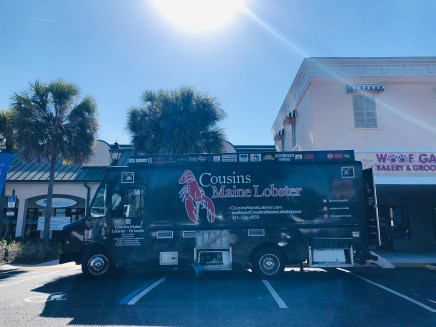
The Orlando Cousins Maine Lobster truck puttered up to where I live at the end of April. My family went for lobster rolls, lobster tacos, and whoopie pies. This once a month effort is about serving people an experience. But food trucks at lunch are about convenience, quickly serving people something new.
Music too has faced the split between convenience (buying) and experience (shopping). Compact disc sound quality was overengineered. The music industry was selling experience when people wanted convenience. Napster didn’t succeed because of the price was free. Napster succeeded because the songs could tag along. How do we know? Apple created the iPod (and along with lawsuits) the free music sites went away. Netflix went into streaming and the free movie sites shriveled.
Consumers hire businesses to do a job and businesses succeed when they do that job and adapt with the customer. Which brings us to the third point.
…
Talk to your customers.
Businesses succeed when they serve customers and create sustainable profits. Serving means passing The Mom Test. Paul English founded Kayak and carried a notebook when he traveled. When he met people at airports he asked questions. An email newsletter for twenty and thirty-something women could be run by two thirty-something women.
Carl Turner Jr. thinks that Dollar General is defensible because the people who work in the store are the same people who shop there. In his conversation with Jeff Jordan, Jordan said, “Brian Chesky (Airbnb) strongly encourages the employees to host or be a guest on the platform because it keeps you connected to the value and philosophy of the business.”
Jenn Hyman understood this. During college, she went home for Thanksgiving and visited her sister Becky who showed her a new dress. The dress was nice, but cost more than a month of rent.
Ouch. But “it was a lightbulb moment for me,” Hyman said. She’d been talking to her sister about the feeling a great dress gave. Hyman wondered, do people ‘hire’ a dress to feel good?
She took her idea back to Harvard where Hyman and co-founder Jennifer Fleiss bought 100 dresses (all their sizes, this scheme might not work ya know) and had a pop-up event on campus. But it worked. People wanted to rent dresses. Fleiss and Hyman got funding to buy dresses. Tested, built a website, then needed more funding for more dresses, better pictures, and growth.
Hyman and Fleiss headed to Silicon Valley to secure funding. Only, the venture capitalists didn’t get it because they weren’t the customers and they didn’t even know the customers were out there. Their wives were too rich, their daughters were too young, and their admins were too old.
Customers hire for jobs to be done. Businesses survive when they do those jobs. Investors succeed by finding those matches.
In our podcast about restaurants, we saw many examples. Alice Waters walked the Chez Panisse dining room. Ray Kroc saw all kinds of places as a milkshake mixer salesman but only fixated on the McDonald’s brothers. Ron Shaich asked why people wanted their bread sliced. Patrick Doyle put the honest feedback he got right on social media.
Amazon uses databases, business owners sit at kitchen tables.
Steve Jobs said that people don’t know what they want until you give it to them, but Mark Ritson and I know there’s more to that quote. People know what they want if you ask them the right way. If you sit down with them, no matter where they are in the world.
Before the iPhone was the most successful product ever there was someone warning Nokia about Apple. Trica Wang was in China, in 2009. “I did things like working as a street vendor and selling dumplings to construction workers or fieldwork spending nights and days in internet cafes.”
These were people living in the bottom quartile of worldly wealth, but Tricia Wang noticed something about them. They wanted iPhones or affordable knockoffs. “I saw people investing over half their monthly income into buying a phone.”
Nokia and RIM missed this because they assumed the world wouldn’t change. They aggregated data which requires numbers. Income, hard drive size, camera pixels, etc. But not all purchases are rational and measurable.
The iPhone and smartphone wave is parallel to the three-pointer in basketball. Of course, it makes sense that 3 is worth more than 2 and that a computer in your pocket would come after a computer on every desk, in every home. But we have a hard time predicting who will succeed when things change. Here’s Zach Lowe talking to Kevin Arnovitz about James Harden.
What’s in the “collective imagination”? Ask your customers.
Technology companies have a data advantage. That’s fine. Strengths are weaknesses. Knives cut boxes as well as fingers.
…
Channel surfing.
Amazon is one of many channels for a business. Nike sells shoes on Amazon but also its website, Kohls, and Footlocker. The question a business must ask about a channel is: ‘Who needs who more?’
When it’s hard to switch, people switch less. Switching between television and cable operators is easier than switching between phone and cellular providers even though they look the same. One piece of hardware (TV/phone) and one bit of service (internet/cell). But the job I hire my phone for is vertically integrated. That gives one company an advantage. Whereas TV is horizontal and substitutes take little work at all.
Who needs who more? Does Amazon need a merchant or does a merchant need Amazon? There are five million+ marketplace sellers on Amazon. More than 300,000 Americans joined those throngs in 2017. But there’s only one Amazon and that means Amazon has pricing power.
When one business passes along costs that another business can not, the first business does well and the second business does not. Tren Griffin says to imagine a restaurant. A landlord can increase the rent easier than a chef can increase the menu prices. That’s exactly what Amazon is doing. Amazon is like the troll who lives under the bridge, only this troll also maintains this bridge that reaches Consumer Land, population 330,000,000+.
But there are other bridges, other channels. A business needs to match its competitive advantage to its channel. Ben Horowitz said, “Your channel is a function of your product and your target customer.”
How?
Direct, all the pain, and all the gain. Ben Thompson noted that Disney+ is a great expansion for the company. What consumers watch will feed into what ads it sees for what vacations it might take. But this same direct to consumer approach probably isn’t good for Showtime.
Direct means it’s just you and them. Their payments are your profits but their problems are your problems too. Fulfilled by Amazon puts Amazon between a business and its customers, but it also means Amazon picks, packs, and ships the orders.
When Peter Rahal and Sam McBride worked on RXBar they went straight to the consumers who were in Crossfit gyms. Rahal said he’d rather be in a Crossfit box than a grocery store. Why? Direct was a better channel for the company to grow.
A unicorn in a field of horses. As far I can I tell AmazonBasics batteries are the same as any other brand of battery. They look the same, feel the same, and work when I put them in a mouse. Batteries are undifferentiated. Alex Rampell explains this for hotels.
“If the only route to the customer is Priceline and there are four hotels, all indistinguishable, then Priceline will say, ‘Hilton, I’m not going to list you among those four unless you give me 99% of your profits from each customer.’ That’s a very dangerous position to be in. Unless people show up and say ‘Hilton is the hotel I want to stay in’. Suddenly the sharing of the economic rent changes dramatically.”
That’s where the Amazon squeeze is. Marketplace sellers have to comply when marketplace sellers sell commodities.
To successfully sell on Amazon means offering something Amazon can’t or won’t.
New channels. Amazon accounts for half of all online sales which makes it the largest online channel, but less than 10% of total retail sales. That means shelf space in stores is even more competitive. How might someone get shelf space from Coca-Cola? What if that’s the wrong question? Why is a shelf important at all?
Five Hour Energy drinks did just this. The bottle is small and founder Manoj Bhargava said he started in GNC because there was more elbow room. The product was also different, it had no extra water, just the sugar, and caffeine. In a further end-a-round the endcaps, the bottles easily fit on a store’s counter.
Five Hour Energy avoided the TiVo problem, getting distribution before Coca-Cola got innovation. That said, the energy drink’s market share fell from 93% to 67% once the innovation spread. This, said Marc Andreessen, will always happen. “One of the things you see crystal clearly in VC is how much competition emerges whenever anything works.”
Uncompeteable. FinTech startups face one of the more difficult TiVo problems. “In the US the big ones are Betterment and Wealthfront who were the innovators,” said Rampell, “The challenge is, it turns out that Vanguard and Fidelity and Schwab have now replicated what they’re doing and has a massive distribution.”
So Rampell co-founded a company the incumbents couldn’t compete with. Affirm CEO Max Levchin said, “Those guys cannot enter our business because they’re addicted to the income. If you make half your money on fees and the other half on these nasty deferred interest programs.”
Affirm’s strategy is to offer simple, dollar-based pricing, loans with no fees or deferred interest programs.
I still need you, but less. A final example of a company diversifying its channels to decrease the WTP risk and increase their BATNA is Buzzfeed.
Like Amazon, Buzzfeed has multiple revenue sources; advertising, branded content, affiliate links, and products. Ben Kaufman and the product teams partnered with Shopify so that those merchants can have their items listed on Buzzfeed articles like 2016’s, 42 gifts every elephant lover will want to get this year.
Why can Buzzfeed do this? Their customers aren’t on Amazon, they’re on Buzzfeed.
…
Business owners must remember that this too will pass. No company dominates a market forever. Detroit auto manufacturers lost the car market to international producers. Microsoft lost the consumer internet to Silicon Valley. Lots of small business grow in small niches, take root, and blossom despite the harshest conditions.
Here’s what businesses need to do.
1/ Reduce transaction costs. Make it easy for consumers to find, pay, and trust your products. Currently, there’s a gap in Amazon’s find function and they don’t have a patent on good payments. Apple pay on mobile worksnicely. Tom Goodwin sells his book with a QR code.
2/ Distinguish between shopping and buying. Amazon isn’t for shopping, it’s for buying. Platforms like Instagram, Pinterest, and YouTube are for shopping. What do those platforms have in common? They’re visual. Ditto for the physical. I love visiting bike shops.
3/ Talk to your customers. Any business has to know what job the customer is hiring them to do and to understand that those jobs change over time. Amazon has better data and better data scientists but all data is backward looking. Understanding customer needs is about anticipating future solutions.
4/ Channel surfing. A business’s channel should match their competitive advantage. A direct relationship can be good but will certainly be more work. There is more than one way to avoid the TiVo Problem.
…
Walmart is my favorite example of a retailer who might be succeeding against Amazon. Specifically Walmart grocery. The service allows users to add grocery (and other items) to their cart and schedule a pickup, often the same day.
Walmart has reduced the transaction costs because all my shopping is done in the app rather than wandering the aisles. My credit card is saved in the app too. I also trust what I’m getting because substitute items are of an equal or greater value and consumers have the chance to decline offerings.
Walmart is a buying experience. I need this and this and I want to get in and out. Not only does Walmart make it easy by collecting the grocery items in the store, but they have a special side parking lot adjacent to the building where grocery customers can wait and the items will be brought to you. I time the staff and their best mark from shifting to park to shifting to reverse was 70 seconds. That’s what buying experiences should be, not the average 43 minutes.
For my family of four, we add things to the list and order via the app once a week or so. Before checkout Walmart suggests other items I’ve purchased. On average, people buy the same 13 items each week.
Walmart is not our only grocery store. There’s a Publix that’s closer to my kids’ school and we go there once a week too. But Publix is more like a shopping experience. The kids get a free cookie. We can buy fried chicken, or try a new hummus flavor, or test a new Aprons recipe. But we still use Walmart.
If you aren’t familiar with Michael Mauboussin’s work the best introduction is this FT interview from 2017. Our notes will focus on his 2019 Invest Like the Best Podcast with Patrick O’Shaughnessy.
…
Stakeholders. One of the ILTB principles is that the podcast is a way to find better ways to invest both your time and your money. We have numbers for the latter but the former is more important.
One way to think about that is by stakeholders.
Each bill to pay is a call on your income and lean on your time.
Each relationship is a mental and physical commitment to someone.
Everything is denominated in time.
One life-hacky solution is Taleb’s via negativa, remove the jerks from your life. Mauboussin addresses the opposite, add good partners to your life. “Seth Klarman of Baupost said something like, ‘The definition of a great client is someone who cashes a check when we write one and writes a check when we ask for one.'”
Rich Barton gives this advice to founders. “You want to take money from somebody who adds value and wants you to succeed and has the experience to help. Those are radically different dollars from someone who’s looking for a quick return.”
Stakeholders are important because returns are lumpy and great opportunities are scary. Someone who would have bought LTCM’s portfolio would have been fine. Someone who invested in Lyft in 2016 would have quintupled their money at the 2019 IPO. Someone who bought Bitcoin, well, let’s sit on that one.
But how much wandering is allowed? Most investors, Mauboussin said, are directed to “invest in large-cap equities or whatever so go do your thing.” But what-if there are opportunities elsewhere? When Mohnish Pabrai was asked how to be the best railroad analyst, Pabrai said it was the wrong question. “The question should be ‘where should we put our money in the entire universe of possibilities.'”
Decision making. Michael Mauboussin teaches a value investing course at Columbia and the early versions didn’t address decision making “But it is probably the most important component.”
Why is decision making so important? “You can have incredibly smart people in hard-charging organizations but they aren’t as efficient as they could be because they’re not thinking about how they’re making decisions.”
…
Machines. Is a machine going to take your job? That’s the wrong question said Paul Daugherty who titled his book Humans + Machines because it’s the “+” that’s most important. Machines are supplements first, not surrogates.
Mauboussin said the biggest change he’s seen is the rise of the machine. “Most noteworthy is the introduction and seriousness of integration of systematic approaches. How do we get to this holy grail of taking the very best of what machines do and allowing them to do that? And the very best of what humans do and allow humans to do that. I think, no question, there’s a role for humans in all this stuff. Even if it’s just in how you’re going to set up your algorithms and the judgments in that.”
We’ve adopted and adapted to machines already. Accountants use computers, carpenters use power saws, doctors use electronic records.
People adapt.
When the Oakland A’s – as told in Moneyball – started to use different analytics to evaluate players they didn’t simply rely on the algorithms. Michael Lewis wrote, “‘Bad makeup’ is a death sentence. ‘Bad makeup’ means this kid’s got problems we can’t afford to solve. The phrase signified anything from jail time to drinking problems to severe personality disorders.”
Billy Beane and Paul DePodesta would tell someone to “put a Milo on him” (these were magnetic whiteboards) with the name ‘Milo’, from a player who looked great on paper but never panned out.
The NFL has moneyballed less than the MLB but is using algorithms to supplement their peoples. Josh Hermsmeyer explained on the Wharton Moneyball podcast that scouting then counting tends to work well for anticipating quarterback success.
People should let machines do what they do best, count and repeat.
People should let people do what they do best, ask questions.
Goodwin got fired from a big advertising firm in NYC. Then, “I was sitting at home, quite angry at the lack of change that was happening in our environment. I found it particularly frustrating that advertising agencies are very smug about being innovative and creative.”
So Goodwin started writing and without a boss he wrote freely.
The investor’s boss is their LP and those LPs should let them act freely too.
Brian Singerman said, “We have LPs we like.” Graham Duncan said, “You always want to feel comfortable holding cash and there should be no pressure to put money to work.” Michael Mauboussin recalled Seth Klarman saying something like, “The definition of a great client is someone who cashes a check when we write one and writes a check when we ask for one.”
In other businesses, it’s the hierarchy and culture. Good investors are opportunists, that requires freedom. That’s difficult to have, professionally and personally. Goodwin sees this regularly. It’s hard to propose something innovative if the risk of it going wrong means losing a job, then a house, then a place for your kids to go to school. Those people are “not really prepared to undertake the risk and to do something that’s gonna take a long time to pay off.”
What Goodwin wants those people to do is suggest more unimaginative and illogical things.
The Unimaginative vs The Illogical.
Humans want to appear consistent to others and themselves.
Humans do not want to think about path dependence or alternative futures.
In his book, This I Know, Terry O’Reilly wrote that some of his best commercials came from playing the ‘What-If game.’ If you want to see how well this works, visit any local third-grade classroom. Nine-year-olds are excellent at it.
The only problem is those stakeholders (above) support the unimaginative instead of the illogical. “Increasingly I see clients spending more time… on showing a rigorous uncreative logical process as being followed so that if anything does go wrong they can hold their hands up and go, ‘the numbers told us this.'”
This is a problem said Rory Sutherland because many of those problems have already been solved. We’ve picked, clean, sorted, and stored a lot of the low hanging fruit. What’s left is the hard to get stuff. So instead of using a taller ladder, we need something different.
This #robot apple-picker runs around the clock to ensure no fruit is wasted. 🍏🤖
“We end up having to leave a lot of the crop on the tree, because we just don’t have enough people to get it all off,” Peter Landon-Lane, COO of T&G Global. https://t.co/K3rEdmMZPhpic.twitter.com/29ec0Fznyw
“Leaving school and starting out or leaving school and traveling the world and writing or leaving school and creating a documentary are actually pretty remarkable ways to learn,” said Goodwin.
Why does someone select school? When is this choice cool?
Clayton Christensen encourages people to ask ‘What job is this person hiring for?’
We hire school for certain things, but as people like Daid Perell demonstrate, there’s other ways to learn skills, signal to others, and create social connections. Goodwin said, “I learn so much from Twitter. I learn so much from observing stuff as I travel the world. I learn so much from other people. Compared to what I learn in a normal week now, the university seems like an inefficient way to learn.”
Natives.
My daughters are in the third and fifth grades and they take Spanish in school. The results are so-so and they don’t talk about it often.
Those same daughters take math, science, and choir and I hear so much more about those classes.
Each of those latter studies has its own language. Math has numbers. Science has taxonomies and terminology. Chorus is lyrical. So why is Spanish the laggard?
My guess is the native advantage. Their introduction to each of those latter classes is built around their native understanding of the world. They’ve counted since they were little, they’ve experienced biology, chemistry, and physics at each birthday party, and they’ve sung songs – baby shark do do do – for a long time.
They’re also digital natives. Goodwin said, “There is no online or offline there is just the modern world.” My youngest daughter was confused years ago when she couldn’t watch Netflix in the car.
“We don’t do electrical banking yet we talk about e-commerce.” Non-natives, like adults, think of the internet as a place you went. Natives think of the internet as a place that is.
“I’ve been going around the world and I still don’t think people understand fundamentally quite how omnipresent and how ingrained in our culture digital stuff is.” “If you use Tinder, you do not do online dating, you just do dating. If you get in an Uber, you’re not doing digital car sharing, you’re just getting somewhere.” “People now behave in a way where the internet is background to everything they do.”
Customers.
Talk to your customers. Talk to your customers. Talk to your customers.
“We spend far too little time in the normal world.”
From Andy Grove to Terry O’Reilly, if you talk and listen to your customers, even mom, you can find out what their problem is. It is NOT a technology, but the solution may be. “It’s about people, it’s about empathy, and then know that technology exists.”
A business succeeds when it creates sustainable profits by serving customers. Sustainable profits come from LTV, CAC, and making the trains run on time. Serving customers comes from figuring out what people want (or will want) and providing it.
We guessed in the Restaurant post and podcast that food quality past a point doesn’t matter. A rare few dine for the sublime. Most people hire a restaurant to have a good time. This is something the beer brands have done quite well. In Knoedelseder’s Bitter Brew, he writes about Anheuser-Busch:
“It all went back to the beginning, when his grandfather Adolphus first explained to his new partner and father-in-law, Eberhard Anheuser, that their business was not just making beer. ‘Making friends is our business,’ he said. Gussie had made that his motto; rarely did he go a day without uttering it.”
Ron Shaich of Panera was probably the most persistent person we’ve profiled. When he started selling cookies out of a small urban storefront he started with the Tollhouse recipe off the bag then asked people what they liked or didn’t.
Then when Shaich started selling bread and baked goods he asked why people had their orders sliced. “You didn’t have to be a Harvard MBA to say, the real thing here is that the baguette is not the end, it’s the platform to sell sandwiches. My whole view of business is that if you really focus on listening and seeing you’ll learn amazing things.”
Thanks to technology there are other ways to ‘talk to your customers’. Michael Smith is a researcher at Carnegie Mellon and advisors to technology and media companies said this:
“The advantage Netflix got was from using its data was to do something that no traditional broadcast network could replicate. Netflix’s advantage didn’t come from knowing how many fans of Kevin Spacey were in the audience. Netflix’s advantage came from knowing exactly who they were as individuals and promote content to them directly based on their individual preferences.”
Netflix, we don’t think, uses data to dictate the creative aspect. Instead, they use a decentralized command. Ted Sarandos told Marc Andreessen “We’re way better off taking someone’s creative vision and putting it through the service than us trying to go in and retool it.”
That is, Netflix listens to the customers to a point. They do not, we think, dictate direction with data. “At the end of the day if the creator says, ‘That’s my show.’ we put it up.” Sarandos added, there’s an audience for everything.
Netflix creates digital content and targets viewers.
Buzzfeed creates digital content and targets consumers for physical products.
The Tasty One Top, Tasty Cookbook, (formerly) Homesick Candles, and Glam Spin are all physical products that came out of digital content. Head of product labs Ben Kaufman said, “In our research group at Buzzfeed we saw that a lot of people that consume lip gloss content are also consuming fidget spinner content.”
Consumers conversed with Buzzfeed with clicks. Buzzfeed listened and made products molded in those patterns.
Even when the ideas seemed silly. Kaufman thought the idea of combining lip gloss and fidget spinners was silly. But his team trusted the data (aka the consumer) and the product reached number seven on Sephora.
Ditto for the One Top. Before joining Buzzfeed Kaufman founded Quirky and describes it as a rollercoaster ride with big ups but bigger downs. He’d been burned by IOT devices, and the One Top was going to be an IOT device.
Kind of.
People opened a recipe in the app and then the One Top set the temperature and timer for each stage. Kaufman and his team partnered with GE for the device and sold out. Then Tasty partnered with Costco and doubled sales of their air fryer. Then Tasty partnered with Oster and sold out of their seven-minute grill.
Why can Tasty/Buzzfeed boost sales for Macy’s, GE, and Costco?
They know what customers want.
Our final example comes from Kai-Fu Lee who believes that China’s AI efforts will surpass the American ones. His case rests on two data points; China has more people, and what you say isn’t necessarily what you do.
Before AI we need better algorithms and better algorithms aren’t a quality problem, they’re a quantity problem. Simpler math with more people is better than fancier math on smaller data sets.
Chinese consumers are a huge data set and better connected to be counted. As Connie Chan of a16z has noted it’s a different structure. Lee said, “People’s spending patterns are so much more valuable than their clicking patterns.”
Rich Barton is the co-founder of Zillow and said that figuring out what customers want is both an art and a science. Businesses have to have empathy and listen to what people say. They have to ask questions that pass The Mom Test. Form a hypothesis from there, and said Barton, “we have tons of data on how (it’s) used and that’s where the science comes in.”
Good marketing isn’t good email marketing or omnichannel marketing or PPC management. Those are just actions. Good marketing, as people like David Trott, remind us, focus on the customer.
With 30+ years of experience, that’s what Terry O’Reilly provides in his Under the Influence podcast and in his book, This I Know. In a line, good organizations understand their customers and communicate how they are different. This creates pricing power and everything works better in the right culture. Simple but not easy. Let’s see how.
What job is your customer hiring for?
We all hire for things that we don’t want to, can’t, or won’t do. Even employers hire their boss. At Going Deep 2.0 I ab libbed the introduction and reminded attendees that we don’t all have to be entrepreneurs. We’ve glorified this kind of business, but employees don’t have to take their work home with them in the same way. Employees hire their boss to manage payroll, develop strategy, and be on call.
People hire for jobs to be done all the time. In the book, O’Reilly gives the example of Coffee Crisp.
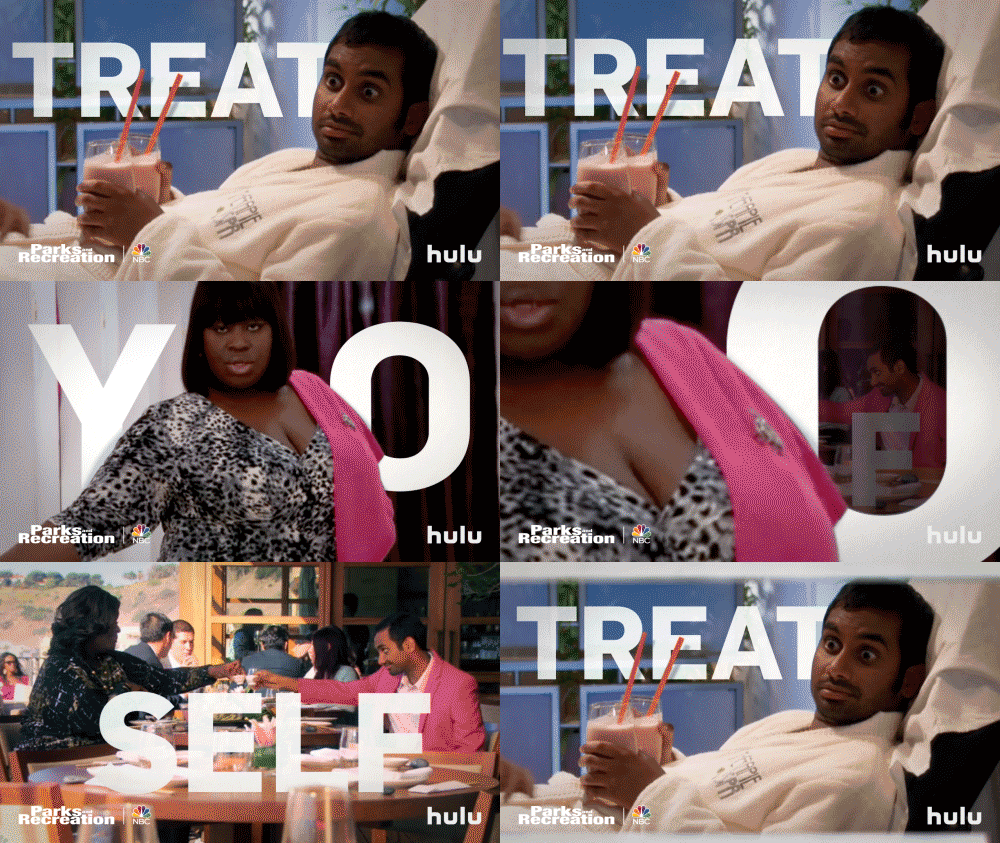
Coffee Crisp looked at the market and saw that people already ‘hired’ for the ‘job’ of treat. But in talking to customers, Coffee Crisp realized that ‘snack’ was a different job than ‘treat’. People treat-yo-self once a year. People snack daily.
Think of it as a grid that’s 7 spaces high by 24 spaces across. Those 168 boxes are all places for a job. It’s why even small English pubs compete with Netflix.
O’Reilly writes, “The first rule is: Know your audience. You have to have a deep understanding of who you are talking to in order to be relevant.”
This is why many products start with a founder scratching their own itch.Peter Rahal created a paleo protein bar, Ben Horowitz created a venture capital fund, Julie and Elizabeth created a fitness studio.
For outsiders, the beginning is really important. “Before a new business pitch, smart agencies list everything they know about a company or a product before they begin to do research. It’s the only time they can think like the general public.”
Rob Fitzpatrick calls this The Mom Test, a book Jerry Neuman has his students read. What Fitzpatrick wants founders to do is to ask questions so objective that even their mom could answer without bias. Do you like my app/thing/product? is the wrong question because people, especially moms, are too nice. Instead, What makes you buy/do X/Y/Z?
That’s a better question because it leads to the why, and the why to the job.
O’Reilly writes, “You also have to be Switzerland when doing research You have to be utterly neutral.”
And for on-going businesses, “Because pain-points are often hard for proprietors to spot, you need to check in with your customers frequently.” Once an organization figures out what job customers are hiring for they can see what niches are available.
Be different.
O’Reilly kinda calls this Strategy but the word matters less than the meaning; what do customers remember. Which of these: O O O X O O O, stand out?
The invisible is harder to articulate than the visible.
Duke Economist Dan Ariely articulated this idea nicely in a podcast with Ted Seides. Ariely said, “The whole category of saving is invisible. Think about what you know about what your neighbors are saving. Nothing. What do you know about their spending?” To which Ted Said, “Something more.”
The same goes for product, service, and strategy.
O’Reilly writes, “The thing that bugs you most about them (your competitors) is probably their greatest strength.”
Or turn a weakness into a strength. Dave Trott gives this as an example.
Cellnet was 1/4 the size of Vodafone at the time. That seems like a disadvantage until you sell size as crowds and small as space.
Unique ideas work, but the “the better the work, the harder the sell.” Why? “The difficult thing about counterintuitive solutions is that they are often difficult to swallow and hard to present, and are usually shunned by almost everyone initially.”
Career risk influences decisions. Tom Goodwin articulated why, “For companies to really establish themselves around the potential of these new technologies they need to make significant changes, they need to rewire the foundations of their companies and most people at a certain level of seniority, with a mortgage on their house and worries about what school their kids are gonna go to next and how much that’s gonna cost, are not really prepared to undertake the risk and to do something that’s gonna take a long time to pay off.”
People don’t get fired for buying IBM – or making any other decision they could deem was logical in hindsight.
The opposite of ‘buying IBM’ is something weird, off-beat, and fragile. Sam Altman said that Y-Combinator doesn’t have co-working spaces for this very reason. Too many people can smother a quirky idea before it evolves then blooms.
When Steve Martin started out he worked at Disneyland, then for the Smother’s Brothers and then he tried to be a standup comedian. Martin had some performing chops from his time in California and he learned how to write while working in TV. But this phase of his life was the hardest. Luckily for him, he was alone.
“The lonely road with nobody watching was the place to dig up my boldest – or dumbest – ideas and put them on stage.” If Martin headed straight to New York City or Chicago he would have been smothered, his act was fragile. But he kept working.
The secret for Steve Martin wasn’t to be great, that was random. What mattered was to be consistently good. “What was hard was to be consistently good, night after night, no matter the abominable circumstances.”
That’s true for ideas too. O’Reilly writes, “An idea is a fragile thing. When it only exists as a notion – a flicker of potential – the slightest breeze from across the table can extinguish it. Presenting a new idea requires poise, persuasion and gust protection.”
That gust protection comes from a top-down leadership that supports this kind of decision making. Ken Kocienda praised Steve Jobs’ style of acting like an editor. Jobs issued assignments and declared his feedback. Good leaders hire well and then get out of the way. At Netflix, wrote, Patty McCord it meant hiring adults and treating people that way. David Ogilvy suggested “gentlemen with brains.”
If you can talk to your customers and find a way to be different the next step is going back to the customers and telling them about it.
Communicate well.
Highlighted nicely by Marc Andreessen and Brian Koppelman is the idea of selling your idea. Andreessen said the day of building a better mousetrap and the world beating a path to your door is over. They won’t, “The world is busy.” Koppelman agreed, “It’s the responsibility of the artist to do things that gets the work in front of people.”
If you can’t communicate well, that’s okay. If you’re aware of it it’s good. That means hiring well. Rich Barton said that founders need to marry a marketer. Josh Wolfe said much the same. Jeff Jordan of a16z told a class of students at UCLA, “As an entrepreneur salesmanship is huge.”
But that doesn’t mean selling. The used-car salesman has a bad vibe because the used-car salesman skips everything we just mentioned. They fail to understand needs.
O’Reilly wrote, “In business, persuading people to buy your ideas is a fundamental necessity.” Good ideas are not enough. The Pauls said that analysts aren’t paid to analyze. They’re paid to analyze and sell and idea to their boss.
To communicate well, O’Reilly suggests a consistent theme to what you do. Keep it simple. Show, don’t tell. “If people feel, they believe.”
Good communication is about embodying an idea not a specific. Viewers often can’t recall the details of a specific advertisement but they can recall how it made them feel. And those feelz are a company’s brand.
These steps are crucial because they lead to the mother of all metrics.
Pricing Power.
In an a16z hallway conversation; Li Jin, D’Arcy Coolican, and Frank Chen, Chen calls pricing power the mother of all metrics.
As Warren Buffett put it, it’s the ability to raise prices.
Marketing, like Rapunzel, can turn straw into gold. Instead of a spinning wheel, all it takes is a good feeling.
“Apple makes us care because it disrupts entire industries to give us more user power. Nike makes us care because it encourages us to make an important decision…I’m willing to pay more for an Apple computer. All things being equal, I prefer Nike running shoes…There is nothing intellectual about any of those decisions. It’s pure emotion. Each of those companies and people provoke a feeling in me.”
What does it take to delight a customer? The wanted but unexpected.
A friend recently went to Disney World with her two children. When she got there she realized she’d bought the wrong annual pass – his first – for her son. Crap. Hoping for some “Disney Magic” she headed to guest services.
Technically she was wrong. In a world of numbers and rules, she should have paid $100 for her son to enter the park that day. But, as sometimes happens, with faith, trust, and pixie dust her wish was granted.
Patty McCord at Netflix thinks that these kinds of actions should be rewarded and communicated to all the stuff. Customer service, McCord wrote, should know about the LTV and CAC of each customer. My friend’s story will spread, reducing Disney’s CAC and increasing Disney’s LTV much more than $100.
O’Reilly agrees, “Customer service equals profit. When customer satisfaction soars, so do revenues.”
When Danny Meyer started his first restaurant in New York City he had more problems than patrons. But he had one great solution, ‘the medicine cabinet.’ If guests waited too long, got the wrong food, or were generally disappointed Meyer and his staff could offer them a drink. It wasn’t any drink, it was a dessert wine. These were popular in Europe but mostly unknown in the states.
So not only did they get a free glass of wine but something special that wasn’t on the menu. O’Reilly likes Meyers work too, noting that while Grammercy Tavern was ranked tenth for food and unranked for decor it was ranked third overall in Manhattan.
That’s kinda magical.
Rory Sutherland makes this point too, only in the opposite direction. It doesn’t matter how good the food is, if you sit by a bathroom that stinks it won’t be a good meal.
How much are you willing to pay for something nice? Something new? Something from a brand you love? That’s pricing power.
But that only lasts in the right environment.
Culture.
This is the operating systems for an organization. It’s the attitude. Ben Horowitz said it’s what people do when you don’t tell them what to do. O’Reilly writes, “The Ritz-Carlton is a successful company because it knows exceeding customer expectations can’t just be a marketing campaign. It has to be an operating platform.”
He adds, “Nothing — repeat, nothing — is more important than your company culture.”
Culture should be a competitive advantage. The things one organization is willing, capable, or committed to doing that others can’t. Michael Porter tells the story about going to IKEA with his daughter. Porter hated the process but she loved it. His point was that organizations can’t be great at doing all things for all people.
In 2019 Disney will release a streaming service and while it will look like Netflix its development should not be. The Disney culture is different from the Netflix culture. Netflix has a spirit to move fast and test things, hiring adults they trust. Disney’s is more static, sometimes literally, as theme parks and merchandise circles their IP.
Who should we hire for this business and how do we let them do their best work?
Paul Lavoie named his agency Taxi, writes O’Reilly for “Lavoie’s belief that the number of people needed to service an account should be able to fit into a cab.” Jeff Bezos said the ideal number for a project is fed by two pizzas. Michael Mauboussin said the sweet spot for investing committees is 4-6. Agencies, Amazons, and investors then should fiind the sweet spot for work built around their advantage.
This “methodology” includes manual inputs from Amazon for the number of reviews, total sales rank, and used book price. I selected the last item thinking that if a book was great, people would keep it, making fewer copies for sale and a higher price. For as good as Good to Great is, it can’t be that good if there are 1,300 used copies for sale starting at $0.19 plus shipping.
These are affiliate links.
General data.
There were 82 books in this set. I had to throw out a few things I couldn’t find or didn’t understand. You could buy used copies of all of them for $549.23, which seems like a bargain. When people talk about college being a waste of money this is what they’re referencing. The worst of college is well below the value of these books – and many other life experiences. However, the best parts of college are still great. Where does it switch?
The average age of a suggested book was 13 years, the median age was 11, the modal age was 1. Less recency tendency than I expected.
The best-selling book (Bad Blood) was ranked #48 of all books on Amazon, the median (Barbarians at the Gate) was #154,990, and the lowest (Accidental Empires) was 10,477,615.
These are the books with the highest cost of a used hardcover. The Power Broker, Masters of Doom, Against the Gods, Business Adventures, and Accidental Empires. Though they’re also older, with an average age of twenty-two years. Older means fewer and rarer and that probably explains the bulk of the higher price. Still, these books still come up frequently on Twitter.
Patty McCord wrote, Powerful: Building a Culture of Freedom and Responsibility, a book about her time at Netflix. The book reminded me of my time as a graduate student and the ways higher education is not like Netflix. McCord notes that it’s not the perks that get people to do good work, but interesting problems without too much friction. Grad school had perks (Look, a rec center!), kinda interesting problems and plenty of frictions.
…
Your intrinsic advantage. One competitive advantage of being an internet company is being an internet company. As Andrew Ng said, a mall with a website is not Amazon. Netflix’s problem was with the DVD queue. It vacuumed valuable resources. Should they keep the queue?
McCord et al. headed to the data center and looked at customer surveys. People wanted it, they said they liked seeing the list of movies coming to them. Okay, ask customers what they want and keep what they want, right?
What if there was a better way? What if a company could measure action, not attitude. Internet companies can. “But A/ B tests showed that it made no material difference in customer retention or the number of movies or shows watched or any of the other hard-data measures of customer satisfaction.”
The customer’s stated preference was X.
The customer’s revealed preference was Y.
This happened at eBay too, said Jeff Jordan. In an attempt to “add layers to the cake” they experimented with the Buy it Now button. The old-schoolers hated it but not nearly as much as everyone else loved it.
When stated and revealed preferences don’t align then having the latter is much more important. This was one of the reasons Kai-Fu Lee said China may surge ahead in AI research. “People’s spending patterns are so much more valuable than their clicking patterns.”
But data are not a silver bullet. Ted Sarandos told McCord, “There is lots of intuition that is acted on, and I look for people for the team who are smart enough to read the data and intuitive enough to know how to ignore it.” Sarandos wants people who know data is backward looking and act like it’s part of history, not an ordained future.
Internet companies get to act their age and move fast and test things.
Culture is the operating system for an organization.
Like:
Good arguments. “Our Netflix executive team was fierce. We were combative in that beautiful, intellectual way where you argue to tease out someone’s viewpoint, because although you don’t agree, you think the other person is really smart so you want to understand why they think what they think.”
Marc Andreessen said this attitude is why his partnership with Ben Horowitz has gone so well. Brian Koppelman said the same thing about his partnership with David Levien.
But tawk is cheap and actions speak louder than words (as above). At RXBar Sam McBride had his evaluation in front of everyone. At Netflix, executives had to argue in front of others too. And sometimes Reed Hastings inverted their positions.
“He arranged a debate between the two (head of marketing, head of content), onstage, in chairs facing each other, in front of the rest of the executive team. And the really brilliant twist was that each one argued the other’s side. To prep for that, they really had to get into the other person’s skin.”
Good organizations search for the truth and don’t care who gets credit for finding it. Bad organizations search for credit and don’t care if they find the truth.
…
How do we make money? “But if I could pick one course to teach everybody in the company, whether they’re in management or not, it would be on the fundamentals of how the business works and serving customers.”
For example, what’s the Customer Aquisition Cost and what’s the Lifetime Value? McCord suggests sharing the CAC with customer service representatives so they understand, “each person who becomes a customer on another customer’s recommendation saves the company that amount of money.”
McCord’s attitude has evolved over time. There was one time she spent $100,000 on a Cinco de Mayo party which was, “enormously costly, time-consuming, and unproductive.”
Instead, communicate clearly about the business fundamentals with adults. If you do that, “the less important policies, approvals, and incentives are.” As David Ogilvy said, hire gentlemen with brains.
An example was when an engineer asked about the windowing process; where movies are exclusive to theaters, then hotels, then rentals, then cable. McCord didn’t know why this occurred. But she found out and conveyed why to her staff. That led Netflix to release all their episodes at once.
Windowing is one part of the movie business we looked at in our Pixar podcast:
Brian Koppelman spoke with Marc Andreessen and Marc Andreessen spoke with Brian Koppelman in a pair of episodes. They covered a fair bit of Koppelman’s career, which we’ll skip here and instead point readers to -> Koppelman’s Career Capital.
…
Visiting Silicon Valley, Koppelman said that the highest compliment is to be called a system’s thinker. Yep, agreed Andreessen. “If you’re not a systems thinker you say, ‘I’m going to build a really great product.’ But the systems thinking mode is that a great product is just the first step.”
Every product gets released into a certain system which is why we note that timing and conditions matter so much. Sometimes we get lucky, like Danny Meyer wrote, “I would also have the good fortune of entering the restaurant industry during its fertile period of revolutionary change.”
Sometimes we recognize the system and act responsively. In the world of venture-backed startups and television shows, that means mastering the sizzle and the steak. “It’s the responsibility of the artist to do things that get the work in front of people,” said Andreessen.
The sizzle is important because founders need to sell investors on their idea, sell employees on the company, and sell customers on the product. Ideally, one person can do this, but if they can’t they need to hire for their weaknesses. Rich Barton said to “marry a marketer…because you’re going to need to be super clever about how to get your product in front of people.”
And that’s harder than ever. The world will not beat a path to your door, said Andreessen, “People are busy. There are 7 billion people on planet earth and their time is fully allocated. The work has to speak for itself and somebody has to pick up the flag and carry it into the world.”
But the work has to be good. “None of this is an excuse for the work not being good.” Andreessen praises Steve Martin’s book, Born Standing Up. It was Martin’s advice, be so good they can’t ignore you that Cal Newport used as a title and both those ideas are part of the post on Koppelman’s Career Capital. Adam Carolla has touched on this too:
…
Koppelman gave leadership and communication advice from running the television show Billions. Careers are like trees, adding rings each year, and Koppelman learned from John Dahl – on Rounders – to give people limits. That means hiring well and getting out of people’s way. Ken Kocienda said Steve Jobs did this, acting as an editor.
Then, when it’s time to give feedback you communicate well. “It’s important to make people feel heard when they are giving notes about the show, make them know you are actually listening. But then it’s important that we only take the notes that will make the show better.”
At Zillow, for example, they have a color-coded system for communication.
Former CEO Spencer Rascoff said, “Red means be brief, be bright, and be gone. That’s how I want to be communicated with.”
Visual cues help communication, especially in sports. Mike Zarren of the Boston Celtics said, “The communication of the information is as important, if not more important, than the actual quantitative work that you do.” The Pauls noted that not getting investment ideas into a portfolio is the same as not having any good ideas.
Finally, Koppelman and Andreessen geeked out about partnerships. Koppelman has worked with David Levien and Andreessen with Ben Horowitz.
“The key is to regard the other person as incredibly smart and regard their motive as a way to make it work better.” – Koppelman
“It has to be more important than the other one gets to make the decision than for you to prove yourself right.” – Andreessen
In our post on restaurants, we saw partnering well is crucial. As Charlie Munger reflected, “Two talented people working well together, of course, that works.”

 ,
,  ,
,  ,
,  ., and
  . I thought the first four were fantastic.
 ,
,  ,
,  ,
,  , and
, and  . Though they’re also older, with an average age of twenty-two years. Older means fewer and rarer and that probably explains the bulk of the higher price. Still, these books still come up frequently on Twitter.
 ,
,  ,
,  ,
,  , and
, and  . If my memory is correct, I think Rich Cohen credited Ryan Holiday’s email list for pushing The Fish into such esteem.
 ,
,  ,
,  , and
, and  .
. ,
,  ,
,  , and
, and  .
. ,
,  ,
,  ,
,  , and
, and  .
.
