Amy Schumer

Amy Schumer (@AmySchumer) joined Brian Koppelman (@BrianKoppelman) on The Moment Podcast to talk about life as a female comedian. The interview was from January 2015 (no typo) and I missed it dropped. Luckily the episode was sent out again and I took some notes.

Before we begin, I have to note a problem on this blog. There’s too few women represented. In Antifragile Nassim Taleb notes that without the word “antifragile’ we miss half of – what Taleb calls “the interesting part” – life. My problem is bigger than that. I’m missing the female perspective.

I don’t feel compelled to write about women for gender reasons, but FOMO (fear of missing out). They know secrets to a good life. I read Ray Dalio’s Principles and was blown away. That’s a guy I have almost nothing in common with, but he taught me a lot.

I felt the same way reading Will Schwab’s The End of Your Life Book Club. That book made me a better person. Ditto for Man’s Search for Meaning and Finite and Infinite Games. Female interviews are like a category of books that I have yet to find out about.

I have written up some notes from women: Amanda Palmer, Carol Leifer, Marni Kinry and Kristen Carney, Gretchen Rubin, and Maria Popova is the complete list of female only posts. That’s five out of 120.

I’ll do a better job in 2016, starting now.

This post – Amy Schumer – like a good movie, has narrative arc.

Our hero’s constraints help her in unexpected ways. She enters a battle, and loses. She trains to get better (while getting her butt kicked). She has a moment of inspiration (with instrumental swell of music, is John Williams available?). She defeats the boss, wins the prize, makes a hit. She makes friends. She gives advice. She starts it all over.

Ready?

Constraints.

Schumer is asked a lot about her looks, and she says she’s “pretty enough.” That’s good news. Constraints are part of the creative process, and sometimes they’re a straight up advantage. Being “pretty enough” helped Schumer get on stage, but it wasn’t enough to keep her there. It was a start. Anything can be a constraint you can use.

Kevin Kelly said that a lack of money helped him be more creative. Tim O’Reilly said the same thing about his business.

“Limitations can expand rather than shrink the creative flow,” wrote Amanda Palmer.

In her book, You’re Never Weird on the Internet, Felicia Day writes that being different helped, a lot:

“I’m glad I didn’t know better than to like math and science and fantasy and video games because my life would be WAY different without all that stuff.”

Even Brian Koppelman had to move to a new medium (stand-up) to have constraints that focused his creativity. Step one of our hero’s journey, you can’t start out as royalty.

When you start, you’ll stink.

Koppelman recalls watching Last Comic Standing (2007) and seeing Schumer on the show. They had both been at the same club a year before and he says to his wife, “this girl is a genius and she sucked so hard just last year.” Everybody stinks at the start.

Austin Kleon articulated why this is so hard. You start doing something – writing, stand-up, marriage – and the only people you’ve seen do that thing are good. That’s why you’ve seen them. You are not good. You are bad.

“There’s a big gap, Kleon says, “when you’re starting out between what you love and what you’re producing.”

Step two of the hero’s journey, step out the door and realize it’s a big scary world.

The grind.

Schumer says that she’s never been jealous of other comedians, but has wondered, why them and not me? She tells Koppelman that she quickly snaps out of it and remembers she has to do the work. It’s time to work, and grind, and hustle.

In Do The Work, Steven Pressfield gives advice on this part:

“Ignorance and arrogance are the artist and entrepreneur’s indispensable allies. She must be clueless enough to have no idea how difficult her enterprise is going to be—and cocky enough to believe she can pull it off anyway. How do we achieve this state of mind? By staying stupid. By not allowing ourselves to think. A child has no trouble believing the unbelievable, nor does the genius or the madman. It’s only you and I, with our big brains and our tiny hearts, who doubt and overthink and hesitate. Don’t think. Act.”

You  have to get to work and not realize how crazy your idea might be. Because it is crazy. Alex Blumberg, Robert Kurson, and Koppelman (“the line between being an artist and being delussional is very thin.”) all explicitly warn people not to examine how hard things will be. Schumer got to work.

She “barked” to get ten minutes on stage. That is, she stood outside, no matter the weather, for two to three hours at a time and yelled at people to come in. Only then did she get a chance on stage.

She worked more, she got better. She toured with Last Comic Standing. “That was like boot camp,” Schumer told Judd Apatow. She toured more. She did slightly bigger and bigger rooms. She persisted, and then she arrived, at the waiting place. Step three is a step back.

The waiting place.
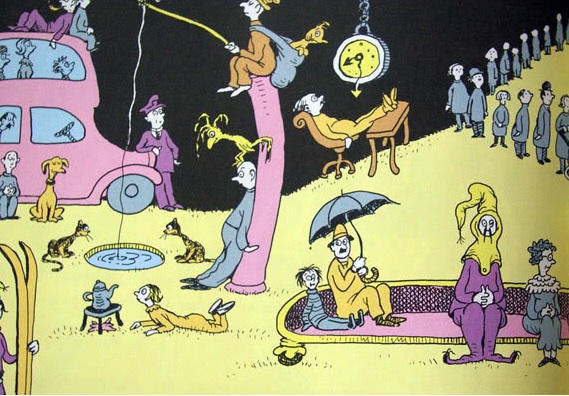
The Waiting Place - By Dr. Seuss

At some point you’ll get to the place where it just doesn’t seem like things will happen. Koppelman’s writing partner David Levien said, “it seems brutal when you’re toiling away in obscurity.”

Brian Koppelman added, “you have to cover that difficult terrain yourself.”

Step four, our hero is stuck, can’t go on, can’t measure up. It won’t happen.

The spark.

If you listen closely, and pay attention, something in the waiting place will spark. Schumer shared two of these instances.

The first was a train ride. Schumer was on a train after a set. It hadn’t gone well. She wondered what she was doing with her life. It was late. Her boyfriend was about to dump her. Things weren’t going well.

It was then that a lady asked if Schumer had “heard the good news.” The women of course was asking Schumer to come to her church. “No, I’m Jewish,” Schumer said, but there was something else in that exchange.

Schumer went home. Told a friend. Wrote a joke. It was good. She had something.

That something is all you need. It’s a foothold on the mountain. Louis C.K. said that this step is the start of a set. You get one joke, that’s your closer. Then you get another joke, that’s your opener. You piecemeal things together until you have an act.

Schumer’s second spark was during Last Comic Standing. Schumer won a challenge and another contestant said, “you don’t deserve it.” “That broke my heart,” Schumer recalls.

But later when the episode aired, she saw the other comics. “I knocked it out of the park, I absolutely did deserve it,” she tells Koppelman.

That spark that gets you out of the waiting place can take a long time coming.

It took Andy Weir years to write The Martian after several failed attempts. Jim Luceno was a carpenter during the first years of his writing career before he believed he could make enough money writing. Jack Canfield says to build failing five times into your plan for success. It takes persistence. Koppelman knows.

“I’m sure there are days when you think the haters are right and you’re not good enough. Days you know it’d be easier to quit. But then you’ll never know what would have happened if you gave it one more push.” – Brian Koppelman

Step five, there might be a chance.

As you ascend, have friends.

There are so many people who have partners that help them on their way. Schumer is one of them. She says that her friends are always asking each other if they “have a think about this.” It’s good to have other people who support you around you. People to take comfort with in the waiting place and that can help you in the grind.

Peter Thiel said, “a lot of these companies aren’t solo efforst of a god-like person that does everything.”

Jay Jay French went through ten iterations of the band before he met Dee Snyder and formed Twisted Sister.

Adam Carolla found Jimmy Kimmel and stuck with him because, “we’re funny together.”

Many hands make light work goes the saying, good friends make the work more enjoyable might be a good second part.

Step six, I can do this – no, we can do this.

We did it. We’re famous. Now, get back to work.

Koppelman asks, “was fame a conscious part of the the thing when you were doing this.”

“No,” Schumer says – and it never is.

James Manos said that when they were writing The Sopranos, they never thought about great it might be. B.J. Novak said that the office was never expected to be a great show. James Corden said neither was Gavin and Stacey.

“My goals have been very small,” Schumer says,  “things just right in front of me.”

Even when you “make it” you realize there’s no it. There’s always a higher mountain, and the climb begins again.

Schumer – or anyone – is back where they started. Doing the work, one small bit at a time. The hecklers never die, the doubts never leave, the constraints don’t seem like blessing.

Step seven, repeat as necessary.

Caveat emptor (buyer beware).

It might never happen. To think this sequence is prescriptive would be wrong, it’s descriptive only. In the Charlie Munger/Tren Griffin post we noted how valuable it was to describe the stock market as a person, rather than machine. Mechanistic systems are computers, and even not entirely.

I was reminded of all this because at the end of 2015 I saw a Brian Regan stand-up show. Then for Christmas a friend gave me one of his old CDs. Regan has been at it a long time. Way longer than Schumer. If the path of “successful stand-up comedian” was linear, prescribed, or a checklist, Regan would be a household name. Schumer is, he’s not.

There is something we can do. We can take the advice of astronaut Chris Hadfield and enjoy the process. Hadfield wrote:

“It’s probably not going to happen, but I should do things that keep me moving in the right direction just in case – and I should be sure those things interest me, so that whatever happens I’m happy.”

You need to embark on the journey and be happy with the journey. Schumer admits a bit of this to Koppelman, saying that on Last Comic Standing she was the only one who wanted to hang out after.

Thanks for reading, I’m @mikedariano on Twitter. Want to catch up on the posts, The Waiter’s Pad: Volume 6 is available here. You can also donate a few bucks here.

A Dozen Things I’ve Learned from Tren Griffin and Charlie Munger.

Tren Griffin has written a book, Charlie Munger: The Complete Investor. In it, Griffin breaks down what makes Munger – Warren Buffett’s partner at Berkshire Hathaway – Munger. 

It’s by no means complete, but it’s a good start. Griffin’s bibliography alone could fill the reading queue for a year, and Munger’s original writings go well beyond that. But the book serves a purpose, it gives us a place to start. Griffin has distilled and organized Munger’s ideas so anyone (even me!) can understand and learn from them.

Griffin’s been on the blog before, when he spoke on the a16z podcast about the book.

Two quick notes before we jump in. The first is for you, dear reader, to keep your guard up. Jason Zweig emphasized the importance of skeptical reading and this post is especially suspect. We’re at risk for Generation Loss. That is, a copy of a copy will always lose some of the original data.

In our case, Benjamin Graham influenced Munger who was written about by Griffin who was read by me and is now consumed by you.

Graham > Munger > Griffin > Me > You

That’s enough copies of copies that something in Graham’s original message will be lost. What I hope is that something will be added in its place.

Second, this “A Dozen Things I’ve Learned” style post is a tribute to Griffin who writes them at his blog, 25iq. If this post is bad, it’s because of me, not the premise. Griffin’s posts are some of the best writing I read each week.

Okay, ready?

1- Don’t try to be Charlie Munger. “No one can ever be Charlie Munger,” Griffin writes, “just like no one can be Warren Buffett.” So what’s the point?

The point, writes Griffin, “is to consider whether Munger, like his idol Benjamin Franklin may have some qualities, attributes, systems, or approaches to life that we might want to emulate, even in part.”

That’s the point of this website. You can’t folow the same book writing path as Andy Weir, but you could model the persistence. You can’t become a tech mogul like Mark Cuban, but you can be inspired by his attitude. You can’t make movies like Judd Apatow but you can emulate his humility.

Find something that successful people do and fold it into who you are.

2- Work hard at simple things. Investing, says Buffett, is, “simple, but not easy.” Griffin quotes Munger as saying, “take a simple idea and take it seriously.” To succeed you don’t need to solve huge problems like Elon Musk, you can work hard at smaller things.

Penn Jillette said that his only trick is working hard than the audience expects he would.

When James Corden worked with Meryl Streep on Into The Woods, he said she was great to work with because she took her work very seriously, but not her life.

  1. Writing is a form of thinking. “Part of the benefit of creating a checklist is the process of writing down your ideas. I have always loved the point Buffett made about the importance of making the effort to actually put your ideas in writing. In Buffett’s view, if you cannot write it down, you have not thought it through.” – Tren Griffin

How well can I write this is a proxy for how well do I understand it. Michael Mauboussin, Barry Ritholtz and Maria Popova explicitly mention that writing is a form of thinking.

Comedians support this idea too. Phil Rosenthal said that comedy is a form of deep understanding. Only if you understand something deeply do you understand what part of it is funny. It’s the idea behind Jason Zweig’s book, The Devil’s Financial Dictionary.

  1. Focus on the stones of history rather than the clouds of the future. Griffin does a wonderful job explaining how Munger and Buffett make predictions – they look to the past. Griffin writes, emphasis mine:

“Effective Graham value investors are like great detectives. They are constantly looking for bottom-up clues about what happened in the past.”

“What Munger looks for is a business that has a significant track record of generating high, sustained, and consistent financial returns.”

“By sticking to investing activities that are easy, avoiding questions that are hard, and making decisions based on data that actually exists now, the Graham value investor greatly increases his or her probability of success.”

This is what makes Griffin’s book great. In three pages he’s refined one of Munger’s big conclusions. Like a master chef who studies the recipe for Bolognese and we get to eat at the restaurant.

Munger doesn’t try to predict the future because the future is complex/chaotic. Instead, Munger looks for companies that have succeeded in dealing with the future as it came.

Chaos theory doesn’t have a large role in the book, but it underlies Munger’s thinking. That is, there are too many variable to perfectly model a future. Rather than looking at what might happen, Munger looks at what has happened. This gives him an idea about how a company will react in the future – whatever may come.

  1. Everything is a system and systems are alive. Systems are alive and we should listen to them. This idea is throughout the book. From the macro chaos theory to the way Munger manages Berkshire. Griffin quotes Buffett, who warns against, “institutional imperative.”

“As if governed by Newton’s First Law of Motion, an institution will resist any change in its current direction; just as work expands to fill available time, corporate projects or acquisitions will materialize to soak up available funds…”

That’s Buffett talking about his own company. Even he can’t control the “institutional system.” Griffin writes – and this thrilled me to no end – “the culture at Berkshire has been created by Buffett and Munger so as to reject the institutional imperative like a foreign body.”

Griffin compares the “Berkshire culture system”  to the immune system!

Everything is a system and systems are alive. They move to natural states. If we think of them this way we can better understand the world we live in – #6 will help with that too.  

  1. Anthropomorphize to reframe something. “The Graham value investor believes Mr. Market is unpredictably bipolar in the short term; for that reason, when the market is depressed, it will sometimes sell you an asset at a bargain price.” – Tren Griffin

Note what Graham compared the stock market to. Not a machine. Not an equation. Not a computer. A person. That’s a key point, because as we noted above, “Mr. Market” can be entirely unpredictable (like that one friend where nothing he does surprises us).

Rename the stock market as bi-polar Mr. Market and we see things in a new light. This is incredibly helpful.

Chris Dixon reframes startups as a maze. Dan Coyle reframes exercise repititions as meditative. Stephen Dubner reframes himself in situations to think differently. Dubner recalls being at a “New England yard sale.” The skies were blue, the air was clean, and the stuff was laid out on tables. This stuff looks great, Dubner thought to himself, but what if this stuff was in Pier One instead? He reframed how he viewed the trinkets and decided he didn’t in fact need one.

  1. Measure what matters, but not more. “Practically everybody overweighs the stuff that can be numbered, because it yields to the statistical techniques they’re taught in academia, and doesn’t mix in hard-to-measure stuff that may be more important.” – Charlie Munger

Did you have a nice holiday? How do you know? Was it because you drove (walked?) 500 miles? Was it how much you spent on gifts? Pounds of mashed potatoes consumed?

Of course not, and this quote from Munger magnifies the end of the spectrum we need to think about. Remember that systems don’t always talk in numbers. But numbers are simple and we are cognitive misers. It’s so easy to just look at the numbers.

Numbers may be all you need, Munger says, but maybe not.

  1. Turn problems into games. Munger says that his multidisciplinary approach has made life “more fun.” Griffin writes, “looking for models that can reveal and explain mistakes so one can accumulate worldly wisdom is actually lots of fun. It is like a puzzle to be solved.”

Remember, Chris Dixon reframed entrepreneurship to be like a maze. In Principles Ray Dalio writes about the fun of solving problems too. In Reality is Broken, Jane McGonigal examines how games help us learn better. Tyler Cowen sees games as very helpful in learning.

Turning problems into games is a reframing technique anyone can use.

  1. Know the fool at the poker table. The axiom goes; if you can’t spot the fool at the poker table, it’s you. The stock market is a huge poker table with some of the best players and biggest fools.

Griffin writes, “investing is less than a zero-sum game due to fees, costs, and expenses relative to the market. If you are buying an investment, by definition someone else is selling. Either the buyer or the seller is making a mistake.”

Your job is to figure out which side you’re on – and that’s really hard.

When Cliff Asness spoke with Tyler Cowen, even he didn’t know who was on the other side of his trades. It could a pension fund manager who needs to dial down a risk figure, Asness explained, but he didn’t know. Asness has a Ph.D. from Chicago and runs AQR Capital Management and he’s not sure who the fool is.

Luckily for fools like me, Munger has another piece of advice. If you find a problem that’s too hard to solve (e.g. who’s the fool at the poker table), decide that it’s too hard, and move on to something else.

  1. Be okay with the wrong side of maybe. You need to be disciplined and clear headed writes Griffin. How does Munger suggest we do that? “The right way to think is the way (Richard) Zeckhauser plays bridge,” Munger said.

Okay. So how is that? (emphasis mine)

“Bridge requires a continual effort to assess probabilities in at best marginally knowable situations, and players need to make hundreds of decisions in a single session, often balancing expected gains and losses. But players must also continually make peace with good decisions that lead to bad outcomes, both one’s own decisions and those of a partner. Just this peacemaking skill is required if one is to invest wisely in an unknowable world.” – Richard Zeckhauser.

Philip Tetlock calls this “the wrong side of maybe,” in his book Superforecating.  Tetlock explains that sometimes long odds come up. You can’t look at a forecast that says 20% chance of rain as wrong if it rains that day. The forecast said it could rain. What you need to do, Tetlock writes, is to evaluate long term predictions that people put numbers to.

Bill Simmons knows this when he bets on sports (and it’s why he’s a superforecaster). He knows bad bounces happen. That’s the understanding that Munger advocates for investors.

  1. Be studios. Munger is described as “a book with legs sticking out.” He reads a lot. But then again, almost everyone who succeeds is in a state of constant learning.

Rather than a list of links, read this Reddit reply shared by Taylor Pearson:

  1. There is no passion without knowledge, and vise versa. I used to think “follow your passion” was good advice. Then bad. Now I don’t know.

What I do know is that passion alone isn’t enough. Passion needs to enter a positive feedback cycle where it turns into skills and knowledge and then reinvests in passion for more skills and knowledge.

Griffin writes, “One trick related to passion is that you are not likely to be passionate about something you do not understand…the more you know about some topics, the more passionate you will get.”

When I taught at a local college I surveyed students on two questions to start the semester; what do you like doing and what are you not good at doing. Their answers never overlapped.

The things they were bad at they never enjoyed.

Then we listed those skills.  We improved those skills as the semester went on and voila, by the end of the semester they were better at them and enjoyed them more.

Ramit Sethi put it this way, “when you get good at something, you get passionate.”

Thanks for reading, I’m @mikedariano on Twitter. If you want to catch up on the blog posts, you can buy Volume 6 here.

Successful Ways to Use Twitter

Twitter gets mentioned here a lot, and it needed its own post. Like any tool, knowing how to use it well makes the work we’re doing that much easier.

So far we’ve seen 4 ways to use Twitter well.

(This post will be updated as needed)

Connect with colleagues.

The first way to use Twitter well is to be connect and collaborated with colleagues. Austin Kleon advocates for creating your own “scenius.” John August uses Twitter to announce writing sprints. Nicholas Megalis talked about the value of connecting with other people.

Create a filter.

Scott Adams notes how reticular activation helps him.That is, you can use Twitter to filter inspiration. See if Gary Vaynerchuk does it for you.

Chris Dixon uses Twitter to create a his own news source. “Essentially I have two thousand of the smartest people in the world finding information for me and telling me what to read,” Dixon says.

Bust your biases.

You can use Twitter to get balanced conclusions. Jason Zweig, Tadas Viskanta, and Tren Griffin all suggested to generate conclusions from multiple perspectives. Twitter can be one where we gather those perspectives, but also test the ones we have. We can follow people we disagree with just to see how well we know our own arguments.

Connect with fans.

Amanda Palmer connects with her fans constantly. Casey Neistat uses it to get questions for his Q/A. Comedians like Judah Friedlander announce shows.

Thanks for reading, I (of course), am on Twitter @mikedariano.

Signals

A lot of successful people use signals to nudge them toward one action, thought, or idea compared to another. This idea has come up so often that it needed it’s own post.


Why do we need signals?

We need signals because we can only process so much information. Our attention is finite, our short-term memory limited (4-7 spots), and our resources constrainted.

In Thinking Fast and Slow, Daniel Kahneman offered the first explanation I really understood.

“You make many small decisions as you drive your car, absorb some information as you read the newspaper, and conduct routine exchanges of pleasantries with as spouse or a colleague, all with little effort and no strain. Just like an easy stroll.”

Kahneman, like good authors, is setting us up. (A quick digression, both Penn Jillette and B.J. Novak said that an unnoticed setup is the key part to their craft)

Back to Kahneman, we understand this. A lot of what we do we don’t have to pay attention to, mostly because we are already filtering it out. It’s why Scott Adams leverages reticular activation.)

But when we get to hard problems things change. Back to Kahneman:

“It is normally easy and actually quite pleasant to walk and think at the same time, but at the extremes these activities appear to compete for the limited resources of System 2. You can confirm this claim by a simple experiment. While walking comfortably with a friend, ask him to compute 23 x 78 in his head and to do so immediately. He will almost certainly stop in his tracks.”

Aha! We have something.

Not only to we have limited bandwidth, but even a task as automatic as walking gets interrupted when we need to draw more. Fascinating.

Okay, let’s get past the academic cuteness.

Why does this matter to you and me?

The most successful people succeed because they quickly get rid of what’s not important. They focus their bandwidth on the most important task at hand.

Casey Neistat asks, “is this good for me and my technology company (Beme), and if the answer is no it gets a pass.” Neistat’s signal is the question, “does this help Beme?”

Richard Feynman got so tired of choosing a dessert, that he resolved to always order chocolate ice cream. That was his dessert filter.

Barry Ritholtz said that he looks at the prices of classic cars as a signal for bull and bear markets, or if people say “ugh” to his trading ideas.

Ramit Sethi and Taylor Pearson both construct interview questions that need answered in an exact way.

Stephen Dubner called this, “teaching your garden to weed itself,” and wrote an entire book chapter about it.

Some banks figured out how to filter out dangerous marijuana growers.

The most famous of the signals might come from Van Halen.

The story goes, that when Van Halen was touring they had the latest and greatest light and sound rigs. There was just one problem. Each venue had a different person set them up. The guy who set things up in New York wasn’t the same guy that did it in Charlotte. So, according to David Lee Roth, Van Halen introduced a wrinkle to their rider.

They said that among the other rock star accoutrements, they wanted a bowl of M&M candy with the brown ones removed. Some people looked at this as divas being divas. Au contraire mon ami. Roth said they did this to see how closely a promoter read the rider. If someone removed the brown M&M candy, they probably set up the equipment correctly.

Okay, I’m a believer. How do I do this?

First, shift your self perspective.  Scott Adams calls this the “moist robot theory.”

Some of you will liken the idea of reprogramming your brain to self-hypnosis, and that might feel creepy or unlikely to work. A better approach, as I mentioned, is to think of your body as a moist, programmable robot whose outputs depend on its inputs, not magic. Imagine you’re an engineer who is trying to find the user interface for your moist robot body so you can make some useful adjustments. It’s as if you had one menu choice labeled “Make Sleepy” and another labeled “Energize.” You can choose “Make Sleepy” simply by eating simple carbs.

Ah, so I can think of signals as a very basic programming language to use on myself.

If dessert does not include fruit, then do not eat.

If spouse yells, then do not yell back.

If this takes time, money, resources, beyond X, then do not engage.

The best way to start is just to start and know that it won’t be perfect. Barry Ritholtz admits he missed some investment opportunities. Ramit Sethi says that he didn’t hire some great people.

It won’t be perfect. Good signals are a trade off:

Good results + more time > Perfect results + less time.


Thanks for reading, I’m @mikedariano on Twitter.

Listen to your systems

This post is available in podcast form. There’s a bit of scratchiness in the audio. FYI: Quarter zip fleeces are suboptimal podcasting clothes.

Ready?

Everything is a system.

A quick note on the formatting. I’ll use “quotations” for both actual quotes and to set out systems. When everything is a system we lose sight of the specialness of systems. Hopefully the quotes will set off the words, and my points.

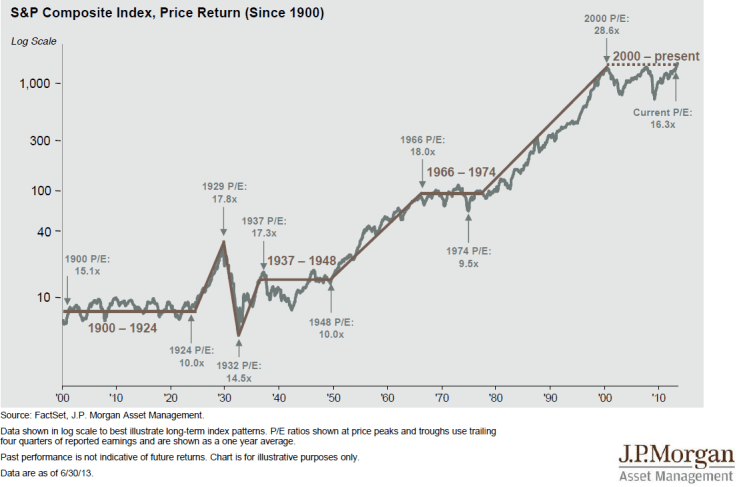
Some systems like the “stock market system” change a lot.

sp1900

Some systems like the “Lego brick system” change very little.

2000px-lego_dimensions-svg

But we shouldn’t be fooled by the simplicity of those bricks. As parents know, they can be quite powerful on the floor of a dark room.

Those bricks are a system too – even though their simplicity suggests otherwise. The plastic is degrading (over 500 years) and this alone is a valuable lesson. Just because we can’t see a system act, doesn’t mean a system isn’t acting.

For example, not until 2009 did we realize that Jupiter and Saturn nudge the earth like a delicate surgeon might nudge a top. That ice ages come and go based on the alignment of Jupiter and Saturn, two events you and I will never see, is an example of systems acting but not easily observed.

Our simple “Lego brick system” also interacts with the “home office system.” On my desk at 1atm the “Lego brick system” is stable. Add pressure and the “Lego brick system” changes. Ditto for heat or gravity.

Our “Lego brick system” has gained complexity; plastics, gravity, and pressure in a matter of paragraphs. Now how complex does the stock market get? Global politics? Taylor Swift’s song writing?

Now hold on, this may get bumpy. Everything is a system of systems.

Systems on top of systems on top of systems….

Systems stack. We’ll use the Power of Tens video as a metaphor.

While the video is about the size of the universe, it points out something we can use – there’s never a final thing. There’s always something smaller or bigger.

The hand is small, but the hairs are smaller. Part of hair is the cuticle, part of that is the cell, part of the cell is nucleus, electrons, and so ons. In the same way we can’t observe the degradation of Legos with our eyes, or ice ages based on Jupiter’s position, we can’t see what’s smaller than quarks, which isn’t the destination, but a stop on the discovery train.

Okay, is there any good news to this mess?

The spirituality of systems.

The good news is that we’re quite good at listening to systems, even really complicated ones. But how we do that will take a bit of faith.

This idea coalesced when I read Deep Survival by Laurence Gonzales. Holy cow is it a good book.

Gonzales looks at survival from two angles. One is how to survive when you’re in a dangerous situation. The other – and relevant to us – is about how to avoid those situations.  It’s about listening to systems. 

Gonzales explains one of his moments of enlightenment when he landed in Hawaii, headed out to surf, and as he passed a lifeguard, asked how the surf was.

“‘Well,’ he (the guard) said, as if considering it for the first time, looking out to sea, rubbing his goatee. He was a redhead, thin and freckled, his face lined with experience. He came down from the tower and studied the sea. Before answering he seemed to think of something and asked my name. I told him. He grabbed my hand in a surfer’s handshake and said, ‘Mike Crowder.’ I waited. He turned back to the seas and continued to stare at it with a space-out look, and I started to wonder if he was stoned. Hawaiian weed is supposed to be bitchin’.

‘Okay,’ he said at last, as if he’d decided something. It was only then that I realized he’d been reading the waves, the lineup, the break.”

Crowder, like other surfers learned to listen to the “surf system.” He told Gonzales that the sea was dangerous.  

I dismissed this idea. It was too spiritual. But then I realized I did the same thing. I can sense the “weather system.” The darker the cloud the bigger the storm. It smells like rain. The wind is out of the northwest.

I know each of these things instinctively. Lots of people do.

Football players.

When Tony Dungy was coaching the Tampa Bay Buccaneers, he took them from being the worst team in the league to winning the Super Bowl (a year after he left). He did it by creating a new way to listen to and act with in the “football game system. 

Charles Duhigg writes about the change in The Power of Habit:

“Part of the problem was Dungy’s coaching philosophy. In his job interviews, he would patiently explain his belief that the key to winning was changing players habits. He wanted to get players to stop making so many decisions during a game, he said. He wanted them to react automatically, habitually. If he could instill the right habits, his team would win. Period.”

Dungy wanted to switch the actions within the system.

Rather than; if the systems shows A, then DECIDE. 

Instead; if the system shows A, then REACT.

Duhigg explains that Dungy understood how the players listened to the “football game system” (like you feel spring showers or lifeguards read the surf).

Duhigg wrote: “Players spent their lives building the habits that got them to the NFL. No athlete is going to abandon those patterns (–how they listen to the system–) simply because some new coach says to. When asked Dungy said, rather than creating new habits, he was going to change players’ old ones.”

Music executives.

Doug Morris, who at one time or another was in charge of every major record label knew how to listen to the “pop music system.” Morris had tried to hear hits, write hits, and see hits. Those were different – and unsuccessful ways – of interacting with the “pop music system.” Morris only succeeded in the system when he found hits. 

It’s 1964 and Morris has had limited luck with signing artists. He goes to the accounting room one day to see what’s selling. There he saw that an anomaly. A band called “Music Explosion.”

Stephen Witt explains in How Music Got Free, emphasis mine.

“One of the acts on Laurie’s roster in those days was a generic garage rock band from Mansfield, Ohio, called the Music Explosion. Side A of their lead seven-inch single was a schlocky two-minute cover of a 1964 British Invasion tune titled “Little Bit O’ Soul.” Morris, however, would forever remember this platter by a different name: Laurie 3380, the catalog number the order-taker used to track the sales of the song. Those sales were generally unimpressive, with one exception: a record store in the small town of Cumberland, Maryland, which had, during the most recent inventory cycle, inexplicably ordered two crates of discs. Morris was struck by this anomaly.

Anomalies are signals from the system.

He (Morris) was soon talking long-distance with the Cumberland store’s owner, who told Morris that through repeated heavy airplay, a local radio DJ had turned this unexceptional song into a regional hit. In fact, the owner was already planning to place another order for the single, as the two crates of Laurie 3380 he’d bought were running out.


Morris found that regional sales were the system’s signal.

Soldiers.

From All Quiet on the Western Front: “At the sound of the first droning of the shells we rush back, in one part of our being, a thousand years. By the animal instinct that is awakened in us we are led and protected. It is not conscious; it is far quicker, much more sure, less fallible, than consciousness. . . . It is this other, this second sight in us, that has thrown us to the ground and saved us, without our knowing how. . . .”

Soldiers understand the “war system.” Sometimes subconsciously.

Financial analysts.

Barry Ritholtz has said that he listens to the system of “stock market” by what sort of prices are sells for.

NPR had a podcast about tracking the Sotheby’s market to see how much money was moving. 

1920’s America had an essence of “too good to be true,” an odor that systems aren’t right. In Rainbow’s End, Maury Klein quotes one mother as saying: “we’d rather do without clothes than give up the car.”
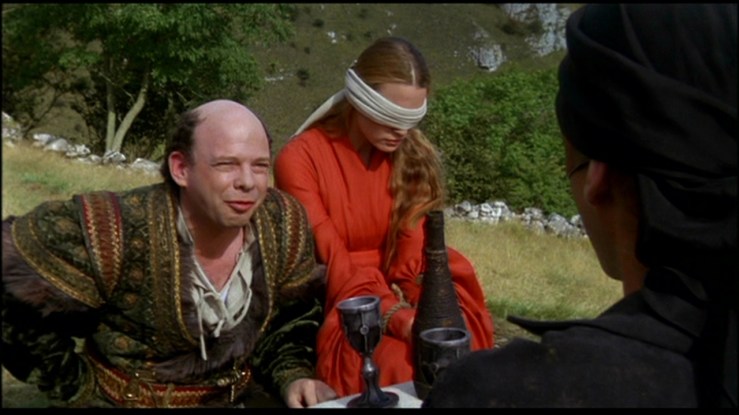
Each of these were hushes, nudges, and winks from the system.


So what?

Okay, now harness your chakra and say twenty Hail Marys and you too can listen to systems.

Wait, that’s not right. There are some things we can do.

  1. Be in and aware. Systems speak in small ways and you need to listen a lot to hear them. When soldiers are in battle there are years of self-preservation to tap into and react to the “war system.” Athletes study tape to look for “game system” clues. Whatever your system, know that it’s talking, and that you can listen.
  2. Be humble. Appreciate that the systems are infinite and there’s no way to understand them entirely. If music success was only about finding regional hits, then that’s all that would happen. That’s not the case.
  3. Be aware of chain reactions within systems. This is where the danger arises. A leads to B and suddenly you’re at M wondering how it all happened.

In 1914 countries began to lean into alliances that culminated in World War I.

In 1929 people lent to country banks who lent to city banks who lent to NYC banks who lent to Wall Street. When the stock market collapsed the dominos fell. 

In 1998 LTCM hedge fund needed liquidity but no one would lend to them because other banks had the same investments to invest in. 

In 1999 Al Pacino gave the Inches speech in Any Given Sunday. A more poetic, and historic, For Want of a Nail explains it as well.

In 2002 a group of four climbers hooked together to descent Mt. Hood. The most experienced of the group was who slipped and took them down. They hooked 2 more on the way. And then 3 others before heading down a crevasse. 3 of them died.

Thanks for reading, I’m @mikedariano on Twitter.

Cliff Asness

Cliff Asness (@Cimmerian999) joined Tyler Cowen (@TylerCowen) to talk about investing, comics, and asking the right question.

Before we start, I wasn’t going to write up this interview. The transcript and video are both online, and both great. The conversation is a little “wonky” at times, and not what I typically note.

But, this interview has stuck with me. It’s been on my phone and on my mind. I gave it another listen this weekend and I realized why.

Asness knows big things. As Cowen says in the interview:

“I think of you as doing a kind of metaphysics of human nature. On one side, there’s behavioral economics. They put people in the lab, one-off situations, untrained people. But here it’s repeated data, it’s over long periods of time, it’s out of sample. There’s real money on the line, and this still seems to work.”

Asness has theories, applies them and reports the results. You and I get to see what worked. 

Ready?

Certain strategies work best at certain levels.

Asness is a momentum trader (in general terms). This means he buys things that did well in the last 6-12 months and sells things that didn’t. It might earn 1-3% over an indexed benchmark Asness says. What matters isn’t the strategy though, what matters is that it’s aligned with your actions.

When strategy isn’t aligned with actions we get problems. Asness sees when “momentum investors are on a value time horizon.” That is, the strategy of value is mixed with the action of momentum. It’s like trying to play basketball with the mindset of football.

Why exactly does the momentum strategy work?

Asness isn’t sure, it’s probably multiple things. As Sanjay Bakshi noted, “part of the reason thinking” is a way to frame the question so you get more than one answer. This is good because it sidesteps our existing biases to see what really stands up.

Asness identifies three reasons why momentum – or any empirical strategy – works.

1 – Complete accident. This needs to be an option. Asness says:

“You never reduce that probability to zero. You just make it lower. As it works again, you go ‘chance you’re just lucky, smaller.’”

Asness says this happened with his dissertation. He datamined (bought enough lottery tickets) to find something that correlated and, presto, he had a conclusion. It’s an example of weak correlations, and they’re everywhere.

In How Music Got Free, Stephen Witt writes:

“the Napster boom coincided with the two best years the recording industry ever saw, and even (Doug) Morris (CEO of MCA music) would later concede that, for a while, Napster’s pirate trade in mp3s fueled the CD boom.”

Correlation does not mean causation goes the warning in introductory statistics class and Asness adds a layer to it. Be careful that you don’t find something just because you looked everywhere. Even a blind pig finds a nut.

Of course, there’s an xkcd comic:

correlation

2 – Behavioral reasons. Asness says that momentum trading tends to work because of one of two behavioral explanations, both of which may be part of the reason. Underreaction and overreaction. Note, Asness echoes Ken Fisher’s advice to include what other people will do in our strategy.

prinbride

Here’s how we underreact.

New information is outside information, and we tend to let it slip past.

Daniel Kahneman writes that we let it go because we are biased to prefer what we already know. We underreact to new information because it doesn’t fit in our world view. “That may be true for others, but not for us,” goes the hearty attitude.

But it gets us all the time. It gets us even when we see it coming.

Jason Zweig tells the story of working with Kahneman and the two falling for the planning fallacy. That is, the man who most clearly enunciated “it may take others a long time to do this but not us!” succumbed to that very idea.

I would too. So would you. It’s hard to get the right level of reaction. Michael Mauboussin talks about the difficulties of updating our beliefs. Tren Griffin quotes Charlie Munger on it. Maria Popova notes that changing our mind (updating our beliefs, reacting correctly) is an “uncomfortable luxury.”

That it’s hard to do explains why Asness succeeds with a momentum strategy. He’s just a bit better in a world where no one is that great.

The other behavioral reason is that we overreact to new information. Cowen thinks this matters a bit more:

“You receive a signal about the world. It’s to some extent a private signal and you over-interpret that signal and you think it’s a signal about the whole world so you overreact.”

This happened to me at Pizza Hut. It was a bad experience and – while waiting for a pizza that might never come – I resolved to never eat at Pizza Hut again. Yeah right.

It was an overreaction in that I took a signal (service at the local Pizza Hut on a certain night) and over-interpreted that signal (all Pizza Huts on every night). I told you, catching our biases is a tough task.

Barry Ritholtz agrees with Cowen and it’s why he says, “don’t just do something, sit there.” We tend to associate action with solution when that’s not always the case.

Sometimes these overreactions are for all the wrong reasons. Richard Feynman writes about this idea, calling it “cargo cult science.”

Feynman says:

“In the South Seas there is a cargo cult of people. During the war they saw airplanes land with lots of good materials, and they want the same thing to happen now. So they’ve arranged to make things like runways, to put fires along the sides of the runways…They’re doing everything right. The form is perfect. It looks exactly the way it looked before. But it doesn’t work. No airplanes land. So I call these things cargo cult science, because they follow all the apparent precepts and forms of scientific investigation, but they’re missing something essential, because the planes don’t land.”

We can act like the islanders. We see A lead to B and believe that A always leads to B. We’ve overreacted to a correlation. A few sentences later Feynman makes the same point as Asness:

“For example, if you’re doing an experiment, you should report everything that you think might make it invalid-not only what you think is right about it: other causes that could possibly explain your results; and things you thought of that you’ve eliminated by some other experiment, and how they worked – to make sure the other fellow can tell they’ve been eliminated. Details that could throw doubt on your interpretations must be given, if you know them.”

Remember Asness’ datamined thesis? He says:

“I sat there in my dissertation in 1990. I found this empirical relationship with a big t‑stat but I really checked 63 things so the t‑stat is a bit of a lie, and it never works again.”

3 – Risk and fundamental reasons. As it relates to investing, there a risk premium where it’s believed that riskier securities pay more than less risky ones. Asness notes this may be more true for value strategies than momentum ones.

“Now, in the value world they have the same fight. Does cheap beat expensive because it’s riskier? I don’t think they’ve done a very good job of identifying the risk but I find it inherently more plausible that something priced to a long-term lower level might have a risk element to it than a much more short-term phenomenon like momentum.”

If you’re as smart as Asness, why aren’t you as rich as Asness?

Okay, so Asness sounds like a smart guy. He’s also a rich guy. He’s giving away his trading theory. Can anyone now do this?

Not really. If everyone were to do these things, Asness says, they would go away yesterday. But people don’t because the work is too much. Asness says his system is:

“Good enough to be really important if you can follow discipline, not so good enough that the world looks at it and goes, ‘this is easy.’”

He calls it a “sweet spot.” There’s enough of a barrier that it keeps a lot of people out. (And we’ll see how little those barriers need to be).

Penn Jillette said something similar. The only trick he really does is to work harder than the audience thinks he would.

Asness on bubbles.

When asked what he thinks might be a bubble, Asness says nothing really. Bubble, like “Donald Trump” or “10 Best Ways To…” are headlines we can add to Clickbait Dictionary. All sizzle, no steak.

“A bubble,” says Asness, “is where you say ‘this cannot last.’” Things could be bad, but that doesn’t mean they are a bubble.

Take stocks and bonds, Asness says. The P/E ratio is higher than it’s been in a long time, but that doesn’t mean it’s a bubble. It just means that things are expensive. What we don’t know is whether it’s a bubble or a new normal or record high.

Asness also gives us a sharp framework for popping the next bubble you hear about. Ask, is there “a reasonable scenario that could happen in the next 20 years.”

If you can imagine  how things could work out and find an example of when they’ve done so, you’ve popped the bubble.

The best investment advice.

It’s not often that we get to pick the brain of someone smart – and Asness does not disappoint. So what does someone with Ph.D. from Chicago who worked at Goldman Sachs and runs his own investment management firm say to do with your money?!?!

Don’t overtrade.

That’s it?

Even worse than simple advice, it’s simple advice to not act (“don’t just do something, sit there”). No hot tip? No system? No trading chart with lots of green and red?

Nope.

Asness probably has all those things, just not for you and me. Regular people succeed when they don’t shoot themselves in the foot.

Asness, like Jason Zweig and Tadas Viskanta and Ken Fisher, says that overtrading is a sure way to diminish returns.

The good news to this is that there’s an easy solution. In the terms used in this post, we can easily align our actions with our strategy. Taking a cue from Brian Wansink’s book,  Mindless Eating – it’s like giving candy to a baby.

If you don’t want to eat a piece of candy, give it to a kid. That doesn’t keep you from eating it. You could physically take it from them – or do as I do and sneak it away when they’re asleep. But Wansink has found that any small obstacle – in this case your morals – can keep us from taking actions. For food it’s all about perception.

At a movie with unlimited popcorn, people with big buckets ate 50% more. People at a buffet where the tables were cleared away after each course ate 28% more than people whose table wasn’t cleared. People who drank pre-lunch smoothies from a full glass ate 12% less than those who drank from half-filled ones. Even though both smoothies had the same ingredients and calories, one just has less air.

Each step created a perception that influenced how much a person ate. None of these examples were a diet, but the results add up. Investors give us the same advice.

Why Asness (and maybe his kid) is so smart.

This interview was good for me because a lot of what Asness said caused cognitive dissonance. I had to settle competing ideas.

At one point Cowen asks Asness about hedge fund strategies, and Asness explains arbitrage:

“There are so-called arbitrage strategies … a trade that has reliably worked over time where they go long and short, fairly similar things, they are clearly not riskless. But, something like a merger, A is buying B, if the deal closes, it’s going to go to here. A is going to fall, B is going to rise.”

Long Term Capital Management used (pioneered?) this strategy in the 1990’s. They found companies like Royal Dutch Shell which was listed on both the London Stock Exchange and the Amsterdam Stock Exchange. Effectively one company with one set of revenues listed in two places. From When Genius Failed

“The English firm had historically traded at an 8 percent or so discount to its Dutch cousin. The stocks were owned by distinct pools of investors, and the Dutch stock was typically more liquid. But there was no good reason for the price differential. With Europe becoming a single economic unit, Haghani reckoned that national differences would matter less and less, and the spread between Royal Dutch and Shell would contract.”

Okay, this make sense. Normally it works. Normally it’s no big deal. Normally – well, you know what’s coming. It’s a fine position as long as you aren’t forced to act. That is, you can service the arbitrage and only sell when the time is right. This was not what happened to LTCM. Their position was big, really big.

“‘It was ridiculously big,’ said an executive at a Wall Street bank. Goldman Sachs had the same trade on. They believed it was a good trade. But Long-Term’s trade was ten times the size of Goldman’s.”

Note: Asness wasn’t on the trade:

https://twitter.com/Cimmerian999/status/676826482577117186

One more from When Genius Failed:

cwsqfncwiaa4c3y

So arbitrage is a devastating strategy. Both investments have to go to some middle ground or else you lose and you lose big.

Why is Asness interested in all this? He explains:

“I am dying to do this, I have not done it yet, I have talked about it for two years, I am about ready to try it. I want to ask one of my two older kids, they are a set of twins, they are 12 years old, “Does this sound like a good idea to you?” I’d have to hold their attention throughout this whole thing.

“There’s about a 98 percent chance they say, “No. That sounds like a terrible idea to me, you can lose a lot, you can make a little. Who wants to do that?” I’d be the proudest pop on Earth if either one of them kind of paused and said, “how often do both of those two things happen, Dad?” Because, that’s the proper question.”

The proper question!  This is a big idea! This is something I’ve learned and written about and still I missed it until Asness pointed it out (and that his 12-year-old might know the answer).

Don’t substitute an easier question for the one at hand.

I nearly did this twice asking Is Bill Simmons a Superforecaster?.  

Kevin O’Leary uses a version of this in the Shark Tank to his advantage. O’Leary will make an early offer that effectively anchors the negotiations. It switches the entrepreneurs from talking about their valuation to talking about his.

What traders and comedians have in common.

A question that never gets answered in the interview is “whose money is Asness (or any trader) taking?” It doesn’t get answered because it’s hard to figure out.
The best you can do, says Asness, is think through know both sides. You know why you do something, but why does someone else take the opposite. And if you don’t know, know this. If you look around the poker table and can’t find the fool, it’s you.

Comedians use this system all the time. Judd Apatow,  Phil Rosenthal, Judah Friedlander and B.J. Novak all say that the key to good jokes is deep understanding. When you understand why you told a joke and why the audience gets the joke, then you really understand.

Thanks for reading, I’m @mikedariano on Twitter.

If you want to catch up on the last 20 posts, a Kindle copy is here.

B.J. Novak (part 2)

Part 1 is here.

A quick catch up if you don’t want to follow the link. B.J. Novak likes podcasts because “it’s like an extra hour of of reading.” He commented on the advantages and disadvantages of Harvard (and we added why this perspetive is valuable).

We addressed why it’s a good thing that you can’t be B.J. Novak, but that you can imitate him to get started.

After that it’s up to you to take small steps and build career capital.

Ready for part 2?

And to be great you need to get lucky.

Everyone featured on this site has some combination of skill, hard work, and luck. Novak says two lucky things happened for The Office.

First, it was moved to Thursday night. It’s not a big deal now, Novak says, but in 2005 it was. People didn’t want to watch a show about an office early in the week, Novak guesses, plus NBC Thursday night comedy was a thing. Like the Good Housekeeping seal of approval or a verified Twitter account, it signaled something. Frasier, Friends, and Seinfeld all had that spot.

Second, iTunes helped. Novak says that at the time a lot of The Office fans were young and downloaded episodes. This meant that The Office was a top show on iTunes. The Office got into a positive feedback system known as the Mathews Effect.

Malcolm Gladwell introduced this to me within the frame of Canadian Hockey players. You see, Gladwell writes, most of the best youth hockey players in Canada are born in January, February, or March. Why?

Well it’s because of the cutoff date. Kids born in January of one year are 11 months older than kids born in December of that same year- but they’re in the same league. The older kids are bigger, stronger, and more dexterous. The older kids are “better.” The better kids get more experience and coaching. Then they really get better – and on the cycle goes.

This holds for other areas too. In the early years of Netflix, Crash was the most popular movie on the site. Not because it was great. Rather, it came out when Netflix was gaining popularity.

But don’t get too big for your britches.

Novak says that when he worked on The Office they still needed to test jokes. “You never know how something’s going to play until you test it,” Novak says, “there’s no one smarter than the audience.”

One character in Stephen Witt’s How Music Got Free is Doug Morris. Morris presided over all three major record labels at one time or another, and he did so because he could find hits. Not with his ears, with his eyes.

Morris looked at the regional sales data. If a band was selling a lot of records regionally, then they had the right stuff to sell a lot of records nationally. Limp Bizkit and Hootie and the Blowfish are both products of Morris’s system. Witt writes, “years of scouting the order-taker had taught Morris there was actually no such thing as a regional hit. There was only a global hit, waiting to be marketed.”

How B.J. Novak does creative work.

Novak says that his creative work falls into two phases; Idea Phase and Execution Phase.

Idea Phase, Novak says, is where anything goes. On The Office they had “blue sky periods.” Lasting a few weeks, it was when the writers could come up with ideas for anything. What if Dwight went to the moon, what if Pam and Jim got a divorce.

This is a big theme of James Altucher’s work too. His talk about daily ideas led to this blog – hence the name. I was writing daily ideas when one for a blog that summarized and expanded on podcast hit. It sounded great. That feeling also led to Novak’s second phase.

Execution Phase is when Novak tries to get stuff done, and it relies on the Idea Phase. During the Idea Phase you want to come up with something so good during that the excitement about that will carry you through the obstacles of the Execution Phase.

Two emotions you can leverage to get more done.

Novak says that he always tries to keep a positive attitude. “I consider being in a good mood the most important part of my creative process.”

He also uses self loathing. When it’s late in the afternoon and he’s full of caffeine, Novak says he gets a lot done.

Adam McKay also uses this technique. He takes it one step further and gets a hotel room to work in. So not only has he gotten nothing done, but he’s paying to do so.

Rapid fire.

A few other things that didn’t quite fit elsewhere in this post.

“These just feel like jokes to me.” Novak recalls Steve Carell saying that when they were reworking part of a scene. Yeah, Novak thought, that’s what we do. But it’s not.

Gary Shandling told Judd Apatow that the key is to write more than the jokes. “The struggle in the writing room,” Shandling said, “is getting people not to write just words.”

Any tool will do. When Ferriss asks about what tool Novak uses to write with, the list is notably – and somewhat ironically considering his startup li.st –  generic. Microsoft word, Moleskine notebooks, coffee. The reason that Novak doesn’t use something else is that the switching costs are too high. “I use Microsoft Word,” Novak says, “because it’s what I learned  and got in the habit of.

Casey Neistat said much the same thing about filming. “It’s not worth it to me to investigate and switch,” he said about figuring out new software. This is a big idea, and one that Ferriss misses. It’s not about having the best tools, it’s about having good enough tools and getting to work.

“You really learn something when you parody it.” Novak paraphrase P.J. O’Rourke (and joines Judd Apatow, Phil Rosenthal, and Judah Friedlander) noting that comedy is a way to understand something deeply.

“You’re not on someone’s schedule, ever.” This was a particularly good reminder for me. To remember that Robert Kurson was a lawyer before he was a best-selling (and awesome) author. That Peter Thiel hated his job in law before he became an author and thinker we look to. That it takes everyone their own time to reach their own goals was poignant for me.

On selling out. Novak has a new (to me) take on what it means to sell out. He says that early in his career he resolved not to sell out. He would only do things for their artistic rewards. Then he had a change of heart.

Who am I, Novak asks, to turn down a movie (payday). He says people in Hollywood can earn enough to put their kids through college with a single Christmas movie. So they do it.

Media suggestions.

Easy Riders, Raging Bulls was the sort of think Novak wanted to create.

Daily Rituals is a book both Novak and Ferriss like. It’s one we’ve mentioned many times.

Thanks for reading, I’m @mikedariano on Twitter.

B.J. Novak, part 1

B.J. Novak (@BJNovak) joined Tim Ferriss (@TFerriss) to talk about startups, starting out, and stand-up. Novak is on the podcast to talk about his app, Li.st, a place to create and share lists about anything. Beyond talk about the app (and references to Novak’s books) there’s good stuff throughout.

For example, in what ways is Harvard a disadvantage? How did Novak get on The Office? What does it really mean to be a “sell out?”

Ready?

The benefits of podcasts.

Novak says that he’s started to get into podcasts and, “listening to podcasts is like an extra hour of reading a day.”

Gretchen Rubin wrote that podcasts and audio books changed the way one friend viewed her entire job. In her book, Better Than Before, Rubin writes that she was talking with a friend that hated her job. Her friend gave a bunch of reasons why, but Rubin wasn’t convinced. As they talked more, Rubin discovered that her friend didn’t really hate her job, only her commute.

lightbulbWhy don’t you try audiobooks or podcasts, Rubin suggested. A month goes by and Rubin checks in with her friend, who says that everything has changed. She likes her job and her commute, actually looking forward to the latter.
The advantages and disadvantages of Harvard/The Harvard Lampoon.

Novak tells Ferriss that it took 3 attempts before he got on the staff at The Harvard Lampoon. This was his final attempt, Novak says. Which is too bad, because Novak didn’t know his numbers.

We never succeed all the time, and sometimes fail a lot. That’s normal, and important to remember for your psyche. In The Hard Thing About Hard Things, Ben Horowitz writes:

“(If) CEOs were graded on a curve, the mean on the test would be 22 out of 100. This kind of mean can be psychologically challenging for a straight-A student. It is particularly challenging because nobody tells you that the mean is 22.”

It’s not only CEOs. Investors like Ken Fisher and Brett Steenbarger and Kevin O’Leary all explicitily mentioned that failure rates can be higher than success rates.

As Horowitz found out, that can be demoralizing. What you need to do is know your numbers. Ramit Sethi talked about how to do this in business.  Mark Cuban in basketball. 

The advantage of Harvard.

The best part about Harvard, Novak says, was the environment. “Those people (at the Harvard Lampoon) train each other rigorously.” It makes sense, the list of alumni is impressive.

But there’s more.

There was also an acceptance. “The biggest advantage,” Novak says, “is to not think it’s crazy to be a comedy writer.”

Penn Jillette said the same thing when he went to clown college. “This was really really important to me,” Jillette says. He didn’t know he could do that. When he found out, it changed his life. 

The disadvantage of Harvard.

Being at Harvard creates a disconnect, Novak says. You lack life experiences and develop a form of cockiness. It’s a catch-22. If you want the environment where people push each other to be great, you can’t also have the everyman experience.

Novak’s balanced view about Harvard reminded me of “part of the reason thinking,” introduced by Sanjay Bakshi.

When we examine a situation we would do well to look at it as the sum of some parts. Harvard has lots of great things about it, but it has drawbacks too. Just like marriages, jobs, and friendships. No one, no place, no condition is perfect. Each has good and bad parts, advantages and disadvantages.

You can’t be B.J. Novak – so don’t try.

Ben Horowitz wrote in The Hard Thing About Hard Things, “the problem with these books (about business) is that they attempt to provide a recipe for challenges that have no recipes. There’s no recipe for really complicated, dynamic situations.” 

Like becoming a TV star.

Novak says the same is true for show business. “Everyone who gets a job in show business has a story that’s not replicable.” This is actually great news.

Horowitz and Novak warn not to follow anyone’s advice too closely. And that’s true, just not at the beginning. 

After college Novak ended up writing for Raising Dad, a WB comedy starring Bob Saget. Novak tells Ferriss that he looked around the writer’s room one day and realized he didn’t like what he saw. Not the people, but the paths. He wanted to be like Saget or Jonathan Katz (the show’s creator). So he decided to start like Saget and Katz, with stand-up.

This is how we start, with imitation.

Stephen King writes that imitation is good, and in some ways the only way. Ben Mezrich did it. So did  Jason Calacanis who told Tim O’Reilly, “I copied everything you did coming up, you’re my inspiration for a lot of what I do.”

You can start in a place of imitation, but then you have to go beyond that. You have to take small steps on your own.

When you’re afraid to walk, take small steps.

It’s okay if you’re afraid. Don’t do anything big.  In fact, it’s better if you start small.

But you need to overcome your fears (and sooner than later). If you want to get into stand-up, Novak says to book your entire first week of shows in advance. Otherwise you may chicken out. 

Note, this small step (schedule a week of shows) is a small hack, but small hacks have powerful effects. Food researcher Brian Wansink found that small hacks are all it takes to eat less. Smaller bowls and opaque containers cut consumption. It doesn’t take a big diet to lose weight, just small steps. So too for careers. 

You also have to be ready for small improvements. “You can’t make each night a referendum on whether or not you should be doing it,” Novak says about stand-up. If you have three good jokes, keep them and get rid of everything else.

This is exactly how Louis C.K. works. In Sick in The Head Louis says, “everything has been one foot in front of the other, one step at a time.”

Louis also explains that he constructs his act this way. If you have one good joke, that’s your closer. When you get another, that’s your opener. The third good joke is your mid point. It’s like snapping together Legos.

Okay, small steps. Now what?

Now it’s time to get work building career capital. Introduced by Cal Newport in So Good They Can’t Ignore You, it is the idea that to have a great job, you have to have a great skill.

Career capital theory explains that good jobs are the exchange of one valuable thing for another. It’s exactly what Novak did.

After Raising Dad was cancelled Novak did stand-up for 18 months, and got “decent.” That led to a stand-up showcase and Punk’d. Then came a call from Greg Daniels, who wanted to create an American version of The Office. Daniels wanted a small staff like at SNL and the original The Office. He needed people who could write and act. He needed people like Novak.

Novak got the great job because he had great skills. Look at his sequence.

High school and family experiences -> Harvard -> Harvard Lampoon -> “The BJ Show” at Harvard -> The BJ Show special with special guest Bob Saget -> “Raising Dad” -> stand-up in Hollywood and L.A. -> The Office.

Novak accumulated career capital and exchanged it for a job on one of the great comedies of all time. Of course, no one knew how great it would be.

To be great, you can’t focus on how great you might be.

“This was not considered a show with any chance for success,” Novak says about The Office.

Great things never start out as things that are expected to be great. It takes so much work to create a masterpiece that any thought of it’s relevance takes away from the resources for the work.

James Corden said this about his show, Gavin and Stacey. If this could be one person’s favorite show, that would be great, Corden said.

James Manos said the same thing about The Sopranos. “None of us were conscious of creating something that became truly iconic.”

Thanks for reading, I’m @mikedariano on Twitter.

Tomorrow part 2 will drop, with sections on luck, perspectives, and what “blue sky” means.

Bundling Economics in the Connection Economy

Economic bundling is a good idea for both buyers and sellers. It’s efficient. It’s easy. It’s also going to happen less.

People are unbundling goods and services that were previously bundled. Why?

Let’s try to figure this out through four question.

  1. Why are people “cutting the cord,” when the a la carte options end up costing the same or more?
  2. What are the economics of bundling? We’ll hypothetically merge Netflix and Spotify to explain.
  3. What are the four parts that make a good bundle?
  4. Why is bundling in decline?

Ready?

Cord cutting.

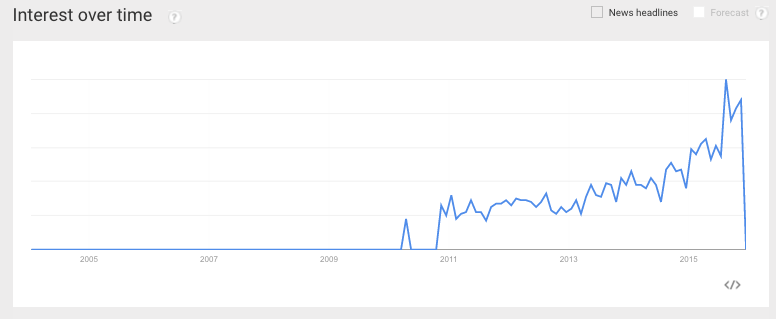
“Cord cutting” via Google Trends:

There are plenty of articles that explain why and how to cut the cable cord. Like this CNN Money Article, which says:

“Dropping cable TV can be a tough choice: You’ll save money, but you’ll have to work harder to watch your favorite programs when you want to see them.”

Well, I’m not above a little work to save money, what do I need to do?

First, set up an HD antenna. Then add Hulu, Netflix, Amazon, HBO, Showtime, CBS, and SlingTV. Hmm, that sounds like a lot. How much does all that cost?

$78 !?!?

Wait a minute, that only saves me $8 a month. What gives?

The same CNN article has the answer:

“When you call your cable company, make sure an Internet-only plan is the cheapest package it has to offer. Sometimes, cable providers incentivize customers to keep their TV subscriptions by making “double play” or “triple play” phone-Internet-TV bundles cheaper than any single option — at least for an introductory period.”

The bundle isn’t cheaper because it’s a promotion, the bundle is cheaper because of bundle economics. Once the cable company is providing you one service, it doesn’t cost that much to provide more.

Bundles also work because they “elongate the demand curve” which is fancy language for “more people will want it.” Imagine if Netflix and Spotify combined.*

“Netify”

The economics behind the idea go like this. I subscribe to Netflix (69 million subscribers)for $10 a month, but not Spotify (20 million subscribers, and also $10). I’m willing to pay something for Spotify, just  not $10.

I’m not the only one. There are other people in this willing to pay something group. Call us the $5 members.

Now imagine this. What if Reed Hastings — CEO of Netflix — woke up tomorrow and wanted to buy Spotify. He’ll combine the services — now called “Netify” — and offer both for $15 a month.

This is where economic bundling theory makes a prediction. There will be more revenue from the bundled $15 service than there was for separate services at $10 each because more people are willing to pay. 

Add in a host of other savings (salary costs, royalty negotiations, etc), and “Netify” will be cheaper to provide than Netflix and Spotify were as stand alone services.

A quick explainer in terms of food.

Anytime I go to a breakfast buffet I always eat one thing I never order: biscuits and gravy. You see, I like biscuits and gravy, but I don’t want it to be the only thing I eat.

A breakfast buffet has bundled all the food in a single package, so I (over) indulge. And others do too.

One more thing about the economics of bundling.

Economic bundling only works when the marginal cost is practically zero. That means that each additional item cost almost nothing to create.

It takes a lot of time and money for Taylor Swift to write, record, and mix an album. But once the master is done, the costs are almost nothing. A CD costs less than a dollar to make, the digital download less to host. The marginal cost for music is practically zero.

Low marginal costs exist elsewhere too. The cost to build and staff a hotel are up front, each additional guest adds almost nothing. The cost to build Google was up front, each additional user add almost nothing.

This raises the question:

If bundles are great for producers and consumers, and cable packages are bundles, why are people cancelling cable packages?

Why are people cutting the cord if bundling is so great?

It’s not that people save money. The NCTA is happy to note that Spongebob, True Blood, Mad Men, and MLB Season Pass purchased a la carte are more expensive than a monthly plan.

It’s not that the quality is that bad. The Sopranos, The Wire, Breaking Bad, and Mad Men are all great shows.

Ben Thompson at Stratechery has five reasons why people watch TV (or aren’t watching TV). Listen to the podcast (it’s really good) for the specific reasons. For us we only  need the general idea: people aren’t watching TV because those other things do what TV did. 

Entertainment now is Facebook posts and YouTube Channels and blog feeds and craft pins. Those things satisfies desires that TV used to. And they do so at a “good enough level.”

4 things bundles must do “good enough.”

The good news for bundles is that they don’t have to be perfect, just good enough. Netflix is a classic case of “good enough.” Note, Netflix is “good enough” for me. This is a subjective decision on the consumer level.

Netflix have enough okay kids shows, original series, and old shows to catch up on. Netflix does four things “good enough.”

  • Bundles have consistent quality. The TV shows on HBO are varied, but the quality isn’t. Girls and Game of Thrones are both different shows, but they’re both great shows. HBO has “good enough” quality.
  • Bundles have wide and deep offerings. If I like original programming, Netflix has it. If I like old TV shows, Netflix has it. Netflix has a “good enough” spectrum of options.
  • Bundles look like good deals.I’m going to get my money’s worth” goes the saying. At $10 a month Spotify is a “good enough” deal compared to a la carte pricing.
  • Bundles are convenient. Planning a vacation to the beach is more difficult than planning a cruise. A cruise answers questions like; when and where to eat, what to do, and where to stay. It’s a “good enough” vacation bundle.

Bundles don’t have to do all these things well, only well enough. The ultimate bundle of bundles does this well.

The ultimate bundle, Walt Disney World.

Here’s what’s great about Walt Disney World. Upon landing at the Orlando airport you take a Disney bus to a Disney hotel. From there a Disney shuttle takes you to a Disney park where you see Disney shows with Disney characters and eat Disney’s food.

Disney bundles; transportation, lodging, food, shows, thrills, souvenirs, and picture packages all into a single vacation. They call it “my Disney experience.” There’s an app you can use. It’s the ultimate bundle because Disney nails the 4 things:

  • Bundles have consistent quality. You know with Disney that the entertainment will be good, not great. It’ll be clean, with some humor, and not too deep.
  • Bundles have wide and deep offerings. Walt Disney World has thrill rides, peaceful rides, and children’s rides. There are comedy shows, singing shows, and 3D shows. There are cutting edge attractions and old favorites.
  • Bundles look like good deals. Here’s where Disney branding comes in. Parents don’t know if their kids will have a good time at a generic beach vacation, but are almost sure they will on a Disney one. A good deal can cost a lot if you get a lot in return.
  • Bundles are convenient. Disney is an easy vacation to plan. Pick a hotel budget. Pick what things you want to do. Done.

Compare the Disney bundle with the worst bundle, compact discs.

The worst bundle, compact discs.

Some CD’s are great bundles. I’ve listened to Blood on the Tracks by Bob Dylan for hundreds of hours — and it only cost me ten bucks.

The problem with compact discs was that most weren’t a good bundle of songs. They failed in the same way HBO would fail if they only had one good show.

In How the Music Got Free, Stephen Witt writes about the confluence of conditions that led to changes in the music industry. There were many factors, but one of them was bad bundling. Quotes are from Witt.

  • Bundles have consistent quality. Bob Dylan aside, most albums weren’t very good. “For years the industry had been selling songs that even their creators acknowledged were not very good. Now they were paying the price. In economic terms, album sales were an example of ‘forced bundling’”
  • Bundles have wide and deep offerings. CD options were limited in a way that the mp3 — it’s successor — was not. You needed a nearby store to have an album in stock. There was no streaming, no digital download, no two day shipping.
  • Bundles look like good deals. Most albums never came down in price and didn’t warrant repeated listening. “Seeing something for efficiency gains in compact disc manufacturing brought the per-unit cost of goods below a dollar — a savings that was not passed on to the consumer, who was charged $ 16.98 retail.”
  • Bundles are convenient. Compact discs weren’t convenient to listen to.  The mp3 was much more convenient.

Bad bundling wasn’t the only thing that caused the shift in music, but it was one part.


Okay, so what do we know?

If you can do it “good enough” (HBO, Disney), then bundling has economic forces that make it smart for the provider and consumer.

If you stop bundling well (cable TV, compact discs) you may lose your chance.


The future of bundling.

I think bundling is over.  Ben Thompson notes that (same link as above), things don’t become unbundled and then rebundled the same way. There’s a reason things become unbundled and stay unbundled.

And I think it’s an emotional one.

Mystery Science Theater 3,000 (MST3K) had a Kickstarter where they raised $4.7M+. Sorted by backers it looks like this.

That green curve is PERFECT for a bundling opportunity — but it’ll never happen. There’s something that keeps that curve from being flattened and bundled. Today’s kids call it, “the feelz.”

The people who funded MST3K on Kickstarter are people with an emotional investment to the show. Ashley Holtgraver, a fan and supporter, wrote this on Medium:

My morning email check usually doesn’t contain anything worth (literally) jumping up and down about. But there I was, pre-coffee, bounding around my house, doing my best unintentional impression of an inflatable wacky waver tube man at a grand opening sale.

Emotional connection is the new transaction in the ledger.

People can now connect to a story, and be part of a story, and there’s value in that. It may not make financial sense to unbundle and choose a la carte options, but only because that equation misses something. It discounts the connection people feel. That matters too.

And connecting is so easy now. MST3K used Kickstarter. [Casey Neistat](https://thewaiterspad.com/2015/11/06/casey-neistat/) vlogs. [Alex Blumberg](https://thewaiterspad.com/2014/12/19/70-alex-blumberg/) (Gimlet Media) podcasts. [Tyler Cowen](https://thewaiterspad.com/2015/08/25/tyler-cowen/) blogs.

Through Twitter we can connect with our favorite authors, and they respond!

This connection is having “your band” or “your bar” or “your favorite author.”

In high school I remember a bunch of kids like O.A.R. They had some catchy songs, and were popular in school until the band became popular. Then no one listened to them.

The connection severed.

At first the the high school kids were connected to the band because they saw them. You could go to Columbus Ohio any weekend and the band was playing somewhere. As the band became more popular, things changed. The band toured and wasn’t in Columbus. The opportunity to connect wasn’t there.

That doesn’t happen anymore. Now every band has email and Twitter and videos. [Amanda Palmer](https://thewaiterspad.com/2015/01/14/82-amanda-palmer/) is the queen of this and writes about it in her book The Art of Asking.

Palmer writes that sending email to her fans was like giving them flowers. “The signing line is a cross between a wedding party, a photo booth, and the international arrivals terminal at the airport.” Palmer coordinated “ninja gigs,” (impromptu events). “I chatted constantly online, and listened to the input and feedback from the fans. If they wanted high-end lithograph posters, I made high-end lithograph posters.”

That’s the new exchange. That’s why people are happy to unbundle. People may pay more, but they get more. If you’ve ever supported a Kickstarter you know this. It’s about the person and idea, not only the reward.

Conclusion

Bundling can still work, but only if it’s done “good enough,” as judged by the consumer. That means:

  1. Consistent quality.
  2. Wide and deep offerings.
  3. The appearance of good deals.
  4. Convenience.

When these things don’t exist, consumers look elsewhere.

The internet has made connecting so much easier and that’s what people want.

Thanks for reading. I’m @MikeDariano on Twitter.

* This article was first published on Medium. There I completely forgot that Amazon Prime offers this bundle.

For more on bundling listen to @BenThompson and James Allworth on the Exponent podcast. Follow  @R_Thaler on Twitter. Learn from @TylerCowen and @ATabarrok at Marginal Revolution University, who explained bundling in a way that even I could understand.

How to solve “hard things.”

Note, there is a podcast version of this post. You can find it below, or in your podcast player of choice. Search, “Mike’s Notes.”

In his book The Hard Thing About Hard Things, Ben Horowitz notes that for hard problems there’s no prescription.

“The problem with these books (about business) is that they attempt to provide a recipe for challenges that have no recipes. There’s no recipe for really complicated, dynamic situations.”

To solve hard things you need to act and learn, get dirty, and take your lumps.

A lot of Horowitz’s book is about his own lumps, and advice for people in business. That’s not me.

It’s not that I disagree – or know enough to –  but that I’m on a different path. A lot of other people are too. Horowitz’s experiences are helpful, but, and this is his point, not prescriptive.

Like everyone else on this site, the specifics don’t matter. You can’t be the next Seth Godin or Mark Cuban or Robert Kurson. You have to be you. But that doesn’t mean you can’t learn from other people.

“Fools say that they learn by experience. I prefer to profit by others’ experiences.” – Bismarck

We want the big ideas that work most of the time. Then we can experiment on our own. We can twist and tweak from a place that worked once. That’s the systems for success here.

And Horowitz has an idea for us.

Silver bullet and lead bullet thinking.

Let’s set the scene. Ben and Mike (Homer) are working at Netscape trying to figure out a way to survive. Microsoft has just released a web server that’s better in every way. Horowitz writes:

I immediately went to work trying to pivot our server product line to something that we could sell for money. The late, great Mike Homer and I worked furiously on a set of partnerships and acquisitions that would broaden the product line and surround the Web server with enough functionality that we would be able to survive the attack.

Okay, that should work, right?

Enter Bill Turpin:

“Ben, those silver bullets that you and Mike are looking for are fine and good, but our Web server is five times slower. There is no silver bullet that’s going to fix that. No, we are going to have to use a lot of lead bullets.”

The lesson is this, there is no panacea, no cure all, no silver bullet. There is only a lot of hard work. 

We understand this, but why?

Silver bullets don’t exist because problems range from complicated to complex. Taylor Pearson explained this vis a vis jobs. We’ll look at it at the macro level.

A lot of problems exist on the complicated to complex spectrum (anything less complicated is an equation, 2+2).

complicatedcomplexspectrum.pngThe challenge for Horowitz was how to solve a complex business situation. It was closer to predicting the weather than the tides.

Horowitz’s business choices were a complex network, like an ecosystem. Pull on one string, and  another moves too. That stressed him out. Horowitz was sick and couldn’t sleep as he tried to solve these types of problems. Until he realized something, he was thinking about it all wrong.

“All the mental energy you use to elaborate on your misery would be far better used trying to find the one seemingly impossible way out of your current mess.”

Rather than worry about finding a silver bullet, Horowitz needed to spend his time firing lead ones.

It’s like untying a knot done by a 5-year-old. There’s no single tug to unravel it. You just need to start twisting and winding. That’s what Horowitz started to do.

How to solve complex problems.

Complex problems often require new questions. Ask new questions and you’ll start to get new answers.

Horowitz switched from, “what’s the worst that can happen,” to “if the worst happens what will I do?”

Like Newton under the apple tree or Archimedes in the bathtub – Horowitz got an idea.

Note, acting does imply accuracy. As Barry Ritholtz points out when he spoke with  Michael Mauboussin, Jason Zweig, and Ken Fisher – “don’t just do something, sit there” can be good advice.

When to act.

Act when you need to survive. Each big business decision in Horowitz’s book was when his company needed to just survive. That’s when you need to act, to not die.

Conclusion.

  1. Complicated and complex problems have many connected nodes.
  2. Those nodes tug on each other and create problems that live in an ecosystem.
  3. There is no single solution to change a complex problem.
  4. Change only happens through a lot of work on the different nodes.
  5. To do this you need to forget about worrying and take the right action.

Thanks for reading, I’m @mikedariano on Twitter.