Chris Douvos

Supported by Greenhaven Road Capital, finding value off the beaten path.

Chris Douvos spoke with Patrick O’Shaughnessy, Ted Seides, and gave a pair of presentations at Stanford (2016 & 2017) that we will use for these notes on venture capital investing.

Douvos’s investing career began with some choice teachers; David Swensen at Yale, experience at Princeton, David Salem at TIFF. Douvos learned to be a BLT investor – beyond the long-term. Swensen told him:

“Investing is about optimizing discomfort. If you’re feeling too comfortable you’re not taking enough risk. Risk is not itself a dirty word. There are two kinds of risk, there are risks you can mitigate and there are risks that you can’t. The ones you can mitigate you want to spend all your time mitigating and diversifying them and the risks you can’t mitigate you want to make sure you get compensated adequately for.”

From David Salem he learned to invest heroically, as a robust nonconformist with courage in his convictions. Douvos presents it this way:

Screen Shot 2018-05-01 at 10.44.46 AM.png

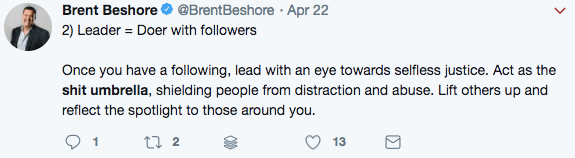
Howard Marks has a similar matrix that inspired Andy Rachleff to start Wealthfront. David Salem explained to O’Shaughnessy in their podcast that to be right and alone you need degrees of freedom. Or as Brent Beshore puts it, you need a shit umbrella above your head.

Screen Shot 2018-05-01 at 10.48.36 AM.png

Besides support from the top, Douvos warned Patrick that investors shouldn’t choose venture if they have the wrong timeline. “The biggest drive of venture success is a willingness to have a long horizon.”

High tolerance for risk, illiquidity, and a distant horizon, Douvos said, “is a rare trio.” Yale is the canonical example. “But Yale has a comfort envelop dynamic. They have an accommodative committee that will stick with them through thick and thin. They have a time horizon that is much longer than most folks.” This was a point Salem made too; someone can’t imitate the Yale strategy without imitating the Yale people and processes too.

But imitating Yale is comforting. Those folks are doing it. Being different takes career risk. Jeremy Grantham told Douvos, “Over ninety percent of decisions as an asset manager first take into account the career risk associated with those decisions.”

No one gets fired for IBM and not-buying IBM takes career capital. Michael Mauboussin explained it this way:

“I do think there’s an element of career risk, and this spans not just sports but also investment management. Bill Belichick goes for it on fourth down and it doesn’t work out and people give him the benefit of the doubt. But if you’re a coach who has a .500 team, it may be the correct decision but if you lose that game people don’t think about the quality of your decision-making process, they do think about the outcome, that’s a real big problem.”

Rory Sutherland said that this comes from our willingness to signal competence.

“If I pretend everything is logical, it may not be a really good decision but if things go wrong no one can blame me. This is an extraordinary form of corporate insurance.”

“The Venn Diagram of the people who can do and have the courage to do it is,” said Douvos, “that interaction is actually pretty small.”

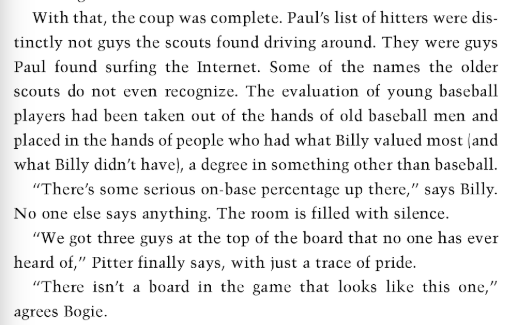
The Venture Captial Model. According to Douvos, there’s no great model. As he says in a presentation at Stanford; “you don’t have winners repeating.” But, he tells O’Shaughnessy, it’s not as extreme as monkey’s throwing darts. That said, factors may not be the best approach. “If you found four factors, I’m not sure they would correlate with success, but they would certainly correlate with volatility.”

His best guess for a venture capital model with quantifiable inputs would be; concentration, scientific processes, early-ness, and size discipline. Like he says, it’s not easy.

One thing he wouldn’t include is performance. “I actually think track record is a lagging indicator, not a leading indicator.” Part of the reason is the time it takes for venture investments. The average investment, Douvos explains, lasts longer than the average marriage. Also, size isn’t a perfect indicator. “Someone once told me, it’s harder than you ever dreamed it would be to raise fund one, but far easier than you ever thought it would be to raise fund two.” O’Shaughnessy adds, “I call this assets vs alpha.”

Venture capital hasn’t always been so difficult and messy. Douvos admits in talks that he does a kind of “voodoo.” But it wasn’t always voodoo. No, this problem began with David Swensen.

“After Swensen placed all his chess pieces on the board he wrote a book and when I pitched non-profits I would sit down and say, ‘Now a reading from the book of David.'” That book, Pioneering Portfolio Management, became an investment tome. Swensen wrote for so much of an allocation in venture capital and groups invested so much in venture capital.

Money flowed west and the landscape bloomed. “All these things led to a flowering of entrepreneurship.” But opportunity withered. Douvos is electrified in his chats and likes to quote Buffett; Opportunity = Value – Perception, though he’s not sure Buffett ever said such a thing.

“A thousand flowers are blooming and the vast majority of those will die off but the few that survive with thrive and be transformative.”

And that’s the stage venture capital is today. The innovators were followed by the imitators who are followed by the idiots – and “sometimes I feel like we’re in the idiot phase.” Things are feverish. “I think a lot of people in this zip code think about sexiness as a proxy for an opportunity but it’s the exact opposite.”

Douvos recalled his time as a “Henry McCance barnacle.” Following McCance around he recalled, “He told me, ‘When an asset class works well, capital is expensive and time is cheap. What we saw in the bubble was that capital got cheap and time got expensive.'”

Today, Douvos repackages a Gatsby line for the Valley.

“The tempo of the city had changed sharply. The uncertainties of 1920 were drowned in a steady golden roar and many of our friends had grown wealthy. But the restlessness of Palo Alto in the 2000’s approaches hysteria. The parties were bigger. The shows were broader. The buildings were taller. The morals were looser.”

Perception isn’t value. Indexing isn’t value either. “If you were to index venture you would waste your time.” Venture capital returns are like average income when Bill Gates is in your sample. “Skewness can drive sadness,” said Douvos when he presented that the mean return for a vintage of funds was 45% higher than the median return.

This doesn’t mean good ideas, good companies, and good people aren’t out there. They are. The world is getting better. But investors have to work harder to find them.

Douvos is perplexed when he reads articles about another app. Come hang out at his portfolio companies “and you’ll see smart, domain focused people doing amazing world-changing stuff.”

Douvos looks on college campuses. “If I could make a pairs trade I would go long Berkeley and short Stanford.” That’s nothing against Stanford, where Douvos has given presentations, but more for Berkely. It’s a Moneyball approach, find value where others aren’t looking.

Douvos models himself after Herodotus. After an early visit to California he reflected, “I thought I needed to be in the land of the start-up-ians.” Walt Wittman’s Song of the Redwood Trees also inspired Douvos. “Populous cities—the latest inventions—the steamers on the rivers—the railroads—with many a thrifty farm, with machinery,”

pablo (48).png

West, young man, go west.

He knew from his days at TIFF and Princeton that running up and down Sand Hill Road, “You just get his warmed over conventional wisdom and sometimes a healthy dose of politics on the side…Historians prize primary sources and the primary sources were the entrepreneurs.” So he moved west and starting showing up at companies with a case of beer on a Friday afternoon. “People are thrilled to talk about what they’re up to.”

“I asked Mike Maples, ‘How is your success so repeatable?’ and he said, ‘I’m looking to meet with ten people a week that are really smart that no one else is meeting with.”

“I set a rule for myself to be like Herodotus. For every hour I sit with a VC I’m going to sit with an entrepreneur.”

“Creativity doesn’t come from within the community of consensus.”

Though different in words, the spirit is the same as How Brian Koppelman made Billions. If you have genuine interest people will talk.

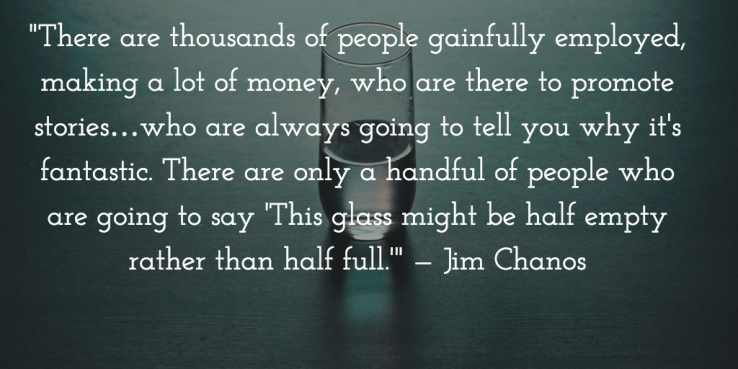
But not necessarily believe. Douvos told a group of students, “(To do this job) you have to be a professional skeptic, everyone is a fantastic salesman. You can sit there all day and get pitches from people and every opportunity is as exciting as the last.” He wears many hats; investigative journalist, counselor, teacher.

Douvos raises money then gives it away, then (hopefully) gets more back. The model works, for now.

Patrick O’Shaughnessy asks if he’s worried about Initial Coin Offerings but Douvos isn’t perturbed. “You created a more effective vehicle in a sense – but you still need help. So much has to go right in building a company that you want more people in your squad than you ever dreamed possible.” He points to a 2014 blog post that Josh Kopelman titled Domino Rally Business Models. In that post, Kopelman notes that you need a lot of things to go right for a business to succeed. Douvos said, “taking a company from 10M to 100M in revenue is an amazing challenge…It’s like riding a tiger whose fur is on fire running through an oil field.”

Help comes as doing something, making connections, offering insight. “One of my views is that active management will look like catalytic management.”

Douvos, again and again, lays out what he looks for. He’s teaching not obstructing, he wants to educate not confusticate. His process?

1/ The people. Do they have an edge somewhere? They must be “people who are reflective, opinionated, and have humility.”

“Every great partnership is a well-rounded whole of jagged pieces that fit together nicely.”

2/ The strategy. “Is there a resonance between the strategy and the people?” It’s like Christensen’s Disruption Theory, only instead of the firm, it’s applied to the individual.

“It’s amazing how often I meet middle managers from Proctor and Gamble who all of a sudden want to run a micro-cap buyout firm. They say they can bring operational experience but, no, you had a staff of thirty people for all these years in Cincinnati. What do you know about being in the weeds and deploying all these other plays in the playbook?”

3/ The portfolio. “These are fragile.” How does someone diversify the risk when “Bob the VP of sales sleeps with Jane the wife of Bill the VP of engineering.”?

Then we get into PE math “I tell entrepreneurs, once you take venture capital the venture capitalist’s business model is your business model.” Douvos wrote:

“Here’s where it gets dicey for the masses, though (and I’ll make some gross simplifying assumptions): if you’re an LP and investing in an run-of-the-mill $500 million fund hoping to get a 3x net return, that fund has to generate $1.75 billion in returns ($1.25B in profit less 20% carry equals two turns of profit). Of course, that’s just the capital that accrues to the firm’s ownership stake. Since a lot of firms end up owning only 10-15% of their companies at exit, you’ve typically got to gross the $1.75 billion up by a factor of between 6.67 and 10. That suggests that those firms need to create between $12 and $17 billion of market cap just to get a 3x fund-level net return to their LPs. Caliente!”

4/ The performance. It takes seven years and by the time you see results, it’s like looking through a telescope at life in the past. “The challenge is that performance is easy to measure,” but it may not be the right metric.

“People focus on a few metrics because they are easy to extrapolate but if you’re doing this job well it’s crazy time intensive.” It’s getting a beer with people, it’s walking tours, it’s visiting.  It’s “building the mosaic and that takes time. It’s why people take shortcuts and that’s why you default to brand.”

So what makes Douvos work?

When asked about his day, Douvos explained his average week; meeting with a manager about their portfolio with mental notes about cross-references to check, meeting with investors, a Palo Alto walking tour and history of the electronics industry, meeting with entrepreneur, “hopefully I’ll have a neuron fire from a conversation from a few days earlier.”

After that, he’ll drive to a robotics or AI lab and talk with the teams there.

Douvos got to this point by standing out. He visited campuses before others. He started blogging before others. He wore a red t-shirt before others, actually, the t-shirt is a good story. He realized, “ I can educate people.” When you’re the first voice, you get to choose the conversation.

“Venture Capital,” Douvos said, “has more units of ego per dollar of return than any other asset class.” But Douvos tries to build partnerships and community. He tries to manifest what Mr. McCance at Greylock told him. “If we ever have to go into the bottom drawer to pull out our documents we lost. We should have a partnership with a capital ‘P’ where we do right by you and you do right by us.”


Thanks for reading.

Andy Rachleff

pablo (45).png

Supported by Greenhaven Road Capital, finding value off the beaten path.

Andy Rachleff joined Jason Calacanis for a nice seventy-five minutes of startup, investment, and strategy talk. Much like his conversation with Aaron Watson, Rachleff reminds us to revisit Howard Marks. Here are my notes.

Luck Rachleff started venture investing in 1996, “Right when Netscape and the Mosaic browser came out.” Sometimes, he said, “Better to be lucky than good.”

Starting Benchmark. The company’s start came from envisioning someone else’s end. Throughout the interview, Rachleff’s advice for founders is, figure out your competitor’s greatest strength and make it their greatest weakness. In venture capital, John Doerr was Kleiner Perkin’s strength. “We figured the best way to beat an individual was with a team.” And so Benchmark’s structure was created. And it worked well.  “We thought an equal partnership would attract talent like no other firm…On and on we keep attracting great people who are better than the founders were.”

What’s the name of this magical arrangement? “We call it communist capitalism.”

What job are your customers hiring you for? When the conversation switches to Wealthfront, Rachleff explains, “millennial pay us not to talk to them.” How do they do that?  “What might surprise people is the thing that most attracts people to our service is we do everything in software.”

Calacanis is surprised when he hears travel agents are still around, but if we ask what job are your customers hiring for? we can see why. Baby boomers and large groups use travel agents because of an informational disparity the internet can’t bridge. Millenials have the mindset of, I’ve got an app and I’ll figure it out.

But Wealthfront isn’t a casino. Their job is to provide the best service they can.  Crytpo is “a great interest to our target demographic, but we are a boring service that’s focused on investment strategies that have been academically proven over time.”

“Everything we do,” Rachleff said, “is rules-based and unfortunately crypto doesn’t qualify for that.”

Some rules originated with cash flows.

“My investment idol is a guy named Howard Marks who runs a hedge fund called Oak Tree, and Howard likes to say, in order for something to be an investment it has to have a cash flow because the only way you can evaluate something is by evaluating its cash flow. If there isn’t a cash flow it’s speculation.”

But that doesn’t mean you shouldn’t invest in crypto. “If you think about buying Bitcoin as entertainment you’re going to be fine,” Rachleff said. Calacanis said he gets similar questions about angel investing since he wrote his book. Others have said this about DIY investing. If you’re going to put in the time to master something then go for it but don’t invest so much you blow up.

Zero Marginal Cost & Economies of Scale. That Wealthfront even exists is interesting. Besides learning from Marks, Rachleff mentions Bridgewater and other pioneering financial firms that innovated something which is now deliverable to the masses. This was a theme to Albert Wenger’s podcast with Patrick O’Shaughnessy too. Wenger’s big idea is that everything has become (or will become) computable and distributable thanks to zero marginal cost.

Besides distribution, the beauty of software Rachleff says, “it keeps getting better.” For example, Wealthfront combines your ‘house’ savings account with data from Redfin and Zillow to give an estimate about buying a home, the number one withdrawal reason of millennials.

The software also lets Wealthfront install bias frictions.

“There’s a lot of research that suggests human nature is such that we want to sell when the market goes down and buy when the market goes up, which the exact opposite of what you should do. The problem is, it doesn’t feel right. it doesn’t feel right to sell when you’re winning and it doesn’t feel right to buy when you’re losing.”

Calacanis put it better; “Anyone who has played blackjack and was up ten grand will tell you, leaving the table is heartbreaking.”

Nudging. “You don’t pick the risk level, because most people don’t know how to. We tell you what we think it should be and you can adjust it if you want.”

For a long time, I viewed nudging as a panacea without realizing that nothing is a panacea. Everything has tradeoffs. Nudging too.

Lessons from Reed Hastings. “There’s no one I think more about as I run Wealthfront than the lessons I learned from Reed Hastings.”

What makes him good?

“He keeps it really simple.”

How so?

“He takes asymmetric risks.”

Is that a better form of risk?

Yeah, and it comes from pattern recognition.

Venture Capital Pattern Recognizers. “I don’t think the vast majority of people should invest in startups,” Rachleff explains as he tells Jason that the top two-percent of firms generate ninety-five percent of the realized gains. What makes that top group so good?

Success. “You have to know which leaps of faith to take.” You have to know which asymmetrical risks are worth it. “The thing that separates the premier firms from the other firms is they’ve had a lot of success and they’ve learned from that success which leaps of faith to take – which you wouldn’t know unless you’ve had those successes.”


Thanks for reading.

Albert Wenger

Supported by Greenhaven Road Capital, finding value off the beaten path.

After Albert Wenger was on Patrick’s O’Shaughnessy’s Invest Like The Best Podcast I thought, this guy sounds fascinating, I gotta see what else he’s said. Hours – really days – later with viewed YouTube videos, exhausted podcasts, and creased pages from his book, World After Capital here are three things I learned from Wenger.

1/ The steps to thesis-driven investing. These including understanding the thesis deeply (i.e. network effects don’t overlay old businesses) and changing your thesis as others come in.

“To me, the idea of having a thesis is a little like the idea behind science.”

2/ Crypto-currency and techno-economic revolutions with a specific focus on the work of Carlotta Perez.

“My view is that when the dust settles there will be a dozen or so protocols that matter and to get to the ones that matter we’re going to have to try thousands if not tens of thousands.”

“The zero-knowledge position is that your best prediction for how long something will be around is how long it has been around. That predictor is very very powerful.”

3/ The World After Capital, why we need to sell the sizzle with the steak.

“We have failed to provide a good forward-looking narrative.”


Thanks for listening, and of course, the book’s pages were only metaphorically creased.


China Books

Supported by Greenhaven Road Capital, finding value off the beaten path.

Imitating his Gotham neighbor, Commissioner Gordon, Josh Brown put up the book signal.

https://twitter.com/reformedbroker/status/990565520792604675?s=11

Like the Deep Books request from Patrick O’Shaughnessy, I went through the 100+ replies to the above tweet. Below is the best. These are Amazon Affiliate links.

But first, consider travel. Tyler Cowen told David Perell that books are a good precursor for travel. “I’ve tried reading (about how the Balkan states are messed up) and I can’t grasp it. I go there and the mix of going there and the books make it all work.” Going there was a suggestion from the Twitter crowds to Brown too.

In honor of Cowen, we will include @MR links when available.

The Best! This is based on ranking books by the number of reviews, then reranking books by percent of reviews that are four stars or above, then adding one ranking score to the other. Or, more people read and liked this books than any other.

Country Driving by Hessler. “I found this to be an excellent travel memoir, a very good book on transportation economics, a wonderful book on China, and most of all a first-rate study of the adjustments and changing norms which accompany rapid economic development,” wrote TC@MR

Age of Ambition by Osnos. This was one of my favorite books from 2017. Osnos writes, “This book is an account of the collision of two forces: aspiration and authoritarianism.” “This is one of the best books on contemporary China, maybe the best,” wrote TC@MR.

Tai Pan by Clavell. I remember reading this as a teen and liking it. Jane Wells liked it too.

Wild Swans by Juan Chang. Wikipedia describes it as; “a family history that spans a century, recounting the lives of three female generations in China…”

Most reviewed These were the books with the most reviews on Amazon. It turns out people really like fiction, historical fiction, and/or gripping narratives. Art of War, The Three Body Problem, The Good Earth, and The Ghost Fleet topped the list.

Highest rated. These were the books with the highest percentage of 4 + 5-star reviews. This was trickier because the top few books here all had fewer than twenty reviews. Past that group of small numbers it was; Little Soldiers, Wish Lanterns and Search for Modern China.

Africa. There were a lot of books that included references to Africa. I was surprised, though I shouldn’t have been. On a Caribbean cruise a few years ago, our family took an island tour and there were a set of apartments so colorful they looked like an Instagram picture.

‘What’s that?’ I asked the guide.

‘China money,’ he replied. The full list lets you dig in for more. Or…

Podcast it. Of course, you don’t have to actually read anything on this list. There are many YouTube talks and podcast interviews. I thought Graham Allison’s conversation at a16z gave me enough. Here is Allison and Kissinger (whose book On China also scored highly) on YouTube.

Multiple people suggested the TV The Three Kingdoms as well. Here’s the Wikipedia page.

Marginal Revolution is my go-to place for book suggestions and footholds, here is more Cowen; in 2006,  in 2011, New books and notes on China, and 2017, How to understand modern China.

Brian Koppelman’s Career Capital

Supported by Greenhaven Road Capital, finding value off the beaten path.

If you want to snuggle into something longer, here’s a brief tour through Brian Koppelman’s career. Three choices available; save for later or pdf or ebook ($4.99 at Amazon).

If you want to snuggle in and have it read to you, that’s also available.

https://soundcloud.com/mikesnotes/brian-koppelmans-career-capital-chips-and-arc/s-oes9O

I can’t say what drew me to Koppelman, we’ve written about him before; Brian Koppelman and Brian Koppelman and David Levien but this was fun to put together. Here’s the introduction if you’d like to see the flavor.

Brian Koppelman’s career as a filmmaker is like his first movie; Rounders. He wins with good hands. He loses with bad hands. He loses with good hands too. He bellies up to the table, gets a break, and shows up the next day.

Life, wrote Scott Adams, is like “A reverse casino. In a casino, if you gamble long enough, you’re certainly going to lose. But in the real world, where the only thing you’re gambling is, say, your time or your embarrassment, then the more stuff you do, the more you give luck a chance to find you.”

Koppelman was the guy that studied poker odds and won a big pot. He worked on Rounders, Knockaround Guys, and The Illusionist. Then he lost or broke even on a bunch of hands. In a sense that’s all that could have happened when you finish a movie like Oceans 13 which starred Matt Damon, Brad Pitt, and George Clooney. When Runner Runner came out, Koppelman told his friends not to see it. When his role on the television show Vinyl fell through he was gobsmacked. When he gets stuck writing Solitary Man he gets really stuck.

Then, he starts Six Second Screenwriting Lessons on Vine. He starts podcasting. He starts writing Billions.

Koppelman’s film career mirrors a successful poker career. Don’t blow up. Play games you can win. Get back to the table. Ditto for how Billionaires make actual billions. Just like financial capital, Koppelman has compounded career capital due to small investments; in projects and with people.

David Levien is Koppelman’s best friend (since he was fourteen). He’s a crucial supporting character here. Part of the reason this is about Koppelman and not both is because Koppelman puts out so much material while Levien does less. Ditto for Amy Koppelman. Brian gives her a lot of credit for the initial nudge and continuing support. When asked for advice, Brian’s first suggestion is to marry someone who supports you.

Brian Koppelman will be our subject but he hasn’t done it on his own.

One programming note; all unattributed quotes are from Brian Koppelman.

Ready?

Decision Making

Supported by Greenhaven Road Capital, finding value off the beaten path.

This seems a good point to recap some decision-making advice.

1/ Check your ego at the door. Good decision making means always learning.  “Humility,” wrote Tariq Farid, “is never a sign of weakness. Rather, it is a sign of willingness. Unlike seventh-grade history, the world changes. Good decision makers are curious, nosey, insatiable.

2/ Think in dials not buttons. Yes and No are not the only possible outcomes. There are always shades of gray.

3/ Go with the base rate. Too often we don’t follow the base rate when we are unsure. Annie Duke explained to Barry Ritholtz that people don’t like to do things rotely. Instead, she has to reframe the situation to her clients, that, you have to be very wise to figure out the base rate is the right strategy.

4/ Record the decisions. People (please sit for this) have this tendency to make themselves look good. Luckily for you and I, this is mostly other people. WE keep a decision journal.

5/ Talk with others. Whether it’s red teaming or something else, the best decision makers get feedback from other people. This could be a formal process or emerge on its own. Josh Wolfe said that the worst investment decisions his firm makes are when everyone agrees. “The biggest mistakes are when an entrepreneur comes in and we won’t let them leave, we want to give them terms on the spot.”

6/ Recognize the role/roll of luck. Dice are the canonical example but there’s some luck in anything we do. Michael Mauboussin put it this way; anything out of your control can be considered luck. Anything in your control is a skill. So…

7/ Build up your skill.In Mauboussin’s work, he uses the two-jar model to explain outcomes. While the luck jar is independent, the skill jar is entirely dependent on what we spend our time on. “People often talk about following your dreams,” said Brian Koppelman, “but you also have to work ferociously hard.”

8/ Schedule your tweets before the second glass of wine. Annie Duke said that we tend to make wise long-term resolutions but make dumb short-term implementations. I want to lose weight but I also want to eat potato chips. We can design a solution, such as the one-hour diet. For the one-hour a week we’re in a grocery store we don’t buy potato chips.

9/ Biases are like coffee grounds; filter and swallow. This morning I discovered my coffee filter had a hole after I started drinking the coffee. Biases are like that. We can design our life (#8) and get help from friends (#5) but we’ll never be able to eliminate all the biases we have. That’s fine. Notice the mistakes, learn from them, and move on.

10/ What kind of distribution is this? There are two big distributions types to be aware of; normal and power laws. Normal distributions like height have helpful means. Power laws have unhelpful means, and a whole lot more going on. We looked at Brian Arthur’s work in this podcast episode. Knowing what kind of system you’re in affects what kind of information you’ll see.


Thanks for reading.

Annie Duke

pablo (44).png

Supported by Greenhaven Road Capital, finding value off the beaten path.

Annie Duke joined Barry Ritholtz to talk about her book Thinking in Bets. The book is a good introduction to someone who wants to understand decision making. Here’s a YouTube playlist of clips of things Duke writes about:

In the book, Duke introduces the term resulting.

“We have this very uncertain relationship between decision quality and outcome quality.”

“Learning from your outcomes is a really poor strategy. It’s great if you’re playing chess; but it’s terrible if you’re playing poker, it’s terrible if you’re investing, it’s terrible if you’re driving.”

This was something we looked at in the Traffic podcast. The system we call driving offers terrible feedback for the human. But camera and radar make it better. Why? Feedback. After it therefore because of it isn’t always right reasoning.

Duke writes about Pete Carroll and explains why the intercepted pass play was a good play call. Carroll explained his  philosophy this way:

“The winning/losing thing. The judgment at the end of it. You can’t focus on that. If you focus on that you’re missing all the things that happen in the meantime. What really gets you there are the good plays, one after another. One step at a time. One thought at a time. If you believe and trust in that, the outcome will turn out the way you want it to.”

Carroll must be a 76ers fan. Duke uses Daniel Kahneman‘s two systems to explain. “We’re pretty good at understanding our goals…the problem is all the small execution decisions along the way.”

We tend to choose goals in System 2 (thoughtful, wise) but pursue them in System 1 (reactive, myopic). Wes Gray suggested making those small, middle, execution steps part of the big goal planning.

Luck “The problem with luck,” Duke explained, “is that if you were unlucky there’s nothing you can learn to improve your execution of decisions in the future.”

Why is it so difficult?

“Generally we don’t have enough data to do it and generally we field outcomes one at a time…We live in this noisy system where sometimes we drive through red lights and we get through just fine and sometimes we go through green lights and get in an accident. It’s not perfectly linked together like a game of chess”

Okay. Instead of just saying luck is hard to untangle from skill is there practical advice? Yes!  Michael Mauboussin suggests we figure out how replicable something is. Rolling a seven with a pair of dice is pure luck. Sports and games are less luck and more skill. Chess is almost purely skill.

For things that are less skillful, assume the base rate. What’s the base rate? Cade Massey explains:

https://soundcloud.com/mikesnotes/cade-massey-explains-nfl-qb-base-rates

Success requires a mix of humility and ego. It’s an attitude of, I believe I can do this though it’s not guaranteed. Duke said:

“I think there’s a difference in being humble in the face of the game you’re playing and humble in the face of the opponents you’re facing.”

“The more you play the more you realize you have no idea what you’re doing at this table.”

“I think once you’ve survived a long time, whether it’s poker or anything else, you’ve probably developed some more humility around the rightness and wrongness of your decisions in the first place.”

Tariq Farid of Edible Arrangements put it this way. “Humility is never a sign of weakness. Rather, it is a sign of willingness — to learn, collaborate, benefit from the experience. Arrogance, on the other hand, is often a sign of insecurity and can be an immediate turn-off when dealing with anyone in a business venture.”

At the 2010 NBC National Heads-Up Poker Championship Duke defeated her mentor – and one of the best poker players ever – Erik Seidel. How?

“I ended up facing Eric Seidel at the final table and I knew he was going to outthink me. So I injected a lot of luck into that match. I understood that if I had to execute a lot of decisions where he has the edge I’m going to be in big trouble.”

Daryl Morey said something similar about the pre-20017 Houston Rockets. When asked about playing the Golden State Warriors Morey suggested a one-game playoff. Why? More variance in small sample sizes. Fun statistic professors point out that it’s the lowest population counties that have the highest cancer rates. Is it because of access to services? No, it’s about statistical variance. Do you know where cancer rates are the highest? Other low population counties.

Perpetual beta. Duke asks, do you want to be someone who goes around justifying your beliefs or do you want to be someone who verifies the world?

“The person who wins at a bet is not the one who affirms their prior, it’s the person who has the most accurate model of the world.”

“When you view your beliefs as under construction, you don’t end up with these full-on reversals that I’m an idiot.”

Phillip Tetlock writes about perpetual beta in Superforecasting and points out that it goes along with a growth mindset. How does Duke do this? “I have to make sure I’m openminded to the information and that I’m information hungry.”

Unsexy careers Playing poker, making wine, writing movies – these are all very sexy careers. Which also means they’re damn hard to dominate. When Ritholtz asked Duke for advice to a young person considering poker she said:

“Now that it’s been on television, it’s a little more glam, know what you’re getting into. It’s a grind. You have to put in your hours because the amount of money you make is tied to the amount of hours you put in.”

Careers pay financially and emotionally. If you’re not getting paid in the former, advised Scott Galloway, then make sure you’re getting paid in the latter. Sometimes we assume the two are tied; that only sexy jobs pay well. But as investors like Brent Beshore know, that’s just not the case.


Thanks for reading.

Tiffany Zhong

Supported by Greenhaven Road Capital, finding value off the beaten path.

Tiffany Zhong spoke with Khe Hy about Gen Z.

Our X Y Z generation demarcation marks our technological revolution. Past transitions like the industrial revolution, Ford’s assembly line, and the shipping container were specifically somewhere. Today the change could be everywhere. Breaking Smart explains this nicely.

Zhong grew up in San Francisco. She had a Blackberry at fifteen and spent a lot of time on Facebook. One day her dad asked why she wasn’t creating something herself, instead of consuming it from someone else. This was Zhong’s see-it-to-believe-it-moment.

“I was like, Wow, there are people behind these platforms that I’m using. There are designers and engineers and product people and CEOs and founders and I could get access to them if I tried hard enough.”

That question “led me to using Twitter.” Zhong didn’t think of emailing people when she could tweet at them. She asked questions. She replied. She learned.

During Brian Koppelman’s press tour for Billions, many interviewers are surprised that billionaires will open up to Koppelman. Well, Koppelman replies, who doesn’t want to be understood? Zhong had the same experience.

Tiffany shifted from just adding questions to adding value.

“I changed my tagline to, would you be up for grabbing a coffee and in exchange, I’ll give you my perspective on anything consumer related from a real teens point of view…That’s how I got my foot in the door, they didn’t really know any teens.”

They didn’t really know ____ is the seed for a startup surprise. Sarah Tavel with Pinterest, Katrina Lake with Stitch Fix, and Brian Chesky with Airbnb are all examples of venture capitalist ignorance.

Twitter helped, Zhong explained, because “Twitter taught me a lot about emotional intelligence and talking to people.” Just not overnight. “It took me five years to get me to where I am today.” Five years of work is a good reflection point. Stratechery, for example, just turned five. Brainpickings is older and wiser:

Screen Shot 2018-04-12 at 6.25.59 AM.png

When not on Twitter, Zhong worked at Product Hunt. “I was at Product Hunt when I was sixteen, this was in high school…Senior year of high school I was working basically full-time hours at Product Hunt.” What kind of skills does a high schooler have?

 “I didn’t have a strong network back then but I did have my perspective and I was willing to work hard and spend time on janky early apps and give feedbacks to founders.”

Tiffany’s experience reminded me of the Douglas Adams quote, why are there still sharks in the ocean, because nothing is better at being a shark than a shark. What’s your competitive advantage? You.

“I did not have any other skills other than knowing how to tweet and being Gen Z.”

After a year with a VC firm Tiffany heads to UC Berkeley. This part made me laugh:

TZ: “I wanted to build things rather than spend all my time meeting founders and investing in things.”
KH: “So you went to college because it was going to give you free time to work on projects?”
TZ: “Basically.”

But college didn’t work out. Rather than advising her peers to also drop out, Zhong said, “I don’t think everyone should drop out. There’s a lot more to that. What will you be doing instead and who will you be doing it with?”

Ben Carlson wondered, is college worth the cost?. While I advocate for the DIY MBA it’s been reading Annie Dukes Thinking in Bets that’s made me think less in buttons and more in dials.

That means going from A or B to, How can I tune this? I talked to high school students and some of them stream college courses at high school. Those kids are planning on 18 months at an Ohio State satellite campus and then two years at the main campus. The best education seems to be a cycle of finding and solving problems.

Zhong said, “The only skill you need is to be able to think creatively and use your resources well. You don’t need to know how to code…If you can write and sell you can get very far in life.” This echoes Seth Godin‘s advice to teach people how to ask interesting questions and solve problems.

All this has led to Zebra Intelligence. “Everything around Gen Z basically.” Zhong, like authors such as Andy Weir and Steven Kotler, formed a project around questions people asked her.

What does Zebra Intelligence do?

“We help teach high school and college students things that they need to know but that they don’t learn; how to talk to adults, how to cold email, how to do double-opt-in intros, how to work with adults to create a product scope.”

What is Zebra Intelligence?

“A platform that connects brands and teens to deliver continuous consumer insights.”

Why is this important?

“Anyone who does stuff in product, design, engineering, or wants to start their own company should know how to talk to and interview users or potential users…Being able to talk to people in an unbiased manner is crucial.”

One theme of failed startups was not asking critical questions to unbiased users. You can’t ask your mom if a product is great because your mom will answer about you, not the product.

Understand what job your customer is hiring for. IDEO, Tariq Farid, and Susan Tynan have all proved how important this is. Zhong is proving it too.


Thanks for reading. I’m mikedariano.

Katrina Lake

pablo (43).png

Supported by Greenhaven Road Capital, finding value off the beaten path.

When my wife’s first fix arrived the value was obvious. Stitch Fix founder, Katrina Lake’s How I Built This podcast (and other interviews) are another template for startups. It’s a similar path to Instagram & theSkimm, only Lake has taken one further step, straddling the online and meatspace worlds. Let’s see what she did.

Note, Tren Griffin had a typically erudite post on Stitch Fix.

Lake got the idea for Stitch Fix when she was a restaurant and retail consultant. Large retailers wanted ideas from smart young people (like Lake) but they acted on few if any. One of Lake’s ideas was to make a store half museum, half warehouse. Customers could scan items from one side and they would be collected and delivered to a changing room from the other.

“I had all these ideas on what these businesses could do better,” Lake said. Yet, “People looked at me like I had seven heads.”

This is good! Andy Rachleff said Wealthfront was a radical idea. Scott Norton advocated zigging when others are zagging. Peter Thiel asks about what do people not agree with you on. Eddie Izzard puts it this way: “(history + change in society) * change in technology = the future”.

Lake’s job was to suggest new glasses to men who wanted to stay blind. “It is difficult to get a man to understand something when his salary depends on his not understanding it,”  wrote Upton Sinclair.

This isn’t to say that the people Lake advised were obtuse or ignorant or illogical. They were locally logical. Their incentives were tilted toward the status quo. No one gets fired for buying IBM and no one gets fired for saying no to a museum/warehouse mutt.

Lake left advising and began capitalizing, but it was “A weird time (2007-2009) to be in venture.” But it was also instructive.

“The most important learning was that all these people were just like super unqualified normal people – just like I was…I didn’t need to be in the peanut gallery lobbying my ideas at other people, I could just do it myself.”

She watched for a company to join. No good fit appeared. Two years later she left for business school.

At this point in her podcast with Guy Raz I was cheering for her to say I knew B-School would be a waste of my time and I could learn everything I needed as I went. Lake did not say this. It’s helpful she didn’t. We advocate for the DIY MBA and collect (minor degree curriculums). But Lake said:

“I was never going to quit my job and have this gap in my resume. I can take these two years and be a mediocre student. My end goal is to have a company funded, paying myself a salary and paying back my students loans on the day I graduate then the risk profile of entrepreneurship is tenable to me.”

When asked if her MBA was useful and worth it, Lake told Bloomberg:

“It was absolutely the right thing for me. I had no history of being an entrepreneur. I loved the classes. I learned to be able to present thoughts quickly, which helped with pitching, leadership, running meetings. I was very deliberate about what I was going to get out of it.”

It’s a great approach. Who could argue when your plan B is an MBA from Harvard.

Shipping up to Boston (from California), Lake considered the hunting and fishing industries.

“I had collected a bunch of thesis in my head. If you look at industries, the hunting and fishing industry is massive, people are super compassionate about it, it’s fragmented but also concentrated. There are elements of fashion, whether it’s technology or actual fashion, things go out of style.”

But it wasn’t a good fit. Lake kept thinking and tinkering. She paid attention. Elle wrote that Lake was part of a Community Supported Agriculture (CSA) group that delivered fresh produce to her Cambridge apartment. Hmm, a regular delivery, that’s interesting.

As Griffin wrote, Lake is more missionary than mercenary. Great brands are built on belief, Phil Knight at Nike and Yvon Chouinard at Patagonia are two examples.

In her time consulting, Lake noticed that small dropoffs cascaded into large effects. If a business’s revenue decreased by ten percent, then those marginal dollars had to shoulder more fixed cost.  “Blockbuster,” Lake said, “is kind of the best example of this.” Netflix didn’t have to gain 50% market share, they only had to gain 15. With that loss, Blockbuster would flounder and the 85% remaining would have to find an alternative. Like Netflix.

“There was also a mass depersonalization in a retail store. You don’t need iPhone chargers or diaper purchases to be personal, but this ignored the category of apparel that’s deeply personal.” Why couldn’t a business offer a personal service Lake wondered.

🔑 “The idea was, how can you deliver a personal experience in apparel and use data and technology to make it scalable and make it better.”

In Boston, Lake started to experiment and talk to her customer. These two small acts; test and question, are crucial. Susan Tynan said:

“At Living Social, I sold a lot of framing deals so I knew customers were looking for a deal in this category…I started talking to everybody about it. Imagine me at a cocktail party or a friend’s baseball game talking to people about it and I kept hearing the same stories about six-hundred dollars worth of framing and I couldn’t believe it.”

At IDEO they talk to customers a lot. CEO Tim Brown said that people tour their offices and ask where is everyone? Good designers said Brown, go out and talk to the users. When Fashionista asked Lake for advice she said:

“I would really focus on product/market fit and really understanding your client. I think this is a world where it’s very hard to get people’s attention and it’s … the customer is the most honest. You can come up with all the ideas that you want and then customers ultimately vote with their dollars. So I think the quickest way that you can get feedback from your clients and listen to your clients, and evolve to be able to have the right products for them: All of that is the right place to start.”

What did Lake find out? Surveys worked. Ten items were too many. Brands weren’t sticky. How did she do this? A credit card or two and free online survey tools. Specifically:

“I was buying inventory from boutique stores in Boston and would keep track of their return policy. Then when someone would fill out their profile I would put together a box of things that were relevant based on what they shared in their profile. If they liked it they would write me a check. If I didn’t sell it I would return it.”

“I wasn’t making any money, I just wanted to see if this would work.”

Businesses have to have customers, this is the iron law of the market. Don’t try to sell seven-fingered gloves said Tony Hsieh. Lake told Bloomberg:

“That ‘working mom’ profile is our bread and butter. Someone who is time-starved feels like she is super-busy and doesn’t have time to shop but is excited to have fresh clothes. The time-starved mom is, on average, 39. We also have the working gal profile, she’s more like 30. We have a lot of teachers.”

First, there were ten, then twenty, then thirty-five customers. “We had a wait list for a long time because we didn’t have clothes to send to you that were relevant and demand outpaced what we had.” For people who did get the boxes, Lake sent PayPal request and paper surveys.

The business grew and more people signed up. Stitch Fix expanded into places customers had queued up. “We had 80,000 people on a wait list for plus size before we even launched the business.”

Though a technology company, much of Stitch Fix’s early work wasn’t technical. I was reminded of simplicity in a podcast between Maria Popova and Tim Ferriss. As he often does, Ferriss asks about the tools Popova uses. It’s fun to see the what which is easier to adopt than the why or the how. But Popova is remarkably simple. For exercise on the road, she carries a weighted jump rope. For edits, she emails her post. For hosting it’s WordPress. Lake started simply too, with Paypal and Google Docs. That’s how super unqualified normal people start.

Lake pitched her idea. Venture Capitalists hated it. It was too different for them.

“When you’re doing something nobody else is doing you are either the smartest or the stupidest person in the room.”

Part of the reason may have been that it was a service for women and Lake needed capital to buy inventory.  “Raising money was really hard.” Another headwind was the company size. The home run approach to venture capital was “another dynamic, they want you to be a zero or a billion and everything in the middle is not that attractive.”

Stakeholders influence decisions. How many teams passed on Stitch Fix because they were focused on a round number? How many teams passed on Stitch Fix because – as Lake put it to Elle – “They were like, ‘You want $2 million to buy dresses?’”

Yet, maybe the lack of fundraising helped. On Exponent #143 Ben Thompson talked about Dropbox and Twitter. In some ways, Thompson notes, those companies were too successful. They weren’t forced to figure out a business strategy. Maybe the opposite occurred for Stitch Fix. Without venture money, the company was forced to excel at inventory management, balance cash flow, and crush marketing. They kept serving customers, one of whom was Amie Fineberg. Lake told Elle:

“One of those loyal clients was Amie Fineberg, who happened to be the executive assistant to Bill Gurley, a general partner at the venture capital firm Benchmark. “She was like, ‘I think you should know the staff is spending a lot of money with this company,’” Gurley recalls. He set up a meeting with Lake, and although he was skeptical at first, having worked with Nordstrom.com and experienced the pitfalls of e-tail, he was “blown away” by the company’s financials.”

Benchmark led a twelve million dollar B Round in 2013.

By 2014 Stitch Fix was a profitable company.

What helped get them there was good data. “We were always a data company,” said Chief Algorithms Officer Eric Colson. How do data and fashion go together? Lake explained what Tyler Cowen wrote, “We see it as both are uniquely good at different things. The stylist should never worry about whether or not you hate yellow, the data will take care of that.”

“We don’t have opinions here, we have hypotheses,” Colson told BuzzFeed News. “And we test them to make sure we’re acting in our clients’ best interest.”

Stitch Fix went public in November 2017. Lake and her son were there to ring the bell. Initially, she didn’t want to be seen as a Woman CEO, just a CEO. But:

“Being part of what opens peoples lens of possibility is really powerful. Now I’m proud to be part of that and wear that label and it’s good that people can see more examples of what success could look like that maybe are different from what it’s looked like in the past.”

See-it-to-believe it is a powerful concept. Jessie Itzler, Judd Apatow and Joe Rogan, and Kara Swisher all started because they saw someone do something and thought, Yes. That!


Thanks for reading.

Danny Meyer 2

Supported by Greenhaven Road Capital, finding value off the beaten path.

In our first round with Danny Meyer we looked at his book Setting the Table and took away these lessons:

  • Do something that interests you.
  • Understand your (and employee’s) incentives.
  • Be there for a deep understanding.
  • Be different in a way you can be excellent.

Let’s dig into more of Meyer’s advice.

Meyer sat down with Gary Vaynerchuk.

Meyer is, according to Gary, curious. “Twitter at it’s best is a listening platform,” Vaynerchuk said, “You are great at what you do because you macro listen to your employees, to the market, to the consumer, you’re a listener.”

Meyer experiments. “Daily provisions was an accident…my favorite kind of accident.” Meyer had a little extra room to do something, but what? Experimental optimism may make Meyer an Intelligent Fanatic.

Meyer knows a job is more than work. “I can never imagine not working because it’s brain and heart food.”

Meyer focuses on the most important things. When Vaynerchuk suggested Meyer start a podcast he replied:

“My own team is begging for the same thing but my answer is this; for ten years before I wrote Setting the Table my team was like, ‘you gotta write a book’ and I said ‘we already have cookbooks.’ They said, ‘No, we don’t want a recipe for how you do food, we want a recipe for how you do business.’ What do people need to hear in a podcast that doesn’t already exist?”

Meyer communicates well. At one point they asked Alexa for the best restaurant in New York City and there was no answer. That led Vaynerchuk to say:

“Who has the leverage? In this scenario, Amazon has the leverage. It’s not that Danny’s firm wants to spend all this marketing money to be a paid endorsement, he wants to win on his own merit…99% of restauranteurs don’t want to be at the mercy of Alexa. That’s just Zagat twenty years later. That’s just the New York Times twenty years later.”

“I think the way to not be at the mercy of a third party is to be a tremendous communicator at scale. For you to do what you need to do well, you need to have a podcast and a blog post and an Instagram account and Twitter and Facebook and a YouTube vlog and all of the above.”

“If you ask me, there is nothing more important than the ability to communicate with the end consumer because it keeps you from being vulnerable to the technology revolution happening.”

“Instagram (for marketing today) is the cost of entry.”

Ben Thompson’s body of work emphasizes the pinch point where the value is captured like fish in a net.

If someone is a Naked Brand, is scale communication is the antidote to the aggregator’s paradox?

Meyer said about brand building:

“I really believe that powerful brands emerge when you don’t pursue them becoming a powerful brand…Thing number one, if you want a powerful brand, you gotta pursue the things you’re passionate about and it’s possible a successful brand will ensue.”

Marketer Ryan Holiday wrote, “You know what the single worst marketing decision you can make is? Starting with a product nobody wants or nobody needs.” If Meyer’s Shake Shack hamburgers were foul no one would eat there. If churn was elevated customers weren’t elated. How?

“Make sure your staff understands why you got into this business in the first place. What’s their job when they come to work.”

Brands are one way a business can develop pricing power. Meyer has lived our Moats and Allocators post; harvest gains and allocate to the most fruitful fields.

Screen Shot 2018-03-31 at 6.59.00 AM.png

Thanks for reading.