Simmons, House, and the Utah Jazz

Supported by Greenhaven Road Capital, finding value off the beaten path.

Before each NBA season, Bill Simmons and Joe House team up to pick over or under win totals for each team. Sports and forecasting go together like burgers and fries. We’ll use the Simmons and House section about the Utah Jazz (1:33:30) to look at how other decisions can be made.

Our caveat. House and Simmons are entertainers and it’s betting slips, not loose lips that tell us what they really think. Without skin in the game we know little, but can still think about better decisions.

Ready?

The Utah Jazz over-under is 49.5 and gamblers need to bet $135 to win $100. “It could be minus 235 and I would bet the over,” said House, “There’s no price I’m not willing to pay to bet the over for Utah. I think they are so good. I think they are the third best team in the Western Conference.”

October 2018 was also the Howard Marks podcast tour and Marks would disagree with House. He told Barry Ritholtz, “It’s not what you buy, it’s what you pay.”

But House believes. “They had 48 wins last years.” So, it’s not just that House likes the team but it’s that their base rate from last season is 48 wins. But we need to keep digging.  “The west got better from a top-heavy standpoint,” Simmons said. Sure, House added, “But they had the point differential of a 53 win team and I think the sky is the limit.”

Good base rates include statistics that can be measured and that matter. The Jazz under-performed based on point differential, so maybe they were better than their record suggested. In a podcast with Ted Seides, Michael Schwimer explained the nuances around hitting. It’s more than just batting average, it’s also about what types of pitchers a hitter faces. Base rates, according to Michael Mauboussin, Phillip Tetlock, and Daniel Kahneman, offer us the “outside view” and are a great place to start.

Then Joe House (possibly) oversteps. “I watched them (the Jazz) a lot. I went and saw the ‘almost Bullets’ play Utah and they could just not figure out how to get open shots against Utah. They are very well coached, they are disciplined, they have a ton of talent. This is a Joe House L-O-C-K lock.”

Later Simmons added, “Every year there’s one team that really played well in the last eight or nine weeks of the season and put up some crazy record and we’re like ‘Whoa, what about that team?’ Every year there’s a team that does that and I don’t know if that translates into them being a contender the next year. Sometimes teams just peak at the right time, take advantage of injuries on other teams, or have a favorable schedule.”

House’s possible miscalculation may be from the availability bias. This, said Haralabob Voulgaris, is why people underestimate defense. This, said Simmons, is why Doc Rivers signed players who played well against him. “Teams that perform out of the ordinary, either good or bad, will get the most attention by both the media and bettors,” wrote Kristian Brinch Hansen

Simmons noted that maybe the Jazz were lucky. That could be part of the reason too.

There’s a lot of tiny red flags with this team, concluded Simmons and House but they might have the most important thing; good culture.

Throughout the two-plus hours, the two agree to trust the infrastructure for teams like San Antonio, Dallas, Houston, Miami, and Los Angeles. For other teams like Milwaukee, they praise the coaching changes. Teams like Phoneix aren’t so lucky. “The case against them is that they have no point guard and they just fired their GM nine days before the season, which was actually kind of hilarious,” said Simmons. “Have the guy do the draft and free agency and then fire him? What kind of jackass that’s in charge of anything would do that?”

Howard Marks said to hire adults and create an environment where they could do their best work. Britian created a gold medal culture. Culture is what kept Pixar from being copied. Culture, wrote Peter Thiel, isn’t something you have. It’s something you are. Culture in sports comes from the owner’s box.


Thanks for reading, with love, a blog boy.

Daryl Morey

Sponsored by Greenhaven Road Capital, finding value off the beaten path.

Daryl Morey was on the Woj Pod with Adrian Wojnarowski to talk about building a team and while the episode was short, it was long with good advice. We’ve praised Morey many times.

Morey told Woj that his executive of the year trophy is still in the box. It’s an award he’d written off after Pat Riley didn’t win putting together the Miami team. “I thought, this award is stupid,” Morey said. “It’s a weird combination of moves and a popularity contest.” 

Yet, it was recognition for the Houston Rockets staff. “I like that it’s an organizational award. Our second round picks aren’t magic. We have a great staff.” 

That staff helped Houston almost make the NBA finals. Their secret to success was “not complicated.” Better players win more games. But everyone already knows that.

“From there, we said, ‘How do we create the environment that makes them (players) want to be here?’ The one thing we thought we could differentiate ourselves on (though our edge might be eroding) is to be the place where top players say ‘If I go there, I’m going to have a big voice in how everything happens.’ That makes sense from a recruiting perspective and once they’re here. If you have your top players involved there’s more buy-in.”

This is a new idea in sports. When Pete Carroll was an assistant he was specifically told not to ask the players their opinions. Yet, this is stupid. The person closest to the problem is often the best equipped to solve it.

Morey and his staff will go to Chris Paul and James Harden and say, “Here are the guys that are available, here are the ones we think can help. You’ve played against them and with them, what do you see in them that would move them up a little bit or down a little bit?’”

Tweaking prevents algorithm aversion. It creates buy-in. This, Morey said, “has been an edge for us.” 

In buzzwords; Part of the reason the Houston Rockets have a competitive advantage is thanks to a decentralized command with invested stakeholders.

This works in media at places like Seinfeld, The Simpsons, and Pixar.

This works in business at places like Koch Industries and Oaktree Capital.

This works in the military as well.

The Houston culture, “has been developed over years.” About working with Harden, Morey said, “That relationship is where both of us can give feedback to each other that sometimes isn’t easy. Like, I’m not seeing what you’re seeing, let’s talk about it.”

It takes hard work and good relationships to argue well.

Another part of the reason Houston succeeds is that they find good people; players, staffers, and coachers. Sometimes that means fishing where others aren’t. Morey explained:

“…look at it from a Moneyball type of perspective and ask, ‘What are other teams not seeing?’ Our job isn’t to know what’s going to be good, it’s to know what’s going to be good more than other teams think is good.’ Everyone knows winners are good to have, but we have to find things that other teams aren’t seeing. Maybe someone has been in a  bad situation. Maybe someone has been injured. Maybe someone has been in offensive systems that didn’t accentuate their skill. We have to choose pools that other teams don’t want to play in.” 

Houston has to be different and be right and they try to find individuals in bad situations because conditions matter.

Mike Lombardi wrote: “I couldn’t help but wonder (after Rich Gannon’s MVP award) just how many potentially great quarterbacks have wasted away in the wrong system.” 

And said:

A final part of the reason – on an inconclusive list – is Morey himself. The hardest part of his job is the “travel to obscure gyms,” and time away from his family. But those are the trips he needs to take. He needs to sit on bleachers and watch players.

“I feel like that firsthand knowledge really matters. You learn in any job that as you move up and up the information gets filtered and filtered and you can lose touch with the things that help you differentiate and be successful.”

Executives that don’t feel the winds of the real world lose touch.

Ed Catmull wrote that after the Pixar IPO he noticed that the pettiness and bickering disappeared — in his office. So he left his office, walked around, and asked questions. Going to basketball games over Thanksgiving is Morey’s version of that. This holds for PR and design too.


Thanks for reading.

Howard Marks, may the odds be ever in your favor

Supported by Greenhaven Road Capital, finding value off the beaten path.

image.png

This post will use quotes from Howard Marks’s fall 2018 interviews with Barry Ritholtz,  Tim Ferriss, and the The Investor’s Podcast as well as an August 2018 talk at Wharton.

You can listen; iTunes, Overcast, or Soundcloud.

Or read; ePub.

Howard Marks’ advice is for people to think like Nassim Taleb’s dentist. Not his dentist, but the one introduced in Fooled by Randomness. Dentists in New York earn (on average) $163,000 annually. Ones in North Carolina $120,000. It’s a stable and normal distribution that one can arrive at with almost all skill and zero luck. Marks’ periodontist probabilistic philosophy makes sense.

In the terms of Michael Mauboussin’s Success Equation, dentists find “history a useful teacher.” Mauboussin introduced three questions to ask to determine if something shades towards skill or luck.

1/ Are cause and effect easily identifiable?
2/ How steep is the mean reversion curve?
3/ How predictable is it?

Careers cleaning canines and incisors is an easy example. But, dentists rarely give podcast interviews and Marks has learned some helpful lessons in the field of investing. If you want a stable career, go into dentistry. If you want a more stable career, listen to Marks.

We’ll use Matryoshka – little matron in Russian – Dolls as our model. Also, if Oaktree ever needs to raise another round, Marks Matryoshkas might be a nice bonus. It’s not unprecedented.

matryoshka-2742506_640.jpg

Marks’ Matryoshka is three versions; himself, his firm, and his situation. Good choices at one level sit within good choices at another. And it takes all three levels to have good results. Marks told Tim Ferriss, “I began each chapter ‘the most important thing’ because there are twenty-one most important things.” The capstone chapter is even titled, “Pulling it all together.”

It’s combinations that matter. Michael Ovitz told Ben Horowitz that CAA succeeded as a composite. Individually this was hard to see, but if someone looked at the whole they would get the picture.

Owen Slot saw this too after he documented the British Summer Olympic team overhaul.  Slot wrote, “It’s not just your ten-thousand hours, or your leadership, or your environment, or your talent – it’s all these things….but that doesn’t give you the opportunity to put one simple answer on the book.” Hence Marks’ titling tack.

Interacting elements also removes one-size-fits-all solutions from our list of options. Tim Brown warned that designers can’t be “exported universally” to solve problems. Margit Wennmachers warned that PR isn’t like a fireman, swooping in to limit the damage. Pat Dorsey said discount cash flow is “not a magic bullet.”

But, what Brown, Wennmachers, and Dorsey do say is that lots of hard work will pay off. If someone were to read Marks’ books, tinker with the lessons, and apply them to their lives – then you’ll have great returns. He told Ritholtz, “I never want to give people the impression that this is easy, but it can be done.”

Marks wants people to find valuable things but never pay too much for them. What’s valuable? That’s a good question. He told Ritholtz, “A good investor has to be skeptical, the great investor has to figure out the truth as opposed to the story.”

Stories are to the truth like butter is to popcorn, it makes it tasty.  Story, Robert McKee wrote, “is the metaphor for life.” McKee also quotes Plato who disdained storytellers, “Writers deal with ideas, but not in the open, rational manner of philosophers. Instead, they conceal their ideas inside the seductive emotions of art.”

Our challenge is to figure out what parts of stories, metaphors, maps, and models are true. There’s never a 1:1 to map. There’s never a model that always works.

Marks told Ritholtz, “The fact that things have gone down is not a sell signal.” Good businesses may look ugly and bad businesses may look good. Buffett said that airlines are “sexy for some reasons.” Scott Galloway told FT it’s the boring businesses that are creating shareholder value. Patrick O’Shaughnessy told Meb Faber, that “the more boring, stodgier portfolio is probably going to do better.” David Chang told us that just because a restaurant is busy doesn’t mean it’s also profitable. Pixar made great commercials and special effects but their business strategy was going to Steve Jobs, hat-in-hand, at the end of each month and asking him to cover the difference. Chris Douvos uses this formula; opportunity = value – perception.

How might someone listen critically and shift the odds? Here’s how Marks has done it.

Himself

Marks has what Mike Lombardi calls the management of self, as Lombardi told Shane Parrish, “When you make a mistake or when you do something that’s not effective, you have to be able and honest to say, ‘You know what? I made a mistake here. I need to correct that.'”

“One of the keys to successful investing,” Marks said, “is to be unemotional or – at a minimum – act like you are.” How do you do this? It’s not easy. Marks said, “In basketball, they say, ‘You can’t coach height.’”

What we can do is manage our hubris and humility. “We should never say ‘never’ ‘always’ ‘has to’ ’can’t’ – these expressions are far too absolute to be winners in a world beset by uncertainty and randomness. When you use those words you tend to get into big trouble.”

We need to see the world as flexible and ourselves as sometimes wrong. Marks uses writing as a form of thinking. He told Ritholtz, “Writing makes you tighten up your thinking.” In another interview Marks said, “One of the reasons I love to write is because I tend to think of new things as I write that I hadn’t thought of before.”

Other investors like Morgan Housel, Bob Seawright, and Eddy Elfenbein do this kind of thinking too. Author and ‘academian’ Adam Grant said, “I often find I have to write a longer summary of a study before I really start to distill why I care about it.”

Thinking, writing, and investing all take time to compound. Tyler Cowen said he’s able to read so quickly because he’s read for forty years. He has compounded returns. Marks wrote for ten years and “After ten-years I became an overnight success.”

In addition to reducing emotional outbreaks and sharpening his thinking via his pencil, Marks uses an alternative history mental model. “We need to think of the world as a probability distribution…The things that reasonably could have happened but didn’t.”

Peter Thiel could have followed the supreme court path. Charles Lindbergh could have fallen sick and we’d celebrate someone else. Even the horse, wrote Stephen Jay Gould, is only one possible outcome of many. Bill Simmons said to think of the alternative histories of a football season.

What trips us up is ourselves. Marks said, “The element that causes the problems in investing is psychology. If we knew that positive news would result in good price-performance life would be very easy.”

This applies to the professionals too. “Institutions don’t make investments, people make investments for institutions.” Sure, Marks admitted to Ritholtz, professionals may have more education, more experience, and more capital, but there’s one thing working against the professional – career risk. “The mom and pop investor has the advantage that they can’t get fired. The institutional investor has to worry about getting fired and that makes it hard to do the right thing at the extremes.”

Go back to 2008, Marks said, “Personal concerns make it very hard, even for the professionals.” Ritholtz added, “Career risk is present all the time.”

Career risk is like a crosswind in sports. Sometimes it gusts, sometimes it doesn’t. It’s a variable to consider. Pat Dorsey uses the axiom, no one gets fired for buying IBM as a way to find businesses with moats. Rory Sutherland noted how some decisions are more important for signaling something rather than being right.

Bill Belichick is brilliant. David Swensen is smart. Scott Malpass is magnificent. These things are true, but each of them also has a unique situation. They have less career risk which lets them make more interesting decisions.

Which brings us to the second vessel, his firm.

His Firm

Marks succeeds because he’s in an environment to succeed. Conditions matter. A simple example is sports. Steve Nash said about Kevin Durant, “the more he plays like a point guard the more brilliant he is.” The trouble with Durant’s previous team, Nash explained, was too much offense where he might “face five guys, put the ball on the deck and take a tough pull up.” In another episode about basketball, Bill Simmons said, “It’s a long list of people that miss Brad Stevens,” implying that the conditions on the Celtics let the players overachieve.

Like pieces of furniture in the office, there are three areas Marks has arranged.
1/ Career risk.
2/ Communication with clients.
3/ Combative and kind arguments.

Marks has little career risk, but Warren Buffett has less. “There’s a book out called The Warren Buffett Way and I was asked to write the forward for the latest edition and I wrote something called ‘what makes Warren Buffett Warren Buffett and I listed the things that characterize him; extremely high IQ, unemotional, great analysis, understands what’s important, looks at the things that are important, ignores the things that are unimportant, and on and on. The last one was one of the most important; he’s not afraid of getting fired. He doesn’t have to worry about the interim consequences of error. Most people do.”

Part-of-what allows this is clear communication with clients. Ritholtz asked about pushback and Marks said there wasn’t much. Oaktree’s clients invested their dollars and bought into the approach. Ritholtz’s firm is good at this too.

Astros GM Jeff Luhnow said this is a big part of his job, ” I think it’s important in our position we spend the requisite amount of time managing the stakeholders; the fans, the media, the influencers in the organization, the ownership – all of those stakeholders.”

And clients are only one stakeholder we all have.

Lastly, Marks and the Oaktree staff argue well. In interviews, Marks praises his partner Bruce Karsh. A good business partner is like a good tennis partner.

“The person should bring skills you don’t bring and operate in ways you don’t.” They should also have “shared values and complementary skills.” We saw this with Pixar’s story. Steve Jobs worked well with Ed Catmull and Lawrence Levy while he butted heads with Michael Eisner.

What makes Marks’ relationship with Karsh so good is that they’ve never had an argument. “Intellectual disagreements but never an emotional argument. The key is respect. Even when we disagree, we respect each other.”

And Marks warned, “Don’t equate winning an argument with success. If you’re in a business situation that proves to be a mistake, your success in winning the argument will lead to a failure. Don’t confuse winning an argument with coming to the best decision.” Sometimes your arguments wrote Ed Catmull, won’t even end in an answer. That’s okay too.

Good arguments only work with good people. “Who did you get in a partnership with. You have to share values. You shouldn’t be partners with someone you don’t like spending time with and be able to work with constructively when the stuff hits the fan. Solving most personal problems starts at the beginning, with the hiring.”

Any single advice for this? “Try to limit the testosterone.”

In his podcast with Ritholtz, John Montgomery articulated this balancing act:

“We all know that you don’t want to hire a bunch of yes people – but there is tremendous psychological pressure to hire people that look and feel and think just like you.

“You want to associate with people you trust. Who do you trust? People that look just like you. That’s a formula for disaster.

“We’re trying to intentionally hire people that don’t agree with us. People who have a different view into things.

“Some people will say, ‘Do you know that this other team member doesn’t agree with you on XYZ?’ I’m like, ‘Yes, and that’s a good thing.'”

Ben Horowitz said, “If you’re too friendly you never ask hard questions to the other one – which you need to grow.” It’s like picking fruit. Too gentle and you’ll harvest nothing, too rough and you’ll have a mess on your hands.

Our Situation

Our final Matryoshka is the situation. Marks is publishing his book as we run through a (long, longest?, TBD) bull market. It’s probably good timing. He brings this up in the interviews. Marks told Ritholtz, “My approach is that we never know where we’re going but we should know where we are,” and “The easy money had been made.” At Wharton he told undergraduates they’ll have to work a lot harder than he did.

While the self is easier to control and the people we work with manageable too, our overall situation is difficult. Which brings us back to where we started; getting the odds in our favor. For example, might this time be different?

Maybe it’s a new economy. What if modern monopolies are the new norm? What if there are two economies? What about network effects? Do these things change the calculus?

We should know where we are.

Our world isn’t designed so much as compiled. Many individuals pile into a composite. But, Marks reminded Ritholtz, “There is no market, only a bunch of people. The collective decision of the market is not better than the decisions of the individuals and they are riven with psychology.”

When to trust the wisdom of crowds and when not to? This question has been around a long time:

“According to Aristotle, ‘it is possible that the many, though not individually good men, yet when they come together may be better, not individually but collectively, than those who are so, just as public dinners to which many contribute are better than those supplied at one man’s cost’.”

But crowds are only wise when they are diverse, intelligent, and can communicate but not overly influential. But, Charlan Nemeth told Russ Roberts, “majorities can be correct but aren’t necessarily correct.” Fear of judgment, fear of looking stupid, fear of dissent can also create unwise crowds.

Getting the odds in your favor is like not hitting line shots in tennis. “Look in the mirror, do you see Pete Sampras?” wrote Brad Gilbert. “Unforced errors determine results more than spectacular shots.” That’s kinda what Oaktree has done. Marks said that five of the firm’s thirty years account for more than their share of returns.

 “So it’s not an investment question, it’s a management question. How do you keep an organization going when its business goes out of favor sixty percent of the time? First, you have to hire people that are long-termed oriented, that don’t need instantaneous gratification every year.” 

Matryoshka doll #2.

Marks has also been lucky. “When my mother came back from every parent-teacher conference she said, ‘Your teachers all say you are an underachiever,’ and I didn’t know what that meant or why it was a problem.” 

But he helped the tennis coach who was kind enough to write him a letter for Wharton. Then he got to Chicago right as they were teaching the new stuff. Then some guy named Milken called and he wanted help with something called ‘junk bonds.’ Marks had the ability, skill, drive, enthusiasm, curiosity, etc to turn luck into serendipity.

Matryoshka doll #3.

When asked at Wharton what separated Bruce and Marks from others he said, Why do people buy high and sell low? “I think we can lump the explanation under the heading of emotion.” 

Matryoshka doll #1.

The worst thing someone could do is try and copy Marks. It’s a fools errand. It can’t be done. What someone could do is think about making better decisions, and getting the odds in their favor.


Thanks for reading.
Gold Medal Culture

Supported by Greenhaven Road Capital, finding value off the beaten path.

After the Olympic games in 1996, where Britain finished 36th in the medal count, Sir John Major shifted some of the national lottery money towards sport. Journalist Owen Slot covered the team through this time and in 2017 wrote The Talent Lab. He told a crowd at Google, “If you just chuck money at it does that guarantee you success? Money equals medals? My answer is very much ‘No’.”

Money did not solve Britain’s Olympic issues but it did make the next steps easier – and there were many next steps.  By the 2016 Rio games, Australia spent more on their Olympic program but Great Britain won more medals. At the 2012 London games, Japan and Korea combined spent seven times what Great Britain did only to win the same numbers of medals.

In addition to the lottery money was a cultural shift that reprioritized what as important. In the past, athletes selected their own coach, facility, and process. Now the British looked for athletes for their coaches and plans. They looked at base rates and determined that rowers needed to be a certain height, taekwondo athletes needed to do thirty-five high kicks in a minute, and swimmers needed to live within twenty minutes of a pool and not be older than thirty-two.

The coaching system changed too. Athletes are benchmarked numerically and now coaches would be scored, tallied, and ranked too. Even on intangibles. Steve Nash told Bill Simmons that they track resilience in soccer. “How?” Simmons asked. Attitude, hustle plays, and teamwork Nash said. They point out when players do or don’t do certain things. The English problem was too much stress, too much pointing out flaws too close to the events.

Base rates and coaching changes weren’t a silver bullet. Slot said, “I had a massive struggle with that. I tried to please my editor, but if you’re writing about twenty some gold medals you’ve got twenty some different stories. I started telling him that we were kidding our readers if we were going to tell them there was one thing all twenty some of these people did for success. It’s not just your ten-thousand hours, or your leadership, or your environment, or your talent – it’s all these things….but that doesn’t give you the opportunity to put one simple answer on the book.” Michael Ovitz told Ben Horowitz that the CAA culture was like this, a composite solution.

With the mindset of improvement, the lessons kept coming. Someone suggested that injured servicemen would make good paralympians. Here’s a group, most with an athletic background who have already proven they will work hard and follow instructions. The serviceman to Olympian program was a bust. Why? “No serviceman who went to Afghanistan or Iraq ever had the dream of becoming a paralympian.” Motivation mattered.

For 2008, British engineers redesigned the cycling bikes and kits, but a bike can only be so light. By this point they’ve changed the physical nature (selection of athletes), the psychology (management of coaches), and the physics (weight of bicycles). ‘What else could we do?’ they asked the athletes.

They got a surprising answer. “The team found that riders were somewhat embarrassed to talk about them and they were staggered by the number of training days missed due to saddle sores. Because no athlete wants to miss a training session if they train their training isn’t as good. So instead of trying to make the bike faster, they worked on that problem.” Their solution was simple, decline the saddle angle a few degrees. Those people who face the winds of the real world often have helpful solutions.

Previous British Olympic culture was heavy on top-down expertise. Once that culture changed, the teams started to change too. Pete Carroll said one of his best meetings was when he was a young coach and went to the players to ask them what they thought they should work on. They gave him good ideas. Proud of this insight, Carroll went to the head coach, high stepping like a proud child only to be admonished to never do that again and leaving with is tail between his legs. These insights are only found when teamwork trumps ego.

Thanks for reading.

PR for VC from a16z

Supported by Greenhaven Road Capital, finding value off the beaten path.

Shannon Brayton (CMO LinkedIn) and Margit Wennmachers (SV spinmaster) spoke with Sonal Chokshi on a September 2018 a16z podcast. A Wire Magazine profile of Wennmachers wrote, “She has a sixth sense for communications strategy, which has helped her educate the world about the revolution technology is powering.”

Brayton and Wennmachers take Chokshi on an expedition of public relations. There were more types of PR than I would have guessed (pre-IPO, crisis management, media relations, consumer-facing, product reviews, executive comps, etc). But every company needs someone to tell their story. Ideally, it’s the founder, but that’s rare. One said, “If you’re a founder and don’t have the storytelling gene, you need to let the PR team in so they can discover those stories and tell them for you.”

Companies are like restaurants, they need sizzle and steak. Josh Wolfe said, “There are amazing credible people. And there are amazing salesman. And sometimes those two people are one. When they are you have an amazing entrepreneur. But often times they’re not.”

And the sizzle can really move the steak. Hit Makers is a book devoted to this idea. “Content may be king,” Derek Thompson told Barry Ritholz, “but distribution is the kingdom.”

CEOs that don’t communicate well need PR. Brayton and Wennmachers praise agencies because they feel the winds of the real world. Andy Grove inspired Ben Horowitz and wrote, “Our IT manager said, ‘Well, that guy is always the last to know.’ He, like most CEOs, is in the center of a fortified palace, and news from the outside has to percolate through layers of people from the periphery where the action is.” Agencies do this.

Agencies also remove the challenge of hiring well. Sam Walton wrote what many leaders repeat, “My role has been to pick good people and give them the maximum authority and responsibility.” Finding good employees is onerous, hence agencies.

There’s other advantages. Brayton and Wennmachers point out that they can act as touch points for the world outside the company. Brayton added, “Agencies can tell the CEO they look like a complete dweeb where the employees have a harder time landing that message.”

What kind of an agency does your company need? “It depends,” Brayton said, “what you’re trying to solve for.” To start, companies submit an RFP (request for proposal) to find an AOR (agency of record). Both women urge honesty, if their acronym alphabet soup is hard to digest, tell them.

In fact, tell them everything. Wennmachers said, “Lawyers will tell you if they don’t want to know about a thing – but PR people do… I cannot steer the ship story wise if I don’t know what to stay away from.”

When vetting, ask a lot of questions. Find out, for example, that holiday gift guides are compiled in July. For retail products, ask what kind of media the agency selects. “For a consumer-facing product, the Nirvana is to have a Today Show spot,” said Brayton.

A multinational company will probably want a multinational agency. But, Wennmachers explained, “No agency is equally excellent in all their shops.” Like Ben Thompson reminded Shane Parrish, each strength is a weakness and each weakness is a strength.

The key may be communication. Companies and agencies don’t need to talk all the time, but “You need to communicate enough that you’re in a groove.” Companies need to be clear about what problem they’re trying to solve and give an agency the raw materials to do so. “During the building phase,” Wennmachers said, “you’re trying to see stories that don’t exist.”

As an agency manages relations they need access to the CEO. They know the story best and their involvement demonstrates how important a PR agency really is. Wennmachers advised to, “take as much care as you take with your product and your first hires, take as much care to decide if you are going to take this function seriously or don’t bother.”

Bill Simmons noted that the best NBA teams have organizations in lock-step with each other.

A PR agency is not a silver bullet, nothing is. Rather, the company story is built like the company product; by good people with the resources they need.

Thanks for reading. (An initial version of this post spelled Wennmachers’ name every conceivable way, and only one correct one. Thank you to the reader who pointed this out.)

Ed Catmull

Supported by Greenhaven Road Capital, finding value off the beaten path.

IMG_0862.jpegIn 2015, Tim Ferriss spoke with Ed Catmull, the computer scientist who leads Pixar and author of Creativity Inc.. In the podcast with Tim Ferriss, Catmull (briefly) lamented the IPO which christened Steve Jobs a billionaire. Catmull said November 1995 was the culmination of twenty years of work and “I felt a sense of loss, a curious sense of loss because I had just achieved this goal.”
Catmull spent the next year reflecting. He wondered why successful companies become unsuccessful ones. “I had a lot of friends that were smart, creative, and hardworking. So whatever it was that was leading them astray was really hard to see.” In looking around, Catmull found a way forward, big goals. Whether it’s Cal Newport’s vital few, Scott Adams’s systems rather than goals, or Tyler Cowen’s production function, everyone has a system for work. Companies too.

How Pixar works, Catmull said, is misunderstood by most people. “Most people think of art as learning to draw or some kind of self-expression. But what artists do is learn to see and the actual training is one of observation.” Pixar’s work works because they tell true tales. It’s not the characters that are real, but the stories.

Our problem is misdefining creativity. Tom Kelley, the founder of IDEO, wrote  “When you hear the word ‘creativity,’ what do you think of next? If you are like many people, your mind immediately leaps to artistic endeavors like sculpture, drawing, music, or dance.” Don’t do this. Artistry is not creativity, but artistry and creativity are both things you can learn.

How? However, you want.

Different forms have different norms where new understandings are born. Catmull never read poetry but loved to listen to Hagel’s Odyssey, which was “enthralling.” Ditto for The Great Courses and their “marvelous lectures.” It’s in history that Catmull tries to find the human experience that he uses for Pixar’s ‘Brain Trust’.

In his book and interviews, Catmull conveys curiosity. Steve Jobs was curious too, and he and Ed debated Pixar’s course. Sometimes Jobs would see Ed’s point. Sometimes Ed would see Jobs’s point. Sometimes Jobs would “just let me do it my way.”

Sometimes, Catmull wrote, Jobs would float out ideas just to see what people would say. Dwight Eisenhower, we saw, did this too.

Whether with Pixar CFO Lawrence Levy, or Catmull, Jobs would argue well. “Steve was incredibly intelligent,” said Catmull. The people who worked best with Jobs were the ones that focused on the issue, not the issuer. It was as John McCain reflected to David Axelrod:

Catmull ended his book with an afterword titled, “The Steve We Knew.” He wrote, “The outside world sees the mythology of old Steve and the success of new Steve (Apple iPhone) and doesn’t understand the arc that Steve went through.”

We get mercurial Jobs – and it’s always ‘mercurial’ – because that’s easy. It’s easy to understand, remember and caricature. But life changes and our stories should too. We have to avoid what Tyler Cowen called, “the philosophy of once-and-for-all-ism.”

Every story is an abstraction from reality. Sometimes it’s a large one, sometimes not.  Annie Leibovitz recalled being in Israel, on the front lines of a war, in 1982 and seeing photographers rearrange scenes. Ben Falk saw a version of this, with the media and Sam Hinkie. Every ‘Moneyball’ baseball book has a story of the media degrading a team because they were (at least) one step away.

This tendency isn’t malicious, it’s instinctive. We crave stories. When Brad Bird promoted Incredibles Two, interviewers would ask about the comic influences to the movie. Err, there really aren’t any Bird replied.

We want stories that go down easily. But…

How do we see what life is like? We feel the winds of the real world. That, Catmull wrote, helps Pixar. For Finding Nemo, people got scuba certified. For Ratatouille, they visited Thomas Keller. For The Princess and The Frog, they went to Mardi Gras. For Up, an ostrich visited campus. For Monsters University, they visited campuses.


Thanks for reading. More Pixar here.

Pixar’s Business Story

Supported by Greenhaven Road Capital, finding value off the beaten path.

For your listening pleasure.

https://soundcloud.com/mikesnotes/the-pixar-business-story/s-xi19G

Here’s an ePub, a PDF, and here’s a sample:

Pixar’s business success is a good lesson, but not for the reason you might expect. It’s a story with a happy ending but it’s a cautionary tale; this is everything that has to go right.
At TheWaitersPad.com we look at podcasts, videos, and books to learn lessons. That’s what we’ll do here, Pixar’s history and lessons in under an hour.

First a warning. There are no heroes in this book, only people. Some will appear wiser than others, but everyone was locally logical. The ‘dumbasses’ had succeeded while the times had changed. The ‘visionaries’ rode the winds of luck and skill.

We’ll draw mostly from Ed Catmull’s Creativity Inc. and Lawrence Levy’s To Pixar and Beyond. Catmull co-founded Pixar and still works there. Levy IPO’d Pixar and has moved on to new projects. Between these two – and a scattering of other sources – we’ll see how everything broke right.

The history book on the shelf, Is always repeating itself. — ABBA’s Waterloo, 1974

In 1974 Catmull graduated with a computer science Ph.D. and “a nice list of innovations under my belt.” He worked in New York and got his first taste managing a group that wasn’t grad students. “Once Alex (Schure) brought me in (to the New York Institute of Technology), he left it to me to assemble a team. I had to give that to him: He had total confidence in the people he hired.” This early example of a decentralized command would go on to be something Catmull made central to Pixar. He wrote about New York, “giving a ton of freedom to highly self-motivated people enabled us to make some significant technological leaps in a short time.” David Ogilvy advised the same thing, suggesting people hire “gentlemen with brains.

In 1977 Star Wars premiered and by 1979 Catmull worked for George Lucas in Marin County California. It was one hour north of Silicon Valley by car, and one hour north of Hollywood by plane. Lucas moved there because “he thought there was something a bit unseemly and inbred about it (Hollywood).” There, Catmull was able to continue his work. “The resulting environment felt as protected as an academic institution.”

Having space to focus helped Ken Burns too, who told entrepreneur.com, “I don’t live in Los Angeles or New York City. I live in a tiny village in New Hampshire, which permits us to do the deep dives, to do the necessary research and keep the sanity in the course of a 10-plus-year project.” Some paths require someone to be in a place; New York for finance, Silicon Valley for computers, Detroit (formerly) for auto. Other times the insidiousness makes doing new things hard.

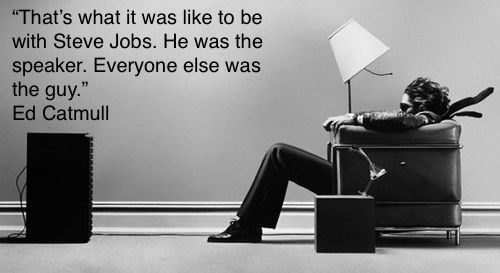
In 1983 George Lucas was going through a divorce and sold the company in 1986 to Steve Jobs for five million dollars and a promise to invest five million more (it would go on to be fifty million more). Catmull reflected that his conversations with Steve Jobs were like the Maxwell Cassette commercial. Steve Jobs was the speaker, everyone else was the guy.

Pixar’s product was the Pixar Imaging Computer and Catmull was president of a hardware company. “There’s nothing quite like ignorance combined with a driving need to succeed to force rapid learning.” Today we can ‘Google it’ and Catmull did the 1986 equivalent, he visited the library. However, the needles of good advice were buried in haystacks of platitudes. Simple questions like ‘What to price our computer for?’ “had distracted me and kept me from asking more fundamental questions.” This led to one of the most valuable lessons from the early days of Pixar.


Seinfeldia

Supported by Greenhaven Road Capital, finding value off the beaten path.

Seinfeld the show and Larry David and Jerry Seinfeld the writers, succeeded because of talent, luck, and culture. In her book, Seinfeldia, Jennifer Keishin Armstrong takes us to the set, through the history, and into once in a lifetime experience. What are the chances that another show’s finale will have commercials that cost more than those for the Super Bowl?

Seinfeld got his XMBAs at comedy clubs in college. Armstrong wrote, “He used his attendance at Manhattan comedy clubs as a kind of independent study. He analyzed comics’ approach to their material and even wrote a forty-page paper on the subject.”

David too took his turn on the stage, though he was more petulant. He needed Jerry as a ballast for the ship known as S.S. Televisionvision Show. Roz Hewsenian warned Ted Seides about brilliant grouches, “Do they recognize their own shortcoming and do they pair themselves with somebody who’s is sane?”

David, Seinfeld, and the show also benefitted from great talent around them; Julia Louis Dreyfus with her SNL and acting experience, Jason Alexander and his classic training, Michael Richardson and his physicality. Like Bryan Mills, they had a very particular set of skills.

On set, the culture was good, but tough. Culture isn’t about great craft food’s tables, it’s about great work with great people. Mike Reiss said about The Simpsons (who were almost network mates with Seinfeld) “Maybe that’s the key to the show’s longevity – there’s no drama at our comedy show. The Simpsons keeps rolling along because everyone gets along: the cast, the animators, and the writers all respect each other.”

Like The Simpsons, Seinfeld was mostly left alone. In Bill Belichick’s words, it was a do your job set. This surprised Alexander. “As soon as Alexander got the full pilot script, he noticed a major difference between The Seinfeld Chronicles and other shows he’d done. The pages contained few to no behavioral cues or stage directions; they had nothing but dialogue.”

NBC network executive Rick Ludwin, Armstrong wrote, “was known for protecting the creative talent behind the shows he supervised.” He told another executive to let Larry and Jerry make the show they wanted, “even when the network didn’t understand what the producers were doing”

This decentralized command was even celebrated. Armstrong again:

“In this spirit, Seinfeld celebrated its hundredth episode with a one-hour retrospective special on February 2, 1995. At the hundredth-episode party stood a centerpiece, a ten-foot-tall blowup of NBC executives’ list of requested changes to the pilot way back when. Almost none of them had been made.”

Seinfeld and staff needed this support because they were doing something different. Jerry said that early pitches for writers were, “all these sitcom ideas. I tell them we don’t want sitcom ideas. I tell them what we don’t want to do, but it’s hard to explain what we do want.”

Great shows are different. A network executive, Jeff Sagansky, agreed, “All hits are flukes.”

After the show finished, Seinfeld said that uniqueness came from newness – in the people writing and running the show – “this is a model that all networks subsequently ignored and never did again, except for HBO. That’s a network that hires people that they like and says that’s the end of their job.”

But Seinfeld wasn’t too different. Derek Thompson wrote about the Most Acceptable Yet Advanced (MAYA) theory. He suggested that cultural hits are different but not too different. There’s a Goldilocks zone.

Larry and Jerry found the sweet spot with fresh faces. The writer turnover was high because Larry and Jerry used those personal histories like raw materials and their writers like an assembly line. Many of the stories germinated in reality. For example, when they hired Carol Leifer they tapped the reality of woman, an often overlooked part of the room.

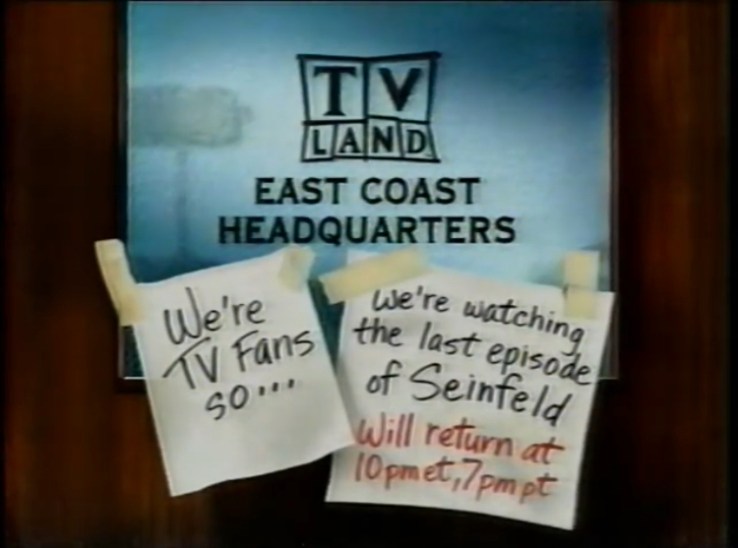
After nine seasons, Jerry turned down an offer for five million dollars an episode. He reflected, “I didn’t want to twist a dry sponge.” The finale was the third most watched in TV history (MAS*H & Cheers). TV Land broadcast a static door during it.

tvland

Larry needed Jerry and Jerry needed Larry and while Seinfeld got his public praise early and often, David got less. But he was just as important. “People won a lot of acclaim and a lot of awards for Larry’s work,’ writer Alec Berg said of the scores of scripts credited to staffers but heavily revised by David.”

Fellow Larry – Bird – said something similar about LeBron James. “[Former Pacers’ GM David] Morway was trying to get me to trade for them [J.J. Hickson and a selection of other teammates of James], but I ain’t takin’ any of them fucking guys up there…I said ‘you don’t understand son. Them guys playing with LeBron James look a whole lot better than what they really are.’”

Conditions matter. In an FT conversation, Vitalik Buterin rants about Bitcoin Bulls, “It’s the luck of the draw, where everyone who won the draw seems to feel like they deserved it for being smarter, ‘I was loyal and I was virtuous and I held through and therefore I deserve to have my five mansions and 23 lambos!’

Seinfeld was one of a kind once in a lifetime creation. It might have been the last show to join the zeitgeist with staying power. But it worked because of the professionalism, creativity, and camaraderie of the people who made it.


Thanks for reading.

Steve Osborne

Supported by Greenhaven Road Capital, finding value off the beaten path.

Steve Osborne is a former NYC detective, speaker at The Moth, and author of The Job. Osborne’s book should be a graduation gift candidate. When young people finish school and begin work I’d hand them this book and say, find something that makes you feel and think like this.

Ready?

1/ Find a job where you say, “I love this fucking job.”

“I really liked the Ninth. I really liked the salty cops that worked there and the station house that was crumbling around us. But more than anything I liked the neighborhood. It made you feel alive, and it made me feel like a cop.”

“I got to work early, found a safe place to park my car, and walked into the precinct. I had that spring in my step that said I was happy to be here. It may sound crazy but I didn’t want to be home curled up in bed, or out at a party somewhere.”

Osborne hated waking up at 4:30 but he loved the work.

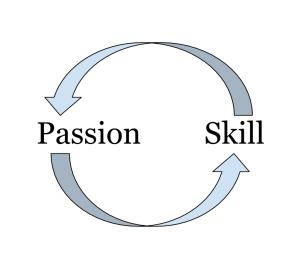
Mike Reiss wrote that after leaving The Simpsons, “I couldn’t stop writing.” Tyler Cowen said, “I view myself as a prisoner of my passions so that helps me to be very motivated to do what I do.” Charlie Munger, who said, “The more you know about some topic, the more passionate you will get,” is aligned with Steve Martin and Cal Newport to be so good they can’t ignore you.

PassionSkill (1)

How? Reps.

2/ Reps and understanding.

“The trouble with rookies is, once you learn a little and start to get the hang of things, you get cocky.”

Osborne admits he was like this.

“In my overenthusiasm to catch the perp and make a nice collar, I never planned on the likely event the train would come. Now, I only had a few seconds to think of something before I became a hood ornament.”

“I realized (later that day) that in police work having balls is a great thing, but having brains and common sense is what keeps you alive.”

With reps, Osborne learned how to spot a drug dealer.

“They’re always walking, constantly moving, but they never seem to go anywhere, and they watch everything and everybody – just like cops do.”

And reading graffiti.

“To normal people, graffiti looks like some nonsense written by a two-year-old child with a crayon, but to the trained eye it contains a wealth of knowledge.”

Reps led to what Ben Horowitz calls “earned secrets.” These lead to win-win situations.

3/ Create win-win, avoid lose-lose. For Osborne, a streetfight was a lose-lose proposition. Winning meant paperwork and time on something (likely) inconsequential. Losing meant being punched, stabbed, or shot How does a cop avoid that? “The reason we start yelling like maniacs is to shock the shit out of you.”

Warren Buffett looked for opportunities he called “two strings on a bow.” If an investment increased in value, Buffett’s stake would increase. If an investment decreased he could take a controlling stake and adjust the companies course. Buffett was like a pirate. If the captain did his job well, the profits would be shared by everyone. If he didn’t, then the crew would vote a new captain in and chart a change of course. That new captain would be Buffett.

Win-win is also theme in Scott Adams’s book Win Bigly.winbiglywin

4/ Opportunity costs.

“We could all collar up the first five minute of the tour, but then there wouldn’t be any cops left out on the street.”

After a homeless woman took a piss on his car, “I thought about chasing her – but why? What the fuck for? I didn’t want to catch her…And if I did catch her, then what? Tie up a sector car for a couple hours while they sat on her at the Bellevue psych ward? We only had three sectors working that night, and crime never stops in the Ninth. It would be a total waste of manpower.”

Opportunity costs can be difficult to tabulate…

…but Osborne succeeded.


Thanks for reading.

Stephen McKeon

Supported by Greenhaven Road Capital, finding value off the beaten path.

Stephen McKeon joined Ted Seides for a podcast about drones, (block)chains, and wine. Most of the second half is about McKeon’s articles about tokens, compliance, and liquidity. We’ll focus on the wider ideas. Ready?

At the peak of the dot-com bubble, spring of 2000, McKeon took a job at a tech startup. “I had nothing to lose. I had no dependents. Making rent was my biggest concern.” This is a great time to act because of the limited stakeholders. Though the startup failed, “It felt educational in some ways.” Like Jenna Fischer, McKeon turned a failed outcome into a helpful experience.

His next job was at a winery in Napa Valley. Shortly after joining, the winery relocated nearer to McKeon and he found himself doing more because he lived closer. McKeon worked his way up to CFO as people more qualified than him steadily exited. He got the job, “largely just because I was there.”

McKeon’s early career is the success equation. He advocates for active serendipity at the end of the podcast and emphasized that yes, luck plays a role in every outcome but there still preparation we can do. Like Annie Duke’s podcast with Seides, this humble point of view is crucial.

Ed Catmull writes that without considering luck, we trick ourselves into believing false causality. “We must acknowledge the random events that went our way, because without acknowledging our good fortune – and not telling ourselves that everything we did was some stroke of genius – leads us to make more realistic assessments and decisions.”

Not wanting to harvest grapes forever, McKeon headed to Purdue for a Ph.D. It was a “non-traditional path (but) I took those experiences from the winery and they served as the basis of most of my early research.” The boots on the ground experience often guides us to better information for decisions.

Andy Grove advocated we feel the breeze of the real world. Jan Chipchase wrote, “The best way to understand how a culture adopts (or doesn’t adopt) an innovation is to go there and see it for yourself.”

After his graduate program, McKeon got a job and met a pair of students who would start a drone company. Like his other startup, McKeon spent this time “being close to emerging technologies.” In addition to drone regulation, McKeon started thinking about blockchains.

As he talked with Ted, the second half revolved around Josh Wolfe’s question and solution; Ask what’s a huge pain in the ass and solve for that. McKeon explained how blockchain might change 24/7 trading, settlement time, fractional ownership and liquidity issues.

In the same way eBay allowed people to sell baseball cards, blockchain may allow people to sell anything or even parts of anything. “Blockchain offers us protocols that are specifically built to move value,” McKeon noted.

But why does it have to be blockchain? The interview is pleasantly devoid of buzzwords and McKeon thinks it’s a Gordian Knot. Microsoft and Google are incentivized to not agree to a common protocol, which is the dirt solutions grow in. It’s why Master of None was ten episodes on Netflix. “There’s no reason for twenty-two episodes of anything,” Aziz Ansari said. New tech lets people start fresh.

There’s still work to be done. “Wallets are still kind of intimidating to people,” McKeon said, but “Coinbase is like logging onto Fidelity.” ‘Design matters’ is an echo we hear from the IDEO team, Rory Sutherland, David Ogilvy and Dan Ariely.

This was an inspiring episode. Whether any of McKeon’s ideas will transpire no one knows but learning the thinking behind them has already been helpful.


Thanks for reading.