John Elkann

Supported by Greenhaven Road Capital, finding value off the beaten path.

pablo (37).png

On Masters of Scale Reid Hoffman spoke with John Elkann of Fiat. It wasn’t until finishing this post that I realized the similarities between Elkann at Fiat and Andy Grove at Intel.

Curiosity + Humility .

“I always enjoyed solving problems, I still do enjoy that.”

Like Tariq Farid of Edible Arrangments, Elkann had an optimistic curiosity and humility. When he was invited to sit on the Fiat board of directors as a twenty-one-year-old “that came with a shock.” But he had good advice from his grandfather:

“The advice from my grandfather was very clear, ‘no one is expecting you to know or understand or contribute. The most important thing is for you to listen, but really to ask questions. If you don’t understand that is absolutely normal.'”

Hoffman added, “John was welcomed onto the board on one condition, he couldn’t conceal his ignorance. His grandfather was insistent that it all hang out.”

David Ogilvy advised young people to learn before they earn. That requires curiosity and humility. Charlie Munger saw this in his grandfather too:  “he had an attitude that was pretty damned extreme. And I would say his attitude was, you had a moral duty to make yourself as un-ignorant and as un-stupid as you possibly can.”

Be there for a deep understanding.

Beyond being on the board, Elkann had direct experiences.

“In parallel to that, he organized for me to start working, spending time in the accounting department, in the finance department, in the legal department just to learn the basic duties of the director and I got incredible teachers and was very fortunate to go through that apprenticeship.”

“I’ve always enjoyed being able to be close to where things happen. The experience I had as an intern in a headlamp factory in the suburbs of Birmingham was really about understanding how a manufacturing process worked.”

Why was it so important for the grandson of the CEO to work the factory lines?

“You are quite far away in a board setting from where the actual life of the business is happening and how that information gets distilled and filtered through the organization.”

Andy Grove gave the same advice:

“Our IT manager said, ‘Well, that guy is always the last to know.’ He, like most CEOs, is in the center of a fortified palace, and news from the outside has to percolate through layers of people from the periphery where the action is.”

Grove also described what kind of deep understanding you’re looking to congeal from these experiences:

“You have to understand what it is that you are better at than anybody else and mercilessly focus your efforts on it.”

Resilience. The theme of the episode is being like a phoenix and rising from the ashes.

“I often compare starting a company to jumping off a cliff and assembling a plane on the way down.” Reid Hoffman

“It’s as if we jumped out that window with the parts we need to sew a parachute.” Jerry Kaplan, The Startup

Barbara Corcoran wants to see jack-in-the-box founders on Shark Tank. “They keep popping up. It doesn’t mean they don’t take the injury, but it’s a quicker turn around time.”

Truths; uncomfortable, inconvenient, or otherwise. Elkann was fortunate to have Sergio Marchionne running one of the businesses and join as the CEO. There were two reasons he was an excellent choice. First, Sergio had direct experience, “Sergio had run and turned around SGS.”

“Secondly Sergio was a truth teller. For the amount of problems, we had, having someone who was a truth teller was a breath of fresh air. His attitude and honesty really led to the extraordinary turnaround from 2004 to 2008.”

Andy Grove wrote:

“People who have no emotional stake in a decision can see what needs to be done sooner.”

Hoffman added, “any key executive must be by nature a truth teller.” We’ll add, you can get to the truth by arguing well.

Good arguments are competitive disagreements. Grove wrote, “we developed a style of ferociously arguing with one another while remaining friends (we call this ‘constructive confrontation’).”

Businesses need to answer; What job is the customer hiring me for? That’s a question truth-tellers can answer.

Career capital. Though not a startup, Hoffman connected with Fiat because of the founder-like connection. He explained:

“The real benefit of having the founder stick around is their ability to take a big risk, to say, ‘We must take this risk. We must take this stab at the future. We can’t just preserve what we built. And not just say it but have the whole company believe in it.”

“The willingness to take that risk and the moral authority to drive it is actually quite hard to replace once the founder steps down.”

For Grove, “It required swallowing my pride.” Why? Grove explained: “Businesspeople have emotions, and a lot of their emotions are tied up in the identity and well-being of their business…In many instances, your personal identity is inseparable from your lifework.”

To make a change like Elkann and Grove pulled off requires no ego, which is hard as sometimes it’s literally the name on the building.


Thanks for reading.
Charlie Munger

Supported by Greenhaven Road Capital, finding value off the beaten path.

Unsurprisingly we’ve covered Munger before; using Damn Right (post), the 2017 Daily Journal Meeting, and using Tren Griffin’s Book (twice!). Today’s source is a 2017 conversation at the University of Michigan.

My favorite quote was this: “I was not a courageous, adventuresome, admirable man. I was a cautious little squirrel.”

Charlie Munger is like a time traveling man; he’s seen the future but explains it in the language of the past.

Onto the notes.

Learn the right things.

“And he (Charlie’s paternal grandfather) had an attitude that was pretty damned extreme. And I would say his attitude was, you had a moral duty to make yourself as un-ignorant and as un-stupid as you possibly can.”

“When I was young, I could get an A in any mathematics course without doing any work at all.”

However…

“I never touched calculus, not once, after I was 19 years-old, I’ve lost it. The symbols would mystify me. But I think you’ll find, if you really know the basic stuff, it’s enormously useful, and only a very few people are ever going to need any calculus.”

Munger’s success equation is this; natural gifts plus hard work times a luck coefficient. Within the ‘hard word’ variable is ‘working on the right things.’ Toward the end of the interview he talks about Bitcoin then makes a larger point.

“And by the way, I just laid out a wonderful life lesson for you. Give a whole lot of things a wide berth; they don’t exist. Crooks, crazies, egomaniacs, people full of resentment, people full of self-pity, people who feel like victims—there’s a whole lot of things that aren’t going to work for you; figure out what they are and avoid them like the plague. And one of them is Bitcoin.”

Munger’s best compounding investment hasn’t been financial, but intellectual. Learning new things each day has made him a better decision maker and that’s his real success.

Another thing to learn is about yourself.

Know thyself. Why did Charlie Munger go to law school?

“I knew I didn’t want to go into the bottom of a big organization and crawl my way up. I’m a natural contrarian; that was not going to work for me. And I found that people could tell … when I thought they were idiots, and that is not a way to rise in a big organization. And so I couldn’t do that.”

Self-knowledge was one of the big ideas from 2017 and it’s still underappreciated. To enter your thoughts like a third person and make sound decisions is a wonderful skill.

Stakeholders. Host Scott DeRue had this exchange with Munger.

So, that’s actually what I wanted to ask. So you moved to California and you actually start a law firm and then practice law for some period of time…
“I had no alternative…I had an army of children almost immediately. I painted myself into quite a corner.”

Yeah. So zero choice is pretty powerful, for sure.
“Yes. Of course.”

Part-of-the-reason Munger and Buffett have been successful investors is their advantage of personal/permanent capital. They don’t have to answer to investors in the same way that Munger had to answer to his children earlier in his career.

Some stakeholders are like small yippy dogs. Good for appearances but expensive in time and money. “We don’t have an isolated group [managers] surrounded by servants,” Munger said in another interview, “Berkshire’s headquarters is a tiny little suite.”

Some stakeholders can be external, created by peer pressure with the Joneses. Burton Malkiel told this story:

“When Jack Bogle first met Warren Buffett they were at a hotel together and Jack recognized Warren, went up and introduced himself, and he said to Warren, ‘you know the thing I really like about you is you have rumpled suits just the same as I do’ and Jack and Warren have become very good friends.”

Some stakeholders can be fans, peers, or owners as in the case with The GMs like Daryl Morey or Sam Hinkie.

Whether mouths to feed or mouths with feedback, the more people involved the more you’ll be involved with people.

Career capital.

“Coming to business, not as business school graduates, but as people who would own portfolios or securities, we fought like capitalists, because we were always in a shareholder mindset. A lot of people running the business think like careerists. And believe me, you gotta think like a careerist to a certain extent if you’re in a career. But it also helps to look at the business strategy problems as though you are an owner. And so my advice to you is, you don’t wanna be…never get to be a careerist so much that you don’t see it from the owner’s point of view.”

Reid Hoffman said that what makes company founders so powerful is their ability to think like owners rather than careerists AND to get people to believe in those ideas too.

Rory Sutherland is on the same page:

“There are lots of cases where your need to signal something, by making a decisions – and it may be the rationality of the decision – actually prevents you from making a better decision.”

Michael Mauboussin is too:

“I do think there’s an element of career risk, and this spans not just sports but also investment management. Bill Belicheck goes for it in fourth down and it doesn’t work out and people give him the benefit of the doubt. But if you’re a coach who has a .500 team, it may be th correct decision but if you lose that game people don’t think about the quality of your section making process, they do think about the outcome, that’s a real big problem.”


Thanks for reading.

DIY MBA 101

Supported by Greenhaven Road Capital, finding value off the beaten path.

Periodically the big ideas from this blog need to be updated. This post is about a DIY Education or a Do-It-Yourself MBA. This post could be 100% wrong.

https://twitter.com/MostlyDev/status/963150419491921920

The signaling effect of an MBA is so strong that a friend told me that the correct lingo isn’t The University of Chicago MBA but rather Booth MBA.

Yet, the first principle of attending Wharton, Booth, Haas, or HBS is to learn something – and then keep learning somethings. The DIY or eXperimental approach shows up enough in interviews that it’s worth pointing out that the University of Hard Knocks offers different classes and different fees.

Fariq Tarid wrote “In 1989, I enrolled in college part-time. As I weighed the benefits of the classes against what I was learning and earning with my businesses, I decided to put off college and never finished.” His career before and during the Edible Arrangments success was all about figuring things out.

Eddy Elfenbein started a newsletter on microcaps that “was fun doing, very informative, a learning experience.”

Charles Lindberg wanted to be a pilot but the best education was in the skies, not the classroom. Bill Bryson wrote that when Lindbergh delivered airmail, “he acquired the sort of resourcefulness that comes with flying cheap and temperamental planes through every possible type of adversity.”

Meb Faber noted that Angel Investing is a DIY education. “I think the only way to learn this world (angel investing) is to do it and get some skin in the game, maybe even viewing it as an education expense given the high likelihood that these things won’t pan out.”

Elizabeth Gilbert‘s comments might be my favorite. “My parents would have seen (getting a degree or credentials) as a waste of money and time when you could just be out there doing the thing, and learning how to do the thing by doing the thing.”

Ben Carlson said: “For people trying to understand how the market works, for how business works, you can do a lot worse than dabbling in stock picking when you’re first starting out.”

Seth Klarman said, “I learned an enormous amount there (at Mutual Shares), probably more than in my subsequent two years of business school.”

Rich Snyder took over In-N-Out Burger when founder, and father, Harry passed away in 1976. At first, Rich was unsure of himself, having never attended college. But,  “He cobbled together his own kind of degree, attending leadership seminars and classes and seeking out mentors.”

Ken Grossman got most of his business education for the Sierra Nevada Beer Company when he ran a bike shop.

Alice Waters did a semester abroad in France, “but I never went to class.” Instead, she traveled, hitchhiked, attended art shows, consumed concerts, and ate at little restaurants where the fish were pulled from a stream and prepared fresh.

Ty Warner “seemed to have a genuine passion for the product. He was making a lot of money, but he was also using it as an extremely well-paid internship in the business of plush. Retailers Warner once sold to recall him quizzing them on which products were selling and which ones weren’t; Warner sought feedback on competitors’ products, too. What did they think of this idea? What about that? What if you combined this with that?”

In Damn Right Janet Lowe wrote that Charlie Munger, “began investing in securities and joining friends and clients in business endeavors, some of which proved to be graduate-level courses in the school of hard knocks.” Munger said that he learned the value of learning from his paternal grandfather who “had an attitude that was pretty damned extreme. And I would say his attitude was, you had a moral duty to make yourself as un-ignorant and as un-stupid as you possibly can.”

All that said, Morgan Housel made this point. “As a twenty-two-year-old, you’re showing your employer, ‘I did this for four years. I followed the rules. I checked the boxes.’ That’s the only thing you have on your resume, so people say ‘it’s just the signaling,’ but that’s extremely important for both the employers and for you as a student.”

Mark Suster has this advice:

My advice is often, “make sure that what you get out of working at this company is one or several of the following: a great network of talented excutives (sic) and VCs, more responsibility than your last job, specific industry or technical skills that will help you in what you do next, a chance to partner with companies that will increase your industry relationships, etc.” Learn now to earn later.

David Ogilvy also said to learn before you earn.

What would be the curriculum? Whatever you want. All of the examples listed learned something they were interested in. That’s the most important thing.

Tariq Farid

Supported by Greenhaven Road Capital, finding value off the beaten path.

pablo (36).png

On How I Built This Tariq Farid tells Guy Raz about his careers mowing lawns, cleaning McDonald’s bathrooms, and opening flower shops before starting and growing Edible Arrangments to six-hundred million dollars in revenue.

The tl;dr version is like the Susan Tynan of Framebridge (and fellow HIBT interviewee) post — understand your customer.

Farid’s youth was filled with benevolent adults. His mother and father played large influences but so too did early employers. One man, Charlie, who ran a flower shop said he could “come down a few days a week to keep yourself busy.” Another, a neighbor, paid Farid to shovel snow and mow grass. Sometimes Farid would even show up before it stopped snowing. That neighbor told him, “If you keep working this hard, by the time you’re 35, you’re going to be a millionaire.”

Entrepreneurial children need adults who believe in them. Jim Clark, Yvon Chouinard, and Ken Grossman were all fortunate to have mentors.

For Farid, shadowing Charlie in the flower shop was formative.

“The genius of this man was that he would have you follow him. When he would go and help a customer you would follow and he was just amazing at customer service.”

Farid did all the jobs in the shop, learning by doing. The HIBT interview ends with Charlie, the original mentor talking to Raz.

“I turned to my brother and said ‘How do you like these kids? They picked my brain and opened up a flower shop and now I’m in competition with them! But you know, it’s a beautiful competition. I’m happy with that kind of competition.”

After a six-thousand dollar loan from his father’s boss, Farid had his own flower shop. Even though the shop was small and out of the way it worked because Farid understood what customers needed.

“I looked around and everyone closed at five-o’clock and I stayed open until seven-o’clock and we started to get a lot of customers coming home after work.”

Farid wrote for Entrepreneur magazine:

“Live in your customers’ shoes…I like to be a one-man market research department conducting my own surveys. I often engage strangers in conversation at an airport or a hotel to get a feel for others’ opinions. I sometimes become an informal mystery shopper inside my own stores as well as those of the competition to see what works and what needs improvement.”

This is something Indra Nooyi, CEO of PepsiCo does too:

https://soundcloud.com/mikesnotes/indra-nooyi-on-decentralized-command-and-consumer-research

Designers like Steve Vassallo or the IDEO team rely on research. Jan Chipchase conducts his research in pop-up studios. Other times, people Farid or Steve Jobs know (or guess).

Farid’s first locations succeeded, and he opened a second. To make the businesses more efficient, Farid wanted to computerize the shops. It cost twelve-thousand dollars. That was too much to pay so Farid, as he’d done before, figured things out himself.

If wowing customers was the backbone of Farid’s businesses, the can do attitude was the brains. He liked figuring things out. He said in another intervew:

“The world is at the fingertip of anyone who wants to do the research. So if you want to find out how a brand got built, what it took, and what the risks were. People write stories about what they went through…”

Farid’s curiosity led to a fruitful idea. He saw fruit arrangments in stores and on a cruise ship. “I saw that and with that, I started to dabble…I got a knife and started doing it. The same way we did the flower shops, you just experiment until you get it right.”

The Steve Jobs bio is Farid’s favorite book and he explained:

“To this day for inspiration I often refer back to his famous quote that everything around us that we call life was made up by people that were no smarter than any of us and we all have the ability to change things, to influence things and to create things that make the world a better place for us all.”

Gumption pays. Jenn Hyman (another HIBT alum) saw her email list included someone with an @NYT address. She reached out and landed a profile.

Toward the end of 1997, Farid sent a few fruit arrangments to friends. “Some thought it would be great but the majority thought it wouldn’t work. ‘Who’s going to buy fruit on sticks in a basket? Come on.'” Even Guy Raz expressed doubt, “If I was your friend at the time I would have said the same thing. Who is going to buy fruit arranged as flowers? What a weird idea.”

Farid’s father was doubtful too:

“My father was always a person who needed it validated, so what he did was, he asked a “doctor sahib” friend to visit my first shop. His (doctor sahib’s) first question to me was: “Is anyone else doing this?” I excitedly replied, “No, no one else is doing it. I’ll be the first one.” “What makes you think you’ll become successful if no one else is doing it, and it’s such a good idea so all these big companies, the ones with millions of dollars, why aren’t they doing it?” Tariq recalls he was told to calm down, and to concentrate on his flower shop. He was also asked if he had done a focus group, the term he had never heard of. “Yes, yes, I did one. I made one. I put it on the table, and my mother saw it, and she said it would be a complete success.”

Typically, maternal validation is a poor choice. It was one of the themes for start-ups who failed. Instead, be like Scott Norton and his ketchup tasting party. Norton invited friends and neighbors, looking for constructive feedback not adoring praise.

Yet, Farid had something. He had a ‘Zero to One‘ idea. He sold the fruit arrangments alongside his flowers. Then the fruit arrangements passed the flowers. One day a man came in wanting to franchise it. ‘Sure we can do that,’ Farid said, even though he had no idea how. Farid’s career is a bit like the improv bit “Yes and…”.

Yes, and…” thinking is a rule-of-thumb in improvisational comedy that suggests that a participant should accept what another participant has stated (“yes”) and then expand on that line of thinking.

For Farid, this mindset wasn’t to make laughs, but bring delight.

Time is a zero-sum game and while he built a company Farid did not coach youth soccer. His first marriage ended in divorce and he said that an outsized commitment to a business “is something that you have to be ready for. Our business is unique because when people are taking time off we’re working hard. The holidays are when we’re busy.”

Marcus Lemonis said that part of his advantage is a lack of kids. Morgan Housel commented, “If you want to be an Elon Musk type character you need to work one hundred hour weeks for years, maybe decades, on end. There’s no way around it. There are no part-time founder jobs.” Stephanie Linnartz, Chief Communication Officer at Marriott said, “My family first, my job second and that doesn’t leave a lot of roomful hobbies and book clubs.”

During the long hours and bits of success Farid was humble and always learning:

“I’m very prepared to be wrong. One thing I learned a long time ago was that, when you’re wrong and you admit that you’re wrong, everybody around you will help to dig out of it and help you learn a lesson. But if you have an ego or think you are right people will stomp on you.”

Mistake custody is powerful. Elon Musk does it. Scott Norton built it into his company. David Ogilvy wrote, “Great leaders almost always exude self-confidence. They are never petty. They are never buck-passers.”

Humility and curiosity combine to form life-long learning. But this doesn’t necessarily mean school.

“In 1989, I enrolled in college part-time. As I weighed the benefits of the classes against what I was learning and earning with my businesses, I decided to put off college and never finished.”

Instead, be curious.

“Ask questions and listen to the answers. When I started out, I sought the advice of people in similar businesses. Not everyone would take the time to help, but I didn’t give up. Those who did find time for me provided a wealth of useful business information. When I found someone willing to offer advice, I only asked one or two questions and then soaked up all the wisdom they had to offer.”


Thanks for reading, Mike.

Susan Tynan

Supported by Greenhaven Road Capital, finding value off the beaten path.

pablo (35).png

If you were unaware, the How I Built This podcast hosted by Guy Raz is excellent. The episode with Susan Tynan could be a case study on understanding customers.

Before we jump into Tynan’s comments, here’s what other people have said about customer focus:

David Ogilvy’s early career experience selling Aga Cookers door-to-door led him to conclude, “Find out all you can about your prospects before you call on them; their general living conditions, wealth, profession, hobbies, friends, and so on. Every hour spent in this kind of research will help you and impress your prospect…Learn to recognize vegetarians on sight.”

Ali Hamed said that the best products are built with empathy at their core. “That empathy translates to features and functions that understand the seemly non-pragmatic nuances of a given industry.” The IDEO team calls these latent needs.

Jack Ma said this while building Alibaba, “We should not design our products for the investors, we should design our products for the customers. What do the customers need? What do the customers want?”

Susan Tynan explained the experiences which led to her adopting this view too. After earning her MBA, Tynan got a job at Living Social. Her focus there was on family and home deals. Calls, emails, posts, requests, and feedback were all bits of data about what customers did, or didn’t want. “I sold a lot of framing deals so I knew customers were looking for a deal in this category.”

But, Living Social’s cardiac existence and it wasn’t for her. She wanted “a business I could touch and feel.” This idea for frames was planted after a trip and was taking root.

“The idea originated eight or nine years ago. On annual hiking trips with my sister, I had bought national parks posters and I took them to a local frame store to be framed. It was a terrible experience. It was really intimidating and really expensive…I had these feeling when I picked them up, ‘how did that just happen to me?'”

As Hamed said, the best founders “understand the problem as the first party.” It’s how Soulcycle, Gimlet, and Harry’s started too.

Unlike failed startups, Tynan talked to others.

“I started talking to everybody about it. Imagine me at a cocktail party or a friend’s baseball game talking to people about it and I kept hearing the same stories about six-hundred dollars worth of framing and I couldn’t believe it.”

But why her? Tynan guessed:

“It required someone out of the industry to plot it from the consumer’s viewpoint.”

But centralized framing is expensive. Tynan needed to raise money. She met with one Ventrue Capitalist who told here, ‘I was just searching for this service last week.’ Tynan raised enough to invest in equipment, a facility, and people.

At first, sales were slow. “One or two degrees of separation.” Then “we started to send out frames to people in the press and the first couple of months we got big hits from Architectural Digest and In Style.”

They didn’t send random things, that’s not understanding your customer. They were customized. “We asked, what exactly what would this editor at this magazine like? What’s something about their life can we figure out?”

Even now that the company has grown, “I can’t help myself. I do always want to be skimming customer support tickets and things like that.”

Susan Tynan has succeeded – so far – thanks to hard work and (mostly) good luck. While frame assembly may be physically demanding, it’s her customer focus that too many businesses find difficult.

Clayton Christensen said that understanding the job the customer is hiring you to do is the critical unit of analysis.

Marcus Lemonis said his trick is to “turn my mind into a consumer and not a business owner. I think ‘Would I buy that? Would I pay for that?’ and I really work hard at it.”

Yvon Chouinard wrote “We knew what we wanted. I heard someone say that if you wait for the customer to tell you what to do you’re too late. We were our own customer. I think that was the secret to coming out with products.”


Thanks for reading.


Deep Books

Supported by Greenhaven Road Capital, finding value off the beaten path.

I saw this:

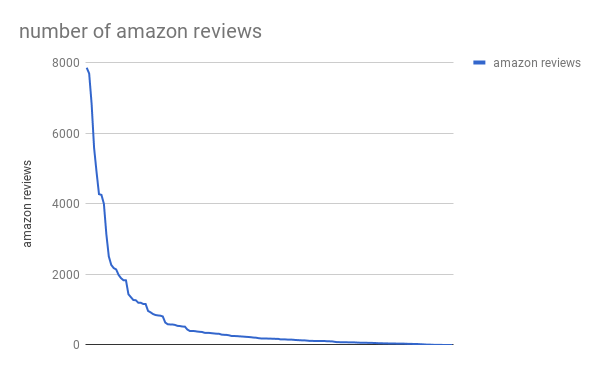
And thought, that’s interesting let’s see what people suggested. Hmm, let me write some of these down. Huh I wonder if there are any patterns here. Here are three observations from looking at the 152 replies to the tweet above.

Book success follows a power law distribution.

chart (3).png
Number of Amazon reviews for the suggested books, n=152

In the Increasing Returns Economy post/podcast, we looked at Brian Arthur’s work and one of his major points was that managers need to recognize their economic ecosystem, optimization or innovation. Beach trips require different acts, steps, and plans than ski trips. Innovation, Arthur wrote, requires commando units to move fast and break things. Optimization requires hierarchy and efficiency.

Tren Griffin has written similar things about books, advising for only missionaries to write them. Much like DIY investing, unless there’s something extra in it for you, you’re likely better off spending your time on something else.

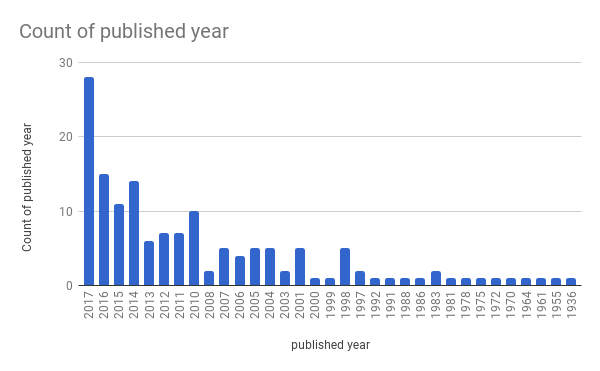
There was also a recency bias towards books.

chart (4).png

One-third of the suggestions were books published since 2016. It could be the case that the best “deep’ instead of ‘broad’ book(s) have been published in the last two years. But it could also be the recency bias. This mental shortcut is something Sam Hinkie, Marc Andreessen, Gina Martin Adams, Barry Ritholtz, and Micahel Mauboussin all caution against.

In compiling this data and drafting this post I got my own dose of the sunk cost tendency. First I listed the books, then I thought the number of reviews might indicate a good place to start, then I thought if I’ve done this much work let’s turn it into a post.

If you’re looking for something to read, here are some suggestions. These are all Amazon Affiliate links.

Most Amazon Reviews. How to Win Friends and Influence People, When Breath Becomes AirBeing Mortal, Devil in the White CityZealot, and, The Untethered Soul.

Hidden Gems. These I calculated; years since publication/number of reviews. So something a few years old but with many reviews would rank higher here. The top ones not yet mentioned were, Dark Money, The Undoing Project, Shoe Dog Evicted, and Brain on Fire.

Oldest. Some deadlifters advocate for older books, preferring books that weather the test of time. Those oldies but goodies were Modern Man in Search of a Soul, Children of the Ashes, The Arms of Krupp, and The Structure of Scientific Revolutions.

You may have missed. These are books a few years old but with a healthy quantity of reviews. Class, Empire of Cotton, TheTao of Physics, The Beginning of Infinity, and Debt.

Patrick’s reviews.

Empire of Cotton. ⭐️⭐️⭐️⭐️⭐️
Ficciones ⭐️⭐️⭐️⭐️⭐️
The Luxury Strategy ⭐️⭐️⭐️⭐️
Dream Big ⭐️⭐️1/2

Happy reading, see the full list here.

David Ogilvy

Supported by Greenhaven Road Capital, finding value off the beaten path.

pablo (34).png

Much like our posts on Rory Sutherland, IDEO, and Bill Belichick, this is a deeper dive.

David Ogilvy succeeded as a Madison Avenue advertising executive for multiple reasons, including these three:

  • He was objective in his research. If the facts differ from your beliefs, change your beliefs rather than the facts.
  • He created advertising around big ideas. Images should aim to inspire intrigue, not win awards at Cannes.
  • He groomed a culture. Hire “gentlemen with brains” and give them the autonomy to do good work. Also, avoid bureaucratic bloat. “If you were a dairy farmer and kept cows, would you employ twice as many milkers as you have cows?”

You can read it here.

You can listen to it on Soundcloud, iTunes, or Overcast.

Grab Bag 4

Supported by Greenhaven Road Capital, finding value off the beaten path.

A request: If you listen to the podcast, please let me know if you liked this as one episode or would prefer many shorter ones.

https://soundcloud.com/mikesnotes/grab-bag-4

This audio post covers four things that caught my eye in podcasts.

Why is Nick Saban undefeated against his former assistant coaches? Rather than having their number, it’s more likely that those assistants take jobs at colleges whose football teams aren’t very good. Much like Apple executives leave the mothership to start companies that never rival Apple, coaches leave for schools that never rival Alabama.

What’s the reference class for the Philadelphia Eagles? When the Eagles were home underdogs in the playoffs, some commentators gave hope to their fans because the Eagles were undefeated when underdogs at home. However, this was a terrible reference class. As Michael Mauboussin has written, summarizing the work of Amos Tversky, good reference classes are “broad enough to be statistically significant but narrow enough to be useful in analyzing the decision that you face.”

There are no called strikes in investing. Warren Buffett’s advice, used accidentally, helped one football predictor rise to the top of his betting pool.

Visual Analytics. Data doesn’t magically change behavior.  Many sports teams have found that adoption by players increases when numbers are translated into the language of pictures. Good analytics; collecting data, finding patterns, communicating to players and coaches, and implementing strategies is part-of-the-reason the Las Vegas hockey team has succeeded so far.

Novel Analytics. Moneyball started the data rush and different industries have advanced at different rates. The largest data staff in the league has helped the Toronto Maple Leafs. As athletes approach “the right wall” of physical capabilities, new avenues of advantage will become more valuable.

Identity flexibility. Ideas become dangerous when anchored to your identity. Just as a ship needs to move when conditions change, so too should our ideas about how the world works.

Ali Hamed

Supported by Greenhaven Road Capital, finding value off the beaten path.

pablo (33).png

Ali Hamed’s podcast with Patrick O’Shaughnessy was a wonderful hour+ of stories, ideas, and adjacent possibles. Among other things, I thought Hamed’s explained the value of understanding customers and establishing advantages.

Customers, customers, customers.  Successful companies satisfy a customer’s need. This is true for authors like Andy Weir and restauranters like Alice Waters. It’s something that Hamed understands too:

“The hardest part of starting a technology company used to be building a product. Now the hardest part of building a company is acquiring your first customers.”

“I think the tech world has this problem where we go out and say ‘We think we’re really smart and the rest of the world is really dumb, and so why don’t we build apps to make their lives more like ours.’ What you end up doing is building products with judgment at their core. But when you find founders that are building products for themselves and their friends you find products with empathy at their core. That empathy translates to features and functions that understand the seemly non-pragmatic nuances of a given industry.”

Empathetic understanding is part of IDEO‘s Human Centric Design. It’s why IDEO CEO Tim Brown wrote:

“Walk into the offices of any of the world’s leading design consultancies, and the first question is likely to be ‘Where is everybody?’ Of course, many hours are spent in the model shop, in project rooms, and peering into computer monitors, but many more hours are spent out in the field with the people who will ultimately benefit from our work.”

Hours are spent with the customer, not in the design studio or, as Hamed said, tech world. It’s something  Jason Calacanis sees too. He told Meb Faber:

“I have to always get founders to stop thinking about the game ‘Startup Land’ and get them to play the game ‘Customers.’ My inbox is filled with ‘How do I get investors to do this?’ ‘How do I convince VC’s to do that?’ I’m like, ‘How do you convince customers to buy your product?’ Let’s answer that question.”

But what your customers want isn’t always clear. People would have told Henry Ford they wanted faster horses. IDEO encourages people to find latent needs. As Hamed noted, find someone who already is the customer. This was Yvon Chouinard‘s advice too:

“We knew what we wanted. I heard someone say that if you wait for the customer to tell you what to do you’re too late. We were our own customer. I think that was the secret to coming out with products.”

Hamed ended up here thanks to the base rate. He said, “‘What are the main reasons seed companies don’t get to a Series A?’ One of the main reasons is they never build their software and bring it to market…And the second reason is they don’t find customers.”

Founders of failed start-ups missed this.

Advantages. Hamed’s second pursuit is advantages. He said, “The minute I’m nervous to get on this podcast and talk about one of our investments means it’s not defensible enough and I never want to be the guy waiting for everybody else to find out about his secret.”

What kind of advantages does Hamed look for?

“Our goal is to add one or two asset classes a year and ask:
why does this exist,
do we understand why no one knows how to price it,
do we think that our teams’ DNA of being between technology and finance allows us to underwrite it differently than anyone else can?”

Hamed is also fortunate to have the right stakeholders that let him explore these kinds of moats. He explained, “We have an amazing LP base that allows us to be flexible and do these weird, niche, interesting things because they like we’re getting a really high return and no one knows how to do it.”

Stakeholders are like bobsled pushers. They help start your journey but at some point, they just need to hop in and keep their head down.

Seth Klarman said “The more flexibility you have, the better your ability to maneuver in complicated, volatile, and fairly competitive markets…the more weapons you have at your disposal.”

Michael Batnick wrote about the volatility of stocks like Amazon, Netflix, and Apple. Realized and idealized returns are two different things. Moats too are non-obvious.

In the episode, Hamed gave an example of scheduling and payment software. For example, a company like McDonald’s pays the software company and the software company pays the employees on whichever day they choose – for a small fee. Hamed said:

“I don’t know what to call it – payroll finance, I don’t know – there’s probably a word that will one day be a thing once it’s an established asset class but that’s the type of stuff we love…not by taking a ton of risk but by doing something no one’s done before.”

I don’t know what to call it. That’s a moat! It’s like what Scott Norton and O’Shaughnessy talked about, once there’s a manual for how to do something it’s not a new something. Hamed said, “We love looking at stuff and wondering, this is a new thing, how do you buy it?”

The best example was a Stanford Ph.D. who was a consultant for heavy equipment operators. She found out a better way to do warranties and built an app to do so. “That’s a person,” Hamed said, “who’s solving a problem that no one in Silicon Valley gives a rats ass about.”

She knows her customers and her advantages is an unsexy industry.


Thanks for reading.


Steve Vassallo

Supported by Greenhaven Road Capital, finding value off the beaten path.

pablo (30).png

Our mission here is a sort of mental find/replace function. We want to find existing ideas and replace them with new ones. Sometimes this works. Sometimes it doesn’t. Shane Parrish gave the best warning about this, saying that you can’t just give employees 20% time and be like Google. Rather, you have to understand the context for why 20% time works.

Steve Vassallo is a partner at Foundation Capital and he wrote a manifesto – The Way to Design – for designers who want to be founders. It’s a beautiful hour-long read. In it, Vassallo gets at some ideas we’ve seen elsewhere. Like a writer, let’s see if some of our existing words (ideas) would be better after the find/replace function.

Vassallo was a designer before being a founder or VC. He writes that design thinking is advantageous for two reasons; better arguments and as a disruption antidote. You want a design cofounder who can “project her weirdness onto the organization.” We call back-and-forths between multiple-points-of-view Arguing Well.

Argument is natural selection for ideas. Or, as Daniel Kahneman told Michael Lewis, “The idea that everyone is entitled to his/her opinion was a California thing – that’s not how we did things in Jerusalem.” Good organizations are good because they have the best ideas.

Another advantage of a design co-founder is as disruption antidote. Vassallo writes that consumer preferences have migrated from speed to cost to design. Or as Jan Chipchase wrote, wants are solved by technology but technologies are like hermit crab shells, they’ll be adopted, adorned, and abandoned.

Disruption theory and it’s solutions is focused on changing needs. Last year the buyer valued faster, now they value cheaper, next year they’ll value easier. Designers – possibly – can figure out these needs that underly the shell.

In picture form Morgan Housel explains it this way:

Screen Shot 2018-01-05 at 6.13.03 AM

Design thinking is rooted in the first layer; “Solve someone’s problem.” It may not lead to profit but it’s a better start. Too many failed startups didn’t start there.

Okay, but how? Good design is less about Apple products and more about being curious. Curiousity can have wonderful effects. It’s something the Kelley brothers and rest of designers at IDEO advocate. One designer said that when talking to someone about their needs they should feel like the most interesting person in the world.

Good design is a process, not a product. Vassallo writes “product-market fit is a liquid not a solid.” It’s something that changes through time rather than a crystalized destination. Design thinking is an adaptive mindset. Specifically:

Good designing aims for potential. Vassallo wrote, “It’s extremely powerful, especially in your earliest days as a company, to have someone who can convert your abstract ideas into something with existential heft.” I loved that expression, existential heft. Dream big, says Vasallo, and go make something.

Good designing asks not ‘Can we?’ but ‘Should we?’. This, I’d guess, Vassallo picked up from his time at IDEO. Founder David Kelley said, “So much of the world is focused on problem-solving, we’re good at that and we should keep working at that but we really believe the designer’s task is to figure out what is a problem worth working on. What’s a non-obvious need?” Don’t build a better mousetrap because the need isn’t trapping mice.

Good designing approaches familiar problems in novel ways. Vassallo wants founders to solve problems not build apps. That means having the internal drive to change something annoying but to do the external work of talking to other people. This is do things that don’t scale story (8:55 mark) of Airbnb.

Good designing exploits leverage points. Vassallo has probably read The Systems Bible because he warns against entrepreneurs solving complex problems. These Wicked problems can have vicious feedback systems. Vassallo wants designers and founders to be like Rory Sutherland’s butterflies. Find small changes that can have huge effects.


Thanks for reading.