Tony Hawk’s conversation with James Altucher was wide and deep. I didn’t know much about Hawk before I listened, but here are 7 things I learned from his conversation with Altucher.
1/ No idle days. “The drive was to keep challenging myself and keep getting better. I think some of my peers got caught up in the celebrity/party aspect, or they reached this pinnacle and they lost their motivation.”
People who are the best are always moving in important areas. When asked how he got so much done explorer Percy Fawcett said he “had no idle days.” Teddy Roosevelt was known to stay up late and work. He’d wake up in the morning and show up to work, “like he’d been shot out of a catapult” said one friend. Gary Vaynerchuk put it this way, “I’m not interested in the politically correct version of everything right now. I’m not interested in having a conversation around how to raise my kids. I’m not interested you imposing your will on me on how I meditate.” The only thing Vaynerchuk is interested in is work.
One way to do this is follow the path of Casey Neistat, Ryan Holiday, and Nate Silver – always have something to work on. When each reaches capacity in one area, they have the ability to switch to another.
Adam Savage spoke about how this helps his process. Savage was stuck on a precision machining task that he couldn’t get right. He switched to something that needed sewn instead and it “was like the wheelhouse I needed to get myself into.” Savage continued, “I think it was firing a different part of my brain…it was totally a change of pace…and the pivot really did surprise me with how invigorating it felt to work with a brand new material.”
2/ In strengths are weaknesses and in weaknesses are strengths. “My style was all about tricks and I got criticized, but eventually I found my strengths and did really well in competition and shut everyone up.”
Hawk explained that when other skateboarders were learning one way, he was doing another. He was too small for the popular “surfer style” and had to learn to skate differently. This ended up paying off, as those skill that people criticized were eventually really valuable.
Strengths in weaknesses and weaknesses in strengths operates on multiple levels. At the micro level it’s Hawk learning a different style. Zoom out and – Clayton Christensen explained “an organization’s capabilities become its disabilities when disruption is afoot..a process that defines a capability executing a certain task concurrently defines disabilities in executing other tasks.” Zoom out further yet and Nial Ferguson proposed that the silver mines of South America led to a less democratic foundation compared to the more resource scattered lands of North America.
From the personal to the world of business to the global landscape, there are strengths in weaknesses and weaknesses in strengths.
3/The economics of blue jeans and video games. “It was right when the cool washes were coming out. It was very boutique. The designs were cool. Little did we know, not everyone wanted to pay $200 for jeans and that it was going to keep costing us money to produce.”
Marginal cost is the cost of each additional unit. Cars have high marginal costs, software has (very) low marginal costs. Hawk missed this. What was notable was how low the software (his video game) cost to make. He told Altucher that the engine was from another game.
4/TIMING MATTERS. “There was a lifestyle associated with it (skateboarding). There was an attitude. There was a culture that was born out of punk-rock–70’s-pool-skating-surfing.”
Skateboarding blew up because there was a culture ready for it. “Nothing is more powerful than an idea whose time has come,” wrote Victor Hugo.
Hawk also said that he started his company during a downturn in the industry, which meant their advertising dollars went further. He said the X Games helped too.
This is a great story. You have this untapped cultural force (skateboarding) that’s been brought about by punk rock and a California drought (people couldn’t fill their pools, so they skated in them). As this wave begins to break, Hawk is skating in Six Flags parking lots for $100 a day, with no idea of the swell.
Television helped. Before YouTube it was hard to find videos for niche cultures. In 1997 I bought a used VHS of professional sand volleyball video from a new website called Amazon. Four years later I did the same for a video of ultimate frisbee. Those things were hard to find. Now not so much.
Timing matters in anything we do. Good timing allowed Brian Grazer to get a great office. Poor timing, said Chamath Palihapitiya meant the Facebook phone failed . As the quote from Any Given Sunday goes:
Because in either game, life or football, the margin for error is so small. I mean, one half step too late or too early, you don’t quite make it. One half second too slow or too fast, and you don’t quite catch it.
5/Adversity helps. “In the late 80’s and early 90’s pool skating and ramp skating came to a halt because all the skateparks closed due to liability issues and insurance and everyone went out and skated the streets. That’s how all the modern skateboarding was born, out of necessity, going out and making the urban landscape your skatepark.”
It helped the sport when the skateparks closed. This idea goes by other names; blessing in disguise, silver lining – and we see time and again how true it is. Charles Lindberg was a great pilot because he flew tempermental planes in poor conditions. Jocko Willink was a good commander because he was tested and occassionally failed.
“Failure meant a stripping away of the inessential.” – J.K. Rowling
Going back to #4, bad business conditions forced out Hawk’s competition. While things were hard at the time, anyone that made it through would be stronger on the other side.
6/Strive for a deep understanding. “The best advice I have is, you want to learn every aspect of what you’re getting into. I learned it by accident. I didn’t ever want to learn what point of purchase was, or net, but I embraced it because I wanted to be prepared for what was to come.”
A deep understanding helps. When John Chatterton found a U-boat on the ocean floor he booked a plane ticket to walk through a similar one in Chicago – and did so twelve times.
“In the debrief about food for instance, we’re asked, ‘how was it?’ what did you like? why? was there enough for everyone? what did you throw away? How about the packaging – any way you can think to improve it?’ The level of detail we go into helps explain why the food on the station is, for the most part, really good.”
Louis C.K. was only able to make Horace and Pete because he had a deep understanding of all the aspects of a show’s creation.
How do you get a deep understanding? You “stay on the bus.” Hawk said, “I was considered a super nerd because I was still skating, I was doing this kid’s activity. But I loved it.” In some ways, Hawk merely outlasted his competition. If you need to get this mindset, you need to read about the Helsinki bus station.
7/Learning to fall safely. “I’m definitely used to falling, it’s more the like the unexpected falls. When you think you got something and all of a sudden something didn’t go right but you don’t have the time to prepare for the fall, that’s when you get hurt.”
There’s a good way to fall; take one step then go down on your knees, explained Hawk. Those are manageable. It’s the unexpected falls that cause the most surprise. .
My favorite author on this idea is Gilbert Gall who wrote in Systemantics, “COMPLEX SYSTEMS EXHIBIT UNEXPECTED BEHAVIOR.”
In Foolproof, Greg Ip suggested that we never get complacent with our safety. Hawk never assumes that because he knows how to fall (one step then slide on your knees) that he’s safe. Ip noticed a domain blindness. We’ll think we are always safe because we know how to fall, or think we are protected from a fall. For example, we (re)build houses in floodplains and along coastlines.
New episodes have been published to this series. I’ve started to add clips rather than just reading quotes in the episodes. It’s rough, but I like it. If you’ve been listening let me know what you think.
Colonel Percy Fawcett was explored the Amazon and whose story is told in The Lost City of Z by David Grann. It was an incredible adventure. Here are a few things I learned.
1/ Mind over matter. “Men under these conditions are often broken by their minds succumbing before their bodies,” wrote Fawcett, who forced his expeditions beyond what most bodies were able and willing to do.
Though exploration seems physically demanding, it’s the mental site Fawcett saw break. It was the choice to put one foot in front of the other rather than the act. Navy SEAL, Leif Babin wrote, the same about Hell Week, “it was not a physical test, but a mental one.”
2/ Adjacent possibles. Late in his life, as the quest for Z consumed but eluded him more, Fawcett sought out psychics. His diary became more imaginative than factual. He wasn’t alone in this.
In Thunderstruck, Erik Larson wrote about the Society for Psychical Research:
“The society’s constitution stated that membership did not imply belief in “physical forces other than those recognized by Physical Science.” That the SPR had a Committee on Haunted Houses deterred no one. Its membership expanded quickly to include sixty university dons and some of the brightest lights of the era, among them John Ruskin, H. G. Wells, William E. Gladstone, Samuel Clemens (better known as Mark Twain), and the Rev. C. L. Dodgson (with the equally prominent pen name Lewis Carroll). The roster also listed Arthur Balfour, a future prime minister of England, and William James, a pioneer in psychology, who by the summer of 1894 had been named the society’s president.”
When we explore one adjacent possible – whether it’s a tangible space like the jungle or a scientific one like radio waves – it opens a new adjacent possible where we lack tested theories.
About maps, Grann wrote:
“During the Middle Ages and the Renaissance, maps depicted fowl in Asia that tore humans apart, a bird in Germany that glowed in the dark, people in India with everything from sixteen toes to dog heads, hyenas in Africa whose shadows rendered dogs mute, and a beast called a “cockatrice” that could kill with a mere puff of its breath.”
Fawcett lived in a time when inventions like the Marconi radio (1895) and Wright brothers flight (1899) shifted what people knew to be true. Fawcett wasn’t crazy for seeking spiritual solutions, he was typical. At He was one of the best explorers in the world.
3/ About wearing carpet slippers (1). Fawcett lived through a shift from explorers to academics. One scolded the explorers this way, “what you can do, is state accurately what you saw, leaving it to stay-at-home men of science to collate the data of very many travelers, in order to form a theory.” An explorer retorted that those in “carpet slippers,” should not “criticise those who labour in the field.”
Sometimes we must be the explorers. Samuel Zemurray overtook American banana imports because he was there. Sarah Tavel said technology companies need to be in Silicon Valley. John Nagl wrote about the importance of being there for warfare.
4/ Economic bubbles. While Fawcett plumbed the Amazon, a rubber industry grew on the surface. And it grew well. Grann wrote about one rubber baron’s house:
“And nothing was more extravagant than the opera house, with its Italian marble, Bohemian glass, gilded balconies, crystal chandeliers, Victorian murals, and a dome bathed in the colors of the national flag. Prefabricated in Europe and costing an estimated ten million dollars in taxpayers’ money, the opera house was shipped in pieces more than a thousand miles up the Amazon River, where laborers were deployed around the clock to assemble it, working at night under Brazil’s first electric light bulbs.”
Soon the rubber bubble popped. Should they have known?
Bubbles are hard to predict. Jim Chanos said the best you can do is understand history and notice familiar things.
5/ No idle days. When someone asked Fawcett how he got so much done, he replied, “I am a rapid worker and have no idle days.”
Exploration took up a lot of time, but Fawcett also presented findings, wrote articles, planned future trips (and raised money for them), spent (minimal) time with family. He wrote:
“One learns little from a smooth life, but I do not like roping others into the difficulties which have dogged me so persistently . . . It is not that I want luxuries. I care little about such things—but I hate inactivity.”
Successful people seem to be constantly busy with something. Casey Neistat called it “the religion of work.” Nate Silver, Ryan Holiday, and historical geniuses were especially productive because they had different things to work on. They had many irons in the fire.
6/ Timing matters. Grann wrote that Fawcett could have explored even more, except for the world war. In 1914 Fawcett had just scouted his next trip, yet, “when he emerged from the jungle he was greeted with the news that…World War I had begun. Fawcett and his two British companions immediately set sail for England. … Though Fawcett was forty-seven years old and a “renegade” from European life, he felt compelled to volunteer. He informed Keltie (a fellow geographer) that he had his ‘finger on important discoveries’ in the Amazon, but was obliged by ‘the patriotic desire of all able-bodied men to squash the Teuton.’”
Lucky timing helped people like Seth Godin profitably exit the stock market, Teddy Roosevelt enter politics, and Louis C.K. create Horace and Pete.
Unlucky timing hurt F. Scott Fitzgerald whose The Great Gatsby sold poorly, Neil Strauss who released a book the same weekend as Hurrican Katrina, and Mark Cuban who created a streaming music service too soon.
“When the bad times are coming, I get excited.” — Corcoran
1/ It’s not the market. It’s not the competition. It’s you.
About successes Corcoran said, “the real difference between the superstar salespeople and everyone else, was…how long it took to feel sorry for themselves.” “They keep popping up. It doesn’t mean they don’t take the injury, but it’s a quicker turnaround time.”
About failures: “They took insult personally.” “They were living in the past.”
Corcoran has seen that success is about being “stupid enough,” to focus on the now. In her interview with James Altucher, she said that her successful Shark Tank entrepreneurs are dumb in the sense that they don’t know how to quit.
“My asset was terrible years for New York.” “I had the luckiest timing of any kid in the world because I happened to land in New York at its darkest hour.” “When the shit hit the fan, I realized it was game time and I was going to have a huge advantage.” “When interest rates went to 18% I had one of my best successes of my life.”
Daymond John called it “the power of broke.” Tim O’Reilly said his business was saved when they were forced to pivot. Kevin Kelly noted that you only invent things when you’re stretched. Eric Weiner proved this thesis in his book. Amanda Palmer said that restrictions help the creative flow. Megan McArdle wrote an entire book about it, The Up Side of Down.
Bad times can be the perfect time for future success.
3/ Have a good mixtape in your head.
“The tape kicks in and I go, ‘oh yeah, you’re not any smarter than me.’’ “Then boom, I’m in my feet and I’m over it.”
“The worst troll is the one that lives in your head” — @austinkleon
Corcoran goes on, “when you’re building a business it’s an extension of yourself as an entrepreneur.”
I saw this time and again when I looked at failed companies. The identity of a startup entangled the founder — an emotional yoke. Entrepreneurship has a heavy emotional component. Corcoran’s advice is to create your own mixtape, one you can cue up the moment your troll starts whispering. Get out of your head and back in your feet.
Theodore Roosevelt did a lot before being the 26th President of the United States. In the book Mornings on Horseback, David McCullough wrote about the early life of Roosevelt which has some timeless lessons. Here are six:
1/ “Money can’t buy me love.” The Beatles song was a toe tapper, but the Roosevelt family would have sung a different version, “money can’t buy me health.”
Despite being one of the richest families in New York City (and the country) they were plagued with health problems. Roosevelt has asthma, his brother became an alcoholic, and his sister wore a brace for her spine. Beyond that, Roosevelt’s wife and mother died on the same day in 1884.
Money helps, but it’s not the only cure. John Nagl noted when money does and doesn’t work in fighting wars. Kevin Kelly talked about when a lack of money is valuable. Louis C.K. eschewed money in favor of experimentation.
2/ Roosevelt had a real world education. His parents didn’t think much of the schools, so he had a private tutor. When he visited family in Philadelphia he visited the library “every spare moment.” His father’s advice upon leaving for Harvard was to take care of his morals, health, and learning – in that order.
School is not synonymous with learning. The Wright brothers learned more from books than at school. Elizabeth Gilbert asked, “why learn about the thing by learning about the thing, when you can learn about the thing by doing the thing.”
Of course, Roosevelt had the opportunity to learn thanks to the money, but he still did the work. He took advantage of his situation to do the best he could.
3/ Be damn sure you’re right. When Roosevelt challenged more senior state legislators he never backed down because he believed he was right. In one case, cigar makers were forming a lobby to mandate conditions for work. Roosevelt was against it at first, but then visited apartments where cigars were rolled next to “filty bedding.” When he changed his mind he was adamaent, because he had facts to go with his opinion.
4/ Roosevelt was energetic. On friend wrote, “he came in as if he had been ejected from a catapult.” Another said that he was halfway up the stairs before the door swung closed behind him.
5/ Timing matters. There was a shakeup in state political power dynamics right before Roosevelt ran. “The game had opened up just as Theodore commenced to play,” McCullough wrote. Another moment of good timing was starting his ranch in the badlands a few years before the cattle boom. His operation was relatively small, but it rose with the rising tides brought by railroads and refrigerated cars.
6/ Adversity helps. Though Roosevelt was blessed with money, education, and family connections, he had to work for a lot of things too. His health was relatively feeble. Politically he always had an adversary (or two). The wilderness challenged him. People made fun of the way he looked.
He had the right mix of opportunity and opposition. His brother, who was much better looking, funnier, and more jovial ended up an alcoholic. Whether there’s a connection there, I don’t know. I do know that some adversity helps.
Charles Lindberg earned his wings by flying in the worst conditions with the worst equipment as a mail deliverer. Judd Apatow wrote in Sick in the Head that a lot of funny people had sad childhoods. Apatow himself was a product of divorce, and he said he wants to screw up his own kids just enough so that they face adversity too.
While McCullough’s book is only a sliver of Roosevelt’s life, it was a golden one. If you liked this post, you’ll love my podcast, it’s on; iTunes, Soundcloud, or Overcast.
Ryan Holiday joined Shane Parrish to talk about his (newest) book Ego is the Enemy. Holiday has been on this blog twice before, back when these posts had numbers; #18, #108.
This post will be all about how Ryan Holiday works.
Holiday started out by dropping out. Kinda. He told Parrish that he left college because the opportunity cost was too high. He was working on three things where, “if you told me when I was graduating that I could choose one of them, college was worth it.” He left college.
Life was busy, but worth it. Holiday said the work was exhausting, but also a compulsion. One of those jobs was as a researcher for Robert Green. This job was “transcribing interviews and reading books he (Greene) didn’t want to read.” It paid off. Greene taught Holiday how book indexes are constructed and how he wrote books.
This reminded me of how Louis C.K. approached his new show Horace and Pete. Louis, like Holiday, collected skills. Louis explained it using The Matrix as a metaphor.
“When there is a helicopter and he says to her, you know how to play helicopter. And she goes wait a minute and she loads the program. Now I do. Well, anyone can do that. It just takes longer. You can just load a program. So, now I know how to create a multi-camera drama and mount it the same week that I shot it. And how to direct many great actors which I had never done before.”
One of Holiday’s merit badges was the notecard method. He’s explained the system before, but what he emphasized to Parrish was that it’s not Evernote. “It’s physical notecards for a reason.” Holiday works better with a tangible, non-searchable system. “People overestimate the perfect optimized thing,” Holiday said, “not having it searchable has not held me back.”
What matters? Doing the work.
What doesn’t matter? The perfect system or gear.
Casey Neistat makes awesome movies and preaches that the gear doesn’t matter. B.J. Novak writes on notebooks and in Microsoft Word. You don’t need RED cameras or fancy software. You just need to do the work. That’s what Holiday has done.
Holiday guessed that this work for Greene and others compressed his 10,000 hours of practice into four years. In choosing the work options over school Holiday recognized opportunity cost.
This can be hard to weigh in our decisions. Dan Ariely studied our (error-prone) mental calculations. The XMBA requires you understand opportunity cost. John Nagl studied the opportunity cost in war. Whatever the domain, understand there’s something on the other side of each choice.
Holiday told Parrish that eventually this got out of control. He used to take every opportunity. Eventually though he realized that all the energy he put out wasn’t coming back in one form or another. “I never asked ‘what’s the opportunity cost’ and sometimes you have to touch the stove and get burned.” So Holiday scaled back.
He changed how he works with clients. He’s focused his business. He realized, much like Brad Feld that you don’t need to get on every flight and put out every fire.
Scaling back and making changes doesn’t necessarily mean Holiday works less. “I couldn’t turn off my brain,” he told Parrish. His typical routine is to wake at 7, write from 8-11 and then work with clients until 3. After that Holiday runs or swims where ideas “come loose” in his head. He stops official work at 5 or 6, except for email.
Both Holiday and Parrish say that writing “is draining,” and Holiday can pivot to working on something else. Successful people have something to work on. Holiday shifts from writing to consulting to running Brass Check. Nate Silver does this. Casey Neistat does it too. When they get exhausted in one area, they switch to something that draws on a different reservoir of effort.
Holiday’s schedule reflects deliberate choices. It means swimming next to your goats.
Yesterday’s swim. A fence-walking goat showed up at about three quarters of a mile in. Photo… https://t.co/UiKRVFPAyS
Your choices should be intentional, he warned Parrish. “My whole life was about not showing up to an office,” yet he was saying yes to everything and kept ending up in offices. So he cut back. “If you don’t make the decisions about what’s important to you will end up very far from what makes you happy,” Holiday said.
Part of Holiday’s designed life is writing and he looks to his readers for ideas. Holiday treats emails like “frequently asked questions, a sign that someone wants to know something.” Other writers have done this too; Jocko Willink, Austin Kleon, and Steven Kotler all turned audience questions into books.
As Holiday (and Parrish) have succeeded, so have solicitations. If you reach out to them, don’t offer to buy coffee. The five bucks isn’t worth it. The obstacle for busy people, Tyler Cowen noted, isn’t the money but the time. Cowen said that he doesn’t take another research assistant because it would be too much work to supervise them.
What can you learn about business and life from a Navy Seal? A lot. Jocko Willink (@JockoWillink ) joined Tim Ferriss to talk about life, business, and war. I missed this episode when it first came out (September 2015), but that’s fine. Things that are good and true stay good and true. This podcast certainly was. Here are a 8 lessons for life from Jocko Willink.
1/ Experiment. Willink said before his SEAL teams used certain techniques they were tested other places first. What Willink reminded me of most though is that experimentation is messy. “It’s not a movie, so everything was not perfect.” If we knew what to do, we would just do it. We don’t though and we must experiment.
John Nagl found that British success against guerlilla fighers was thanks to experimentation. Louis C.K. exerimented his way through Horace and Pete. David Chang experiments with his restaurant menus, policies, and size.
Experimentation – from the monumental to inconsequential – is a good way to figure out what we should do
2/ Have two perspectives. Willink said that part of the reason he was a good soldier was because he could detach himself from a situation. He tried to train his soldiers so that “failure to detach and step up and away from the problem would result in failure.” A peer told him “ it’s so easy when you’re not in it.”
Willink simultaneously held the inside and outside view.
This can be difficult footing. Bob Seawright found it only when he questioned his predictions. Bethany McLean found it when she talked to short sellers and salesmen. Bill Simmons is both well connected and local homer. When the inside view of intuition meets the outside view of historical fact we often make better decisions.
3/ Be passionate. “If you are super passionate about it there’s a very good chance you’re going to be one of the top performers,” Willink said about the SEAL teams he worked with.
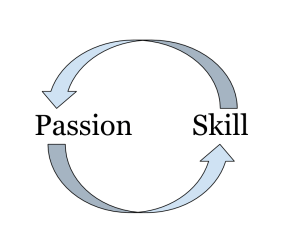
Passion is not ex nihilo. It’s more like fuel for a car. No matter how much gas you have, you need the engine first. Willink’s SEAL teams and teammates had a foundation thanks to their personality, life experiences, and boot camp and only then did passion propelled them to success.
Don’t be fooled by only the sirens of passion, those are empty promises.
Daymond John used passion to sell hats outside a mall. He wasn’t passionate about the specifics (standing outside in the cold). He was passionate about where that would get him.
Tren Griffin addressed it like this; “one trick related to passion is that you are not likely to be passionate about something you do not understand…the more you know about some topics, the more passionate you will get.” Ramit Sethi said the same thing.
Penn Jillette said to follow your anti-passions. Find something you hate so much you want to make it better. I’m guessing this is the angle that SEALS like Willink hold. They don’t like destroying things per se, but making the world a better place.
4/ The greatness of being average. Willink said that during BUD/S training he was never the best. That’s okay. Sometimes it’s better to be good at a few things rather than great at one. Ferriss said about Madonna, “it’s the collection of those tools that makes you world class.”
Charles Lindberg wasn’t the best pilot – but had a collection of tools (barnstorming, mindset, low overhead). Dave McClure started his VC fund because he had the engineering and marketing sides and “there weren’t that may people doing investing that had both disciplines.”
Scott Adams succeeded this way too. Adams wrote:
“I’m a perfect example of the power of leveraging multiple mediocre skills. I’m a rich and famous cartoonist who doesn’t draw well. At social gatherings I’m usually not the funniest person in the room. My writing skills are good, not great. But what I have that most artists and cartoonists do not have is years of corporate business experience plus an MBA from Berkeley’s Haas School of Business.”
5/ Don’t confuse games for life. Willink said that there are three things that made him feel complete; jujitsu, combat, and marriage and kids. Each of those things were like a checkbox, and once Willink did it he felt he could handle anything in that domain. Ferriss asked about how a civilian might replicate combat.
You could do paintball, but, said Willink “there’s no real risk in paintball, there’s not the fear of death.” Simulations are good, but they can miss crucial parts.
In The Black Swan, Nassim Taleb termed this the Ludic Fallacy:
“the focus on those pure, well-defined, and easily discernible objects like triangles, or more social notions like friendship or love, at the cost of ignoring those objects of seemingly messier and less tractable structures.”
On one level paintballing is like combat. You have a gun. You shoot at people. People shoot at you. If you get hit, you’re out. War (and life) is more complex. You can’t simulate the same details nor can you account for the things you don’t know you can account for.
This isn’t to say you shouldn’t train, only not to extrapolate training as more than it is.
6/ Write a book based on the questions people ask. Willink and Leif Babin wrote Extreme Ownership because people wanted a manual of sorts. This is a gold mine for authors.
Steven Kotler wrote The Rise of Superman based on the questions from his Abundance book tour. Austin Kleon did the same. On The Knowledge Project podcast, Ryan Holiday said that he takes the questions people email him as a barometer of what people want him to write about.
7/ Backups are “space.” “Two is one and one is none,” Willink tells Ferriss. This is a powerful idea. Charlie Munger called this “a very powerful idea.”
Benjamin Graham has so much backup/space, Munger said, “that even with an elderly alcoholic running a stodgy business, this significant excess of real value per share working for you means that all kinds of good things can happen to you. You had a huge margin of safety—as he put it—by having this big excess value going for you.”
8/ Use Twitter well. “I never liked people who talked for no reason… if people ask me questions we can have a conversation,” Willink said.
We can update our list of ways to use Twitter well: connect with peers, get opinions from a Devil’s advocate, create positive confirmation biases, and connect with fans.
10 things I learned about life from reading about warfare.
In Learning to Eat Soup with a Knife, John Nagl writes about the difference in counterinsurgency techniques between the British in Malaya and the United States in Vietnam and Afghanistan.
What amazed me most was that many non-military theories intertwined with counterinsurgency warfare, like; organizational culture, philosophy, disruption theory, and economics.
1/ You have to be there. “General Templer was smart enough to go out into the jungle with the Gurkhas to find out for himself.”
When Samuel Zemurray took over the United States banana industry his rallying cry was“they’re there, we’re here.” His competitor, United Fruit, made their decisions from the offices in Boston whereas Zemurray was on the docks of New Orleans and plantations of Honduras.
When John Chatterton found a U-Boat off the New Jersey shore, he walked through a similar one at a museum to get a feel for the ship. Sarah Tavel said that technology start-ups need to be in Silicon Valley, fin-tech and fashion ones in New York. Stanley McChrystal visisted a vineyard in Afghanistan before he understood the true fighting conditions.
2/ Incentives matter. “Templer required each household to submit a (secret) ballot providing information on Communists or their supporters.” “Harnessing nationalism as an issue for the government against the insurgents was the single most vital part of winning the ‘hearts and minds’ of the population.”
Nagl lists other examples of incentives – like rewards for surrender of yourself or weapons – but the most interesting part was the spectrum. From local farmers to guerilla fighters to imperialist troops – everyone was motivated by incentives, but not the same amounts or ratio. For some it was money, others it was freedom, choice, or safety. The most valued incentives were a powerful force.
Part-of-the-reason Charles Lindberg had his plane made quickly was because the incentives of the manufactorer were aligned with his.
3/ Strength are weaknesses and weaknesses are strengths. “The demands of conventional and unconventional warfare different so greatly that an organization optimized to succeeding one will have great difficulty in fighting the other.”
This notion twisted the tumbler that opened the lock to Clayton Christensen’s disruption theory. When a business moves up the value chain to more profitable areas, the theory goes, they often surrender the less profitable areas to other companies. Eventually though they can’t move higher up the chain and have been disrupted from below. What was a strength for a business (high margin areas) becomes a weakness and what was a weakenss (low margin areas) becomes a strength for the compeitors.
This Yin and yang nature is elsewhere too. Jim Chanos said that “short selling is an important check on the marketplace.” Napoleon Bonaparte was an excellent agressive general but couldn’t fight a defenseive battle (to save his life). You can’t be good at everything, and by building up some strength you also create some weakness. Which brings us to the next point, opportunity costs.
4/ Consider the opportunity costs. A major theme in Nagl’s book is difference between traditional theories of warfare to new ones. That is, to shift resources from the former to the latter. Nagl suggested that this balance transfer was too slow.
Opportunity cost in everything. It’s a central tenent to the XMBA and part of the reason people like Elizabeth Gilbert and David Chang pursued it.
Opportunity cost is also hard to articulate. Dan Ariely found that people are often too narrow about it. When he asked people at a car dealership what else they could buy if they didn’t buy a car, they often just said a different brand of car. Rather, the full opportunity cost was anything that could be done with that money.
It’s a challenge to compute all the opportunity cost considerations, especially when they are unproven. Add to that the system around the decision.
5/ Institutions are systems (and systems have internal rules). “(Edward Katzenbach) discovered that emotional faith in battle-tested systems; the hierarchy of the military culture, the lack of peacetime pressure to make changes whose actual importance to the state becomes clear only in war, and the lack of desire of civilian leadership to spend money on military change in peacetime all conspired to keep horses in the cavalry.”
Systems have well worn grooves that influence certain choices, like a horse cavalry. Sometimes this is good. Nagl noted that certain military branches fought better because their systems were better matches for the conditions. Some worse.
There is also institutional memory in our systems. Sometimes this is good, other times it’s not. Nagl noted that the lack of institutional memory in the British Army meant they tried different things. The United States Army however, had annihilation as part of their memory and acted as such.
6/ POTRT. To succeed in counterinsurgency warfare, you have to align three groups: the people, the army, and the government.
This is part-of-the-reason-thinking (POTRT). It was mental model #04 and introduced by Sanjay Bakshi. Whether in war, finance, or parenthood, every domain has answers with many reason.
7/ Trail markings and path dependence. “These themes…contributed over time to a uniquely British approach to warfare.” “(Hugh Carleton Greene) argued that the policy of ‘string them up, no matter what’ gave him nothing to offered and left the insurgents with no choice but to fight on.”
The first quote referenced why the British were well adapted to the fight in Malaya. The “British approach” was one of experimentation and optionality. The second referenced Greene’s pleas to have more options for his propaganda. In both cases, path dependence worked best when they led to a place with options.
Contrast this with the Cuban Missile Crisis. Historian Jim Blight said that Castro believed attack was imminent when American warships arrived in the Caribbean. He reached out to the Russians for help. Like a cornered mongoose, the only option left was to attack.
Our takeaway then is to not end up on a path where we get cornered. In areas we know a lot about, we can use intuition to guide us. In unfamiliar areas we should lean on learning from others.
8/ Good ideas come from anywhere. “The British army demonstrated a remarkable openness to learning…bottom-up input was welcomed, from tactical innovations, such as walking backward, through operational ones such as food denial operations.”
The idea of a secret ballot was from a junior officer. Contrary ideas too (like red teaming ) were welcomed. The British succeed – in part – thanks to an openness of ides. They avoided exclusive top-down decision making.
9/ Conditions matter. “Economic grievances provided kindling for nationalistic fires in young men like (Ho Chi Minh).”
Wars are the result when conditions tip from peace to violence. Napoleon Bonaparte, for example, was a product of his times.
It isn’t only war though. Music changed from physical albums to digital singles because of the conditions, a story told in How Music Got Free. Investing too. Benjamin Graham’s value system worked best in the 1930’s and 40’s. Charlie Munger noted that the same system don’t work in today’s conditions.
10/ Measure the right things. War needed a measuring stick of some kind, Nagl pointed out just a few. Poor metrics were things like positions or territory. Retreat was a tactic, not a loss for the guerillas. Kidnappings, assassinations, and road safety were all more accurate measurements.
This problem (also) came from the types of systems soldiers operated in. In the World Wars, territory mattered, and so that’s what the Army measured.
We tend to do this too. Look at time and money. Mellody Hobson said that “people undervalue time and over value money.” Seneca wrote much the same thing: “People are frugal in guarding their personal property; but as soon as it comes to squandering time they are most wasteful of the one thing in which it is right to be stingy.” Seymour Schulich wrote “the word ‘billionaire’ is a very crude and inaccurate measure of how well I have played the game of life.”
The right metrics are valuable to have, but not always so easy to figure out.
As promised, here’s a brief update about my latest podcast season. Mike’s Mental Models is a series about the mental models I use. Five episodes are available so far, each about 10 minutes in length. Show notes and details are at https://medium.com/mikes-mental-models.
#04 – Part of the reason thinking.
#03 – The three filters.
#02 – Alternative histories.
#01 – Gordian knots and Chesterton fences.
#00 – An introduction to the season.
Thanks for reading, I’m on Twitter, @mikedariano and at 559-464-5393 .
In 2015 Louis C.K. filmed the final episode of his FX series, Louie. Five seasons and many Emmy nominations and awards later and it was time for a break. Not a total break, but with television projects like Baskets with Zach Galifianakis and Better Things with Pamela Adlon, and plans for a movie, Louis needed to stop Louie. He told Marc Maron, “I don’t know if I’ll make another one and it needs to be okay if I never do.”
“I walked away from Louie and I had a month where I didn’t know what I was going to do next,” Louis told Howard Stern. That’s okay, he added, because gaps are “where good ideas come from.”
Later that summer, Louis met his friend Dino Stamatopoulos and told him “I saw this little thing called Abigail’s Party.” This along with Annie Baker’s play, The Flick ,ignited what would become the web released show Horace and Pete.
It seems obvious that the comedian who pioneered concert ticket sales and downloads of stand-up specials, would reconstruct everything about a television show, but that process wasn’t bestowed upon Louis. It took luck, time, hustle, and a roster of talented people for Louis to pull the whole thing off. That’s the story we’ll look at, how Louis C.K. made Horace and Pete.
Clear the decks.
To start, Louis had to clear the decks. “I threw everything away,” he told Howard Stern. Abigail’s Party was so good, it inspired something that would take all his time. “God dammit, I’ve never seen anything like this,” Louis told Stern. “I want to make a show that operates on this frequency.” Louis considered making it for FX. He had just signed a new contract with the network and he wanted to do something for them, but Horace and Pete couldn’t be it.
The things that drew Louis to Abigail’s Party and The Flick were things that wouldn’t work on television. There were no ad breaks, ample profanity, and long scenes were the square peg that couldn’t fit in the round hole of television. Louis also didn’t want to promote it. “I didn’t want the audience to smell this show before they got it,” he told Marc Maron.
Once he decided it couldn’t work on FX, he thought about other options. “Originally I thought I’ll never cut,” Louis told Stern. He soon realized that wasn’t going to work, and “I let go of the never cutting thing.” Other ideas developed and faded. He wanted a single set, but two scenes. That meant a business below a residence. What kind of business? A family business. What kind of family business? A bar.
Louis told Charlie Rose, “I feel like I found this family in my head somewhere.” He just the “stenographer.” “I open the bar in the morning and just start writing what happens,” he explained to Marc Maron.
In episode 7, Louis’s character is perplexed. Another character teased something that could be true or not. Louis told Charlie Rose he still isn’t sure what the truth is. “Stories are found things, like fossils in the ground,” wrote Stephen King, and it’s an approximation for Louis’s process too.
Louis kept digging. He thought about it, refined it and turned it around. He told Charlie Rose, “before I write it I walk around, driving myself crazy thinking about it. I carve — I do all the carving up here. And I know what’s going to happen. I think about what it means in each interaction and what direction it’s going to go. And I think about all of that for a long time. It’s like being pregnant and finally I regurgitate it on to the page.”
As he carved a few things became clear.
He wanted a multi-camera show, unlike his FX show Louie, a single camera show. He told Marc Maron that with this type of filmmaking “you move on a dialogue or the moment a person’s mood shifts.” He told Charlie Rose he wanted that “live feeling.”
He wanted no laughter. It “discredits a sitcom,” he told Bill Simmons. Or explicit jokes. The show could be funny, but not Jokey. “Jokes are conversation stoppers,” Louis Simmons, “jokes have a corrosive nature to them.”
He wanted no promotion. Whether for experimentation, financial, productivity, or other reasons — I couldn’t find — Louis didn’t want to feel “beholden” to promote the show.
He wanted to experiment with the distribution. “I kept it a secret,” he told Charlie Rose. Louis and Simmons joked that releasing it on a Saturday was even more obscure than a Friday afternoon news dump because it wasn’t part of the workweek.
As he worked, Louis kept asking “does this write?” He told Rose, “I have had a lot of ideas for different kinds of shows but there is this test — does it write? Like can you actually get out the scripts? And I started writing it this summer. And it just kept coming. Episode after episode. And I realized I’m writing something that is worth shooting. So, I started to get it under works producing it.”
Louis had scripts for episodes 1 and 2, now he just needed actors, a place to film, crew, the rest of the scripts, and everything else. There was still a lot of work to be done.
The Who and Where.
Louis asked his Louie producer to see if the Penn Hotel Studio was available. It was. He put down a deposit and figured it was a win win. He would use it, or sell it to someone else for a — speculative — profit.
First to join the crew was Steve Buscemi. Boardwalk Empire had just ended and Buscemi called Louis to ask if he’d volunteer for a charity Buscemi worked with. Louis said sure, and hung up. A moment later he rang Buscemi back and asked “do you want to do this show that I’m doing?” Buscemi said sure.
It was good timing, Louis pointed out to Charlie Rose. “If I come up this idea a year before it wouldn’t have existed. But he (Buscemi) had just come off this big show and I said, what are you doing. And he said ‘nothing, I’m looking for stuff to do.’”
Next on Louis’s radar was Edie Falco, and it had to be Falco. Louis read an interview in the June issue of Variety where Falco said she loved to work, but that she wanted to choose the right thing.
“I need to be moved,” Falco said. “There are people who can feed their whole soul with comedy. I really need to feel like there’s some deeper subterranean movement in the piece… I’m reading all kinds of stuff… but nothing’s grabbing me.”
The interviewer asked about theater. “I love the idea of doing stage,” Falco said, “But my standards have changed. Theater in particular is really grueling. You’re never home in the evening, you never get to say goodnight to your kids. Your weekends are blown. That schedule is hard on a family.”
Imagine Louis as he read this. He has a script with deep subterranean movements. It’s like theater, only it’s filmed. Louis wants Falco for the part, and she, like Buscemi, likes to work but wasn’t working. Louis joked to Marc Maron, “I looked at her face in the magazine and said, out loud like a psycho, ‘you’re going to be on my show.’”
September rolled around and Louis saw Falco at the Emmy Awards. There was an open seat next to her. “I thought fuck it and I sat down,” Louis told Howard Stern. He explained the show, and she said to mail her a script.
Then Louis ran into Jessica Lange. This wasn’t uncommon, both were actors on FX shows. “She liked sitting next to me because I would make her laugh,” Louis told Bill Simmons. “There’s always a kind of even exchange between glamorous actresses and comedians, which is that, we’re happy to sit next to you if you’re a glamorous actress and she gets entertained.”
After the Emmy Awards Louis dropped off scripts for Falco and Lange, with a note and his number. Two days later he got this message; “Hi, this Edie, I’m in. When do we start?” Lange was in too.
Things were going well, three characters written, three characters cast. Up next, Joe Pesci. Unlike Buscemi, Falco, and Lange — Pesci said ‘no.’ Not without adding a few ideas though. Louis spent an entire day with Pesci, and used some things from their conversation on the show. The problem, Pesci said, was that the show was too good. “I think your show is going to be very successful,” Pesci told Louis, “and for that reason I’m going to decline it.”
After he declined, Pesci still helped. Louis told Marc Maron: “I still sent him a couple of scripts and he would call me and go, ‘listen you dummy, you’re going to write Archie Bunker again? This character has no depth and is a fucking idiot and it’s been done, so are you going to listen to me?’ And I’m like ‘Yes Joe, tell me what’s wrong with Uncle Pete.’”
Louis’s second choice was Jack Nicholson. He asked Lorne Michaels to arrange a call. One day Louis’s phone rang and a voice said, “I’m looking for Louis C.K.. I’m calling for Jack Nicholson. If this isn’t you, I’m hanging up immediately.” Louis said he was Louis and got on the phone with Nicholson. “The writing’s terrific,” Nicholson said, “but I’m not going to do it.” Louis tried to convince him, but Nicholson countered, “do you know what I did today? I went out to the tree in my yard, and I sat under it, and I read a book, and when I was done I went back inside.”
No Pesci, no Nicholson. Louis asked Christopher Walken. He liked it too, but thought it was too similar to other guys he’d portrayed. Walken suggested Louis find someone unexpected for the part. Walken and Lange’s agent was Toni Howard, who suggested Alan Alda.
No, Louis thought, that won’t work. Just talk to him, Howard said, “Alan loves to work.” Louis relented. They men met and Louis asked how Alda might play it. Alda said he doesn’t work like that, he’s more of an in-the-moment actor.
“I’m trying to see Uncle Pete in him.”
Louis was concerned, “I’m trying to see Uncle Pete in him,” he told Marc Maron, but he relented because, “I love every single thing he’s done and he wants this, so I said, let’s just do it.” It worked out well. “He invented that fucking character, it’s not what I had in my head, it’s something a billion times better.”
The set was booked, the actors had committed, all that was left was the music. Louis wanted Paul Simon. “You asked Paul Simon?” exclaimed Howard Stern. How? “I have this new method,” Louis explained. “I write an email to a guy like Paul Simon, saying, ’I’m making a new show. I want you to write the theme song, it’d set the tone perfectly.’”
“That’s it?” asked Stern. “That’s all, just ask,” advised Louis.
All the while Louis kept writing. He wrote episodes 3–8, and had ideas for 9 and 10, but wanted to hold off to see if something better came to him. He also got more details for the show.
He visited bars during the day. He “talked to a doctor of psychology to run some of this shit by him,” Louis told Maron. He wanted his character to be “a nothing guy.” “I wanted to play a guy who makes terrible choices and blew it with his kids,” Louis told Maron.
Charlie Rose asked how Louis’s writing was so relatable. Louis said it’s because he’s an “ordinary guy.” Really asked Rose. “Yes,” Louis said. “You know, my gut is hanging out of my t-shirt half the time. I will put ice cream on my chest like Tony Soprano and eat and watch, you know, Shark Tank.” You know, Louis told Bill Simmons, “I was poor for 40 years, I’ve been better off for 5.”
Louis talked to experts, drew on his own experiences, and talked with other writers. “The biggest help,” Louis told Simmons “is when someone sits on my couch.” He expanded on this with his interview with Marc Maron, “The way that I use help as a writer is to have somebody sit on my couch to talk to.” Sometimes it was Vernon Chapman, Steven Wright, or Pamela Adlon. For Horace and Pete the biggest help was Annie Baker, who helped Louis figure out a key character and idea for episode three.
As he wrote, Louis also wanted a way for the show to feel current, so he left sections open for discussions of current events, trusting the actors he had. Scripts 1–8 were ready, now it was just time to film the thing.
It’s time to film the thing.
Louis had given up on the no-cutting idea, but there were still problems. Louis’s FX show Louie was shot with one camera, and the episode was stitched together after. Horace and Pete had four, and Louis wanted long takes. To untangle this mess, Louis went through the script with four different colored highlighters, one color for each camera. Each highlighted line of dialogue had a camera assigned to it.
He told Charlie Rose, that Horace and Pete was “so different” from Louie:
“It was indoors in a studio, all day…Louie was a single camera which means that you shoot little pieces… and then you sew them together through the magic of editing. This thing we shot like 20 pages without stopping. We did it like a play. We let people feel like they were at a play performance…so it was about rehearsing and preparing and then just letting it happen. It’s a completely different kind of directing.”
Louis’s dislike for laugher also helped move things along. His friend Dino Stamatopoulos helped out and observed, “I never saw more than three or four takes being done. Because there’s no audience, you don’t have to do it again and tell the audience to laugh again.”
Another perk of no laughter was the flexibility of pace. “The laughs are so disruptive to me when I watch a sitcom,” Louis told Howard Stern. “If you take the laughs out you can get faster and slower, faster and slower.”
With the cameras aligned and lack of laughter, it was fertile ground for the actors to shine. Louis repeated over and over how great everyone was. Somedays he would tell actors that this take was it, and if they wanted to do something good they should do it now. “Pressure is really good for good actors,” Louis told Simmons.
Stamatopoulos added, “I know the actors all loved working on it. It was such a fun experience. When I was there they would finish shooting halfway through the day, which is unheard of. Louis would look around and say, ‘I guess that’s it, we can all go home!’ It went so smoothly.”
Efficient filming was good, because it was expensive. Louis’s initial plan was to film four episodes, at a cost of $500,000 each. “I can spend two million bucks on this show, and it’ll hurt, and it’ll leave me with no cushion in life,” Louis said, “but I’ll go on the road after that and make it back.”
Easy and simple enough. Then 4 episodes became 10, and Louis had to take out a line of credit to pay for the show. Making it, Louis said, was like being an ATM machine. Howard Stern summarized it as “money shooting out of your asshole.”
It wasn’t as if he couldn’t get the money. Stern asks why he didn’t just take Horace and Pete to FX. Lorne Michaels begged him to get financial backers. Louis wanted to do this on his own for a few reasons.
Experimentation. What if this is released on a Saturday? What if it’s only available from a website? What if each episode is filmed in a week? What if a season is filmed in ten? What is it like to own a TV show? Louis wanted to experiment his way to these answers.
Beholden to executives. While Louis liked FX, he didn’t want to answer to anyone for this show. Television, Louis noted to Marc Maron, has a certain economic structure.
“I want to do this show for years I thought, but every time I took a big dramatic or tragic turn on the show, I thought, the only thing that keeps you from doing that in a sitcom or any series is that you need to stay within the margins so the show stays the same and so it can stay on the air. The decision to make big moves on a television show is economic.” Louis didn’t want the show’s path to be dictated by the reins of advertising.
Louis added, that the content was extreme, and “I didn’t want to convince anyone of anything or risk their money when I knew I was taking a deep risk.”
Responsible to employees. When Louis said he wouldn’t return for another seasons of Louie it was hard. He was the center of a universe of employees. If he left, that universe would collapse.
He kept doing Louie for so long because, “I wanted to pay them off as long as I could and once we were getting Emmys and stuff, that means a lot to them. So I milked that as long as I could and some of the people that worked for me, that make a living working on my show…. It was very hard to tell them you’re all fired. And tell all these people, I quit. That’s very hard to do. That’s a lot of pressure.”
Louis’s go-it-alone loan was risky, but he had a plan. For starters, there was no promotion budget, which can exceed the production budget. More important, Louis owns a television show.
In his interview, Bill Simmons called it the current media alley “an Anchorman style fight for content.” Louis framed it like an investment. One that looks to be doing well. “By the summer, the whole show will have paid itself off,” Louis told Howard Stern.
The initial media hullabaloo missed these nuances Simmons joked about buying Louis lunch, and he responded, “I’m so not broke,” however, “it’s not a bad place for the story to start.” Louis expected this response, “Louis C.K. lost all his money on Horace and Pete and it was a total failure is a very clickable story.” Normally a network will have someone that enlightens the media about what’s going on, Louis kept them in the dark.
What’s money for anyway? Louis told Charlie Rose, “to me it’s more interesting to do something than to have it stored up somewhere, you know, sitting, accruing interest. I could be dead tomorrow.”
This all only worked the way it did because of the confluence of Louis’s skills. He knows how write, produce, film, act, direct, edit, and publish shows. He may be the only one. Louis told Charlie Rose that he thinks of his set of skills like merit badges or a more techno-friendly metaphor, like the Matrix.
“When there is a helicopter and he says to her, you know how to play helicopter. And she goes wait a minute and she loads the program. Now I do. Well, anyone can do that. It just takes longer. You can just load a program. So, now I know how to create a multi-camera drama and mount it the same week that I shot it. And how to direct many great actors which I had never done before.”
This “loading” took a lot of time to learn. Louis and Marc Maron reminisced about how long they struggled to make it.
“We fucking slogged,” Louis said, “with no hope of reaching it, for each of us, 25–30 years of running in place, of building skill and not know if anything was going to work out and that the odds were very against us.”
With the right skills, money in the bank, actors on set, and — highlighted — scripts in hand, what did a normal week look like?
They found this rhythm in the first week, thanks in part to the skills of the actors. The cast did a table read on Monday, rehearsals on Tuesday, shooting Wednesday, Thursday, edits on Friday and each episode was emailed out on Saturday.
Saturday was a very deliberate choice. Louis told Bill Simmons that it’s even more obscure that a ‘Friday news dump’ because it’s not even part of the workweek. Charlie Rose questioned this choice too, saying, “you didn’t roll this out with a lot of fanfare.” No, said Louis, “it was the opposite, I made it a secret.” Why?
Louis told Bill Simmons, “the event of the show was meant to be an intimate experience.” If you were watching along you weren’t supposed to know if an episode would come, or when, or how long it would be. Louis explained to Charlie Rose, “one of the things they liked about ‘Horace and Pete’ was that they got an email from me, that I sent to them saying the next episode is ready…it was very bespoke.”
This intimate release was exemplified by the ending. Episode 10 was the final episode, but no one knew this when it was published. Louis wanted people to watch the ending without knowing it. The last episode was emotional for the cast too.
Louis told Rose: “When we shot the last episode it took me awhile to recover from it. I never had an experience like that. Because I didn’t have to act, I didn’t have to conjure something from my past or figure out how to get there. I was just very upset for real. And all of us, we traded e-mails me and Alan and Edie and Steve, traded e-mails.”
The process also stirred up other ideas. “It really inspired me. When I got off that show, I came back to my studio and wrote a whole screenplay,” Louis said.
Louis’s experiment will continue. After releasing the final episode on April 2, he appeared on The Tonight Show with Jimmy Fallon. He did an interview tour too, sitting with; Marc Maron, Bill Simmons, Charlie Rose, and Howard Stern. Louis has plans to eventually sell the show to a network or online distributor. He also submitted the show for an Emmy.
Awards and money don’t really matter though. If this doesn’t become a critical or financial success, that’s okay. Louis isn’t worried about failing at something new. “I’ve done other things I haven’t done before,” Louis told Charlie Rose, “And also if this doesn’t go well, what’s the big deal?”
For now, Louis says he needs to get back into standup. “I’m going on the road now for a year. I’m clearing the decks,” Louis told Rose, because “I haven’t been as good at stand-up as I was in like 2008 to ‘10.”
This bothers Louis because he feels like his profession is stand-up comedian. “It’s an awful feeling, yes. It feels like I’m betraying the audience and also I’m betraying the thing I’m doing.”





 10 things I learned about life from reading about warfare.

 The Waiter's Pad