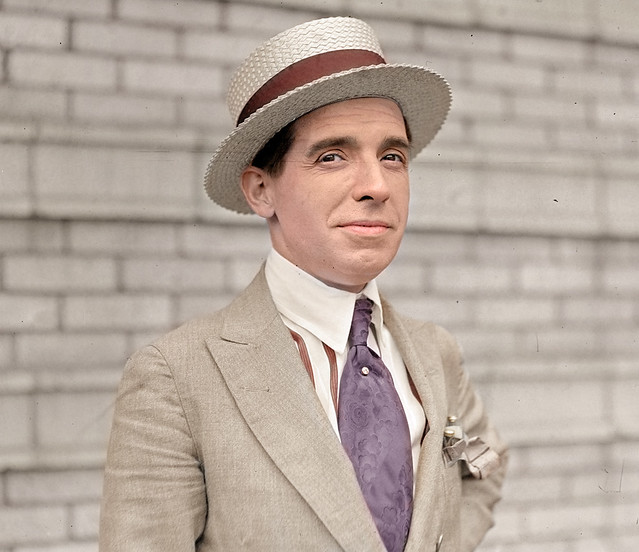
Walt Disney

Walt Disney 1946.JPG
I picked up the book, Walt Disney by Neil Gabler, after Marc Andreessen recommended it. The book is good, but it’s thick.

I’m only partially through the book, but entirely through Disney’s early career. Disney, like other noted people, has a lot of lessons from early in his career. Let’s see what they are.

1/ Disney was a grinder. “(The paper route) developed an appreciation of what spare time I did have and used it to great advantage in my hobbies.” – Walt “When he’d come home and long after everybody else was (in) bed, Walt was out there still puttering away, working away, experimenting.” – Roy Disney

Most biographers credit Disney’s work ethic to his demanding father, who worked on farms and factories. Disney was a relentless worker when it came to drawing cartoons, performing on stage, or filming movies. He did what Gary Vaynerchuk suggested:

“The people that win with my content are the ones who suck out everything I say for a year or two, then put their head down for 18 hours a day and then pop back up 3 years later and start reading more content from me because they’ve taken the first step and now they’re looking how to get from 1K to 1M.”

That’s what Walt did.

A girlfriend of an early animator who worked for Disney said, “he had the drive and ambition of ten million men.” Later on, when he married, Disney and his wife would go to the studio. She would take a nap while he worked, but as she slept he would turn the clock back an hour. Then, when she woke, he would point out that the time was still early and they could stay longer.

But you can’t be busy for the sake of business. You have to build up a valuable toolbox.

2/ Disney built up a skill toolbox.  “I found out that the inside and outside of an ambulance is as good a place to draw as any.”

Disney’s military service was sort, but valuable (see #3). He never gave up drawing when he was there. After he returned he started a cartooning business, and then film and animation. With each medium he built up valuable skills. He took art classes, checked out library books, and talked to the people who did the best work. 

The modern day example of this process might be Louis C.K.. He compared stocking his toolbox to the Matrix:

Louis C.K.: You know, like what’s the movie, “Matrix.”

Charlie Rose: “Matrix,” yes.

Louis C.K.: When there is a helicopter and he says to her, you know how to play helicopter. And she goes wait a minute and she loads the program. Now I do. Well, anyone can do that. It just takes longer. You can just load a program. So, now I know how to create a multi camera drama and mount it the same week that I shot it. And how to direct many great actors which I had never done before.

Malcolm Gladwell said you can built up a writer’s toolbox working for a newspaper. “It used to take me ages to write,” said Gladwell, “then I worked at a newspaper for ten years and I was cured of that.”

3/ Travel is a net positive. “(France was) a lifetime of experience in one package.”

Disney loved his time aboard. Jamie Foxx and Tim Ferriss both said travel affected them on a spiritual level (Africa and Japan).

Travel lets you see the world. Elizabeth Gilbert started to travel because she heard to write what you know but admitted she didn’t know anything.

Travel is much better than reading a book about a place said Tyler Cowen.

4/ **Barter as a starter.” “I got to be a little celebrity in the thing.”

Disney said that after he sold an early animation to a distributor for what it cost him to make, leaving no profit. The publicity he earned though was probably worth more. Another instance was when he traded work for office space, drawing cartoons for a newspaper. 

5/ Constraints help creativity. “The first Mickey Mouse was made by twelve people, after hours, in a garage.”

Disney created other successful characters, but lost them through legal poaching. One to a distributor, another to an early partner. Mickey Mouse was his third creation, and he only came up with it because he had to. It had to be something they could animate quickly. It would be an animal. It couldn’t be a cat.

Each constraint chipped away at the range of choices until Disney could only do so much, and out came Mickey Mouse.

Donald Campbell said, “the greatest thing about being Scottish is that you’ve got something to push against.” Jason Fried said “fewer official working hours helps squeeze the fat out of the typical workweek.” Terry Gross said she’s glad her show isn’t longer because it forces her to squeeze in a good conversation.

Constraints help us be more creative.

6/ Flyting. “We voice our opinions and sometimes have good old fashioned scraps, but in the end things get ironed out and we have something we’re all proud of.”

Though Walt may have had the last word, there was a lot of back and forth before he ruled.

Wilbur Wright said friend of the family George Spratt “was always ready to oppose an idea expressed by anybody…ready to jump into an argument with both sleeves rolled up.”

True, said Wilbur, but “a good scrap….brought out new ways of looking at things…helped round the corners.”

Flyting is a marker of places of genius. Ancient Greece had the symposia, Florence had workshops, Edinburgh had flyting (15th century rap battles), and Calcutta had the adda.

7/ You are never ready. “Everything’s fine. When I get back we’re going to make a big start…but he really didn’t have anything. And then on the train he sketched out some plans.” Roy Disney

Walt and Roy Disney learned their lessons the hard way. They oscillated between success and bankruptcy. They got scammed and taken. They hustled and were hustled. They were never ready for the business until they were ready.

The modern equivalent is the story of Nike that Phil Knight tells in Shoe Dog. Knight, like Disney, is never ready for the next thing.


8/ Want more than money.  “If you want to know the real secret of Walt’s success, it’s that he never tried to make money. He was always trying to make something that he could have fun with or be proud of.” Ward Kimball, Animator

Money is nothing more than fuel. Nicholas Megalis comared it to gasoline. Phil Knight compared it to blood in the body. Robert Kurson found that treasure hunters wanted to find treasure to fund their next treasure hunt.

Money, said Tim Ferriss is “wampum.” It’s the thing that leads to the THING.

9/ Home field advantage.

Part of the reason the Disney’s lost their intellectual property (#5) was they didn’t know the rules of the game. Walt especially was too trusting of early partners and Roy’s role grew as he had to keep Walt from making too many errors.

Walt’s domain of expertise was in creating art, not negotiating distribution. He was a skilled basketball player who sometimes mistakenly dabbled, on a baseball field.

Actual baseball players, the Chicago Black Soxs made the same mistake. They had no gambling experience (or plan) when they threw the 1919 World Series. They failed to win, and failed to get well paid.

Napoleon Bonaparte often created home field advantage. When he didn’t, he faced the worst loses; Waterloo, Spain, Russia.

Warren Buffett said, “we don’t look at something like that (Amazon.com) and try to beat them at their own game. They’re better than we are at that, and we aren’t going to try to out Bezos Bezos.”


Thanks for reading. Thanks for reading, I’m @mikedariano on Twitter. The podcast version of this blog (with different stories) is available wherever podcasts are posted; https://itunes.apple.com/us/podcast/mikes-notes/id1055386383, https://soundcloud.com/mikesnotes, https://overcast.fm/itunes1055386383/mikes-notes.

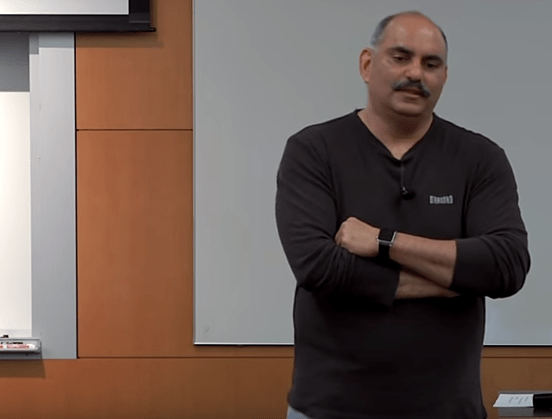
 

Alex Blumberg

Alex Blumberg at XOXO 2015

Alex Blumberg was on the Tropical MBA podcast to talk about work/entrepreneurship. It was a good podcast. The Tropical MBA guys – Dan Andrews and Ian Schoen – did an episode in 2015 when they put themselves in Blumberg’s shoes, and retraced his steps, commenting about they would have done. Now Blumberg joined them to talk about his company – Gimlet Media – and what’s happened along the way. Here are a few notes I took.

1/ Marry the right person. “If she wasn’t on board, I definitely couldn’t have done it.”

Malcolm Gladwell joined Stephen Dubner on the Freakonomics podcast to talk about this. Here’s Gladwell on  the 10K hour idea:

“to me the point of 10,000 hours is: if it takes that long to be good, you can’t do it by yourself. If you have to play chess for 10 years in order to be a great chess player, then that means that you can’t have a job, or maybe if you have a job it can’t be a job that takes up most of your time. It means you can’t come home, do the dishes, mow the lawn, take care of your kids. Someone has to do that stuff for you, right?”

Someone has to do that stuff for you. Blumberg has this. His wife has a  job, but supports his startup. Brian Koppelman said that marrying the right person was the best decision he ever made. Chris Hadfield wrote that he could never have been an astronaut without his wife. Brett McKay and Rich Roll both run their businesses with their wives.

Tyler Cowen and Stanley McChrystal said stable home lives are valuable. In part because they let you stretch at work. Stable homes mean you can stay late, or volunteer for a project. 

2/ Pattern recognition. “This American Life worked. Planet Money worked. After Planet Money worked it felt like you can take this kind of storytelling, this kind of long form journalism and you can apply it to a bunch of different places and now we know that this is fertile ground for this kind of storytelling….then Serial comes along and demolishes everything in its path and then it was very clear that it was the right instinct.” 

Startups fail because they run out of two things; time and money. Pattern recognition extends both. Warren Buffett said “pattern recognition gets very important in evaluating humans and businesses.” Jim Chanos relies on it too.

Tren Griffin said that Charlie Munger thinks, “business school should be taught from more of a historical case format, that you learn from pattern recognition and in order to learn from pattern recognition you have to see a lot of examples.”

Andy Weissman said:

“we can provide a good level of service because we have seen lots of different types of business at lots of different types of stages and we have good pattern recognition that provide frameworks for how to support the decisions entrepreneurs need to make.”

If you can’t do, the next best thing is to read. It’s why David Chang and Ezra Klein said biographies help this pattern recognition.

3/ Podcasting is more than telling stories. “The power of audio is that it’s a more empathetic medium than TV. People hear our words, so they know we’re real people but they’re sort of creating their own images of who we are, and in that act of creation, as they listen to us, we are now part of them in a way.”

Ben Thompsen talked about this in episode 82 of exponent. He said that podcasting is a way for people to relate to him, and if they like what they hear, to read more from him.

About 4-6 years ago the “free ebook” was a lead generator. I wonder if we are entering a parallel reality only for podcasts. Especially now that any fool can have one.

4/ (Empathy) Like a Boss. “People are really really brave. I wasn’t even aware of how brave people were being until I really sat down and thought about it…it took me a while to understand what it meant to be a boss, it meant you can fire people.”

Part of Blumberg’s show StartUp was about admitting mistakes. The most glaring example was episode #1 from season #1. Blumberg pitched Chris Sacca and was painful. Especially because Blumberg is so well polished. It was like when Michael Jordan played baseball.

When it came time for his employees to be that honest, Blumberg realized might not have been as easy for them. They had to balance admittance with existence, to tell good stories and to keep their jobs.

Ezra Klein intervied Jessica Valenti and her perspective about being a woman included a lot of things I hadn’t considered. Hopefully her perspective made me more empathetic.  Reading fiction builds empathy. Empathy from working in teams, rather than alone builds emptahty too.

Thanks for reading, I’m @mikedariano on Twitter. If you liked this post, but don’t have time to read, I have a podcast; https://itunes.apple.com/us/podcast/mikes-notes/id1055386383, https://soundcloud.com/mikesnotes, https://overcast.fm/itunes1055386383/mikes-notes. My wife must think it’s good because she told me; “good, now you have someone else to talk to about these things.” 


Mohnish Pabrai

Screen Shot 2016-06-15 at 6.41.04 AM.png

Mohnish Pabrai gave a great talk to a UC Irvine class. Thanks  Jana Vembunarayanan for sharing it.

It delights me that a one-time talk to a small group of people on a certain day is now available anytime to anyone in the world. But being available isn’t enough, we need to avail ourselves of this. Let’s do just that.

1/ Skin in the game. “Roberto Goizueta himself owned 2% of Coke, he had a significant economic interest.”

The first chunk of Pabrai’s talk is about the Berkshire Hathaway investment in Coke and he says that Coke had Lollapalooza effects because it was a great business with a great manager (Goizueta). Why was he so good? Because he has skin in the game.

Skin the game changes decision making. Tim Ferriss said he plays poker different with his own money. Mellody Hobson said that managers act different. Chris Dixon said a16z succeeds – in part – becaus of “aligned interestes.”

2/ Understand the simple things. “It’s not the numbers. The factors that drive long term success don’t have much to do with spreadsheets. They have to do with understanding human nature or nuances of how things work…(for example, a) distribution engine is very difficult to recreate.”

Pabrai explains the history of Coke so well, and with no numbers. Coke succeeded because good branding, distribution, costs, and human psychology. Don’t think the simple things are easy to understand, they often aren’t. Charlie Munger said “plain vanilla stock picking is hard enough.” Jocko Willink said good leadership is “simple but not easy.” Napoleon Bonaparte aimed for simple instructions because they held together better in the fog of war. 

3/ Learning things. “They (Buffett and Munger)  get a little more information because they’re willing to dig deep and read a lot, which most people aren’t willing to do.” “You would do well if you enjoy reading…reading from the context of ‘I’m going to get better at knowing how the world works.’”

When I received my graduate degree I thought I was done with formal education, and most learning. Finished. Complete.  I knew there were ‘life lessons’ ahead of me and I’d have to learn how to fix a clogged sink, but book learning had passed me.

Now I read more than ever.

My inflectin point was Shane Parrish’s blog Farnam Street, where it was okay to “go to bed smarter than when you woke up.” Not only that, to live a fuller life meant more books. 

Podcast episode #016 looked at  Sebastian Junger’s conversation with Tim Ferriss. Here is what Junger said about his enlightenment about learning:

“I wrote a thesis about Navajo long distance running, and I just came alive academically doing that. I was a pretty indifferent student, I was much more of an athlete than a student. The idea that you could just go out in the world and gather information, gather research, interview people, and bring it back and then turn it into words that people will read and be moved by and maybe changed by was such an extraordinary idea.”

And our learning never stops. Pabrai said, “I’m getting an education in the insurance business, and I’m finding out that I’d rather own See’s Candy.”

4/ Sunk cost bias. “When we spend a lot of time on something, we feel we should get something in return for that time, it’s a danger if you say, I’m going to research a company and decide if I want to invest or not. I think you’re better off researching a company with no such preconceived notion.”

Investing is hard. “It’s not easy to be a weekend investor…it’s a lot of work reading 100 years of annual reports,” said Pabrai. Charlie Munger said “plain vanilla stock picking is hard enough.” Auren Hoffman said, “do it as a full time job” or don’t do it at all.

Now layer on the sunk cost bias.

Richard Thaler guessed that part of the reason the standard economic model has yeilded so little to the behavioral economic model is due to the sunk cost bias. People invested too much of their careers to give it up. 

Pabrai’s suggestion is the machete to the vines of sunk costs. Walk out of bad movies. Put down unexciting books. Turn off awful podcasts, especially mine.  Take Marc Andreessen’s advice; have strong views but weakly held.

5/ Hitting the reset button. “I have a rule I’ve followed for my entire career: if on Monday morning I’m not fired up for work I do two things. Number one, I don’t go to work. Number two, I hit the reset button.”

I loved the clarity and conviction Pabrai expressed when he said this, but also the explanation. At first it sounded Silicon-Valley-ostentatious, do what you love, follow your passion, man. But, being excited can lead to better work. 

“One trick related to passion is that you are not likely to be passionate about something you do not understand.” Tren Griffin

Pabrai pointed out that the safety net in America is pretty good. Many failed startup founders said their journey was hard, but net-net it was worth it. They may have lost time and money, but came out as better, different people. Phil Knight said the same thing about running a shoe business:

“If Blue Ribbon went bust, I’d have no money and I’d be crushed. But i’d also have some valuable wisdom which I could apply to the next business. Wisdom seemed an intangible asset, but an asset all the same.”

It doesn’t take a lot of money either. Casey Neistat bought one computer to start making vidoes. Sophia Amoruso scoured used clothing at estate sales. Ramit Sethi gave free talks at college. Daymond John sold homemade hats out of a garbage bag. 

If you aren’t excited to do some work, try a reset, and know that it doesn’t take much.

6/ Have extras. “Don’t focus on being fully invested.”

Pabrai said that he looks for companies with a good moat and runway. To have the option to buy them though, he needs (extra) cash on hand.

Greg Ip wrote about extra physical and financial space between us and danger. Nassim Taleb wrote, “mother nature likes redundancy.” Microsoft’s extra cash allowed them to buy LinkedIn. Jocko Willink shared the military mindset, “two is one and one is none.”

When we don’t have extras, bad things happen. Charles Ponzi ran out of extra money before he could turn his scheme around. Niall Ferguson wrote:

“The Ming system had created a high-level equilibrium – impressive outwardly, but fragile inwardly. The countryside could sustain a remarkably large number of people, but on the the basis of an essentially static social order that literally ceased to innovate. It was a kind of trap. And when the least little thing went wrong, the trap snapped shut. There were no external resources to draw on.”

Extra [______] allows you room to move when conditions change, and they always change.

Thanks for reading, I’m @mikedariano on Twitter. If you’d rather listen to these kind of posts, I have a podcast; https://itunes.apple.com/us/podcast/mikes-notes/id1055386383, https://soundcloud.com/mikesnotes, https://overcast.fm/itunes1055386383/mikes-notes.


(My) Podcast update #1

I started a podcast, it’s like this blog, only you listen to it.

If you like this blog, you’ll probably like it. If you don’t, you won’t.

You can subscribe on iTunes, Soundcloud, or Overcast.

Recent episodes include:

  • 6 takeaways from Sebastian Junger’s podcast with Tim Ferrriss.
  • Lesssons from Charles Ponzi, very similar to the Charles Ponzi post.
  • Strategic blunders from the 1919 Chicago Blacksoxs.

Upcoming episodes include:

  • How Nike implemented Peter Thiel’s framework –  40 years in advance.
  • Warnings about sunk costs.

Lonely Island

Lonely Island is the music trio of Andy Samberg, Akiva Schaffer and Jorma Taccone. Their latest project is Popstar: Never Stop Never Stopping. They joined Terry Gross on Fresh Air to promote the new movie. The interview fascinated me.  Amanda Palmer reminded us that we are all creating something, we are all artist, and the Lonely Island trio talks about how to make good art.  Here are 3 things I learned from Lonely Island.

1/ Constraints help. “Sometimes lightening strikes and inspires you. In the movie, he (Connor) puts out a new record. It flops, and people think it’s kind of an offensive record and don’t think it’s good. That gave us – in the writing process – a lot of freedom to come up with songs that we thought ‘let’s make the silliest version of a song that fails’ that gives you so much creative license to make the silliest song you can think of because it’s not supposed to be ‘good.’”

A lot of artists point out that creation doesn’t come ex nihilo. Part of How to be a Genius involves constraints; from Da Vinci (because of his station at birth) to Michelangelo (squirming as he painted). Austin Kleon’s work was limited to newspapers. Maria Popova was limited to classic books.

Constraints help in other domains too. Jason Fried wrote, “fewer official working hours helps squeeze the fat out of the typical workweek.” Ryan Holiday addressed marketing, “Because these companies didn’t have access to the ‘luxuries’ of an ad budget or the burden of proper training, they were able to be creative enough to broaden the definition of marketing to immense advantage.” Sophia Amoruso wrote how constraints helped her:

“When people write about Nasty Gal, the articles almost always note how I built the company with no debt, because that’s a pretty unusual feat in the business world. And yes, once I finally got a job and started working for my money, I was extremely responsible with it. But what these stories usually leave out is that it wasn’t by choice that I built the company debt-free. It simply wasn’t an option, because no one would even give me a credit card, never mind a business loan. This was frustrating; however, it was also a blessing in disguise.”

From ancient times to modern, from art to business, being constrained helps.

2/Comedy = Comprehension. “The idea behind it (the song Equal Rights) is talking about how people will sometimes piggyback a social cause to leverage goodwill. In this case, Connor is trying to piggyback the gay marriage cause and get behind it, but he has trouble wrapping his head around what he really is saying and maybe is not as behind it as he claims to be.”

This segment of the interview was an excellent explanation of what it means to understand something deeply enough to make fun of it. The Lonely Island trio needed to understand how people felt about gay marriage, what was taboo and what wasn’t, what they could say about it and what they couldn’t. Then, they had to consider all those questions from the main character’s point of view.

Jason Zweig said “the ability to define a term in such a way to be cynical or funny is a measure of your own skepticism.” Garry Shandling said, “the struggle in the writing room, is getting people not to write just words.” When B.J. Novak handed Steve Carrell a script, Carrell told him “these are not just jokes.” Novak didn’t get it at first. Later he did.

To be good at anything requires a deep understanding, comedy is one demonstration of this. If something is funny, it’s because it exposes something more.

3/Too busy for an existential crisis.  “One of the advantages of Saturday Night Live (SNL) is that because it’s happening every week, no matter whether you felt like you had been successful the week before or failed the week before…there was another one the next week. You couldn’t really dwell on anything. There were moments of excitement, but we were just head down, working so much that we didn’t really focus on anything more than that.”

People who go on podcasts believe work is a good thing to get lost in. Casey Neistat called it “the religion of work. Rich Roll said “the only time that I’ve actually ever accomplished anything noteworthy was when I allowed myself to be out of balance.” To which Gary Vaynerchuk added, “I’m not interesting in the politically correct version of everything right now. I’m not interested in having a conversation around how to raise my kids. I’m not interested you imposing your will on me on how I meditate.”

Jason Fried said that he finds his mind in two modes; default and focus. In his default mode, he said “the mind is wandering and the mind tends to wander towards worry.” That’s not good, said Fried.

Freud said the secret to a happy life was “love and work.” Lena Dunham told Judd Apatow “I’d always wanted to be a person who worked so much that I wasn’t even available to go to dinner.”  Percy Fawcett wrote:

“One learns little from a smooth life, but I do not like roping others into the difficulties which have dogged me so persistently . . . It is not that I want luxuries. I care little about such things—but I hate inactivity.”

Work can be a philosophy, a religion, an attitude.

Thanks for reading, I’m @mikedariano on Twitter. If you liked this blog post, I have a podcast too: iTunes, Overcast, Soundcloud, & Medium.

Finally, I couldn’t catch in the interview which of the guys said what, sorry for the lack of attribution in this post.

Andy Weissman

I love podcast like this. I had no idea who Andy Weissman was (he’s a partner at Union Square Ventures). I had no idea what his firm did (thesis based investments around network effects). Basically, I knew nothing, but learned a lot. Here’s 5 things I learned from Weissman’s interview with William Channer at Dorm Room Tycoon.

1/ The “No’s” never stop. “We got told ‘no’ a lot and it hurt and it stung and it stayed with us and we used it to motivated us. Part of being a founder at the early stages is that you’re running up against a wall a lot. Going with that rhythm and not really getting discouraged is a really important piece because in the early stages the words ‘no’ or ‘this is dumb’ come up a lot no matter what. I have seen it in every single company. You have to be able to roll with that and learn from those difficult periods.”

A lot of people who are big time say that when they were small fries they heard the word ‘no.’ They also say  it still happens. Louis C.K. said he just gets personal ‘no’s’ now. Jack Nicholson for example, called him to say; “the writing’s terrific, but I’m not going to do it.” Brian Grazer said people still tell him ‘no’ a lot, only now it’s in a nicer way.

2/ Know thyself. “From being a founder to a manager, there’s a scaling process that goes with that.”

Weissman said there are two ways companies need to scale; in business and in management. Sophia Amoruso was quick to realize she couldn’t scale as a manager and stepped aside as CEO. Ezra Klein said, “I can’t do teleconference calls.” Elizabeth Gilbert said “I needed to go roll around in the world.”  Knowing yourself is a great help.

“I’m always saying, better your strengths and punt your weaknesses.” – Gary Vaynerchuk

Tren Griffin said; “one of the great contrasts in life is between people who know a moat when they see it and people who know how build one out of nothing.” Weissman recognizes this too, “we don’t run these companies…if we were good at operating companies we would operate these companies, but we’re not.”

“You really want to study your strengths and reverse engineer your successes.” – Brett Steenbarger

If you – as a founder – know you can’t scale yourself or your business, don’t do it. Weissman said, “if you take money from a venture capitalist, the way the economics of the VC world work, an investor like me needs to make 10 or 100 X on our money.” That sounds fine, who could have a problem with that? Weissman continued: “you must be comfortable taking big risks, including existential risks around managing that business.”

3/ Pattern recognition. “We have seen lots of different types of business at lots of different types of stages and we have good pattern recognitions that provide frameworks for how to support the decisions entrepreneurs need to make.”

In my my research on failed startups, startups always needed more time or more money – sometimes both. You can save time with a good guide, one that knows the lay of the land, that is, one that knows the patterns. That’s what Weissman provides.

In the 2016 Berkshire Hathaway meeting Warren Buffett said, “pattern recognition gets very important in evaluating humans and businesses.” Jim Chanos credited pattern recognition for his stock shorting success.

4/ Scratch your own itch. “A characteristic that resonates with us is a founder that has real direct experience with the problem they’re trying to solve. They feel that problem on a personal level because they’ve experienced it, therefore they have an intense desire to solve that problem.”

Another finding from my research on failed startup was the surprising number of founders who didn’t really care. They hoped to strike gold, but when things got tough, they bailed because they never cared. Farnam Street was Shane Parrish’s attempt to scratch his itch for education. AngelList was Naval Ravikant’s attempt to scratch his itch for a better connection place for startups.

5/ The availability bias. Interviewer William Channer asked, “when things go wrong, how does a founder get fired from his company?”  

Weissman answered, “It’s a reality in business, it’s not specific to taking on venture capital. We notice it more acutely, all of us who are in our startup world because we see when it happens. I don’t know if it happens more or less.”

Part of the problem with a diet of only podcasts is the type of people who go on podcasts. Ezra Klein said it this way, “there are an unusual percentage of people who get to go on podcasts who have this particular schooling experience.” He was referencing smart(ish) kids that were bored at school. Chris Dixon said, “VC gets a lot of attention in the press, but it’s actually a very small industry.”

On the other hand, the availability bias can help. Ryan Holiday said that it helps him write his books.

Thanks for reading, I’m @mikedariano on Twitter. I’ve started a podcast to scratch my own itch,: iTunes, Overcast, Soundcloud, & Medium


Marc Andreessen

Marc Andreessen (1)
My notes from Marc Andreessen’s appearance on Tim Ferriss’s podcast.

1/ Read history books. “I got a lot of my education from history. Rather than reading a lot more about the contemporaries I would go back and read about; Ford, Rockefeller, Edison, Morgan.”

Andreessen does mention some modern books he likes – like cofounder Ben Horowitz’s book The Hard Thing about Hard Things, which we’ve touched on  – but for the most part he learns mostly from history. David Chang and Ezra Klein both said the same thing. Forget management books, said Chang, “I can learn more from a history book or autobiography about someone that made a ton of mistakes.”

2/ What’s the right shade of grey? “You want to fail fast, but you also want to be determined and can’t give up. How do you possible reconcile those? That’s where you get to strong views weakly held.”

Andreessen is known for the expression “strong views weakly held,” and this mindset is a tool for deciphering spectrum locations.

We’ve seen a number of spectrums; ecologists to engineers, skill to luck, and baseball scouts to statiticisans. These are good models for thought, but we can’t use them the same way every time.

“No man ever steps in the same river twice, for it’s not the same river and he’s not the same man.” ― Heraclitus

Andreessen provides a switching mechanism. “Strong views weakly held.” We can find our footing in some part of the spectrum, and hold that position until it’s time to flee.

3/ Alternative histories. “Do you have the judgement to make that call, knowing by the way, that either way can be a big mistake. Nobody’s going to tell you that you made the right call. If you change and then succeed, that’s great, but you might have succeeded at the old thing even better.”

We touched on alternative histories in podcast episode #02, but Andreessen points out a challenge. We’ll never be sure about the range or intensity of the different outcomes.

4/ Opportunity cost. “The investors in Friendster were more likely than not, unable and unwilling to invest in Facebook when it came along because they were conflicted.”

Andreessen said investments have three costs; money, time, and opportunity. Of these three, money is the cheapest. When a partner at a16z has to work on a project, it means they can’t work on another. When they choose a drone or cryptocurrency it precludes them from another chance to invest in that sector.

This mindset about choices means the a16z team has to proceed slowly. Daniel Kahneman said, “when things get really big and you’re really not sure, slow down.” Warren Buffett put it this way:

“I could improve your ultimate financial welfare by giving you a ticket with only twenty slots in it so that you had twenty punches – representing all the investments that you got to make in a lifetime. And once you’d punched through the card, you couldn’t make any more investments at all. Under those rules, you’d really think carefully about what you did, and you’d be forced to load up on what you’d really thought about. So you’d do so much better.”

Dan Ariely found that we have trouble with the mental accounting of opportunity costs. Andreessen and his team have recognized where it is highest – and presumably move slowly.

5/ Red teaming. “It’s the responsibility of everybody else in the room to stress test the thinking. If necessary we’ll create a red team. We’ll formally create the countervailing force and designate some set of people to counter argue the other side.”

Bob Seawright said much the same thing; “Institutional red teams are not the same thing as real disagreement… you need people to become empowered if they are to become a red team.”

At a16z they do exactly this, Andreessen said, “whenever he (Ben Horowitz) brings in a deal, I’ll trash the shit out of it.”

Stanley McChrystal recalled being in a red team meeting where a commander who was role playing the bad guy used all his forces to attack at once. That won’t happen, someone said. But that’s the whole point, added another. Good red teams – much like the good culture we looked at in the Shane Parrish post strive for an objective understanding of the issue.

6/ Toys are for children. “These things look like cult and fringe activities until they break mainstream.”

Things we think are toys can become much more. Bill Bryson wrote:

“When Henry Ford built his first Model T, Americans had some 2,200 makes of cars to choose from. Every one of those cars was in some sense a toy, a plaything for the well-to-do.”

7/ Competition. “We don’t foreclose the possibility that there will be another mobile killer or social killer app but it’s getting harder and harder and harder because more and more people have figured out that you can do these things and the winners have gotten very established. One of the ways to think about it; first you had Facebook and then Twitter and then Instagram and now Snapchat, and those all became big winners. What would it take to make the fifth one? You only have so many icons on the home screen of your phone. It has to knock one of the other ones off.”

Investor Burton Malkiel said, “The problem is, as the market gets more and more professional, when people are better trained, when people have better sources of information…it’s then harder and harder to actually beat the market.”

Biologist Terrt Burnham wrote, “with high population density comes competition for resources, and with competition comes conflict.”

Auren Hoffman said that investing is such a challenge it can’t be anything but a full time job. Jack Bogle said that Vanguard succeeded because there was no competition. Jim Chanos also found a niche with limited competition. Peter Thiel wrote in Zero to One, “the best place to look for secrets is where no one else is looking…every great business is built around a secret that’s hiding from the outside.”

Thanks for reading, I’m @mikedariano on Twitter. If you liked this post, I’m looking to do more research work like it. Get in touch.

Charles Ponzi

Charles Ponzi
Ponzi’s Scheme by Mitchell Zuckoff reminded me a lot of the book The Fish That Ate the Whale by Rich Cohen. It’s not as good, but like a Polaroid photo, developed the story to a well-known picture. Though Charles Ponzi and Bernie Madoff ran the same scheme, they were quite different. Here are 5 things I learned:

1/ Opportunity costs in education. Most of the examples on this blog, from Sophia Amoruso to Ezra Klein lean toward favoring real world knowledge rather than book knowledge. As Elizabeth Gilbert asked, “Why learn about the thing by learning about the thing, when you can learn about the thing by doing the thing?”

This typically means less formal schooling and more of the XMBA approach. Where this fails is if we do neither. The real world education can be more valuable, but also requires more work. When Ponzi went to school in Italy, Zuckoff wrote, “His rich friends considered the university a four years vacation, and so Ponzi acted as though he could too.”

The same thing occurred to  the future newspaper editor who would bring him down – Richard Grozier. Zuckoff wrote, “There was a cachet of laxity among certain Harvard students. This was especially true of ‘club men,’ who thought a grade above a C was a waste of effort.” Grozier believed this applied to him. He only barely graduated. 

School is not the most efficient form of learning, but it is a decent one.

2/ About newspapers. Two aspects about the daily news came up in this book. First, was rosy retrospection. We tend to look back and think ‘those were the good old days.’ While the owner of the Boston Post had been inspired by the work of Joseph Pulitzer, the paper printed a wide range of stories.

“Then there was the ‘primitive man’ stunt. The Post sent a man named Joe Knowles into the Maine woods, naked and empty-handed, to live completely alone for sixty days. During the two-month adventure, the paper printed dispatches and drawings Knowles made with charcoal on birch bark and left at a prearranged drop point. When Knowles emerged from the woods, wearing deer skins and carrying the tools of a caveman, some 400,000 people crammed the length of Washington Street to greet him. The paper’s circulation doubled that year.”

The second point of note was the – at first – limited coverage of Ponzi. Papers only have so many pages, television so many minutes, and websites so many pixels above the fold. The year 1920 was busy enough that other stories pushed Ponzi out of the pages.

Nassim Taleb called daily news “toxic” for this very reason. Something is going to fill that space everyday. The chances of it being important and true are low.

3/ Path of dominos. Ponzi, like so many others we’ve profiled, had  a one-of-a-kind path to his infamy. To come upon his scheme had to had to have been born overseas, come to America, left, had his name misspelled on an arrest warrant, started a trade publication, opened a letter with an exchange coupon and so on.

200_s

We’re all some outcome of choices, and I wonder what our alternative histories look like without one or another key event. Had Napoleon Bonaparte not been admitted to military school what would have become of him? Had Teddy Roosevelt not been elected as a state legislature would he have been president? Would we have national parks?

4/ Hedonic treadmill. “The average man is never satisfied with what he had, he does not realize when he is well off. If he has a shirt, he wants two. If he is single, he wants a wife. If he is married, he wants a harem. He is always reaching for the moon and stepping off into space.” – Charles Ponzi

Ponzi was a good judge of other men. He also wrote:

“Each satisfied customers became a self-appointed salesman. It was their combined salesmanship, and not my own, that put the thing over. I admit that I started a small snowball downhill. But it developed into an avalanche by itself.”

That’s the other side we can forget, greed. There were people like Clarence Barron who questioned Ponzi’s business. People neglected the advice as they praised Ponzi.

5/ Fabian strategy. One person who thought that Ponzi’s scheme stunk, was bank commissioner Joseph Allen. Though he doubted the legitimacy he lacked authority to stop it. Ponzi could legally sell notes, take deposits, and make payments. Allen was forced to wait.

But not idly. Allen’s domain(turf) was the banking system, and it was there he set his snare. He watched Ponzi’s accounts (many of which were under aliases). If those accounts dipped too low and pushed the bank’s reserves passed a limit, Allen could act, and he did. When he froze Ponzi’s accounts at one bank it was the beginning of the end. 

Fabian strategist use timing as a tool. Allen might have stretched in an attempt to stop Ponzi, but he would have likely failed. Instead he waited to attack Ponzi where he was most powerful. When Napoleon Bonaparte invaded Russia the Russians continually fell back and soon the French armies were strung out and freezing. Gene Tunney withstood Jack Dempsey’s onslaught only to land a few crucial punches at the right time. Charlie Munger deflects options as not worth it or too hard until he pounces. (“I think part of the popularity of Berkshire Hathaway is that we look like people who have found a trick. It’s not brilliance. It’s just avoiding stupidity.”)

The Fabian strategy is survive, survive, survive, attack!

Thanks for reading, I’m @mikedariano on Twitter. The audio version of this post is coming soon: iTunes, Overcast, Soundcloud, & Medium

Shane Parrish

This was a fun one to write. Shane Parrish was interviewed by Mitch Joel at Six Pixels of Separation and the two talked about a host of interesting things. I’m a fan of both their work, so let’s get to it. Here are a few things I learned.

1/ How to challenge your thinking. “I used to subscribe to magazines that had the opposite point of view that I did, just so I was exposing myself to those ideas, but it’s not really enough to expose yourself to them, you kind of need to hone these general ideas over a long period of time and get better at them if you want to apply them.”

Parrish’s comment reminded me of what Ben Horowitz wrote about culture, “yoga is not culture.” Horowitz’s book drills deep to determine what culture is. It’s true for many things we do in life. Parrish addressed this too:

“A lot of the books are prescriptive, but that doesn’t work in the real world. You can’t just add 20% innovation time to your organization and expect you’re going to be Google. No you have to understand what Google was doing. How it fit in their culture. Why it was part of their culture. Why it worked as part of their culture. And now why it’s stopped. And you further have to map it to the base rate.”

Twenty percent time is not culture. Giving kids iPads is not teaching tech. College is not (always) education. It’s not about what you wear, said Auren Hoffamn but whether that represents something deeper.

For example, we have a collection on ways to use Twitter well, one of which is to challenge your ideas by following people with opposing views. Seeing tweets only does so much, and rarely tests our ideas. In Marc Andreessen’s podcast with Tim Ferriss, he said that he and Horowitz argue like crazy so that any idea that survives that process is a good one. Similarly, we can improve our Twitter use if we engage (cordially) and debate.

2/ Opportunity cost of education. “If you have to prioritize what you’re learning there’s an opportunity cost to it. With that opportunity cost we’re trying to prioritize things that change slowly or not at all.”

Farnam Street is an education in and of itself. Parrish noted that they sometimes discuss best selling books, but don’t begin from that list. Rather, they try to find things that change little. Reading takes a lot of time where you could be doing something else, and Parrish values that time.

The best-selling-books system – as Ryan Holiday has pointed out, can be gamed. Beyond reading Farnam Street, here’s my advice:

a) Prefer number of reviews over favorable reviews:

b) Let podcasts be your guide for books to read. I found Robert Kurson and Eric Weiner after hearing them interviewed.

c) Quit a book that you don’t reach for instead of your phone.

3/ How to eat an elephant. “One of the things I was really conscious about was ‘how do I get a little bit better each year, a little bit smarter.’ I don’t need to be 100% improvement, I just want to get a little bit better every year, and over a long life, hopefully that adds up and I surpass people naturally more smart than me, that are naturally more gifted.”

Elephant

An idea Steven Kotler has thought about too.

4/ Potpourri. “I was passionate about learning, and I found that the MBA program wasn’t what I thought it would be…it was more of a big money machine…it became about what was easy for the students and teachers.…but that’s how life works too, it was a great lesson for life. Doing what other people lead you down the road to do isn’t always the best answer for you as a person and you need to own and be conscious of the decisions you’re making.”

This quote has a few nooks and crannies we can peek into.

4a/ Time and again we see – thoughaccording to Ezra Klein, we may be biased that people on podcast talk about education this way – that people find education lacking. Teddy Roosevelt’s parents hired tutors and took (lavish and exoitc) family trips. Elizabeth Gilbert approached trips from a different financail place, but found the same value at the end. Our post on the XMBA explains more, and in a way, Farnam Street is an eXperiential MBA.

4b/ Parrish saw that incentives mattered at the university level; both students and professors want things to go smoothly. I sat on both sides of those desks and agree. The incentives were for no one to rock the boat and the journey to be smooth. Incentives matter. People loved  to sell Charles Ponzi’s certificates because he payed (apparently) handsome comissions. Charles Lindbergh used the power of incentives to get the Spirit of St. Louis built. Louis C.K. traded normal TV incentive structure (align content with commercials) for a different set when he released Horace and Pete on his website.

4c/ Your life is your life. Jocko Willink frames it as “extreme ownership.” This kind of ownership can help solve different kinds of problems. Chris Sacca told Bill Simmons that they rarely had leaks at Google because “everyone felt an ownership of the company.” Brogan BamBrogan told Ashlee Vance that Elon Musk would approach an engineer and say:

“‘I need the impossible done by Friday at two P.M. Can you do it?’ Then when you say yes, you are not working hard because he told you to. You’re working hard for yourself. It’s a distinction you can feel. You have signed up to do your own work.”

Thanks for reading, I’m @mikedariano on Twitter. If you liked this post, my podcast is basically the audio version: iTunes, Overcast, Soundcloud, or Medium.

Auren Hoffman

This post was originally published on Medium. I’m moving it here for linking purposes. 

Auren Hoffman joined Erik Torenberg on the Product Hunt podcast and here are 3 things I learned.

1/ Timing is a variable in the success equation. “If you’re 6 people, a false positive is so destructive to your company that hiring somebody really bad can be a really real bad thing…when you’re 200 people it’s not nearly as destructive.” “None of your listeners should take advice from me on investing…I’ve been a very active investor in the last eight years, and if you were a very active investor, in the valley, 100% of them did really well.”

Hoffman’s humility here (and throughout the interview) demonstrates objective observations.

In the success equation it’s crucial to figure out what happened because of your “genius,” and what happened because of “rising tides.”

Daymond John said he launched FUBU (effort) on the hip hop tide (timing).

Chris Dixon noted that some startups fail because a tsunami strikes the harbor. “Some reasonable percentage of the time the entrepreneur does everything right and things happen.”

The valuable part is to figure out how much of your success (or failure) was your timing and not lucky timing.

2/ Invisible scripts and default options. “A lot of people spend more time thinking about what restaurant to go to tonight rather than if they should go to college.” “People should affirmatively choose to go to college … The default position for too many people is to go to college, and I think in society we have too many default positions.” Hoffman adds this caution applies to marriage and kids too.

How do you see these invisible scripts? Flip them upside down.

Venkatesh Rao told Dan Andrews that reversing our point of view garbles existing scripts. Look at things upside down.

Or backwards. “One easier way to figure out what your strengths are is to figure out what they aren’t,” said Hoffman. Tren Griffin said that if you want to have a good marriage, be someone who is good to be married to.

Or anthropomorphic. Benjamin Graham compared the stock market to a bipolar “Mr. Market,” that Warren Buffett says is the best part of Graham’s book The Intelligent Investor.

3/ Creating Company Culture. “Culture is something that your company does that other companies like you don’t do.” “You don’t need to recruit everyone in the world, if you can appeal to just 1% to come work for you that’s good enough.”

Yoga is not culture. Culture is a weapon, sometimes a self harming one.

One main theme of failed startups — in my survivorship bias project was hostile culture. Good culture meant focus and responsibility.

When he was on Product Hunt, Josh Kopelman noted that there’s no “virality dust,” and the same is true for culture. It has to be baked in.