Daryl Morey

Supported by Greenhaven Road Capital, finding value off the beaten path.

If you hadn’t heard, Michael Lewis has a new book out called The Undoing Project. I’m a Lewis fan and enjoyed it. If you’re curious about Lewis and the book, this Slate article, Basketball’s Nerd King – How Daryl Morey used behavioral economics to revolutionize the art of NBA draft picks is a good sample.

I took some notes. Ready?

1/ On certainty. Morey started his career as a consultant. Not because he didn’t want to be involved with sports, he did, that’s why he was a consultant.

His plan was to make a fortune at McKinsey, then buy a team. Ah, the naivety of youth. In Damn Right, Janet Lowenstein writes that Charlie Munger had a similar idea, only as a lawyer instead of a consultant. However, Munger saw in his day-to-day practice was that business owners not business lawyers who generated the real wealth. Munger switched paths.

Morey wasn’t aware of this thinking (yet). He was learning other things.

“From his stint as a consultant he learned something valu­able, however,” Lewis writes, “It seemed to him that a big part of a consultant’s job was to feign total certainty about uncertain things.”

McKinsey was billing clients $500K a year and those clients wanted predictions with certainty. They weren’t comfortable with what Phillip Tetlock calls “the wrong side of maybe.” Morey served his clients.  They’d ask for an oil forecast and “we would go to our clients and tell them we could predict the price of oil,” Morey said, but “no one can predict the price of oil. It was basically nonsense.”

We want confidence in our predictions. “Confidence is part of a complex (of competence)” that we want in people says Daniel Kahneman. “We want the people that we depend on to be competent and to be confident.”

Nate Silver wrote, “the amount of confidence someone expresses in a prediction is not a good indication of its accuracy—to the contrary, these qualities are often inversely correlated.”  This is what Morey felt.

We think confidence follows accuracy like a coal car follows a locomotive. This isn’t so.

2/ Extreme ownership. 

“Here’s the biggest reason I want to be in every interview,” said Morey. “If we pick him, and he has some horrible problem and the owner asks, ‘What did he say in the interview when you asked him that question?’ and I go, ‘I never actually spoke to him before we gave him 1.5 million dollars,’ I get fired.”

Morey practices what Jocko Willink calls “extreme ownership.”

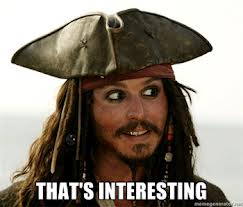
3/ That’s interesting. Morey was 15 and the Cleveland Indians were on the cover of Sports Illustrated and predicted to win the World Series.

““I was like, ‘This Is It!!!! The Indians have sucked for years. Now we’re going to win the World Series!’ ”

The Indians finished last.

“The guys they had said were going to be so good were so bad…And that was the moment when I thought: Maybe the experts don’t know what they’re talking about.””
thatsinterestin

The next year Morey came across The Bill James Historical Abstract. He bought a copy.

These moments, where you go, that’s interesting are moments worth sniffing around a bit more. That’s what Benjamin Graham did when he found information on Northern Pipeline company. Judith Elsea does the same thing, only with an algorithm. Richard Thaler kept a list of stupid things people do.

We get that’s interesting moments from good pattern recognition. We see something, it doesn’t make sense, we dig deeper. And here’s where I disagree with Lewis who writes, “It was bizarre that it was even possible for a total outsider to walk into the game with an entirely new approach to valuing basketball players and see his approach adopted by much of the industry.”

The opposite makes more sense. Only an outsider could come into the game with a new approach that worked. Outsiders succeed all the time. Charles Lindberg flew mail routes in whatever plane was available. In The Outsiders the twist is in the title. John Boyd was a fighter pilot who developed ground warfare strategy.

4/ Measure the right things. Lewis quotes Morey:

“Obviously their performance statistics told you something about them. But which ones? You might believe—many then did—that the most important thing a basketball player did was to score points. That opinion could now be tested: Did an ability to score points in college predict NBA success? No, was the short answer.”

I realized after listening to Chris Cole and reading Dear Chairman by Jeff Gramm that superficial observations can conceal chaotic currents. Cole and Gramm approach this from an investing angle. They’re looking for situations where what we see isn’t what it is.

In basketball this was points. Points looked good. It told you something. It was easy. But to make good choices you needed more. What was the more for Morey? “Almost everything we looked at was nonpredictive.”

Hmm.  What to do?

Investors of money like Joel Greenblatt and Warren Buffett would tell you to wait for the right opportunity. Sam Hinkie’s firing in Philadelphia is a data point that tells you how well that works.

What do we do if we don’t know what the right things are? We find the wrong things and eliminate those. The Rockets learned this lesson the hard way when the player evaluators gave Marc Gasol the nickname “Man Boobs.” Whoops!

The problem was a bit of attribution substitution. Rather than answer (the harder) question of, “can Marc Gasol be a good NBA player?” The staff switched to (an easier question) of, “does Marc Gasol look like a good NBA player?”

Not only that, but scouts and coaches would overvalue things because one player was the same race as another. Or a player persuaded them in a meeting (tall guys are particularly charming it turns out). There were many things that did not contribute to the success of a basketball team but the staff acted like it did.

You have to get the MIT right. John Boyd taught fighter pilots how to reverse a position. Ross Perot tried to convince GM the MIT was quality not technology. In personal finance, says Morgan Housel, it’s car, house, and school.

The MIT for a basketball player is not race, “man boobs”, or (only) points scored in a game. There were better things to measure, Morey set out to find those.

5/ Barbell approach. 

“So long as it relied almost exclusively on performance statistics, the model would always miss DeAndre Jordan. The only way to see him, it seemed, was with the eyes of an old-fashioned basketball expert. As it happens, Jordan had grown up in Houston under the eyes of Rockets scouts, and one of those scouts had wanted to draft him on the strength of what appeared to him undeniable physical talent. One of his scouts had seen what his model had missed!”

Success would start to come with a barbell approach. Take statistics and scouts and mix them together. Lewis writes, “The trick was to listen to it (Morey’s model) and to the scouts at the same time.”

6/ The two-jar model. I love the two-jar model and it fit perfectly as the theory behind one of Morey’s rules.

When the Rockets had workouts with players the coaches tended to overvalue the things they saw (good and bad). Morey told them to weigh these evaluation sessions “really low.” It was hard for the staff. They saw things and those things meant something.

Or did they?

The two-jar model is a framework to view each outcome as a combination of draws from a skill jar and a luck jar.  If a player performs awesome or poorly in his workout what was the reason?  The two-jar model suggests we ask how much of the performance was skill based and how much was luck.  Morey understood this, Lewis writes, “If a guy was a 90 percent free-throw shooter in college, for instance, it really didn’t matter if he missed six free throws in a row during the private workout.”

Free-throw shooting is mostly a skill draw with very little luck. That’s an outcome that will hold up over time.

7/ Rapid fire. This post could go on forever. Let’s pull a few more quotes.

Finding the truth is not a popularity contest. “Who cares what other people think?” Rockets owner Leslie Alexander told Morey. John Boyd told his compatriots that “getting kicked in the teeth is the reward for good work.”

“Soon Morey noticed something else: A scout watching a player tended to form a near-instant impression, around which all other data tended to organize itself.” Daniel Kahneman suggests we use delayed intuition. “There is a need for disciplined intuition and what I mean by disciplined is delayed intuition. One of the many problems with our intuitions is they come too fast and we tend to confirm them.”

Confirmation bias is the most insidious because you don’t even realize it is happening,” says Morey. “The normal mind takes out of the noise what it wanted to hear all along,” said Nick Murray.

During a lockout Morey took a class on behavioral economics that made him uneasy after seeing the anchoring effect in action. It can happen for the starters on a team writes Chris Anderson. Managers “wait until the evidence of flagging performance is undeniable. By that time it’s often too late.” Let anchoring help you and start with the base rate.

“You know,” one Rocket executive said, “if we had the pick we’re thinking of trading for and they offered Lowry for it, we wouldn’t even consider it as a possibility.” This was a great example of inversion, one I’ve heard Dave Ramsey use to give financial advice. If your car is worth $8,000 would you buy it if you had no car but eight grand?

Thanks for reading, I’m @mikedariano on Twitter.

 The story about Gasol made me laugh out loud. Anyone who’s played pickup basketball has met the big guy who looks overweight, slow, and clumsy and who anything but the last two. At a slim 6’2″ I guarded these guys all the time and they unconditionally kicked my butt.

Chris Cole

Supported by Greenhaven Road Capital, finding value off the beaten path.

In late 2016, Chris Cole joined Patrick O’Shaugnessy to talk about investing. It was not what I expected.

I had Cole’s paper, Volatility and the Allegory of the Prisoner’s Dilemma queued up but couldn’t get through it. After listening to the podcast, the big ideas were loosened and easier to consume. Cole’s paper became simpler. These are my notes.

Ready?

1/ -1, 0, +1.  “(Value investing is) a valid classic strategy, but value investing extracts an equity risk premium. During large-scale declines in markets, value investing is not immune to the crisis that can envelop a market…the irony is that value investing needs these crises because it results in all this behavioral inefficiency that allows for the value risk premium to be extracted.”

A lot of the podcast was about volatility, convexity, and figuring out how to act once you figure out what might happen.

This conversation reminded me of a key that unlocked Taleb for me. When I first tried to read Antifragile I was bogged down. The words were too big. The history too old. The ideas to dense. What freed me was when I realized that Taleb’s triad could be summarized as: -1, 0, +1.

My mistake was in thinking that the opposite of -1 was 0. That’s not it at all. It’s true for Cole’s ideas too:

  • Long convexity is antifragile
  • Value investing and cash is robust
  • Short convexity is fragile

“Cash might protect you,” O’Shaughnessy says, “but you’re not going to earn a big positive by sitting in cash.”

We think a lot about inversion here. Bill Belichick, Mohnish Pabrai, and John Boyd all think forward and backward. They invert.

Sometimes we (mostly me) stop short at the absence, not the opposite. This was my misunderstanding of Taleb. For example, the opposite of spending isn’t saving, it’s earning.

Cole doesn’t want to weather a crisis, he wants to profit from it.

2/ Small Vol.  “We have this false stability and underneath that we have this incredible potential for volatility. We see this every time people try to suppress smaller volatility. It’s true with marriage counselors. They say the people most likely to get divorced are the ones that aren’t fighting. The ones that aren’t fighting at all have the most tension because they’ve given up on one another. It happens with avalanche prevention on ski slopes. The forest service will blow up portions of a mountain.

One of my favorite books, though not of 2016, is Deep Survival by Laurence Gonzalez. (Sidenote, did you Gonzalez was Michael Mauboussin‘s editor for The Success Equation?)

The book opens with Gonzalez – of all places – on the deck of an aircraft carrier.

“If you could see adrenaline, then you’d see a great green greasy river of it oozing off the beach at San Diego tonight. You’d see it flowing one hundred miles out toward the stern of the boat – that’s what pilots call it, a boat, despite the fact that it displaces 95,000 tons of water, has a minimum of six thousand people living on board at all times, and is as long as the Empire State Building is tall.”

How’s that for the opening of a book!

Gonzalez is there to find out how pilots don’t die. How do they land an F-18 on the deck of boat. Part of the secret is not repressing ‘small vol’. Briefing officers use “dark, dark humor,” a ritual Gonzalez writes “in which everyone was reminded how to look death in the face and still come up with a wry smile.”

Forests have controlled burns. Snowpacks have controlled avalanches. Marriages have fights. Fighter pilots have humor.

Trouble sparks when flammables accrue.

Cole suggests that current macro mechanizations are borrowing returns from tomorrow for today. Risk from today is being pushed into the future. As snow on a mountainside builds up, it may be a dangerous system.

3/ How much does your insurance cost?  “It’s one thing to have convexity but if it’s incredibly costly, then you end up in a hole that you can’t come back out of.”

O’Shaughnessy asks about how someone can be long convexity. Cole explains how to mix value investing so that it pays for the long convexity premiums. It reminded me of a landlord.

Imagine that rather than financial instruments, it’s physical ones. You own an apartment complex and collect rent (Cole’s value strategy). The rent doesn’t make you rich, but it covers your expenses. One of those expenses is a colossal insurance policy.  Your hope is that the buildings burn to the ground – while everyone was out, of course – and you collect on insurance.

This theoretical strategy is insurance fraud, but I think the financial version is what Cole looks for.

What’s key is paying the right price. If you pay too much for fire insurance, you’ll never last long enough to see a fire. If Cole pays too much for options, he’ll never last long enough to see the convexity.

Howard Marks reminds us, “there’s no such thing as a good or bad idea regardless of price.”

4/ Cheerleaders (what to do) and Coaches (how to do it). “I’ve always felt that macro investing is so hard because you need to get two things right; accurately forecast what’s going to happen, but more importantly you need to position your portfolio in a way that will actually benefit if your forecast come true.” – O’Shaughnessy

What to do is easier than how to do it.

5/ Argue well. “I ask myself and my staff that question all the time. ‘What if we’re just wrong?’ This is an existential question if you’re a long volatility manager.”

The best managers of money, sports, and people all try to be proven wrong.

Bill Belichick evaluated assistant coaches based on their pushback and ideas. The Outsiders compared meetings to wrestling matches. Jeff Bezos and Andy Grove argue well with their subordinates. Danny Kahneman had Amos Tversky and Amos Tversky had Danny Kahneman.

No one person knows all. Arguing well, said Wilbur Wright, “rounds the corners.”

6/  Are we all artists? “I hate this idea that people segment left brain right brain. Some of the investors I admire the most are truly creative. Particularly if you look at the global macro space, someone has to envision a reality that is different than the reality we have today and understand how to structure instruments to profit from that potential reality shift and assign probabilities on that. Intellectually I don’t see that as that much different from some highly technical artists.”

We often come back to Howard Marks’ idea that you have to be different and you have to be right. It’s easy to read, but harder to do (see #4 above!). How do you think differently?

Look at the iPhone. Why in the world did Apple make it without a keyboard?

Look at Tesla. Why in the world did Elon Musk start a car company?

Look at Sam Adams. Why in the world did Jim Koch start a beer company?

Maybe the why is in the who.

Maybe they’re artists.

Amanda Palmer makes this case. You’re a performer whether your stage is a BMW dealership, a blog, or Carnegie Hall. You’ve props, an audience, and expectations. You have to show some creativity.  What is sales but performance and what is performance but art?

Read this Ben Carlson post about selling and think singing rather than selling. The ideas still stand.

The problem is if you stop at being an artist and fail to roll up your sleeves and make the trains run on time. This is the other brain that everyone talks about. There’s the creative side and the practical side. Jobs, Musk, and Koch would have been footnotes if they didn’t do the work.

Sonal Chokshi had a tweetstorm that helped me think about the balance:

Thanks for reading, I’m @mikedariano on Twitter.

Daniel Kahneman

This blog is supported by Greenhaven Road Capital, finding value off the beaten path.

My tallest reading hurdle is ignorance. Not willful, but present nonetheless. We all need a ledge to stand on and hoist ourselves up to new ideas. Podcast are great for this, so are YouTube videos.

Daniel Kahneman’s Thinking Fast and Slow is an accessible, though thick, book (we’re reading it here if you want to join us ). If you want to sample to the big ideas, his 2015 conversation with Michael Mauboussin is good.

Here are my notes and quotes from there:

1/ Intuition. You stink at predictions. You’re biased by recent data. You’re biased from a focus on survivors. You’re biased six ways from Sunday.

We all are.

Yet we have to make predictions in our lives. We have to use intuition. What to do?

Like a mat that teaches tango, there are beginning steps for good intuition. (1) Kahneman says to start by asking, “Is the domain one with enough regularity to support intuitions?” That is, does it pass the Hickory High test? Is the basketball hoop ten feet no matter the gym?

Coach Bill Belichick has a good intuition because he operates in a domain with regularity. If someone can develop good pattern recognition skills then that domain has regularity.

Kahneman also says (2), “did the individual have an opportunity to learn those regularities?” This moves the question from can someone to did someone? Warren Buffett did it after many years. John Boyd did it after many flights. The key, says Kahneman, is immediate high-quality feedback. (True for Buffett and Boyd). Toward the end of the YouTube video, an audience member asks about why some rules like traffic lights work better than others. “Unequivocal feedback,” says Kahneman “you know if you violated that rule or not.”

Good intuition is also delayed. (3) “There is a need for disciplined intuition and what I mean by disciplined is delayed intuition. One of the many problems with our intuitions is they come too fast and we tend to confirm them.”

Daryl Morey saw this, writes Michael Lewis, “Soon Morey noticed something else: A scout watching a player tended to form a near-instant impression, around which all other data tended to organize itself.” Morey had to tell evaluators to under-weight what they saw during a tryout. We can take a second look at Belichick and see that his success in “player evaluation” is less consistent than his success a “teacher of football skills” or “leader of men”. Head football coach includes multiple domains, some of which are better for intuition.

2/ I ♡ STORIES. “Why do smart women tend to marry men less smart than they are?” Kahneman asks. As someone with firsthand experience let me answer this for you, good jokes and cooking go a long way.

These things aren’t actually true. While “it sounds like a topic worthy of discussion,” Kahneman explains, it’s “an effect without a cause.”

“There is no causal explanation. You have to rid yourself of the idea of causation to understand that result. This is extraordinary difficult to do.” – Daniel Kahneman

Let’s rephrase the question to see the mess. Why do tall women tend to marry men less tall than they are? Duh, because most people are shorter than them. We don’t always see this logic, we sometimes make up stories instead.

Stories aren’t all bad. They are the yin to the yang of numbers. Good thinking requires a balance.  Bethany McLean and Barry Ritholtz both praised “left and right brain” thinking. Chris Cole said that the best macro investors have creativity like “some highly technical artists.” Buffett wrote that the big money is by being right qualitatively, but that the sure money is made being right quantitatively.

Our best results come from a balance of strategy. Stories and numbers pinch out falsehoods. Problems start if we get too focused on one end. If you too ♡ stories too much, there’s a simple tool to use.

3/ You know I’m all about that base rate, bout that base rate, bout that base rate. (#notreble)

“I will count on the fact most people here have not read what I wrote about this,” Kahneman said, “because it’s in a chapter that – frankly – many people who bought the book never get to.”

This comment got a laugh. Kahneman goes on to tell the textbook story. It’s a good one – that we covered in the third Michael Mauboussin post.

What I found most interesting was what Kahneman said next.

“I had the information. After that we should have quit that day…Even though we’d been given the outside view, we didn’t act on it. The inside view, the feeling that we were doing well, that this was a good team, and that we were going to succeed overwhelmed.”

Knowing != doing.

Ben Carlson put it this way:

“However, as anyone who has ever tried to diet or get their personal finances in order can attest, knowledge alone is not enough to change behavior. If it was, we would all be rich with six-pack abs.”

Charlie Munger wrote, “We started coping better with reality when it stopped waving the danger flags at us and started using them to poke us in the head and stomach.”

Knowledge alone is not enough. Thankfully we can turn some of our biases around and use the in our favor.

The anchoring bias is a pesky rascal until you anchor to the base rate. That’s a start. Then take the two-jar model and figure out if the thing is based more on luck or skill. If it’s more skill, you can move your expectation away from the base rate. If it’s more luck, don’t you dare touch it.

4/ Balancing optimism and objectivity.  On the one hand, you have the objective; base rates. On the other you have the subjective; like optimism. People are often optimistic, says Kahneman, because “they don’t fully appreciate the risk they are taking.”

That’s the truth.

While researching 28 Lessons from Startups That Failed this surprised me. Many founders lamented how difficult it was. Not just the start-up, but everything. Founders lost friends, relationships ended, and their diets and health went to hell. Funding was slow, if it came at all. Products orders were magnitudes more expensive in money and time. Feedback was kind but sales were nasty.

It was like founders had signed up for a marathon. They looked at race form, saw distance and knew it was hard but thought they could do it. After committing they got a call (late at night) and were told they couldn’t train more than ten miles a week and couldn’t sleep more than five hours a night. In addition, they were competing against elite runners who had years of experience, personal trainers, and supportive families.

Oh, and they were doing it barefoot.

In the business world, this is good for the whole but bad for the parts. It’s why Nassim Taleb suggests a holiday for entrepreneurs. Kahneman too believes in optimism:

5/ Are advisors inoculated against biases? Well, your personal biases, yes. Kahneman says that when a principal acts for an agent, loss aversion and the endowment effect recede.

9it8lbc-imgur

6/ “That’s one thing I hate! All the noise, noise, noise, noise!” – The Grinch

“Noise,” says Kahneman, “is costly.”

Yes! Damn the noise!

Or maybe not. Didn’t we just say that a balance of tactics is often a good course?

  • Intuition (#1) balanced with base rates (#3).
  • Stories (#2) balanced with stats.
  • Optimism balanced with objectivity (#4).
  • Scouts balanced with algorithms (post-Moneyball).
  • Arm strength and football smarts (Tom Brady).

How then can noise be helpful?  “Noise-free environments end up being too sterile and predictable in their output,” writes Stephen Johnson. “The best innovation labs are always a little contaminated.”

Taking reading as an example. One reading model is to only read books on the NYT list. If  is on the NYT Bestseller list, then read.

No thanks. Instead, read whatever you’re excited to read. If you don’t want to trade a few minutes a day on activity X for reading a book the problem isn’t activity X. The problem is the book.

7/ Success and luck. I enjoyed this:

“Success = talent + luck. Great success = talent + a lot of luck.”

And this:

“Success has a lot of luck in it. We can say it differently because that can be misleading. Talent is necessary, but it’s not sufficient.”

Thanks for reading, I’m @mikedariano on Twitter.

Moats and Podcasts

Supported by Greenhaven Road Capital, finding value off the beaten path.

Tren Griffin wrote a nice post that explained why some restaurants do and some don’t have moats. Or, why can some businesses raise prices? While Disney can charge more for stuffed animals and Nike can sell $28 socks, Nasty Gal couldn’t raise prices. Why? Is there a big idea behind all this?

Griffin explains profitability in terms of restaurants. We will extend the exercise to podcasts.

These are murkier waters. Restaurants have a simpler revenue and cost structure. Podcasts are more of a patchwork. This American Life is produced “in collaboration with Chicago Public Media.”  Hardcore History has a sponsor and accepts donations. Entrepreneur On Fire has ads and a membership community.

We’ll try to answer the same question as Griffin, can podcasters make money?

TLDR; they can, but not by only podcasting.

Before we jump in let’s remember the two-fold goal. We want to think about the thing and think about the thinking. We’re thinking about podcasts, but also how these ideas apply to any business.

Ready?

1/ Conditions of the environment. In the Galapagos Islands, there are seasons with more rain and seasons with less. When it rains less there are fewer plants and the finches with the larger beaks do better because they can open the Caltrop seeds.

538890d1272255494-goat-head-thorns-dealing-natures-tire-spikes-goat_head_thorns
Caltrop seeds.

In seasons with more rain, the smaller finches do better because their caloric needs are more easily met by what is available. The larger finches must work harder.

Conditions matter for finches and they matter for restaurants and podcasts.

  • The barriers to entry are low. Restaurants begin as food carts or caterers. Podcasters can do everything from a smartphone.
  • Limited opportunity.  People have only so much disposable income to spend at restaurants. People have only so much time to listen, read, and watch things.
  • Ample alternative supply. Chipotle doesn’t compete against other “fast casual” restaurants like Panera, but also McDonald’s and eating at home. Podcasts have to survive in the attention economy against Westworld, Carrie Underwood, and Instagram.

Like the finches, it’s easier to grow when conditions are good. Milton Hershey had this good fortune.

  • There were barriers to entry. To learn how to make caramel, then chocolate, young Milton apprenticed with different confectioners across the country.
  • There was a growing opportunity. Hershey started to make chocolate at the right time. “In 1870 America had begun an immigration boom that would last fifty years and triple both the country’s population and the number of potential customers for products like Hershey’s caramels,” wrote Michael D’Antonio.
  • There was little competition. Hershey was one of the first to create a good milk chocolate in the United States.

“Supply is the killer of value,” writes Griffin and for podcasts there is a lot of supply.

2/ W-T-P is the M-I-T. In Paul Johnson’s short biography of Winston Churchill he writes, “Churchill had an uncanny gift for getting priorities right. For a statesman in time of war it is the finest possible virtue.”

WTP stands for Wholesale Transfer Pricing, an idea Griffin got from John Malone.

Griffin writes:

“Wholesale transfer pricing =  the bargaining power of company A that supplies a unique product XYZ to Company B which may enable company A to take the profits of company B by increasing the wholesale price of XYZ.”

Griffin elaborates. Restaurants that rent their space are vulnerable to rising rent (WTP). When Apple sells songs for $.99 they are NOT vulnerable to rising costs from labels and artists (they make their money on the devices).

Thanks to digital transfers, podcasters aren’t captive in the same ways. Podcasts and blogs can redirect consumers to a different location. When Morgan Housel left the Motley Fool he changed his Twitter handle without a loss of followers. Unlike a restaurant then, podcasts can move to a new location (domain, RSS feed) and maintain the same traffic.

However, they aren’t fully immune. Companies like Midroll service the ads for podcasts like WTF, The Ringer network, and Doug Loves Movies. If Midroll charges more for ads they don’t have to pass on the revenue to the podcasters. These podcasters are vulnerable to WTP.

3/ Opportunity cost. Few people run restaurants just for the fun of it. The hours are long and hard. As we say about investing here, you can actively invest, or passively invest and have a hobby.

Restaurants have high opportunity cost. Podcasts have almost none.

Patrick O’Shaughnessy, James Altucher, and Barry Ritholtz all seem to genuinely enjoy podcasting. Like a restaurant, they earn money, but also get compensated with prestige, recognition, education, and good conversations.

David Chang compared opening a restaurant to graduate school. Both cost about the same, required similar work, and would demand his attention. He chose the former at the cost of the latter.

Marc Andreessen said that opportunity cost is something he thinks about in his investments. It wasn’t that smart investors missed Facebook, he told Tim Ferriss, but that some couldn’t invest because their financial and professional commitments were elsewhere.

It costs a lot in time, money, and energy to start a restaurant. With long hours and small margins, it’s a full-time job. Podcasting is closer to a hobby. The commitments are small, the payoffs multiple, and opportunity cost low.

4/ But what if you REALLY want a comparative advantage? There are five moats (read: ability to raise prices/charge less).

  1. Supply-side economies of scale. McDonald’s buying trucks of potatoes.
  2. Demand side economies of scale. Waze users reporting traffic flow for other Waze users.
  3. Brand. Field Notes, Yeti tumblers.
  4. Intellectual property. Lipitor, Marvel superheroes.
  5. Government regulation.

Restaurants have access to brand (#3) (Jimmy Buffett, Five Guys Burgers, and Buffalo Wild Wings) and supply side economies of scale (#1) (fast food franchises) and maybe IP (#4).

Screen Shot 2016-12-01 at 8.47.20 AM.png
December 1, 2016

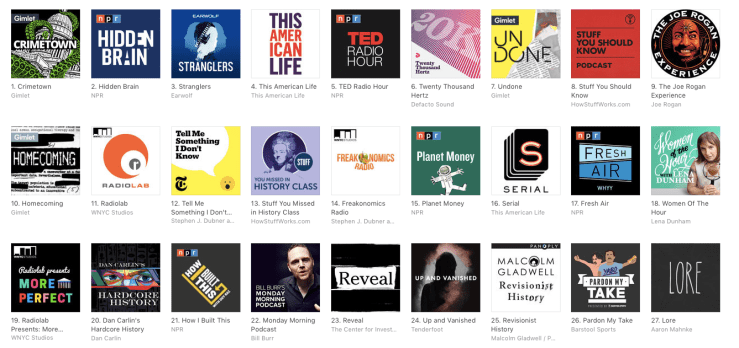
Podcasters are limited to brand. Sort of. Look at this top podcast list. Some podcasts have more than one brand.  Gimlet, NPR, How Stuff Works, WNYC, Panoply, etc. is one brand. Hosts are another.

Podcast branding is a catch-22. Podcasting is intimate because the person is in your head, but it’s hard to build a brand around a person. As Kevin O’Leary likes to ask on Shark Tank, “What happens if you walk out of here and get hit by a truck?”

Instagram passed this test. (when I wrote about them I had to look up who the founders were) Nasty Gal did not.

It’s hard to imagine Hardcore History without Dan Carlin. Malcolm Gladwell’s name is the biggest thing on the podcast icon.

My guess is that branding similarly to word of mouth testimonials. If a friend suggests a restaurant, you’ll probably try it. If a brand like NPR suggests How I Built This (which is exactly how I found this great show), you’ll probably try it. The host is like the food, if it’s good you’ll come back for more.

5/ The public good problem. Podcasting is nonrival. You, me, and Bobby McGee can all listen to a podcast at the same time. One person using it doesn’t stop others from using it.

  • Rival goods;  a physical book, hammers, (eaten) apples, domain names.
  • Nonrival goods; music, podcasts, roadways (to a point).

Podcasts are also nonexcludable. Anyone can listen.

  • Excludable goods; private concerts, satellite television, private beaches.
  • Nonexcludable goods; public concerts, public television, public beaches.

Podcasts are (mostly) public goods because they are nonrival and nonexcludable. Podcasters know this because like musicians (another area Griffin has written about) they supplement their income. Maron is a stand-up comedian. John Lee Dumas has a membership program. Gladwell and Ferriss write books.

Conclusion.

1/ It’s hard for podcasts to be profitable. Low barriers to entry allow anyone to start, and anyone will.

2/ If a podcast does get large enough for advertising, it can be better to farm out the ad work. “Focus on your strengths,” someone might say, but this makes a provider vulnerable to WTP.

3/ The good news is that podcasts have a low opportunity cost. They’re cheap and simple to start and multifaceted rewards.

4/ Podcast moats must be built on brand, but personal brands fail to answer the Kevin O’Leary question.

5/ Podcasts face the public good problem. Fortunately “talking into a microphone” is similar to “talking to a theater” and “talking words onto a page,” two excludable services.

Griffin began his post about restaurants:

“Investing is about owning a partial stake in a real business. You must understand whether the actual businesses in which you own stock earns a return on capital to be a successful investor. The more different types of businesses you understand in this way, the more skill you will acquire in understanding another new business.”

Thanks for reading. Hopefully, we thought in a few new ways.


Read more in 2017

One bit of housekeeping. This blog has a sponsor! It is supported by Greenhaven Road Capital. Thanks to Scott for his interest in clear thinking, making better decisions, and finding value.


It’s a new year, a new you, and blah, blah, blah about resolutions.

People sometimes email me and ask how I read so much. After some self-congratulating about my work ethic, early alarm, and productivity – I realized it wasn’t really any of those things. What actually matters is that it’s my job to read and write and I enjoy doing it.

In hopes of finding a better answer, I emailed Patrick O’Shaughnessy. He shared this tweet storm:

I agreed with most of it. But that really doesn’t matter to you.  O’Shaughnessy’s reading style can’t be your reading style. Copying won’t work. Cherry picking, however, is encouraged.

At the beginning of Charlie Munger: The Complete Investor, Tren Griffin writes:

“The point is not to treat anyone like a hero, but rather to consider whether Munger, like his idol Benjamin Franklin, may have qualities, attributes, systems, or approaches to life that we might want to emulate, even in part.

Here are a few things that help me read more. Remix please.

1/ When to read. It starts here. If you don’t have time to read you won’t read. Seneca’s words inspire me most:

“It is not that we have a short time to live, but that we waste a lot of it. Life is long enough, and a sufficiently generous amount has been given to us for the highest achievements if it were all well invested…So it is: we are not given a short life but we make it short, and we are not ill-supplied but wasteful of it… Life is long if you know how to use it.”

Odds are good that you can find some time. Books have never been more portable, recommend, or easier to find. It’s the time that you need to find.

If you need instruction beyond Seneca,  168 Hours and How to Invest Your Time Like Money both led me to better returns on this investment.

2/ What to read. Podcasts are great samples for books. When I heard Greg Ip on EconTalk I understood the big ideas in his book. The actual reading was faster because of it. Ditto for Eric Weiner’s Geography of Genius, and Jocko Willink’s Extreme Ownership.

I also like to read books in a cluster around a theme. In 2016 that meant reading a lot of book about biology and evolution; On the Origin of Species, Full House, The Beak of the Finch, and Darwin’s Dangerous Idea.

The same was true for when I wrote about Bill Belichick’s red teams.

Clustering will mean an overlap around subjects. That’s fine. Those parts are an extra reminder or a part to skip.

Skipping sections or entire books is underrated.  It took me a few cracks to read Taleb. I still haven’t read the books I own on Chaos and Complexity. I didn’t know enough the first time. I’ll take another crack at them soon. If I’m ready, I’m ready. This isn’t school. There’s no deadline.

3/ How to read. However you’d like.

O’Shaugnessy reads one book at a time. Bully for him.

I do multiple books at a time, but none too similar. A typical mix is one science book, one business book, a biography, and a fiction book.

Polymaths, well, I don’t know what polymaths do. Go read Marginal Revolution to see what Tyler Cowen writes.

Michael Mauboussin said he likes physical pages, me too. Morgan Housel, O’Shaughnessy, and Sanjay Bakshi use a Kindle. Jason Zweig reads with a red pen.

Financial advisors write that the best investment plan is the one you’ll stick with. That applies to reading too.

4/ Create hurdles and remove obstacles. One of my favorite books on psychology is Mindless Eating. The book is about food but the lessons apply to everything.

  • If you make something slightly easier (i.e. Nudge(s)) people will do it more often.
  • If you make something more difficult, people will do it less often.

To combine the ideas of Jocko Willink and Steven Pressfield, you’re flanking resistance. Make reading easier and something else harder.

Reading is easier when you have good books and have the prerequisite knowledge for them (#2). Reading is easier when the Kindle app is more accessible than the Twitter one. Reading is easier when you sit down with a book and leave your phone across the room.

5/ Reading is cool. Years ago I emailed Shane Parrish to thank him for teaching me about learning. When I graduated college I thought I was mostly done learning, at least from books.

I was wrong.

Reading Farnam Street was enlightening. What is this and who are these people?! There was all this interestingness and excitement, it was almost palpable. I hadn’t learned it all. Heck, I hadn’t even scratched the surface.

Successful people – in any domain, by any metric – have a growth mindset. Casey Neistat talked about this when he sold his company to CNN. He says that his career is like swinging through vines in a jungle. You have to let one go to reach the next one. You have to keep moving forward.

Reading is one way to do that.

Thanks for reading, I’m @mikedariano on Twitter.

If you want some books to read, I send out a monthly list, http://eepurl.com/bgRZOX. I also shared my favorites from 2016.

Favorite books of 2016

SenecaOpenBook

If you want to see the monthly list, subscribe here —> http://eepurl.com/bgRZOX. 

It’s that time of year. Temperatures recede, consumerism peaks, and bloggers write about their favorite books of the year. As a blogger, I will abide.

I’ve done this list the past five years, usually at my personal blog. I let that domain lapse so the list moves here. That works because most readers here are Readers.

Before we begin, this is my final post of 2016. I’m not stopping because the holidays make things too busy, though they do make things busier, but because I need to get better. I haven’t read enough books on writing better or enough books on disruption theory or enough on….

The list is endless.

The catalyst for this pause was re-listening to Cal Newport’s podcast with James Altucher. It reinforced the idea of being So Good and Deep Work. Newport’s books are some of my favorites. I nod my head as  I read them. Yet I fail to implement the lessons on a day to day basis.

I’m off to the woodshed for December. See you again in January.  Happy holidays, feliz ano nuevo, and safe travels!

For now, here are a few of my favorite books from 2016 (with Amazon affiliate links):

Investing

Charlie Munger: The Complete Investor by Tren Griffin. I like Griffin’s Blog, 25iq.com and this book was an extension of that. However, if i had to choose between Griffin’s weekly posts and this book I would take the posts.

Investing and investors is a newish area for me, and I began my journey down the rabbit hole with the familiar books. The Black Swan, Damn Right, and The Most Important Thing all lived up to their billing as good books – and ones I’ll reread.

Biographies

My biggest focus this year was on biographies, an area I had never enjoyed all that much. My hesitation was because they were biased. I remember one CEO writing about his heroics in turning his company around. It wasn’t his heroics so much as the 1990’s. Tailwinds – as we’ve noted here – have a powerful effect.

Only the Paranoid Survive by Andy Grove. This book was more business than biography but it felt too personal not to include here. In this book you get in Grove’s head to see his confusion, success, and decision making process.

Shoe Dog by Phil Knight. This also felt true to its roots. Knight, like Grove, acknowledged the gray areas and confusion he felt. It humanized him. Knight’s book is also good for people who want to start something but aren’t ready. No one, not even the founder of Nike, was ever ready.

Napoleon by Paul Johnson. A short book about a – HA! you’d thought I’d do it. Actually, this is part of the Penguin Lives series of books that cover big people in a short format. The appetizers of the book world.

My favorite biography of the year was Boyd by Robert Coram. Incredible.

History

The lesson from each history book was that a lot of little things have to go right for one big things to.

Bill Bryson taught and entertained with One Summer (about 1927). If you like Bryson, you’ll also like Eric Weiner’s Geography of Genius.

The Wright Brothers by David McCullough. This book is as good as everyone says. McCullough takes us back in time like we’re in a Hollywood movie, watching history unfold with one of the best narrators around.

Learning to Eat Soup with a Knife by John Nagl. A common sight from the history books was me slapping my forehead with the palm of my head, muttering ‘not again’, and my wife asking about my sanity. This book takes the cake for that reaction. America’s actions in the Vietnam boondoggle do not compare well to the British success in nearby Malaya. Not recommended for people with (already) high blood pressure.

Big effects

Then there is the category of books that had the biggest effect on me. These are books you can use as a lens to see the world. Boyd fits that mold because I think of this quote often:

“So you got your reward; you got kicked in the teeth. That means you were doing good work. Getting kicked in the teeth is the reward for good work.”

Another was The Success Equation by Michael Mauboussin which introduced the two-jar model.

Tribe by Sebastian Junger had an unexpected effect on me. Sometimes there are things that happen in life so related to what you read it gives you goosebumps. In the fall of 2016 I was thinking about the two largest communities where I live; college football fans and church. Fill in the rest of the week with work and school and that’s a typical week for most people. Overlay this with the sheared political election and the importance of feeling connected came into focus. Junger speaks to this feeling.

Grit by Angela Duckworth. I wrote a lot about this book here. It reminded me that to get to any vista you have to walk up a trail. I often forget about the work required for a view.

A Curious Mind by Brian Grazer. A surprisingly enjoyable book. It was a reminder to be curious.

Self contained curriculum

Books that should replace textbooks.

The Beak of the Finch by Jonathan Weiner taught me more  about evolution than anything in high school.

Erik Larson continues to write great books like Dead Wake: The Last Crossing of the Lusitania. Larson speaks to an entire period of time with a story that took only two weeks.

For God, Country, and Coca-Cola by Mark Pendergrast. The history of the world’s greatest brand. This lens on the past 130 years was fantastic because it avoided the political/military direction so often taken with looking at one period of time. A solid book on American history.

Military

I’ll blame Jocko Willink for this. I enjoyed his book, Extreme Ownership as well as Blind Man’s Bluff (submarines) and Skunk Works (B-52).

Big history

Civilization by Niall Ferguson was good.

Sapiens by Yuval Noah Harari was good too. This one I got less from because I listened to it. It was after I saw and heard the praise on other blogs and books that I realized I may have missed something. From what I remember though, Will and Ariel Durant’s The Lessons of History could be considered the abbreviated version.

Potpourri. 

Hershey by Michael D’Antonio. If you take your family to Hershey Park read this ahead of time. Quick and fun.

Let my People go Surfing by Yvon Chouinard and The Outsiders by William Thorndike. There are different ways to run companies, these two books tell those stories.

Failure is not an Option by Gene Kranz. The story of Mercury, Gemini, and the Apollo missions from someone who was there.


Drafting this post and planning to not write in December felt odd. Like I wasn’t doing what “I should” and that I would lose readers without writing and a few other hesitations that are hard to name.

In a more clear headed moment I would say that this is “attribution substitution.” That I’m confusing posting with relevance, importance, or some other metric of vanity.

I want to write about things that good and true despite the time. A break will help prove if that’s true.

What Happened to Nasty Gal?

Nasty Gal filed for Chapter 11 bankruptcy protection. This surprised me. It looked like Nasty Gal was a good company, Amoruso was #53 on the Forbes self-made richest women list, and I even linked to her  book a bunch of times! What the hell happened?

In my book about startups that failed, there were 6 themes to the mistakes:

  1. Failure to understand customers.
  2. Failure to manage money.
  3. Failure of strategy.
  4. Failure of key skills.
  5. Back luck.
  6. Bad teams.

Let’s use those things as a template to see what parts Nasty Gal got right and wrong.

As Professor Sanjay Bakshi reminds us, we should always start with part-of-the-reason thinking. We can’t perfectly paint the picture of what happened but we can bring it into focus.

1/ Customers.

What Nasty Gal did right: In #Girlboss Amoruso wrote that she has a friend adding software on MySpace and she “responded to every single comment that anyone left on my page.”

“Social media allows me to have my ear to the ground even when I’m out pounding the pavement.”

Too often founders had the Field of Dreams delusion, if I built it they will come. That rarely happens. Instead, founders must talk to people and figure out what they want and build that. 

pablo (7).png

What Nasty Gal did wrong: Time does not scale. Early on Amoruso could devote time to each customer comment. That’s impossible now.

The problem was that Amoruso got too far on her own. In Here Comes Everybody, Clay Shirky addresses the lower operating costs available to Amoruso. Social media and online auctions allowed her to transact with customers at a cost never seen before. Shirky explains that audience size and conversation are inversely correlated.

  • The larger the audience, the less conversation (and more broadcast).
  • The smaller the audience, the more conversation (and less broadcast).

The Facebook group “Summer Running Club” is small and conversational. The Runner’s World magazine is large and not. As Nasty Gal grew Amoruso lost the pulse of her community.

Nasty Gal also failed to develop a system for interaction with customers. Amoruso told Tim Ferriss in an October 2015 interview, “we still don’t have the systems we’d like to have.” Add in the fact a that new customers aren’t (forgiving) brand loyalists, but people who have less affinity (and forgiveness).

2/ Money.

What Nasty Gal did right: Amoruso carefully stair stepped her location size. When the company moved and bought Herman Miller chairs, Amoruso found out and got rid of them. “It sent the wrong message,” Amoruso writes, “to preach frugality while balling out on twelve grand worth of chairs.” Nasty Gal had to be bootstrapped because no one would lend to Amoruso:

“As I had no financial cushion to support me while the business ramped up, I had to bust my ass and make it profitable from day one. In the end, this meant that I grew Nasty Gal to $28 million in revenue without borrowing a dime.

She told Tim Ferriss, “I didn’t need stuff, I lived in a pool house for 500 dollars a month.” During the early years Amoruso was frugal.

What Nasty Gal did wrong. Those frugal ways went by the wayside. Nasty Gal raised $65M in venture funding in the last four years to facilitate growth. As a private company we don’t get to see what they spent, but they did hire too fast and raised a lot of money.

Maybe the actual strategy matters less than the consistency of it. Soon after Alex Blumberg started Gimlet, he said they might be profitable sooner than expected. When Chris Sacca heard this he called Blumberg (Sacca is an investor) and told him he was going about it all wrong. Gimlet was a growth company and needed to prioritize that.

Was Nasty Gal a profitability company that mistakenly switched to growth?

3/ Strategy.

What Nasty Gal did right:

“Many of the vintage shops already on eBay were so bohemian it hurt, with names like Lady in the Tall Grass Vintage or Spirit Moon Raven Sister Vintage. So the contrarian in me grabbed the keyboard and named my shop-to-be Nasty Gal Vintage.”

Nasty Gal was differentiated. It’s brand was vintage clothes with a modern attitude.

Brand was their moat. Brand moats are some of the most difficult to build but most defensible once established. Don Keough and Mohnish Pabrai have spoken about Coke’s brand. Phil Knight has written about the Nike brand. Andy Katz-Mayfield has spoken about the Harry’s brand.

What each of them noted is that brand takes a loooong time to build. Harry’s, much like Nasty Gal, is now large enough that others are taking notice. This is dangerous territory. It’s why Nasty Gal got sued by Chanel (among others).

Strong brand moats exist when customers are insensitive to price. Nasty Gal didn’t get there as this Reddit post shows. People liked the look, but shared cheaper alternatives.

One year I volunteered at a PTO fundraiser before Christmas with some other parents. As we packaged meals we talked about Christmas gifts for our kids. One mom said her son asked for only one thing, Nike Elite socks. “They’re $14 a pair,” she said, “but it’s the only thing he wants.”

When a kid asks for socks, that’s a brand.

What Nasty Gal did wrong. Their moat was never deep enough.

4/ Key skills.

What Nasty Gal did right: Early on Amoruso had all the necessary skills. She knew what would sell:

“If it sold, cool—I’d instantly go find more things like it. If it didn’t, I wouldn’t touch anything like it with a ten-foot pole ever again.”

How to post it:

“Silhouette was always the most important element in my photos. It was critical on eBay, because that was what stood out when potential customers were zooming through thumbnails, giving less than a microsecond’s thought to each item.”

And when to put it online:

“The prime time for auctions to go live was Sunday evening.”

Amoruso had all the key skills to sell on eBay. She knew what to buy, how to describe it, how to take a good thumbnail, and when to put it online.  Jason Calacanis said he looks for founders who have a deep knowledge of their product, their competitors, and their industry. Amoruso had that.

What Nasty Gal did wrong:

As the company grew Amoruso’s skills overlapped less with what the business needed. She told Tim Ferriss that “culture can be used as a weapon…we’ve been working on a brand bible.” She didn’t need a brand bible early on because she was the brand. As the company grew, deficiencies in leadership were more damaging than deficiencies in Photoshop.

Amoruso noticed this, “the things I think I’m good at aren’t the skills a CEO needs to do,” she told Ferriss.  She told Forbes, “It takes a lifetime of chops to learn what my CEO, Sheree, knows about leadership. That’s a learning curve I didn’t want Nasty Gal to absorb.”

The mistake comes in the timing. Nasty Gal needed someone with those key skills sooner.  In the same Forbes interview she says:

“No one knows what it takes to be CEO, even CEOs. My advice would be to get some real management chops, work for some great companies, and know more than I did before you try to do what I’ve done. I have learned some hard lessons on the job, and some that I wish could have been a bit earlier in my career.”

It took too long to switch to someone who had the right skills.

5/ Luck.

What Nasty Gal did right.

It was “very serendipitous that it worked out at all,” Amoruso told Ferriss. She was a community college dropout who dabbled in petty shoplifting. But she did have some tailwinds.

Amoruso recognized the opportunity on MySpace and eBay, and cruised on those gusts as long as possible. She had good timing with social media, venture capital, and direct to consumer internet businesses. Her personal story yielded a book deal. A lot of things that could go right for Nasty Gal did go right.

Like Bill Gurley, when opportunity knocked, Amoruso answered.

What Nasty Gal did wrong. 

It’s hard to say they did anything wrong. Luck, as Michael Mauboussin points out, is something you can’t control. Nasty Gal’s success and failures very clearly fit the two-jar model.

6/ Team.

What Nasty Gal did right.

Early on Amoruso hired well. It was hard work but once she found people who could do a job she often stuck with them.

What Nasty Gal did wrong. 

The NYT reports that there were problems with the team:

Despite its successes, Nasty Gal went through several rounds of layoffs, in 2014 and earlier this year. High-level hires, like Kate Williams (editorial director) and Christian Parkes (vice president for brand marketing), left quickly, while other employees expressed discontent, rating the company 2.8 stars out of 5 on Glassdoor.

In 2015, Aimee Concepcion sued the company for laying off her and two others just before they were set to take maternity leave, while Farah Saberi claimed in a lawsuit that she was let go because she came in late to work and took a five-week leave after she was diagnosed with a kidney disease.

Team members are a stakeholder, and getting the right ones matter.  Wesley Gray said that they screen for a certain type of investor. Morgan Housel and Patrick O’Shaughnessy talk about how Valve and Zappos do this well. Louis C.K.  considered it too when he made Horace and Pete.

Closing words. 

The biggest thing I got from the articles about Nasty Gal and Amoruso was how tightly connected the two are. That worked fine early on, as Amoruso’s hustle, eye, and motivation were aligned with what the company needed.

Things went wrong when Amoruso’s skills separated from what the company needed. She wasn’t good enough, couldn’t be good enough, no one person is. Like a sports team that overachieves, Amoruso got a long ways on her own.

On Shark Tank, Kevin O’Leary often asks a pitching entrepreneur what would happen to their company if they walked out of the studio and got hit by a buss. The macabre questioning is good for TV, but it gets at something too, something Nasty Gal never answered.

Nike was never Phil Knight. Harry’s was never Andy Katz-Mayfield. Instagram was never, hold on, let me Google it…Kevin Systrom.

Nasty Gal was Sophia Amoruso. She did a good job, probably about as good a job as one person can.

Morgan Housel 2

Morgan Housel was on the Invest Like the Best podcast with Patrick O’Shaughnessy. O’Shaughnessy’s podcast has fast become one of my favorites. Much like EconTalk, Jocko Podcast, Masters in Business, TAL, and Recode it comes out once a week and the episodes are consistently good (and sometimes great).

When I first listened to this episode I wanted to experiment. I enjoyed it, but I was biased. The episode was fresh, Housel was kind enough to mention this blog, and I like his writing. Like tree roots that trip up hikers, a potential for bias was here; recency, reciprocity, and liking.

I sat on the episode. If I wanted to come back to it, I could. If it was good, I would. I did, here are my notes. As always, initial quotes are from the subject, Housel.

1/ The right signals. “For stock pickers or asset allocators, a lot of the due diligence and research is done in a spreadsheet. It’s, ‘let’s crunch these numbers,’… In venture capital there’s often no revenue, sometimes there’s not even a product and you move away from the analytical side to the fuzzy world of “I believe in this guy, he’s really passionate.”

Each domain has a different signal. Stocks have ratios. Venture capital has feelings. The first important step is paying attention to the right things.

Laurence Gonzalez writes in Deep Survival (a great book BTW) about heading to a beautiful Hawaiian beach to go surfing. The sky was blue, the sand was warm, the waves looked good. Gonzalez was looking forward to it after his flight.

There was a guard on the beach. Gonzalez asked about the surf:

“‘Well,’ he (the guard) said, as if considering it for the first time, looking out to sea, rubbing his goatee. He was a redhead, thin and freckled, his face lined with experience. He came down from the tower and studied the sea. Before answering he seemed to think of something and asked my name. I told him. He grabbed my hand in a surfer’s handshake and said, ‘Mike Crowder.’ I waited. He turned back to the seas and continued to stare at it with a space-out look, and I started to wonder if he was stoned. Hawaiian weed is supposed to be bitchin’.

‘Okay,’ he said at last, as if he’d decided something. It was only then that I realized he’d been reading the waves, the lineup, the break.”

He told Gonzalez it was too dangerous. Gonzalez never would have known. The weatherman wouldn’t have known. There was data in the waves, the lineup, the break, but you had to read those. The lifeguard could.

2/ Find good filters. About blogs Housel says,  “There’s so much material out there that you need a filter and some curation. You need a trusted list of people who are going to point to other sources. People like Tadas Viskanta at Abnormal Returns.”

You can’t consume everything. That treadmills won’t stop so we have to filter the good stuff. It’s one of the ways to use Twitter well.

In that post we looked at four ways to use Twitter well and it’s worth noting that #2 (create a filter) and #3 (bust your biases) are opposite sides of the same coin. There was a lot of talk after the 2016 United States presidential election about people who were surprised at the outcome. Part of the post-election prognostication was about these bubbles we create.

3/ Go for a walk. “I walk a lot. Just by myself, no headphones, nothing, just a forty minute walk. That’s when I think the best and figure things out…When I sit down it’s like my brain shuts off. It’s like I only think when I walk.”

‘Walking’ is my oldest tag in Evernote, germinating from Daily Rituals  by Mason Currey. Here’s two favorite sections:

“Promptly at 2:00, Dickens left his desk for a vigorous three-hour walk through the countryside or the streets of London, continuing to think of his story and, as he described it, ‘searching for some pictures I wanted to build upon.’ Returning home, his brother-in-law remembered, ‘he looked the personification of energy, which seemed to ooze from every pore as from some hidden reservoir.'”

And.

“After a midday dinner, Beethoven embarked on a long, vigorous walk, which would occupy much of the rest of the afternoon. He always carried a pencil and a couple of sheets of music paper in his pocket, to record chance musical thoughts.”

In his tour around the world and through time in search of genius, Erik Weiner writes, “I can see why the ancient Greeks liked walking so much. It quiets the mind without silencing it completely.”

3/ The MOST IMPORTANT (personal finance) THING. “I think it comes down to a handful of things; school, house, and car. For most people those are the three big things…If you can tackle those three things all the other things we talk about in personal finance – cutting out the latte, bringing your lunch to work – don’t matter at all.”

When I bought a racing bike the salesperson tried to sell me something a little lighter (but more expensive). I didn’t even consider it because the weight of the bike wasn’t that important. What was important was that I ride many (many!) miles. That’s the MIT.

Sometimes we get distracted by marginal things when we should focus on the MIT. Cal Newport calls Deep Work the MIT. Anson Dorrance had 2000+ emails before he ever checked because ‘checking email’ wasn’t a MIT. John Boyd‘s first lesson to fighter pilots taught the MIT. Warren Buffett took the advice of Ted Williams who said the MIT was to “wait for the right pitch.”

MITs are simple, but not easy.

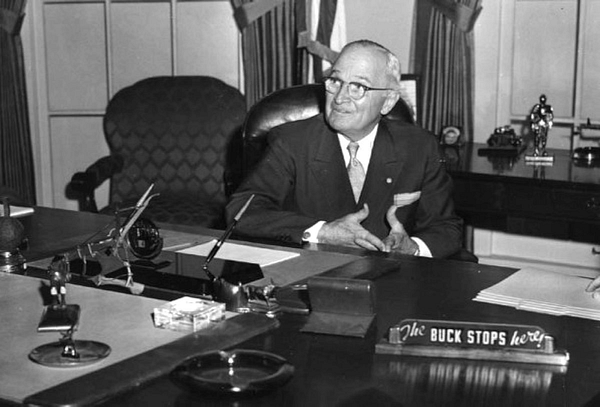
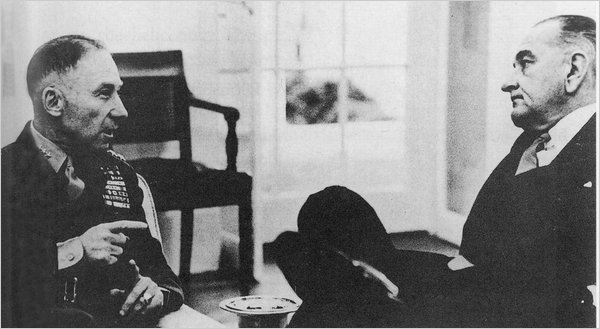
4/ X-MBA. O’Shaughnessy said, “It seems like college’s value is mostly about – because you can learn just about anything on your own – signaling and network.” Housel agrees, and notes that when you’re young, signalling is about all you have. “As a twenty-two year old you’re showing your employer, ‘I did this for four years. I followed the rules. I checked the boxes.’ That’s the only thing you have on your resume, so people say ‘it’s just the signaling,’ but that’s extremely important for both the employers and for you as a student.”

In the first post about the XMBA, we guessed that five things were important to DIY schooling.

  1. Opportunity cost.
  2. Financial cost.
  3. Connections.
  4. Self-directed learning.
  5. Experience and/or signalling.

79a2024cfdbc900ec9f497f4a463c08bHousel and O’Shaughnessy were in agreement with the first two, that school is expensive in time and money. “Almost everything I learned in college you can go read and do it for ten cents at the library,” O’Shaughnessy says. Housel suggests going to a community college for the first two years.
It’s in the last three where the ballast swings. Most 18 year olds need a framework. They need a color by numbers outline. College does this part well.

5/ Stakeholders. “The only way it can work at Valve or Zappos is if you get completely compulsive and obsessive about hiring the right people.”

Housel’s point here that those companies can work a certain way because they hire a certain way. This applies to anyone you allow in your life. Wesley Gray pointed out that if you get the right investors, you can organize things a certain way. Louis C.K. said he made his new show the way he did so he didn’t have to have stakeholders.

6/ “A perfect storm!!!” “The biggest events only happen because of a crazy confluence – a perfect storm of events – that come together to cause the Great Depression. A lot of this stuff is not foreseeable before it happens. When you read old newspapers that becomes clear.”

Housel says that he hates the term “perfect storm,” but it’s an apt metaphor. It’s true too for things that go right.

Phil Knight‘s book Shoe Dog will be on a lot of the end-of-the-year book lists (mine is coming soon) because it’s a great read. It’s also evidence to this point. Nike was a perfect storm.

Knight had to be cut from baseball, try out for track, and then go to Oregon. He couldn’t be an elite runner, only good enough. He had to have graduated, sell the idea of a shoe import business to Bill Bowerman, and then go find shoes. Knight had to work during the day as an accountant, at night on the shoe business, and not burn out.

These are the things that had to go right BEFORE dealing with finance, competitors, and creating the orange boxes we identify as Nikes. Starting a company like Nike is like making 100 free throws in a row, outside, during a snowstorm.

Thanks for reading, I’m @mikedariano on Twitter.

Dave Oliver

Dave Oliver’s book, Against the Tide, was about his experiences working in the Hyman Rickover Navy. It was a fast read, Oliver fills it with stories and lessons. Here are three things I learned.

1/ Ego and fighting the last war.

Any lesson we learn is a good lesson, but it’s not the final lesson. Fool me once, shame on you. Fool me twice, shame on me. Yes, but in addition to being fooled I shouldn’t be duped, tricked, or manipulated.

Too often we stop at fooled. We fight the last war. Oliver writes:

“Basking in the glory of its role during the sweeping Allied victory in the Pacific, most of the post WWII U.S. Navy was in no mood to consider, or even listen to, calls for radical change.”

The Navy succeeded in the Pacific, therefore, the Navy was set to succeed in future wars. The Navy was stuck fighting the last war and fighting the other armed services too. Military funding was a zero sum game. Egos battled and turf was defended.


In any organization the individual incentives (promotion, rank, honor, pay) can move aligned with, or orthogonal to the organizational goals (win, growth, profits).

In his podcast, Jocko Willink, often points out that the military is much less formulaic that people think. We can see this is the careers of people like John Boyd, Victor “Brute” Krulak, and Hyman Rickover. Each of who pursued the truth at the expense of their career.

A good leader will hitch emotions like ego and point it toward finding the truth. That means figuring out where and how the next war will be fought, not basking in the glory of the last.

2/ Chesterton fences on nuclear subs.

Oliver describes Condition Baker as a surfacing maneuver where all the submarine cabin doors and pipes were sealed. Diesel subs often operated in shipping lanes and had to be careful during the final ascent. Condition Baker partitioned off the sub in case a ship’s hull sheared hit them. One compartment would flood, but not the entire ship.

When the nuclear Navy came around, Condition Baker wasn’t as important. Nuclear subs rarely surfaced in shipping lanes and did so only a fraction as often. But, submariners still called out Condition Baker when they surfaced.

Oliver was running a battery charge one day when Condition Baker was ordered and he realized a danger. His compartment required a cooling airflow that ceased when the doors and valves were closed.

Condition Baker was a dangerous relic.


Chesterton fences get their name from G.K. Chesterton, who suggested that before we change something, we ask why it’s there.

“…let us say, for the sake of simplicity, a fence or gate erected across a road. The more modern type of reformer goes gaily up to it and says, “I don’t see the use of this; let us clear it away.” To which the more intelligent type of reformer will do well to answer: “If you don’t see the use of it, I certainly won’t let you clear it away. Go away and think. Then, when you can come back and tell me that you do see the use of it, I may allow you to destroy it”

Understand why something exists before you remove it. Oliver understood in an all-too-real way. The climbing temperature dials indicated Condition Baker was not only unhelpful, it was potentially disastrous. The thing it sought to stop — losing the ship — became more likely, not less.

Nuclear submarines eventually stopped doing this. It was “cleared away.”

3/ Extreme ownership.

“People may not be prepared for the situation in which they find themselves in life. The good leader recognizes this and reassigns them to a place or position where they can be successful.”

One of the maintenance procedures (O/I 62)on electrical equipment requires the power to be shut down. The engineers would do this at night, part because the air conditioning units would be offline and it was cooler.

One day Oliver read a report where on another ship an engineer had been electrocuted during the procedure. The report said it was an accident. A few months later the same thing happened. Another engineer died and another accident was the cause.

That didn’t smell right to Oliver.

How does the same procedure lead to the same outcome in two independent places and both times it’s an accident? Something else was going on and Oliver wanted to figure out what.

The best way to go through the procedure on his ship. After everyone went home, he and his head engineer got out the manual and started.

Things began well enough. At one point Oliver thought that maybe it was just an accident. Then he caught himself. As he was reaching toward the back of a control panel to take a reading, he realized his arm was a quarter of an inch from 450 volts of electricity.

“I carefully swayed right and abruptly sat down. The chief wordlessly lit a cigarette, bent over, and stuck it between my teeth. Then he lit one for himself. His hands were shaking. I was sitting on mine.

In doing the procedure Oliver realized a slew of problems that didn’t come up when the procedure was outlined:

  • It got hot and people sweated.
  • The work was done after a full day of work.
  • Important components were tucked in the back.

Oliver diagnosed the problem, closed everything up, and drafted a solution. With a few dollars in parts from the local hardware store he amended the system and sent a memo to the fleet.


Leaders need to own everything. Oliver didn’t have to deal with this problem, in fact, he had to jump through hoops to get all the details about it.

In Only the Paranoid Survive, Andy Grove wrote that leaders need to listen to the people in the field because they have the winds of the real world blowing in their faces. It’s often calm and comfortable where leaders are but they fail to see all the conditions on the ground. They fail to understand problems deeply enough.

When Samuel Zemurray went from selling ripe bananas out of a cart in New Orleans to running the entire import business, he attributed his success to being there. Zemurray relished that his competitors sat in their Boston offices. “They’re there, we’re here,” he would say.

Victor “Brute” Krulak

This was originally published on Medium. Moving here for linking convenience. 

Victor Krulak was a Marine whose service time covered the major American wars and whose ideas are still being used today. Here are 3 things I learned from Robert Coram’s book Brute.

1/ Finding truths

Every person in every organization is motivated by incentives. Within some organizations — and the military is no exception — people operate with the wrong incentives.

Soldiers who seek personal gain/promotions are derisively called “boot lickers.” They operate with an imbalance of emphasis between the self and the whole. They are yes men. Krulak was not this type. Coram writes, “being both impertinent and right did not endear Krulak to his superiors.”

Krulak’s focus was on the truth. At times this helped his career. Certain commanders accelerated his promotions because he did good work for them. Other commanders retarded his climb because the truth was contrary to their agenda.

The ability to disagree should not be underestimated. It was a key part of Krulak’s success. Coram writes that Krulak’s first instance of speaking with candor was “a quality that later would make him invaluable to a series of generals whom he would serve in a staff capacity.”

Finding the truth isn’t passive, it’s combative.

Wilbur Wright welcomed a “good scrap” because it helped “round the corners.” Jeff Bezos installed a combative culture at Amazon. Geniuses flyt. Bill Belichick encourages his assistant coaches to disagree. Great CEO’s compare meetings to wrestling matches. Marc Andreessen push against the ideas his partner brings.

Healthy disagreements only work when each boss; Wilbur, Bezos, Andreessen, etc., creates an environment that allows disagreement. They can’t pull rank.

In one combat simulation, Army commander Walter Short was ordered to guard against a Marine landing. Short chose not to guard the section where the Marines ultimately landed. From there they “captured Short’s entire headquarters staff.” “(Short) then used his seniority to nullify the capture of his headquarters.” Short refused the truth and it cost him later on.

Krulak never let rank, agenda, or ego be an obstacle for the truth.


2/ Short, bald, and fat

Krulak was a small man. When he became a general he called up the base photographer. The man entered and Krulak climbed on top of his desk. “This is what I want to look like in the pictures you take,” Krulak said to the man.

When the photographer talked to his boss about it, he said that Krulak wanted him to bend down to take the photos. The photographer’s boss said that wasn’t it at all. Krulak wanted him to dig a six-foot hole and take the picture from there.


Early in his life, Krulak’s father told him:

“You will be short, and you will be bald. But you don’t have to be fat.”

There are things we can control and things we can’t. The short episode with the photographer aside, Krulak focused on what he could control. He learned as much as he could. He exercised. He traveled, talked, and thought. He knew he could control his hustle.


3/ Hustle

Towards the end of his career, Krulak’s driver Sam Mayer had this to say:

“I never saw anyone so constantly in motion, so full of energy, always, under all circumstances and under all conditions.”

Teddy Roosevelt’s roommate said that when Teddy came home he would be halfway up the stairs before the door closed behind him.

Some things in life pay extra. Fighters “punch above their weight.” Certain books are better per page. Companies have “synergy.”

In one of his letters, Seneca wrote that just because a man has gray hair or wrinkles doesn’t mean he’s lived. That man has punched below his weight. That man isn’t Krulak.

During Vietnam Krulak flittered about the countryside talking to soldiers for his report. When he was stateside Krulak left work with his briefcase full. He was up early, stayed late, and kept a vigorous pace between.

Krulak did so much in his life because he hustled.


I liked Brute, though not as much as Boyd. One final note, Krulak wasn’t a saint. He had an ego. He concealed parts of his past. As a father the best that might be said was that he was gone a lot.