Chris Sacca 2

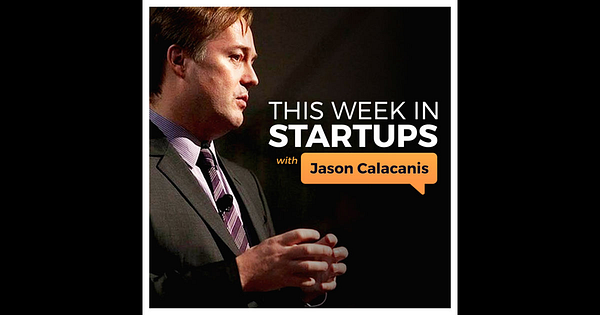
Chris Sacca and Matt Mazzeo joined Jason Calacanis on This Week in Startups to talk tech, Twitter, and teenagers (okay, not really teenager, but at least how Sacca is old, man).

There were actually two parts to this interview, but my notes are only from the first.

Ready?

1/ Fresh eyes on the problem. “You’ve got teams within those companies (potential Twitter buyer) that can take a fresh look and make them simpler. One of the things that Twitter suffers from right now is that everybody who works there is a power user of Twitter. Rarely do they get any fresh eyes on the product.”

If you want to have a good team, you need to have good team members. Peter Thiel wrote, “a lot of these companies aren’t solo efforts of a god-like person that does everything.” That means you have to work with other people, and if you want to be great they should be great people too.

Part of that is having people with multiple points of view. Sacca believes Twitter needs fresh eyes, and the best organizations bake those in. Bill Belichick gets pushback from coaches and Ernie Adams. Anson Dorrance gets pushback from assistant coach Bill Paladino. Ben Horowitz gets pushback from Marc Andreessen. The Wright brothers got pushback from each other.

Good organizations argue well. Andy Grove called it constructive confrontation. It’s arguing, but remaining friends. It’s taking a different point of view and suggesting why it makes sense. That’s what Twitter needs.

2/ The most important thing (MIT). “All they (Facebook) do at the end of the day is they accelerate the things that have the most likes on them.”

This was great to hear. If more people like a thing, then make the thing show up more.

Charlie Munger likes to say that a few mental models carry most of the intellectual freight. To put that in Facebook/Sacca terms, a few mathematical models provide most of the content people want. Get the right ones and you’ll zip along.

When John Boyd taught at fighter pilot school he focused on the MIT, “Have the student assume in trail position on the instructor and learn how to stay in that position throughout any maneuver.” That was the MIT. If you were being chased, how fast could you shake your tail? If you were chasing, how fast could you take down the plane?

Anson Dorrance is bad at paperwork and email because his MIT is coaching and recruiting.  Aziz Ansari deleted his email account. Christopher Nolan doesn’t have email or a cell phone. Neal Stephenson explains why he’s a bad email correspondent:

The productivity equation is a non-linear one, in other words. This accounts for why I am a bad correspondent and why I very rarely accept speaking engagements. If I organize my life in such a way that I get lots of long, consecutive, uninterrupted time-chunks, I can write novels. But as those chunks get separated and fragmented, my productivity as a novelist drops spectacularly.

For Ansari, Nolan, and Stephenson, social and communication are not MITs.

For technology companies product is the most important thing and Kara Swisher said Yahoo!? didn’t have it.

MITs don’t have to be complicated, but they do have to be prioritized.  KISS your MIT.

3/ Circle of competence (and control). “We invest in things where we feel we can personally move the needle. Instead of just throwing darts in the board like in the public market, I want to know, is this a company that we can help.”

The right choice of capital allocation brings the best returns. That’s capital in every sense, time, money, resources, and so on. Sacca wants to be in areas where not just his money, but his patter recognition skills (see #4) are helpful.

Charlie Munger  said, “I think the record shows the advantage of a peculiar mind-set not seeking action for its own sake, but instead combining extreme patience with extreme decisiveness.” Munger wants the same way as Sacca, control. Airlines, for example, don’t have this.  Berkshire’s investment in USAir fluctuated with the market. “It worked out fine for Berkshire, but we’re not looking for another experience like it.”

Warren Buffett said at the 2016 Berkshire meeting, “we’re not going to try to out Bezos Bezos.” Buffett and Berkshire have the money to enter e-commerce, but not the skill.

Walt Disney lost much of his early intellectual property becuase his circle of competency was in animation, not legal. Only as Roy Disney’s – Walt’s brother – role grew did Disney become a business.

4/ Pattern recognition. “We (Sacca and Mazzeo) have very complementary skills. Where my value comes in, there are very universal principles in building all these principles. While I may not be a great arbiter of that original idea, I am certainly valuable in determining whether your story is working. I’m certainly good at sussing out ‘are these the guys and gals with the hustle?’”

“That said, I’m not a kid. If I see an app in the app store at $4.99, I’m like, yeah $4.99, whatever. Yet we know that is a huge tipping point where a lot of people, millions and millions of people abandon that option.”

This was the part I enjoyed most. Sacca admits that his skills are different from Mazzeo’s. The former is older, with more experience and kids. The latter is younger, dating rather than married, and believes in e-sports. This kind of pairing tends to succeed.

Sacca’s pattern recognition dovetails with #3, skating within your circle of competency. He also points out the “complimentary skills” which is a combination many successful pairs share, and part of #1, fresh eyes.

Sacca got his pattern recognition through lots of experience, especially with high profile investments in Twitter and Uber. You and I can get some of that experience via books. The biggest help will be time, and how you use it.

Pattern recognition is a superpower, like moving faster than everyone else or moving through time (because you make fewer mistakes). I did a podcast episode about it.

Thanks for reading,

Mike

KISS your MIT, keep it (your most important thing) simple, stupid.

Charlie Munger 2

I finished  Janet Lowe’s book, Damn Right about Charlie Munger with a fat stack of notecards on the book. That makes sense, I assumed, Munger has a lot to teach. Then I reread my first post on Charlie Munger and saw that there was little overlap. Few ideas from the first book I read about Munger was notable in the second book about Munger. How great is that!

The first, Tren Griffin’s Charlie Munger focuses more on the investing side and Lowe’s is more of a biography.

I can only hope that the lack of overlap means I’m smarter. That in the first book I learned first book kind of things and in the second I was a touch wiser.

Munger is like a modern-day Benjamin Franklin and we all have a lot to learn from him, but shouldn’t imitate him. I liked what Griffin wrote in this first chapter of his book.

“The point is not to treat anyone like a hero, but rather to consider whether Munger, like his idol Benjamin Franklin, may have qualities, attributes, systems, or approaches to life that we might want to emulate, even in part.”

Here are some of those approaches.

1/ Finish line fallacy. “Charlie judges himself by an inner scorecard – and he’s a tough grade.” – Warren Buffett

The goal isn’t to win someone else’s race but to run your own. Lowe writes that “envy strikes him as the silliest of the seven deadly sins since is produces nothing pleasant at all. To the contrary it simply makes the practitioner feel miserable.”

At the 2016 Berkshire Hathaway meeting Munger addressed this as it related to Geico, “I don’t think it’s a tragedy that one competitor had a little better ratio one period…I don’t think we should worry about the fact that somebody else had a good quarter.”

Jason Calacanis said his finish line is to be the #1 angel investor, not some series of returns. Ryan Holiday warned Shane Parrish about writers angling toward the wrong finish line. Jason Fried pointed out that you can’t be Jeff Bezos, “His success is one that’s very very hard to achieve…most likely you won’t get there…the odds are stacked against you…and if you think that’s the only way you’re going to be miserable.”

Run your own race.

2/ FU money. “I had considerable passion to get rich. Not because I wanted Ferraris – I wanted the independence.” – Munger

One of my favorite internet niches is financial independence. People like Mr. Money Mustache and the Mad Fientist not only have super cool-dorky names, but they also tell another story. One where you bike to work, invest huge portions of your income, and live moderately. Their story is important, to paraphrase Auren Hoffman, because it shows that the default doesn’t have to be the only option.

The backbone to financial independence is the freedom when you don’t have to work. Many FIers keep working because they like it. They have the freedom to someday not go. That’s the idea I got from Munger.

In Damn Right, Munger’s son Hal explains how you get FU money:

screen-shot-2016-09-24-at-7-32-39-am

Nassim Taleb writes in The Black Swan that this means independence:

Screen Shot 2016-09-27 at 9.00.59 AM.png

When/If you don’t need to listen to other people your worldview changes. There are two sides to this balance, one the financial independent bloggers report, income and expenses. Taleb’s big payout meant his income was large enough to cover his current expenses. Munger learned this too. Ben Horowitz found this in his business under the name “positive cash flow.”

3/ Other’s opinions. “Everybody engaged in complicated work needs colleagues. Just the discipline of having to put your thoughts in order with somebody else is a very useful thing…we (Buffett and Munger) both think the other one is worth listening to.” Munger

One valuable cog in the machine of organization is having smart people around and listening to them. Karl Rove said the Bush White House had this. Bill Belichick encourages this on his football teams.

Assistant coaches say that Belichick is approachable, so long as you have your facts right. Former vice president of player personnel Scott Pioli said that part of the annual evaluation system of coaches was “whether or not you have an opinion,” and “Bill never discouraged me. Because even when we disagreed and got into it, he never discouraged me from having a different opinion.” Belichick wants his coaches to talk to him and push back.

Good organizations do this. Andy Grove said that part of the reason Intel succeeded was because they had “broad and intensive debates.” “We developed a style of ferociously arguing with one another while remaining friends,” wrote Grove.

Smart arguments are in places of genius too.

For this to work the boss has to listen. Belichick listened, Grove listened, and Buffett listens to Munger.

Anson Dorrance is the winningest college soccer coach but he needs his assistant Bill Palladino, because as Palladino says, “no one else is going to say no to Anson.”

Former CEO of Coca-Cola, Donald Keough writes that these sorts of relationships are requisites of success, and in The Ten Commandments for Business Failure he points out Munger explicitly:

“When teams of leaders complement and balance one another (as in the case of Warren Buffett and Charlie Munger at Berkshire Hathaway, Tom Murphy and Dan Burke at CapCities, or Frank Wells and Michael Eisner at Disney), then one person’s shortcomings can often be offset by another’s strengths.

Failure to do this, writes Keough leads to isolation, which, “carried to its most extreme form, tends to breed a sense of almost divine right.”

4/ Youth soccer coaches don’t get 10,000 hours. “Up here we went fishing. We were always making fires. The rest of the year we didn’t see him much.” Charles Munger Jr.

“I think my mother gave him an incredible amount of latitude to concentrate on his affairs and career. She did everything in the home.” Emilie Munger

It’s hard, maybe impossible, to be world class at something and do much else in life. Malcolm Gladwell popularized the idea of 10,000 hours, but he clarified that his point wasn’t to set a bar, but to note how high it was. There’s an opportunity cost to expertise.

John Boyd was the greatest American fighter pilot and made huge contributions to the philosophy of war, but he was never nominated for “Dad of the Year.” In his book on Boyd, Robert Coram writes in the epilogue, ” John Richard Boyd – as is often the case with men of great accomplishment – gave his work far greater priority than he did his family. The part of his legacy that concerns his family is embarrassing and shameful.”

Steve Jobs was not a stellar father.

NASA Flight Director Gene Kranz wrote, “Behind every great man is a woman – and behind her is the plumber, the electrician, the Maytag repairman, and one or more sick kids. And the car needs to go into the shop.” Rorke Denver said he couldn’t be a Navy SEAL if not for his wife doing the family stuff.

One of my favorite books on productivity is Laura Vanderkam’s 168 Hours. Vanderkam looks at time use surveys and concludes that the problem isn’t a lack of time, but a misuse of time.  Subtract a fifty hour work week and eight hours of sleep each night and you still have almost 9 hours a day for other things. This idea isn’t new. Two thousand years ago Seneca wrote,

It is not that we have a short time to live, but that we waste a lot of it. Life is long enough, and a sufficiently generous amount has been given to us for the highest achievements if it were all well invested.

But these people who make a dent in the world seem to be at another level. Their professional commitments are all-consuming. Their work takes a huge bite out of a finite pie. These people don’t/can’t be the youth soccer coach – heck, they probably won’t even attend any games.

5/ XMBA (night and evening curriculum). “(Munger) began investing in securities and joining friends and clients in business endeavors, some of which prove to be graduate-level courses in the school of hard knocks.” – Janet Lowe

When I articulated the idea of the XMBA, it only existed as an option different from college. You could, like David Chang, Tim Ferriss, Sophia Amoruso, or Elizabeth Gilbert consciously replace “school learning” with “life learning.” That does work, but Munger’s actions point to a better model.

That model is that you are always learning. Seth Klarman said, “I learned an enormous amount there (Mutual Shares), probably more than in my subsequent two years of business school.”

When I taught at college the students always told me that the things they learned in the field were 10X as valuable as the things we taught on campus.

That’s what happened to Munger. He learned from life. That’s really important.

I didn’t internalize this until I found Shane Parrish‘s Farnam Street blog. Whoa, I thought, you can read, think, and talk about ideas? I assumed after college that I was mostly done. I was wrong.

Getting things right later in life is about learning from the things earlier in life. Warren Buffett said, “If we hadn’t bought See’s (candy), we wouldn’t have bought Coke.” Notice how easy it is to change the nouns and verbs and have your own lessons for life.

  • If I hadn’t dated Kim, I wouldn’t have married Jan.
  • If I hadn’t failed Economics, I wouldn’t have the motivation to finish my degree.
  • If I hadn’t taken that early meeting with Ben, I wouldn’t have the opportunity to start my business.

The key isn’t the particulars, but the sequence, which comes because you paid attention and learned something.

I still believe the XMBA is a good idea, a real alternative to college thanks to technology. But it stands on the foundation that is lifelong learning. You don’t need an MBA if you are a lifelong learner.

6/ Be different and be right. “Graham often told his students that there were two requirements for success on Wall Street; the first is to think correctly  and the second is to think independently.” Janet Lowe

You have to be different and you have to be right.

In the recent post on Instagram, we looked at how they pivoted from being a gamified-check-in app to a photo-sharing-social-network. We guessed that they followed the different and right idea.

First, they were right because they imitated what had been working. Check-in apps were the right direction. There was something to this smartphone in your pocket. The Instagram founders said that they knew people wanted to use the phones in their pockets to share their view of the world with others. They thought that view was as check-ins.

Imitation is a good way to figure out what’s right. Look at what others are doing and just do that. It’s wrong to stop there, you have to be different too.

bf3ec2536170fef2004419711ee669a4Second, Instagram became different. Foursquare and Gowalla were slugging it out and Burbn (the precursor to Instagram) had to move on to something else. They did when one of the founders went on vacation and had a simple conversation with his girlfriend about how filters make photos look better.

Howard Marks coined the idea of being different and right, and its value has been demonstrated in other domains too. Bill Belichick was different when he focused on studying film and physical preparation for each season. Bill Gurley pointed out that startups in VR aren’t interesting to him because they aren’t different enough. The big players like Samsung, Facebook, and Google will likely crush those startups. Instead he said, “Most big startup breakouts are where people aren’t paying attention.” What’s more different from that? Milton Hershey was different in that he made milk chocolate.

7/ Some things are worth more. “Ben Graham had blind spots. He had too low an appreciation of the fact that some businesses were worth paying big premiums for.” – Munger

Bill Gurley saw this with Google. When asked about why he didn’t invest, Gurley said:

“I think it came down to the price at the time was remarkably high and the team was remarkably self-confident in a way that would cause you to question whether they could pull it off but they did. I go back and the learning is that if you have remarkably asymmetric returns you have to ask yourself, ‘how high could up be and what could go right?’ because it’s not a 50/50 thing. If you thought there was a 20% chance you should still do it because the upside is so high.”

If we can figure out what’s valuable and what’s worthless we can buy the former, when it’s expensive or cheap.

Athletes are a proxy for investments and this thinking applies. Lebron James is one of the best players in the NBA (valuable) and landed on his first team via a high draft pick (expensive).

Tom Brady is one of the best football players in the NFL (valuable) and landed on his first team via a low draft pick (cheap).

The hardest part of this is picking out the valuable from the worthless. Long Term Capital Management was an expensive, but valuable investment until it suddenly wasn’t. Darko Milicic was an expensive but worthless NBA player. Once you get good enough at finding valuable assets, you can hone this philosophy. It’s what Munger says they did:

“See’s Candy was acquired at a premium over book (value) and it worked. Hochschild, Kohn, the department store chain, was bought at a discount from book and liquidating value. It didn’t work. Those two things together helped shift our thinking to the idea of paying higher prices for better businesses.”

Warren Buffett added, “I became very interested in buying a wonderful business at a moderate price.”

8/ Patience to wait. “I think the record shows the advantage of a peculiar mind-set not seeking action for its own sake, but instead combining extreme patience with extreme decisiveness.” – Munger

Jack Schwager said that his success in investing is thanks to patience. Buffett’s addressed this too. Gary Vaynerchuk warned about impatience out of the box. Louis C.K. had patience to make his show Horace and Pete.

Munger sees Berkshire Hathaway’s patient capital as a supreme asset.

Patience isn’t the only part of Munger’s quote, you need decisiveness too. That means knowing what the right situation looks like. It means pattern recognition and reading books and having good decision makers around you. It means winning hinge plays.

The podcast and post about Instagram had a point about hinge plays, what they mean and why they are important. The Instagram founders said that a key decision to their success was choosing an open graph over a closed one. That’s a hinge play, a fork in the road, a bifurcation. One way leads to one collection of outcomes, one way leads to another.

Patience and knowledge allow you to wait until you get to the really big ones, and the understanding to know which way to go. Bill Belichick looks at third downs as hinge plays. Warren Buffett has said certain investment decisions are hinge plays.

“You’d get very rich if you thought of yourself as having a card with only twenty punches in a lifetime, and every financial decision used up one punch. You’d resist the temptation to dabble. You’d make more good decisions and you’d make more big decisions.”

To put it one other way; Wait, wait, wait, GO!

9/ Read books by dead people. “I think you when you’re trying to teach the great concepts that work, it helps to tie them into the lives and personalities of the people who developed them. I think that you learn economics better if you make Adam Smith your friend.” “I frequently like the eminent dead better than live teachers.” – Munger

Do you realize how amazing this is? That you can be friends with Munger, Smith, or anyone else? Seneca wrote that the dead are never too busy to see you and will happily share what they’ve learned. Munger’s work too is available to anyone with an internet connection.

Not only that, BUT IT’s FREE! All it costs is your time.

10/ Low overhead. “I don’t know of anybody our size who has lower overhead than we do, and we like it that way. Once a company starts getting fancy, it’s difficult to stop.” Munger

What I didn’t know about Munger before this book was that he’s been successful his entire life. He went to the University of Michigan, Caltech, and Harvard Law. He was a successful lawyer with successful investments before he teamed up with Buffett. He’s never been poor.

Or dumb.

Warren Buffett makes compound interest a lead role in many of his stories and a high overhead might be the foil. Excessive overhead is credit card debt, compounding the wrong way.

When Sophia Amoruso started her company she kept a low overhead, always stair-stepping (never rushing) to larger sizes, websites, and employees. Eventually her company moved into a large space and she took a vacation. Upon her return she saw Herman Miller chairs. Amoruso writes:

There was no way that I was going to have interns rolling around on these things! It sent the wrong message to the company to preach frugality while balling out on twelve grand worth of chairs. You can’t act like you’ve arrived when you’re only just receiving the invitation.

“Once a company starts getting fancy, it’s difficult to stop.” In part because we hate losing things.

We feel loses more intensely than we feel gains. Mix into that inertia and status quo and you have a soup of entitlement, expectations, and emotions.  If you supervise a business, division, or family, keep a low overhead.

11/ Decentralized command. “We’ve decentralized power in our operating businesses to a point just short of total abdication.” -Munger

The right people making the right decisions is a powerful tool. In episode 035 of my podcast we looked at different areas where this works.

  • Pete Carroll does it in football by asking his players what they need to succeed.
  • NASA flight director Chris Kraft helped his engineers by relieving political pressure from them saying yes.
  • The Skunk Works team used decentralized command to build the world’s best aircraft.
  • The University of Utah let people like Ed Catmull run around and do what they were most interested in.
  • Andy Grove used it to get Intel out of one area of expertise and into another.

Decentralized command is the feature that lets organizations move faster with less oversight and wasted time and money.

12/ Luck and skill. “(US Air) worked out fine for Berkshire. But we’re not  looking for another experience like it…(airlines are) a very leveraged business. So when the industry turned, it turned beautifully – for US Air included.” Munger.

One tenet of Buffett and Munger’s work is the idea that capital should be distributed where it can do the most work. Their investment in GEICO and the accompanying insurance “float” is often cited as the gasoline that makes this engine run.

The float is invested in the best opportunities that Buffett and Munger can find, and those returns more than outpace what GEICO needs to return in claims.

Buffett and Munger’s focus is in areas where they can have the most success, and that dictates areas where they have some ability to control the outcome.

Airline returns have too many things that can’t be controlled. Even if Munger follows the right process, he can still be wrong. We’ve seen how sports like soccer and football have this too.

Chriss Sacca told Jason Calacanis in his September 2016 podcast, “We invest in things where we feel we can personally move the needle. Instead of just throwing darts in the board like in the public market, I want to know, is this a company that we can help.” Mark Cuban says this about his Shark Tank TV deals too.

These investors all look for things where they can make a specific difference. They look for places with causation between effort and outcome.

Thanks for reading,

Mike

Podcast Update #4

avatars-000203369713-p89s0v-t500x5001

Wowza, the fourth update for the podcast. This is great. To keep things fresh, and produce something of decent quality, I’ve settled on the schedule of 2 or 3 blog posts a week and 1 podcast episode. You can subscribe to it:

On iTunes, https://itunes.apple.com/us/podcast/mikes-notes/id1055386383

Or on Soundcloud, https://soundcloud.com/mikesnotes

034 NFL bets/ making good forecasts. I listened to Bill Simmons talk about NFL bets on a run and so much of what Simmons says about gambling relates to what Phillip Tetlock writes about in Superforecasting. This episode looks at those overlaps.

035 The Education of Bill Belichick. The audio version of this post.

036 Pattern Recognition. Stories about this “superpower” from investors, submarine commanders, football coaches, and pilots. It also includes the three ways I guessed you can build this skill.

037 Six things Instagram did right. The audio version of the Instagram post.


Default “no”

This was originally posted on Medium. Moving here for linking convenience.

This got me thinking…

Examples:

When Bill Gurley spoke with Kara Swisher she asked about inflated valuations. Gurley said “you have to play the game on the field.” It sounded like he didn’t want his next dollar to necessarily follow his first, but was already committed.

Marc Andreessen said that the biggest cost of an investment isn’t money or time, but opportunity. He told Tim Ferriss, “The investors in Friendster were more likely than not, unable and unwilling to invest in Facebook when it came along because they were conflicted.”

When the Apollo 13 capsule limped back to earth, engineers wanted to use more power for a faster trip (and to warm up the astronauts). Lead Flight Director Gene Kranz said ‘No.’ “Generating options was our business, and options remained as long as there was power, water, oxygen, and propellant.”

Seth Klarman said that because his fund’s stakeholders don’t have a mandate for him to hold certain assets; S&P500, REITs, AAA graded paper, etc., he has the option to say “no” to more things and wait for the right things.

“The path to superior results is to accept only the best ideas,” Seymour Schulich wrote in Get Smarter. That means saying “no” to most things.

“I am incredibly cautious about my use of the most dangerous word in one’s productivity vocabulary: ‘yes,’” Cal Newport wrote in Deep Work. Newport looks at the unit of time the way Schulich looks at the unit of money.

The default option — opt in or opt out — for organ donation influences donation rates. Ditto for automatic (the default) enrollment in retirement plans. Nudges are powerful. Richard Thaler knows this.

Patrick O’Shaughnessy said, “We like to say that stocks are guilty until proven innocent.” That sounds like a ‘no’ that could be a ‘yes.’

Generalizations:

  1. Waiting appears less valuable than doing. This pressures some people to say “yes”/action.
  2. It’s easier to avoid commitments than get out of commitments. Saying “no” keeps you toward the easier end of this spectrum.
  3. Some things are hard to figure out. Saying “no” keeps you from being embroiled in things Charlie Munger says are too hard.
  4. Some things are dangerous, it’s better to live to fight another day.
  5. You can’t start ex nihilo.
  6. Our automatic reactions to things are impossible to stop. A (safe) default gives us time to “think things over.”

Counterfactuals:

  1. Taken too far, saying “no” means you rule out everything.
  2. Sometimes a “no” will turn to “yes” with second level thinking ( “First-level thinking says, ‘I think the company’s earnings will fall; sell.’ Second-level thinking says, ‘I think the company’s earnings will fall less than people expect, and the pleasant surprise will lift the stock; buy.’” — Howard Marks)
  3. Our “no” can be built on an outdated/wrong system; needing a center for an NBA team, Blackberry thought only business people needed smartphones, in blind taste tests people want a sweeter cola and we got New Coke.
  4. A default “no” will work better for abstainers, less well for moderators.

Instagram

Instagram logo 2016

Note, this one runs a touch long. If you want to listen, there’s a podcast version called “Mike’s Notes.” If you want to buy the e-book of this post for ease of reading, or to support the blog, it’s available on Amazon.

NPR has a new podcast call How I Built This hosted by Guy Raz. Episode 2 was an interview with Instagram founders Kevin Systrom and Mike Krieger. It was good. One note before the notes, I wasn’t sure who was talking during the episode so some of these quotes go unattributed.

Our table of contents:

  1. Imitation is a fine place to start, but not stay.
  2. Keep a low overhead.
  3. Get lucky (like, really lucky)
  4. Hinge plays
  5. Timing matters
  6. You’ll never be ready for a trial by fire.

1/ Imitation is a fine place to start, but not stay. “At that time there were so many check-in apps. There was Foursquare and Gowalla and a bunch of others trying to make it. Of course, following the trend, I thought there was something here about the devices in everyone’s pockets being available to share new types of information.”

Instagram was born as a check-in app too, alias, Burbn. Good name, but a bad strategy, and one they soon moved away from. It’s okay to imitate so long as you soon relocate.

When Casey Neistat was asked how to create a great YouTube channel, he inverted the question and pointed out the best way NOT to succeed – imitate. Starting as an imitator is okay, continuing to success as one is not.

Stephen King writes that everyone imitates to start. Whether conscious or not, you don’t start from scratch.

“You may find yourself adopting a style you find particularly exciting, and there’s nothing wrong with that. When I read Ray Bradbury as a kid, I wrote like Ray Bradbury – everything green ad wondrous and seen through a lens smeared with the grease of nostalgia.”

King goes on to explain that the styles of his youthful imitation blended into “a kind of hilarious stew…a necessary part of developing ones own style.”

Seth Klarman said he imitated Warren Buffett, but moved on. “We always follow value principles but try to improve on them through in-depth fundamental analysis and detailed research.”

Jason Calacanis told Tim O’Reilly that he imitated everything he did early on.

In the domain of sports Anson Dorrance learned about coaching soccer practices from watching Dean Smith coach basketball practices. “Every elite coach is part innovator, part imitator,” Dorrance said. Football coaches like Bill Belichick and Pete Carroll both take then tweak too.

The Instagram guys note that Gowalla was an imitator, and founder Josh Williams wrote a great postmortem (parts of which were in my book on failed start-ups). Williams wanted to create an app “for people to see the world through the eyes of their friends.” Instead he got stuck in the “Check-in Wars” and that accidentally became the key metric people used to compare Gowalla and Foursquare.

Here’s Williams’s warning about imitation:

It turns out there was another app that shared a similar vision called Burbn. They were building yet another check-in type service loaded with every feature but the kitchen sink. But early user feedback, coupled with a desire to avoid the check-in battle shitshow already in progress, led them to drop everything to focus on one simple feature: photos.

They made the act of taking and sharing photos (many of which just happened to be location-tagged) fast, simple, and fun.

They made their own rules. They called it Instagram.

Gowalla got stuck in a battle they didn’t want to fight. Burbn/Instagram escaped the fray and found newly available beachfront property.

Imitate and relocate is a another way to express Howard Marks‘s idea of being different and being right. Imitation is a way to be right, following what has so far worked. Relocation is that you have to be different.

Janet Lowe wrote, “(Benjamin) Graham often told his students that there were two requirements for success on Wall Street: the first is to think correctly and the second is to think independently.” People from Charlie Munger and the Instagram founders have done just that.

2/ Keep a low overhead.  “That’s more money (the first $50K invested) than I had ever heard of in my entire life of a business getting… so here are two guys with a prototype, a couple of computers, and no office, who raised a half a million dollars who are looking at each other like, we think we can make this last. We were living on peanut butter and jelly sandwiches.”

Instagram needed time to figure out that they were a photo-sharing-social-network and not a check-in-game-social-network. That difference is the whole story. They had the time to figure this out because they kept a low overhead.

If a start-up doesn’t die, it was a good day. One way to die is to spend too much money. In my book there were four money mistakes:

  1. Hiring too fast.
  2. Expensive, low return marketing.
  3. Too much hardware or inventory.
  4. Sunk cost bias.

Instagram did none of these things. It was two guys, with some laptops and one server, flitting from one idea to another, and pitching over coffee meetings. In the book I compared these pitfalls to quicksand. Krieger and Systrom moved through the jungle like Tarzan.

In his free e-book, Some More Things, Ben Horowitz writes about another way to avoid the money pit; positive cash flow (which is just enough revenue to cover the overhead):

“This wasn’t about strategy or tactics; this was about freedom. The freedom to build the company the way we thought was best. Over the next five years, investors wanted us to do lots of things. Some things they wanted were smart and some very stupid. We listened to what they had to say, but we always did what we thought was right and we never worried about the consequences. Investors did not control our destiny. Over those five years the company’s value grew 40-fold as a result of controlling our own destiny and being able to make our own decisions.”

Horowitz would have lost control of his company if he kept a higher overhead and needed investor’s money.

Before Yvon Chouinard started Patagonia, he had a small hardware climbing gear company. To keep the company running (and him fishing, skiing, climbing, and so on) Chouinard lived cheaply.  “I’d live on fifty cents to a dollar a day,” he wrote. “Before leaving for the Rockies one summer my friend and I bought a couple of cases of dented cat food cans from a damaged can food outlet in San Francisco we supplemented cat food with oatmeal, potatoes, ground squirrel, blue grouse, and porcupines.”

Chouinard needed time to figure out Patagonia.

Jay Leno told Judd Apatow that he kept a low overhead. “Well, I was also a Mercedes-Benz mechanic at the time. I didn’t have any expenses. I didn’t have any lifestyle to maintain. I liked doing it. I would drive hundreds and hundreds of miles to work for free for four or five minutes. I didn’t know if I would ever really make a living at it.”

Apatow remembered entering Jerry Seinfeld’s apartment early in his career and thinking, there’s not much here. “I was a minimalist from the beginning,” Seinfeld said, “I think that’s why I’ve done well as a comedian…If you always want less, in words as well as things, you’ll do well as a writer.”

Accidentally or not, both Leno and Seinfeld figured out that they needed to practice their act to get good at it. That meant sometimes working for free. You can’t do that kind of thing if you have bills to pay.

Ezra Klein found this out as he developed his career. Before Klein started Vox or wrote for the Washington Post he was a bored college student – until he found something called ‘blogging.’ Klein decided to give it a try.

He wasn’t great, but he didn’t need to be. Klein said publications saw ‘blogging’ and needed writers.  He got a fellowship at the American Prospect. It paid, “very little, but it taught you how to do magazine journalism.” If Klein hadn’t had a low overhead he couldn’t have taken this opportunity. “I was a college student, so I could reorient my career. It was not an opportunity that would have worked for someone with three kids.”

Sophia Amoruso saw interns rolling around on Herman Miller chairs. That’s not okay. Her assistant sold them on Craigslist. “We don’t have an isolated group [managers] surrounded by servants. Berkshire’s headquarters is a tiny little suite,” said Charlie Munger. Michael Ovitz built the most powerful agency in Hollywood with borrowed furniture, a gift of office supplies from his father, and his wife answering the phones.

The more time you have to figure something out, the better your chances of getting it right. Expenses truncates that time.

3/ Get lucky (like, really lucky). I think we’re going to focus on photos.”

The scene where Instagram pivoted to photos could have come from a movie. Systrom tells it:

“She (his girlfriend) said, ‘well I don’t think I’m going to post very much, my photos aren’t that good. They’re not as good as your friend Greg’s.’

Well Greg uses a bunch of filter apps to make them look nice.

She said, ‘well you should probably add filters.’

It doesn’t matter if you back-in accidentally or charge forward full throttle when you find yourself with a good idea. The luck of Instagram didn’t stop there.

“Before you knew it we had overloaded our system…to be clear, there is no reason we should have succeeded. The server was down every other hour and people just kind of forgave us. They came back and they would share their photos. At the time mobile networks weren’t that great either, so people would blame their connection and not us – which was great.”

The good fortune continues! In some ways I wonder if Netflix has this same advantage. When the streaming slows I rarely think negatively about Netflix, my ISP on the other hand….

The founders know they’ve been lucky. When Raz asks how much of it has been luck they say:

“50%. I have this thesis that the world runs on luck and the question is what you do with it. Everyone gets lucky for some part of their life, the question is; are you alert enough you know you are being lucky? Are you talented enough to take that advantage and run with it? Do you have enough grit to stay with it when it gets hard?’”

Bill Gurley had a similar experience. He had been hired to write about the technology sector when a row of people above him left the company. Gurley says he took advantage:

“I got very lucky that CS First Boston gave me an opportunity. Then two weeks after I joined, Charlie Wolfe was there and covering PCs and he announced that he wanted to resign and back off and so I went into my tiny little apartment and wrote a 20 page assessment of the PC industry. I went in and begged for Charlie’s job…It couldn’t have been more fortunate because I moved through the ranks very quickly.”

The job opened up (a lucky break), but Gurley had to hustle to take advantage of it. uiqg24ih

Before Gene Kranz was played by Ed Harris in Apollo 13 he was like many other high schoolers before him – bagging groceries. Kranz was a bright kid, earning scholarships to Notre Dame and the Naval Academy. He was going to do big things.

Then he had a physical examination. His blood sugar level  was too high (one of the perks of the grocery store was the candy). His scholarships were revoked.

Kranz’s bad luck was offset by a kind teacher (Sister Mary) who helped him earn a $500 scholarship to Parks Air College in St. Louis.

We see Kranz at a fork in the road just like the Instagram founders. He’s just had a bit of good luck and it’s up to him to take advantage of it. Kranz does, and goes on to lead the Apollo 11 lunar landing.

“There’s always luck involved,” Jack Schwager said about investing. Soccer is a 50/50 game. Football has a high amount of luck too. Coach Pete Carroll tries to get his players to focus on the parts that aren’t prone to luck:

“The winning/losing thing. The judgment at the end of it. You can’t focus on that. If you focus on that you’re missing all the things that happen in the meantime. What really gets you there are the good plays, one after another. One step at a time. One thought at a time. If you believe and trust in that, the outcome will turn out the way you want it to.”

World Series of Poker champion Annie Duke told Charles Duhigg, “all we can do is learn how to make the best decisions that are in front of us, and trust, over time, the odds will be in our favor.”

Life will have good luck and it will have bad luck.  If you can recognize when an obscurely good opportunity presents itself, that can really help your company, career, or team.

4/ Hinge plays. “We sat down very early on in the product design process and asked ourselves, do we want to be a place where you send a friend a request and you have to accept it in order to see those photos or do we want to be open and anyone can follow anyone. I’m so glad we ended up choosing the open model.”

Bill Belichick calls these moments of a football game “hinge plays.” During one Super Bowl he told assistant coach Romeo Crennel, “we can’t give up this play. We can’t give up a first down on third-and-25. I mean that will kill us.” I didn’t start to think about hinge plays until I started thinking about alternative histories/possible outcomes.

Tic-tac-toe-game-tree.svg

By Traced by User:Stannered, original by en:User:Gdr – Traced from en:Image:Tic-tac-toe-game-tree.png, CC BY-SA 3.0, https://commons.wikimedia.org/w/index.php?curid=1877696

Tic tac toe has 255,168  histories/outcomes. The image’s bottom row shows 12 possible starts. Football has a tree like this too. Even a ‘game’ like tossing a coin demonstrates this.

tree-diagram11

Belichick believes that there are certain plays in the game, hinge plays, that swing from one outcome to another. In coin tossing it might be that you win only when you get two of the same (heads & heads or tails & tails). Toss one tail and you’ll need another to come up. Tossing a coin is a game of  randomness, football and technology companies less so, but the hinge plays exist in both.

The hinge for Belichick’s football teams are 3rd down plays. Part of the reason Belichick admired linebacker Lawrence Taylor was because “he was a monster on third down.”

If we can identify these hinge plays, we can improve our odds for success. Peter Thiel wrote that a hinge play for him was whether or not to take a Supreme Court clerkship. “With the benefit of hindsight, we know that winning that ultimate competition would have changed my life for the worse.”

Once we start to think of possible histories we can identify hinge plays that lead us to the desired goals. This is easier said than done.  Economists Chris Anderson and David Sally looked at soccer and found that defense really does win championships. Not allowing a goal leads to a better outcome than scoring a goal. This is hard to see. If you watch a soccer game and see a great crossing pass into the box, header, or corner kick it’s clear those kinds of offensive plays affected the course of the game. It’s much harder to identify when a defender makes a sharp pass, steals the ball, or is in the right spot at the right time.

Naval Ravikant put it this way:

Think about all the outcomes. Think about the desired ones. Focus on hinge plays that get you closer.

5/ Timing matters. “We started the company right at the moment where the quality of those (smart phone) cameras just kind of met up with point and shoots, and because of that everyone started taking pictures with their phone, but they had no place to put them, or it was hard.”

Good timing allows good ideas to become great.

Jim Miller said, “Ovitz and Meyer were lucky they were in the movie business back then because they had much more influence and many more clients working. It’s a tougher business now.” Tony Hawk got great at skateboarding right before it started to get big. Barbara Corcoran said, “my asset was terrible years for New York…I had the luckiest timing of any kid in the world because I happened to land in New York at its darkest hour.” Milton Hershey built out his distribution on Civil War reconstruction efforts and creeping railroads.

However, timing cuts both ways.

Mark Cuban tried to start a streaming media company, but the ISP speeds weren’t fast enough.Casey Neistat was (probably) too late with his tech company, Beme. Percy Fawcett had bad timing because a world war broke out. Trip Adler was too early for a ride sharing service. Chamath Palihapitiya was too early pitching the Facebook phone.

What helps for the right timing is a certain amount of patience. It’s an ability to pass on okay ideas and then seize great ones.

Louis C.K.  did this when he created Horace and Pete. Louis was scheduled to make a movie during the same time but there was something about his idea for Horace and Pete that tugged at him.

Louis started writing episodes and thinking about how he could make it and who would be in it. Steve Buscemi came to mind. He’s be great, Louis thought, and he was available because his show – Boardwalk Empire – had just ended. Louis called around to other actors he liked and almost all of his first choices said yes.

Louis had good timing but he also took advantage of the skills he had built up in the same way that Bill Gurley saw a chance and took it and that the Instagram guys suggest you have the talent to seize the moment. Louis told Charlie Rose it’s like that scene in the Matrix:

When there is a helicopter and he says to her, you know how to play helicopter. And she goes wait a minute and she loads the program. Now I do. Well, anyone can do that. It just takes longer. You can just load a program. So, now I know how to create a multicamera drama and mount it the same week that I shot it. And how to direct many great actors which I had never done before.

Certain conditions lead to better outcomes than others, and central this is timing. In the same way a backyard gardener plants tomatoes at one time in the year and not another, creating any kind of company is influenced by the timing too.

Business though has no “final frost.” There are no signs to go, and none to wait. As we pointed out in #3, you sometimes need to be lucky – and build up some skills along the way.

6/ You’ll never be ready for a trial by fire. “Those initial weeks it was trial by fire. We had to learn everything on the job and we had so many chances to fail, but we just kept at it. We kept working. We pulled a bunch of all nighters. The amount we learned in that first year was just crazy. It was like five years of college all in one.”

Though the Instagram story is told in a shiny, tiny podcast episode, there is so much more. One thing to emphasize here is that Systrom and Krieger weren’t prepared. They couldn’t be, no one is.

When Gene Kranz showed up at NASA control for the first Mercury mission an astronaut gave him a ride from the airport. This figure-it-out-as-you-go ethos wasn’t only in the early days. Throughout his book, Failure to Launch, Kranz notes that they figured out stuff as they went:

“Without knowing much about anything, I was telling people how to do everything, writing the rules for the control team that would support the Mercury-Redstone launch.”

“Since there were no books written on the actual methodology of space flight, we had to write them as we went along.”

“Such was flight control in the final year before the lunar landing. Assignments and opportunities came like a lightning flash. There were no precedents, no guidelines. All of a sudden you were given a job and you did it – whatever it took.”

When I was an adjunct instructor, I taught in the education department and prepared student teachers to lead a classroom. Their most frequent complaint was that they weren’t ready. I told them that they would never be ready. There’s no “Very Official: Complete Training Manual” sitting on a shelf somewhere. You just get out there and figure things out.

Angela Duckworth (author of Grit) started  Breakthrough Greater Boston, and wrote, “As anyone who has started an organization from scratch can tell you, there are a million tasks, big and small, and no instruction manual for any of them.”

In Nike’s early days, Phil Knight needed someone to go figure out why one of their factories wasn’t running as efficiently as it could have been. Knight chose one of his first hires, Jeff  Johnson. Johnson was a retail guy. He told Knight he didn’t think he knew what to do, and felt over his head.

“Over your head!” Knight wrote, “We’re all in over our heads! Way over!”

Thanks for reading, I’m @mikedariano on Twitter.

Karl Rove

Karl Rove 140x190Wait, that Karl Rove? Yes!

The goal of this blog is to find ideas that work, no matter where they come from and Rove’s podcast with David Axelrod (wait, that David Axelrod?) was good. Not only that, but it’s a pair of political heavies having a civil conversation.

If you don’t care for Karl Rove, you can view this post two other ways. Bob Seawright said, “make sure you have people in your life that are going to challenge your thinking.” Let Rove do that. Or, you can use it to see how the enemy thinks (a form of red teaming).

Ready?

1/ Up close and personal. “First of all, I’m not objective, but on the other hand I’ve seen him up close.”

When Rove offered his thoughts on George W. Bush it reminded me of how venture capitalists talk about the companies they invest in. Chris Sacca spoke with Bill Simmons in April 2016 and mentioned a few apps he was really excited about. I downloaded them. Meh.

Investors like Sacca are up close and personal and know the app, or in Rove’s case, the person, better than anyone. This means that they might know something important that we don’t know. On the other hand, they might be so close as to be biased and seeing the world as they want it to be rather than how it is.

Rove and Sacca both have skin in the game (SITG) and are incentivized for their object of attention to do well. Rove’s legacy is tied to Bush. Sacca’s net worth is tied to his investments. On the one hand, SITG is better than none for decision-making. On the other hand the person may be incentivized to not be truthful.

2/ The village idiot from Midland. Here are Rove’s full comments about Bush:

“People sort of say, ‘village idiot from Midland,’ that was a common criticism. This guy was a Yale history major and a Harvard MBA. He’s really smart. As long as I’ve known him there’s been a book on the night table and an interesting conversation about something available. He’s really smart and it was great working for somebody who’s really smart.”

Rove and Bush had a standing bet each year to see who could read more books. Reading books is one of the most consistent pieces of good advice. Bush also graduated from Harvard and Yale.

That wasn’t all.

“It was also great working for someone who wasn’t the smartest person in the room and didn’t want to be. He wanted to get every smart person around him. He created this ability for people to come in and say ‘you’re not looking so pretty,’ and that as you know is really important in the White House. It’s easy to be isolated. That office has such a powerful presence.”

You need the right people around you to do things like argue well, red team, and choose the best course of action. Michael Dell said, “Try never to be the smartest person in the room. And if you are, I suggest you invite smarter people… or find a different room.” Daymond John likes to do Shark Tank deals with Mark Cuban to work with someone smart. Bethany McLean wrote about the “smartest guys in the room” and what happened to them.

This is compounded when your office has some level of power, and the Oval Office may be the ultimate. “Yeah,” Axelrod agrees, “there’s always people who are willing to tell you you’re doing great.”  Rove went on and told this story:

“I’d have some member of congress in my office pounding the table saying ‘you guys are a bunch of morons and you’re doing ‘x’ and you should be doing ‘y’ and by God if the president knew that,’ and I’d say, he’s got a little time on his schedule, why don’t we walk down and say hello. They walk in and say ‘Hey Mr. President! How you doing. Barney’s looking great. Laura’s looking fantastic Mr. President. How’s your golf game?’”

Whether Bush was actually that smart and whether he really surrounded himself with the right people is for someone else to decide. The point here is that the process he used is good; read a lot and surround yourself with smart people.

3/ Grading your own homework. “The odd thing about (my father’s suicide) was that my father was an immigrant who came here, went to school on the GI bill and became a psychologist. When he died, literally a hundred people came to that funeral who were patients of his who said ‘your dad saved my life’ and he couldn’t save his own, which is tragic.” – David Axelrod

Again, the humanity and civility in this conversation were not what you might expect if you only watched the news. Axelrod faced a tragedy as a teenager and it brings up this idea of grading your own homework.

In Red Teams, Micah Zenko writes:

“Yet, the dilemma for any institution operating in a competitive environment characterized by incomplete information and rapid change is how to determine when its standard processes and strategies are resulting in a suboptimal outcome, or, more seriously, leading to a potential catastrophe. Even worse, if the methods an institution uses to process corrective information are themselves flawed, they can become the ultimate cause of failure. This inherent problem leads to the central theme of this book: you cannot grade your own homework.”

It’s onerous to self-evaluate.

Bill Belichick‘s  New England Patriots have practice squads. Neville Isdell‘s Coca-Cola teams pretended they were Pepsi teams. At Andy Weissman‘s Monday morning team meetings “(we) talk about our portfolio…and hear about ways we screwed up and how we can do better.”

Michael Mauboussin pointed us toward the work of Kathryn Schulz who said that part of our problem is we equate wrongness with badness – and do so from an early age. Not only do we not practice figuring out when we may be wrong, but we assign the wrong emotions to it.

It’s more efficient to get other people to tell you. Assistant coaches to Belichick say that he likes to hear why he’s wrong (but you better have your facts right). It was Isdell’s idea to dress in Pepsi clothes. Marc Andreessen and Ben Horowitz push back at each other.

4/ Relentless Rove. “There was a temporary executive who turned into a disaster and I was asked to get on the plane every couple of weeks on Thursday night or Friday and take a student standby, fly to Washington D.C., spend three or four days cleaning up the office, answering the mail, returning phone calls, preparing the material and then fly back to Utah to take my classes.”

This was not my college experience.

Two of my favorite books about work are Cal Newport’s Deep Work and So Good They Can’t Ignore You. The theme through the books is that rare and valuable jobs require rare and valuable skills. Only when you get certain skills, can you trade them for certain jobs.

Rove had this because he worked weekends, he worked campaigns, he worked his butt off. Axelrod says “I was not the numbers guy, I was the message guy…but you have sort of an encyclopaedic knowledge of precincts, counties, and so on. Those kind of skills will lend you to  direct mail.”

Often it takes many (many!) hours of practice to earn these rare and valuable skills. If we had to pick a number, let’s say it takes 10,000 hours. Many people hustle to get those hours.

When John Boyd wanted to become a fighter pilot, he hustled. One efficiency report for him read, “His production comes from about 10% inspiration and 90% a grueling pace that his cohorts find difficult if not impossible to keep up with. He is extremely intolerant of inefficiency and those who attempt to impede his program.”

When Bill Belichick wanted to be a head football coach, he did this. He works 100 hours a week and has been studying film since he was a kid.

When Rorke Denver wanted to become a Navy SEAL, he trained for months to get ready for the physical part of BUD/S.

Gary Vaynerchuk‘s main skill is hustle.

Anson Dorrance “despises nothing more than holidays.”  Stephen King jokes that he only takes off three days a year (Christmas, July 4th, his birthday).  Peter Thiel wrote that there are many secrets to find, “but they will only yield to relentless searchers.”

Working hard isn’t all though, you need a few chances to get it right.

Rove almost messed this up.

Early in his career, Rove and a friend got an invitation for a fancy pants democratic fundraising dinner, then made and distributed a modified version (FREE FOOD and BEER!) to a bunch of homeless people from Chicago. “I did a stupid thing,” Rove admits. Neville Isdell had a similar experience, though his stupid thing involved animal theft.

Both Rove and Isdell got second chances because you need a few chances in life. There’s a certain amount of luck of anything and sometimes you get bad luck.  That’s fine if you get a few at bats. Scott Adams says it’s like a slot machine:

pablo (4)

The key is not getting kicked out of the casino before you win.

Thanks for reading, I’m @mikedariano on Twitter.

Note, Cal Newport shared his TEDx talk in September 2016:

How Ryan Holiday writes a book

Note, this was originally posted on Medium. I’m reposting here for my own ease of linking. 

I feel quite silly about how this revelation occurred. 

I’ve written about how imitation (among other things) is a great way to start as a writer.

  • Malcolm Gladwell said, “with my own writing. I began as a writer trying to write like William F. Buckley, my childhood hero. And if you read my early writing, it was insanely derivative. All I was doing was looking for models and copying them.”
  • Felicia Day suggested we not mock fan fiction because it’s a good stepping stone to bigger and better things.
  • Stephen King wrote:

When you read what someone has written, the style rubs off on you. It’s inevitable.

This makes sense, but applies to the domain of style. What if it was applied to the domain of process?

How to write a book like Ryan Holiday

I like reading Ryan Holiday’s words. My favorite book is The Obstacle is the Way, but his blog posts are generally good, and his monthly emails about books always give me something to read. I’ve liked his podcast interviews so much I’ve shared my notes; here, here, and here. In all this he’s shared (multiple times) his process for writing a book.

Why don’t I copy that? 

As I compiled this list, I realized that book writing isn’t linear. This reminded me of Steve Callahan, a man lost at sea for 76 days. Callan lived because he juggled the things he needed. Food, sleep, water, food, food, sleep, water, repairs, etc. There was no left-to-right sentence about how to stay alive, and there is none to write a book.

But there are some things I can do.

1/ Read widely.

Every author says to read widely, but Holiday’s ethos appealed to me most of all:

“collect what you’re naturally drawn to, so you start to recognize patterns and interests, which gives you direction for what you should write next. It’s a great cure for writer’s block.”

Read whatever I want? Stop, this feels like cheating.

Well, almost. Holiday’s reading lists are almost all non-fiction, with lots of biographical work. The books he’s written reflect that.

This means I won’t write a book like Mary Roach (not that I could achieve her style or substance) who rarely uses secondary material (books) or Malcolm Gladwell. They talk to scientists, read journals, and interview experts. I’ll follow Holiday’s path for one reason, it’s easier. To paraphrase Seneca, “books are never too busy to see you.”

Okay, read whatever I want. Does the medium matter?

When Lifehacker asked Holiday about his favorite gadget, he said physical books are “the perfect technology.” Michael Mauboussin (another great writer) says he remembers things better out of physical books. Sounds good to me.

Conclusion: Read a lot of nonfiction books. Choose physical over digital.

2/ The gear.

“If I have a thought, I write it down on a 4×6 notecard and identify it with a theme–or if I am working on a specific project, where it would fit in the project.”

Holiday’s system is a perfect example of a theory I have that “the gear doesn’t matter.”

Casey Neistat is always being asked what gear he uses, and always says that gear doesn’t matter. B.J. Novak said he uses notebooks and Microsoft Word. Warren Buffett doesn’t have a computer in his office. Holiday uses notecards, Google Docs, and Word.

What matters more than the gear is the work. If you fret over the gear, or wait for the right gear, or search for the best gear you lose time — and time is the input for work.

Gear only matters in that it’s good enough. Notecards are, says Holiday.

“being able to physically arrange stuff is crucial for getting the structure of your book or project right. I can move cards from one category to another. As I shuffle through the cards, I bump into stuff I had forgotten about, etc.”

Notecards spread on your desk are stepping-stones. They let a writer flit from one topic to the next. Other writers like Sebastian Munger and Anne Lamott both note that it’s not ‘writer’s block’ so much as ‘writer’s chasm.’

Just like ‘Indy,’ writers need to find the bridge to cross the chasm. 

The notecards solve this problem. They keep you moving.

When Chris Fussell was an assistant to General Stanley McChrystal he said his goal for the general was “no locked doors.” That is, Fussell anticipated what McChrystal would need next and do it before he needed it. Notecards are what the book needs next and having enough of them keeps the writing going.

Okay, so the gear doesn’t matter past a very basic point. Except for this:

Holiday is always mentioning this water. What the hell, I’ll buy some too.

Conclusion: Notecards are a good enough system. It’s about the ends, not the means. Plus, stay hydrated.

3/ Have a plan and something to say.

An author friend recently told me that he’d written 115,000 words for the book he was working on; a book that contractually was only going to be 60,000 words. And worse, it was only just now that he’d really figured out the thrust of the book…It almost broke my heart.

A plan. This is much harder. Where am I going? What am I trying to accomplish. For starters, I’m not doing this for money.

Fame, then, it’s gotta be fame.

No, I just have something to say. That’s good, writes Holiday.

My theory on writing books is that you have to have something you really must say. Anything less than that and you’re doing it for the wrong reasons.

When Holiday suggests ‘have something to say’ it reminds me of Peter Thiel’s encouragement that entrepreneurs look for secrets. Find things that people want but are not easy or impossible to provide. 

A book could be that.

  • When Phil Knight founded Nike, he found a secret.
  • When Apple released a touchscreen smartphone, they found a secret.
  • When J.K. Rowling wrote Harry Potter, she found a secret.

I imagine Thiel’s Secrets are like coal seams. They’re all around us. Some are big, some small. It takes a bit of digging and work, but you could find one. Ideas are like that too.

Conclusion: Focus on the ‘thing you want to say.’

4/ Know it’s going to be hard.

10:06am: You’re starting to think that maybe you don’t know this as well as you thought you did. Did you not prepare enough? Is the idea not good enough? Is this ever going to be anything? What the fuck, what the fuck?

I’m not sure why, but knowing something is going to be hard seems to be better than thinking it will be easy. When I ran a marathon, this was the case. When I had kids, this was the case. Starting this book, it’s good to know this is the case.

The difficulty validates the work.

Another theory I have is that dream jobs are BS. I think Holiday agrees:

Creative work isn’t about pleasure. It’s not always fun. It’s about reaching something inside yourself–something that society and everyday life make extraordinarily difficult.

Austin Kleon was once asked what it’s like to be an artist (full-time). He said not all of a dream job is dreamy. It’s still a job.

Holiday also seems to have some self-doubt (What the fuck, what the fuck?). Me too. When I tell people I’m a writer it feels like being in the wrong cage at a zoo. I’m a monkey who ends up with the lions. Oops, sorry I’m here, please don’t eat me.

Conclusion: Frame writing a book like a challenge or game. Doubters give me extra energy, embrace the real ones or manufacture fake ones. 

5/ Make commitments

the plain reality is that books are hard to write, and as you trudge along you’ll make a million excuses.

Oh, ho ho ho. Do I have excuses. First I have a confession. I’ve actually used Holiday’s notecard system before.

Not an actual book. 

Those notecards led to 20,000 words, but no book. This is the hardest decision yet.

Conclusion: Tell anyone who asks what I’m doing. Commit to a finish date. 

6/ Have a routine.

Dress in the same old clothes as always, go downstairs.

Holiday shared his full routine:

What the routine does, — I’m guessing — is remove choices. You don’t have to decide what to do. To put it another way, that blob of gray material between your ear doesn’t get to choose a quick hit of Twitter. (Which is never quick, and never scratches the itch).

I created a routine accidentally. When I decided to post three days a week at TheWaitersPad.com that began a routine that is pretty well entrenched. Malcolm Gladwell said his work at the Washington Post did this for him. My little blog and his big paper experience are widely different — except for this. They both established the habit of writing.

Conclusion: Create my own routine. 

7/ Exercise.

I can’t tell you how many times I’ve rushed home from a run and shouted, “Nobody talk to me, I have to write this down!” while I dripped sweat all over my computer or my note cards as frantically tried to get it down before I lost the thought.

Holiday’s not the only one to finish a run with an idea. Beethoven used to walk around town with loose papers and a pencil to jot down ideas. Dickens would get ideas on his daily walks too. In fact, writes Mason Currey, many people who are writers are also walkers.

Walking, writes Eric Weiner “quiets the mind without silencing it.”

Holiday runs. Malcolm Gladwell runs. Cal Newport runs.

Conclusion: I’ll keep running (and thinking).

Once the book develops further, I will let you know. You can see what I’m reading for it here. Also, I was going to link to other people who I’ve written about here that suggest you READ A LOT but it’s practically everyone. So, read a lot.

Judith Elsea

Judith Elsea was on the Origins podcast from Notation Capital to talk about seed investments, VCs, and figuring out who to work with. Much like Gina Martin Adams I had never heard of Elsea, but thought her interview was good. Here are my notes.

1/ Heuristics (including ‘default to no’). “If it (the Weathervane algorithm) makes us look at something and say ‘that’s really interesting, we don’t have a lot of exposure to that or we really like this team, or that’s a great looking portfolio or we want to know more,’ then the qualitative stuff starts clicking in.”

Weathervane is an internal tool that Elsea and her team at Weathergate Capital use to evaluate what’s a good deal and what isn’t. When I heard the podcast, I thought, that sounds really cool and I’d like to see it.

I didn’t.

The good thing though is that Weathervane is just a filter, and we can all create filters. One filter is the default “no” and Elsea has this one too. “There has to be a really good reason you’re adding a name,” to your portfolio Elsea says.

Mellody Hobson explained one of her managers has a “process of elimination, she assumes she doesn’t want to own anything, everything is a rejection.” Michael Lombardi said “Scouting’s not about finding players, scouting is about eliminating players.”  Lombardi’s former boss Bill Belichick sticks with his draft board rankings, a form of in-the-moment-“no.” Say “no” until you get to something that’s not a “no,” then, in Elsea’s words “the qualitative stuff starts clicking in.”

Seymour Schulich wrote, “The path to superior results is to accept only the best ideas.” Charlie Munger said “If something is too hard, we move on to something else. What could be simpler than that?”

The default “no” is valuable because it limits what you get into. This removes what Marc Andreessen said is a the biggest cost – opportunity.

If you can say “no” until only the best options come, you’ll do well.

2/ Optionality. “Because we were sort of pioneers of this space we happen to be known for it, but of course it’s just a portion of our portfolio. If for some reason we thought that micro-VC and seed stage investing was not going to offer a risk-return profile for our funds we just wouldn’t do it anymore.”

What freedom, “we just wouldn’t do it anymore.”

Having the options to choose what you do is powerful. Seth Klarman points out that even in a small domain like real estate investments, having optionality to pursue REITs, homes, buildings, and so on is valuable. “The more flexibility you have,” Klarman explained, “the better your ability to maneuver in complicated, volatile, and fairly competitive markets.”

In other areas more optionality means time to make a decision. During the Apollo 13 disaster, flight commander Gene Kranz focused on keeping his options open. “Generating options was our business, and options remained as long as there was power, water, oxygen, and propellant.” Some engineers wanted a faster return time. Others wanted more power to keep the astronauts warm. Whatever didn’t fit the maximize power, water, oxygen and propellant mandate was denied. Those astronauts froze their way back to earth, but made it back because Kranz kept his options open.

A big benefit of keeping a low overhead is that it provides you with more options. Jay Leno, Sophia Amoruso and William Tecumseh Sherman all kept their options open.

Not having optionality forces you, in Bill Gurley‘s words, “to play the game on the field.” When Kara Swisher asked Gurley about the inflated values for venture capital investments it sounded like he didn’t like them, but he had investments to take care of. He was limited in the options for each dollar.

3/ Rising  Ducks. When asked about how to evaluate managers in 2006/2007, Elsea said:

“The managers back then enjoyed a number of tailwinds. One was less competition for deals. The valuations were super low. The acquihire machine didn’t start with the dial set at 11 (it got to 11 a few years later). A lot of investments that may or may not have grown up to anything were taken out at pretty good multiples or at least break even. They did put down a lot of bets and some of those bets paid off in a huge way.”

to-rise-upWe call this the ducks on a rising tide effect based on the writings of early Warren Buffett who warned his investors that they should expect more from him than the rising tide that lifts all boats.

In the podcast episode, Yahoo!? we guessed that part of the reason Marissa Mayer looked so good to Yahoo was because she was on the rising tide known as Google.

In a Recode podcast, Kara Swisher told Eric Jackson:

“I had seen a different side of her, and all the Google executives. I think they get buoyed by being at Google and everybody gets this sort of extra special polish because they’re at Google. It doesn’t mean that once they remove themselves from that paradise they do well.”

Jack Schwager said “If you’ve done well in a bull market all you can assume is you’ve been long during a bull market.” When asked for his investing advice, Auren Hoffman said he didn’t have any. He was just in the right place at the right time. “I’ve been a very active investor in the last eight years, and if you were a very active investor, in the valley, 100% of them did really well.”

Our list could go on to include, Ron Johnson (Apple to JCP) and Tim Armstrong (Google to AOL). Bill Belichick‘s former assistant coaches haven’t done that well. There’s been books written about this idea too.

As Buffett wrote about the duck, “the rise and fall of the lake is hardly something for him to quack about.” Any kind of evaluation of a person should include an evaluation of the situation.

4/ Strategic inflection points (SIPs). “We made a number of observations that ultimately influenced the shape of our practice. One, we could see that these massively disruptivethatsinterestin technologies and the promise of big markets were attracting a whole new generation of entrepreneurs that hadn’t been involved in companies before…This new generation of founders were starting companies and getting to product market fit on really trivial amounts of money.”

Andy Grove explained SIPs in Only the Paranoid Survive:

“They are full-scale changes in the way business is conducted, so that simply adopting new technology or fighting the competition as you used to may be insufficient. They build up force so insidiously that you may have a hard time even putting a finger on what has changed, yet you know that something has.”

Grove warned that these strategic inflection points “instead of coming in with a bang, approach on little cat feet.”

Michael Mauboussin encouraged us to look for them. To expect things will change.

“In life consistency is valued as a good thing. If you’re changing your view you’re called a flip flopper. In investing, if you’re doing the right thing, that’s what you need to do.”

Andy Grove also went into how to fight through them.

  1. Be there. You have to spend more time with people who spend their time ‘outdoors,’ wrote Grove, “where the winds of the real world blow in their faces.”
  2. Have a Devil’s Advocate. “We developed a style of ferociously arguing with one another while remaining friends (we call this “constructive confrontation”).” Or as Marc Andreessen says, be able to trash the shit out of your partner’s argument.
  3. Decentralized command (tends to) work better. Those “real world winds” are felt by your front line people first and most of all – trust them.
  4. Remember the emotions.  In SIPs “confusion engulfs you,” Grove wrote. Remember this when you act.

In the book Grove compares SIPs to the valley of death where you need to pick a heading and then march. “It takes every erg of energy in your organization to do a good job pursuing one strategic aim, especially in the face of aggressive and competent competition.”

It sounds like that’s what Elsea did. The SIP she saw was that things cost a lot less than before and new people were coming to play.

5/ Partners.  “The really mundane things is that when these partnerships don’t work out, it’s usually because something is wrong with the distribution of economics internally. You don’t see it so much in young firms because they have a tendency to come with a notion that they want everything to be equally distributed but you certainly see it in the more established firms.”

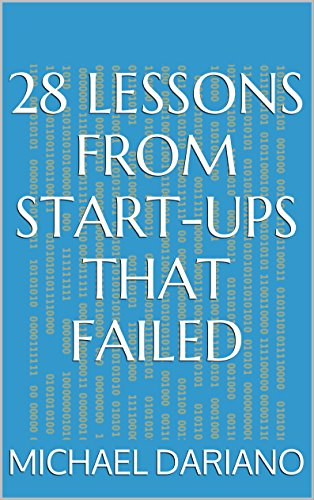
In my book 28 Lessons from Startups That Failed there were six major ways startups failed.

  1. Failure to understand the customer.
  2. Failure to manage money.
  3. Failure of strategy.
  4. Failure of skills.
  5. Bad luck.
  6. Failure of the founding team.

This final area of the founding team is what Elsea has seen in her experiences. If you’re starting a company; get the right co-founder, be focused and have clear areas of responsibility, move fast but don’t hurry, and work well together. Do those things, and you’ll avoid one common pitfall.

Thanks for reading, I’m @mikedariano on Twitter.


Addendum. Mayer is easy pickings for the ducks on the pond analogy because she went from one place (Google) to another (Yahoo) and had very different ranges of success. The thing is though, everyone who talks about Mayer says how smart, sharp, and on it she is.  Which brings up this question; have we miscast her?

One tool of thinking is to consider the counterfactuals of a situation. Might it be the case that Yahoo overachieved with Mayer compared to another CEO?

Sport has the idea of VORP (value of replacement player) and we can use that model on Mayer. When she was at Google, she was a player with good stats on a good team. She went to Yahoo and her stats and team were both not as good, but maybe it’s a case where no one could have done anything to save that sinking ship. If we could find a statistically similar replacement CEO would they have done better? Would they have done worse?

Swisher likes to point out that Silicon Valley types can paid a lot and self-congratulate themselves about how smart they are and this is where Mayer gets dragged down. Fortune magazine writes that Mayer is set to make more than $100mm. A sport team manager would look at that figure and recognize they could almost that same production for a lot less.

I’ll probably still use Mayer as the example for this idea, but I could be wrong about it. She might have overachieved based on the conditions and was worth every dollar.


Bill Gurley

Bill GurleyBill Gurley sat down with Kara Swisher to talk tech and his experiences. This interview was great. Among other things, when Swisher plugged Audible as a sponsor she asked Gurley for a suggestion. He said:

“I’m going to give you two because we’ve been talking a lot internally about trying to identify great talent; one is called Mindset and one is Grit by Angela Duckworth and they’re both about trying to identify high performance talent.”

My notes on Grit was one of the most popular posts ever.

Also, we’re going to deviate from the list style post that this blog normally dons and do a bit more of a how-to post. It’ll be like Ramit Sethi’s business advice, Ben Horowitz’s advice on hard things, and what happened to Yahoo?. Ready?

The Google example that ‘any damn fool’ could not see. 

Swisher asked Gurley about his biggest mistake and he tells her it was not investing in Google. Why didn’t he invest?

It wasn’t that the product was bad. “We were all using it in our office,” Gurley said, “it was a better product.”

It wasn’t that the business model was bad. “The business model really wasn’t a question either.”

Okay, you have a good product (from smart people) and a business model that works. What was the problem?

“I think it came down to the price at the time was remarkably high and the team was remarkably self-confident in a way that would cause you to question whether they could pull it off, but they did.”

Gurley immediately points out the error of his reasoning. Even with a high price it can still be a good deal.

“I go back, and the learning is that if you have remarkably asymmetric returns you have to ask yourself, ‘how high could up be and what could go right?’ because it’s not a 50/50 thing. If you thought there was a 20% chance you should still do it because the upside is so high.”

That’s the tricky part about an investment. Sometimes it makes sense to bet on a long shot or pay a lot because the rewards are so high.

Charlie Munger said that “any damn fool” can pick a winner. The real trick is picking the best bet.  Michael Mauboussin said, “The way you make money isn’t picking a winner. The way you make money is picking mispriced odds. That idea really carries over to investing. I think as investors many of us blur those two things”

Google, though costly, had mispriced odds because the upside was so large. Gurley says the prices was “seemingly ridiculous but obviously very good.”

Okay, so the problem was blurring the value and the payoff. But there was something else in Gurley’s explanation that stuck out.

Gurley wasn’t the only suitor to dance with Google. He notes that his company didn’t really “pass” on the opportunity.

“We failed to pursue it, and it’s always important to state it that way. To say ‘pass’ makes it sound like I had a chance, I don’t know if we had a chance. They presented to us and we failed to pursue it and if we would have we’d had to compete with two of the best.”

Wording like this matters. It shifts the way we look at problems and gets us out of our mental ruts. Benjamin Graham did it for the stock market by renaming it, “bipolar Mr. Market.” Mellody Hobson reframed  problems by pretending her company is public rather than private.  Chris Dixon reframed startups as a maze. Dan Coyle reframed exercise repetitions as meditative.  Louis C.K.  thinks of skills as merit badges.

Imagine you have a gnarly mole. You go to the doctor and she says, “that doesn’t look good. We can slice it off and when we do 85% of patients have no further complications.”

Hmm, you think to yourself. That sounds okay, but you want a second opinion.

You go to another doctor and she says, “that doesn’t look good. We can slice it off and when we do 15% of patients have slight complications.”

People respond differently to these two options, even though the “backend” is the same. Daniel Kahneman wrote that people don’t take risks when there’s something to gain. Most people favor a sure $10 over a 20% chance to win $100. However, people are risk seeking to avoid losses. People roll the dice to keep from losing something.

Reframing situations changes the way we look at them and changes the kinds of solutions we can come up with.

Besides Gurley sharing problems, he also gives advice on how to solve problems. Let’s take a moment to appreciate how amazing this is. For sixty minutes of podcast time you get access to one of most articulate and thoughtful venture capitalist around and HE GIVES YOU ADVICE! How  great is that?!

Here’s what he suggested.

A/ Find secrets where no one else is looking. “Most big startup breakouts are where people aren’t paying attention.” Virtual reality may not be your best bet says Gurley, because “Samsung, HTC, and Facebook are all at the table.”

pablo-6

But being different is difficult. It’s easier to an imitator. In my book, 28 Lessons from Start-ups that Failed I observed this stress. People want to feel like they’re doing ‘the right thing,’ and one of the signals for that what other people are doing.

Phil Knight found a secret in running shoes. Coca-Cola found a secret in the 20 oz glass bottle. Yvon Chouinard found a secret in outdoors clothing.

It may be lonely, but as Peter Thiel wrote, “The best place to look for secrets is where no one else is looking.”

One thing that may help is looking for patterns.

B/ Look for patterns. (Uber for X) “Having come out of Opentable being successful I was trying to come up with other industries where if you put a network on top of would absorb waste and make it more efficient and more usable. The thesis of cars had come up.”

Gurley invested in Uber. The investment has done well.

At the end of the interview he told Swisher that this network idea is being applied to neighborhoods too, but not health care. It’s a running joke that there’s an ‘Uber for X’ but  finding patterns works.

Alex Blumberg started Gimlet Media because he saw patterns. Blumberg cut his teeth in public radio (a job where Terri Gross said you learn a lot because you have to do everything). Then Blumberg worked for This American Life. Then he cofounded the Planet Money podcast. Then he started Gimlet. When asked about these dominos he said:

“This American Life worked. Planet Money worked. After Planet Money worked it felt like you can take this kind of storytelling, this kind of long form journalism and you can apply it to a bunch of different places and now we know that this is fertile ground for this kind of storytelling….then Serial comes along and demolishes everything in its path and then it was very clear that it was the right instinct.”

That’s pattern recognition.

Tren Griffin said that Charlie Munger thinks we should teach this way in school.

 Business school should be taught from more of a historical case format, that you learn from pattern recognition and in order to learn from pattern recognition you have to see a lot of examples.”

Good pattern recognition is a superpower because it saves you time. Gurley didn’t start at square one to look for Uber. He had a head start because of his pattern recognition.

C/ Be patient and keep your balance. “One of the things that Silicon Valley does when it gets risk seeking, which it did in ‘99 and now is that they invest in businesses with lower and lower gross margins and that’s riskier.”

When Warren Buffett was asked what his favorite book was, he said The Science of Hitting by Ted Williams. The reason was because, “Ted Williams described that the most important thing for a hitter is to wait for the right pitch. That’s exactly the philosophy I have for investing.”

It’s patience. It’s being able to wait, wait, wait then GO!

Bill Belichick waits until the second half to try trick plays so the other team can’t adapt during the calm of halftime. Richard Feynman said “the only thing that solves safe cracking is patience.” Gary Vaynerchuk noted that “There’s not a single fucking person on earth that made it big in four minutes.” Steven Pressfield wrote, “The professional arms himself with patience.”

The two most powerful warriors are patience and time. —LEO TOLSTOY

If patience is so important, why aren’t more people doing it? Why are the valuations being driven up? Gurley notices this, pointing out to Swisher that “you have to play the game on the field.” If one of his investment’s competitors raises money, his company probably will need to too.

Seth Klarman addressed this situation when he talked about the kinds of investments he looks for. Part of Klarman’s advantage comes from his flexibility. “The more flexibility you have, the better your ability to maneuver in complicated, volatile, and fairly competitive markets.”

To some degree Gurley lacks this flexibility. His hand is forced by what other people do. He may be forced to “do something” rather than “just sit there.”

D/ Choose a business to provide, not a problem to solve.  “We made a huge mistake choosing HR over sales. HR is a corporate purchase by someone who doesn’t have any authority. Sales is a credit card purchase by someone who has all the authority.”

Part of the success of a business is the conditions around it. It’s not enough to solve a problem, but to solve a problem people want to pay for.

One of the startups profiled in my book was Dinnr, a food delivery service in Europe. The founder thought that because a service worked in Britain he could transplant it elsewhere:

“Apart from lacking a sophisticated online supermarket system like the UK, Scandinavia has a few cultural traits that make people much more susceptible to Dinnr-like services: As I’ve been told (after launch, unfortunately) by expats living in Sweden, the Swedes are generally much more attached to their routines than Brits. You can easily ask a Londoner at work if they’ll have a drink with the team after work. Ask a Scandi and chances are you’ll have to schedule it a few weeks in advance. They also have a much stronger “eat at home with your family” culture.”

This founder had found a problem to solve, easy and immediate access to good food but found the wrong environment for it. In the same way that Gurley chose the wrong department (HR instead of Sales), this founder chose the wrong country (Sweden over Britain).

Sam Shank said that all businesses need to save someone time or money, “and ideally both.”  Gurley adds that it’s easier if you’re saving the time or money of someone who can say yes.

E/ Align the incentives. “It was really helpful for me at Benchmark that there’s an equal partnership. There’s this team orientation where if you feel like you’re struggling people are getting beside you and have a stake in you doing well.”

When Coca-Cola expanded beyond America they tried to employee locals. “As one Coke executive pointed out, ‘in Germany it is a German business; in France, it is a French business; in Italy, it is an Italian business.’ Local industries to produce glass, carton, crown, and bottling equipment started in each new country.”

Seth Klarman’s company is structured like Benchmark.  Charles Ponzi paid fat commissions for his notes. Milton Hershey was good to the dairy farmers and they were good to him.

Phil Knight actually had to borrow money from one of his suppliers when he couldn’t make payroll at one of his early factories. The supplier didn’t want to do it, but when he realized that if Knight’s company left he would be in bigger trouble, he floated the loan.

F/ Get lucky. Gurley explains that he got lucky when he started. “I got very lucky that CS First Boston gave me an opportunity. Then two weeks after I joined, Charlie Wolf  announced that he wanted to resign and back off and so I went into my tiny little apartment and wrote a 20 page assessment of the PC industry. I went in and begged for Charlie’s job.”

Other people left too, and Gurley said, “it couldn’t have been more fortunate because I moved through the ranks very quickly.”

Luck has some role in any outcome. What I liked about Gurley’s response was that he noted the role of luck, but also what he did about it. He went home and wrote a report that he could show his boss and take advantage of the lucky situation.

This makes sense given the books Gurley recommends. Part of theoretical backbone to both Grit and Mindset is the idea of personal growth. It’s a belief that your actions can lead to some effect. Gurley got lucky, but he also acted.

Thanks for reading, I’m @mikedariano on Twitter.

Bill Belichick (invert, always invert)

My complete thoughts on Belichick are available on Amazon. This post is part one of five. 

  1. Inversion
  2. Pattern recognition
  3. Top-down support
  4. Argue well
  5. Seek counterfactuals

New England Patriots at Washington Redskins 08/28/09Drawing on inspiration from David Halberstam’s The Education of a Coach we’ll look at how Bill Belichick prepares by red teaming, specifically the act of inversion. 

Red teaming is the creation, support, and application of a friendly perspective on what you’re doing wrong. This is clear in football. It’s the scout team. Those players will adopt the mindset, strategy, and tactics of an opposing team so other players on the team can practice and improve against their specific skills.

Belichick didn’t set out to adopt a red team set of tools. He didn’t articulate this kind of system. He grew into because of forces beyond his control. It started without intention. It started when he coached the offense.

Inversion

Sometimes the best way to solve a problem is to not solve the problem. Ask, ‘what solutions won’t work?’ and by process of elimination you’ll hone in on the direction you need to go. Answering the opposite question will also expose your own ideas to parts you may not have considered before.

The two quarterbacks

It was around 1973 and Belichick got a job coaching the tight ends for the Detroit Lions. This was not what Belichick expected, explains Halberstam:

“Though Belichick’s instinct was to coach defense – it was where he was pulled as if by some kind of magnetic force – he was also beginning to understand that if you were going to coach defense, you had to master the offense as well, otherwise you were only half a coach.”

This was a valuable lesson writes Halberstam, because “the more he knew about the offensive side and the way the people on the offensive side thought, the better prepared he would be coaching defense.”

Belichick’s first red teaming skill was inversion.  He started to understand both sides. He started thinking forward and backward. He started to understand the why.

This time coaching the offense had a big impact on him. Five years later with the New York Giants, he would run laps after practice with his partner in crime, Ernie Adams and the two would talk about football. “And he would tell Adams,” Halberstam writes, “that he did not understand how some of the other coaches in the League had decided they were only going to understand one side of the ball….it absolutely amazed him.”

In knowing both sides, Belichick created a more accurate picture of the conditions. He saw things as they were, not as he wanted or thought them to be. As a coach he would use this ability to see both sides to make his greatest mistake and greatest success.

First, the mistake. If you’re a big football fan you’ve heard of him. His name is Bernie Kosar. As a kid in Ohio at the time I remember the reverence for Kosar. Halberstam put it this way:

“For almost a decade Kosar had been the signature sports figure in a sports-crazed city, a much-loved figure in a community that badly needed any success in sports to compensate for a profound economic and social decline; the city was becoming something of a national joke.”

Kosar’s reputation wasn’t unearned. He had led the team to the conference finals in 1986, 1987, and 1989. The problem was that Kosar was old. Rod Woodson, cornerback of the archrival Steelers said, “He’s not mobile at all. Now when you look at them on your schedule, you’re putting a W down before you play.”

Belichick released  Kosar. It did not go well. Soon after, team owner Art Modell moved the Browns to Baltimore and Belichick lost his job.

Belichick red teamed Kosar, looked at him as if an opposing coach would and realized he could not longer play at an elite level. He knew this from both the offensive and defensive perspective. As a coach at the Giants he devised game plans against Kosar. As a coach of the Browns he planned game plans for Kosar.

While the correct football decision (and good inversion) Belichick became a pariah in Cleveland. He received death threats. An effigy of him was hung outside the stadium on a crude set of gallows. This  happened because he failed to explain his thinking well enough.

Part of good inversion is to think like an outsider, but only to a point. Belichick told Halberstam that he and Kosar just met at an unlucky time. He knew what to do (stop playing Kosar) but not how to do it (release him with dignity). Good red teaming requires this balance. 

In his book, Red Team, Micah Zenko writes, “The red team’s engagement should not be done in a “gotcha” manner to embarrass or humiliate an office or individual.”


Belichick’s greatest decision was eerily similar to his time on Lake Erie, but the conditions with the New England Patriots were just different enough.

Drew Bledsoe, like Kosar, was a good quarterback. He held many individual records and made four Pro Bowl teams. Belichick thought, like he had for Kosar, that Bledsoe was too old. He had to make a change.

Why had he thought this? Why was Belichick one of the few people in a league full of experienced coaches, scouts, and player personnel managers to notice this?

There’s an anecdote about boiling frogs that helps explain this. The story goes that if you put a frog in boiling water it will notice the danger and immediately jump out. However, if you put a frog in tepid water and slowly increase the heat, the frog fails to notice the change and eventually is boiled alive.

A more relevant and easy to see example is the waistline.

The story about frogs is false, but it buoys something we intuitively know – small changes are hard to notice but add up to large changes. When a quarterback, to use football terms, “loses a step,” how can you tell? The great plays are still there. The heroics, the highlights, the hail-mary passes all look the same.

Belichick knew because he inverted the question. He put on a defensive headset and thought about how he could plan to stop the aging Kosar/Bledsoe. Then he put on the offensive headset and thought about how he could have them succeed. Looking at this from both sides he saw the strengths and weaknesses.

Inverting Coca-Cola

Coca-Cola is the greatest company in the world – ever. Started in 1886 as a patent medicine, reformulated to include Cocoa and Kola, praised for being a pick-me-up then regulated for too much pick-up. Coca-Cola invented the red Santa Claus, brought up the rear of troops in World War 2, and helped President Reagan convince Mr. Gorbachev to “tear down this wall.”

How has one company been able to do all this?

Part of the Coca-Cola success is thanks to successful inversion.

Inversion is a switch from asking “how can I succeed?” and doing that, to, “how can I fail?” and avoiding that.

Investor Charlie Munger knows a lot about this Coca-Cola technique. In the book Damn Right, Munger explained why Coca-Cola was a good investment and he points out that Coca-Cola defended their name aggressively. “The first thing you don’t do is avoid losing half the brand name.” 

If anyone else wanted to have a cola name it was “tough luck.” Coca-Cola succeeded with this course for a long time.

Former CEO of Coca-Cola  Neville Isdell took the application of inversion one step further. When Isdell was leading teams at Coca-Cola, he had trouble getting them to think outside the box, to think about the defense when they were on offense. He inspired inverted thinking by thinking like the enemy, Pepsi.

At one meeting people entered and were handed Pepsi t-shirts and hats to put on. On the walls hung Pepsi posters and Pepsi-Cola was served. “It takes about an hour for people to get comfortable,” Isdell wrote, “but eventually things fall into place and workers get a thoroughly honest assessment of their flaws and strengths.”

In dressing up like this and role playing what Pepsi would want to do they figured out what Coca-Cola should avoid or stress.

Bill Belichick inverted game plans to look at them from both sides of the ball. Coca-Cola management inverted the protection of their brand. Patrick O’Shaughnessy suggests studying short sellers to figure out good long positions. Casey Neistat suggests figuring out how not to be big on YouTube and avoiding that.

My book inverted the question for successful technology start-ups.  Bill Simmons used inversion when he asked, what can the opponent do that scares me the most? Michael Mauboussin says to look at how easy something is to lose to figure out how much skill is involved.