Steven Pressfield was on the Art of Maniless podcast to promote his latest book. It was a good interview. This post won’t be the traditional notes, but a qustion: Would Steven Pressfield pass the Marshmallow test?
…
If you were unaware, “The Marshmallow Test” is a catchy catch-all for delayed gratification. The Marshmallow Test is also a book from Walter Mischel, creator, designer, and recorder of results of said test. If you aren’t aware, Mischel noticed that young children who were able to delay gratification – wait for two treats later rather than one treat now – had a smorgasbord of positive results later in life. They were in prison less, married more, earned higher incomes and had a lower BMI. These results, along with the name, The Marshmallow Test, have brought a lot of attention.
…
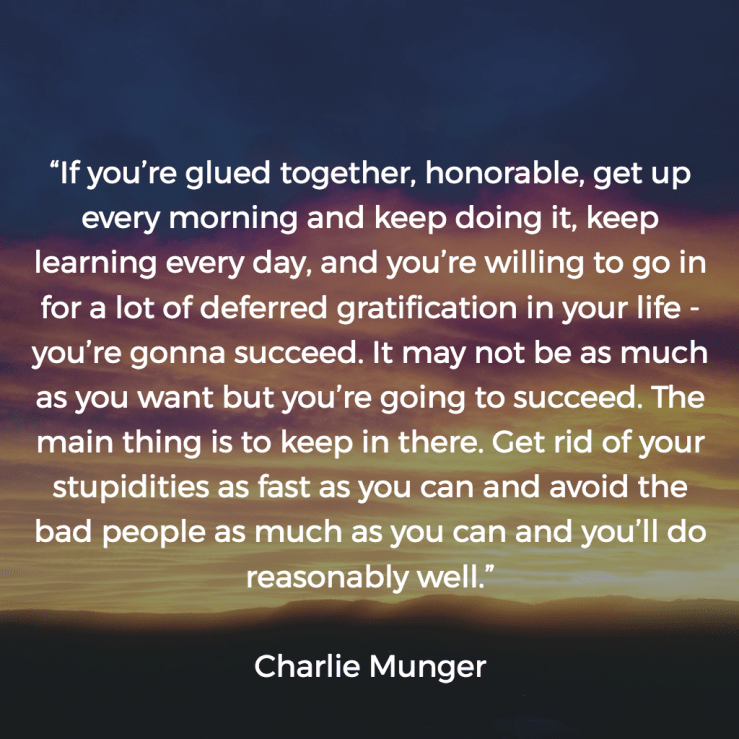
“If you’re glued together, honorable, get up every morning and keep doing it, keep learning everyday, and you’re willing to go in for a lot of deferred gratification in your life you’re gonna succeed. It may not be as much as you want but you’re going to succeed.” – Charlie Munger
…
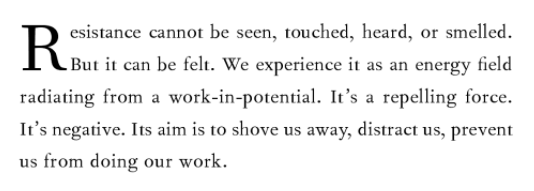
Pressfield is well known for coining his own memorable term, resistance. In The War of Art he opens with this:
In the podcast Pressfield says:
“If you’re a writer you know that when you sit down in front of the blank page you can feel a force radiating off that empty page. It’s a negative force that makes you want to get a hot fudge sundae or go surfing or something like that. Anything other than face the page, and that is resistance…When in doubt it’s resistance.”
That Pressfield uses food is notable. Mischel’s research wasn’t only about marshmallows, the subjects got to choose their rewards, but food qualifies as something Mischel says is a ‘hot’ reward. Marshmallows not only taste delicious but they have a pleasing texture, substance, and elict thoughts of joy.
If you compare that to something like crayons, another reward selected by children, Mischel notes different scores for different rewards. For rewards like pretzels and crayons, children waited 2x-3x as long as for marshmallows. I notice this in my own life. In February 2017 I have access to a recent delivery of Girl Scout cookies & a ski slope. I enjoy both. However, the cookies are more salient and easier to come by than the ski slope which requires ninety minutes in the car. It’s also easier to think about the taste of cookies rather than feel the wind and thrill of speed. In Michel’s words, the cookies are a much ‘hotter’ temptation.
The key to success with delayed gratification (Munger), resistance (Pressfield), or marshmallows (Mischel) is “psychological distancing.” Mischel writes that this can be physical as in out-of-sight-out-of-mind. It can be mental, I’m not checking the ski slope’s Instagram feed. It can be abstract too, thinking about the things you want in the future rather than the current temptation.
Wen Pressfield moved to Hollywood he noticed a form of “psychological distancing.”
“When I first got out to Hollywood and started work as a screenwriter I learned that many writers were incorporated. They had their little one-man corporations. When they signed a contract to write a script or screenplay it would be FSO: For Services Of. Their corporation would sign a deal for their services as an individual. I thought that was a great way to separate the entity of yourself that does the work from the entity that manages. It’s a great device to sort of, split yourself in half and one-half can kick the ass of the other half.”
Screenwriters created a psychological distance for work.
We should note that this isn’t all about willpower. That helps, but all genetic gifts do. You can be thankful for nature, but you get to choose your nurture.
That’s exactly what Pressfield did. He said, “there are so few people that possess self-discipline….coming up I had one friend that got up at the crack of dawn and he was a role model for me. I basically tried to become him. I copied so much of the way I live right now from this one particular friend.” And later in the interview, Pressfield came back to this idea, “Working in the movies was a real Ph.D. in storytelling, how to conduct yourself, and how to manage your emotions.”
There’s a huge value to see it to believe it. Here’s Malcolm Gladwell on that:
In the case of delayed gratification, the ‘it’ is structure. If you can create structure in your life, Mischel found, then delayed gratification is much easier. Pressfield’s Ph.D. was in “how to conduct yourself.”
One solution is the If/Then statement. Plan out what you’ll do ahead of time. You can further enhance this tool by identifying your hot spots. Mischel found that kids – like adults! – act in domain dependent ways. Sometimes kids broke the rules when confronted by an adult, sometimes by another kid. Sometimes the same adults you see in church will be the ones that scream at the soccer referee. The context mattered.
We’ll add two more notes about delayed gratification. First, it takes a long time. Pressfield said, “I had flipped the switch to being a professional but it was six or seven years before I made the first penny. There was plenty of struggle and lessons learned. It was like getting a Ph.D. in a field that doesn’t have an actual college.”
Second, you have to be like Sisyphus and not expect a panacea.
Pressfield said about resistance:
“Oh yeah. It never goes away. You have to slay the dragon every morning. It never goes away. It never gets any easier. But when you have enough success, when you’ve faced it down enough times, you know you can do it which is different from when you were first starting out.”
Part 1 was a large overview of reading more. Part 2 was about my specific note taking for physical books I own.
For Part 3 I want to address three things.
Preparing the mind.
Preparing the body.
Preparing the scene.
Your reading goals (NOT books per year).
…
The mind. The presentation of classes in college catalogs always appealed to me. You take 101 and move on to 102 and then 103. I’m a linear thinker but life is not.
Sequence is important though because if you don’t know the elementary things you can’t learn the advanced things. Right now, for example, I’m reading more books about artificial intelligence and I don’t know where to start. Unlike college, there is no predetermined sequence. However, there are some things that I’ve found work well.
Podcast interviews are great. Authors explain their theories. Some favorite podcasts are; Intelligence Squared, EconTalk, Invest Like the Best, James Altucher, Recode Decode and Bloomberg’ Masters in Business.
YouTube videos fill this niche too. My notes on Peter Lynch, Mohnish Pabrai, and Charlie Munger all came from watching them on YouTube.
Amazon rankings also play a role. Find category links like “Books>Cookbooks>Special Diets” or “Books>Textbooks>Computer Science>Artificial Intelligence” and select the first one.
There has to be some kind of mental footing for your climb.
…
The body. In Part 1 we noted that reading takes time and energy. I find those ingredients between four and seven in the morning.
After experimentation, I learned that it’s easier to get up early if I do certain things. Red win – and all alcohol – would lead to groggy mornings. So too would junk food, cereals, and sugar in my coffee. Overall I have more energy throughout the day, not only in the mornings.
Physical activity helps too. I don’t know if it’s better sleep or if it helps me think in other ways, but the more I move the better I think. Plus, dog walks are great for listening to podcasts.
I don’t disregard sleep. Rather than arbitrarily get up early I used the Sleep Cycle app to help me optimize how much sleep I need.
All these physical things combine to mean that I have energy in the morning. I convert that energy and excitement into reading.
…
The scene. My go to book for behavior change is Mindless Eating from Brian Wansink. The gist is that making things slightly easier/harder can have big effects. I use this to create a space where reading is easier and everything else is more difficult.
To make things easier: I try to always sit down with a book. I find books I’m excited to read. I find books that come highly recommended. I view books as a challenge, a game, or a puzzle. I think about the long-term rewards of reading.
To make things more difficult: I deleted Twitter from my phone and turned off the browser. I don’t open my computer or unlock my phone. I have pen and paper handy for taking notes.
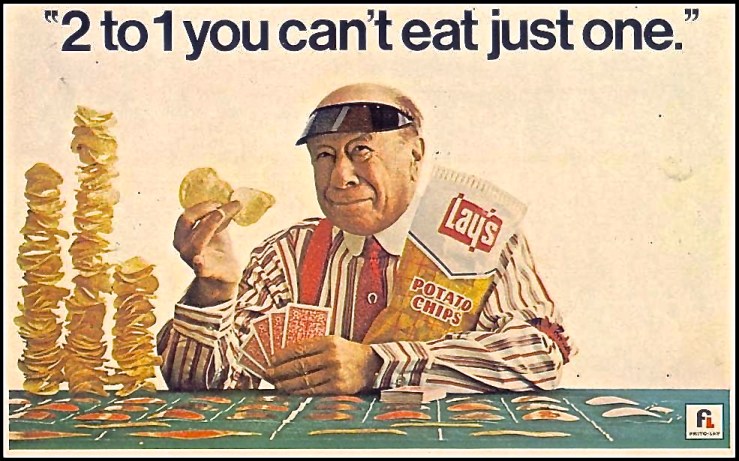
Part of the reason this works for me is that I do better as an abstainer than as a moderator. It helps to know thyself. If you can “eat just one” then a bag of chips is no problem. If you can’t, then it is.
…
The goals. This Inc. article is so wrong. It doesn’t matter how many books you read a year. What matters is how many good ideas you get. Charlie Munger said that Berkshire succeeded because of two good ideas a year for fifty years. On a smaller scale Ramit Sethi said he keeps Wednesday free to read and think:
“Wednesday is my strategy day. I have a list of articles to read, a list of books and I just work through them…Most days, nothing really comes from it, I would say every quarter I get an interesting idea, and maybe once a year I get a big idea but that big idea can transform the business.”
Sethi, like Buffett, Munger, and Inc. article authors may read 200 books a year but that’s not the goal. The goal is to accumulate examples and cross-pollinate ideas. The goal -and long-term readers will see this punchline coming – is pattern recognition.
I almost didn’t write this post because you should watch (or listen to) the 2017 Daily Journal meeting rather than read my notes and summary. These notes are like a bread course, technically full of calories, but not really enough.
My favorite quote from the meeting was this:
“If you’re glued together, honorable, get up every morning and keep doing it, keep learning every day, and you’re willing to go in for a lot of deferred gratification in your life you’re gonna succeed. It may not be as much as you want but you’re going to succeed. The main thing is to keep in there. Get rid of your stupidities as fast as you can and avoid the bad people as much as you can and you’ll do reasonably well.”
1/ More than money. Life and business are about more than money.
“I wish our example spread more because if you’re wealthy and you own a big share of a company and you get to decide what it does and whether it liquidates or whether it keeps going that’s a nice position to be in and maybe you shouldn’t grab more money in addition.” “I don’t think capitalism requires you make all of the money you can. I think there are times when you can be satisfied with less.”
Mr. Money Mustache and Early Retirement Extreme are bloggers who settled on the conclusion that money isn’t your most valuable thing early on. What is most valuable? Freedom of time and choice. This makes sense. We work for money so that we can get time and choice. Time not to do our taxes, time to have someone mow our yard, time to pay back a loan on something we want to buy like a house, car, education.
Time and choice aren’t common denominators because they’re harder to quantify than dollars. Yet, the way we define things matter.
I think Munger is nudging us to think this way. Why does he say “wealthy” instead of “richer”? Those words mean different things. When I think of wealth it means ample time and happiness. When I think of rich it just means money.
…
2/ Run your race. Someone asks how Tyler Technologies strategies affect the Daily Journal Corporation. Munger says that Tyler is “an extremely aggressive company but I like our ethos of operation better than I like theirs.” He and Warren Buffett said much the same thing about Amazon at the 2016 Berkshire meeting. Brent Beshore‘s company notes on the bottom of their site, you do you, we’ll do us.
This idea struck me while on the treadmill. I was momentarily proud of being the longest runner with the fastest speed. If things were still gamified I’d have gotten a digital badge. Echo Charles has seen this too.
But watching what other people are doing is one thing, a distraction.
Charley Ellis said that people wonder why he’s invested in volatile securities at his age. “Becuase I’m not investing for me,” Ellis said. Ryan Holiday cautioned writers to not fall into running someone else’s race. Seth Klarman had a client come in who wanted to dictate a finish line. “I’ll meet with you on anything but that,” Klarman said. A mistake for failed startups was watching what other people were doing.
If your core actions are correct, focus on those.
…
3/ What to do about mistakes? For starters, get ready for them. Munger has many, “my life is one long litany of mistakes and failures.”
When you make a mistake, act quickly and firmly to correct it. Wells Fargo, Munger says, failed to do this. But they’ll be better for it. “One nice thing about doing something dumb is that you probably won’t do it again.”
To prevent those dumb things try to create a system that incentivizes the right things. Wells Fargo, Munger says, failed at this too. “They got so caught up in cross-selling and having tough incentive systems that they got the incentive system so aggressive that some people reacted badly and did things they shouldn’t.”
Shane Parrish suggests a decision journal for keeping track of your mistakes to combat the hindsight bias. Sam Hinkie suggested red teams in meetings and no cherry picking your decisions. Flesh out mistakes and don’t double down.
When you say them, says Munger, you’re pounding them in harder and harder. “One of the reasons I don’t tell the world what I think about how the Federal Reserve should behave and so forth is, I know that I’m just pounding the ideas into my own head.”
If you do happen to destroy an idea, Munger says to pat yourself on the back. “I’m very busy destroying bad ideas because I keep having them. It’s hard for me to just single out one from such a multitude. I actually like it when I destroy a bad idea because it’s my duty to destroy it.”
…
4/ Follow your passion? Passion is a bad career indicator, interest is better.
When asked what sort of work young people should pursue Munger says to find something that interests you. “In my whole life, I’ve never succeeded much in something I wasn’t interested in. I don’t think you’re going to succeed if what you’re doing all day doesn’t interest you.”
Mohnish Pabrai asks, what do you choose to do instead of watching a movie? We can expand it and ask, what do you choose to do? What do you engage in? Munger says, “I recommend that you engage life. If you spend all your time on how some politician wants it this way or that way and you’re sure you know what’s right – you’re on the wrong track. You want to do something every day where you’re coping with reality.”
Munger wants us to be there. Be like Paul Farmer, John Boyd, and Kara Swisher. Find something that interests you and get in there and mix it up.
…
5/ Multidisciplinary thinking. “I don’t think that operating over many disciplines as I do is a good idea for most people.” “Generally specialization is the way to go for most people.” “If you want to get rich the way I did by learning a little bit about a hell of a lot I don’t recommend it to others.”
I felt let down by this. I’m building mental models. I’m solving problems with interdomain solutions. It interests me (#4). But maybe it’s the wrong path.
Munger suggests instead to get good at something that society rewards and spend “10-20%” of your time learning the big ideas in the other disciplines.
Maybe the job I’m hired for is to make the 10-20% easier for others. If Munger is right I need to reread Cal Newport.
…
6/ A philosophy buffet. When asked about Donald Trump, Munger says, “He’s not wrong about everything and just because he isn’t like us – – roll with it.” Kara Swisher noted the same thing.
This can be hard with things in the news. Ryan Holiday gave this advice:
“Whenever you start to feel stressed, upset, depressed, confused, worried, put down your phone, step away from the television or computer and pick up a book. Ideally, pick up a very old book. There was a wonderful New York Times article last week from Alexis Coe where she discussed the clarity that comes from reading old presidential biographies.”
Munger likes dead people too.
“I spent my whole life with dead people. They’re so much better than the people I’m with here on earth. You can learn a lot from them and they’re very convenient to reach (via books). I recommend making friends with the eminent dead which I did very early and it’s been enormously helpful.”
Just keep reading and learning. You’ll see that there’s never been ‘golden days’ for life. That life is a struggle. If you want a break from the news and a reminder that life has been full of less-than-qualified politicians, adventurous inventors, and American culture let me suggests One Summer by Bill Bryson. If you want to see everything I read, sign up here: http://eepurl.com/bgRZOX.
Thanks for reading. If you liked this I just finished a longer article about Sam Hinkie. It’s available for download here: https://gumroad.com/l/philiprocess
Another Howard Marks post? Yes, yes, yes. I wrote about his memo, Expert Opinion because it touched on three timely topics; media, social media, and predictions. I wrote about his book, The Most Important Thing because it was a wonderful summary of his worldview. And I wrote the first post about Howard Marks because it was my first exposure to him.
I’m writing this one because I still haven’t internalized, understood, or applied Marks’s good ideas. But I’m getting there. This one is shorter than the above links. Here are my notes from Barry Ritholtz’s conversation with Marks.
1/ “Experience is what you got when you didn’t get what you wanted.”
What I liked about this quote was the win-win ethos behind it. You can either get what you wanted or get experience, both are valuable.
…
2/ If you want to be in the top twentieth, try being in the top half for a long time. Extraordinary results come from not messing up. Pretty good spouses can have great marriages. Philanderers don’t. Pretty good managers can have great careers. Theifs don’t. Marks explains how investors can follow this model too.
…
3/ Second level thinking doesn’t mean the derivative of the derivative of the derivative and so on. It means considering something just more enough to get your results into the top half (see #2).
4/ Ritholtz asks, ‘what do you do when the phones start lighting up in the office with clients who want to know what you are doing?’ Marks says:
“One of the money managers most important jobs is client education. Hopefully, we’ve convinced our clients by now that you have to be contrarian and you have to look wrong for a while and it’s our job to hold their hands when we do extreme things.”
Good relationships help a lot. They help Kara Swisher get information. They help Tony Hsieh build Zappos. They help Pete Carroll create a winning culture.
Relationships are like the winds that swirl around a bike rider. They can push the rider forward, blow in her face, or push across as a distraction. Unlike the rider who has no control over the wind, you and I do with the relationships we build.
…
5/ “You can only assess the bottom in the past tense. The bottom is the price below which a stock never went.”
We can add this to our list of Signals. If someone says this is the bottom rather than that was the bottom, call them out.
To understand this cycle you have to look at what people do not what people say says Marks. For example, in February 2017, with low fixed income yields, there is some distance between how people act and how people feel. This gulf is because they have to reach for returns.
…
6/ Book suggestions. “My philosophy was shaped mostly by reading,” says Marks, who like Munger, ‘makes friends with the eminent dead.’ John Kenneth Galbraith A Short History of Financial Euphoria, says Marks, “was very impactful on me.”
About Fooled by Randomnes Marks says, “in a world of randomness you can’t have events that are predictable and I think he (Taleb) makes very sound arguments.”
Currently, Marks is reading Stress Test and it “is very interesting…it’s not exciting or fun but it’s very illuminating…if we don’t study crises we are bound to repeat them quickly – if we study them it will take longer.”
…
7/ Do something you enjoy.
“What I try to counsel young people is to try and find something they’ll enjoy because if you’re doing something every day for your life and you’re not enjoying it you’re wasting your life. Doing that to pile up money you’ll have left at the end seems futile…you should not let society set your goals. The challenge is to figure out what will make you happy and pursue it.”
Long-time readers know that I dislike the advice to ‘follow your passion’ but ‘do what you enjoy and interests you’ seems fairer. Every job is still a job people like Austin Kleon and Jon Acuff caution. Just because you get to do the thing you want doesn’t mean that thing will be easy, said Brent Beshore. Mohnish Pabrai said to find something you’d do instead of watching a movie.
Don’t wait to do the things you enjoy. Warren Buffett said that’s like saving sex for old age, “it just doesn’t work.”
Thanks for reading. If you liked this I just finished a longer article about Sam Hinkie. It’s available for download here: https://gumroad.com/l/philiprocess
Grant Oliphant (President of Heinz Endowment) spoke with Aaron Watson. The podcast was good.
If you’ve never heard of Oliphant that’s good. This is the beauty of podcasts. There are all kinds of wonderful, intelligent, ground-breaking people experimenting, running companies, and leading others out there in the world. Podcasting helps tell their stories. Patrick O’Shaugnessy’s podcast is excellent at this too.
Okay, the notes.
1/ Organizational leaders go deep (talk to customers) and go wide (steal what works). Oliphant says, “We work really hard to go deep and to go wide.” To rephrase with more descriptive verbs, Oliphant hires people with expertise and borrows best practices.
There’s an adage in non-profit work, Oliphant says, “nothing about me without me.” It’s “probably the most important rule.” In Pittsburgh, Oliphant’s endowment teams have had 150+ “listening meetings” in the community. Organizations only succeed by solving problems.
Organizations only succeed by solving problems.
Oliphant doesn’t have customers but he does serve people in the same way. Failed start-ups consistently failed to talk to their customers. Those founders should imitate Oliphant or have read more Paul Graham, who wrote:
“If you can’t understand users, however, you should either learn how or find a co-founder who can. That is the single most important issue for technology startups, and the rock that sinks more of them than anything else.”
To serve people you have to solve a problem. To solve a problem you have to listen to what people want. To listen you have to go out and talk. Andy Grove wrote:
“They (middle management) usually know more about upcoming change than the senior management because they spend so much time ‘outdoors’ where the winds of the real world blow in their faces…I feel much safer back here in California than he does in ‘enemy territory.’ But is my perspective the right one? Or is his?”
Collecting information about what people want is going deep. Borrowing best practices is going wide. Oliphant says, “we look all over the world for the best ideas.”
Ben Thompson’s post The Audacity of Copying Well summarizes this. It’s also the subject of episode #102 of Exponent.fm. James Allworth, Thompson’s podcasting co-host, said he admires Instagram for swallowing their pride and copying Snapchat. Samsung too, who copied Apple.
Gary Vaynerchuk suggests this strategy for individuals, “better your strengths and punt your weaknesses” Vaynerchuk says. This means adopting, borrowing, or stealing best practices. Oliphant copies in this sense too, learning from others so he can focus on his strength, helping the people of Pittsburgh.
…
2/ Failure. (?) Failure can be difficult to determine because, “if you’re running a company – you can, despite the bottom line – continue to convince yourself you’ve got a future for a very long time.” Oliphant explained that one early education initiative in Pittsburgh was a “smashing success” for the kids involved. But they shut it down because it couldn’t scale.
As I listened I was again brought back to what I learned about start-ups that failed. Some simply ran out of money, but not all. Other founders shuttered operations because they meandered along.
When does an initiative fail? A company? A relationship? When do you know? Do you ever?
…
3/ Predictions. “Human decision making turns out to be maddening imprecise and beautiful at the same time.” This is why you need to talk to people. It’s why you need to be there on stoops, porches, and sidewalks. It’s why foundations have listening meetings. It’s hard to model what people will do.
Peter Lynch made the case against macroeconomic and political predictions. Lynch said that if you spend 14 minutes figuring out how those currents fit in your plans you’ve spent 12 minutes too long. That’s not to say we can’t do better at predicting things. Phillip Tetlock wrote a book to help us to that and we applied that framework to ask Is Bill Simmons A Superforecaster?.
The most helpful advice for someone in Oliphant’s shoes comes from Howard Marks’s Expert Opinion. In that letter, Marks wrote that we should pursue information that is helpful and knowable. It sounds like that’s what Oliphant has done. Find out the important things you can (at listening meetings) and let everything else go.
…
4/ Talent stacking. “One of the things we’re learning is that intersectionality is really important in this world….we need people who can think about the dynamics of outcomes and why the world is the way it is and what we can do about it to change it.”
Scott Adamswrote that he’s not the best at drawing, making people laugh, or someone with a deep knowledge of business. However, he’s probably in the top 1% of people who are good at each of those three things. Daymond John said this too, only about music and clothing. Dave McClure started his VC fund because he had engineering and marketing experience and “there weren’t that may people doing investing that had both disciplines.”
Talent stacking fits in a world that’s complicated. Our world!
Adams, John, and McClure succeed because their skills match what the real world wants. It’s like a puzzle piece.
Thanks for reading. If you want book recommendations, I send those out via email here http://eepurl.com/bgRZOX.
Let’s start with a story. When I was ten we moved to a new town. It was a typical move; new house, new friends, new school, new patterns, new memories. Another newness was that the town was bike friendly. I could ride to the city baseball diamonds, friends’ houses, and the public library, and oh what a library it was. It was stacked. There were comics and elven fantasies I didn’t even know existed, much less had read. I was thrilled.
Years later I went off to college which had an even larger library, and, get this, you could request things from other libraries! I’d like to report that I searched out the great tomes and read them cover to cover and back again, but I did not. Instead, I used it to borrow rather than buy textbooks.
I mention this because Bill Gates marveled at the same thing. “It’s an incredible time to be a learner,” he told Charlie Rose, “I remember when I was young and it was very good, but I always felt like ‘I gotta get into this more, I want to understand it better.’ Today, the videos and courses that are online with the very best professors is phenomenal.” Tyler Cowen calls these kinds of people infovores and wrote about this.
Consider the magnitude of this. What do you want to learn? It’s out there, go get it. When we moved, I saw my access grow. When I went to college it grew again. With the internet 2.0, user generated content, YouTube, Coursera, and so on and so on you can learn anything. The question becomes, will you?
…
Success is going from ‘what to do’ to ‘how to do it’ to ‘did it.’ This is simple, but not easy. What follows are 9 suggestions for ‘what to do’ from Buffett and Gates. The rest is up to you.
Be curious
Be optimistic
Have focus
Be a multidisciplinary thinker
Learn things that are knowable (and valuable)
Hustle
Match your temperament to your work
Create situations for big wins but small losses
Marry well
Good luck.
…
Start with curiosity. Buffett said that what surprised him about meeting Gates was the curiosity they shared. It wasn’t for the same domains, but it was the same intensity. Curiosity is a superpower.
Brian Grazer is curious, and he writes that it’s been a boon to his career. Grazer explains that curiosity is best when it’s done with an open mind and when you act on it. Listen, understand, and act when possible is Grazer’s model. Yvon Chouinard, for example, was curious. What if we made colored, tough, clothes for climbers like ourselves? Kara Swisher says that curiosity is going where a conversation takes you, not guiding it where you want it to go.
You also need to be an optimist. In a talk, Sanjay Bakshi said that he likes to find entrepreneurs that are optimistic, but not delusional. Successful people climb to the top of the mountain for the view, but don’t jump off thinking they can fly.
When Daymond John started FUBU he said he had this kind of optimism. He believed he could compete with Adidas, but wasn’t delusional that it would be immediate. “I worked at Red Lobster for six years while running FUBU,” John said.
Daniel Kahneman put it this way, “Optimism is the engine of capitalism. When you look at big successes, it’s because someone tried something they shouldn’t have.”
Another attribute is the ability to focus. “Both of us got to where we are because of focus,” said Buffett. That means a deep understanding of the most important things. It’s why Bill Belichick wins Super Bowls. It’s how Milton Hershey created a chocolate empire. It’s how Phil Knight created Nike. In Shoe Dog Knight wrote, “While auditing these companies, digging into their guts, taking them apart and putting them back together, I was also learning how they survived, or didn’t.” Like a watchmaker, Knight saw the gears that made companies tick.
It helps too to be a multidisciplinary thinker. Gates never was until he met Buffett. “One of the first questions he asked me,” said Gates, “was, ‘Microsoft is a small company. IBM is a big company. Why can you do better? Why can’t they beat you at the software game that you’re playing?’”
Multidisciplinary thinking is efficient and fun! Tren Griffin wrote, “looking for models that can reveal and explain mistakes so one can accumulate worldly wisdom is actually lots of fun. It is like a puzzle to be solved.” It also doesn’t take that much work. At the 2017 Daily Journal meeting Charlie Munger suggested spending 10% of your time learning the big ideas from different domains. Robert Hagstrom wrote a book – Investing: The Last Liberal Art – if you want to dip your toe in the pool.
Sanjay Bakshi employs multidisciplinary thinking with the “part-of-the-reason” prompt. When faced with a problem, Bakshi will say, ‘part of the reason is this, and part of the reason is that, and so on.’ Why does this tend to work? Because problems have multiple reasons. Neil deGrasse Tyson noted that “the universe does not divide itself neatly into textbooks.”
When asked about his most valuable skill Christian Rudder effectively said multidisciplinary thinking:
“The skills that have been most important to me in what I’ve done has been a kind of world real experience, a sense of how people work. I haven’t spent my entire life in an academic department. I’ve done a lot of different things. I think that is extremely helpful in analyzing data. Any data analysis in a social setting your goal is to understand human behavior.”
This exposure isn’t normal. We have to seek it out. “Nobody had ever asked me that question,” Gates said.
While we think about thinking, we also should learn things that are knowable. In his Expert Opinion memo, Howard Marks encouraged us to pursue information that is important and knowable. There are some things that are not. Take macroeconomics, says Gates. “Things like macroeconomics involve emotional sentiment, (and) we’re a long way from (predicting) that.” Peter Lynch didn’t even think you should try. Fourteen minutes spent on considering politics, global events, or macroeconomic forces, said Lynch, was twelve minutes too long. Shane Parrish suggests finding things that change slowly.
As you do these things you also have to persist. “Guys like Bill don’t quit,” said Buffett, “He moves onto something like polio. He mentions fifty cases in the world. There were more than fifty in the ward where I want when I was a teenager.”
This was an amazing moment of the talk. Worldwide Polio in 2017 has similar numbers to Omaha Nebraska in 1940. Wow. That’s thanks to persistence.
Gates said that in the early days of Microsoft he never left. There was no such thing as a weekend or vacation. Gates even says that his mother had to negotiate with him for nights when he would come over for dinner.
This work isn’t always easy either. Brent Beshore compared it to a knife fight. Pete Carroll said there’s no rest:
“When you’re a competitor you don’t rest. You’re either competing or you’re not. We’re in a relentless pursuit of finding the competitive edge in everything we’re doing, and that’s a mentality. You’re either competing or you’re not. You’re either working at doing better or you’re going in the wrong direction. You’ve got to be on. You can’t be too comfortable, you have to keep pushing.”
“His production comes from about 10% inspiration and 90% a grueling pace that his cohorts find difficult if not impossible to keep up with. He is extremely intolerant of inefficiency and those who attempt to impede his program.”
What do Boyd, Carroll, Beshore, Gates and Munger have in common? They work hard and they love hard work.
"Play the long game. Be like Sisyphus. Push the rock knowing you’ll never make it to the top of the hill." https://t.co/PaRWsTZKYv
It’s easier to work like this when you have the right temperament. Moderator Charlie Rose asked Gates and Buffett what they would do if they had to start over again. Both said they would do the same thing. Buffett – of course – put it in a memorable way:
“I wasn’t going to be a pro football player. It was a question of zeroing out all the other incomes. I was actually wired in a way where this was something I was going to be good at.”
He continued and said that for investing, “temperament is more important than IQ.”
Find a job where you tap dance to work, says Buffett. Or:
“Look for the job that you would take if you didn’t need a job. Don’t sleepwalk through life and don’t say it’s all going to be great, ‘I’ll do this and I’ll do that. I’m just marking time till I’m older.’ That’s like saving up sex for your old age. That’s not a good idea.”
If you can work this way then the next step is to arrange asymmetrical returns. Gates said, “I didn’t view (working with computers) as risky. I viewed it as this kind of fun hobby…My passion and hobby was in an area I could start a company right at the beginning of a revolution. It coincided in a nice way.”
It was a win a lot or lose very little situation. If everything worked out (and it did) Gates was the founder of Microsoft. If everything didn’t, Gates could get another job working with computers and even the time he sunk into a company was just a “fun hobby.”
Part of the way to arrange this situation is to keep a low overhead. Gates said, “if Microsoft had failed, I didn’t have kids and I could go back to school and finish my degree and go get a job somewhere.” Once he started to hire people he continued to keep expenses down:
“I always made sure we had enough money in the bank to pay everybody for at least a year if nobody paid us at all. I was hiring people who had kids and families and here I was at 19 or 20 years old telling people I would be paying their salaries. I was very conservative on a financial point of view.”
Burton Malkiel told this story about when frugalistas Jack Bogle and Warren Buffett met:
“When Jack Bogle first met Warren Buffett they were at a hotel together and Jack recognized Warren, went up and introduced himself, and he said to Warren, ‘you know the thing I really like about you is you have rumpled suits just the same as I do’ and Jack and Warren have become very good friends.”
Why? In Buffett’s own words, “I have every possession I want. I have friends with a lot more possessions but in some cases I think the possessions possess them rather than the other way around.”
A low overhead provides more runway. More runway means more time for a big payout. On a smaller scale, many podcasters do this. Podcasts may not have moats but they don’t need to. May podcasters do it as a hobby, just like Gates. If it brings professional, educational, or financial rewards then great. If not, it was still a good time.
As you do these things there will be people in your life, so try to marry well.
Gates did. “Melinda is an amazing partner,” he said, “She thinks about the people issues better than I do. She knows when I get over excited about the science we can make sure we’re being realistic about it. And it makes it fun.” Tom Brokaw, Brian Koppelman, and Charley Ellis mention the value of a good marriage.
It’s not only marital ones, there are legal ones too. Buffett has benefited from partnering with Charlie Munger. “Charlie Munger changed my views. He defined them in a huge way, in terms of looking for the quality companies. Looking for the ability to make an investment that would work out well for 5 or 10 or 20 years.” Buffett continued:
“You will move in the direction of the people you associate with and it’s important to associate with people that are better than yourself…you want to associate with people who are the kind of person you’d like to be….The friends you have will form you as you go through life.”
Of course there’s one more thing. You need to be a learner “I read at one-fifth the pace Bill does but I still spend five to six hours a day reading,” said Buffett, “You can learn so much. I particularly love biographies.”
In his podcast with Patrick O’Shaugnessy, Brent Beshore explained how he’s amended his view on incentives and rationality. Beshore’s shifted to a more local approach. The view from ten thousand feet is that doing drugs is bad. The view from the street is different. The same incentives are in play, but the weight has shifted.
Incentives are unique and variability and that means one-size-fits-all solutions are difficult (or impossible). In the 1990’s the government thought CEO pay was too high because companies were laying off their workers. The solution was to cap pay as a deductible expense at $1M/year. Yet companies wanted to pay more, hence the stock option.
This will incentivize results! We did it!
Well, the 1990’s bull market ripped upward and we’re stuck with correlation and regression models trying to piece things together. In effect, how much of a tailwind did that market provide?
Jack Schwager warns us about tailwinds. Kara Swisher said this about people at Google who move to Yahoo!?. Ben Horowitz looks for tailwinds on resumes. Warren Buffett compared it to ducks on a pond. Did ducks rise because of the tide, or because they flapped their wings?
…
Finding good incentives isn’t easy, but this is a solvable problem. In Think Like a FreakStephen Dubner suggested avenues for ideas. Let’s look at them.
1/ Figure out what people really care about.
Baby I don’t need dollar bills to have fun tonight
(I love cheap thrills)
Baby I don’t need dollar bills to have fun tonight
(I love cheap thrills)
But I don’t need no money
As long as I can feel the beat
I don’t need no money
As long as I keep dancing
In his short biography of Napoleon Bonaparte, Paul Johnson writes that Napoleon figured out incentives. He gave the men what they wanted:
“The armies identifies their interests and their future with Bonaparte, and the lower the rank, the more complete this identification became.”
Napoleon let his men send home the spoils of war. They could fight longer campaigns because things were ‘taken care of’ at home. He also promoted on merit, fraternized with his troops, and arranged rides rather than marches when he could. Napoleon gave the men the things they wanted.
“I thought about how easily we are all brainwashed by our society and culture to stop thinking and just assume by default that more money equals more success and more happiness, when ultimately happiness is really just about enjoying life.”
There’s always a better answer than money. Money is only the medium. Good leaders will find the things people care about. Sometimes even on the cheap.
…
2/ Choose things valuable to them but cheap for you to provide. The book Getting to Yes is almost entirely about this idea. There is something you can give to the other ‘side’ that they value but you do not. Rather than quote a passage, let’s look at a nursery rhyme.
Jack Sprat could eat no fat
His wife could eat no lean,
And so betwixt them both
They licked the platter clean.
Figure out what people care about (#1) and present the cheaper options.
What do people want? Recognition, time, freedom, food, options, appreciation, thanks, quiet, shelter, love, less friction, more babysitting, time off, overtime, free time, time to think, twenty-percent time. Talk to people and you’ll find out their secrets.
Basecamp is a successful technology start-up that epitomizes this. Jason Fried and David Heinemeier Hansson offer the following; summer hours, paid vacations (trips and time), and sabbaticals. Why can they offer these things? Because time away from work doesn’t mean less work gets done. It’s not a linear equation. Fried said on the Product Hunt podcast:
“A lot of things we spend our time on is wasted…when we have our 32 hour workweeks, just about the same amount of work gets done as it does in 40.”
What’s something people want? More time off.
What’s something cheap for Basecamp to provide? More time off.
Why is it cheap? Because the same amount of work gets done.
…
3/ Pay attention to how people act, they will give you clues. Let’s stay on campus. The story goes like this.
FOR IMMEDIATE RELEASE:
Old State University has expanded. New buildings for STEM and Underwater Basket Weaving (minor only) were built adjacent to campus. The buildings are modern marvels – LEED certified – but one thing is missing. There are no sidewalks. “We’ll come back next year and build those,” architect Felicia Jones told reporters, “after students have worn paths through the grass.”
Sidewalks are a simple, concrete (see what I did there?) incentive. Walk here and avoid dirt, debris, and wet socks.
Yvon Chouinard noticed that women brought their babies to work or took time off because they couldn’t find babysitters. In response, Chouinard created a childcare program on the Patagonia campus. If you hired someone great, he writes do what you can to keep them.
More examples abound at our signals post. All you have to do is pay attention.
…
4/ Make incentives cooperative rather than adversarial. Choose an incentive that gets everyone rowing in the same direction.
In the early days of Nike, Phil Knight got his bankers and box suppliers behind him because they could succeed with him. Milton Hershey did this with the dairy farmers. Andy Weissman warns start-up founders what to expect. If a venture capitalist needs to return money to their investors, they need a lot of money. If that’s not what you want, said Weissman, don’t take money.
…
5/ People will not always “do the right thing.” No matter how carefully crafted, incentive systems won’t shake out perfectly. Not all college paths are paved and despite the salary cap, CEO compensation went up.
Any system (like incentive systems) is complex. “In complex systems, malfunctions may not be detected for long periods, if ever,” wrote John Gall.
Michael Mauboussin put it this way, “Complex adaptive systems effectively obscure cause and effect.”
Ben Horowitz wrote, “There’s no recipe for really complicated, dynamic, situations.”
Intended design is not actual use.
…
6/ Some people will game the system.
Let’s bring everything together. This is a true story.
My daughters earn an allowance from doing chores. Their compensation goes into a jar and they can spend the money on anything they want (#1 find something they value). Their favorite things are stuffed animals and tchotchkes.
They earn $1/day for things like feeding the dog, taking out the recycling, and picking up their rooms. I’d much rather pay them for doing these things than do them myself (#2 choose things valuable to them but cheap for you to provide).
My six-year-old daughter does her chores almost every day, but especially on days she can use her iPad. My eight-year-old daughter only does her chores on days when they are a prerequisite for using her iPad (#3 pay attention to how people act, they will give you clues).
It would be nice if I instilled a reason behind the chores. They love their dog but the connection between the dog needs to eat food so the dog can stay alive has not yet been made. They are motivated by money and screen time (#4 make incentives cooperative rather than adversarial). Also, as anyone who has been a kid knows, chores aren’t always correctly done (#5 people will not always “do the right thing”).
I offer one conciliation – a performance bonus. If they earn a mathematics flashcard PR I will do two of their chores. My younger daughter loves this. If she sets a record she will go through her list of chores and carefully delegate the most difficult ones. She makes steady progress so the system looks like this. I clean her room and put away dishes on Monday. On Tuesday – if she beats her record – she will “clean” her room and “put away dishes” and choose new chores for me. Of course, the things she chooses are easier because I just did them (#6 some people will game the system)!
Kara Swisher must be on the podcast tour because she ended up in my feed more than two times – and it was great.
Someone on Twitter asked, “Who is someone you don’t agree with but appreciate?” I couldn’t think of an answer then, but Swisher comes to mind now. Each point she makes, makes me think. 🤔 Plus, she’s a great interviewer. Along with Russ Roberts on EconTalk and Patrick O’Shaugnessy on Invest Like the Best, I start every interview of hers.
Her podcast with Ezra Klein was my favorite of the bunch, so let’s take our notes from there. Ready?
1/ School! School? Klein asks about journalism school and Swisher isn’t a fan. There are better ways to learn she says. One great way she’s seen eroded is mentorships. “One thing I think is missing,” from good work environments, Swisher says, “is the mentorship. I had amazing mentorship at the Washington Post and every moment of my life there I had great mentors and that is lost.”
At the end of each episode of his podcast, Barry Ritholtz asks guests about their mentors and the guests always light up. In his February 2017 book email, Patrick O’Shaughnessy said he’s noticed the same thing.
Here’s my theory. Multidisciplinary lifelong thinking should be achieved through multiple ways. Books are great but insufficient. We need to learn from mentors, enroll in XMBA programs, travel, and take classes. That can seem like a lot but you get a whole life to do it.
…
2/ Build relationships. Swisher says she talks to a lot of people. As I listened I wondered, who doesn’t Kara Swisher talk to? There’s a reason for this; she’s curious, and it helps.
“I try to reach out and ask them questions because most reporters don’t develop relationships with people. I’m not talking friendships because most of these people are not my friends…I think people appreciate having a relationship because what a lot of people do is call when something happens and then, ‘tell me everything.’”
How do you start? Just cold call says, Swisher. “I cold call people all the time. I just write them and say ‘Hi I’m Kara Swisher I would love to have lunch with you.’ I want to meet someone in person.”
Tony Hsieh wrote, “The major turning points (at Zappos)…were the results of relationships that we had started building 2-3 years earlier.” Pete Carroll keeps his office door open to grow relationships like crystals in a chemistry set.
I’ve started to think about relationships like the wind. On your journey through life, the right relationships can push you along – though you may not even notice – like a tailwind. Some relationships will blow across your bow, others head on. Relationships will swirl and settle too.
…
3/ Curiosity. Klein asks, what makes a good interview? “Not sucking up to someone. Having a real conversation. Asking the questions you want to know,” says Swisher.
Brian Grazer wrote a book about being curious and has three principles:
It’s ‘curiosity’, not ‘finding answers.’ Grazer never tries to find ideas for productions, he enters conversations with an open mind, ready for serendipity. Swisher says about interviews, “You should go where the conversation takes you.”
Pay attention to the answers. Listen like Eric Maddox. Don’t just nod your head and don’think about what you’re going to say next.
Be willing to act.
Try to bake in curiosity. In a world of #lifehacks and #productivity, this can seem like dead time but maybe it’s not. Maybe curiosity can lead to ideas that are different and right. It can lead to moments where you think, that’s interesting.
…
4/ Chesterton fences. What does Kara Swisher like about Donald Trump? (Yes, there is an answer.)
“One thing I like about Trump, though most things he says are idiotic and cruel, he does point out, ‘WHAT?!’ I do like his ability to say ‘what?’…Let’s not do it the way it’s been done for hundreds of years.”
Swisher likes Trumps ability to call out Chesterton fences. This ability to ask, ‘Why are we doing things this way?’ can be valuable.
Gregg Popovich changed how he coached the San Antonio Spurs when he questioned the fence known as ‘pre-game shootarounds.’ Jocko Willink applied this to leadership. Dave Oliver saw it on Nuclear submarines. It was key to Lyft’s switch.
When Trump suggests moving the press room out of the White House, Swisher says, “What’s wrong with thinking about it?”
We need to change because the world changes. That means that some things have to go – but we don’t like to lose things.
Especialy things we own (the endowment effect).
…
5/ Pattern recognition. Swisher reminded me a lot of Tom Brokaw. Both had a lot of right place/right time luck in their careers. Thanks to fortunate situations, Swisher became an expert pattern recognizer.
“I was paying a lot of attention to his (Donald Trumps) Twitter account.. he’s an evil genius, but I was more interested in the reporters who were more interested in not reporting. I had seen things destroyed, like newspapers or photography or retail overnight. It took a minute for Craigslist to occur. The (San Francisco) Chronicle had a classified business of 70 million dollars for years and years, it was a big money maker. Craigslist came in and did these free classifieds and it became a 7 million dollar business. It wasn’t ever going back to 70. Craigslist could make due on that amount of money but the Chronicle couldn’t.”
Swisher has seen how industries change, anyone can. All you have to do is pay attention.
“Pattern recognition gets very important in evaluating humans and businesses and pattern recognition isn’t 100%, but there are certain things in businesses we’ve seen over and over.”
…
6/ Frictions. Here’s a #lifehack. Make the things you want to do easier. This includes; being able to see the thing, getting better at the thing, have intrinsic or extrinsic motivation to do the thing.
Another #lifehack. Make the things you do NOT want to do more difficult. Hide it, put up blockades, and be disincentivized to engage with it. If licorice shows up at my house, I will put it in three zip top bags. These small frictions create large enough obstacles.
Keep this idea of frictions in mind as we think about social media.
Swisher and Klein wonder how much of social media is a good thing. “(with) the tendency to text so quickly people can now text you every thought,” says Swisher, “These tools give you an ability to say everything on your mind and that’s not necessarily a good thing.” Just because something is easier doesn’t make it better.
Fast food is easier, not better. Online trading, says Tadas Viskanta and Jason Osborne is easier, but not always better. Consumerism, writes Tony Hsieh is easier but not always better.
On her Recode podcast with Tim Ferriss, Swisher said that she saw the movie Arrival and liked it, but didn’t share that. She wanted to keep that to herself.
Any action – tweeting, running, cooking, loving, talking, listening – can be tweaked to be easier or harder. It just depends on how important it is to you.
“Action expresses priorities.” – Ghandi
…
7/ Rapid fire. There was a lot of good stuff in Swisher’s interviews, let’s be quick.
Circle of competence. “We didn’t cover Theranos at all because we didn’t have a health care reporter and one of the things I like to do is not cover things we don’t know about.”
You’ll never be ready for it. When asked why she jumped to TV Swisher says; “I thought it was interesting…I didn’t know anything about it, why not?” Each interview with Swisher exudes this attitude.
Sometimes don’t be there. “It was good he (Walt Mossberg) was here (Washington D.C.) because he wasn’t part of the cabal of Silicon Valley.” Warren Buffett is in Omaha, not New York. Josh Kopelman is in Philadelphia, not Silicon Valley. When Theo Epstein started out in baseball his office was between the head scout and head analyst. Both colored his view. Epstein was never pulled into an echo chamber.
Career advice. To summarize Swisher:
Do every job offered – especially ones other people don’t like – and crush it.
Get your foot in the door. Swisher started in the business section. At the time it was the “backwater.”
Become indispensable.
Thanks for reading. If you think I missed something you can email me. I got the Tony Hsieh quotes from his book Delivering Happiness, if you want to see all the books I read, sign up here: http://eepurl.com/bgRZOX.
One addition. It’s easy to see Chesterton fences to tear down; pre-game shootarounds, diesel submarine procedures, etc. It’s harder to see ones you maybe should have kept. One example comes from Paul Johnson’s book about Napoleon where he writes, “In fact, the Holy Roman Empire filled a role. It was a driver for stressing the cultural unity of Germany while making it difficult to bring about its political and military unity.” Napoleon, naturally, destroyed it.
…
Also, we are trying an experiment this week, an Amazon Giveaway of Organizational Alpha: How to Add Value in Institutional Asset Management. https://giveaway.amazon.com/p/c82ede01f5347009
NO PURCHASE NECESSARY. Ends the earlier of Feb 20, 2017 11:59 PM PST, or when all prizes are claimed. See Official Rules http://amzn.to/GArules.
This post isn’t the typical notes posts, feel free to skip. It’s three observations of Amazon.
Ordering non-perishables is easy, cheap-enough, and relieves a pair of small burdens.
The local and big box hardware stores will be killed by Amazon’s selection and YouTube’s ‘How-to’ videos.
Amazon music will head off Spotify and Apple Music at the pass.
…
Example 1: My wife wanted cashew butter and our local store doesn’t stock it. The next closest store only occasionally stocks it. Rather than roll the dice, she ordered it on Amazon. It landed not in our shopping cart but something called the Prime Pantry Box.
The box ships for $5.99 so we filled it up. Among our bounty was a single box of cereal, a twelve pack of fancy water, and the cashew butter. The prices were slightly more than those at the local stores.
Six dollars for the box isn’t a great deal but it was a better shopping experience. For one, I didn’t have to go to the store. Second, there was no mental strain. Unlike physical strain, which I can see by how much I sweat on the treadmill, mental strain goes unseen. Though I can’t see it, I still believe in it after reading Thinking Fast and Slow and Misbehaving.
I also know that frictions matter. Mindless Eating is full of supportive case studies. While Amazon still offers Oreos, I didn’t impulsively buy them like I may have in the store.
I paid more but also got more.
Example 2: I go out of my way to shop at the local hardware store. I pay cash, saving them the 2% in credit card fees. I pay more than the comparable item at big box stores. I wait for things to be stocked and delay projects.
In January our garage door motor crapped out. It was a repair in my circle of competence. I called the hardware only to find out it would be a week until the 1/2 horsepower unit was in stock. “I’ll wait,” I said. When the unit arrived I noticed it wasn’t exactly what I wanted but was close enough. The install went smooth and a few small hiccups were answered by YouTube videos.
Looking back, the Internet offers a better option for the job I’m hiring for.
Amazon has a far larger inventory at cheaper prices and more precision (I would have bought a different motor than the one I ended up with).
With Prime shipping, the Amazon motor would have actually arrived sooner, but the hardware store still trumps Amazon for those “in a pinch” moments.
The hardware store has two employees who know considerably more than me but none with more knowledge than YouTube.
Christensen writes that once customers are satisfied with the performance of one area they will switch to another. Laptops demonstrate this as the distinguishing features have progressed; storage, weight, disc drives, processing, and display. Amazon has passed the local store on price and selection while YouTube has passed expertise. They are neck and neck with availability. It may be time to switch.
Example 3: Music. Amazon Prime members get a nice bundle of service for the $99 annual fee. There’s streaming shows – Ben Carlson likes Sneaky Pete – two-day shipping, cloud storage for photos, and streaming music.
The streaming selections are good, but not great. Fortunately for Amazon, that’s all it needs to be. Christensen wrote in The Innovator’s Solution:
“The companies that are positioned at a spot in a value chain where performance is not yet good enough will capture the profit. That is the circumstance where differentiable products, scale-based cost advantages, and high entry barriers can be created.”
Let’s rephrase in general:
The companies that are positioned at a spot in the value chain where performance is good enough will NOT capture the profit. That is the circumstance where moats will not be created.
Rephrased for Amazon streaming:
If Amazon is positioned at a spot in the value chain for streaming services and provides a service that is good enough (read: selection you use) they will create a moat thanks to scale.
Spotify is screwed. Amazon can offer streaming music at cost as part of the Prime bundle. Facebook is using this same technique via Instagram to cut Snapchat off at the pass. Techcrunch reported that when Instagram released stories, Snapchat growth slowed 82%.
In Exponent episode #102 Ben Thompson and James Allworth talk about this. They agree on copying that companies should copy the strengths of others and focus on their ow. strengths. Nokia failed to play to their strengths, says Thompson “and they went to the grave.” Samsung did, and they’re still around.
Also, we are trying an experiment this week, an Amazon Giveaway of Organizational Alpha: How to Add Value in Institutional Asset Management. https://giveaway.amazon.com/p/c82ede01f5347009
NO PURCHASE NECESSARY. Ends the earlier of Feb 20, 2017 11:59 PM PST, or when all prizes are claimed. See Official Rules http://amzn.to/GArules.
Brent Beshore was on the Invest Like the Best podcast with Patrick O’Shaughnessy and it was great. There was a lot of advice for business operators. Here are five things:
Build a moat, not as easy as it sounds.
Experiment, then do more of what works and less of what doesn’t.
But don’t expect it to be easy.
Find incentives then align incentives.
The bias to act.
Ready?
1/ Build a moat. Brent and Patrick agree that people probably don’t design moats as much as they stumble into them. Tren Griffin reminds us that some build a moat (Bill Gates) and that some find a moat (Warren Buffett). In general, the moat menu looks like this:
Network effects (Facebook, WeChat).
Supply-side economies of scale (Coca-Cola, Tesla batteries, Amazon).
Brand (Harry’s Razors, Amazon).
Intellectual property.
Government regulation.
Beshore adds one – or creates a hybrid -; geographic isolation. Beshore looks for companies with a niche and “not much natural competition.”
Organizations and organisms do better when they have a niche. Seth Klarman said his niche is catalyst moments. Chris Sacca explained that Uber survived because the niche was deemed too small. Yvon Chouinard found the niche of rugged, stylish, functional apparel.
Beshore says that not every company he looks at is worth an investment. In fact, most are not. “Last year I looked at 2500 business and after a while, you get pretty good with the reflexes around what are the things you are trying to ping…it’s painting a story in my head.” Arnold Schwarzenegger said much the same:
“It is always the more you practice something the more confidence you get and the better you are going to perform when you go to those auditions. So, reps, reps, reps and keep practicing…we have a saying in German…the more you practice something the more you master something.”
Mistakes happen when you don’t have the reps, when you think there is a moat and there isn’t. Beshore says that he sees investors buy businesses only to get in trouble. “They haven’t seen enough pitches to even understand what they’re trying to look at,” Beshore explains.
Lesson: Moats are hard to construct from scratch but it’s an idea to keep in the back of your mind. You can learn what they look like through repetition.
…
2/ Experiment. “The biggest secret,” Beshore says, “is there is no secret.” Experiment and then, “do more of what works and less of what doesn’t.”
When Beshore said this it reminded me of what Ben Horowitz wrote about doing hard things. Horowitz explained that there are no silver bullet solutions, only lead ones. Solving problems takes work (time * effort) and panaceas don’t exist. I sort-of knew this but Horowitz crystalized it for me.
Then, Beshore crystalized something else, there’s a lot people don’t know. Sure, doctors are mostly right. Accountants do good work. Bloggers, well, let’s not get into bloggers. Steve Jobs explained it this way:
“Everything around you that you call life was made up by people that were no smarter than you. You can change it. You can influence it. You can build your own things that other people can use.”
I couldn’t unlearn this idea. OF COURSE, WE SHOULD EXPERIMENT! Andy Katz-Mayfield doesn’t know what he’s doing with Harry’s. The Instagram founders created a check-in app. How quaint is that looking back? Jim Koch, Yvon Chouinard, and Phil Knight didn’t know what they were doing. They experimented and did more of what worked, and less of what didn’t.
Hopefully, that inspires you. Now, let’s get real.
…
3/ Knife fights in the mud. Beshore compares running a company to getting out of bed, knife fighting through the day, and then getting back in bed. It’s hard. Beshore loves his job, loves the struggle, but notes “some days you have to trudge through the mud.”
I sense a glory around start-ups, entrepreneurship, gigs, freelancers and so on. They’re not just jobs, but cool jobs. They’re dream jobs. Mostly.
Jon Acuff and Austin Kleon are quick to point out that they too trudge through the mud. Just because you don’t have a boss doesn’t mean you don’t have to do things you don’t like. Elizabeth Gilbert said this:
“I have this theory that everything that’s interesting is mostly boring. Life is filled with all these interesting things and we chase the high and the buzz of the excitement of the thing, but 90% of the thing is boring….The trouble people get into, is that they go into creative careers because they want an interesting life and then they’re amazed to find out at how much tedium and boring is in there, but if you can stick through the boring part, there is stupendous reward.”
The key is to find a job where you – not your parents – like the balance between excitement and boredom. A job with enough knife fights and enough peace. Beshore said, “There are a lot of ways to make money in this world but you ultimately get one life.”
…
4/ Aligned incentives. Money is a commodity (another lightbulb moment) says, Beshore. If the dollar doesn’t differentiate, what does? For founders who take investment dollars the answer better be the people. To put it another way, your incentives better line up.
Andy Weissman is a venture capitalist who cautioned entrepreneurs:
“If you take money from a venture capitalist, the way the economics of the VC world work, are an investor like me needs to make 10 or 100 x on our money, which means we need these companies to be really large businesses for us to return money to our investors. If they’re not, those returns make less sense to us. The time to take venture money is when you think your incentives are completely aligned with that. You have to believe it’s a big business. You are comfortable taking big risks, including existential risks around managing that business.”
When Phil Knight was short on cash – which was always in the early Nike history – he had to borrow from a shoebox supplier to pay payroll. The supplier lent the money because if Nike went out business, who would he make shoes for?
When workers went on strike against Milton Hershey the local dairy farmers came to his aid. If there was no milk chocolate being made, who would buy their milk?
When Coca-Cola expanded overseas they aligned the incentives. “As one Coke executive pointed out, ‘in Germany it is a German business; in France, it is a French business; in Italy, it is an Italian business.’ Local industries to produce glass, carton, crown and bottling equipment started in each new country.”
It helps when everyone in the same boat rows the same direction. If you take on an investor like Beshore or Weissman, make sure they want to row the same way as you.
…
5/ Bias to action. “There is a constant pull to do deals,” Beshore says, “it is seductive, to say the least.” It’s “progress anxiety.”
We call this the “don’t just do something, sit there” condition thanks to how Barry Ritholtz talks about it on his podcast. This bias to action is powerful because we want to show that X leads to Y. However, there are times when no action is better.
Beshore looked at 2,500 companies and invested in two. That’s fighting the bias. Phil Jackson fought the action bias when working out difficulties with players or in the games he coached. Cal Newport suggests we take this approach to social media. Nassim Taleb points out, “It is much easier to sell ‘look what I did for you’ than ‘look what I avoided for you.’”
Brian Grazer writes, “Bob Iger, the CEO of Disney, is a close friend who once gave me a piece of advice that has stuck with me. In the right circumstances, he said, ‘Doing nothing can be a very powerful action unto itself.'”
…
To run a company means to make the right decision. The bias toward action is a crosswind off the bow. Incentives and people are those on the oars. Moats are the direction you want to go, only like the island in Lost, the destination moves. All this isn’t easy because of the weather, waves, and lack of orange juice.
…
Thanks for reading. If you made it this far you’ll probably like some longer, hidden stuff I write. That’s shared on this email list: http://eepurl.com/bgRZOX.
…
Also, we are trying an experiment this week, an Amazon Giveaway of Organizational Alpha: How to Add Value in Institutional Asset Management. https://giveaway.amazon.com/p/c82ede01f5347009
NO PURCHASE NECESSARY. Ends the earlier of Feb 20, 2017 11:59 PM PST, or when all prizes are claimed. See Official Rules http://amzn.to/GArules.